This website contains affiliate links, and some products are gifted by the brand to test. As an Amazon Associate, I earn from qualified purchases. Some of the content on this website was researched and created with the assistance of AI technology.
Key Takeaways
- A complete centerpiece takes just ten minutes when you know the right shortcuts
- Certain grocery store rose varieties look impressive with minimal arrangement effort
- Fast leaf and thorn stripping transforms rushed purchases into polished displays
- One bouquet splits into three mini arrangements for instant multi-room impact
- Kitchen cabinets contain emergency vessels when you’ve forgotten to buy vases
- Strategic greenery use creates fullness without requiring additional flower purchases
Styling grocery-store rose hacks for last-minute valentine decor saves countless panicked romantics every February 14th. I’ve been that person, standing in the grocery store at 5 PM on Valentine’s Day, grabbing whatever roses remained, racing home with zero plan for making them look intentional. The first few years ended in disappointing plops of flowers shoved into whatever container I could find. Then I developed systems. Speed methods. Emergency protocols for transforming last-minute purchases into arrangements that look anything but rushed.
These hacks exist because real life rarely allows leisurely Valentine preparation. Work emergencies happen. Kids get sick. You simply forget until the day itself arrives. The traditional advice, carefully select blooms, condition overnight, thoughtfully arrange, becomes useless when you’ve got thirty minutes before your date arrives. What you need is a playbook for rapid deployment. Techniques that sacrifice nothing essential while eliminating every unnecessary step. That’s exactly what I’m sharing: battle-tested methods for turning grocery store desperation into genuine romantic ambiance.
Use this chart to pick the fastest grocery-rose hack based on your time, your budget, and where you need decor most—coffee tables, dining tables, sideboards, shelves, and sills. It’s colorful on desktop and tap-to-expand on mobile.
| Hack | Best Placement Zones | Time + Budget | Quick Pro Tip |
|---|---|---|---|
| 10-Minute Jar Dome FastClean look |
Coffee table • Small dining table • Sideboard | Time: 10 min Budget: $10–$15 |
Trim stems short and build a low dome so it looks full but never blocks the room. |
| Split 1 Bouquet into 3 Mini Jars Space-saverBig impact |
Narrow dining table • Shelves • Sills/ledges | Time: 12–15 min Budget: $10–$18 |
Use uneven stem counts per jar so each mini arrangement looks natural, not identical. |
| No-Vase Mug + Bottle Trick Zero shoppingInstant |
Side tables • Desk • TV stand | Time: 5–8 min Budget: $8–$15 |
Use a coaster under mugs and keep stems short so the flowers don’t wobble. |
| Furniture Hot-Spot Placement High visibilityMinimal clutter |
Coffee table • Sideboard • Dining table | Time: 5–10 min Budget: $10–$18 |
Decorate just 2–3 “anchor surfaces” so the whole apartment feels done instantly. |
| Mess-Hiding Tray Setup TidyPhoto-ready |
Coffee table • Entry table • Sideboard | Time: 8–12 min Budget: $0–$10 extra |
Place jar + small dish on a tray so the table looks styled even if prep happened fast. |
Time: 10 minutes.
Tip: Trim short and build a low dome so it looks full but stays apartment-friendly.
Time: 12–15 minutes.
Tip: Vary stem counts so each jar looks natural, not copy-paste.
Time: 5–8 minutes.
Tip: Use coasters and keep stems short so everything stays stable.
Time: 5–10 minutes.
Tip: Focus on 2–3 anchor surfaces to make the whole place feel decorated.
Time: 8–12 minutes.
Tip: Tray = instant “styled” look, even if you decorated in a rush.
Use this table to pick the best grocery-rose hack based on how much time you have, which surfaces you need to decorate, what you want to spend, and how much mess you can tolerate.
| Hack (Pick One) | Time-to-Done | Best Surfaces (Small Apartment) | Budget + Mess Level |
|---|---|---|---|
|
10-Minute Jar Dome Centerpiece Most reliableCompact |
10 min Trim stems short, remove lower leaves, drop into one jar. |
Coffee table • Small dining table • Sideboard Anchor surface |
$10–$15 (1 bouquet + reused jar) Mess: Medium (leaf scraps) |
|
Split 1 Bouquet into 3 Mini Jars Big impactSpace saver |
12–15 min Divide stems, keep jars low, space evenly. |
Narrow dining table • Console/sideboard • Shelves/ledges Multi-zone |
$10–$18 (same bouquet stretched) Mess: Medium (more trimming) |
|
No-Vase Mug + Bottle Hack Zero shoppingFastest |
5–8 min Use mugs/glasses, trim short for stability. |
Side tables • Desk • TV stand • Nightstand Small spots |
$8–$15 Mess: Low (minimal trimming) |
|
Low-Profile “Conversation Dome” Dinner-readyPractical |
10–12 min Wide/short container, very short stems, rounded top. |
Dining table for two • Coffee table • Small kitchen table Meal-friendly |
$10–$20 Mess: Medium (short cuts) |
|
Mess-Hiding Tray Setup Clean lookPhoto-ready |
8–12 min Jar + small dish on tray; stash wrap fast. |
Coffee table • Entry table • Sideboard/console Clutter control |
$0–$10 extra (tray/coaster you own) Mess: Low (contained scraps) |
|
Traveling Centerpiece Strategy One arrangementMoveable |
10 min build + 10 sec move One jar, coasters staged in zones. |
Coffee table → Dining table → Sideboard (swap as needed) All-day use |
$10–$18 Mess: Low (one build only) |
|
Console “Rose Trail” Line Long surfaceBalanced |
10–14 min 5–7 mini jars, 1–2 stems each. |
Console • Sideboard • Long shelf ledge Room builder |
$12–$20 Mess: Medium (more cuts) |
|
Bouquet Wrap “Table Accent” Layer No extra buyEasy cleanup |
6–10 min Trim wrap paper flat under jar for instant styling. |
Dining table • Entry table • Sideboard top Fast texture |
$0 extra Mess: Low (paper scraps) |
Surfaces: Coffee table, small dining table, sideboard
Mess: Medium (leaf scraps)
Tip: Trim short, remove lower leaves, build a neat dome.
Surfaces: Narrow dining table, console, shelves/ledges
Mess: Medium (more trimming)
Tip: Keep jars low and space evenly for a “planned” look.
Surfaces: Side tables, desk, TV stand, nightstand
Mess: Low
Tip: Use coasters and trim stems short so nothing wobbles.
Surfaces: Dining table for two, coffee table, small kitchen table
Mess: Medium
Tip: Wide/short container + very short stems = practical romance.
Surfaces: Coffee table, entry table, sideboard
Mess: Low (contained)
Tip: Tray frames the jar and hides small chaos fast.
Surfaces: Coffee table → dining table → sideboard
Mess: Low
Tip: Stage coasters in each zone so moving feels effortless.
Surfaces: Console, sideboard, long shelf ledge
Mess: Medium
Tip: 1–2 stems per jar keeps it neat and apartment-friendly.
Surfaces: Dining table, entry table, sideboard top
Mess: Low
Tip: Trim paper flat and clean for an instant “styled” base.
How to Make a “10-Minute Rose Jar Valentine Centerpiece” from One Bouquet
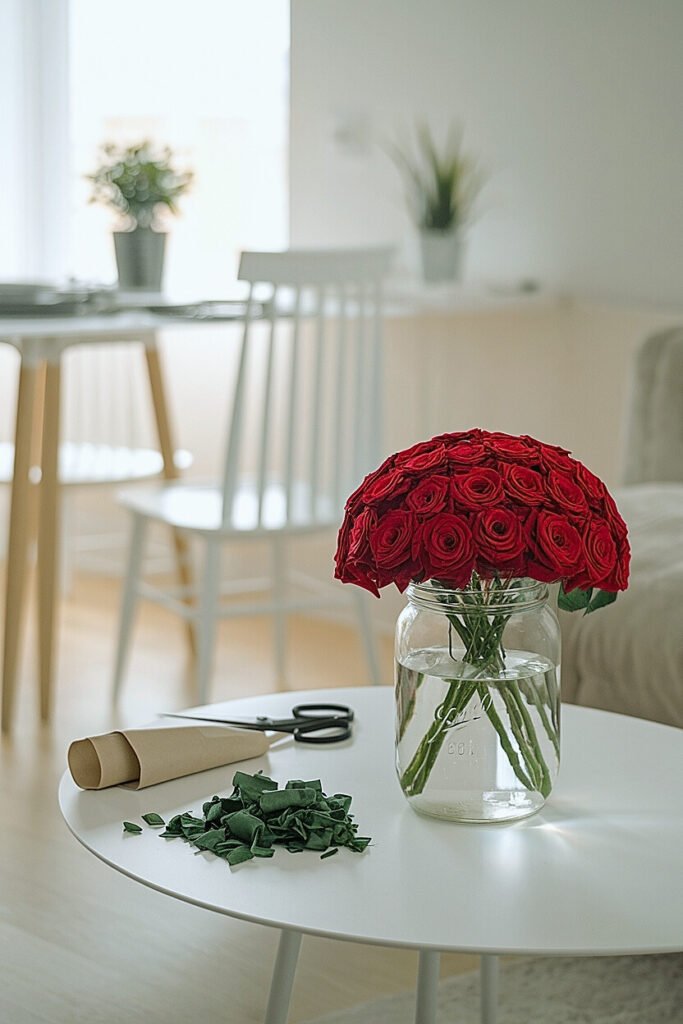
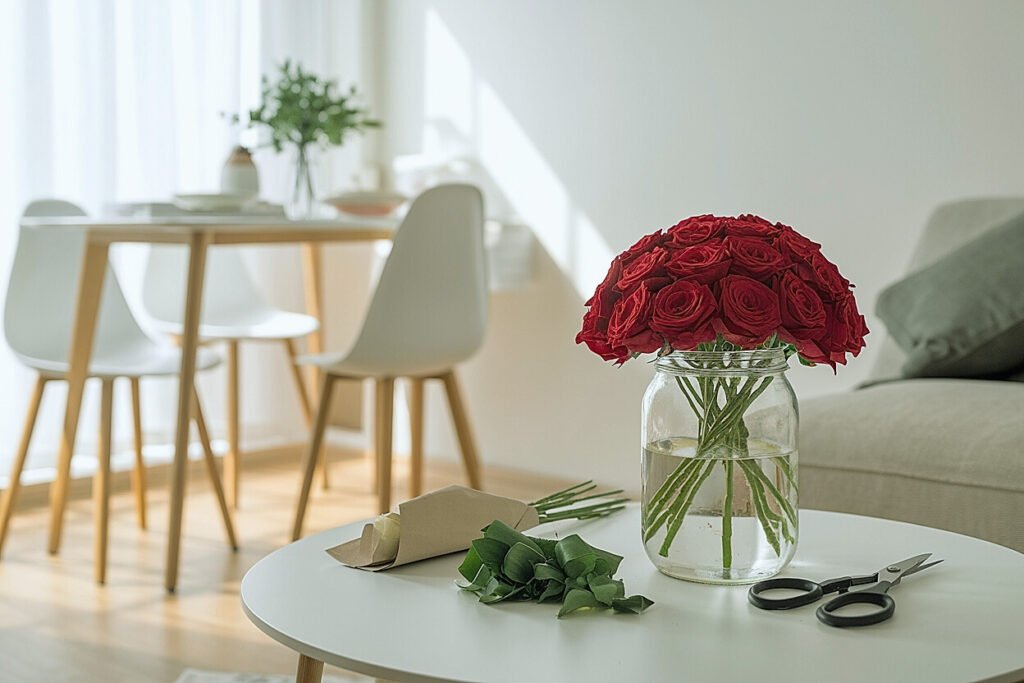
Ten minutes. That’s all you need between front door and finished centerpiece when you follow this method. I’ve timed it repeatedly, refining each step until the entire process flows without hesitation. The secret lies in eliminating decisions. Every choice, container, height, arrangement method, gets made beforehand so execution becomes pure motion.
Grab a wide-mouth quart mason jar from your kitchen. This specific vessel eliminates container hunting; almost everyone has one. Its proportions work with standard grocery bouquets without adjustment. The wide mouth accepts stems easily. Done. Container selected in zero seconds.
Unwrap your bouquet completely, discarding all packaging. Fill your jar two-thirds with lukewarm water, not cold, which shocks stems. Skip the flower food packet; you don’t have time for it to matter. Cut all stems to approximately nine inches using kitchen scissors. Don’t measure, approximate is fine. Strip leaves from the bottom half of each stem by running your fist down the stem firmly. Speed matters more than perfection here.
Drop roses into the jar one by one, turning the jar slightly after each addition. This natural rotation creates even distribution without deliberate arranging. Once all roses are in, give the jar a gentle shake to settle stems. Tuck any included greenery around the outer edges. Walk the jar to your table. Done. Ten minutes, probably less once you’ve practiced. For more jar-based approaches when time allows, explore these small apartment Valentine rose centerpieces using only jars that build on these foundations. Know someone who needs last-minute Valentine help? Share this post with them now!
Continue reading for grocery store rose selections that require the least arrangement effort.
What Are the Best “Grab-and-Go” Grocery-Store Valentine Roses for Quick Decor?
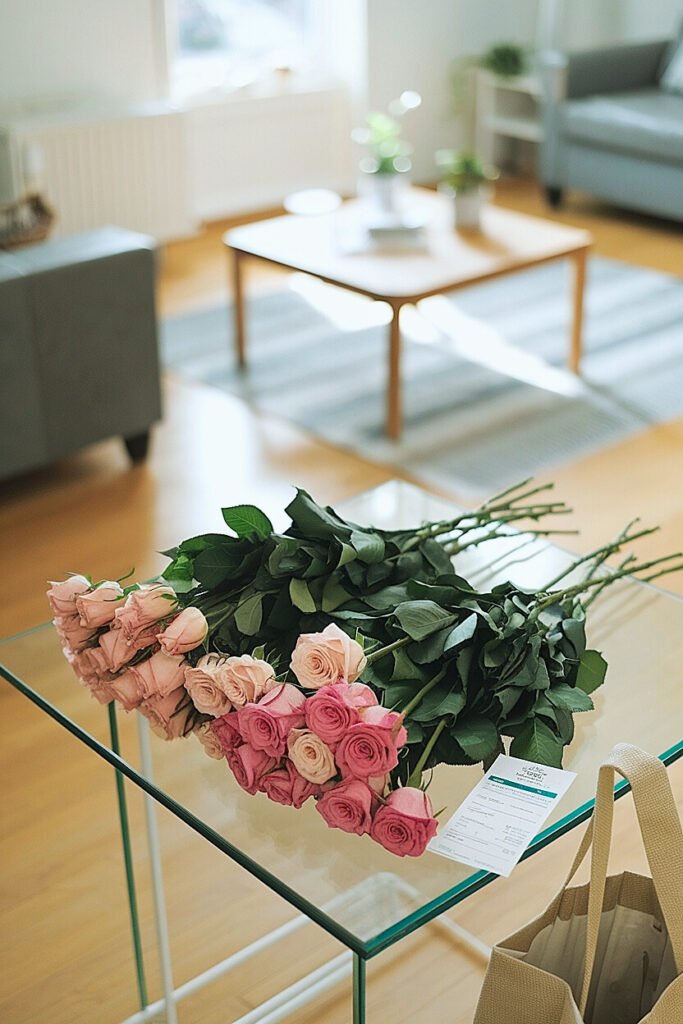
Not all grocery roses are equally last-minute friendly. Some varieties need careful handling, overnight conditioning, or precise arrangement to look good. Others practically arrange themselves. When you’re rushing, selection matters. Grab the right roses and your job becomes easier before you’ve even left the store.
These five options consistently deliver impressive results with minimal effort.
1. Pre-Arranged Mixed Bouquets
Skip the single-variety dozen and grab bouquets already mixed with greenery and filler flowers. These pre-arranged bundles contain everything you need, roses, baby’s breath, eucalyptus, sometimes even decorative elements. The grocery store florist already did the variety mixing. You just need a container and water. The visual complexity makes sparse arrangements look intentionally designed rather than hastily assembled.
2. Spray Roses
Spray roses feature multiple smaller blooms per stem, delivering maximum flower count for minimum stems. A six-stem spray rose bunch contains twenty or more individual flowers. This abundance fills arrangements quickly without requiring precise placement. The smaller bloom size also means faster hydration, spray roses perk up within minutes rather than hours. Grab these when you’re truly time-crunched.
3. Garden-Style Loose Bunches
Some grocery stores sell loose, garden-style bunches with roses at varying stages of bloom, some tight buds, some half-open, some fully unfurled. This natural variation creates instant visual interest without any arrangement skill. The mixed bloom stages also mean extended vase life since buds continue opening over several days.
4. Rose and Greenery Combos
Specifically seek bouquets labeled as rose-and-eucalyptus or rose-and-greenery combinations. The included foliage eliminates the need to source greenery separately. These combos drop directly into containers looking complete. The greenery provides structure that supports roses in attractive positions without requiring manual arrangement.
5. Petite Dozen Bunches
Some grocery stores sell “petite” or “sweetheart” rose dozens featuring smaller blooms at lower prices. These compact roses fill narrow vessels beautifully without the proportional challenges larger roses create. The reduced scale means twelve stems create the density that larger varieties need twenty to achieve. Grab petite bunches when your vessels are modest.
Read on for the fastest way to process roses for a polished appearance.
How to Strip Rose Leaves and Thorns Fast for a Cleaner “Styled” Look
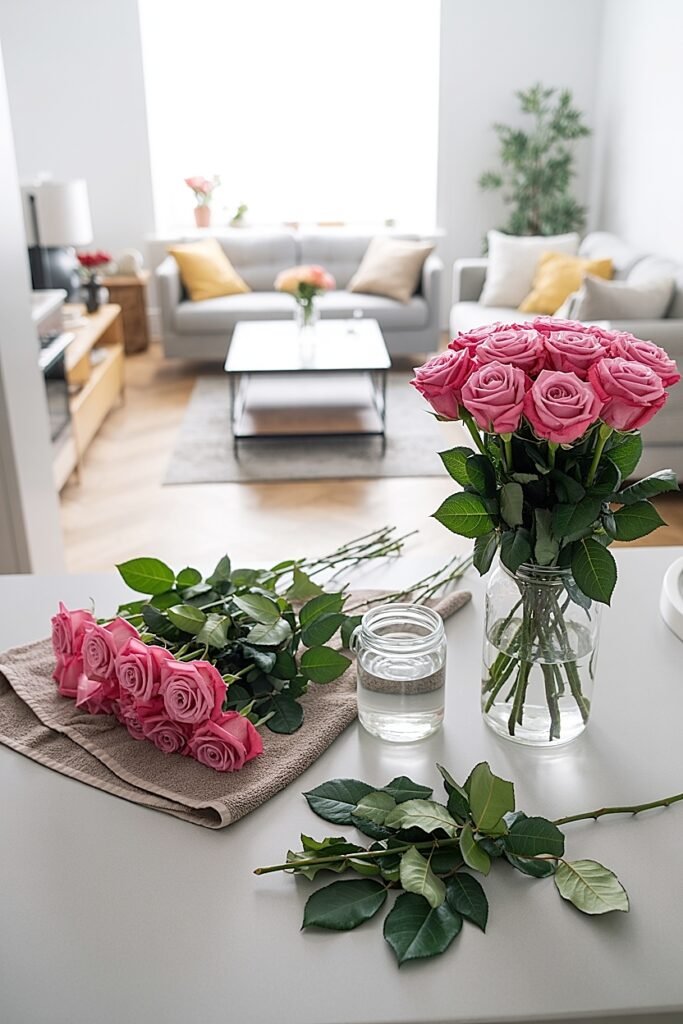
Leaves below the waterline rot and create bacteria that shortens flower life. Thorns catch on everything during arrangement. Professional florists strip both before arranging, and you should too, but when you’re rushing, traditional stripping methods waste precious minutes. Speed techniques achieve the same results in a fraction of the time.
The goal: clean stems ready for water with no snags or submerged foliage. You need this done in under two minutes for an entire bouquet.
Forget thorn strippers, special tools, or careful individual processing. Grab a paper towel, fold it in half, and use it as a protective grip. Starting about four inches below each rose head, grip the stem firmly through the paper towel and pull downward toward the stem’s base in one swift motion. The paper towel protects your hand while the pressure strips leaves and breaks thorns simultaneously. One motion per stem.
Work through your entire bouquet assembly-line style. Grip, pull, drop into the holding container. Grip, pull, drop. The repetitive motion builds rhythm that accelerates as you progress. A dozen roses strip in ninety seconds using this method. Don’t aim for perfection, a few remaining thorns or partial leaves won’t show once arranged. Speed matters more than surgical precision when the clock is ticking.
The following section reveals how one purchase decorates multiple rooms instantly.
Ideas for Splitting One Valentine Bouquet into Three Mini Jars for Instant Impact
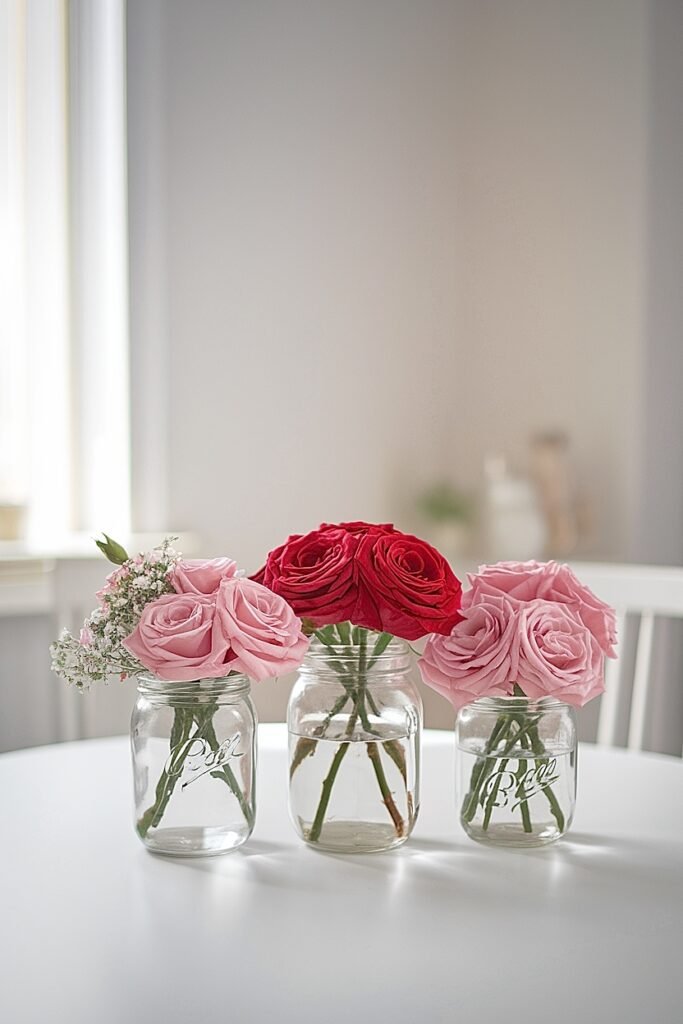
Why limit yourself to one arrangement when three smaller displays multiply your decorating impact? A standard dozen divides perfectly into three four-rose clusters. These mini arrangements scatter throughout your space, creating the impression of thoughtful, comprehensive Valentine decorating accomplished from a single grocery purchase.
The psychological effect of multiple arrangements exceeds their physical reality. Encountering roses in three different locations makes your entire home feel romantically styled. One arrangement, however beautiful, decorates one spot. Three arrangements transform an environment.
1. The 5-4-3 Distribution
Allocate roses in descending quantities: five for your main room, four for a secondary space, three for a tertiary location. Your living room gets the substantial arrangement. The dining area or bedroom receives medium impact. A bathroom or entryway gets a simple accent. This graduated approach concentrates impact where it matters most while still spreading Valentine presence throughout your home.
2. The Equal Split Method
Divide evenly: four roses per jar if you have a dozen, three per jar if you’re working with fewer. Identical arrangements in varying locations create cohesive, intentional styling. The repetition reads as design choice rather than accident. Place matching mini arrangements in a visual triangle, coffee table, side table, kitchen counter, for balanced distribution across your main living space.
3. The Clustered Trio Display
Instead of scattering mini jars throughout your home, group all three together on one surface as a unified installation. Varying jar heights, tall, medium, short, create a compound arrangement with professional layered effect. The three-jar cluster makes a single surface spectacularly decorated while using exactly the same materials as scattered placement.
Continue reading for emergency vessel solutions when you’ve got roses but nothing to put them in.
Ideas for “No-Vase” Valentine Rose Decor Using Cups, Mugs, and Small Bottles
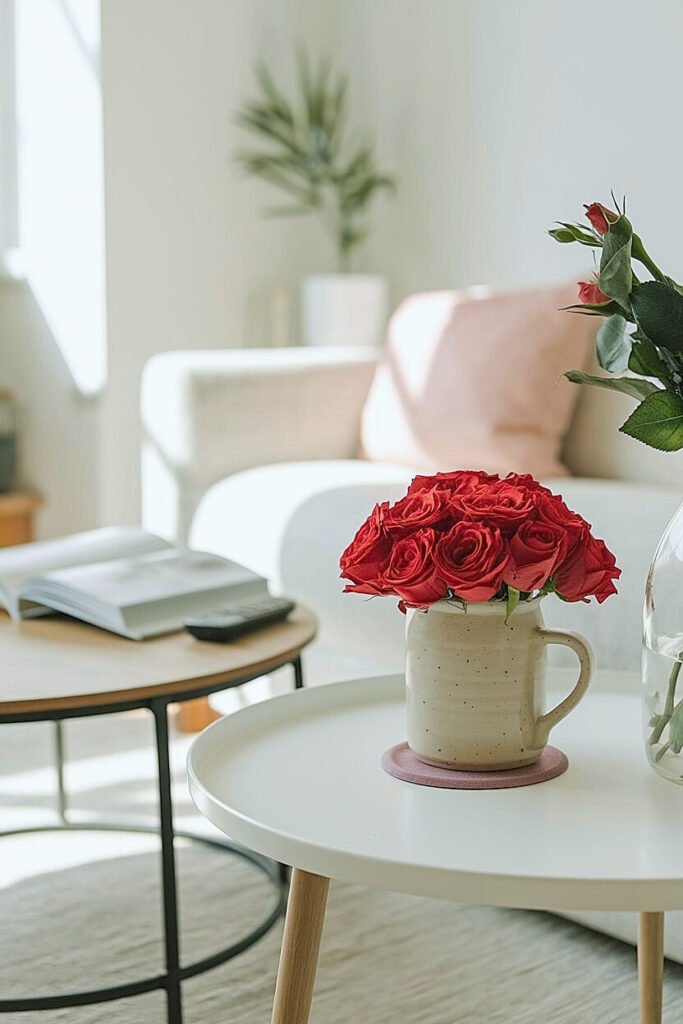
Vases are containers that hold water and flowers. By that definition, half your kitchen qualifies. When Valentine’s Day catches you without traditional vessels, your cabinets contain multiple alternatives that work beautifully and often look more charming than standard vases anyway.
Stop thinking “vase” and start thinking “waterproof container.” The mental shift reveals options everywhere.
1. Drinking Glasses
Standard water glasses or tumblers hold roses perfectly. Their clear glass showcases stems attractively. Their stability prevents tipping. Use taller Collins glasses for longer stems, shorter rocks glasses for compact arrangements. Nobody distinguishes these from expensive glass vases once flowers fill them.
2. Coffee Mugs
Oversized mugs hide short stems while adding personality through patterns, colors, or messages. Valentine-themed mugs become literal containers for literal romance. The handles make carrying easy. Use mugs you already own for zero-cost vessels that charm rather than disappoint.
3. Wine Bottles
Empty wine bottles with labels removed become elegant single-stem vases instantly. The narrow neck naturally supports one rose in perfect upright position. Clear glass showcases stems beautifully. Colored glass adds mood. Group multiple bottles with individual roses for compound impact.
4. Mason Jars and Canning Jars
The rustic alternative hiding in most pantries. Wide-mouth jars accept full arrangements easily. Their clear glass and simple lines suit both farmhouse and modern aesthetics. If you’ve got canning supplies, you’ve got vessels.
5. Drinking Pitchers
Glass or ceramic pitchers provide substantial volume for larger arrangements. The handle aids carrying. The pour spout adds visual interest. Pitchers you’d normally use for lemonade or water become Valentine centerpiece vessels with zero additional investment.
Below, discover emergency options when truly caught unprepared.
What Are the Best “Found-at-Home” Valentine Rose Vessels When You’re Truly Last Minute?
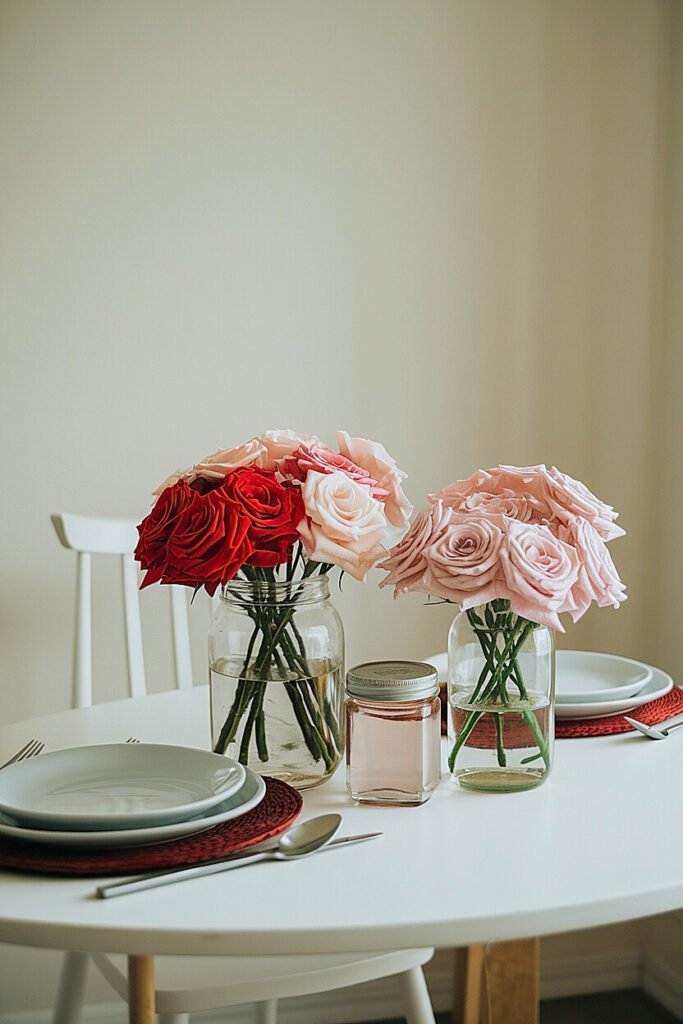
Sometimes you’re beyond last minute. You’re at the stage where opening cabinets and hunting for options counts as too much planning. These three items exist in virtually every home and require zero hunting to locate.
1. The Water Glass You’re Already Using
Whatever glass sits on your counter right now becomes a rose vessel. Dump the water, refill, insert flowers. This isn’t elegant advice, but it’s survival advice for the truly desperate. A single rose in an ordinary water glass, placed intentionally, still reads as romantic gesture. Perfect is the enemy of done.
2. Your Coffee Mug from This Morning
That mug in the sink or beside your computer? Rinse it, fill it, add roses. The personal quality of using your actual daily mug adds authenticity that fancy vessels lack. Your Valentine sees the romance in effort, not expense.
3. Any Clean Jar from the Recycling
The pasta sauce jar, olive jar, or pickle jar you rinsed before recycling becomes an instant vessel. These are already clean and waiting. The variety of shapes available in typical recycling exceeds what most stores stock.
The final section teaches you to make sparse roses look abundant without buying more.
Ways to Make Grocery-Store Valentine Roses Look “Fuller” Without Buying a Second Bouquet
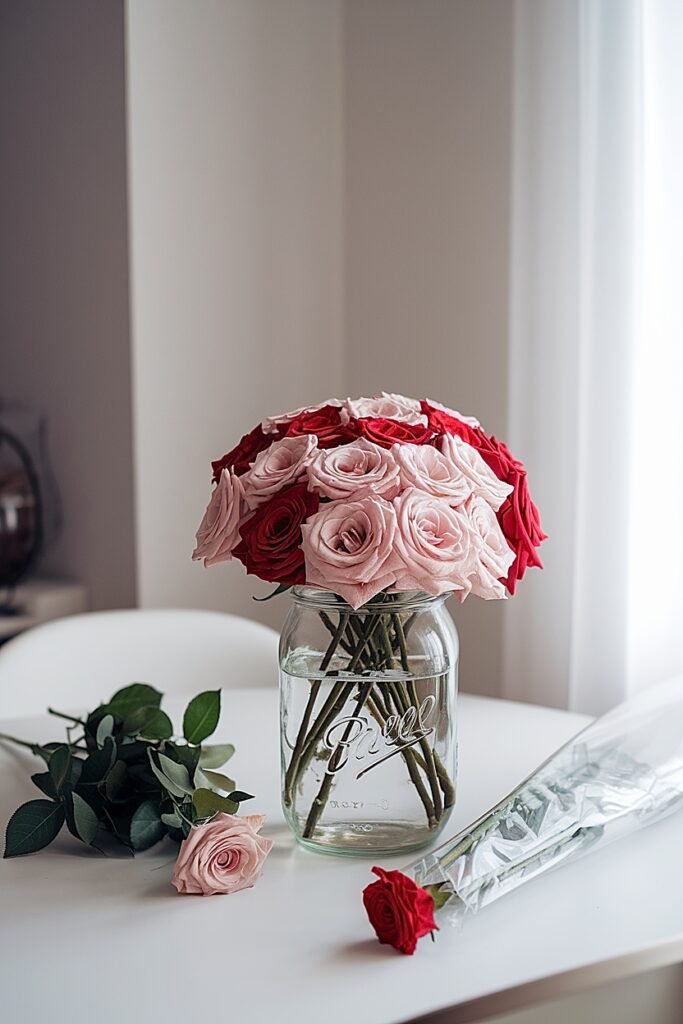
Sparse arrangements deflate romantic intentions. But buying more roses means another store trip when you’re already pressed for time. These techniques create visual fullness using what you already have, transforming underwhelming quantities into lush-looking displays.
1. Add Kitchen Greenery
Raid your refrigerator and herb garden for arrangement fillers. Fresh rosemary sprigs look beautiful and smell incredible. Mint stems add texture. Bay leaves from your spice cabinet provide glossy greenery. Even leafy carrot tops work in a pinch. These kitchen elements fill gaps between roses while adding textural interest that pure rose arrangements lack.
2. Use Smaller Vessels
The same roses that look sparse in a large vase appear abundant in a smaller container. Swap your vessel for something more compact. Roses that rattle around a quart jar become a tight, lush cluster in a pint jar. The flowers haven’t changed; the proportional relationship has. Match vessel size to your actual flower count.
3. Cut Short and Cluster Tight
Trim roses drastically shorter, five or six inches total, and cluster them tightly together in a low, wide container. The compact arrangement concentrates visual impact rather than dispersing it. Short stems bring rose heads close together, creating density impossible with longer stems spread across normal heights. This technique makes six roses look like twelve through sheer concentration.
Conclusion
Last-minute Valentine decorating tests creativity under pressure. The hacks in this guide eliminate pressure entirely. Ten-minute centerpieces. Cabinet-sourced vessels. Single-bouquet multiplication strategies. Fullness techniques that compensate for sparse purchases. Every approach assumes you’ve got limited time, limited resources, and maximum need for romantic results.
These methods developed from genuine last-minute emergencies across many Valentine’s Days. The lessons cost me stressed evenings and disappointing early attempts before the systems emerged. Now you get the refined versions, battle-tested and ready for deployment. Your grocery store roses, properly handled, deliver romance every bit as effectively as expensive florist arrangements. The effort shows. The care matters. The timing? That’s just logistics.
This website contains affiliate links, and some products are gifted by the brand to test. As an Amazon Associate, I earn from qualified purchases. Some of the content on this website was researched and created with the assistance of AI technology.