This website contains affiliate links, and some products are gifted by the brand to test. As an Amazon Associate, I earn from qualified purchases. Some of the content on this website was researched and created with the assistance of AI technology.
Key Takeaways
- One anchor centerpiece creates more impact than scattered small arrangements in studio spaces
- Single-stem roses in mini bottles achieve elegant minimalism without sparse-looking displays
- Strategic zone distribution makes one bouquet decorate your entire studio effectively
- Low-profile arrangements preserve precious bistro table surface for actual dining
- Removing greenery entirely creates a refined, designer-minimal aesthetic
- Trays transform simple rose displays into intentional, curated vignettes
Styling minimalist valentine rose decor for studio apartments requires embracing constraints rather than fighting them. When your living room, dining room, and bedroom occupy one continuous space, traditional Valentine decorating advice falls apart. You can’t create elaborate displays in multiple rooms because you don’t have multiple rooms. Every surface serves multiple purposes. Every square inch matters. I lived in studios for six years and learned that minimalist approaches aren’t compromises, they’re actually better suited to compact living than the abundant arrangements magazines showcase.
The minimalist philosophy aligns perfectly with studio realities. Less visual noise in tight spaces feels calming rather than sparse. Strategic focal points draw attention more effectively than scattered decorations competing for limited sightlines. One beautiful arrangement, thoughtfully placed, creates more romantic impact than a dozen mediocre displays fighting each other across cramped square footage. These techniques celebrate studio living rather than apologizing for it.
“Minimal Studio Rose Plan” (Time • Furniture Zone • Budget • Clutter Level)
| Minimal Setup | Time-to-Done | Best Furniture Zone | Budget + Clutter Feel |
|---|---|---|---|
| One-Jar Anchor Dome Main focal point |
10 min Short stems, smooth low dome. |
Coffee table • Small dining table • Console | $10–$18 Clutter: Medium |
| Single-Stem Bottle Row True minimal |
6–10 min 1 stem each, wide spacing. |
Side table • Shelf ledge • Desk corner | $8–$15 Clutter: Low |
| Low Bistro Conversation Dome Meal-friendly |
10–12 min Wide jar, very short stems. |
Dining table for two • Small kitchen table | $10–$20 Clutter: Medium |
| Micro-Centerpieces (1–2 stems) Slim-surface safe |
8–12 min Tiny jars, lots of open space. |
Narrow console • Slim shelf • Entry ledge | $10–$18 Clutter: Low |
| Tray-Framed Rose Moment Looks planned |
8–12 min Jar + one book + small dish. |
Coffee table • Desk • Entry table | $0–$10 extra Clutter: Low |
| Monochrome One-Color Dome Quiet modern |
10 min Consistent color, clean shape. |
Coffee table • Dining table • Console | $10–$18 Clutter: Medium |
| Rose Buds Only (Tiny Bottles) Ultra minimal |
8–12 min Buds, tiny bottles, clean line. |
Side table • Shelf unit • Console end | $8–$16 Clutter: Low |
| Rose Grid (6 Small Jars) Structured |
12–18 min Two rows of three on a tray. |
Narrow console • Media stand • Shelf unit | $10–$20 Clutter: Medium |
Zone: coffee table, dining table, console
Clutter: Medium
Zone: side table, shelf ledge, desk corner
Clutter: Low
Zone: dining table for two
Clutter: Medium
Zone: narrow console, slim shelf, entry ledge
Clutter: Low
Zone: coffee table, desk, entry table
Clutter: Low
How to Build a One-Jar “Anchor” Valentine Rose Centerpiece for a Studio
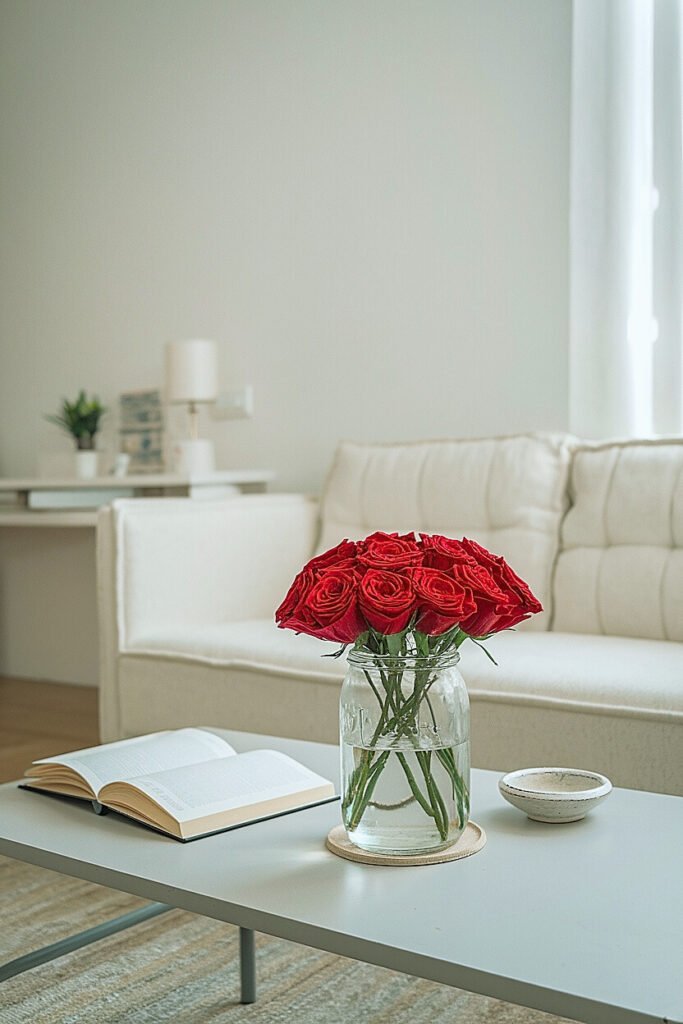
Studios need anchors. Without defined rooms to guide decorating zones, floating arrangements create visual chaos. One substantial centerpiece establishes order, giving your eye a home base while leaving remaining surfaces clean and functional. I discovered this principle after overcrowding my first studio with competing displays that made the space feel cluttered rather than romantic.
The anchor approach concentrates your flower investment for maximum impact. Instead of spreading roses thin across multiple weak arrangements, you build one commanding piece that justifies its existence.
Choose a wide-mouth quart jar and position it in your studio’s natural focal zone, usually the coffee table or dining surface visible from most angles. Fill with five to seven roses, stems cut to nine inches, arranged simply without elaborate technique. Add minimal greenery around the base only if you want softening. The roses themselves become the statement.
This single jar creates sufficient Valentine atmosphere for your entire studio. Guests entering see romance immediately. You encounter it moving through daily routines. The concentration actually increases romantic impact because nothing dilutes attention. Your anchor arrangement becomes the studio’s Valentine identity while surfaces elsewhere remain clear for actual living. For more time-saving approaches, check out these rose hacks for last-minute Valentine decor that work beautifully in studio settings. Found this helpful? Share with friends in similar living situations!
Continue reading for single-stem approaches that take minimalism even further.
Ideas for Single-Stem Valentine Roses in Mini Bottles for True Minimal Decor
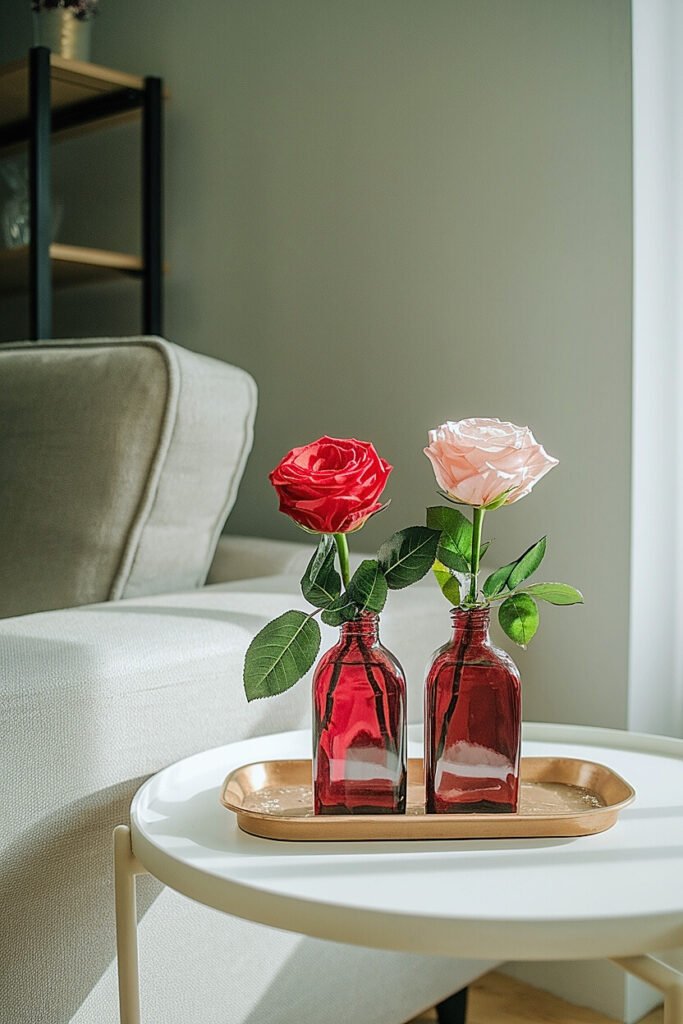
Minimalism reaches its purest expression with single stems. One rose. One tiny vessel. Nothing else. This extreme reduction sounds potentially sad until you see it executed well. The isolation actually elevates each bloom, forcing appreciation of details lost in crowded arrangements. I converted to single-stem styling after realizing that twelve roses crammed together made each individual flower invisible.
These seven approaches demonstrate how single stems in mini bottles create refined Valentine decor.
1. The Windowsill Parade
Line your windowsill with five or seven identical mini bottles, each holding one rose. The repetition creates rhythm that reads as intentional design. Varying stem heights slightly adds organic interest. Backlight from the window makes petals glow. This parade approach multiplies minimal elements into substantial presence while maintaining clean aesthetic.
2. The Nightstand Solo
Place one perfect rose in a tiny bottle on your nightstand. This intimate placement means the bloom greets you each morning and accompanies you to sleep. The singular flower beside your bed carries romantic weight that elaborate arrangements can’t match. Simplicity here reads as meaningful intention.
3. The Bathroom Accent
A single rose in a small bottle transforms utilitarian bathroom spaces into spa-like retreats. Position on the counter or narrow shelf. The unexpected placement elevates daily routines while requiring almost no space. Your studio’s bathroom gains Valentine spirit from one stem.
4. The Desk Companion
Work-from-home studios benefit from single-stem desk accents. One rose in a mini bottle occupies minimal footprint while providing visual respite during work hours. Position within peripheral vision rather than directly ahead, adding beauty without distraction.
5. The Kitchen Windowsill Feature
Kitchenette areas rarely receive decorating attention in studios. One rose in a tiny bottle on the kitchen windowsill changes that, bringing unexpected romance to functional spaces. The stem catches morning light during coffee preparation.
6. The Bookshelf Discovery
Tuck a single rose among your books on a shelf. The bloom surprises when noticed, adding delight to familiar surroundings. The books frame the flower naturally, creating an organic vignette without arrangement effort.
7. The Entry Statement
Place one rose in a mini bottle where you enter your studio. This immediate romantic greeting sets tone before you’ve fully arrived home. The singular placement carries outsized impact through its position as first impression.
The following section explains how to distribute roses across your studio’s functional zones.
How to Split One Valentine Grocery Bouquet Across Three Studio Furniture Zones
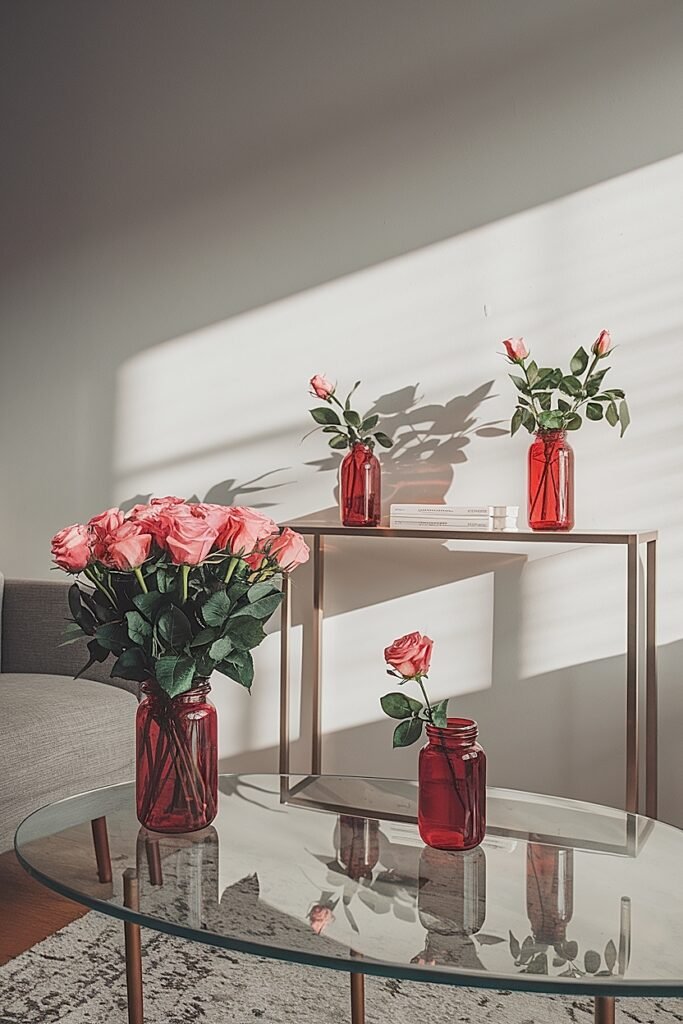
Studios contain distinct functional zones even without walls separating them. Your sleeping area. Your living/lounging area. Your eating area. Distributing roses across these zones creates comprehensive Valentine atmosphere from a single grocery purchase while respecting each zone’s scale.
A standard dozen roses divides naturally: five for your main zone, four for secondary, three for tertiary. This graduated distribution concentrates impact where you spend most time while still spreading romance throughout your studio.
Identify your primary zone, probably where you’ll spend Valentine’s evening. This receives five roses in a medium jar. Your secondary zone, perhaps where you eat, gets four roses in a smaller vessel. Your tertiary zone, maybe your nightstand or a shelf, receives three roses in a tiny container.
Cut stems progressively shorter for each zone’s arrangement. Primary zone roses stay longest. Secondary zone cuts shorter. Tertiary trims shortest. This proportional approach ensures each arrangement suits its vessel and location while all three clearly originate from the same Valentine intention.
Read on for bistro table solutions that leave room for actual dining.
Ways to Keep Valentine Rose Decor Low-Profile on a Bistro Table for Two
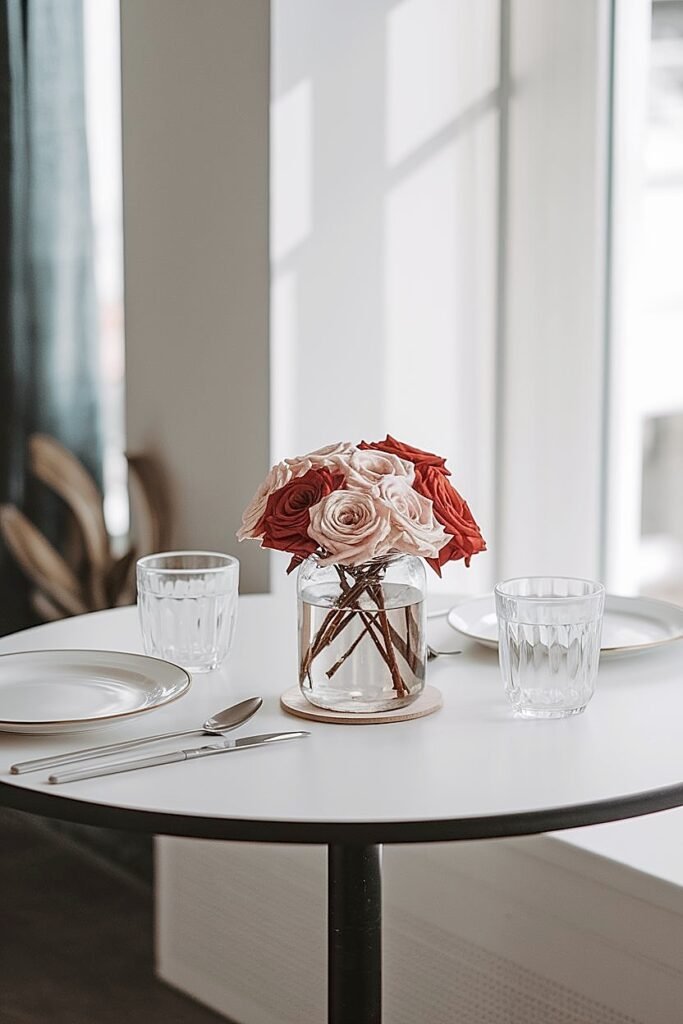
Bistro tables barely accommodate two dinner plates. Adding tall centerpieces makes intimate dining impossible. Yet leaving these surfaces bare during Valentine’s feels wrong. The solution: low-profile arrangements that deliver romance without stealing space needed for food and conversation.
These five approaches maximize romantic impact while minimizing physical footprint.
1. The Floating Heads Bowl
Fill a shallow bowl with water and float three rose heads, stems cut flush beneath blooms. This creates substantial color impact within two inches of height, far below conversation sightlines. Add floating candles between roses for evening sparkle. The horizontal presentation reads as intentional minimalism rather than spatial compromise.
2. The Single Specimen Bud Vase
One slender bud vase holding one rose positioned at table edge rather than center. The extreme reduction leaves nearly all surface available for dining. Move the vase slightly during courses as plates arrive and depart. The mobility makes minimalism practical.
3. The Low Cluster Approach
Cut three roses very short, four inches total, and cluster tightly in a low, wide container. The compact dome stays below eye level while maintaining rose presence. Position off-center, leaving maximum usable surface for actual dining needs.
4. The Petal Scatter
Skip the arrangement entirely. Scatter loose rose petals across the table surface around your plates. Zero height, maximum romance, complete surface functionality. The petals create Valentine atmosphere without any vessel whatsoever.
5. The Edge-Mounted Solution
Attach a tiny vessel to the table’s outer edge using removable mounting, removing it entirely from usable surface. A magnetic bud vase on a metal table or a clip-on vessel works perfectly. The roses remain present but occupy zero table real estate.
Continue reading for techniques that achieve designer aesthetics without greenery.
How to Make Grocery Valentine Roses Look “Designer Minimal” With No Greenery
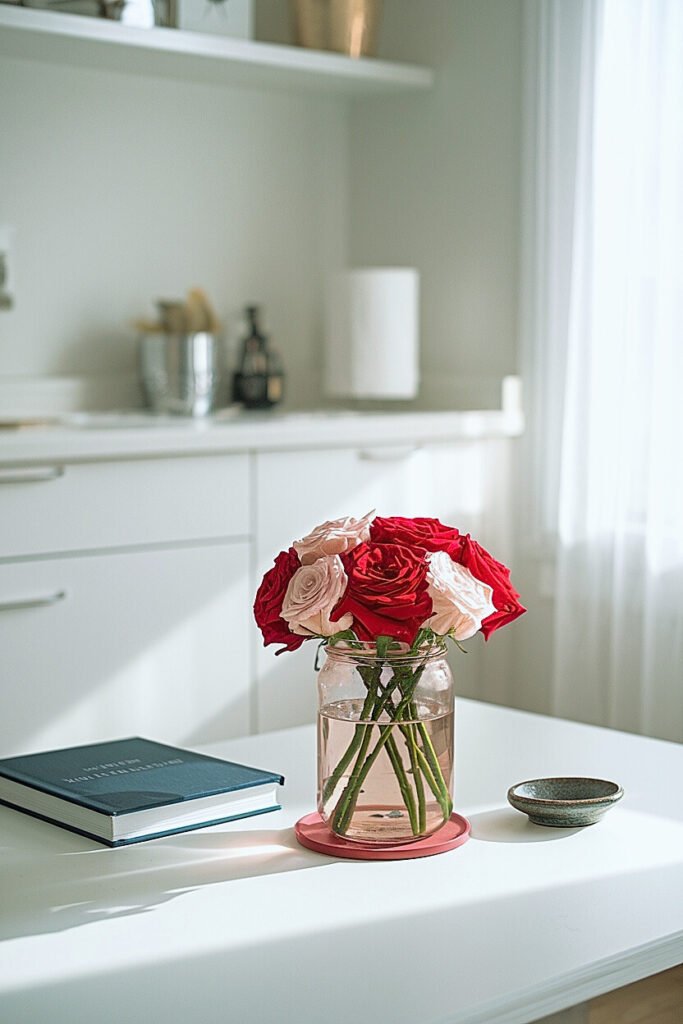
Greenery typically softens arrangements and fills gaps. But removing it entirely creates a stark, modern aesthetic that photographs beautifully and suits minimalist studios perfectly. The roses become sculptural objects rather than garden gatherings. I stumbled onto this approach when my grocery bouquet contained disappointing greenery I simply discarded. The pure-rose result looked better than any of my mixed arrangements.
The no-greenery approach demands intentionality. Sparse roses without greenery look accidental. Deliberate pure-rose arrangements look curated.
Choose a vessel that complements roses directly, clear glass shows stems cleanly, matte ceramic provides neutral backdrop. Fill the vessel fully with roses so density compensates for missing filler. Cut all stems identical length for uniform, architectural appearance.
Arrange roses in a tight grid rather than loose organic placement. The geometric precision signals intention. Remove any damaged outer petals so each bloom appears perfect. The resulting arrangement looks editorial, the kind of minimalist styling you’d see in design magazines. No greenery means nothing distracts from rose perfection.
Ways to Use a Tray to Make Minimal Valentine Rose Decor Look Intentional
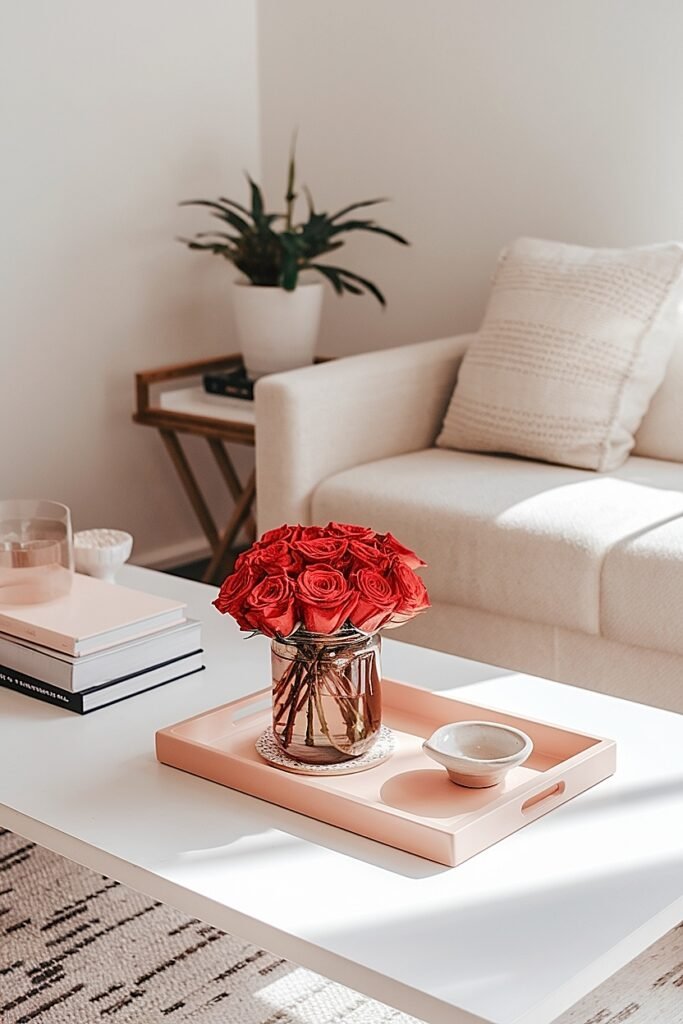
Trays transform scattered elements into composed vignettes. A rose vessel placed randomly on a surface looks incidental. The same vessel on a tray looks designed. This simple addition signals intentionality, elevating modest arrangements to styled status.
1. The Complete Vignette Tray
Compose a miniature scene on your tray: rose vessel, single candle, one small meaningful object. The boundaries contain these elements into a cohesive statement. The tray creates a “finished” feeling that loose components lack. Everything relates to everything else within the defined space.
2. The Rose-Only Feature Tray
Place your rose vessel alone at the tray’s center, leaving surrounding space empty. The generous negative space around a modest arrangement reads as deliberate restraint rather than accidental sparseness. The tray frames your roses like a pedestal frames sculpture.
3. The Mobile Romantic Station
Build your minimal rose display on a handled tray that moves throughout the day. Morning coffee accompanies the roses at your dining spot. Evening relaxation brings them to your coffee table. The tray makes romantic ambiance portable within your studio.
The final section covers vessel alternatives when traditional vases don’t suit minimalist goals.
What Are the Best Minimal Valentine Vase Substitutes (Jars, Glasses, Mugs)
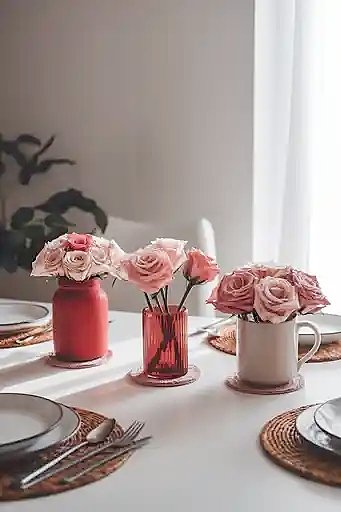
Traditional vases often feel too decorative for minimalist studios. Simple utilitarian vessels suit sparse aesthetics better while costing nothing when sourced from your own kitchen.
1. Clear Glass Tumblers
Basic drinking glasses provide clean, invisible vessels that let roses speak entirely for themselves. The utilitarian origin adds authenticity to minimalist styling. Group multiple glasses with single stems for rhythmic impact.
2. White Ceramic Mugs
Plain white mugs become small sculptural vessels. The mug shape adds personality while solid white color provides neutral backdrop. Handleless mugs or cups work especially well for seamless silhouettes.
3. Laboratory-Style Bottles
Slim medicine bottles or chemistry-style vessels suit minimalist aesthetics perfectly. Their clinical precision complements modern studios. Single stems in narrow necks stand upright without support.
4. Small Mason Jars
Half-pint canning jars offer rustic minimalism, simple, unpretentious, functional. The reduced scale suits single stems or tight three-rose clusters. Clear glass showcases stems authentically.
5. Recycled Wine Bottles
Cleaned wine bottles with labels removed become elegant single-stem vessels. The familiar shape reads as intentional repurposing. Colored glass adds mood; clear glass maximizes visibility.
Conclusion
Minimalist Valentine decorating in studios isn’t deprivation, it’s refinement. The techniques here celebrate constraints rather than apologizing for them. One anchor centerpiece. Strategic single stems. No-greenery precision. Tray-composed vignettes. Each approach embraces the studio reality that less square footage demands more intentional choices.
These methods developed from years of actual studio living. The cluttered early attempts that overwhelmed small spaces. The discovery that reduction increased impact. The realization that minimalism and romance amplify rather than contradict each other. Your studio deserves Valentine atmosphere perfectly scaled to its dimensions.
This website contains affiliate links, and some products are gifted by the brand to test. As an Amazon Associate, I earn from qualified purchases. Some of the content on this website was researched and created with the assistance of AI technology.