
This website contains affiliate links, and some products are gifted by the brand to test. As an Amazon Associate, I earn from qualified purchases. Some of the content on this website was researched and created with the assistance of AI technology.
Key Takeaways
- Tray-based styling creates dedicated rose zones while preserving coffee table functionality
- One grocery bouquet strategically divided creates comprehensive St. Patrick’s coverage across multiple arrangements
- Heavy containers and weighted vessels prevent tip-overs in busy family living rooms
- Small coffee tables benefit from low-profile, compact arrangements positioned at back edges
- Green runners establish holiday atmosphere before adding a single flower
- Open-plan rooms require arrangements visible from multiple sightlines and seating areas
Styling Saint Patrick’s Day coffee tables with roses brings unexpected sophistication to a holiday that usually stops at green beer and plastic shamrocks. I resisted this combination for years, convinced St. Patrick’s Day didn’t warrant “real” decorating beyond a few novelty items. Then a florist friend challenged me to create a March 17th coffee table display using only roses and green accents. No leprechauns allowed. The result changed how I approach the entire holiday, elegant, seasonal, actually worth photographing.
Coffee tables anchor living room life. They’re where we gather, set drinks, watch movies, have conversations. Decorating these surfaces for St. Patrick’s Day extends the celebration into everyday moments rather than limiting it to a single dinner party. The roses become part of your daily routine for the days surrounding March 17th. Morning coffee with Irish-themed flowers. Evening relaxation beside cream roses in a green vessel. These techniques transform a sometimes-overlooked holiday into a genuine decorating opportunity your household actually enjoys.
Use this table to choose the best Saint Patrick’s Day coffee table rose setup based on your table size, traffic level, budget, and reset speed. It’s built for modern farmhouse rooms using olive/sage crocks, grocery roses, and contained tray zones that stay practical.
| Setup Type | Best Coffee Table Match | Budget + Rose Count | Reset Speed + Mess Level |
|---|---|---|---|
| Petite Tray + Small Sage Crock tiny spaceslow dome |
Small coffee tables • apartments • studios | $ • 2–3 roses (cream + 1 blush) | 20–30s • Low |
| Woven Tray + Medium Olive Crock most homesbalanced |
Standard coffee tables • family living rooms | $$ • 5–7 roses (mostly cream) | 45–60s • Medium |
| Round Tray System round tablescentered |
Round coffee tables • soft corners | $$ • 4–6 roses (cream + 2 blush) | 45–60s • Medium |
| One-Green-Item Rule clean modernno clutter |
Minimal rooms • open-plan living areas | $ • 3–5 roses (cream dominant) | 30–45s • Low |
Roses: 2–3 • Budget: $ • Reset: 20–30s
Roses: 5–7 • Budget: $$ • Reset: 45–60s
How to Style Saint Patrick’s Day Roses on a Coffee Table Tray
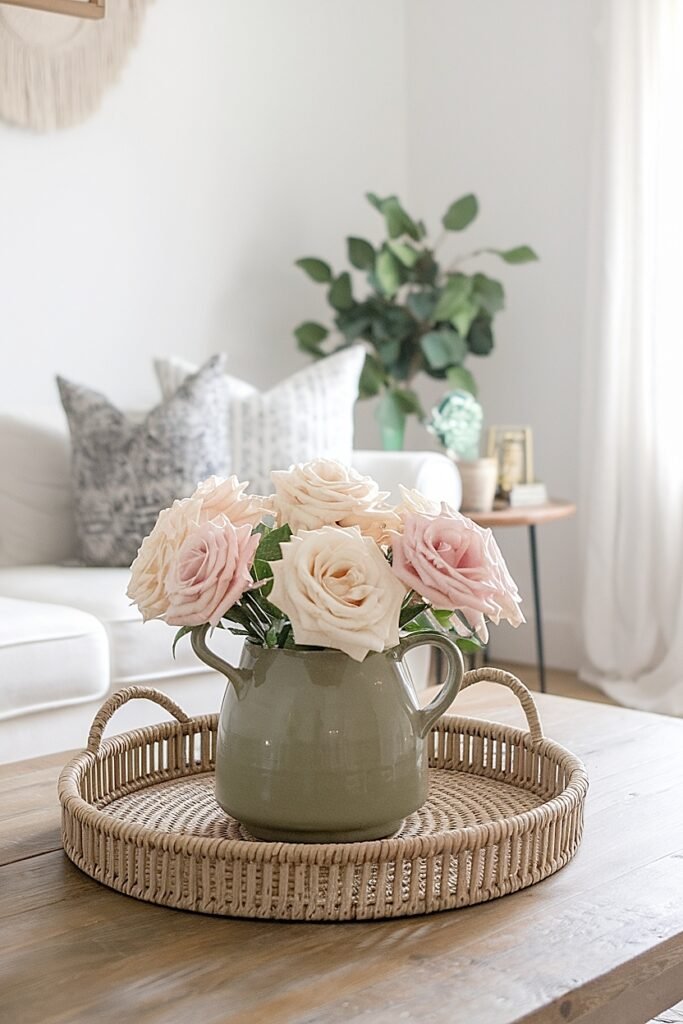
Trays solve coffee table’s fundamental tension: the surface must serve both decoration and daily function. Without boundaries, roses compete with remotes, drinks migrate into arrangements, and everything intermingles chaotically. A tray creates defined territory, roses here, practical items there, bringing order to surfaces that naturally trend toward mess.
The tray itself contributes to St. Patrick’s atmosphere when chosen thoughtfully. Green trays amplify the holiday theme. Wooden trays add rustic Irish warmth. Gold-accented trays nod toward leprechaun legend without cartoon imagery.
Select a tray covering no more than one-third of your coffee table surface. This ratio preserves two-thirds for actual coffee table duties, setting down drinks, holding remotes, supporting snack bowls during March Madness. On a forty-two-inch table, that means a tray roughly fourteen inches across. The constraint forces intentional arrangement rather than sprawling accumulation.
Build your tray display with purposeful negative space. Position your rose vessel slightly off-center. Add a small candle at one corner. Leave remaining tray surface breathing room that makes each element more visible. The roses become focal point rather than one item among cluttered many. The tray boundaries create finished edges that standalone arrangements lack, suggesting curation rather than casual placement. For more green vessel inspiration, explore these Saint Patrick’s Day decoration ideas using roses in green crocks that pair beautifully with tray-based styling. Found this approach helpful? Share with friends planning their St. Patrick’s celebrations!
Continue reading for techniques that stretch one grocery bouquet across your entire coffee table setup.
Ideas for Saint Patrick’s Day Coffee Table Roses Using One Grocery Bouquet
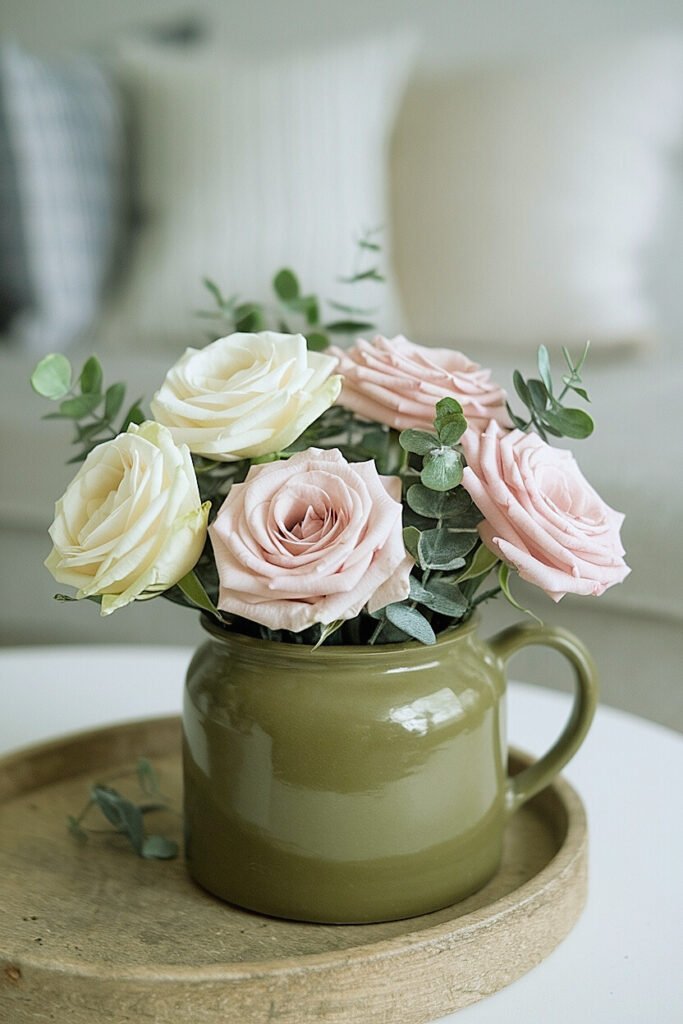
One bouquet, twelve roses plus included greenery, creates comprehensive St. Patrick’s coffee table decorating when divided strategically. This multiplication approach spreads Irish atmosphere across multiple arrangements rather than concentrating everything in one vessel. The distribution creates impression of abundant decorating from modest investment.
These five approaches maximize single-bouquet potential.
1. The Three-Jar Cluster
Divide roses among three small matching vessels, four roses each. Position the trio in a triangular cluster on your tray, varying heights slightly by cutting stems at different lengths. The grouped jars create compound presence impossible with single vessels. The matching containers establish visual unity while the varied heights add dimension. Tuck greenery between jars to connect the grouping.
2. The Main-Plus-Accent Split
Allocate eight roses to one substantial arrangement at tray center. Reserve four roses for a smaller accent vessel positioned at tray’s corner. The primary arrangement commands attention while the accent adds supporting presence. The two-piece approach feels more designed than single-vessel decorating while using identical rose quantities.
3. The Runner Distribution
If using a tray runner or elongated tray, position roses in three small vessels spaced along the runner’s length. Four roses per vessel, or three per vessel with one for elsewhere, creates linear decorating that follows coffee table geometry. The distributed placement makes limited flowers cover more visual territory.
4. The Low Bowl Plus Bud Vase
Create a floating rose head display in a shallow bowl using six rose heads cut from stems. Position a slim bud vase beside the bowl holding two tall single stems. The contrasting heights and styles create visual interest from limited materials. The horizontal bowl coverage plus vertical bud vase accents maximize arrangement variety.
5. The Greenery-Heavy Approach
Build a substantial greenery arrangement using all included eucalyptus, fern, or ruscus. Insert only five or six roses into this green foundation, reserving remaining roses for a separate small accent elsewhere. The greenery-dominant main arrangement feels lush while secondary roses extend decorating to additional surfaces.
Read on for stability solutions in busy household environments.
How to Keep Saint Patrick’s Day Coffee Table Roses Stable in Busy Homes
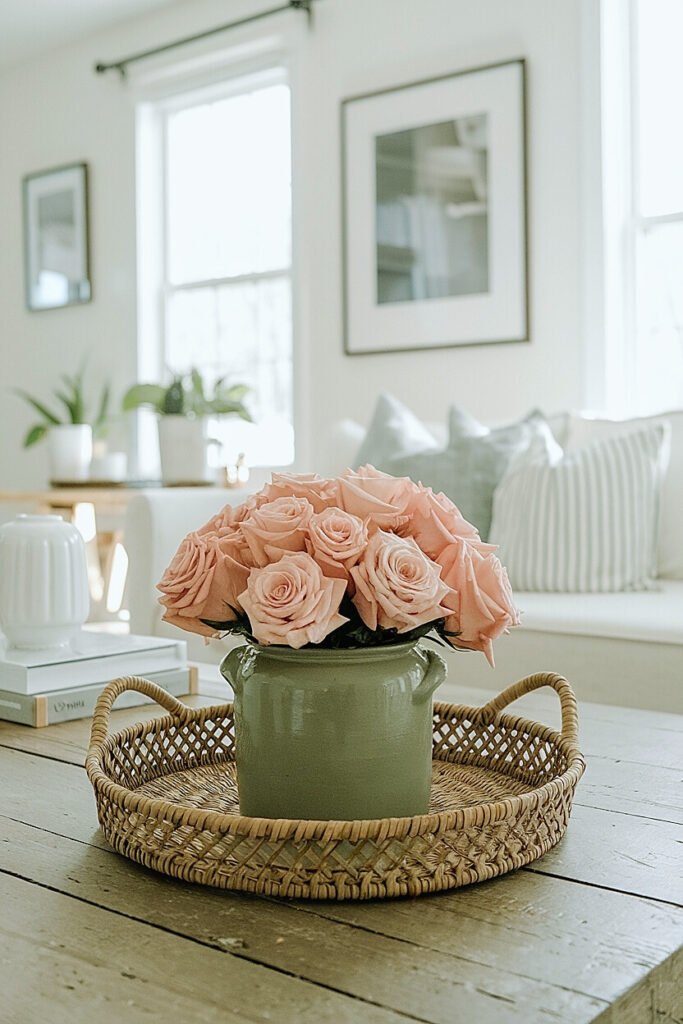
Coffee tables endure more abuse than any other decorating surface. Kids run past. Dogs bump through. Feet occasionally rest. Casual reaches send glasses tipping. Rose arrangements must survive this reality or become liability rather than decoration. Stability considerations matter more here than aesthetics in many households.
Heavy containers prevent most disasters before they happen. Weight creates inertia that casual contact can’t overcome.
Select vessels with low centers of gravity, wide bases, squat profiles, substantial material weight. Ceramic crocks outperform glass vases. Stoneware beats crystal. Short, broad containers resist tipping that tall, narrow vessels invite. Before adding water, drop river rocks or decorative stones into your vessel’s bottom. This ballast lowers the center of gravity further while adding visual interest visible through clear containers.
Position arrangements at coffee table zones with minimal traffic. The back edge, furthest from primary seating, receives fewer accidental bumps than center placement. Corner positioning removes arrangements from reach-across pathways. Consider your household’s actual movement patterns, where people walk, where hands reach, where pets travel, and place roses in the calmest zones. The most beautiful arrangement serves no purpose if it spends March 17th on your carpet surrounded by glass shards and scattered petals.
The following section addresses small coffee tables where every inch matters.
Ways to Style Saint Patrick’s Day Roses for Small Coffee Tables
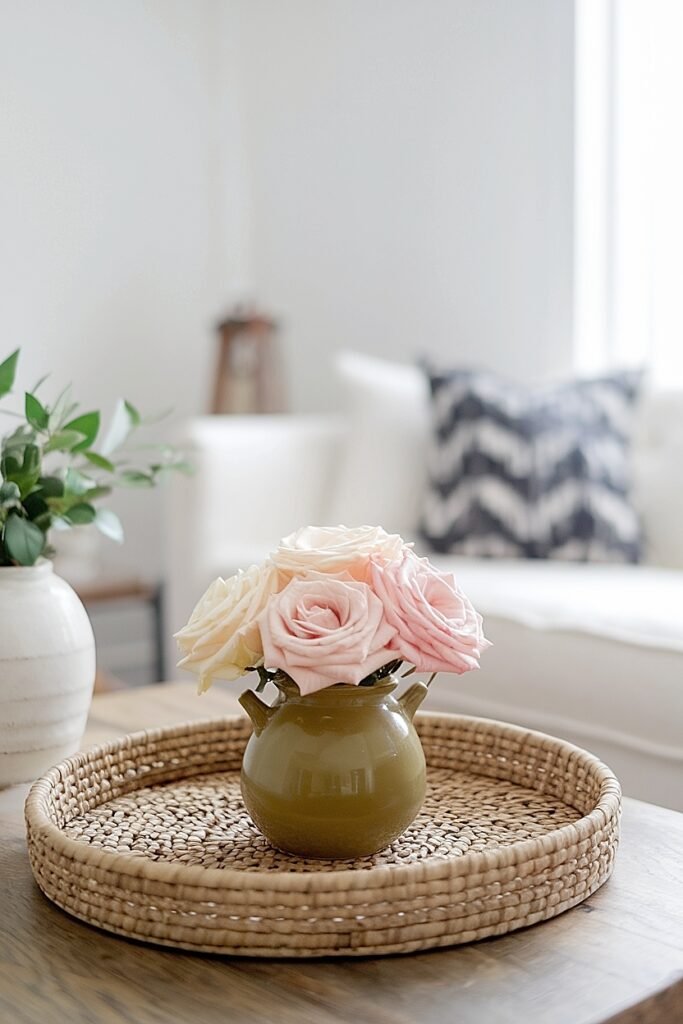
Small coffee tables, the compact rounds and narrow rectangles that apartment living demands, can’t accommodate traditional centerpiece thinking. Every item must earn its position. Arrangements must stay compact enough to leave room for actual coffee table function. These constraints seem limiting until you discover how beautifully minimalist approaches suit St. Patrick’s elegant simplicity.
1. The Single Bud Vase Statement
One slender vessel holding one to three roses positioned at the table’s back edge. The singular placement claims almost no surface area while providing genuine St. Patrick’s presence. The restraint reads as sophisticated rather than sparse. Choose a green vessel to establish Irish atmosphere from the container itself.
2. The Corner Cluster Mini
Group two or three tiny vessels, shot glasses, small votives, miniature pots, in one table corner. One or two roses per vessel creates the cluster effect without overwhelming limited space. The corner positioning removes the arrangement from functional zones entirely while maintaining visibility.
3. The Floating Minimal Bowl
A small shallow bowl with two or three floating rose heads stays under four inches tall while spreading horizontally rather than vertically. The low profile preserves sightlines across the table. The modest footprint leaves surrounding surface available for drinks and remotes.
4. The Book-Stack Riser Approach
Stack two coffee table books and position a tiny rose arrangement on top. The elevation creates presence without claiming base-level surface area. The books themselves become part of the display while the roses gain visibility from their raised platform.
5. The Moveable Minimal Tray
Place a very small tray, eight inches or less, holding one compact rose vessel and one candle. The complete vignette lifts away in seconds when the table needs clearing, returns equally quickly. The mobility makes ambitious decorating practical on tables with heavy daily use.
Continue reading for runner-based approaches that establish Irish atmosphere before adding flowers.
Ideas for Saint Patrick’s Day Coffee Table Roses with a Soft Green Runner
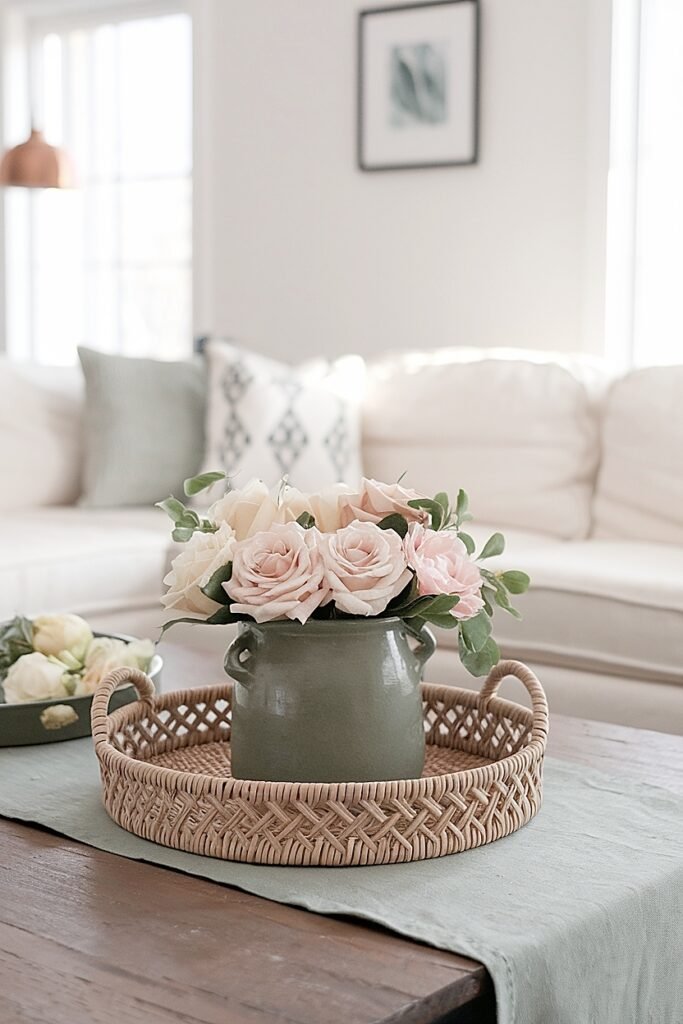
Runners create foundation that makes rose arrangements feel part of larger design schemes rather than isolated additions. A green runner establishes St. Patrick’s theme immediately, the roses become enhancement rather than sole carrier of holiday atmosphere. The fabric softens hard table surfaces while adding color that coordinates with rose vessels.
1. The Centered Runner Arrangement
Position a soft green runner lengthwise across your coffee table’s center. Place a low rose arrangement at the runner’s midpoint, flanked by two small candles. The runner frames everything, creating a cohesive installation from simple components. The green fabric reduces the rose count needed to establish Irish atmosphere, the color does much of the holiday work.
2. The Runner-End Bookend Approach
Let a green runner extend across your table’s full length, draping slightly over both ends. Position matching small rose arrangements at each runner end, creating bookends that frame the green expanse between them. The paired placement establishes symmetry while the runner connects both arrangements visually.
3. The Layered Runner Display
Place a green runner on your table, then position a small tray at runner center. Build your rose arrangement on the tray, which sits on the runner, which sits on the table. The layered foundation creates depth and intentionality impossible with roses directly on surfaces. Each layer adds visual interest while the green runner anchors everything in St. Patrick’s theme.
Below, discover apartment-specific approaches for limited living spaces.
How to Style Saint Patrick’s Day Coffee Table Roses for Small Apartments
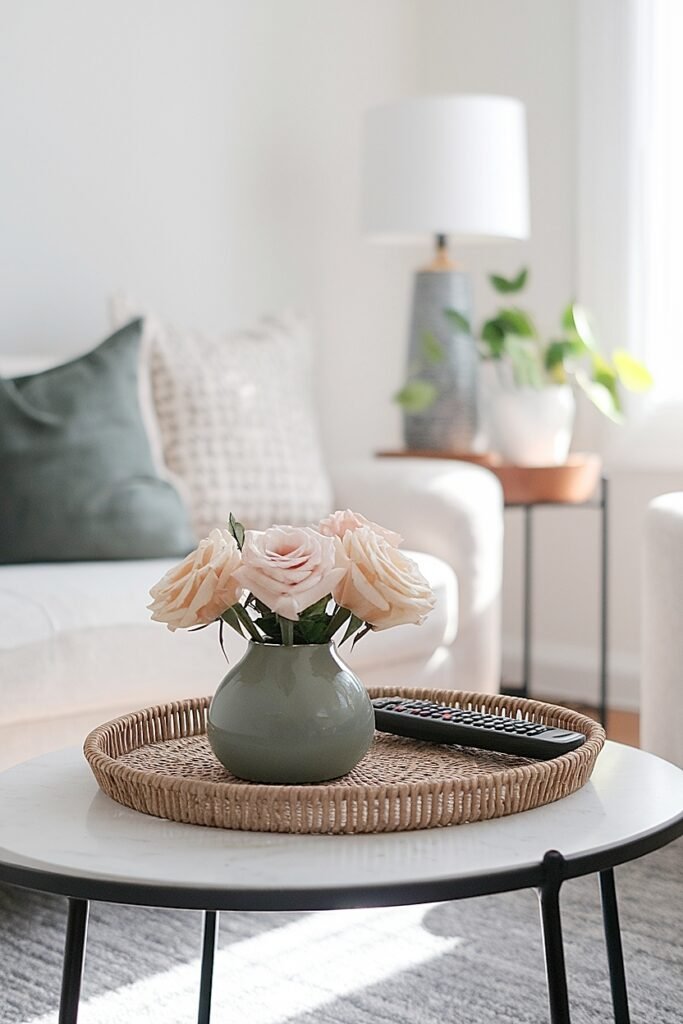
Apartment living concentrates everything into limited square footage. Your coffee table might be the only surface available for St. Patrick’s decorating. The arrangement must work harder, carrying holiday atmosphere for the entire living space rather than contributing one element among many. This responsibility demands strategic thinking about scale, visibility, and daily functionality.
Start by accepting that apartment coffee tables serve multiple masters simultaneously. The surface holds remotes, supports drinks, sometimes becomes a dining table, occasionally hosts laptop work. Your St. Patrick’s roses must coexist with these uses rather than demanding cleared territory that real apartment life never provides.
Choose a compact arrangement positioned at the table’s back edge or corner, zones that see least daily interference. Build into a heavy, stable vessel that survives casual bumps without catastrophe. Keep height under six inches to preserve sightlines across the table and toward screens. The roses become ambient background rather than central obstacle.
Consider arrangements that lift away easily when the table needs full functionality. A small tray holding a compact display removes in one motion for dinner service, returns equally quickly. This portability lets ambitious decorating coexist with practical apartment needs. Your St. Patrick’s roses appear during relaxed evenings, disappear during work sessions, reappear for entertaining, flexible presence rather than permanent fixture.
Ways to Make Saint Patrick’s Day Coffee Table Roses Look Fuller (Without More Flowers)
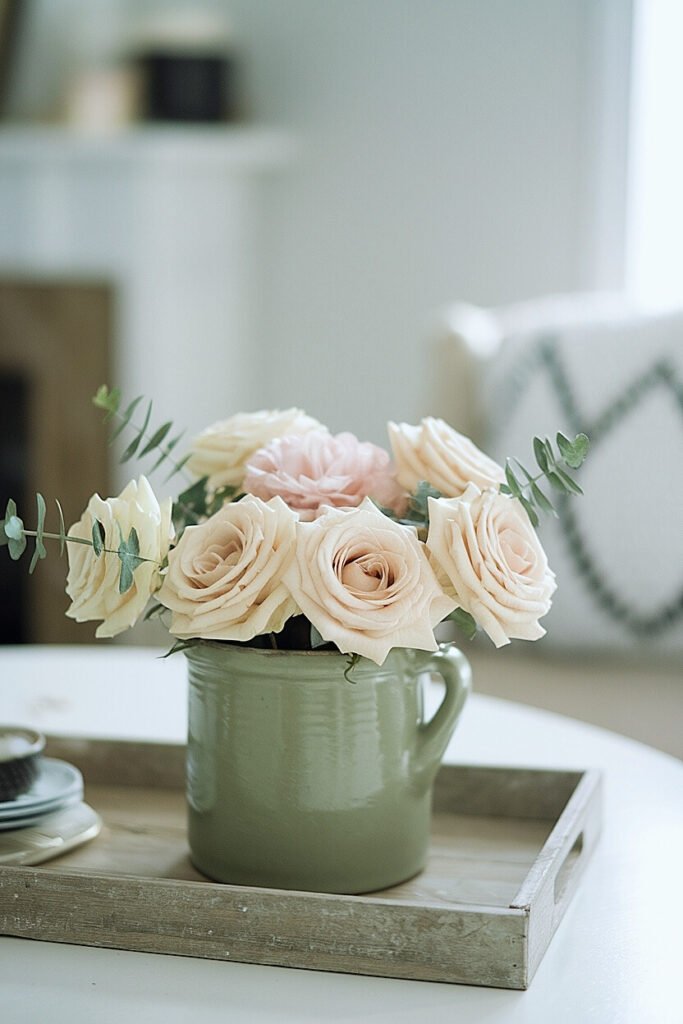
Lush arrangements from limited roses require understanding visual tricks that suggest abundance without requiring it. These techniques multiply perceived fullness while keeping budgets reasonable and arrangements appropriately scaled for coffee table use.
1. The Greenery Foundation Method
Build substantial greenery structure before adding any roses. Fill your vessel two-thirds full with eucalyptus, fern, or ruscus before inserting flowers. The green foundation creates volume that fewer roses complete rather than generate alone. Position roses at the greenery’s peak points where they’ll catch maximum attention. The supporting foliage handles everything beneath while roses crown the arrangement.
2. The Strategic Angle Technique
Angle rose heads outward toward viewers rather than straight up. This positioning shows each bloom’s full face, maximizing visual impact of every stem. Upward-facing roses display only their tops; outward-angled roses reveal complete petal structures. Five roses properly angled create more perceived coverage than eight roses pointing skyward. The technique requires cutting stems at angles that hold positioning.
3. The Reflective Surface Amplification
Place arrangements on mirrored surfaces, metallic trays, or glass surfaces that reflect and multiply roses visually. The reflection literally doubles what viewers see without adding actual stems. Scatter loose petals around your vessel’s base, extending the flower’s visual territory beyond container boundaries. Candlelight amplifies this effect further, bouncing between roses, petals, and reflective surfaces.
The final section addresses open-plan room challenges.
How to Style Saint Patrick’s Day Roses for Coffee Tables in Open-Plan Rooms
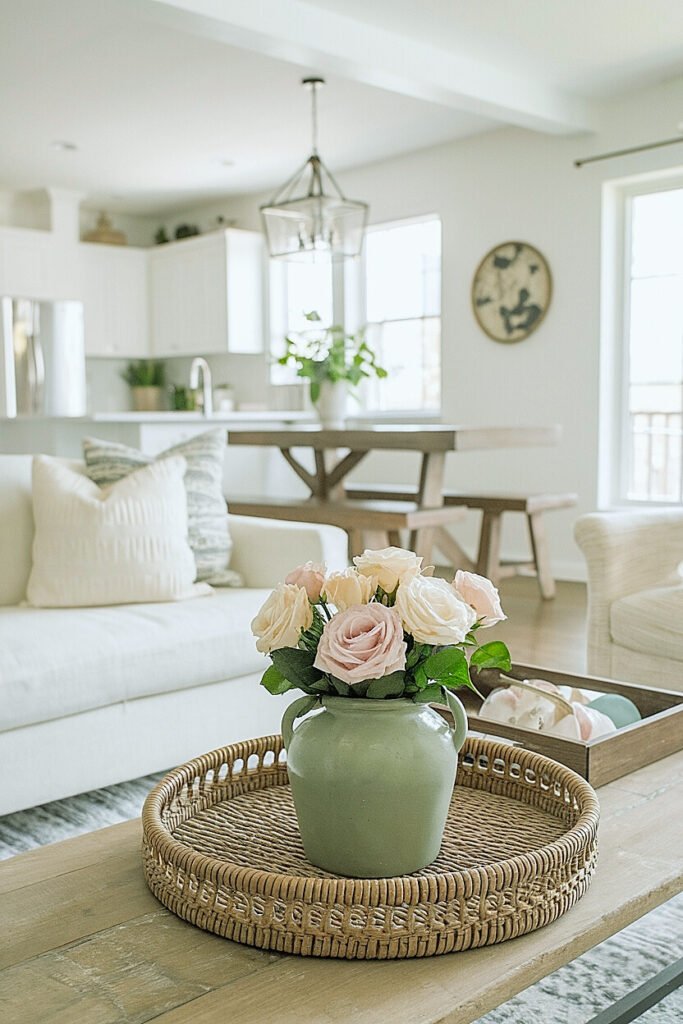
Open-plan layouts mean coffee table arrangements must read beautifully from multiple directions and distances. Kitchen viewers see one angle. Dining area occupants see another. Living room seating provides the closest view. Arrangements visible from all these positions require all-sides design rather than front-facing approaches that work in contained rooms.
Design in the round, no arrangement back allowed. Every angle must display roses attractively. This requires dome or globe profiles rather than front-heavy designs. Position roses at every edge, not just the viewer-facing side. Rotate your arrangement while building, ensuring each angle shows approximately equal beauty.
Scale arrangements for distance visibility as well as close appreciation. Open plans often position viewers further from coffee tables than traditional room layouts. Arrangements must read clearly from kitchen distances, typically fifteen to twenty feet, while still looking proportioned from adjacent seating. This dual-distance requirement favors slightly larger, more defined arrangements over delicate miniatures that disappear at range.
Consider how your coffee table arrangement relates to other room zones. The St. Patrick’s roses should connect visually with any Irish-themed elements in adjacent kitchen or dining areas. Repeated green accent colors, coordinated candles, or distributed smaller arrangements create cohesive decorating across the open space. Your coffee table roses become one note in a larger March 17th composition.
Conclusion
Coffee table rose decorating for St. Patrick’s Day transforms a sometimes-overlooked holiday into genuine living room celebration. The techniques throughout this guide, tray styling, single-bouquet distribution, stability solutions, small-table approaches, runner integration, all share one philosophy: Irish atmosphere can be both beautiful and practical for real household living.
These methods emerged from years of refusing to accept that March 17th decorating requires choosing between elegance and kitsch. Your coffee table deserves better than plastic shamrocks. Your household deserves St. Patrick’s décor that coexists with daily routines rather than demanding cleared surfaces nobody maintains. Roses in thoughtful arrangements deliver exactly that, sophisticated seasonal beauty that works for actual living room life.
This website contains affiliate links, and some products are gifted by the brand to test. As an Amazon Associate, I earn from qualified purchases. Some of the content on this website was researched and created with the assistance of AI technology.