This website contains affiliate links, and some products are gifted by the brand to test. As an Amazon Associate, I earn from qualified purchases. Some of the content on this website was researched and created with the assistance of AI technology.
Key Takeaways
- Sealed water vessels are the only food-safe choice for picnic table garlands: no exposed floral foam near food
- Keep all garland elements below eight inches so guests can see and converse across the table
- Weight is everything outdoors: gravel-filled vessels and terracotta saucers resist wind and vibration
- A tray zone boundary physically separates flowers from food without active management
- Zinnias, lisianthus, and ranunculus are the top grocery store picks for outdoor picnic garlands
- A Lazy Susan center makes round or square picnic tables dramatically easier to style with low garlands
Building Summer Flowers Garlands for picnic tables looks complicated until you actually do it. My first attempt was for a Fourth of July cookout: a long folding table, one bunch each of zinnias and sunflowers, a bag of hardware store gravel, and about thirty minutes. When the burgers came off the grill, the table looked like I had hired someone.
Picnic tables demand things indoor garland tutorials ignore. Long surfaces, used from both sides simultaneously, in wind, with guests reaching across them constantly. The techniques in this article are built specifically for that reality.
Use this quick chart to match your summer flower garland style to the right table or station. It helps readers choose the best flower height, placement, and safety approach fast, especially when they are decorating around food, guests, and real party movement.
| Table or Station | Best Garland Shape | Best Summer Flowers | Food-Safe Tip |
|---|---|---|---|
| Picnic Table Center Shared platters and group seating |
Flat runner with open gaps every 18–24 inches | Zinnias, gomphrena, celosia, marigolds, spray roses | Keep flowers under eye level and never let petals touch serving dishes |
| Outdoor Buffet Table Serving line and stacked plates |
Side-edge garland instead of center placement | Mini sunflowers, daisies, marigolds, yarrow | Leave at least 70% of the top clear for bowls, trays, and tongs |
| Kitchen Island Prep zone before guests arrive |
Short linked clusters on one side | Chamomile-style daisies, zinnias, lisianthus, compact roses | Keep one full work lane open for slicing, plating, and staging |
| Dining Table Indoor lunch, brunch, or picnic dinner |
Narrow center line with plate gaps | Spray roses, scabiosa, zinnias, feverfew | Check every place setting before finalizing flower width |
| Porch Dining Table Outdoor meals with open views |
Long, low garland with no vertical spikes | Celosia, gomphrena, short dahlias, marigolds | Aim for a max height of 6 inches so guests can talk across the table |
| Sideboard or Console Handoff point for plates and drinks |
Front-edge garland only | Yarrow, feverfew, mini carnations, button mums | Keep the center surface clear for the items guests actually grab |
| Bar Cart or Dessert Station Sweets and drinks zone |
Corner clusters or lower-edge swag | Mini roses, gomphrena, billy buttons, daisies | Keep all flowers off the active top surface where serving happens |
| Beverage Table or Cooler Station Refill zone with movement |
Front and side accents only | Marigolds, zinnias, feverfew, compact celosia | Leave the pour zone empty and keep flowers away from ice and cups |
How to Build Summer Flower Garlands for Picnic Tables That Stay Low and Food-Safe
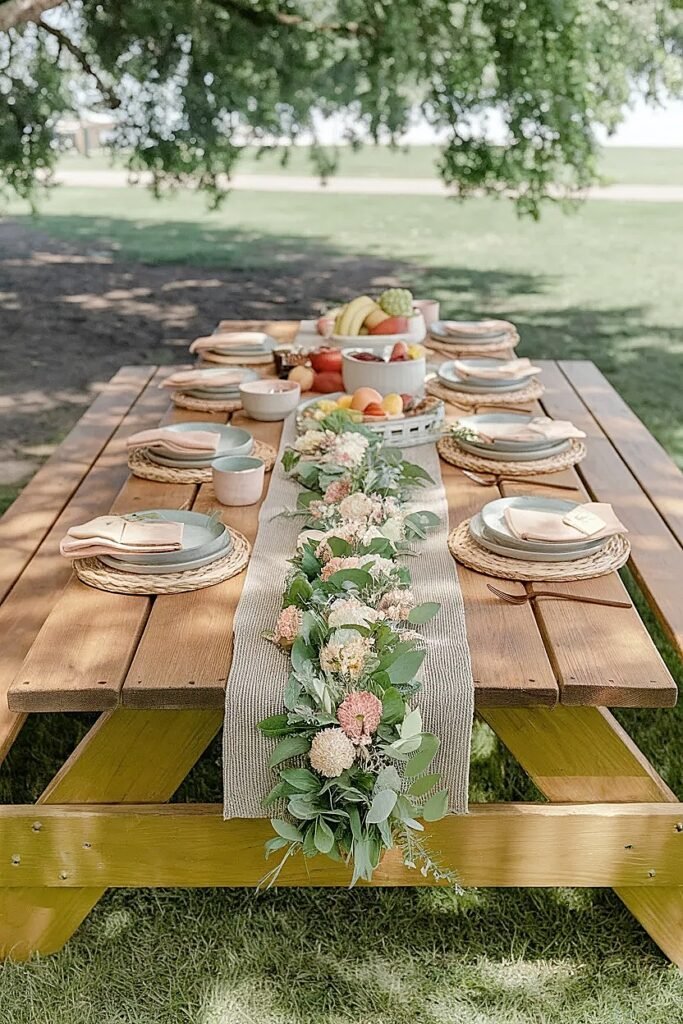
Picnic tables demand things most garland tutorials ignore. Indoor advice assumes a stable surface, a single viewing direction, and no wind. Take that approach outside to a folding table and you end up with scattered stems, tipped vases, and eucalyptus draped across the potato salad.
The low-and-food-safe approach runs on three rules. Every flower element lives in a sealed water vessel, never foam. Nothing sits higher than the rim of a standard serving bowl. Every vessel is heavy enough to resist a light gust and a bump from a passing guest.
The cluster system works best on long picnic tables. Build five or six small, self-contained arrangements in short weighted jars spaced at even intervals along the center back of one side of the table. Connect the bases with seeded eucalyptus or Italian ruscus. The vine does the garland work, the clusters hold the color, and together they read as one flowing element.
Fill each jar with an inch of gravel before adding water. That single change turns a jar that tips in a breeze into one that holds position through a bumped table and a direct gust.
For more on this same approach applied to indoor snack tables, check out how to build a summer flower snack table garland that stays food-safe. Share it with anyone planning an outdoor summer gathering. More ahead covering every picnic table type and surface.
What Are the Best Summer Flowers for Low Picnic Table Garlands Near Food?
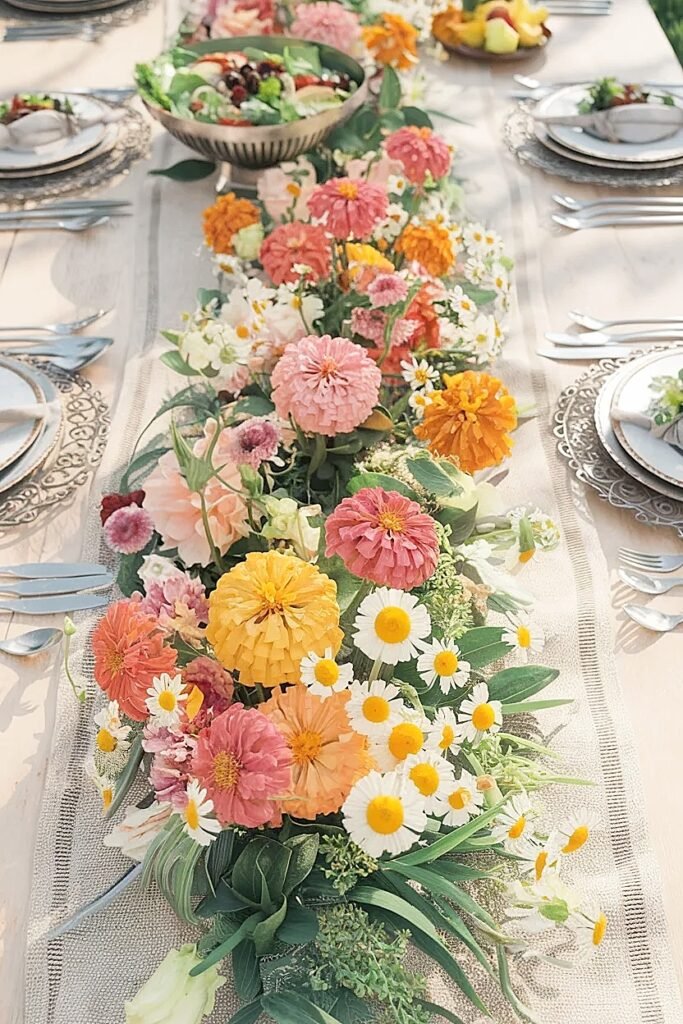
Picking flowers for a picnic table garland is a different decision than picking flowers for a vase. You are selecting for low pollen drop, stems that resist wilting in heat, and compact bloom size that fits naturally in a short weighted jar at table height. Most of the best options are available at any grocery store throughout the summer months.
1. Lisianthus Lisianthus is the top pick for low picnic table garlands. The blooms are tightly layered and virtually pollen-free, so no stray particles land near food. The compact rose-like shape holds structure five to seven days with fresh water, and each stem branches naturally for multiple blooms per cut. Available in white, blush, purple, and deep plum at most grocery stores from late spring through August.
2. Zinnias Zinnias have dense, tightly packed petals and almost no scent, making them ideal near outdoor food. The flat wide faces create bold visual presence at low height without requiring tall stems. They hold their shape in direct heat better than nearly any other summer flower, which matters on full-sun picnic tables. Cut to three inches in a gravel-weighted jar, a zinnia looks intentional and expensive.
3. Ranunculus Ranunculus is one of the most pollen-light flowers at any grocery store. The dozens of layered petals mean no exposed stamen near food, and blooms hold shape four to six days with cold water. They sit beautifully in low vessels because the heavy bloom head bows naturally, creating a cascading look without forced styling. Available in peach, coral, white, and yellow throughout the summer season.
4. Marigolds Marigolds are underrated for picnic garlands because they hold up in full summer sun longer than almost any other cut flower. The dense pom-pom blooms are virtually pollen-free from the surface and resist wilting dramatically in heat. The warm orange and yellow tones look stunning at table level outdoors. Cut to three inches and packed into short low vessels, one bunch goes an extraordinary long way.
5. Sunflowers (Dwarf Variety) Standard sunflowers on long stems are wrong for picnic table garlands, but dwarf sunflowers or standard ones cut to four inches are exactly right. The flat face creates enormous visual presence at low height, the sturdy stems hold position in wind without a tight vessel, and the yellow reads strikingly against any outdoor color scheme. Available at almost every grocery store from June through August.
6. Waxflower Waxflower is consistently overlooked for outdoor garland use. The tiny star-shaped blooms grow in dense clusters along each stem, so one stem looks like several at low height. There is essentially no pollen concern, the blooms do not drop, and the mild honey-like fragrance sits near food without competing with it. White and pink varieties are the easiest to find and pair with any other summer flower.
7. Statice Statice looks like filler but performs as a genuine structural element in any picnic table garland. The papery blooms hold shape and color for weeks rather than days, meaning the garland looks as fresh at the end of a long outdoor gathering as it did at the start. Zero pollen and zero petal drop makes it completely food-safe. Purple and white mixed into any cluster adds textural contrast.
More ahead on exactly how to anchor these flowers on a folding picnic table, which calls for a completely different set of techniques.
How to Anchor Summer Flower Garlands on Folding Picnic Tables
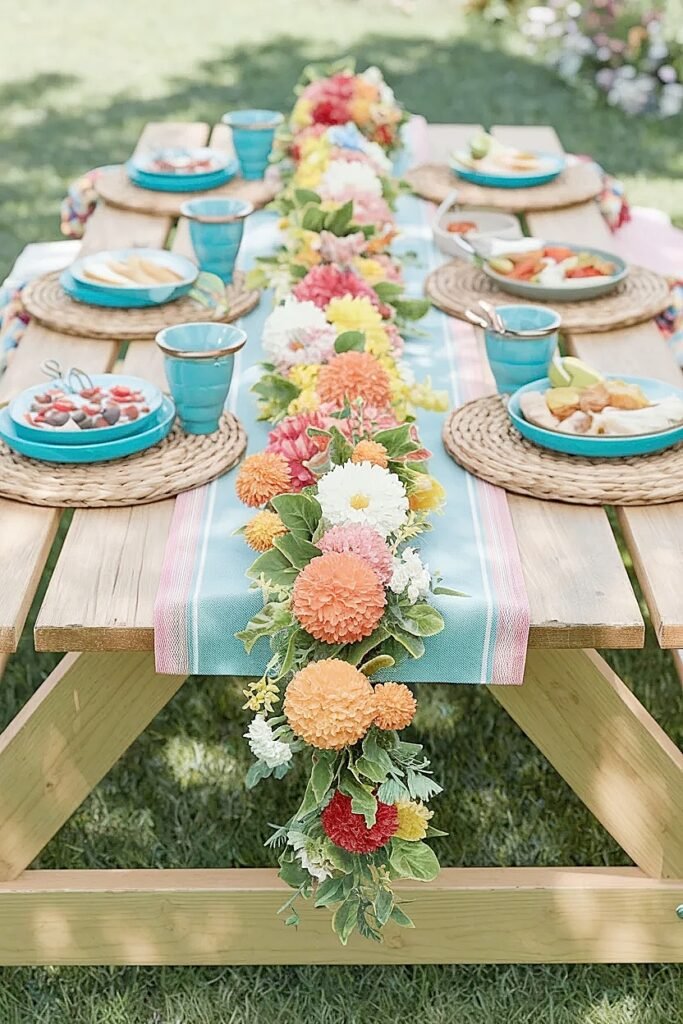
Folding tables are a specific engineering problem for garlands. The surface is smooth and slightly flexible, the legs offer no attachment point, and the whole table shifts when guests sit down or stand up. Traditional anchoring methods, wire staples, adhesive clips, floral tape, all fail on a folding table within the first hour.
The approaches that work are mechanical, not adhesive. Gravel-weighted vessels sit by friction and mass. Tray zones create physical containment. The connecting vine gets tucked under vessel bases rather than lying loose on the table surface.
Set a long galvanized tray along the center length of the table. Fill each cluster vessel with an inch of gravel, add water, and place the vessels inside the tray at even intervals. Tuck the eucalyptus vine under the base of each vessel. The tray holds the vessels in position, the gravel anchors each individually, and the tucked vine stays in place when the table flexes.
Ideas for Summer Flower Garlands Along Outdoor Buffet Tables
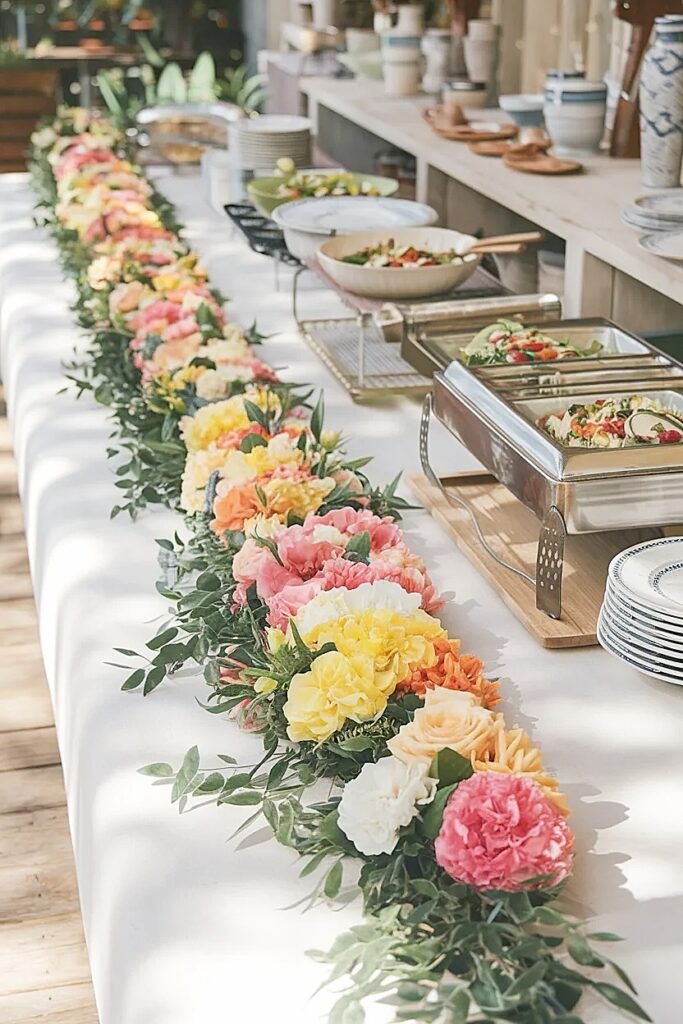
Outdoor buffet tables are longer, more exposed, and under heavier traffic than a standard picnic table. One loose stem drifting into a serving bowl is not hypothetical. I have seen it happen.
The most effective outdoor buffet garland is a bookend system: two dense, weighted arrangements at each end, connected by a single vine tucked along the very back edge. The center stays completely clear for serving dishes.
1. Galvanized Tub Bookend Clusters Place one small galvanized metal tub at each end of the buffet table, each packed with four or five stems of mixed summer blooms cut to three inches. Fill each tub with two inches of water. The metal is heavy, stable, and reflects heat rather than absorbing it, extending flower life in full sun. Lay seeded eucalyptus from each tub along the back edge to connect the whole setup.
2. Terracotta Corner Saucers Set a terracotta saucer in each back corner of the buffet table, each filled with soaked floral foam topped with wet moss that fully covers the foam surface. Press two or three short-stemmed summer blooms into each saucer and trail eucalyptus between them along the back edge. Terracotta is heavy enough to resist wind and a bumped table. The moss layer makes the entire setup completely food-safe.
3. Weighted Mason Jar Back Row Line four or five short mason jars along the very back edge of the buffet, each filled with an inch of gravel at the base, two inches of cold water, and two to three grocery store stems cut short. Guests reach forward toward food and the jars stay protected at the back. The gravel keeps them stable on uneven surfaces, and clear glass lets you check water levels easily.
4. Herb and Bloom Tray Garland Set a long narrow wooden tray along the back edge of the buffet and fill it with alternating small vessels holding summer blooms and fresh herbs. Basil and zinnias, rosemary and ranunculus, mint and lisianthus. The herbs add fragrance and visual depth, stay usable throughout the event, and double visual density without doubling cost. The tray creates a clear physical boundary between the garland zone and food zone.
5. Ice Bucket Focal Point with Flanking Clusters Place one low metal ice bucket at the center back edge of the buffet as the primary focal point and two smaller weighted jars on either side as secondary clusters. Fill the bucket with water and pack in a generous mixed summer bloom arrangement at rim height. Trail seeded eucalyptus from the bucket to each flanking jar. The bucket’s mass anchors the entire garland against wind throughout.
6. Color-Block Jar Sequence Line five short gravel-weighted jars along the back edge and fill each with blooms sorted to a single shade, progressing from light to dark across the table length. Pale yellow to deep orange, or soft blush to vivid coral. Lay eucalyptus stems loosely between all the jar bases. The color gradient reads as deliberately designed from any viewing angle and works well on long buffets needing visual reach.
7. Floating Bloom Tray at Back Edge Fill a shallow rectangular tray with one inch of water and float cut summer blooms face-up at even intervals along the surface. Add a few floating leaves between the blooms for texture. Set the tray along the very back edge of the buffet. Nothing extends above the tray rim, making this the most food-safe buffet garland configuration for situations where guests are reaching directly over the surface throughout.
More ahead on how the same low-and-food-safe approach adapts to indoor picnic nights on the coffee table.
Ideas for Summer Flower Garlands on Coffee Tables for Indoor Picnic Nights
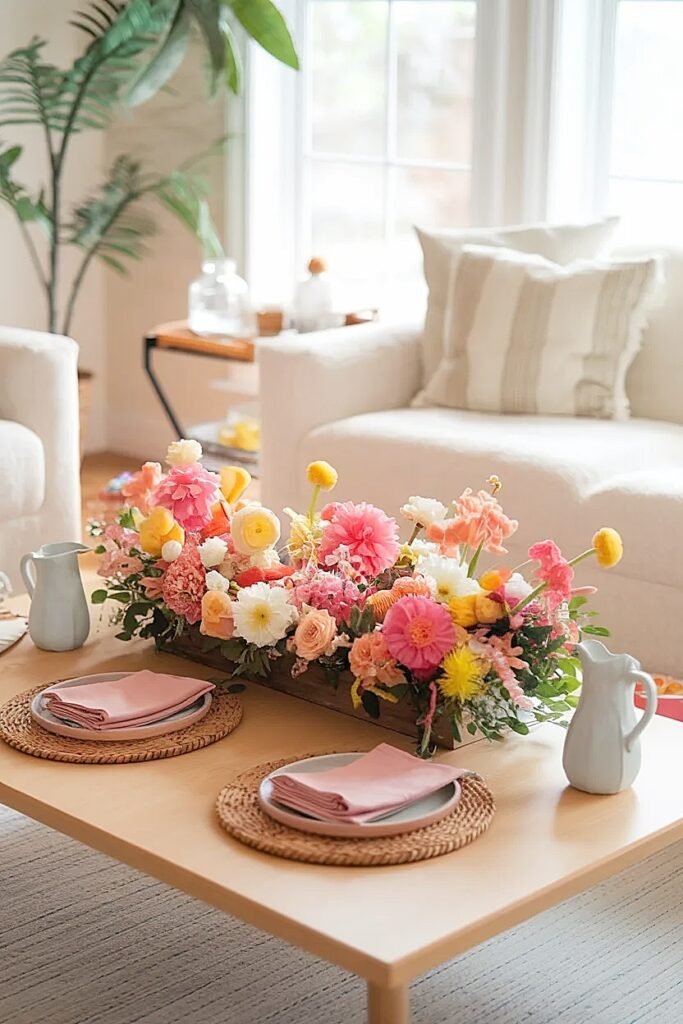
Indoor picnic nights on the coffee table are their own category. The surface is lower, smaller, and surrounded by guests on the floor or low cushions. A garland that works on an outdoor buffet table is comically oversized here. One defined arrangement at one end, nothing in the center, everything else clear for plates and glasses.
1. Single Bud Vase Cluster at One End Place three small bud vases in a tight cluster at one end of the coffee table, each holding one or two short-stemmed summer blooms. Vary the vessel heights slightly for visual rhythm. Lay two or three leaves of Italian ruscus loosely through the base of the cluster to give it a garland quality. The whole setup occupies one corner and leaves the entire remaining surface free for food and drinks.
2. Low Tray Garland with Mini Clusters Set a small wooden or slate tray at one end of the coffee table and arrange three tight mini clusters inside it at even intervals. The tray creates a clear visual and physical boundary that signals exactly where the decor zone ends and the food zone begins. Guests naturally place glasses and plates outside the tray without being reminded. Use matched vessels inside for a cohesive look throughout.
3. Herb and Bloom Single Jar Fill one short ceramic mug with fresh grocery store herbs and two or three summer blooms. Set it at the far end of the coffee table from the main seating. Basil and zinnias, rosemary and ranunculus. The fragrance adds a sensory dimension that purely visual arrangements cannot match, and the setup keeps the entire remaining surface completely clear. The combination reads as thoughtfully styled rather than casually decorated.
4. Floating Bloom Bowl Fill a wide, low ceramic bowl with two inches of water and float three or four cut summer blooms face-up across the surface. Add a few floating petals or small leaves between the blooms for visual texture. Set the bowl at one end of the table. Nothing extends above the bowl rim, meaning no tipping risk, no petal drop onto snack plates, and a genuinely elegant visual effect.
5. Cascading Vine with Single Stem Anchors Place two small weighted jars at either end of one long side of the coffee table, each holding one large summer bloom. Lay a single strand of variegated ivy or seeded eucalyptus loosely between the jar bases along that edge of the table. The vine creates a garland effect running along one side rather than across the center, leaving the full surface clear. Best for long rectangular coffee tables.
More ahead on how a Lazy Susan center changes the garland approach for round and square picnic tables.
How to Make Summer Flower Garlands for Picnic Tables with Lazy Susan Centers
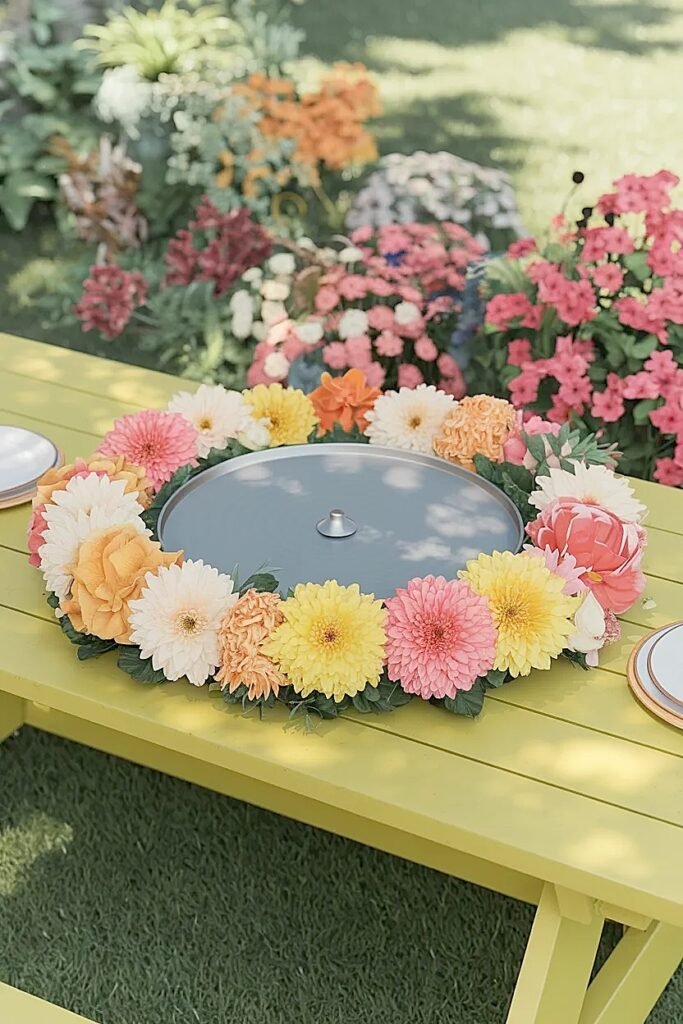
A Lazy Susan center on a picnic table sounds fussy until you actually try it. I added one to a square folding table at a summer birthday party and spent the afternoon watching people rotate it to reach food, comment on how good the flowers looked from every seat, and ask where I found the idea. Nobody had seen it done before.
The Lazy Susan solves the round-table problem: the center is now rotating and visible from every side. A dense arrangement on a Lazy Susan looks intentional from every seat without requiring a perfectly symmetrical build.
Start with a twelve to fourteen inch wooden or plastic Susan on any standard folding table. In the center, place a low wide bowl filled with soaked floral foam topped with wet moss. Pack in short-stemmed summer blooms at or just below the container lip. Around the perimeter, set three or four small weighted bud vases, each holding one or two complementary stems.
The garland effect comes from those perimeter bud vases combined with a trailing vine of eucalyptus or ruscus laid between them. As the Susan rotates, the vine stays in place on its surface rather than on the table, staying tucked without being anchored. The center arrangement, the perimeter bud vases, and the trailing green function as a fully contained garland that stays food-safe and works from every direction.
More ahead on how entry benches and welcome tables call for a completely different visual approach.
Ways to Build Summer Flower Garlands for Entry Benches and Welcome Tables
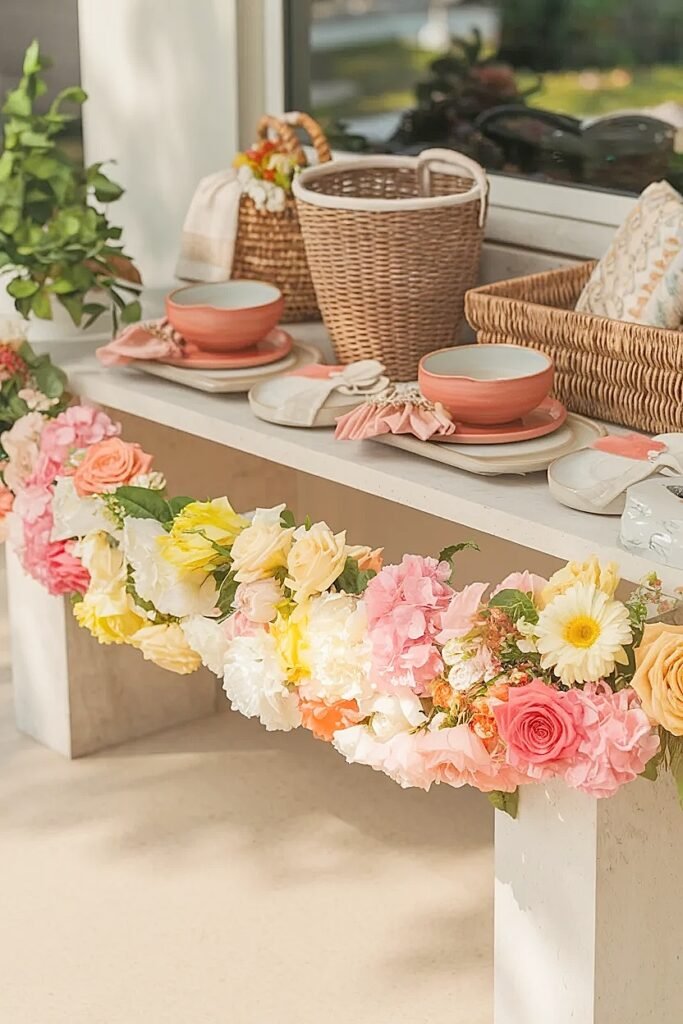
Entry benches and welcome tables are the first surface guests see at any outdoor summer gathering, and the one that receives the least design attention. Most people put a single vase on a welcome table and call it done. A simple garland system changes the entire arrival experience for almost no extra cost.
The key difference from a picnic table garland is viewing distance. Guests at a picnic table see the garland from two feet away. Guests arriving at an entry bench see it from ten feet away. Scale, height variation, and color saturation all matter more at the entry point.
1. Cascading Tray Garland with Height Variation Set a long wooden tray along the entry bench length and arrange five mixed-height vessels inside it: two tall jars at the back and three short weighted jars at the front. Fill each with the same summer bloom family in different shades. Trail seeded eucalyptus through all the bases and let it spill over the front edge of the tray. The height variation makes the arrangement read from across the yard. Use blooms with strong color saturation.
2. Bookend Cluster Garland with Trailing Vine Place two dense arrangements at each end of the entry bench, each anchored in a heavy low vessel: a galvanized bucket, a terracotta pot, or a wide ceramic bowl. Fill each with five to seven short-stemmed blooms packed tightly so the arrangement reads full and abundant from a distance. Connect the two with a long strand of Italian ruscus or variegated ivy trailing loosely along the front edge. The bookend structure reads as intentional and welcoming from every arrival angle.
3. Single Large Focal Arrangement with Side Clusters Center one generous flower arrangement in the middle of the entry bench using a wide low bowl packed full of summer blooms at just above rim height. On either side, place a small weighted jar holding one or two complementary stems. Trail a vine of seeded eucalyptus from each side jar toward the center, framing the main arrangement. This is the fastest to assemble and the most visually impactful at arrival distance. The center does the heavy visual lifting.
More in this article on the Lazy Susan center approach for round and square picnic tables.
Conclusion
Picnic table garlands that stay low and food-safe are not complicated. They require specific decisions: sealed water vessels, gravel weighting, tray zone boundaries, and flowers chosen for petal stability rather than just color. Those decisions separate a garland that holds up through a full outdoor afternoon from one that ends up scattered by the second course.
Start with the weighted mason jar cluster system and seeded eucalyptus. Get that working once and the rest becomes straightforward.
This website contains affiliate links, and some products are gifted by the brand to test. As an Amazon Associate, I earn from qualified purchases. Some of the content on this website was researched and created with the assistance of AI technology.