This website contains affiliate links, and some products are gifted by the brand to test. As an Amazon Associate, I earn from qualified purchases. Some of the content on this website was researched and created with the assistance of AI technology.
Key Takeaways
- A spiller creates movement and softens the container edge: without one, even beautiful containers look static and pot-focused rather than arrangement-focused
- Vigor matters: match the spiller’s growth rate to the container size and planting season length to prevent overcrowding
- Color and texture are two separate decisions: silver creates contrast with every flower color, while green creates harmony that lets flower colors lead
- Match spiller water needs to the primary summer flowers: a drought-tolerant spiller with water-hungry flowers creates a maintenance conflict
- Small containers need restrained spillers: sweet alyssum, bacopa, and lobularia suit small pots while sweet potato vine and creeping Jenny need room
- Choose a spiller variety that holds its appearance from June through September without needing replacement
The best spiller plants to pair with summer flowers are the detail most container gardeners skip and then wonder why their arrangements look finished at the garden center and generic at home. A spiller softens the container edge, creates visual movement, and connects the upright focal flowers to the pot itself. Without one, even a beautifully planted combination reads as a bouquet sitting in dirt.
I spent two growing seasons planting containers without deliberate spiller selection. Good thriller plants, solid filler choices, and no thought given to what would trail over the edge. Every pot looked fine. None looked great. Adding one well-chosen spiller transformed the same thrillers and fillers into arrangements I actually photographed. The spiller makes the entire container read as composed rather than planted.
Use this quick guide to choose the right kind of spiller plant before you build a container with Summer Flowers. It helps you match the trailing habit, color role, and care level of common spillers with the design effect you actually want, so the pot feels more balanced and intentional.
Best Spiller Plants to Pair with Summer Flowers
Pick the spiller based on what you want the container to do. Some spillers add bloom color, some add foliage contrast, and some mainly bring softness, motion, or heat tolerance. This guide helps you match the trailing plant to the effect you want from your Summer Flowers.
| Spiller Goal | Best Spiller Plants | Why It Works | Best Styling Tip |
|---|---|---|---|
| More Flower Color Need the trailing plant to bloom, not just trail. |
Calibrachoa, Scaevola, Verbena These add real flower color along the edge. |
Bloom-Heavy Spill Great when the container needs more color movement instead of just foliage. |
Repeat One Flower Tone Match the spiller to one center bloom color so the pot feels connected. |
| Softer White Edge Want the pot to feel lighter and gentler. |
Bacopa Small white flowers create a delicate softening effect. |
Lightens Strong Colors Helpful when bright Summer Flowers need a softer border around them. |
Keep Soil Evenly Moist Bacopa performs better when it does not dry out too hard. |
| Bold Foliage Contrast Need the spill to bring drama instead of more blooms. |
Sweet Potato Vine, Silver Falls Strong foliage spillers with big visual impact. |
Adds Shape and Motion Useful when center flowers are compact and need stronger edge contrast. |
Use One Bold Spiller Too many aggressive spillers can make the pot feel messy and overcrowded. |
| Chartreuse Energy Want brighter contrast around warm flowers. |
Creeping Jenny Fresh chartreuse tones make summer colors pop. |
Brightens the Whole Pot Especially useful with pink, purple, white, and peach Summer Flowers. |
Best in Containers It is easier to control in pots than in open ground. |
| Hot Sunny Containers Need a spiller that can handle summer exposure. |
Calibrachoa, Scaevola, Silver Falls Good choices for bright, warm conditions. |
More Reliable Summer Performance These help containers stay attractive through stronger weather stress. |
Feed Regularly Heavy-blooming container spillers often look better with steady fertilizer support. |
Resources:
- Calibrachoa | UMN Extension
- Bacopa | Flowers | Illinois Extension | UIUC
- Ornamental Sweet Potato
- Golden Creeping Jenny, Lysimachia nummularia ‘Aurea’ – Wisconsin Horticulture
What Are the Best Spiller Plants to Pair with Summer Flowers in Sunny Containers?
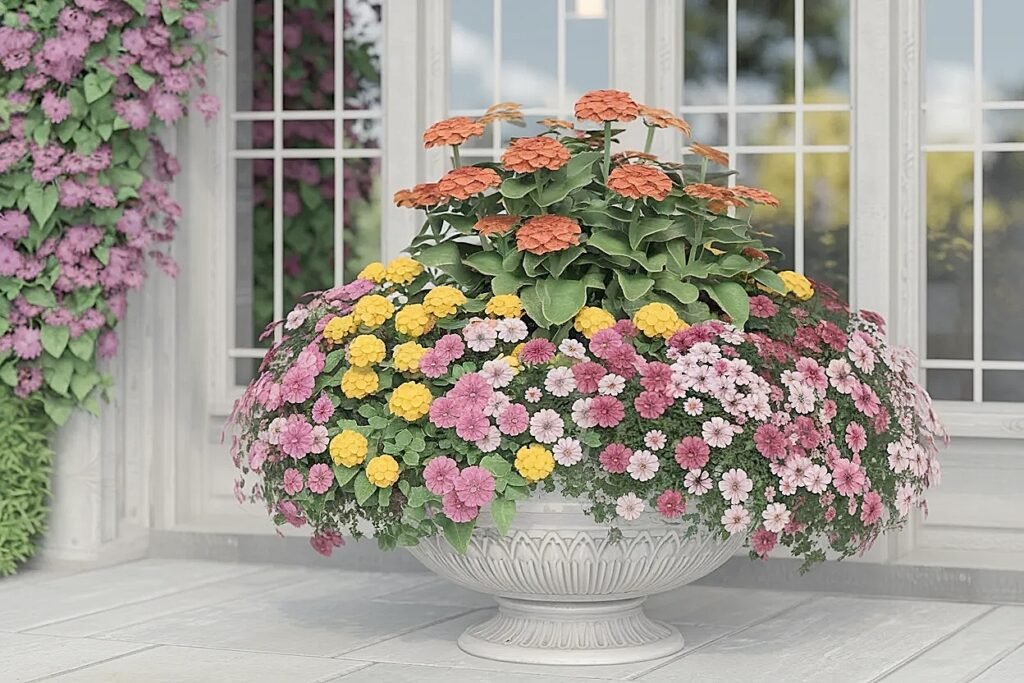
A sunny container position, six or more hours of direct sun, eliminates the most delicate trailing varieties almost immediately and rewards plants with foliage or flowers designed for heat exposure. The spillers that perform best in full sun are either drought-tolerant succulents and annuals, plants with heat-reflective foliage, or varieties specifically developed for sun-container use. Every spiller below meets the full sun standard and pairs well with the bold summer flower palette that direct sun positions favor.
1. Sweet Potato Vine Sweet potato vine is the most vigorous, most dramatic full-sun container spiller available. The heart-shaped foliage in lime green or deep burgundy creates a bold color contrast that complements any summer flower combination. Lime green suits warm tones: orange marigolds, coral zinnias, yellow sunflowers. Burgundy suits vivid tones: deep pink dahlias, magenta petunias, bright white blooms. It grows quickly: plant it expecting to trim once.
2. Calibrachoa Calibrachoa is the most reliable full-sun trailing flower spiller for a mixed summer container. The continuous production of small trumpet-shaped blooms requires no deadheading in most modern varieties and lasts from planting through fall. The color range, vivid coral, orange, yellow, deep purple, and white, allows pairing with almost any summer thriller. The compact trailing form creates a dense curtain at the container edge without.
3. Portulaca Portulaca is the drought-champion spiller for a full-sun container with inconsistent watering. The succulent stems and foliage store water, the compact spreading habit stays in proportion to most container sizes, and the vivid blooms in magenta, coral, orange, and yellow trail gently over pot edges without becoming invasive. Self-cleaning in most varieties. The most forgiving full-sun trailing annual for a gardener managing a large number.
4. Trailing Verbena Trailing verbena produces vivid magenta, coral, and deep purple blooms on spreading stems that create a medium-weight trailing effect below the container edge. The blooms contribute to the flower display rather than serving purely as foliage contrast. Full-sun tolerant with moderate water needs. Fertilize every two weeks for best bloom density. Trailing verbena is the spiller choice for a container that needs two distinct color.
5. Scaevola Scaevola is one of the most heat-tolerant flowering spillers available and one of the most overlooked for full-sun summer containers. The fan-shaped purple or white blooms trail on flexible stems that respond gently to outdoor breeze. No deadheading required. Extremely drought-tolerant once established. The delicate bloom form creates interesting textural contrast against the bolder blooms typical of summer container thrillers. Pairs particularly well with orange.
6. Lobularia (Sweet Alyssum) Lobularia trails gently from container edges and produces a honey fragrance that intensifies in afternoon heat. The tiny clustered white or pale purple flowers suit both the spiller and filler roles in full-sun summer containers. It self-seeds freely, shears back and re-blooms after cutting if it exhausts itself in peak heat, and the fragrance at container viewing height is a sensory detail that no purely.
7. Trailing Lantana The trailing varieties of lantana, as opposed to the compact mounding forms, create a vigorous and thoroughly heat-tolerant spiller for large full-sun containers. The bicolor blooms in orange-yellow, pink-orange, and white-lavender produce a flower spill that adds its own color layer below the primary container planting. Trim twice per season to keep in proportion to the container. Full drought tolerance once established, making it the.
More ahead on how calibrachoa specifically works as a long-season companion to summer focal flowers and why it outperforms most other trailing flower spillers in durability.
How to Pair Calibrachoa with Summer Flowers for a Long-Blooming Spiller Effect
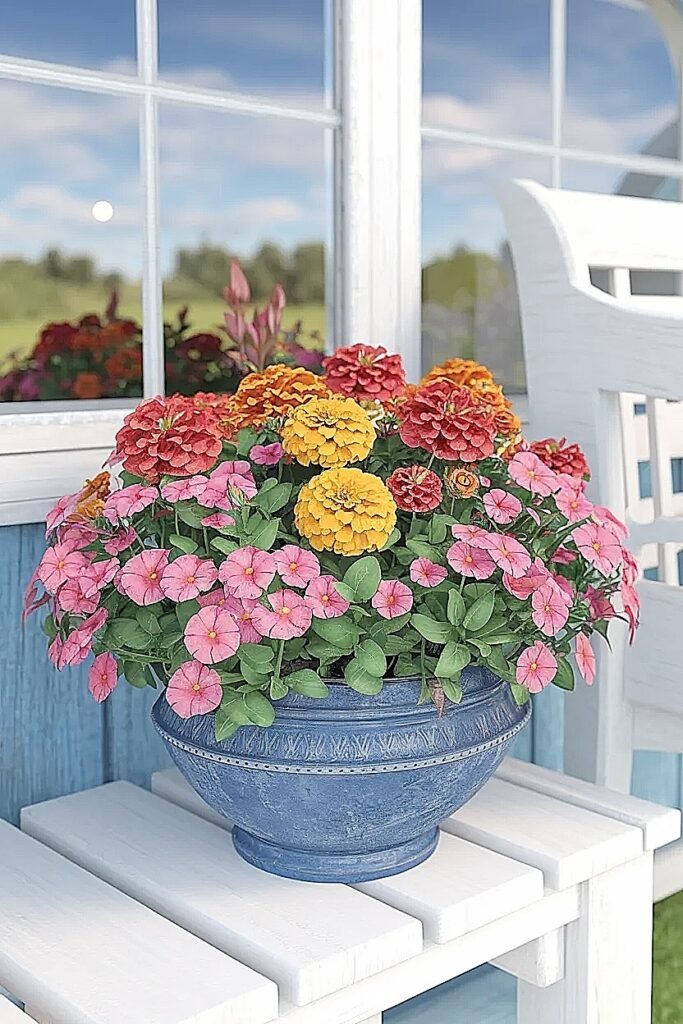
Calibrachoa blooms continuously from planting until frost with minimal maintenance in most modern varieties. A spiller that fades mid-season requires replanting or dead-period management that calibrachoa never triggers.
The pairing logic is color relationship. Calibrachoa’s wide range, vivid coral, orange, yellow, burgundy, soft pink, and white, lets you echo the primary flowers for harmony or contrast them deliberately. Echo works with large-bloomed thrillers where the small calibrachoa bloom scale creates natural size hierarchy. Contrast works with single-color thriller plantings where the spiller contributes the second color.
Plant calibrachoa at the front and outer edges of the pot. Two plants per eight to ten inch container diameter creates a trailing curtain that reaches full length within three to four weeks.
Calibrachoa is a heavy feeder. Weekly liquid fertilizer maintains the bloom density that makes it look designed rather than functional. Under-fertilized calibrachoa produces sparse blooms on long green stems. The fertilizer investment is the difference.
More ahead on bacopa, the most delicate and most fragrance-free white spiller available for a summer container that needs something softer than calibrachoa. You might also like to check out one of my latest articles about using Summer Flowers in Porch Rail Planters.
Ideas for Using Bacopa as a Soft White Spiller Plant with Summer Flowers
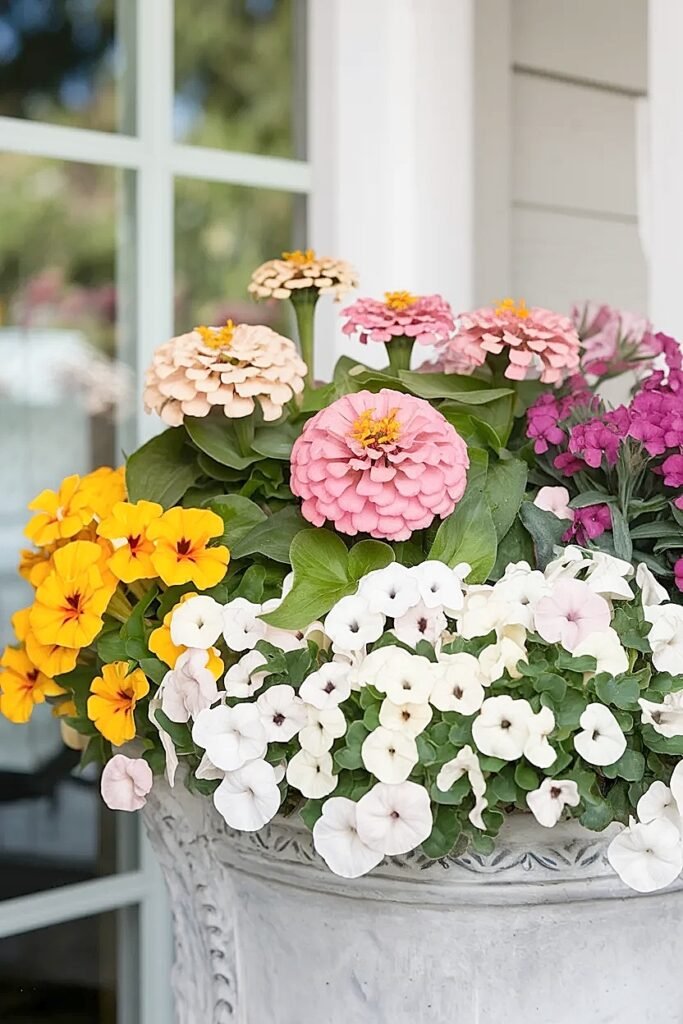
Bacopa creates a visual quality that no other spiller does: a delicate, fine-textured trailing curtain of tiny white flowers that reads as effortlessly natural beside almost any summer flower combination. It does not compete with the focal flowers for visual dominance. It frames them. The small bloom scale makes large summer flowers look more vibrant by contrast, and the bright white creates luminosity at the container edge that catches outdoor light in a way colored spillers do not.
1. Bacopa with Deep Coral Zinnias One bacopa plant at each container edge paired with deep coral zinnia as the focal flower creates a high-contrast white-and-coral combination that reads as sophisticated at outdoor entertaining scale. The white bacopa bloom curtain below the coral zinnia mass creates a visual separation between container.
2. Bacopa with Purple Petunias White bacopa and vivid purple petunias create a classic high-contrast pairing with a clean, designed quality. The bacopa fills the spiller role while the petunias occupy the thriller and filler roles simultaneously in a two-plant combination. The white-on-purple contrast reads clearly at outdoor viewing distance.
3. Bacopa in a Shaded Partial-Sun Container Bacopa performs significantly better in partial sun than full afternoon exposure, making it the ideal spiller for a shaded porch or north-facing container position. In those conditions, bacopa produces more abundant blooms, wilts less frequently, and maintains its fine-textured trailing quality through peak summer heat.
4. Bacopa as Edge Filler Around a Large Tropical Focal When a large tropical plant, a canna lily or elephant ear, serves as the container thriller, bacopa fills the entire planting perimeter as both filler and spiller simultaneously. The delicate white bloom texture at the tropical foliage base creates a refined ground-level detail that contrasts.
5. Bacopa as a Bridge Plant Between Color Zones In a container with two distinct color zones, vivid orange at one side and deep purple at the other, bacopa planted between the two zones creates a white visual buffer that keeps the two colors from competing. The white acts as a neutral separator that.
More ahead on creeping Jenny, which creates the most visually striking chartreuse spill available for any summer container.
How to Pair Creeping Jenny with Summer Flowers for Bright Chartreuse Spill
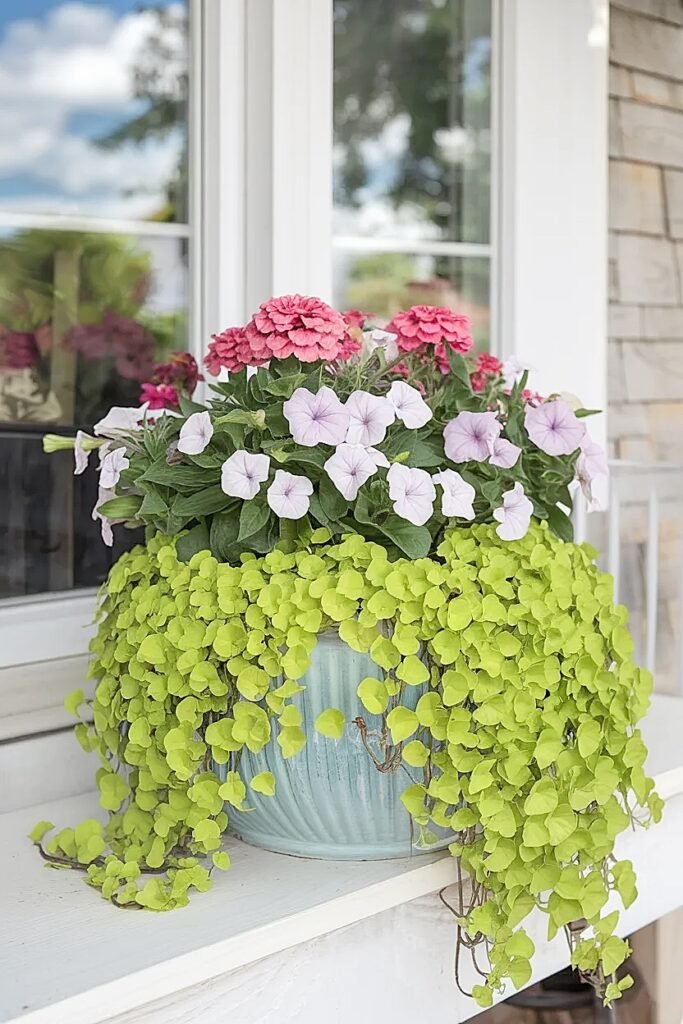
Creeping Jenny amplifies the color intensity of any flower planted above it. Deep coral zinnias appear redder. Orange marigolds read as more vivid. The chartreuse creates a luminous intensification effect against warm flower tones that most foliage plants do not produce.
The growth rate requires management. It can extend eighteen to twenty-four inches below the rim in peak summer and compete with lower filler plants. Trim once every three to four weeks back to the container edge.
Creeping Jenny tolerates more shade than sweet potato vine or calibrachoa, making it a versatile spiller for dappled or morning-sun positions.
The chartreuse works best with warm tones: orange, coral, deep red, and gold. It creates an interesting clash with cool tones: blue, lavender, and soft pink.
There is more ahead on silver spiller plants, which serve an entirely different design function from the green and flowering spillers covered so far.
What Are the Best Silver Spiller Plants to Pair with Summer Flowers for Contrast?
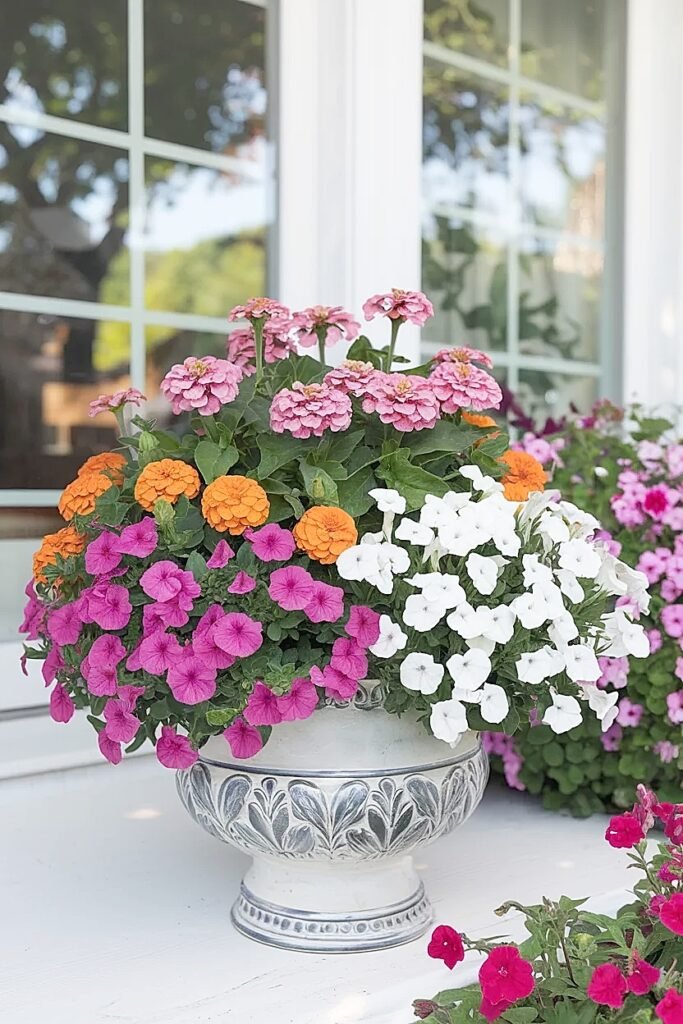
Silver spillers are the design secret of the most sophisticated container arrangements. While green spillers create harmony and flowering spillers add a second bloom layer, silver spillers create contrast with every flower color simultaneously. Silver sits equidistant from every warm and cool tone on the color wheel, which means it amplifies vivid colors without aligning with any of them specifically. A silver spiller makes orange look more orange, purple look more purple, and red look deeper, all at the same time.
1. Silver Falls Dichondra Silver Falls is the most elegant silver spiller available for a summer container. The tiny silver coin-shaped leaves trail in dense, fine-textured curtains that reach three to four feet long in peak summer conditions. The silver tone is vivid enough to create high contrast against.
2. Dusty Miller Dusty miller is the most widely available silver container plant for summer paired with any trailing summer flower. The deeply lobed silver-grey foliage creates a traditional, refined contrast that suits both classic and contemporary container aesthetics. More upright than trailing, it functions best as a.
3. Helichrysum Petiolare (Silver Bush) Helichrysum creates a soft, grey-silver trailing foliage effect with rounded leaves on flexible stems. The trailing habit suits container edge use naturally and the silver-grey tone creates a softer contrast than the vivid silver of dichondra. It handles heat and some drought well once established.
4. Plectranthus (Silver Shield) Silver Shield plectranthus provides a larger-leafed silver foliage option for containers where fine-textured silver has already been used in other pots throughout the display. The bold leaf scale creates a visually different silver quality at container edge that reads as intentional variety across a multi-container.
5. Artemisia (Silver Mound) Artemisia silver mound adds a fine, feathery silver texture that is genuinely unique among spiller options. The soft, almost fluffy foliage creates a delicate silver curtain at the container edge that suits softer summer flower palettes, blush, pale peach, soft lavender, better than the starker.
More ahead on the practical decisions that prevent the spiller plant from overwhelming the focal summer flowers in the container.
How to Choose Spiller Plants to Pair with Summer Flowers Without Overcrowding a Pot
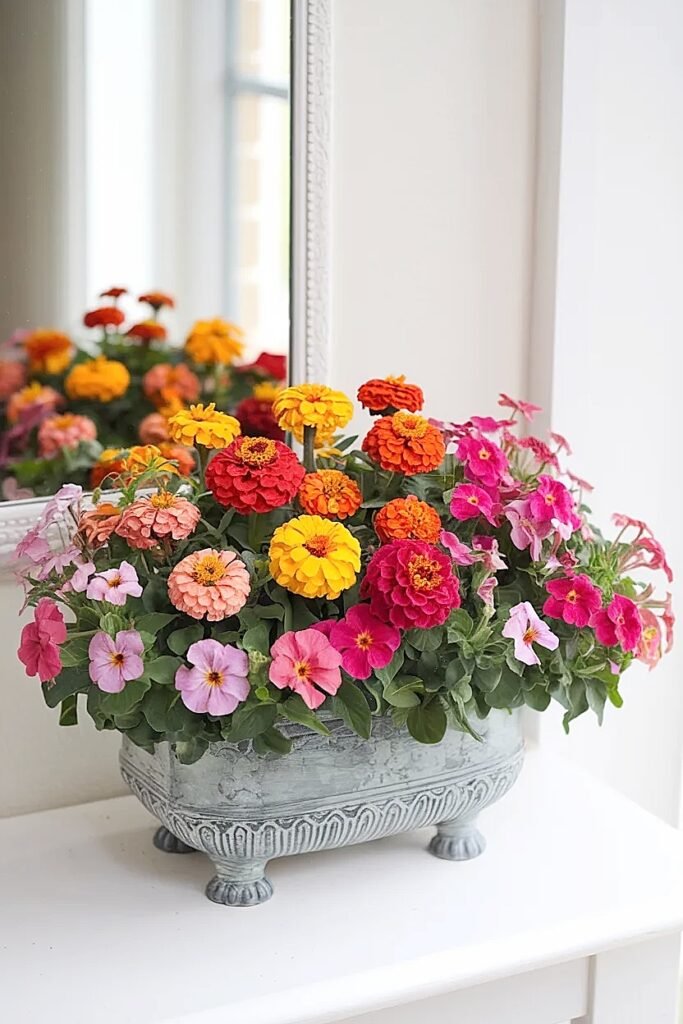
Overcrowding is the most common spiller mistake. A vigorous spiller in the wrong container overwhelms the focal flowers within six to eight weeks.
The formula: for a twelve-inch container, choose bacopa, lobularia, or compact calibrachoa. For a sixteen to twenty-inch container, trailing verbena, scaevola, or standard calibrachoa. For a twenty-four-inch or larger container, sweet potato vine or creeping Jenny.
Water compatibility matters too. A drought-tolerant spiller with a water-hungry focal flower creates a conflict. Calibrachoa and most summer annuals are compatible. Portulaca and most summer annuals are not.
Plant the spiller starts at the outer container perimeter as far from the center focal plants as the container allows. That distance gives the focal plants several extra weeks of root development before the spiller reaches the container center.
Ideas for Using Scaevola as a Heat-Tolerant Spiller Plant with Summer Flowers
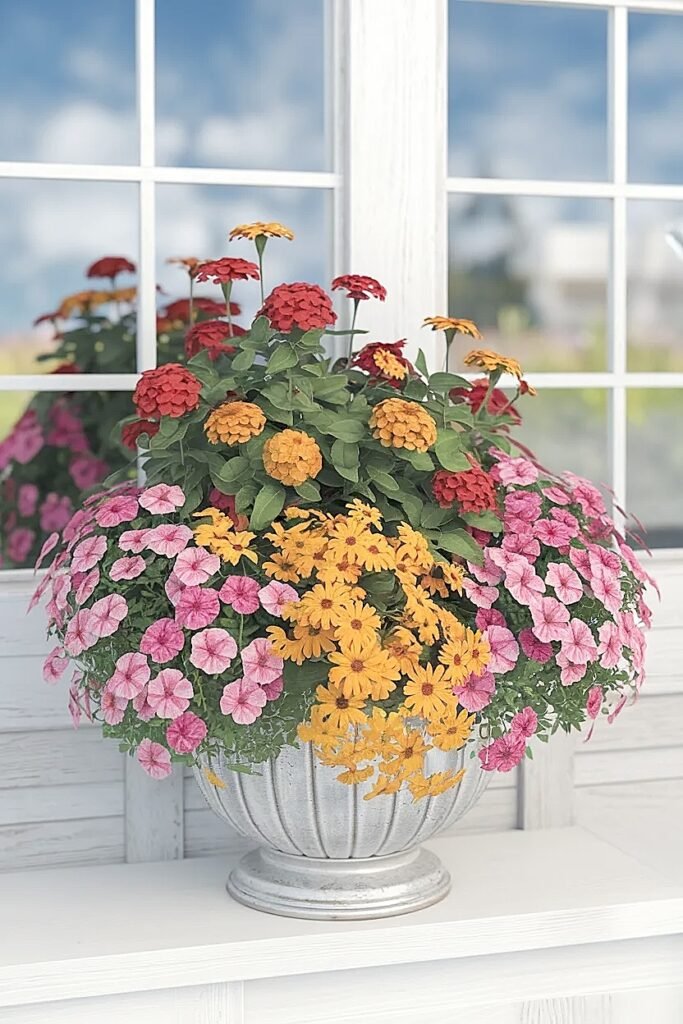
Scaevola is chronically underused in summer container design and deserves a dedicated conversation. The fan-flower shape of each individual bloom, with all petals on one side of the flower rather than symmetrically arranged, creates a genuinely unusual visual texture at the container edge that no other common trailing plant replicates. It is not delicate like bacopa and not aggressive like sweet potato vine. It occupies a middle ground of moderate vigor, interesting bloom texture, and exceptional heat tolerance.
1. Scaevola with Orange Zinnias The fan-shaped purple scaevola blooms paired with vivid orange zinnia as the focal flower create a complementary color combination in a warm-cool pairing that reads as designed at outdoor entertaining scale. The fan bloom texture of scaevola contrasts interestingly against the flat-faced zinnia at close viewing range. Both plants have compatible moderate water needs, similar.
2. Scaevola White Variety with Mixed Warm Focal Flowers White scaevola, also called ‘White Crush’ or ‘White Carpet’ varieties, creates the same white-framing effect as bacopa at the container edge but with stronger heat tolerance in direct afternoon sun. The fan-shaped white flowers create a luminous container edge that suits vivid warm flower combinations. Unlike bacopa, white scaevola does not wilt under moisture stress:.
3. Scaevola in a Coastal or Windy Outdoor Position Scaevola was originally a coastal plant, which means its wind tolerance genuinely outperforms most other trailing container flowers. In outdoor positions that experience regular afternoon wind, scaevola maintains its trailing stem integrity where bacopa and verbena break stems and lobularia drops flowers. For an exposed deck, an open patio, or any outdoor entertaining position with.
4. Scaevola with Lantana as Co-Equal Partners Rather than using scaevola purely as a spiller, pair it with trailing lantana at equal planting volume. Both plants have identical heat tolerance, similar water needs, and both produce blooms continuously without deadheading. The lantana provides the filler and partial thriller role while scaevola takes the spiller position. The combination produces a two-plant mixed container.
5. Scaevola as the Primary Trailing Element in a Large Container In a large container, two or three scaevola plants create a complete trailing display that can serve as the sole spiller element regardless of how many focal plants occupy the center. Unlike sweet potato vine, which can consume the full container, multiple scaevola plants grow at a moderate and predictable rate that stays in proportion.
More ahead on the best spiller choices specifically for small containers, where scale and growth rate require the most careful management.
What Are the Best Spiller Plants to Pair with Summer Flowers in Small Containers?
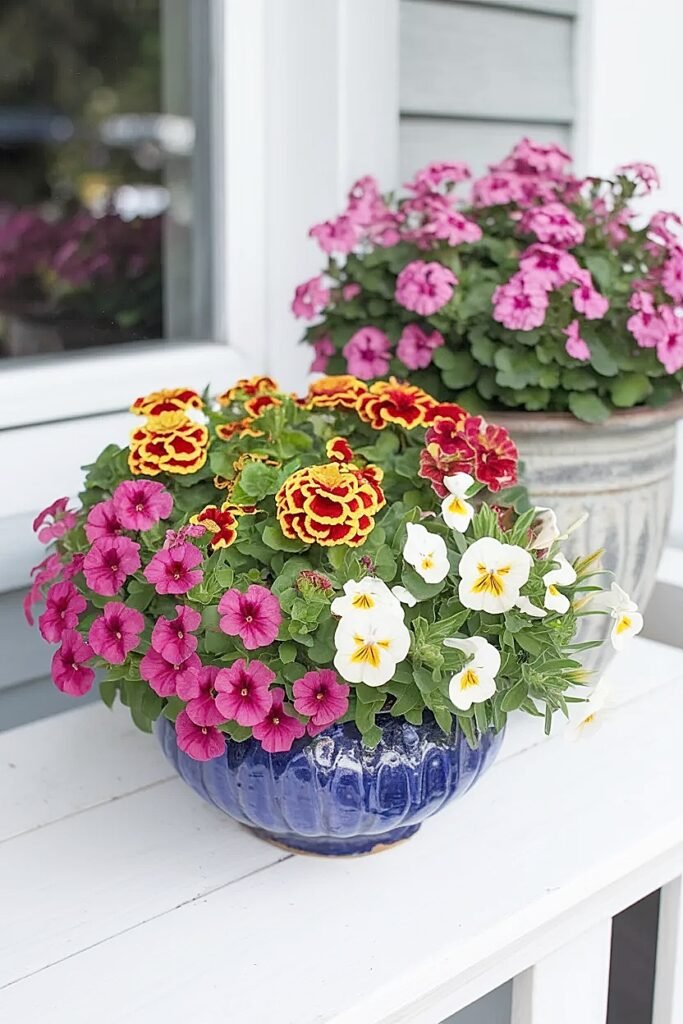
A small container, eight to ten inches in diameter, has room for one good focal plant and one carefully chosen spiller. Nothing more, in most cases, if both plants are to thrive through a full summer season. Small containers magnify every overcrowding mistake: a vigorous spiller in a small pot eliminates the focal plant completely within four to six weeks. The spillers below all maintain a restrained, proportional growth habit that suits small container planting throughout summer.
1. Lobularia (Sweet Alyssum) Sweet alyssum is the perfect small container spiller: slow-spreading, fragrant, and self-cleaning in most varieties. One plant per small container provides gentle edge-softening without aggressive expansion. The tiny clustered blooms stay in proportion to small container scale where larger-trailing spillers look oversized. The honey fragrance.
2. Compact Bacopa Compact bacopa varieties, shorter-trailing than standard types, are specifically appropriate for small containers where even standard bacopa can become proportionally too long. The compact form trails four to six inches below the container edge rather than ten to twelve, keeping the spiller in visual proportion.
3. Lobelia (Trailing) Trailing lobelia is the best purple-to-blue flowering spiller for a small summer container. The tiny deep blue or sapphire flowers on fine trailing stems create a delicate hanging curtain that suits the small container scale without overwhelm. Full sun or partial shade, moderate water needs,.
4. Creeping Thyme Creeping thyme creates a fragrant, compact trailing effect in small containers that simultaneously serves as a culinary herb throughout the entertaining season. The tiny pink or white flowers on fine low stems trail gently over small container edges without the aggressive spread of most other.
5. Pearlwort or Irish Moss Irish moss, botanically sagina, creates the most delicate and fine-textured edge treatment available for a small summer container. The emerald green, moss-like foliage spills very gently, a few inches at most, creating a refined container edge detail suited to small planters at close viewing range.
Conclusion
The best spiller plants to pair with summer flowers are not an afterthought. They are the element that makes the entire container read as a designed composition rather than a planted pot. Calibrachoa for season-long performance, sweet potato vine for dramatic foliage contrast, bacopa for delicate white framing, silver dichondra for universal contrast: each one serves a specific design role that the focal flowers alone cannot fill.
Start with one spiller that matches the container size, the sun exposure, and the water needs of the primary summer flower. Get that compatibility right and the spiller improves every other element in the container simply by being there.
This website contains affiliate links, and some products are gifted by the brand to test. As an Amazon Associate, I earn from qualified purchases. Some of the content on this website was researched and created with the assistance of AI technology.