This website contains affiliate links, and some products are gifted by the brand to test. As an Amazon Associate, I earn from qualified purchases. Some of the content on this website was researched and created with the assistance of AI technology.
Key Takeaways
- Spray mums are the single most versatile grocery store fall flower for small centerpieces because one branching stem does the work of six single-headed flowers at a fraction of the cost
- Sedum, when available, is the texture material that no other grocery store flower replicates. The flat cluster head dries naturally on the stem and holds its shape and color for weeks
- Mauve and dusty rose asters create the softest, most genuinely autumn-specific palette available at grocery store pricing
- Stem branching structure matters more than bloom size for small centerpieces. A stem that branches into multiple heads fills a small vessel better than a single large bloom on a straight stem
- The grocery store checkout flower section and the more upscale natural grocery floral section carry different materials. The upscale section often has sedum, spray roses, and specialty asters not found in the checkout bucket
- Buy by stem firmness, not by bunch price. A fresh firm bunch at six dollars beats a wilted five-dollar bunch at any volume
Most of the best fall flowers I have ever used came from a store that also sells frozen pizza.
Choosing grocery store flowers for small fall centerpieces comes down to knowing which stems do more than just sit there looking like flowers. At small table scale, where the arrangement is eight inches from someone’s face at dinner, everything is visible. The texture of a petal surface. The way a sedum cluster catches the light differently from the morning to the evening. The way spray mum branches fill a small vessel with visual depth from one stem. These are close-range qualities that matter more than visual impact across a room.
Not every grocery store flower has them. This article is about the ones that do.
Use this quick flower-selection guide before buying grocery-store blooms for small fall centerpieces. Each row compares a common store-bought flower, its best centerpiece role, the right small vessel, and the reason it works. The goal is to choose stems that look beautiful, stay compact, and fit real tables.
| Grocery Store Flower | Best Centerpiece Role | Best Small Vessel | Why It Works |
|---|---|---|---|
| Cream mums | Main fullness flower | Low ceramic bowl | One or two blooms make a tiny centerpiece look full. |
| Mauve asters | Soft texture flower | Mini bud vase | Airy petals add fall color without bulky flower heads. |
| Rust carnations | Warm accent flower | Short clay crock | One ruffled stem adds strong autumn warmth. |
| Bronze button mums | Small gap filler | Tiny condiment bowl | Little round blooms fill spaces without spreading wide. |
| Pale sedum | Gentle texture bridge | Mini bowl or low vase | Soft clusters connect larger and smaller flowers naturally. |
Resources:
- Mums and asters: Fall favorites for a colorful landscape | Flowers, Fruits, and Frass | Illinois Extension | Illinois
- How to Care for Cut Flowers | Yard and Garden
- 8 Companion Plants to Pair with Fall Mums for a Stunning Autumn Garden Display
- Floral Arrangement Principles: A Guide for Exhibitors
How to Choose the Best Grocery Store Fall Flower Stems for Small Centerpieces
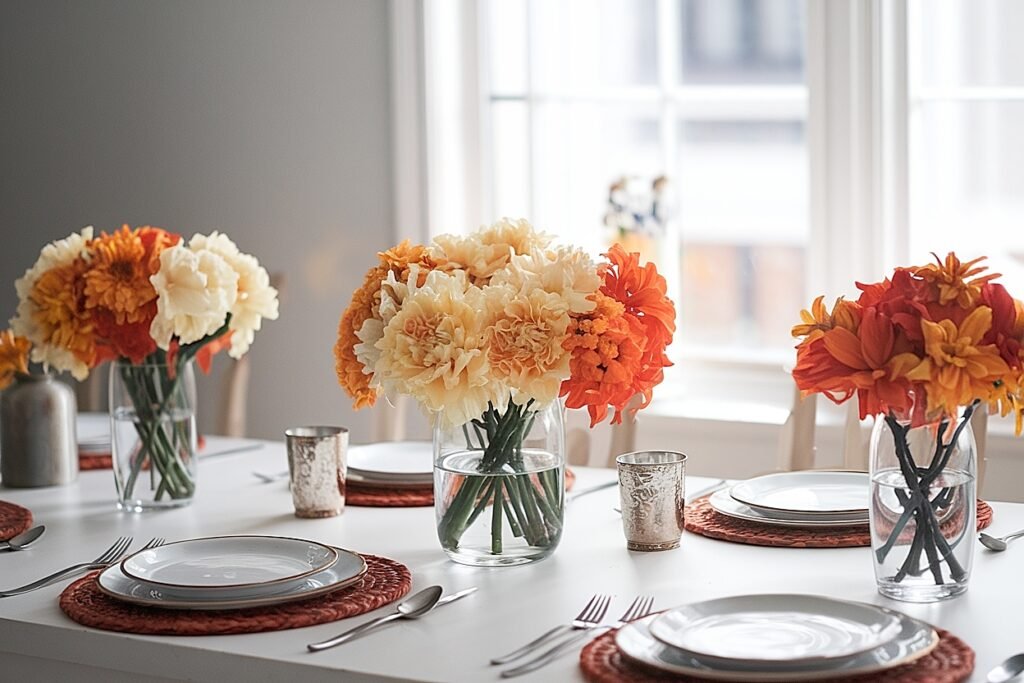
The branching stems are the ones worth buying.
A single-headed flower on a straight stem fills one bloom position in a vessel. A branching stem fills four or five. At a small centerpiece scale, that difference is the gap between an arrangement that looks complete and one that looks like three stems in a jar.
Spray mums branch. Asters often grow multiple heads on one stem. Sedum produces flat cluster heads. Waxflower branches constantly. These are the grocery store materials worth hunting for over the standard single-headed carnation or gerbera when you are building a small table arrangement.
The stem check before buying is quick. Hold the bunch up and look at the structure of a single stem from base to tip. Does it branch? How many times? Are the branch tips carrying their own bloom heads or just foliage? A spray mum stem that branches four times and carries eight to ten bloom heads is a small centerpiece in one stem. A single-headed carnation is one bloom position. Both might cost the same per bunch.
For quality, press a bloom head lightly with one finger. Firm and springy is fresh. Soft and giving with outer petals that feel almost papery means it has been sitting a while. Stem ends should be pale green and clean, not brown or slimy. The store may not change the water daily, so this check matters more than the date sticker on the wrapper.
For more on fall flower arrangement sizing and placement for small tables, including the height rules that keep flowers from blocking conversation and the positioning approaches that keep the serving zone clear, take a look at dining table fall flower centerpieces for small apartments. If this is helpful, share it with someone who decorates for fall. The section on spray mums ahead covers the specific branching cut technique that gets the most out of one stem.
Ideas for Grocery Store Aster Fall Flowers in Small Centerpieces
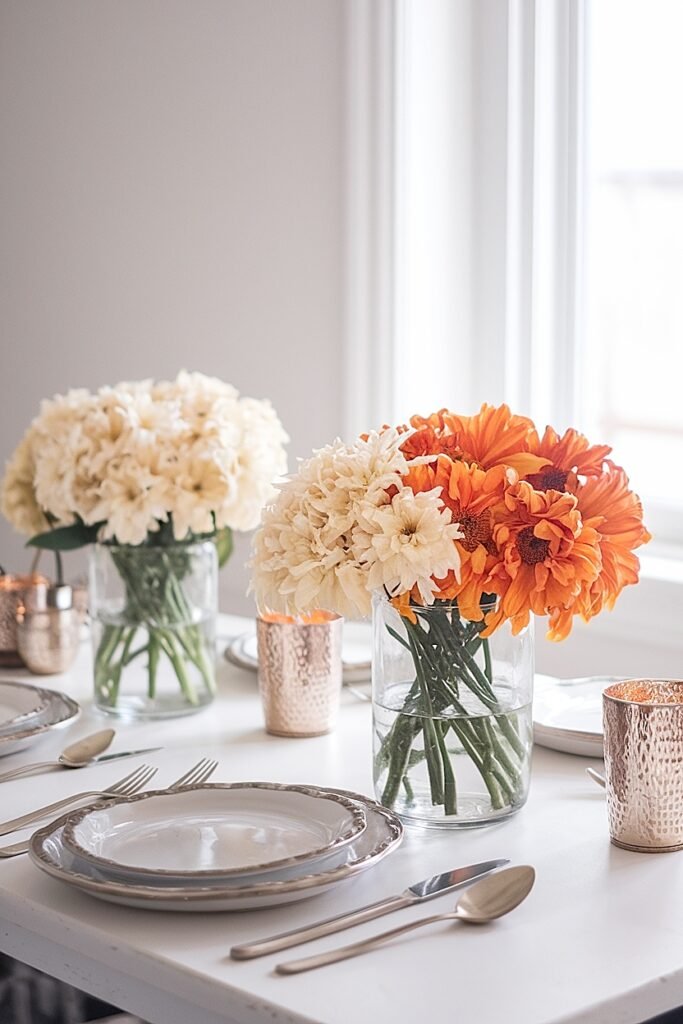
Asters at the grocery store usually come in two forms: the large-headed China aster, which is a single showy bloom on a straight stem, and the smaller bushy aster that carries multiple small daisy faces on branching stems. The bushy variety is the better purchase for small centerpieces. More bloom heads per stem, more visual coverage per dollar.
At small table close range, the soft mauve and dusty purple tones of asters reveal a dusty, felted quality that reads as specifically autumnal in a way that vivid colors do not. These tones get washed out under store fluorescent lighting but come into their own on a dining table in warm indoor light or near a window with autumn afternoon sun coming through.
1. Seven Bushy Asters Packed to Rim Level in a Wide Dark Bowl Seven bushy aster stems with their branching side shoots intact, cut to one and a half inches above the rim of a wide dark ceramic bowl, with gravel base and cold water. At close small centerpiece viewing range, the multiple small daisy faces distributed across the bowl opening create a full bloom surface. No additional material needed. The dusty tone at apartment close-range reads as soft and specifically seasonal.
2. Mixed Mauve and White Asters in a Small Dark Compote With One Sage Sprig Four mauve aster stems plus three white aster stems plus one fresh sage sprig in a low dark ceramic compote with gravel and cold water. Two aster tones at close range create visible tonal depth that a single-color bunch does not. The sage adds autumn herb fragrance. The compote’s raised foot creates visual presence without height. The whole arrangement stays under five inches total.
3. Single Aster Stem Per Bud Vase at Each Dinner Setting One bushy aster stem per small dark bud vase at each dinner place, positioned at the upper outside corner of each place setting. At eighteen-inch close personal dining distance, one well-chosen aster stem in a dark vessel reads as a deliberate detail per guest. The sage fragrance from one additional sprig per vase fills a small apartment dining space within minutes.
There is more in the article ahead on spray mums, which do something at small centerpiece scale that no other grocery store flower quite manages.
How to Pick Grocery Store Fall Flower Bouquets With the Most Useful Stems
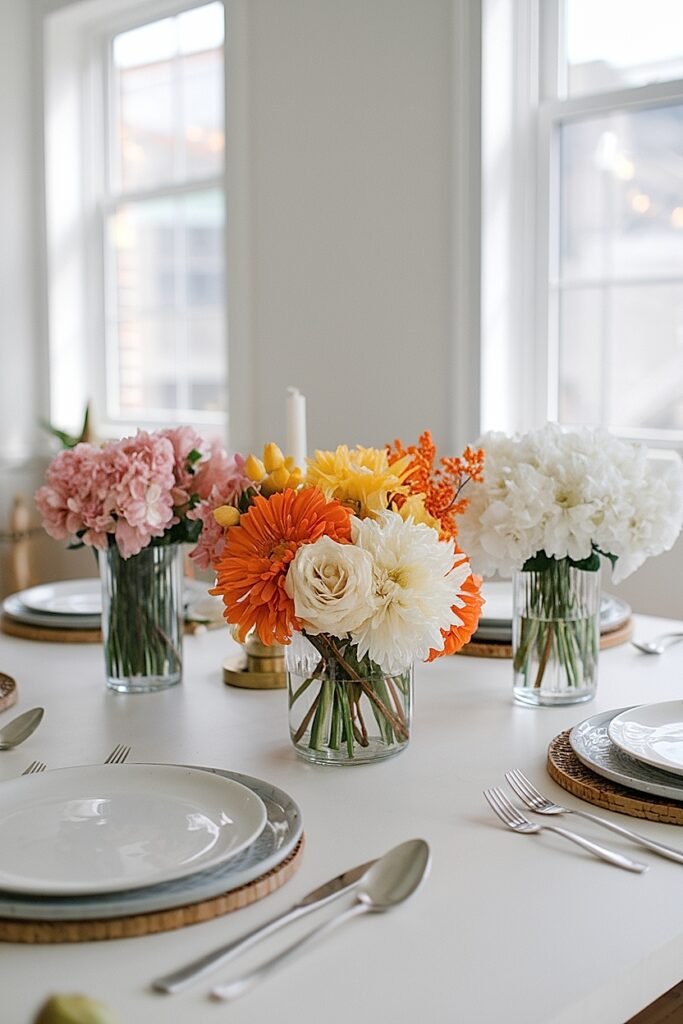
The worst grocery store fall purchase for a small centerpiece is a bunch of large single-headed flowers on straight stems with lots of foliage.
Large single-headed blooms like gerbera daisies or standard dahlias need height and open space around them to read well. In a small vessel at close range, a large-headed single flower looks like it belongs in a different, larger arrangement. The scale is wrong. And the straight stems with foliage filling the vessel from base to bloom give a lot of visual material but almost none of it is the bloom itself.
The best grocery store fall purchase for a small centerpiece is any stem that branches into multiple small blooms. Spray mums. Spray roses. Bushy asters. Sedum. Waxflower. These stems fill small vessels with bloom coverage rather than stem-and-leaf coverage, which is the visible difference between a small arrangement that reads as designed and one that reads as a jar with flowers put in it.
When buying, avoid any bunch where more than half the stem is bare and leafy below the first bloom. That foliage either goes below the waterline, where it causes bacterial buildup, or it has to be stripped before the stem goes in water, which removes visual material that the bunch was priced to include. Branching stems that carry blooms from lower on the stem down through the tip are a better purchase at any price.
Easy Ideas for Grocery Store Sedum Fall Flower Texture in Small Centerpieces
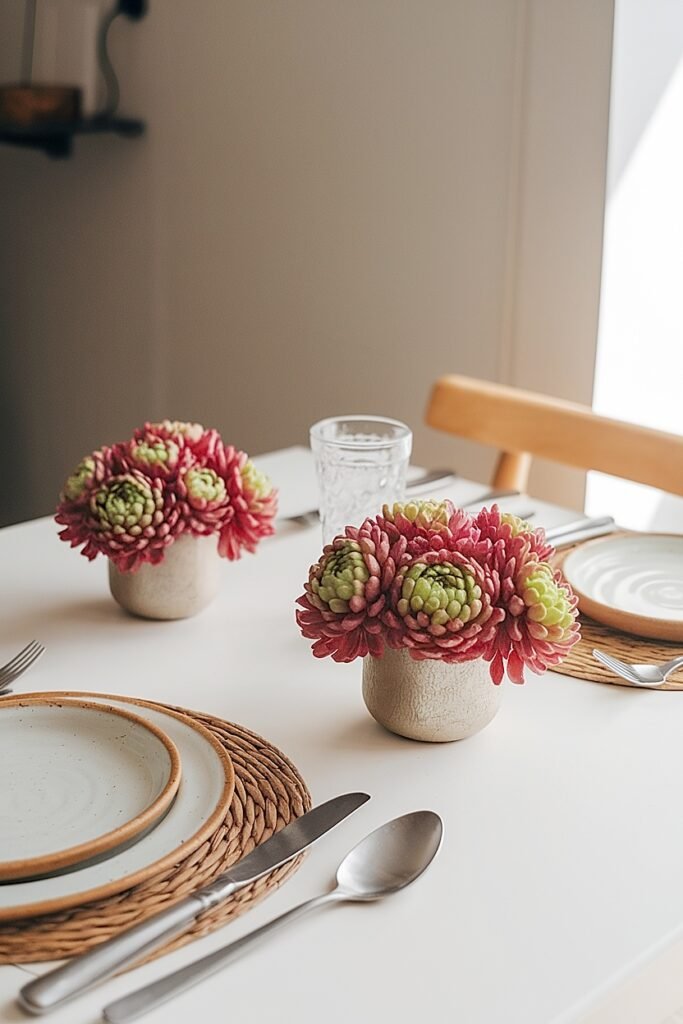
Sedum, specifically the upright ornamental stonecrop varieties like Hylotelephium spectabile, appears at natural food grocery stores and upscale supermarket floral sections from late summer through autumn. The flat-topped flower cluster heads in dusty rose, mauve, and rust tones are unlike anything else available at a grocery store. They dry naturally on the stem without losing their shape or color, which means a sedum stem in an arrangement holds its visual contribution for weeks after the fresh flowers beside it have been replaced several times.
The texture of the sedum cluster head at close centerpiece range is specific and distinctive. Hundreds of tiny individual florets packed into a flat disc, each one visible at close viewing distance, create a surface quality that reads as botanical and complex rather than simply decorative.
1. Three Sedum Stems and Six Asters in a Wide Dark Bowl Three sedum cluster stems plus six bushy aster stems in a wide low dark bowl with gravel and cold water. The sedum flat cluster heads and the aster small daisy faces create two completely different bloom textures at close range. The sedum holds even after the asters are replaced. One.
2. Sedum as the Primary Texture With One Accent Bloom Five sedum stems cut to rim height in a small dark vessel, with one burgundy dahlia or single rust carnation stem pressed into the center as the only fresh bloom accent. The sedum provides the visual mass. The accent provides the color focal point. The sedum holds after the fresh.
3. Mixed Sedum Tones in One Low Vessel If the grocery store carries more than one sedum color, dusty rose, rust, and mauve are the common fall tones, three stems of each tone in a low wide vessel creates a fall color gradient within one material type. The texture is entirely sedum. The color variation across the flat.
4. Sedum Stems Laid Flat as a Table Surface Element Three sedum stems with cut ends in water picks, laid flat across the table surface as a table-level texture element rather than an upright arrangement. The flat cluster heads face upward. No vessel height at all. The sedum texture visible from the overhead dining angle creates a specific autumn surface.
5. Sedum and Wheat as a Dried Autumn Bundle Four sedum stems plus three dried wheat stalks gathered and tied at the mid-stem point with natural twine, laid flat beside the main fall arrangement as a decorative bundle. No water needed. The sedum dries naturally in the bundle. The wheat and sedum bundle beside a fresh flower vessel creates.
Creative Ways to Use Grocery Store Spray Mum Fall Flower Stems in Tiny Arrangements
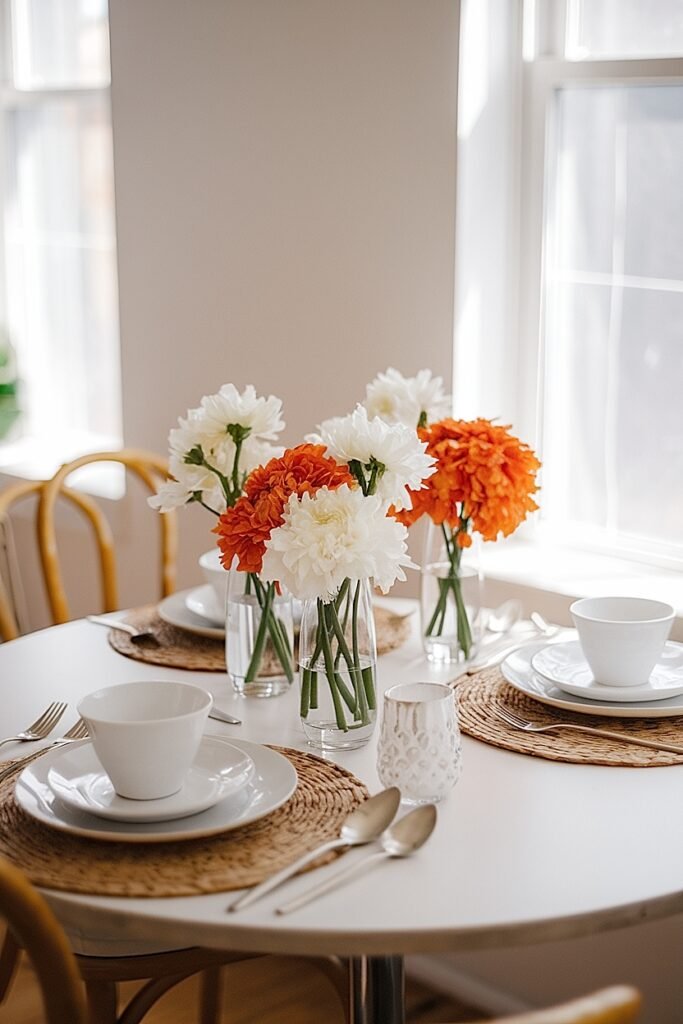
A spray mum stem at the grocery store looks like one flower on a long stem until you look more carefully. It branches. Sometimes four times, sometimes six, each branch ending in its own bloom. That structure is what makes spray mums the most valuable grocery store purchase for small centerpieces.
The cut technique changes how much you get from one stem. Do not put the whole stem in the vessel at the main stem length. Cut each branch from the main stem individually at three to four inches long. Now you have six to eight individual branching sub-stems, each carrying its own bloom or two, each pressable into a gravel base at whatever angle creates the best coverage. One grocery store spray mum stem becomes six to eight arrangement insertions.
1. One Spray Mum Stem Cut Into Sub-Stems Fills One Small Vessel One spray mum stem cut into individual branches at three to four inches, all inserted into a small dark bowl with gravel. One stem fills a four-inch vessel completely with eight to ten bloom faces at close range. The visual result looks like a full arrangement from multiple stems. The.
2. Spray Mum Sub-Stems at Two Heights in a Compote One spray mum stem’s branches divided into two height groups: four shorter at two inches above the rim in the compote center, four longer at four inches toward the back. Two visual levels from one stem. The height variation creates dimensional depth at small centerpiece scale.
3. Single Spray Mum Sub-Stem Per Bud Vase at Each Setting One sub-stem from a spray mum, two to three bloom heads, in a small dark bud vase at each dinner place. One grocery store spray mum stem covers four to six place settings. Under a dollar per setting from a single stem purchase. Each guest gets a bloom detail rather.
4. Mixed Spray Mum Colors in One Bowl From Two Bunches Three sub-stems from a cream spray mum bunch plus three sub-stems from a rust spray mum bunch in one wide dark bowl. Two tones, two textures from the same flower type. At close small centerpiece range, the tonal difference between the cream and rust bloom faces creates visual depth that.
5. Spray Mum Branch Floating in a Wide Saucer Two spray mum sub-stems with stems removed, bloom clusters floating face-up in a wide shallow saucer with cold water. The multiple small bloom faces visible from above at close range create a full floating bloom surface in a four-inch saucer. Total height: one inch.
6. Spray Mum Stems as a Back Layer Behind Taller Accent Flowers Three spray mum sub-stems cut short and pressed into the gravel at the front of a small vessel, with one taller accent stem, a single carnation or one wheat stalk, rising from the center behind them. The spray mum creates the bloom base. The accent creates the vertical reference point.
7. Spray Mum and Sage in a Dark Enamel Mug Four spray mum sub-stems plus one sage sprig in a dark navy enamel mug with gravel and cold water. The sage fragrance fills the small apartment dining area. The spray mum provides full bloom coverage from one cut stem plus a single sprig. Total vessel height under three and a.
How to Avoid Bulky Grocery Store Fall Flower Stems in Small Centerpieces
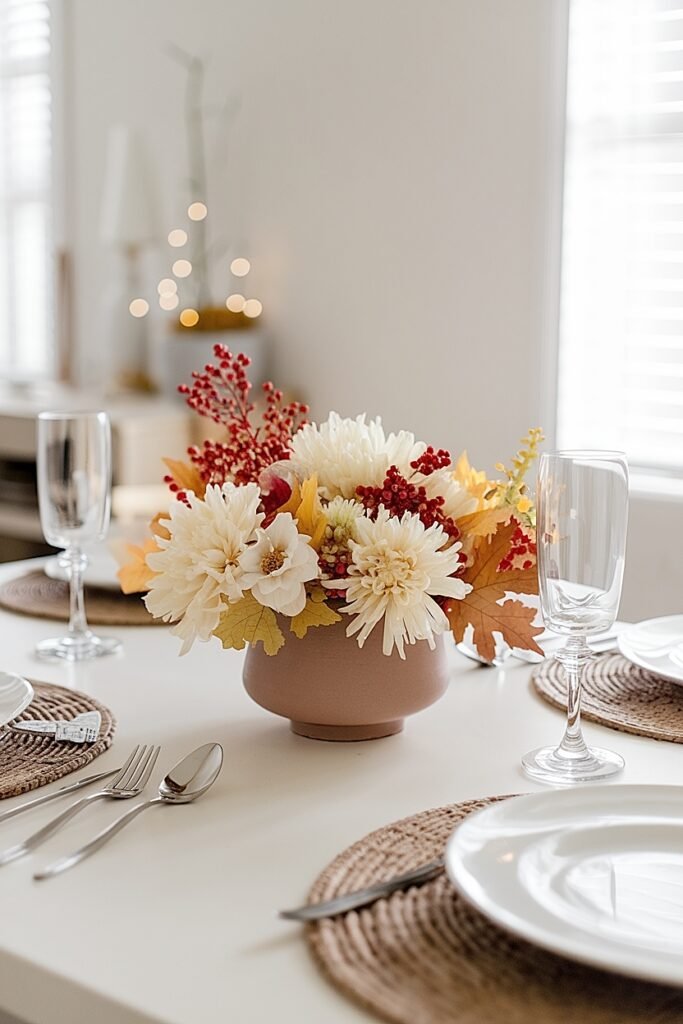
The bulky stem problem is usually not about the flower. It is about the foliage on the stem.
Standard grocery store bouquets often include stems with heavy foliage all the way up, and that foliage becomes the problem in a small vessel. Leaves below the waterline degrade and cause bacterial buildup that blocks water uptake and shortens the arrangement lifespan. Leaves above the waterline crowd the vessel interior and reduce the space available for the bloom zone.
Strip everything below the waterline. No leaf or stem side branch goes below the water surface. For small vessels where the water line might be only two to three inches from the rim, that stripping requirement is significant. What remains above the waterline should be bloom, sub-stem, and minimal foliage.
The second bulky stem issue is physical diameter. Some grocery store carnation and dahlia stems are thick enough that two or three of them side by side fill a four-inch vessel mouth before any bloom positioning has been considered. Narrow, wiry stems, waxflower, asters, spray mum sub-stems after the main stem is cut, give more placement flexibility in a small vessel mouth. Before buying, look at the base stem diameter relative to the mouth of the vessel you plan to use.
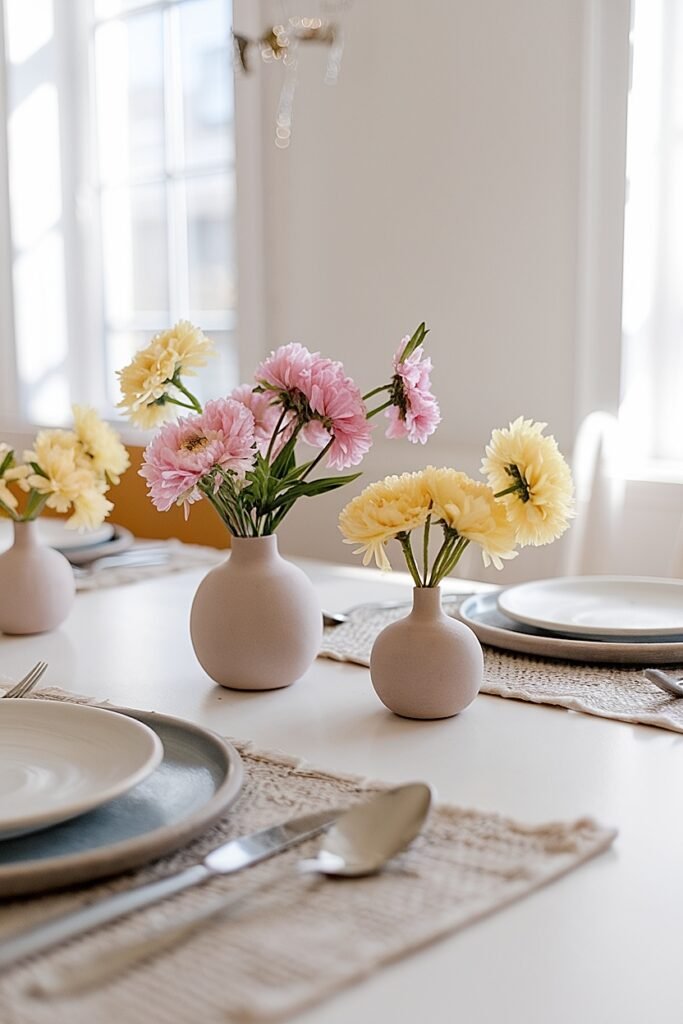
Ways to Use Mauve Grocery Store Fall Flower Stems for Soft Centerpieces
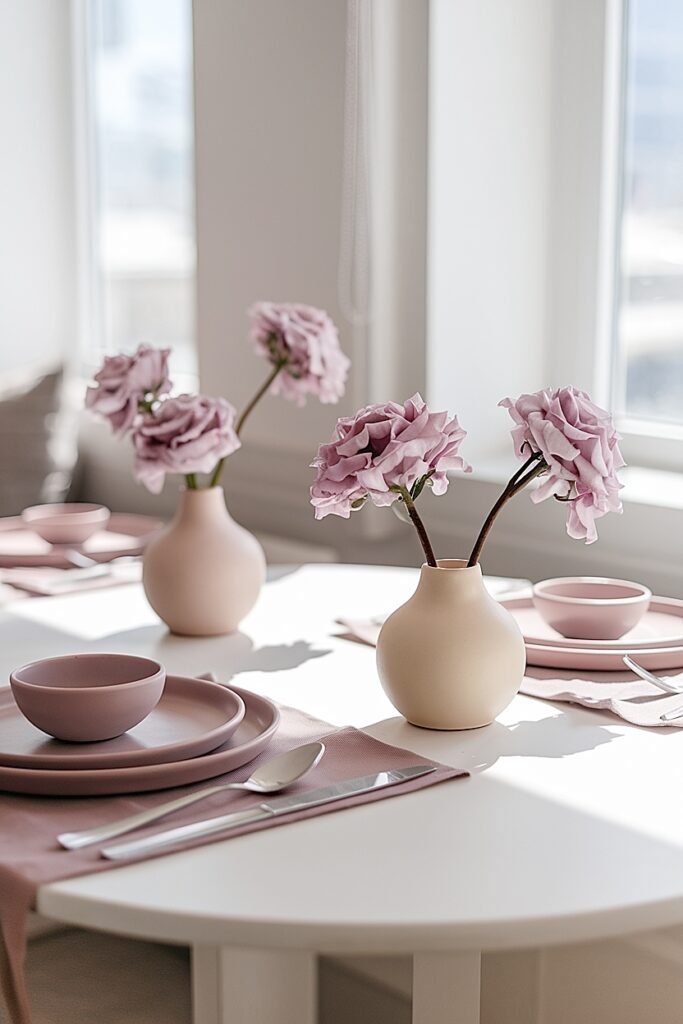
1. Seven Mauve Asters Packed Tight in a Wide Matte Charcoal Bowl Seven mauve aster stems cut to one and a half inches above the rim, packed into a wide matte charcoal bowl with gravel and cold water, all faces angled slightly outward. The dusty rose-purple at close apartment range reads as specifically autumnal. The charcoal amplifies the muted tone. No accent.
2. Mauve Spray Mum Sub-Stems in a Small Dark Compote With Sage Four mauve spray mum sub-stems plus one sage sprig in a low dark compote. The mauve spray mum tone and the grey-green sage leaf create a soft cool-toned fall palette that sits comfortably on a neutral linen or warm white tablecloth. The compote’s raised foot adds presence without adding height.
3. Mauve and Cream Mixed in One Low Bowl Four mauve aster or spray mum stems plus four cream stems from the same or a similar flower type in one wide low dark bowl. The mauve-and-cream pairing creates a light-and-muted contrast at close range that reads as more complex than either color alone. Both tones stay within the soft,.
4. Mauve Sedum and Mauve Aster in a Single Vessel Two mauve sedum cluster stems plus four mauve aster stems in one dark vessel. Two textures in the same color family. At close range, the flat sedum cluster surface and the aster daisy face read as completely different structures within a unified color palette. The sedum holds after the asters.
5. Single Mauve Stem Per Place Setting With Neutral Linen One mauve aster or spray mum sub-stem in a small dark bud vase at each dinner seat, placed on or beside a natural linen or oatmeal-colored cloth napkin. The dusty mauve beside neutral warm white or natural linen creates a specifically soft autumn detail at close personal dining range. Under.
Conclusion
The grocery store flower section rewards close looking.
Not the whole bunch. The individual stem. How it branches. How many blooms it carries. Whether the foliage is already manageable or needs significant stripping before anything goes in water. One good branching spray mum stem cut into sub-stems covers a small centerpiece entirely. One sedum stem holds its texture in the arrangement for weeks. Knowing that before you buy changes what comes home.
Small centerpieces do not need many flowers. They need the right ones.
This website contains affiliate links, and some products are gifted by the brand to test. As an Amazon Associate, I earn from qualified purchases. Some of the content on this website was researched and created with the assistance of AI technology.