This website contains affiliate links, and some products are gifted by the brand to test. As an Amazon Associate, I earn from qualified purchases. Some of the content on this website was researched and created with the assistance of AI technology.
Key Takeaways
- Low containers under 6 inches tall preserve conversation sightlines across patio tables
- Heavy vessels (5+ pounds empty) resist wind without needing adhesives or weights
- Oval dishes work best on rectangular tables by echoing linear geometry
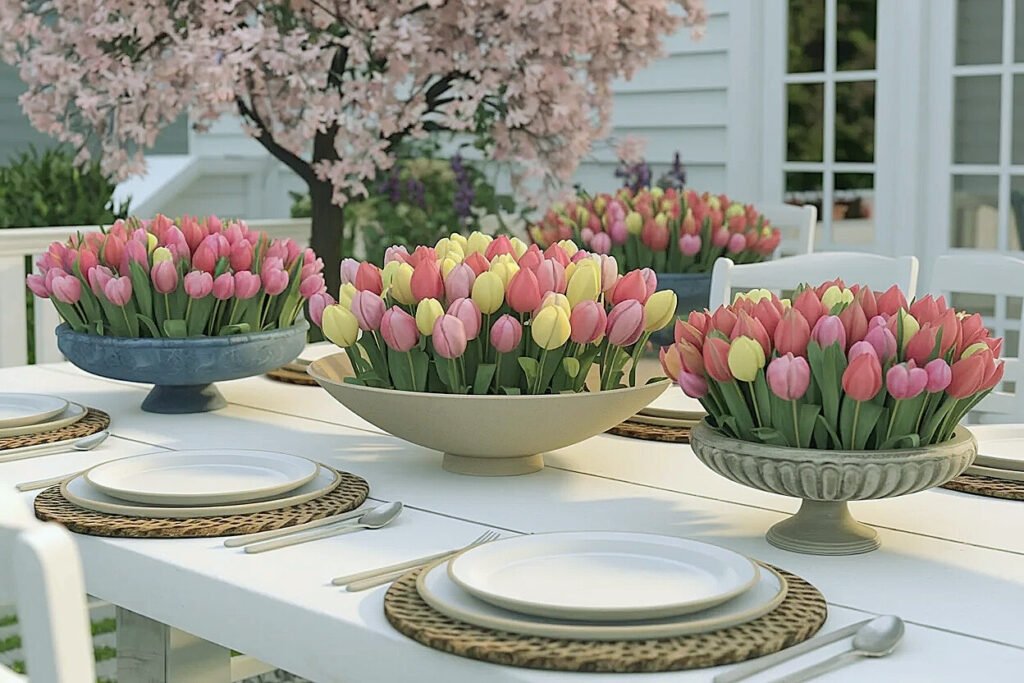
- Footed compotes add elegance while keeping arrangements low through shallow bowl design
- Rectangular troughs create modern linear arrangements perfect for outdoor dining
- Ceramic baking dishes offer budget-friendly alternatives with authentic rustic appeal
- Round containers suit square or circular tables while ovals complement rectangular surfaces
- Side table planters need compact 6–8-inch diameters to avoid overwhelming small surfaces
Choosing the best low containers for spring tulips patio centerpieces requires understanding a principle that took me three frustrating seasons to learn: the container matters exponentially more than the flowers. I wasted countless dollars on gorgeous tulips stuffed into wrong-sized vessels that either blocked conversations, tipped over in wind, or looked absurdly mismatched with my patio furniture. The breakthrough came when I stopped shopping for “pretty vases” and started hunting for “functional outdoor containers that happen to look good.”
Low containers, those staying under 6 inches in total height, solve the primary problem plaguing outdoor centerpieces: visual obstruction during meals. Nobody enjoys craning around a tall arrangement to see the person across the table, and outdoor dining amplifies this frustration because people sit farther apart and gesture more expansively than they do indoors. The right low container creates floral beauty without becoming a barrier, but choosing that container involves way more factors than just height measurements. Weight, shape, material, and proportional relationships to your specific table all influence whether a container succeeds or fails spectacularly.
This table helps you pick the best low containers for Spring Tulips patio centerpieces fast. Match container shapes to table types, learn which low options stay stable outdoors, and follow simple do/avoid rules that keep serving space open. Includes copy-ready checklists for quick planning and easy publishing.
Best Low Containers for Spring Tulips Patio Centerpieces
Pick a low container first, then build fullness with clusters. Use this guide to match container shapes to table types, keep sightlines open, and protect serving space—indoors and outdoors.
| Low Container Type | Best For | Why It Works | Do / Avoid |
|---|---|---|---|
| Outdoor + IndoorShallow Wide Bowl | Most tables (small to medium) | Low height + wide footprint reads full | DO: tight clusters AVOID: tall center spikes |
| Outdoor + IndoorLow Oval Dish | Long tables + sideboards | Spreads color without crowding depth | DO: 2–3 cluster sections AVOID: one long thin line |
| OutdoorShallow Platter | Coffee tables + lounge areas | Ultra low, open sightlines | DO: outer ring widen AVOID: scattered stems |
| Outdoor + IndoorLow Rectangular Trough | Long dining + buffet surfaces | Wide spread, stays short | DO: “pocket” layout AVOID: even thin spread |
| Outdoor + IndoorLow Tray Container | Counters + easy storage | Quick setup, low profile | DO: corner placement AVOID: blocking prep zones |
| OutdoorLow Heavy Bowl | Windy patios | Stable + safe on breezy days | DO: wide base inward AVOID: narrow/light bowls |
Best low containers by table type
Shallow wide bowls keep height low and tables usable.
Low oval dishes or troughs spread color without clutter.
Shallow platters stay ultra low with open sightlines.
Fullness rules that work everywhere
2–3 dense pockets look fuller than scattered stems.
Off-center placement creates a lane for platters.
Wind + stability
Wide base + inward placement reduces tipping in breezes.
How to Choose Low Bowl Containers for Spring Tulips Patio Centerpieces
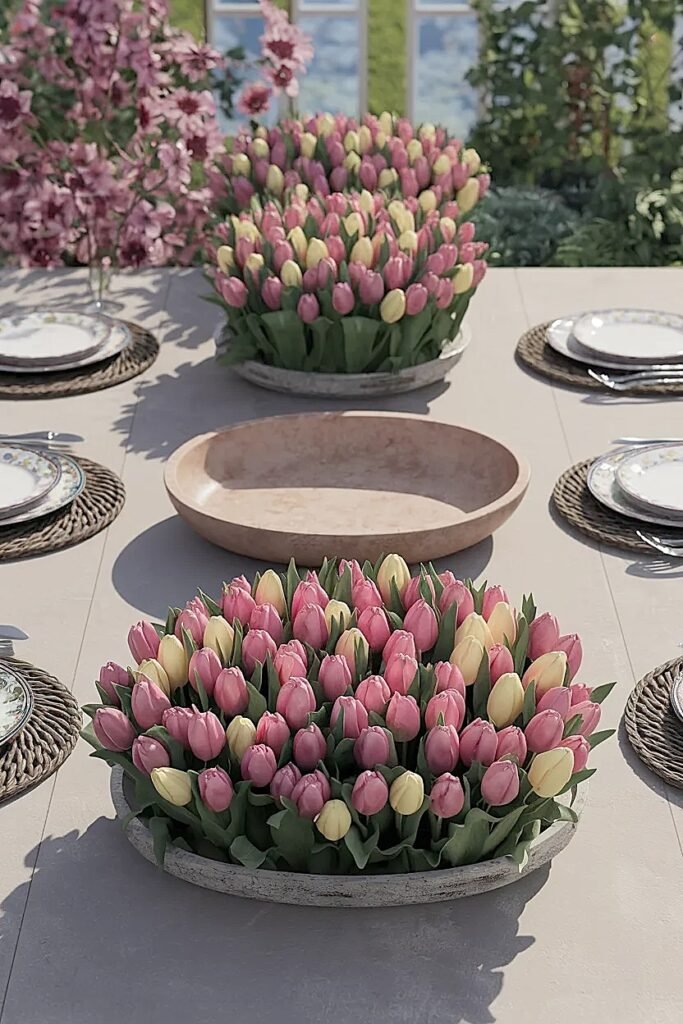
Low bowls represent the classic solution for patio centerpieces, but “low bowl” encompasses such massive variety that the category borders on meaningless without specific selection criteria. I’ve tested dozens of bowl styles over the years, some brilliant, others disasters, and the successful ones share characteristics having nothing to do with aesthetics and everything to do with practical performance.
The first decision: diameter relative to table size. Your bowl should occupy no more than one-third of your table’s width, which means a 48-inch table maxes out at roughly 16-inch diameter bowls. I learned this watching my 18-inch bowl dominate a 42-inch table to the point where guests literally had nowhere to set their plates comfortably. The visual proportion felt wrong even before functional problems emerged.
Material drives performance more than appearance. Ceramic and terracotta bowls handle outdoor temperature fluctuations brilliantly while providing weight that prevents tipping. I’ve abandoned glass bowls entirely for outdoor use after watching one shatter when temperature dropped rapidly during an evening party, thermal shock that indoor-focused glass simply cannot handle. Metal bowls work if they’re genuinely heavy; lightweight aluminum or thin steel shifts constantly and looks cheap despite costing plenty.
The bowl’s interior depth matters for arrangement mechanics. You need minimum 3 inches of depth to accommodate floral foam or a flower frog providing stem support. Shallower bowls force you to wire or tape stems individually, tedious work that makes arrangement take three times longer than it should. But exceeding 5 inches deep creates problems too, requiring so much water that the bowl becomes unmanageably heavy and stems need cutting longer than ideal for low-profile compositions, and when you’re ready to explore complete patio centerpiece setup strategies that work with these container choices, those concepts show how containers integrate into functional outdoor dining, definitely worth sharing with anyone tackling spring patio styling!
The bowl selection principles establish your foundation, and the oval dish guidance ahead addresses how elongated forms serve specific table shapes better than round alternatives.
What Are the Best Low Oval Dishes for Spring Tulips Patio Centerpieces on Long Tables
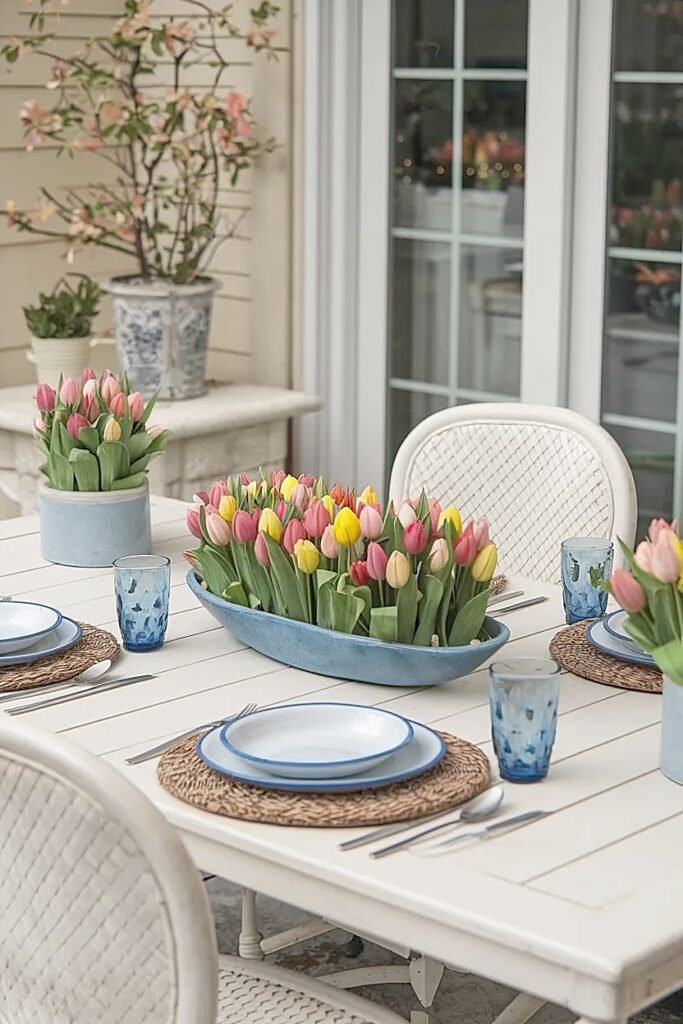
Oval dishes create visual harmony on rectangular tables through geometric echo, the elongated form mirrors the table’s linear shape in ways round bowls never achieve. I resisted this for years, defaulting to round containers regardless of table shape, before finally testing an oval dish and immediately seeing how much better it looked. The difference isn’t subtle.
Long tables, those measuring 60+ inches, benefit enormously from oval containers running parallel to the table’s length, creating arrangements that emphasize the linear dimension rather than fighting it.
1. Terracotta Oval Serving Platter (16×10 inches, 3-inch depth)
These rustic platters bring authentic Mediterranean warmth to patio settings while their substantial terracotta weight resists wind admirably. Position lengthwise on rectangular tables, filling with 12-15 tulip stems creating horizontal arrangements emphasizing the table’s linear form. The porous terracotta requires liner before water goes in, I use cut plastic sheeting, but that earthy aesthetic justifies the extra step.
2. White Ceramic Oval Baker (14×9 inches, 4-inch depth)
Clean white ceramic creates elegant neutral backdrop letting tulip colors dominate without container competition. The baker’s depth accommodates substantial floral foam providing excellent stem support for complex arrangements. These photograph exceptionally well, that white surface reflects light beautifully during daylight or evening gatherings. The ceramic weight (typically 4-5 pounds empty) provides excellent wind resistance.
3. Elongated Metal Trough (18×6 inches, 3-inch depth)
Modern metal troughs create contemporary aesthetic perfect for industrial or minimalist outdoor furniture. The narrow 6-inch width claims minimal table width while the 18-inch length creates generous visual presence. I use these for modern patios where rustic terracotta would clash aesthetically. The metal reflects light interestingly, adding ambient sparkle during evening dining.
4. Vintage Ironstone Serving Dish (15×8 inches, 3-inch depth)
Antique ironstone brings character impossible to replicate with new pieces, those subtle chips and age marks create authenticity that elevates arrangements immediately. The heavy ceramic construction provides wind stability while the classic cream or white color works universally with any tulip shade. Hunt these at estate sales rather than retailers.
5. Shallow Wooden Dough Bowl (20×8 inches, 2-inch depth)
Ultra-shallow wooden bowls create barely-there containers letting tulips star completely. Line with plastic before adding water since wood rarely provides waterproof surface. The long narrow form works brilliantly on extended rectangular tables where width must stay minimal. The rustic wood aesthetic suits farmhouse or cottage-style outdoor spaces perfectly.
The oval options demonstrate how shape affects table harmony, and the weight considerations ahead address wind challenges unique to outdoor settings.
How to Pick Low Heavy Containers for Spring Tulips Patio Centerpieces on Windy Patios
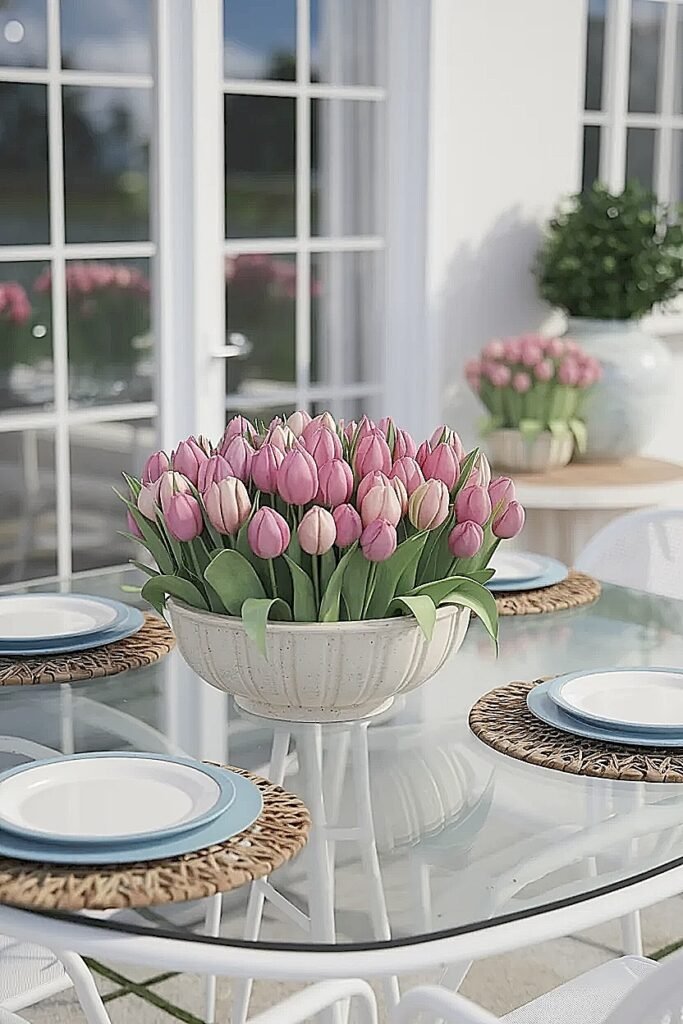
Wind transforms centerpiece selection from aesthetic exercise into engineering challenge. I’ve chased too many lightweight containers across patios mid-party to approach this casually anymore, every outdoor container needs weight calculated deliberately, not assumed.
The baseline: 5 pounds minimum for containers on exposed patios receiving regular wind. This sounds excessive until you experience a moderate 15 mph gust toppling a 3-pound ceramic bowl you thought was “heavy enough.” Wind force increases exponentially with arrangement height, meaning even low arrangements need substantial base weight.
Material choice determines whether you hit weight thresholds easily or struggle constantly. Concrete containers inherently weigh 8-12 pounds empty, often overkill but guaranteeing stability even during significant wind. Cast iron or heavy ceramic provides 5-7 pounds typically, hitting that sweet spot where stability meets manageable portability. Terra cotta varies wildly, thick-walled pieces work fine, but thin mass-produced versions weight maybe 2 pounds and shift constantly.
Testing before committing saves frustration. I literally weigh containers on my kitchen scale before purchasing for patio use, rejecting anything under 5 pounds regardless of appearance. This ruthless weight requirement has transformed my container collection toward heavier materials, creating arrangements that survive outdoor conditions reliably rather than looking perfect until the first breeze arrives.
Base width matters almost as much as weight. Wide shallow forms resist tipping better than narrow deep ones even at identical weights because physics favors low centers of gravity. A 6-inch tall container that’s 12 inches wide will outlast an 8-inch tall container that’s 8 inches wide during wind despite similar weights, the wider base distributes weight across more surface area, increasing wind resistance.
The weight principles ensure arrangements stay positioned properly, and the footed compote concepts ahead show how to add visual interest through vessel form while maintaining low arrangement heights.
Ways to Use Low Footed Compotes for Spring Tulips Patio Centerpieces Without Height
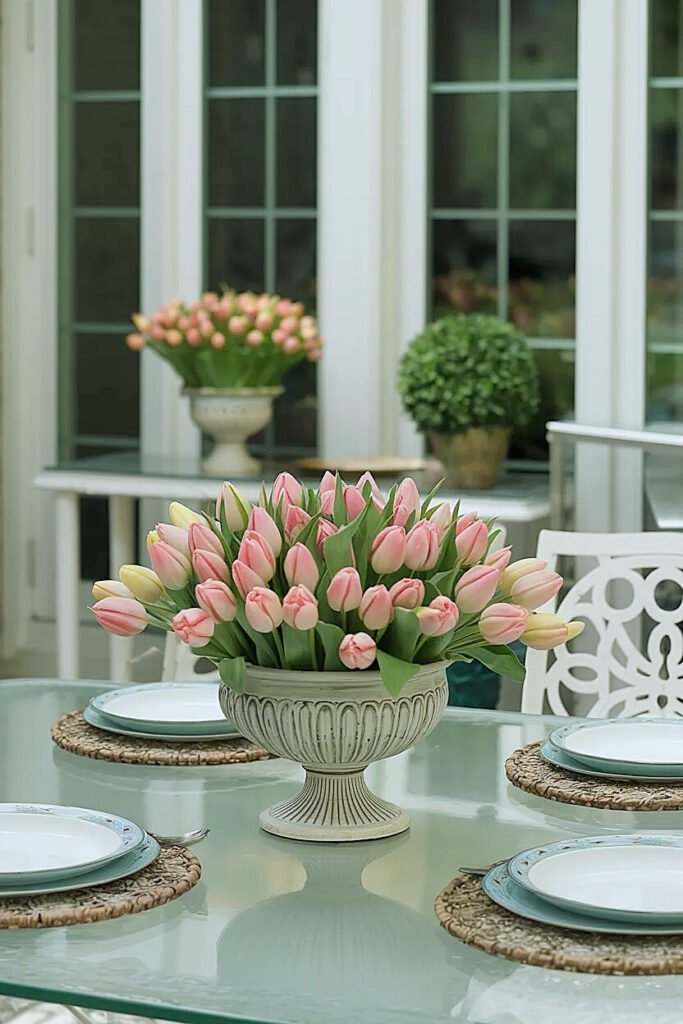
Footed compotes seem contradictory for low centerpieces, those elevated bases suggest height, right? But compotes achieve elegance through base design while keeping the actual bowl shallow, creating sophisticated vessels adding interest through form rather than demanding tall stems creating sightline problems.
The key: choosing compotes with maximum 3-inch pedestal heights paired with shallow bowls, producing total vessel heights around 5-6 inches before stems enter the picture.
1. Wide Shallow Bowl on Low Pedestal
Choose compotes where bowl diameter significantly exceeds pedestal height, like 12-inch diameter bowls on 3-inch pedestals. This creates stable proportions preventing tip-overs while the generous bowl accommodates substantial arrangements. Fill with 10-12 stems cut to 6-8 inches, creating lush compositions staying comfortably under that critical 12-inch total height preventing sightline obstruction.
2. Weighted Pedestal Base for Wind Resistance
Select compotes with solid weighted pedestal bases rather than hollow forms. The concentrated base weight, often 4-6 pounds, creates exceptional stability. I tap pedestal bases before purchasing, listening for solid thuds rather than hollow rings indicating substantial material thickness. This weight concentration low in the vessel provides superior wind resistance.
3. Metal Compotes for Modern Aesthetic
Use metal compotes (brass, copper, or stainless) on contemporary outdoor furniture where traditional ceramic might clash. The metal’s reflective quality adds visual interest beyond the flowers themselves. Position single-color tulip clusters, perhaps 8 coral stems, letting the metal vessel contribute significantly to the overall composition rather than merely holding flowers.
4. Vintage Milk Glass for Cottage Charm
Hunt vintage milk glass compotes bringing nostalgic character perfect for cottage or farmhouse patios. The opaque white glass provides neutral backdrop while the antique nature adds authenticity. These typically feature relatively low pedestals (2-3 inches) with generous shallow bowls ideal for sprawling low tulip arrangements emphasizing width over problematic height.
5. Contrasting Color Compote Against Tulips
Choose compote colors contrasting with tulip selections, perhaps deep blue compotes with coral tulips or black vessels with white blooms. The color contrast makes both container and flowers more impactful than neutral containers would. The pedestal elevation showcases this color relationship beautifully, making the vessel-flower pairing read as intentional composition.
The footed compote strategies add sophistication through vessel design, and the rectangular trough options ahead address linear arrangements perfect for modern outdoor aesthetics.
What Are the Best Low Rectangular Troughs for Spring Tulips Patio Centerpieces
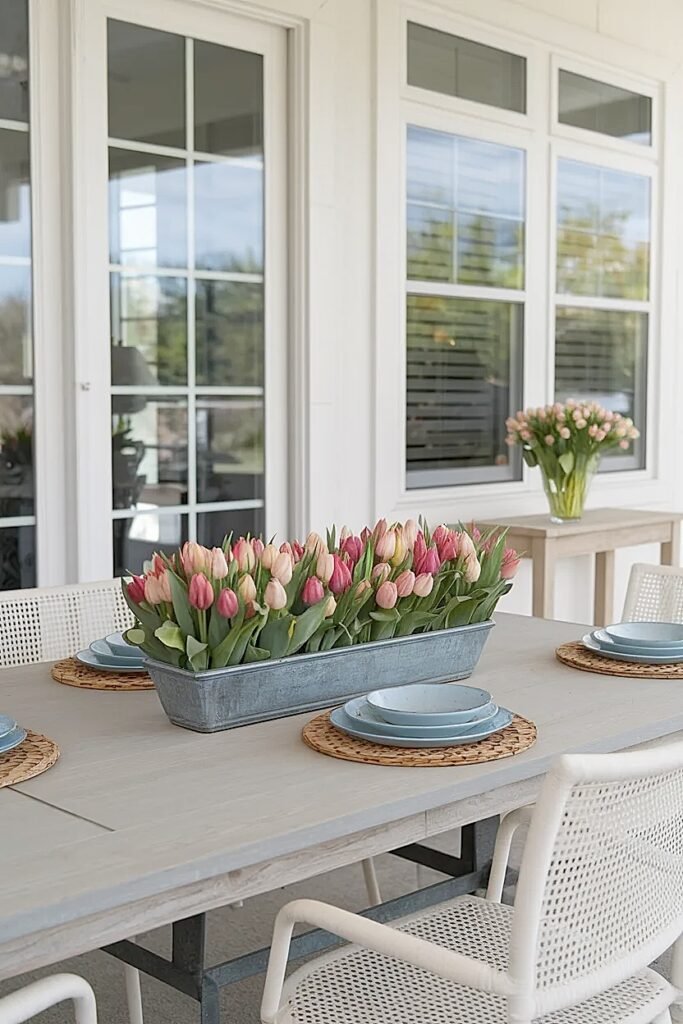
Rectangular troughs create distinctly modern aesthetic departing from traditional round or oval bowls, making them perfect for contemporary outdoor furniture where classic forms might feel dated. The linear geometry creates arrangements emphasizing horizontal lines over vertical emphasis, ideal for patio centerpieces prioritizing low profiles.
These work brilliantly on rectangular tables where the trough form echoes and reinforces the table’s geometry.
1. Concrete Modern Trough (18×6 inches, 4-inch depth)
Industrial concrete troughs deliver contemporary edge with substantial weight (8-10 pounds) providing unmatched wind stability. The gray neutral color works with any tulip shade while adding sculptural interest through material texture. Position 12-15 stems in linear rows emphasizing the trough’s length. The modern aesthetic suits urban or minimalist outdoor spaces perfectly.
2. Galvanized Metal Farmhouse Trough (20×8 inches, 3-inch depth)
Rustic galvanized metal creates farmhouse charm appropriate for cottage or country-style patios. The metal construction handles outdoor conditions brilliantly, rust-resistant, temperature-stable, and surprisingly durable. The elongated form accommodates generous stem quantities while the narrow 8-inch width claims minimal table width. Line with plastic before adding water since metal may eventually corrode.
3. Wooden Planter Box (16×8 inches, 4-inch depth)
Natural wood brings organic warmth softening modern outdoor furniture’s hard edges. Choose thick-walled construction providing adequate weight and durability. These require waterproof liners before use, I prefer heavy plastic sheeting cut to size. The wood grain adds textural interest complementing tulips’ smooth petals beautifully. Seal with outdoor wood treatment extending lifespan significantly.
These linear options create contemporary alternatives to traditional round vessels, and the budget-friendly ceramic baking dish concepts ahead prove beautiful containers don’t require specialty floral budgets.
Ideas for Low Ceramic Baking Dishes as Spring Tulips Patio Centerpieces (Budget-Friendly)
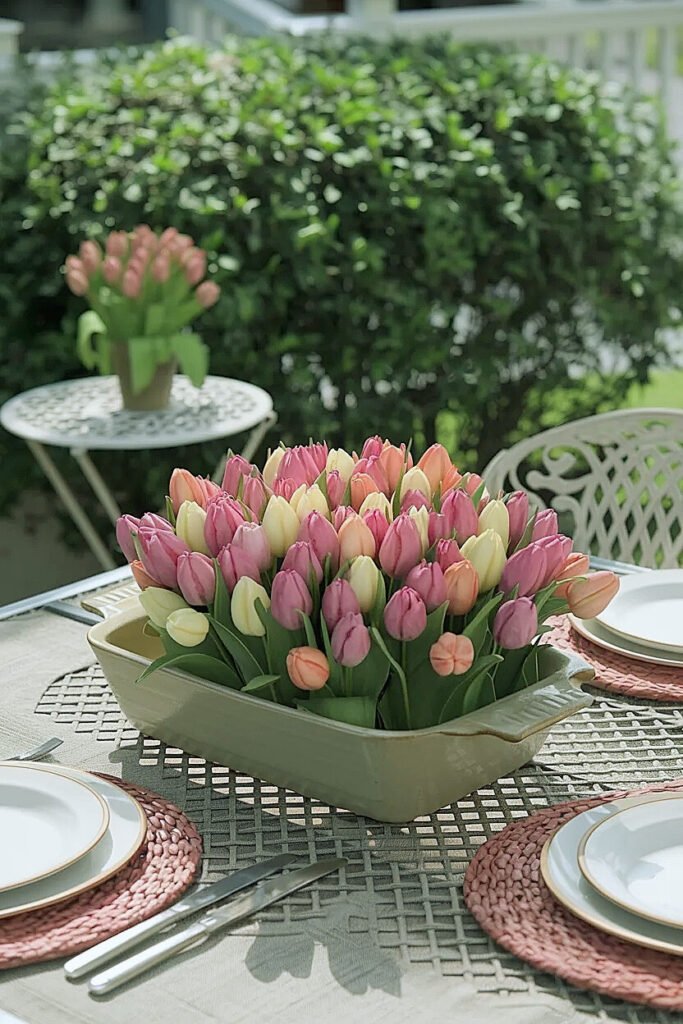
Ceramic baking dishes, those utilitarian kitchen workhorses, create surprisingly sophisticated patio centerpieces at fractions of specialty vessel costs. I stumbled into this accidentally when I grabbed a white ceramic baker for tulips because my “real” vase was dirty, and honestly couldn’t tell the difference in the final arrangement. Now I deliberately hunt kitchen departments for patio containers.
The functionality that makes these great for baking makes them equally great for flowers: substantial weight, proper depth, and durability.
1. Classic White Oval Baker as Elegant Neutral
Use standard white ceramic oval bakers (13×9 inches) creating clean elegant centerpieces at maybe $15-20 versus $60-80 for equivalent “floral” vessels. The white provides universal neutral backdrop flattering any tulip color. The substantial ceramic weight (typically 4-5 pounds) resists wind while the 2-3 inch depth accommodates floral foam perfectly. These look absolutely intentional rather than repurposed, most guests assume they’re actual centerpiece vessels rather than kitchen equipment doing double duty.
2. Colored Stoneware for Personality
Choose colored stoneware bakers, blues, greens, or earth tones, adding personality beyond white neutrality. A cobalt blue rectangular baker creates stunning contrast with coral or yellow tulips. These run $20-30 typically, still dramatically cheaper than specialty containers. The stoneware durability handles outdoor conditions brilliantly. Position complementary tulip colors emphasizing rather than fighting the container color for cohesive compositions.
3. Vintage Pyrex or Fire King for Retro Charm
Hunt vintage glass baking dishes bringing nostalgic 1950s-60s aesthetic to outdoor settings. Those classic Pyrex patterns or Fire King jadeite dishes create instant character impossible with new pieces. Estate sales and thrift stores yield these for $5-15 typically, absolute bargains creating unique centerpieces. The glass transparency lets you see stems and water, creating different aesthetic than opaque ceramic. Ensure glass is genuinely vintage borosilicate (thermal-shock resistant) rather than modern soda-lime glass that cracks outdoors.
The budget alternatives prove style doesn’t require premium spending, and the shape comparison ahead helps you choose between round and oval forms for your specific table.
How to Decide Between Round vs Oval Low Containers for Spring Tulips Patio Centerpieces
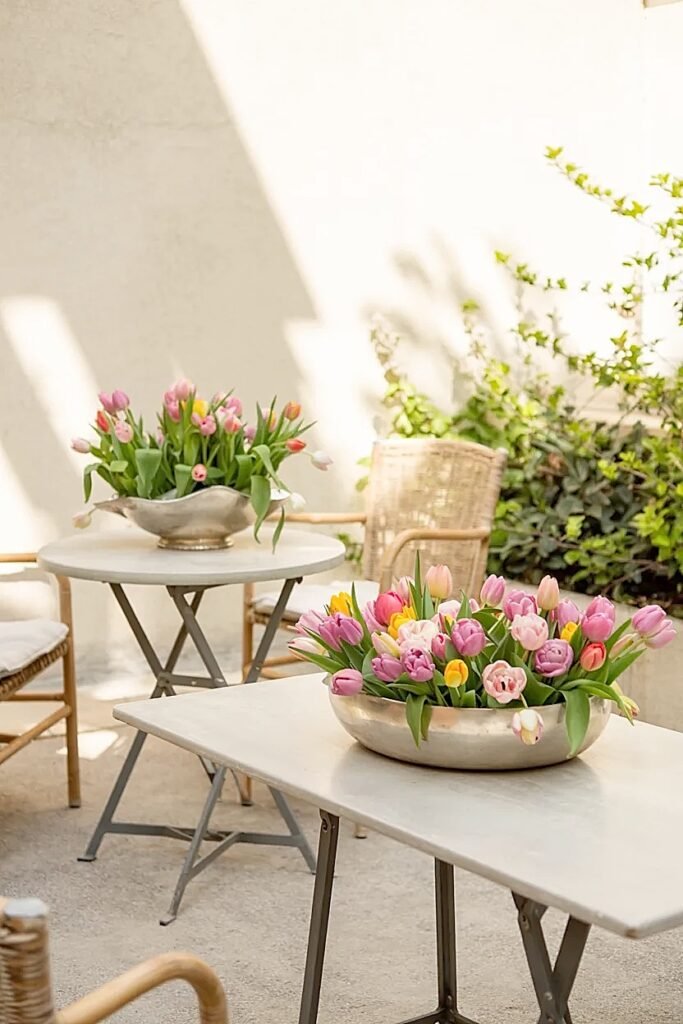
The round-versus-oval decision should be driven entirely by your table shape, not personal preference or availability. I spent years choosing containers I liked aesthetically regardless of table shape before realizing this created subtle visual discord I couldn’t initially identify but definitely felt.
Round tables demand round containers. The circular form echoes the table geometry, creating harmonious relationship between vessel and surface. Oval or rectangular containers on round tables create awkward visual tension, the linear form fights the circular table, making compositions feel forced rather than natural.
Rectangular or oval tables work brilliantly with oval or rectangular containers oriented to emphasize the table’s length. The linear forms reinforce each other, creating cohesive compositions where container and surface feel intentionally paired. Round containers work acceptably on rectangular tables but miss the opportunity to emphasize the table’s linear nature, they’re okay but not optimal.
Square tables offer flexibility, working well with either round or square containers. I slightly prefer round on square tables because the curves soften the angular geometry, but this genuinely comes down to personal preference rather than geometric imperative.
Testing before purchasing helps enormously. I photograph empty containers on my actual tables before buying, those photos reveal proportion and form relationships invisible when containers sit on store shelves. A container that looked perfect in the garden center might appear oversized, undersized, or geometrically mismatched when positioned on your specific table.
The shape principles ensure harmonious table-container relationships, and the side table guidance ahead addresses compact surfaces with completely different spatial requirements.
What Are the Best Low Planter Pots for Spring Tulips Patio Centerpieces on Outdoor Side Tables
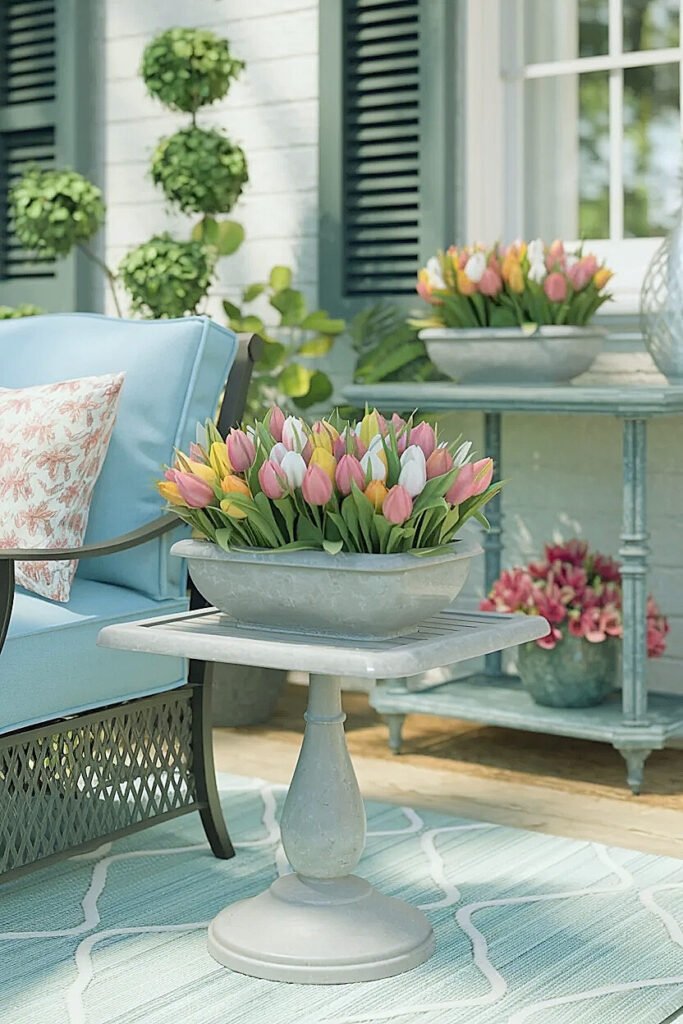
Side tables present unique challenges: they’re typically small (12-18 inch diameters), positioned lower than dining tables, and serve relaxation zones rather than dining areas. These factors demand compact containers that create presence without overwhelming limited surface area while working at the lower viewing angles that seated lounge positions create.
Maximum container diameter for side tables: 8 inches. Larger pieces dominate small surfaces, leaving insufficient room for drinks, books, or phones, the items side tables actually exist to hold.
1. Low Ceramic Planter with Drainage Tray (6-inch diameter, 4-inch height)
These compact planters create perfect proportions for side table centerpieces, substantial enough to register visually but compact enough to leave usable surface space. Choose versions with attached saucers preventing water damage to table surfaces. Fill with 5-7 tulip stems cut to 6-8 inches, creating tight clusters reading as intentional rather than sparse. The ceramic weight (typically 2-3 pounds) provides adequate stability on protected side tables receiving less wind than dining tables.
2. Terra Cotta Azalea Pot for Rustic Warmth (5-inch diameter, 4-inch height)
These squat pots create authentic garden aesthetic perfect for casual lounge areas. The terra cotta breathes, helping prevent overwatering issues common with non-draining centerpiece vessels. The natural clay color provides warm neutral complementing any tulip shade. Position 4-6 stems in loose arrangements emphasizing the compact scale rather than fighting it through overcrowding.
3. Small Metal Cache Pot (6-inch diameter, 5-inch height)
Modern metal vessels bring contemporary edge to lounge spaces with sleek outdoor furniture. Choose brass, copper, or matte black finishes coordinating with furniture hardware. The metal durability handles outdoor conditions while the compact size suits side tables perfectly. Position 6-8 stems creating generous fullness within the size constraints.
4. Mini Concrete Planter (7-inch diameter, 3-inch height)
Ultra-low concrete planters create modern minimalist aesthetic while substantial weight provides excellent stability. The industrial concrete suits contemporary outdoor spaces perfectly. The extreme low profile (3 inches) forces very short stem cuts, 4-6 inches maximum, creating almost ground-hugging arrangements with unique visual appeal different from taller compositions.
5. Vintage Ceramic Jardiniere (6-inch diameter, 4-inch height)
Hunt vintage ceramic jardinières bringing instant character through age and patina. These decorative planters from the 1940s-60s offer unique designs impossible to find in modern production. Position as statement pieces on side tables where their compact size and decorative nature can shine. The vintage aesthetic adds personality that new mass-produced planters simply cannot replicate.
Conclusion
Choosing low containers for spring tulips patio centerpieces means prioritizing function over form while finding vessels delivering both. Start with height restrictions: 6 inches maximum total vessel height for dining tables, even lower for coffee tables. Consider weight ruthlessly, 5 pounds minimum for wind-exposed locations. Match container shape to table geometry: round for round tables, oval for rectangular surfaces. Choose materials handling outdoor conditions: ceramic, terra cotta, metal, or concrete rather than delicate glass or thin plastic. And remember that beautiful containers exist everywhere, not just in floral departments, kitchen bakers, vintage finds, and garden planters all work brilliantly when selected with proper proportions and durability. These practical container choices create patio centerpieces that enhance outdoor living rather than complicating it, which is precisely what successful decorating should achieve.
This website contains affiliate links, and some products are gifted by the brand to test. As an Amazon Associate, I earn from qualified purchases. Some of the content on this website was researched and created with the assistance of AI technology.