This website contains affiliate links, and some products are gifted by the brand to test. As an Amazon Associate, I earn from qualified purchases. Some of the content on this website was researched and created with the assistance of AI technology.
Key Takeaways
- Tulips dominate short centerpieces through naturally flexible stems that arch gracefully at 6-8 inches
- Ranunculus creates perceived fullness through densely layered petals on compact stems
- Kitchen island flowers must look intentional when cut short, not awkwardly stunted
- Dining table arrangements require 12-inch maximum total height preserving conversation sightlines
- Color blocking creates modern sophistication through intentional single-variety zones
- Wide containers create fullness with fewer stems through strategic horizontal spread
Choosing the best spring flowers for short, wide centerpieces requires unlearning everything tall arrangement tutorials taught you about “impressive” displays. Those towering Instagram-worthy compositions with stems reaching skyward? Completely useless for real homes where people actually eat dinner across tables, prep meals on kitchen islands, and have conversations without playing peek-a-boo around floral obstacles. I built one of those tall disasters for my first dinner party, gorgeous in photos, infuriating in practice when my brother-in-law had to lean around it repeatedly just to ask someone to pass the salt.
The truth nobody mentions: certain spring flowers thrive when kept short while others look brutally awkward, like you decapitated something that desperately wanted height. Tulips? Bend beautifully. Ranunculus? Stay lush and full. Gladiolus cut to 8 inches? Looks ridiculous, the proportions go completely wrong and you can’t unsee it. Understanding which flowers naturally excel in low, wide formats versus which ones you’re fighting against transforms your success rate from frustrating trial-and-error to consistent beautiful results that actually function in the spaces they occupy.
Not sure which Spring Flowers work best for short, wide centerpieces? This guide makes it simple. Match your surface to the right low container, pick blooms that stay low, follow a fast build method, and avoid the common “too tall/too messy” mistakes. Tap rows on mobile and copy the checklist.
Short + Wide Spring Flowers Centerpiece Cheat Sheet
Match the surface to the right low container, choose low blooms, then follow the quick build rules.
| Surface + Container | Best Spring Flowers | Fast Build | Rules |
|---|---|---|---|
Dining tableLow bowl
|
RanunculusAnemonesShort tulips
|
|
|
Kitchen islandLow compote
|
AnemonesShort tulipsMini daffs
|
|
|
Coffee tableLow tray
|
RanunculusMuscariMini tulips
|
|
|
SideboardLow trough
|
RanunculusAnemonesMini daffs
|
|
|
How to Choose Spring Flowers That Stay Short in Shallow Bowls on Kitchen Islands
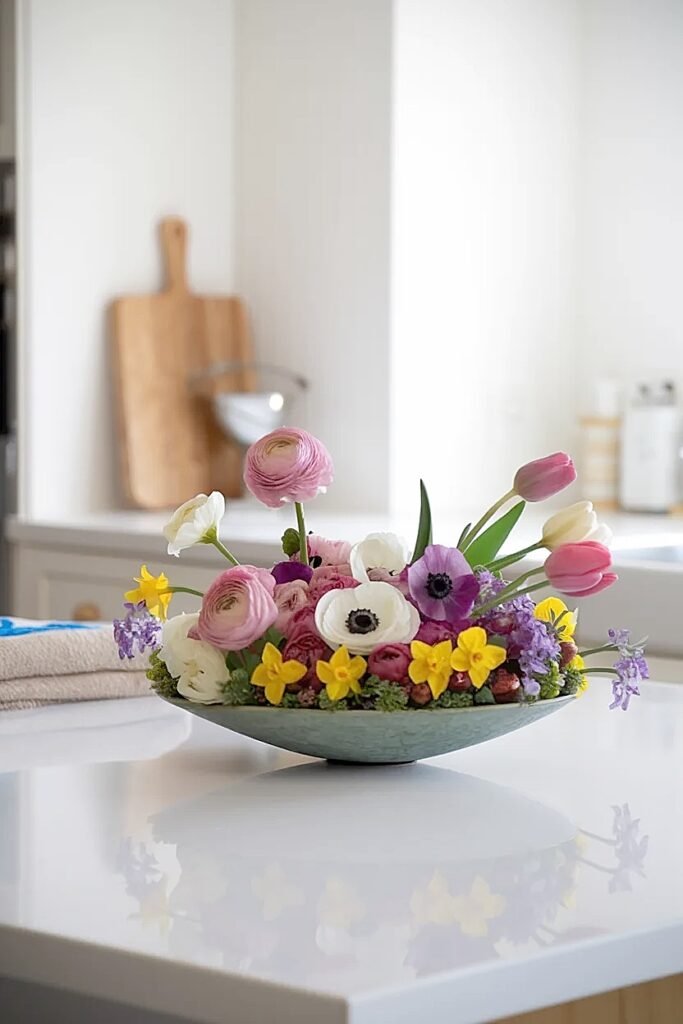
Kitchen islands punish you immediately for wrong flower choices. Unlike console tables where you can get away with questionable proportions, islands serve as active work surfaces where bad arrangements get shoved aside mid-cooking, the ultimate judgment on whether your centerpiece works or fails.
Not every spring flower handles shortness gracefully. Some need height to maintain visual logic, and cutting them creates that awkward “I wish I was taller” vibe that undermines the whole composition. The winners possess either naturally compact bloom structures or flexible stems that curve rather than stand rigidly.
I test candidates ruthlessly now. Cut to 6-7 inches, my target for island work, and evaluate honestly whether the result looks intentional or compromised. Tulips pass brilliantly; those stems arch and flow creating organic movement. Ranunculus excel through blooms so densely packed with petals that they create substantial presence regardless of stem length. Anemones deliver bold graphic centers on naturally short stems. Hyacinths grow compact flower spikes that never needed height anyway.
The automatic rejects: gladiolus, tall lilies, delphinium, and long-stemmed florist roses. These all scream “something’s wrong” when shortened, proportions between bloom size and stem length collapse into awkwardness. No amount of skillful arranging fixes flowers fighting their natural form, and for detailed guidance on container selection and strategic positioning across different serving surfaces, there’s comprehensive coverage worth exploring, definitely share this with anyone wrestling with spring centerpiece challenges!
The kitchen island flower selection establishes which blooms cooperate with low formats, and the dining table list ahead identifies the absolute champions.
What are the Best Spring Flowers for Short, Wide Centerpieces on Dining Tables?
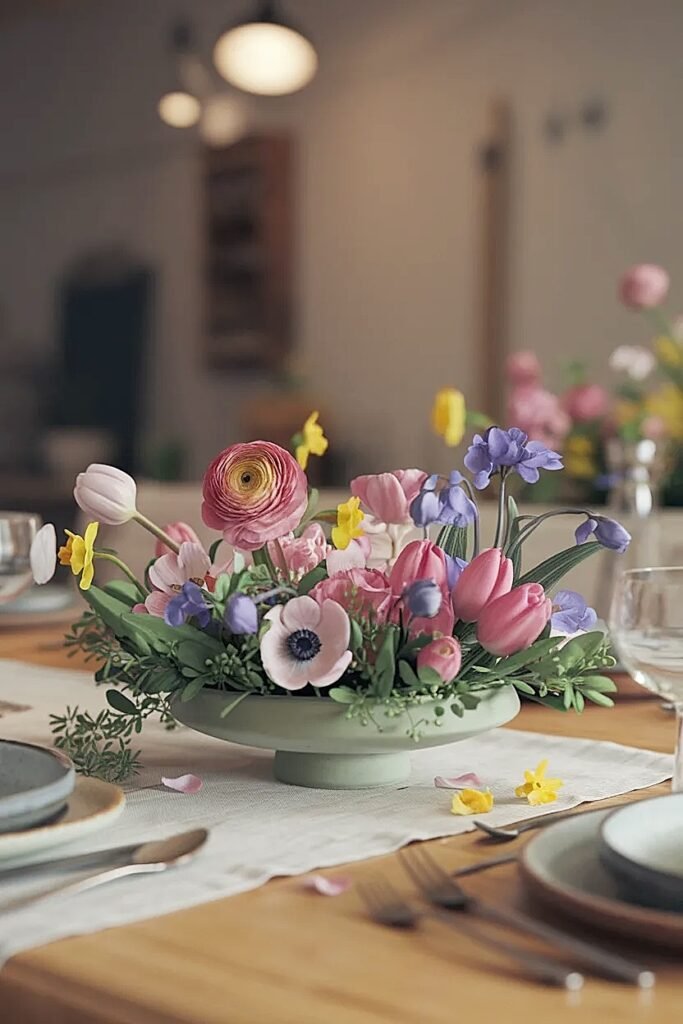
Dining tables impose the sacred 12-inch maximum height rule, violate it and you’re blocking sightlines, forcing guests into awkward neck-craning gymnastics just to maintain conversation. Certain spring flowers excel here through perfect combinations of flexible stems, substantial blooms, and proportions that work naturally at restricted heights.
I’ve tested maybe thirty varieties across five years of dinner parties, and these five consistently crush everything else.
1. Tulips for Organic Flow
Tulips absolutely dominate short work through stems that refuse rigidity, instead curving and arching organically when cut to 6-8 inches. The blooms measure 2-3 inches across, substantial enough to anchor compositions without demanding height. The insane color range means you’ll find matches for any aesthetic. Position 12-15 stems in wide shallow bowls creating lush rounded masses. The stems keep moving for days, creating evolving living sculptures rather than static displays.
2. Ranunculus for Textured Luxury
Ranunculus pack concentric petal layers creating rose-like complexity on naturally compact stems perfect for low restrictions. Those 2-3 inch blooms deliver serious visual weight. The ruffled romantic texture elevates sophistication beyond simpler flowers. Cut to 5-7 inches and use 10-12 stems in generous vessels. The layered construction creates incredible depth even when everything stays low. Spring colors from cream through peach to burgundy provide endless options.
3. Garden Roses for Fragrant Elegance
Modern garden varieties produce full blooms on shorter flexible stems unlike their rigid long-stemmed commercial cousins. Cut to 6-8 inches and they maintain natural proportions rather than looking weirdly truncated. The fragrance adds sensory dimension that purely visual flowers miss. Choose compact types like ‘Keira’ or spray roses. Use 7-10 stems creating textured romantic compositions. The full form creates presence without height demands.
4. Anemones for Graphic Boldness
Anemones deliver those dramatic dark centers contrasting white, pink, or purple petals, instant graphic punch in low arrangements. The blooms sit on naturally short flexible stems already suited to compact work. The simple bold form prevents visual clutter when densely packed. Use 8-10 stems cut to 6-7 inches. Those dark centers create focal magnetism. The slightly wild organic energy beats overly-perfect cultivated flowers.
5. Hyacinths for Compact Fragrance
Hyacinth spikes grow naturally at 6-8 inches, they’re literally designed for low centerpiece work without any forcing. The densely packed florets create substantial visual mass on each spike. The powerful fragrance transforms arrangements into multi-sensory experiences. Position 5-7 spikes in clusters. Spring colors from white through pink to deep purple provide range. Sturdy stems resist drooping maintaining neat presentations.
These champions prove some flowers just work better naturally, and the console building techniques ahead leverage surfaces without sightline restrictions.
How to Build Spring Flowers Short, Wide Centerpieces for Entryway Console Tables
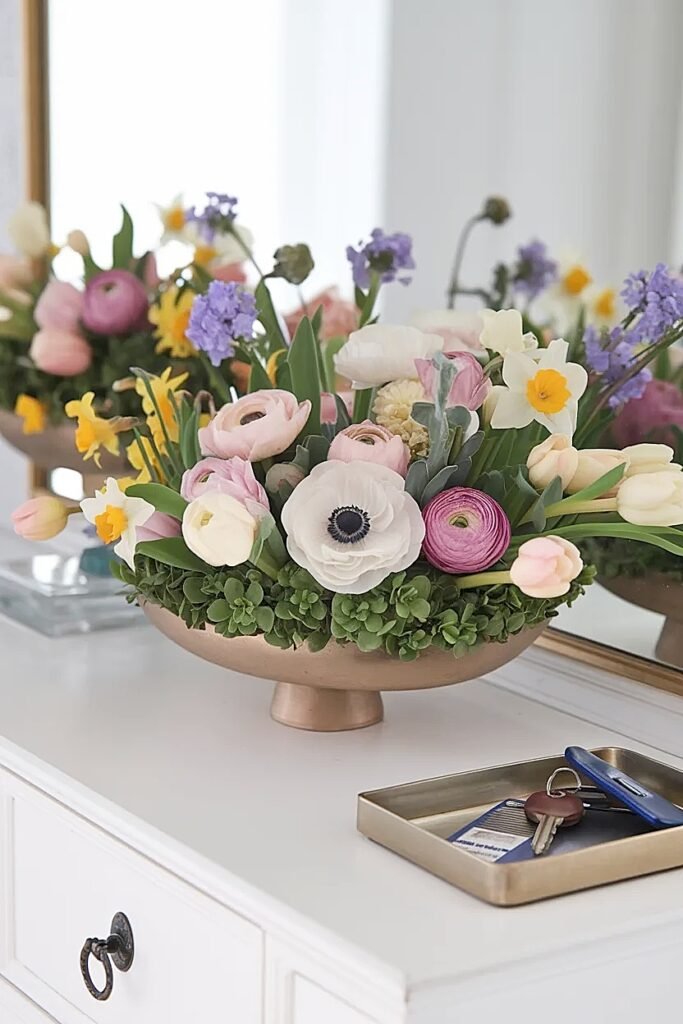
Entryway consoles liberate you from dining table tyranny, nobody’s trying to see over your flowers during meals here. But you still want short, wide emphasis creating welcoming horizontal flow rather than intimidating vertical towers that can feel aggressive in entry spaces making crucial first impressions.
I approach consoles with permission for drama that functional spaces deny. The sightline freedom lets me build denser, fuller compositions using stem counts that would overwhelm kitchen islands or dining tables.
Wide shallow bowls measuring 14-16 inches diameter create appropriate presence for greeting spaces. I fill these generously, maybe 18-25 stems depending on variety, building lush abundance signaling “welcome” through sheer fullness. The low profile keeps everything approachable.
My building method differs from minimalist approaches. I establish structural framework using greenery around bowl perimeters, then pack focal flowers, tulips, ranunculus, garden roses, densely into centers. This creates graduated fullness radiating from center outward with maximum density at the heart.
Asymmetry works brilliantly in entryways more than other locations. Maybe all visual weight concentrated left with trailing elements extending right, creating dynamic energy appropriate for transitional spaces where people move through rather than lingering. The functional freedom makes consoles perfect experimentation zones.
The console liberty contrasts sharply with buffet discipline, and the mixing strategies ahead address combining varieties successfully in food-service contexts.
Ways to Mix Spring Flowers for Short, Wide Centerpieces on Buffets and Sideboards
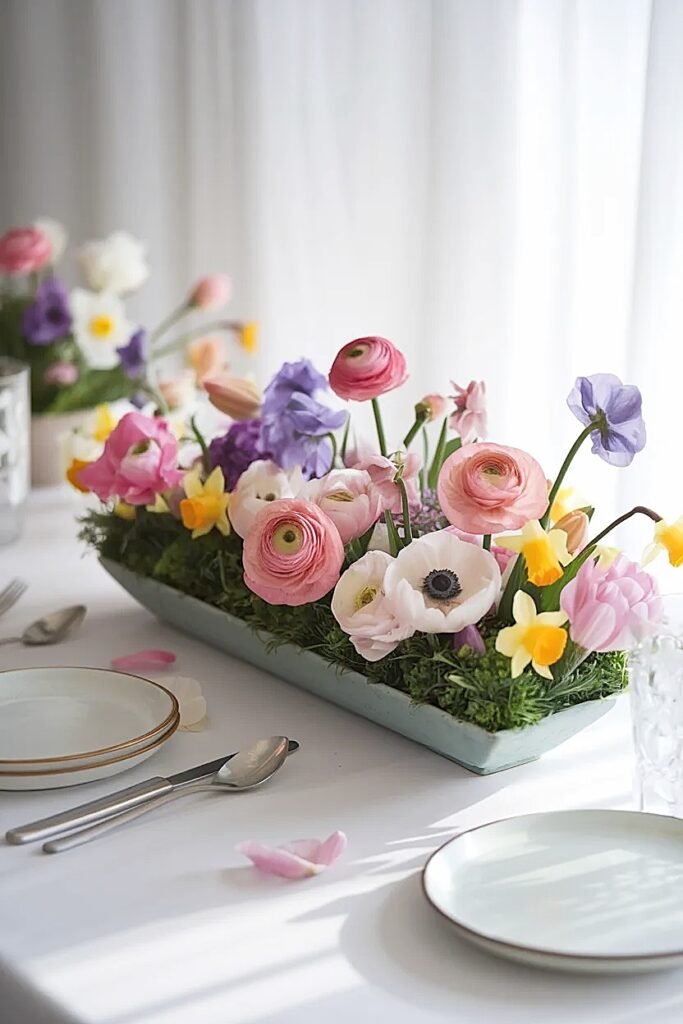
Buffets demand flowers enhancing food without competing, meaning disciplined mixing where each variety serves clear purpose rather than creating chaotic “threw everything together” messes distracting from meals.
I limit buffet mixes to three flower types maximum. More creates visual noise undermining food presentation.
1. Tulips with Hellebores for Texture Play
Combine 8-10 tulips with 5-6 hellebore stems contrasting tulips’ bold simplicity against hellebores’ delicate nodding complexity. Coordinate colors, coral tulips with cream hellebores, maintaining cohesion through palette. Position tulips centrally with hellebores edging, creating layered depth. The garden-fresh combination suits casual buffet vibes better than stiff formal arrangements.
2. Ranunculus with Anemones for Petal Conversation
Mix 8 ranunculus with 6-7 anemones creating interplay between ranunculus’ ruffled layers and anemones’ graphic simplicity. Choose complementary shades, white ranunculus with burgundy anemones, or coordinated corals creating tonal harmony. Varied petal structures prevent monotony while related forms maintain unity. Both naturally sit at similar heights eliminating awkward mismatches.
3. Hyacinths with Muscari for Vertical Interest
Combine 4-5 hyacinth spikes with 8-10 muscari stems creating textural variation through scale differences. Hyacinths provide mass while tiny muscari add delicate counterpoint. Blues and purples create cool harmony, or whites and creams deliver elegance. The shared bulb family creates cohesion despite size differences.
4. Daffodils with Tulips for Classic Spring
Mix 6-8 daffodils with 8-10 tulips hitting quintessential spring notes. Daffodils’ trumpet forms contrast tulips’ cups while both naturally match heights. Yellow daffodils with white tulips create clean contrast, or coordinate colors for harmony. The combination screams “spring” through instant recognition.
5. Garden Roses with Tulips for Romantic Abundance
Combine 6-7 garden roses with 10-12 tulips building romantic lushness. Roses provide fragrance and complexity while tulips add bold color blocks. Coordinate thoughtfully, blush roses with coral tulips, cream roses with burgundy tulips. The sophisticated pairing suits special occasion buffets.
The buffet mixing balances variety with cohesion, and the outdoor guidance ahead addresses weather-resistant selections.
What are the Best Spring Flowers for Short, Wide Centerpieces on Outdoor Patio Tables?
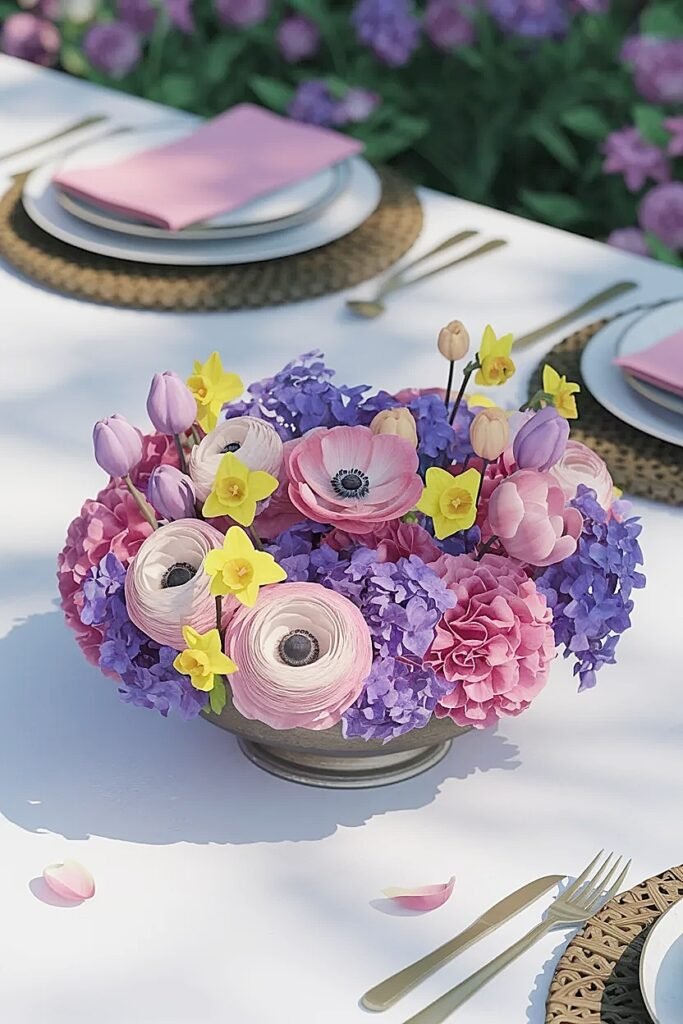
Outdoor flowers battle wind, temperature swings, and sun exposure that indoor blooms never face. Not all spring varieties handle these stresses equally, some collapse immediately while others thrive.
Wind resistance becomes the selection filter outdoors, favoring sturdy stems and blooms that bend rather than shatter.
1. Daffodils for Weather-Proof Sturdiness
Daffodils feature exceptionally rigid stems and aerodynamic blooms that withstand serious wind without damage. The trumpet-and-petal structure actually bends with gusts rather than breaking. Natural compact height of 8-12 inches suits low outdoor work perfectly. Position 10-12 stems in weighted containers creating cheerful clusters. Waxy blooms resist sun damage that destroys delicate petals. Outdoor-adapted bulb origins mean they handle exposure naturally.
2. Hyacinths for Fragrant Outdoor Dining
Hyacinth spikes handle outdoor conditions remarkably well through dense individual floret packing creating substantial mass. Wind damage to a few florets doesn’t destroy overall appearance. Powerful fragrance enhances outdoor meals through natural aromatherapy. Compact 6-8 inch spike height works perfectly low. Use 5-7 stems creating fragrant focal points. Darker colors hide sun fading better than pale shades.
3. Garden Roses for Sophisticated Patio Beauty
Modern garden varieties bred for outdoor cultivation handle exposure through disease resistance and flexible sturdy growth. Choose naturally compact types rather than tall hybrid teas. Full blooms create elegance while flexible stems bend with wind. Position 6-8 stems in substantial weighted vessels. Foliage mass helps anchor against gusts. Fragrant varieties add sensory dimension to outdoor dining.
The outdoor selections prioritize durability, and the color blocking technique ahead demonstrates modern aesthetic through organization.
How to Use Spring Flowers Color Blocking in Short, Wide Centerpieces (Clean + Modern)
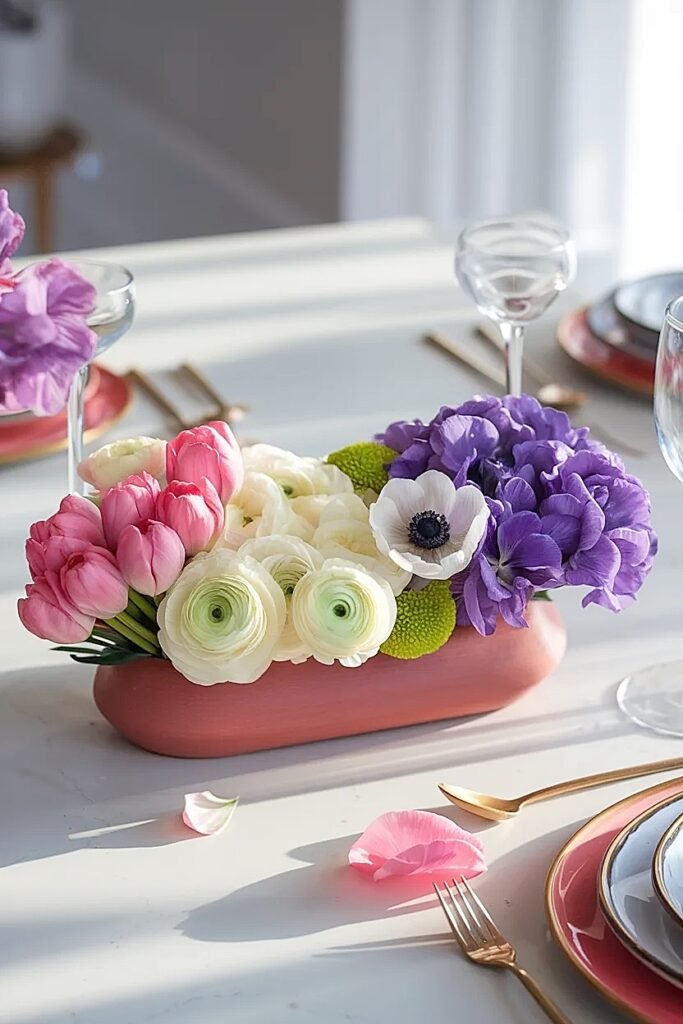
Color blocking organizes flowers into distinct color zones within single arrangements rather than randomly scattering shades throughout. This creates clean modern sophistication through intentional placement.
I discovered blocking’s power accidentally when I ran out of mixed tulips mid-arrangement and had to section remaining single colors. The organized result looked infinitely more sophisticated than usual random mixing.
The method: mentally divide wide bowls into zones, thirds or quarters, dedicating each to one distinct color. In a 14-inch bowl, I might create: one-third coral tulips, one-third cream, one-third burgundy. Colors touch at borders but don’t mix, creating graphic impact.
Color relationships determine success. Use monochromatic progressions (pale pink to deep rose), analogous colors (coral, peach, yellow), or high-contrast pairings (purple and yellow). Random blocking without thoughtful relationships looks confused.
Zone boundaries need definition without rigid separation. I let 2-3 stems per color drift into neighboring zones, creating soft transitions rather than harsh lines. This maintains blocked organization while preventing artificial paint-by-numbers appearance.
The blocking approach creates contemporary edge, and the runner concepts ahead extend visual flow across table lengths.
Ways to Create a Spring Flowers “Runner” Using Mini Low Bowls Across Long Tables
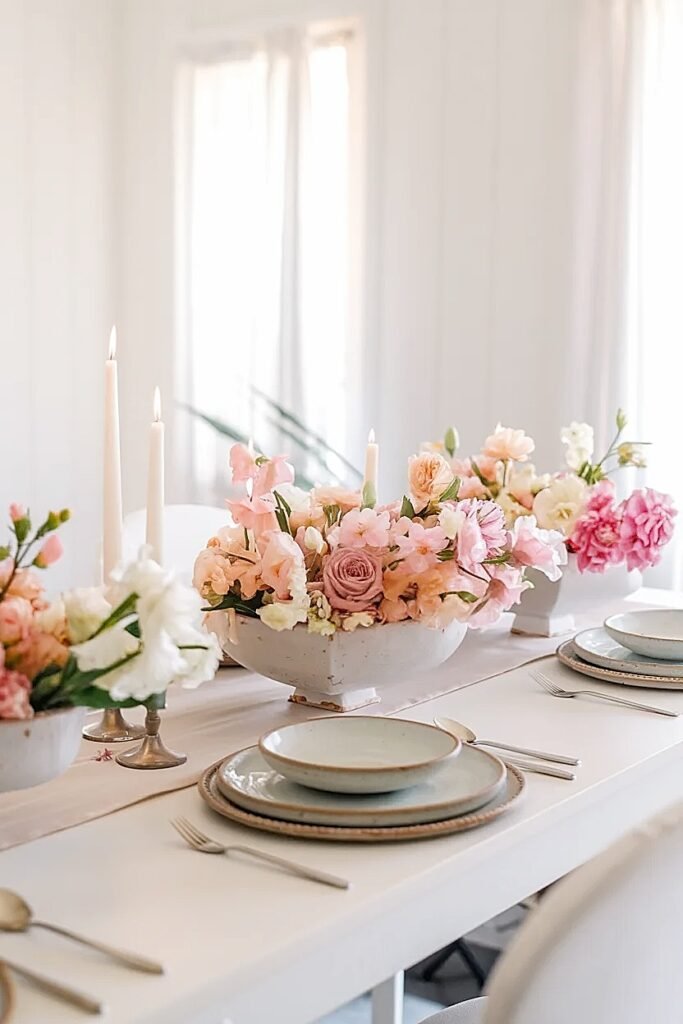
Table runners using multiple small bowls create continuous visual presence on long tables while avoiding single-large-centerpiece problems where one arrangement dominates, blocks sightlines, or claims excessive space.
The runner distributes floral interest across full table length through coordinated repetition.
1. Identical Bowl Repetition Creating Visual Rhythm
Position 5-7 matching 6-inch bowls spaced evenly along table length, each filled identically with 5-6 tulips in one color. Repetition creates rhythm while compact individual sizes preserve sightlines and surface space. Consistency signals intentional design. Space bowls 18-24 inches apart for balanced distribution. This crushes on tables 8+ feet long where single centerpieces would overwhelm or disappear depending on size choice.
2. Alternating Color Pattern Building Table Energy
Use 6-8 small bowls alternating between two colors, coral tulips in positions 1, 3, 5, 7 and white tulips in 2, 4, 6, 8. The pattern creates energy through repetition with variation. Color dialogue across table length adds interest beyond single-color monotony. Maintain identical bowl styles for cohesion while color provides variation. The pattern reads clearly from any seating position around the table.
3. Graduated Size Progression from Ends Toward Center
Position 5 bowls with smallest (4-inch) at each end, medium (6-inch) between ends and center, largest (8-inch) at center. Each holds proportional stem counts creating graduated fullness building toward table midpoint. This creates focal emphasis centrally while end bowls provide framing. Size progression adds sophisticated spatial organization beyond uniform sizing that can read as repetitive or boring.
4. Mixed Flower Types in Coordinated Vessels for Variety
Use 5-7 matching bowls each filled with different single-variety flowers, one ranunculus, next tulips, next anemones, next hyacinths, creating variety through species rather than mixing within individual bowls. Single-variety-per-bowl maintains clean organization while collective variety prevents monotony. Choose coordinating colors across all varieties creating unified palette despite species differences. This approach delivers complexity through thoughtful organization.
5. Asymmetric Cluster Groupings Breaking Linear Expectations
Rather than even spacing, create clustered groupings, maybe three bowls grouped at one table end, two at opposite end, leaving center relatively open. This breaks expected linear patterns creating contemporary asymmetric compositions. Groupings create focal points at table ends while center openness preserves serving and dining space. The unconventional organization feels modern rather than traditional or predictable.
The runner approaches multiply impact through strategic repetition, and the efficiency technique ahead maximizes visual presence with minimal stems.
How to Make Spring Flowers Look Wide and Full with Fewer Stems in Low Containers
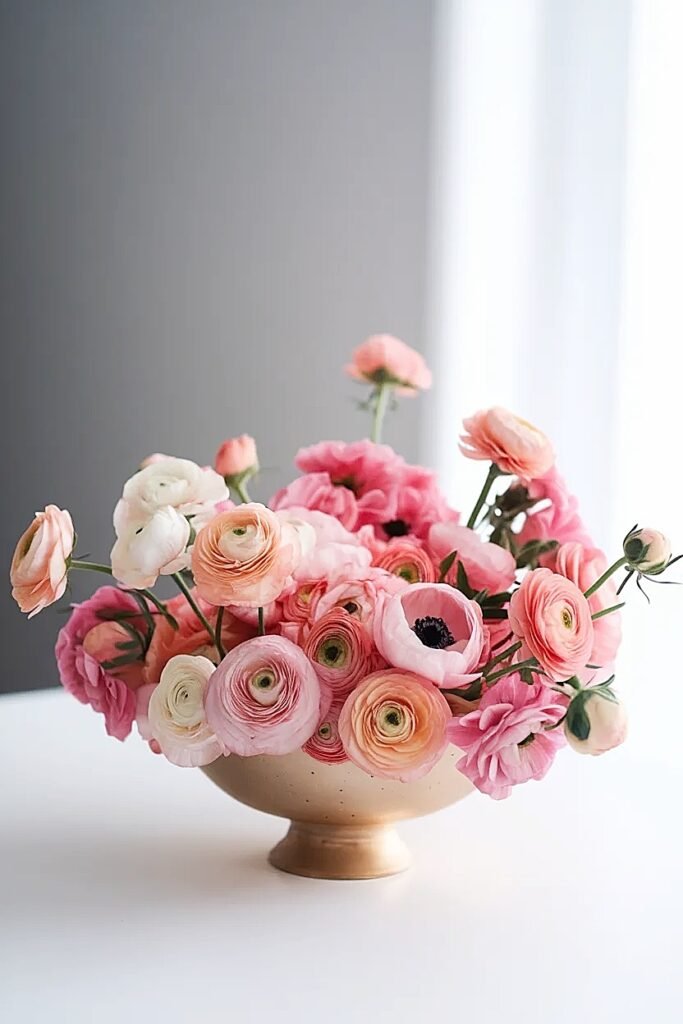
Creating perceived fullness without excessive stems saves money while preventing overcrowded chaos where individual blooms disappear into masses.
Strategic placement maximizing horizontal coverage through spread rather than vertical packing creates the illusion.
I start with the widest vessel possible relative to surface constraints, maybe a 14-inch bowl on buffets where width doesn’t interfere functionally. That generous diameter creates immediate fullness perception before flowers arrive.
Stem positioning delivers the magic. I angle stems outward from center rather than keeping them vertical, creating dome shapes extending beyond bowl rims. This pushes perceived diameter beyond vessel boundaries. Ten angled stems can create 18-inch visual diameter despite sitting in 12-inch bowls.
Floral foam enables angling by holding stems at desired positions. I cut foam fitting bowls snugly, secure with waterproof tape, then insert stems at 30-45 degree angles from vertical. The angled insertion automatically creates wider spread.
I also use inexpensive greenery or filler around perimeters creating fullness frameworks, then position focal flowers, tulips or ranunculus, centrally. Greenery extends visual boundaries using budget materials, reserving spending for fewer statement blooms that get properly showcased rather than buried.
The efficiency strategies prove less delivers more, and the nightstand ideas ahead adapt principles to truly compact bedroom contexts.
Ideas for Spring Flowers Short, Wide Centerpieces for Nightstands in Small Bedrooms
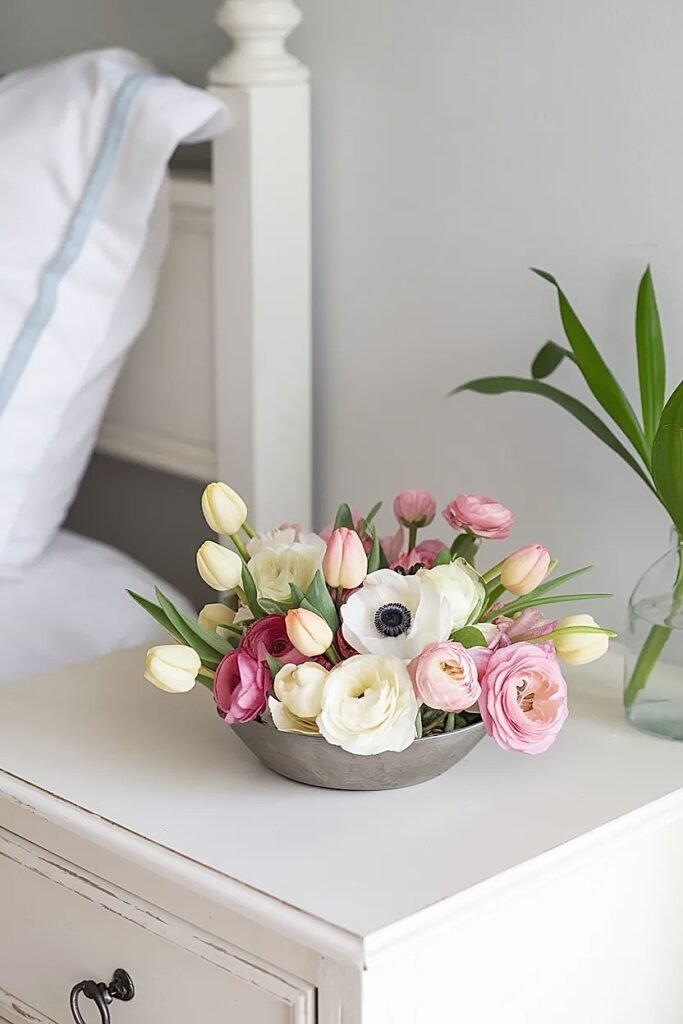
Nightstands present extreme constraints, every square inch matters for lamps, books, water, phones, alarms. Flowers must enhance without interfering, demanding ultra-compact vessels and minimal stems creating impact through quality over quantity.
Maximum nightstand footprint: 6 inches diameter. Larger starts competing with essential bedside items.
1. Single-Color Mini Bowl for Bedside Tranquility
Use 4-inch diameter shallow bowl with 3-5 stems of one single tulip color creating calming monochromatic presence appropriate for sleep spaces. Unified color promotes relaxation rather than multi-color stimulation. Choose soft shades like blush pink, cream, or pale lavender supporting tranquil bedroom atmosphere. Position on nightstand corner preserving surface for functional items. Compact scale maintains bedside utility while adding natural beauty. Simplicity prevents visual clutter potentially disrupting bedroom’s restful purpose.
2. Fragrant Hyacinth Duo for Natural Bedroom Aromatherapy
Position 3-inch bowl with just 2-3 fragrant hyacinth stems creating gentle natural scent supporting relaxation without overwhelming. Compact blooms suit small nightstands while fragrance adds sensory dimension beyond visual appeal. Avoid overly intense scents disrupting sleep, pale colors tend toward gentler fragrance profiles. Minimal stem count prevents arrangement from dominating precious nightstand real estate. Natural aromatherapy creates healthier alternative to synthetic air fresheners or candles presenting fire hazards in bedrooms.
3. Miniature Rose Cluster for Intimate Romantic Touch
Use 5-inch low bowl with 4-6 small garden roses or spray roses creating romantic intimate presence perfect for bedroom contexts. Compact blooms and minimal height suit nightstand scale without overwhelming. Choose soft colors and fragrant varieties adding sensory pleasure. Roses’ romantic associations make them particularly appropriate for bedrooms rather than public spaces. Small scale feels personal and intimate rather than attempting impressive displays unsuited to private spaces where relaxation trumps performance or show.
Conclusion
Choosing spring flowers for short, wide centerpieces means selecting species that look natural and intentional when kept low rather than fighting their growth habits through forced stunting. Tulips, ranunculus, anemones, hyacinths, and compact garden roses consistently excel through flexible stems, substantial blooms, and proportions working beautifully at 6-8 inch heights. Build arrangements in wide shallow bowls creating horizontal emphasis, position stems at outward angles maximizing perceived fullness, and never exceed 12 inches total height on dining tables where conversation sightlines remain sacred. These flower selections and techniques create centerpieces enhancing rather than obstructing, which is precisely what successful floral design should achieve.
This website contains affiliate links, and some products are gifted by the brand to test. As an Amazon Associate, I earn from qualified purchases. Some of the content on this website was researched and created with the assistance of AI technology.