This website contains affiliate links, and some products are gifted by the brand to test. As an Amazon Associate, I earn from qualified purchases. Some of the content on this website was researched and created with the assistance of AI technology.
Key Takeaways
- Keep all flower elements in sealed water vessels rather than loose floral foam, which can contaminate food-adjacent surfaces
- Every garland element should sit below the sightline of a standing guest
- Cluster-based garlands are faster and more food-safe than continuous stem garlands
- A tray zone system keeps flowers physically separated from the food zone without active monitoring
- Lisianthus, zinnias, and ranunculus are the top grocery store picks for this application
- Seeded eucalyptus and Italian ruscus are the backbone greens that make clusters read as a real garland
Building a summer flowers snack table garland sounds like a project reserved for event stylists. It is not. I put together my first one forty minutes before a graduation party using one bunch of zinnias, some grocery store eucalyptus, and five short jars I already owned. Two guests asked which florist I had used.
The secret is not the flowers. It is understanding what a garland on a snack table actually requires. Low profile. No loose stems near food. Nothing tipping when someone reaches for chips. Once those three principles click, the whole approach becomes fast and genuinely impressive.
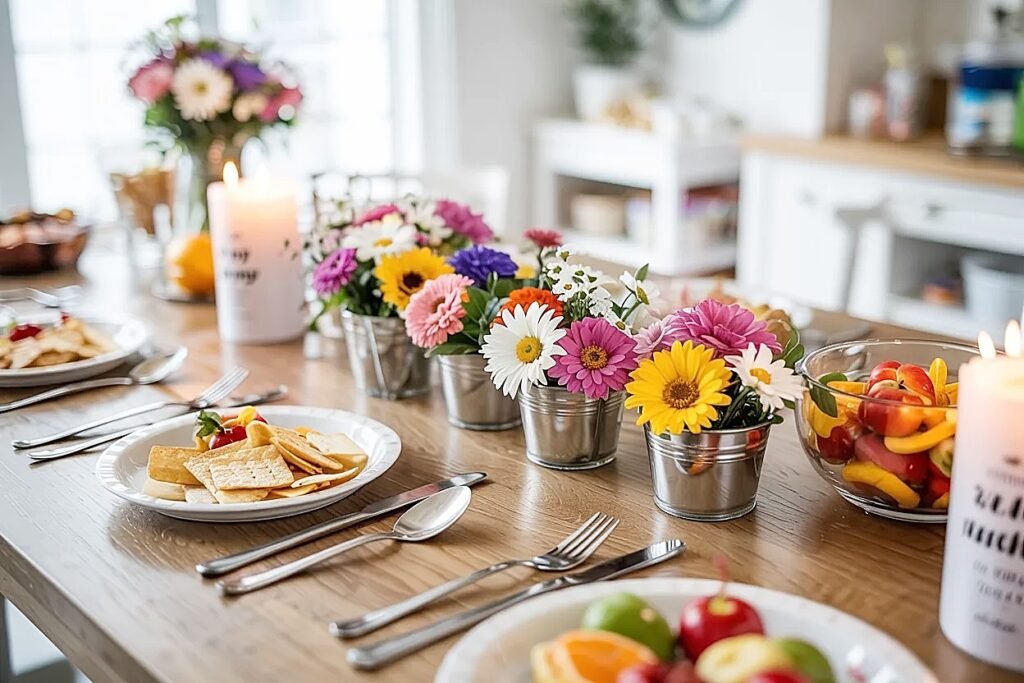
Snack tables get chaotic fast. This cheat sheet keeps your Summer Flowers garland low, tidy, and safely out of the food lane. Use tray zones, back-edge framing, and mini containers so guests can grab snacks easily while your table still looks bright, curated, and party-ready.
Summer Flowers Snack Table Garland: Low + Food-Safe Cheat Sheet
Keep flowers behind the food lane, stay low + wide, and use tray zones so decor never fights snacks.
| Snack Table Area | Low + Food-Safe Placement | Fast Build Formula | Do This / Avoid This |
|---|---|---|---|
| Back edge “garland line” low minisclean lane |
7–9 mini containers along the back edge only | Short stems + tight pockets; greens tucked under | Do: keep front lane open. Avoid: flowers near bowls. |
| Corner “frame” photo-readyno clutter |
Back corners only + a few minis between (framing) | Repeat 1 bloom across minis; looks curated fast | Do: corners + back edge. Avoid: front-edge decor. |
| Tray zones food lanesafe |
Trays define food lane; flowers sit behind trays | 2–3 color edit + mini repeats for cohesion | Do: trays as borders. Avoid: loose snacks + flowers. |
| Labels + signage readablefast |
Place labels in the front lane; flowers stay behind | Low height so labels remain visible | Do: keep labels clear. Avoid: tall blooms behind cards. |
| Kids + pets stablelow |
Heavy bases and back edge placement | Short stems + compact minis (no grab points) | Do: heavy + low. Avoid: light/tippy pieces. |
Back edge garland line (Low minis)
Corner frame (Photo-ready, no clutter)
Tray zones (Food lane stays clean)
Labels + signage (Always readable)
Kids + pets (Stable + low)
How to Build Summer Flowers Snack Table Garlands That Stay Low and Food-Safe Using Mini Clusters
Most people approach a snack table garland the same way they would a centerpiece: one large vessel, all the stems, right in the middle. The problem is that a snack table is not a dining table. Guests reach across it constantly. A big central arrangement is an obstacle.
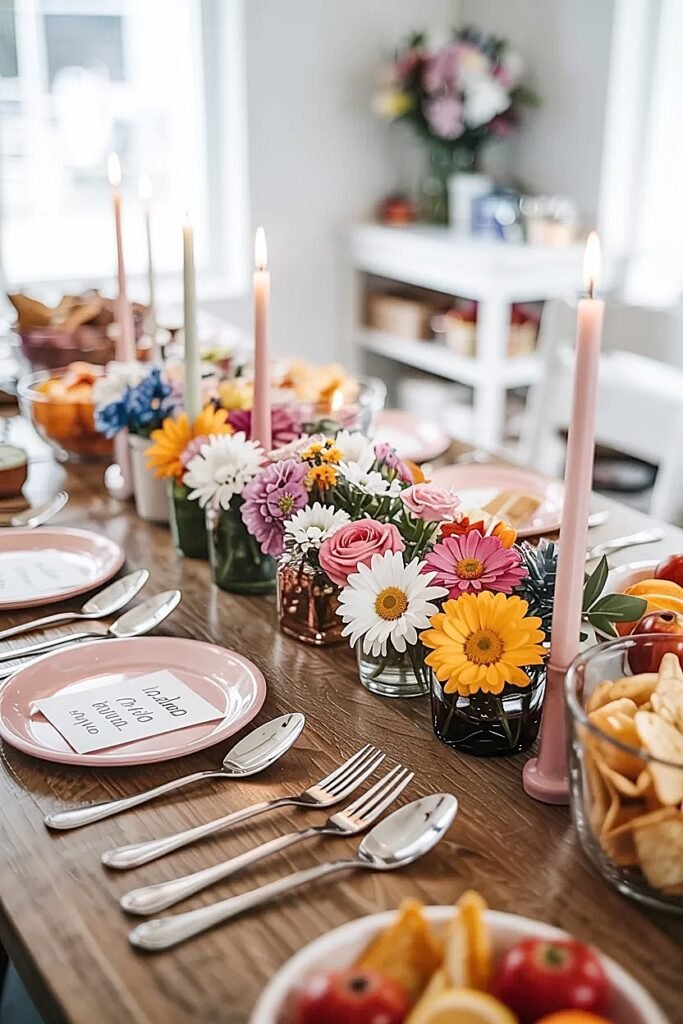
Mini clusters change everything. Instead of one arrangement, you build five or six small, self-contained ones spaced along the back edge. Each cluster is a sealed jar with water and two to four stems. A trailing vine of eucalyptus or ruscus connects the bases loosely, turning a row of jars into a garland.
To build it, start with five small vessels. Fill each with two inches of cold water and cut stems to about three inches so blooms sit just above the rim. Space them along the back edge. Lay a single strand of seeded eucalyptus loosely through the jar bases, letting it follow a natural curve. The result reads as a designed garland while keeping every element contained.
For a deeper look at getting the most out of grocery store flowers for a setup like this, check out how to turn grocery store summer flowers into expensive-looking decor. Share it with anyone planning a summer party. There is a lot more ahead covering every table type and situation where a snack table garland actually works.
Ideas for Summer Flowers Snack Table Garlands That Stay Low and Food-Safe on Kitchen Islands
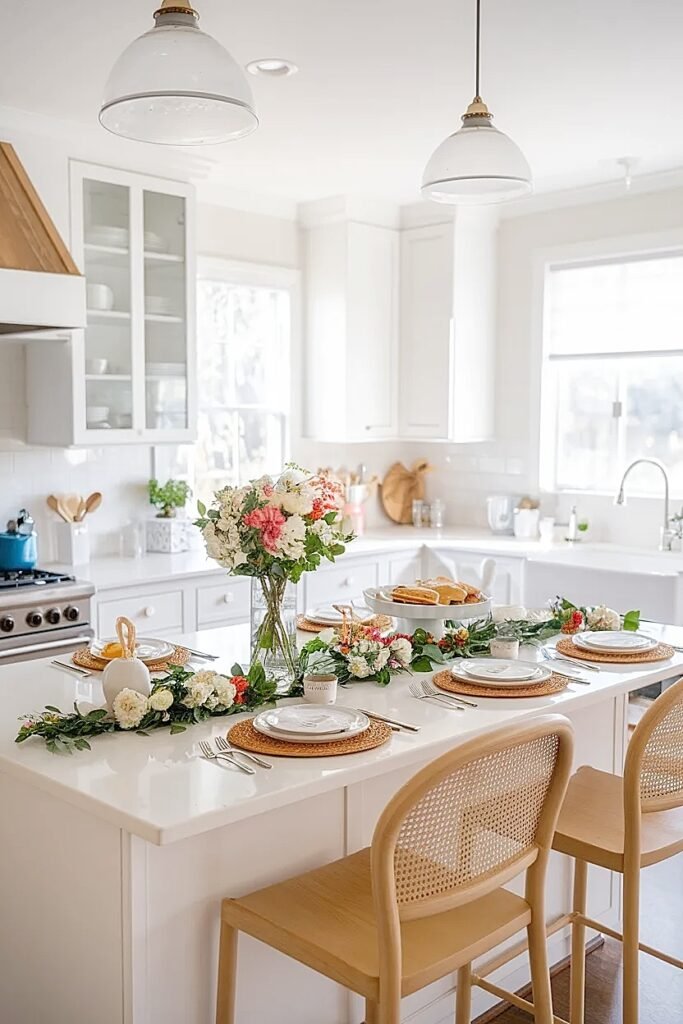
Kitchen islands are the most common snack surface in a home and the most demanding one for a garland. Used from both sides, with guests reaching across them constantly and hosts prepping on them throughout the party, they require a completely different design approach than any other snack surface.
The answer is the back edge. Running a cluster garland along the rear of the island keeps the working lane open and lets the arrangement function as a backdrop rather than a barrier. The food stays visible. The garland frames it from behind.
1. Alternating Single-Stem Jars with a Ruscus Runner Place five short jars along the back edge, each holding one grocery store bloom cut to three inches. Alternate colors so the row reads intentional. Lay Italian ruscus through the jar bases as the connector. The ruscus does the garland work while single stems add color without crowding the surface. No loose plant material, no floral foam, and setup takes under ten minutes.
2. Tiered Herb and Bloom Cluster Arrange three small ceramic mugs along the back edge, each holding fresh grocery store herbs and one or two blooms. Basil and zinnias, rosemary and ranunculus, mint and lisianthus. The herbs add fragrance and depth that pure flower arrangements cannot replicate and stay usable throughout the party. Keep herb stems trimmed so nothing extends over the food zone. The mixed texture reads as a genuine garland.
3. Low Tray Garland with Pressed Clusters Set a long narrow wooden serving tray along the back edge and arrange five tight bud vase clusters inside it at even intervals. The tray creates a clear physical boundary between garland and food zones and makes the setup moveable as one unit. Use matched vessels inside the tray. This is the most food-safe island option because it fully separates all flower elements from the counter surface.
4. Cascading Color-Block Jars Line five short jars along the back edge and fill each with blooms sorted to a single shade, progressing from light to dark. Pale peach to deep coral, or soft yellow to golden orange. Lay eucalyptus stems loosely between the jar bases to connect the row. The gradient reads as designed and intentional, and sorting blooms from one grocery store mixed bunch takes about five minutes.
5. Floating Bloom Tray Garland Fill a shallow rectangular tray with an inch of water and float cut blooms face-up at even intervals. Add a few floating leaves between the blooms. Set the tray along the back edge of the island. This is the flattest possible garland option, with nothing extending above the tray rim, making it ideal for islands where guests reach directly over the surface or overhead clearance is limited.
Keep reading for the tray zone section, which makes all of these approaches more effective and easier to maintain.
How to Build Summer Flowers Snack Table Garlands That Stay Low and Food-Safe with Tray Zones
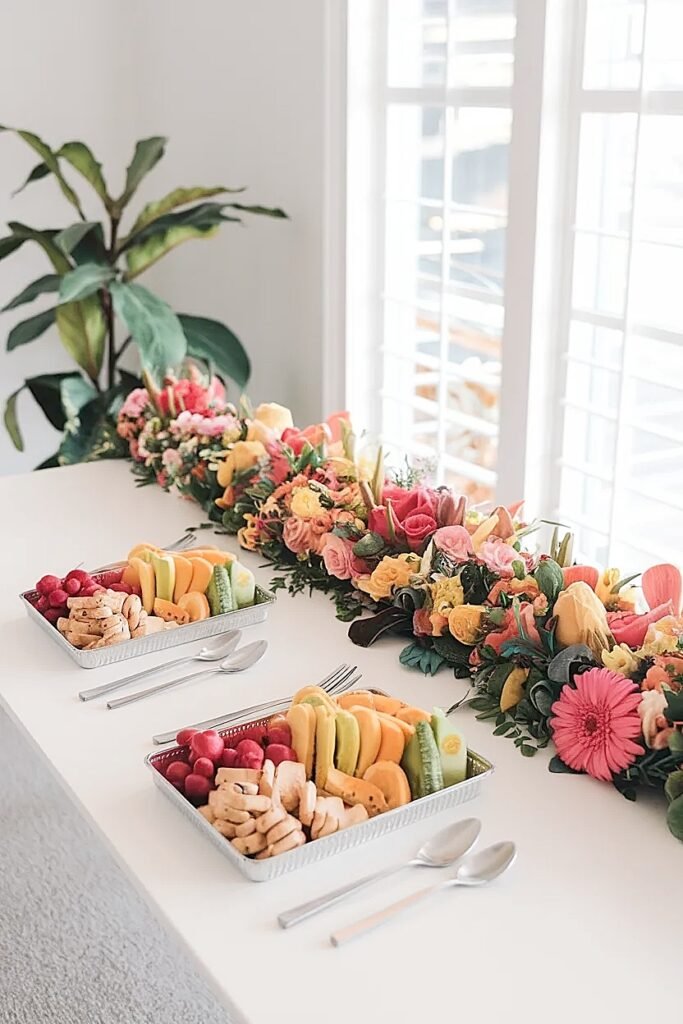
The tray zone system came from one specific moment: watching a guest drag a loose eucalyptus stem through a bowl of hummus. Nobody else noticed. I did. The problem was not the flowers. It was the absence of a physical boundary between the garland and the food.
The tray zone fixes that with one organizing principle: every flower element lives inside a tray, every food item lives outside of it. Guests instinctively place things next to a defined container rather than inside it. The boundary manages itself.
A long wooden serving board, a narrow galvanized tray, or a slate rectangle all work. The length should cover roughly two-thirds of the table running along the center back. Cluster vessels sit at even intervals inside the tray with trailing greenery connecting them loosely. Food and serving dishes have completely clear surface outside.
There is more ahead on which flowers perform best in this specific garland application.
What are the Best Summer Flowers for Snack Table Garlands That Stay Low and Food-Safe?
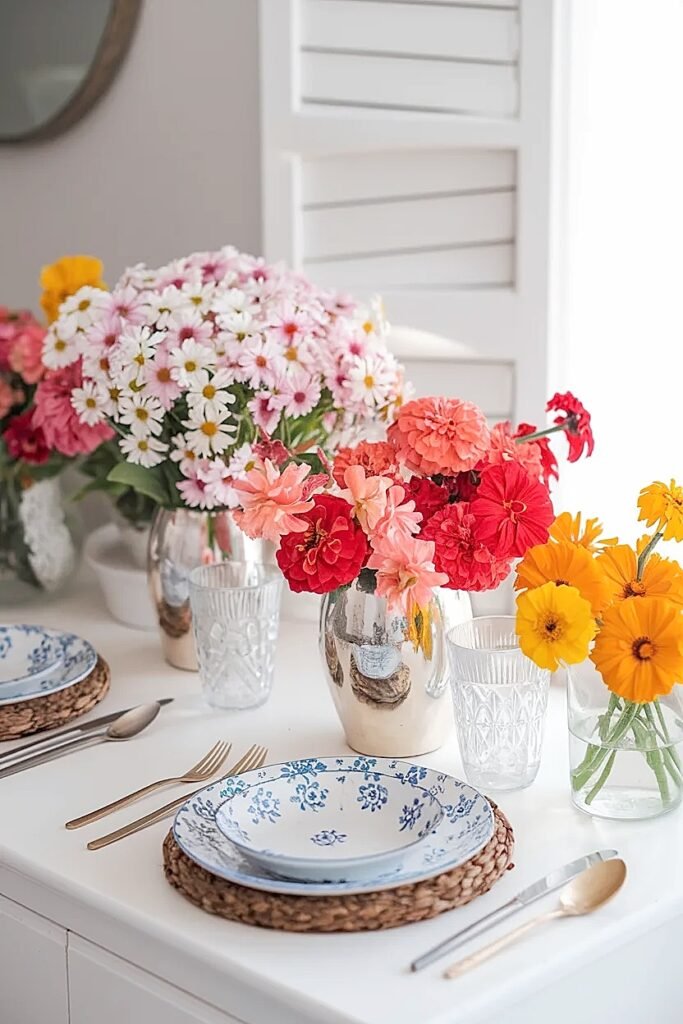
Flower choice for a snack table garland is its own category of decision. You are selecting for petal stability, minimal pollen drop, low fragrance, and compact bloom size. A flower that sheds petals next to a cheese board is not a snack table flower, regardless of how it looks in a vase.
1. Lisianthus Lisianthus is the top pick for snack table garlands because the blooms are tight, layered, and virtually pollen-free. They do not drop petals easily, which matters when sitting next to food. The compact rose-like shape holds its structure five to seven days with fresh water, and the stems branch naturally, giving multiple blooms per stem. Available in white, blush, purple, and deep plum at most grocery stores throughout summer.
2. Zinnias Zinnias have dense, tightly packed petals and almost no scent, making them ideal near food. The flat wide bloom faces create strong visual presence at low height without tall stems. They hold shape in heat better than most summer flowers, which matters on outdoor snack tables. Cut to two or three inches, a zinnia in a small jar looks intentional and expensive. The color range runs from coral to deep burgundy.
3. Ranunculus Ranunculus is one of the most pollen-light flowers at any grocery store. The dozens of layered petals mean no exposed stamen near food, and blooms hold shape four to six days with cold water. They sit beautifully in low vessels because the heavy bloom head bows slightly, creating a cascading look without forced styling. Available in peach, coral, white, and yellow throughout summer at most grocery stores.
4. Spray Roses Spray roses are better than standard roses for snack table garlands. The smaller bloom size fits naturally in low vessels, and the tight multi-bloom stem means one stem covers more visual territory in a cluster. Their fragrance is mild enough to not compete with food aromas, and they last well in summer heat with water changed every two days. Look for peach, blush, or white varieties.
5. Dahlias (Pompom Variety) Small pompom dahlias are worth seeking out for snack table garlands. The ball-shaped blooms have zero exposed pollen, the petals are tightly packed so nothing drops onto the table, and the round shape reads beautifully at table level. One stem typically carries three to five bloom heads, making the cost per bloom very reasonable for a garland even though they sometimes run slightly higher than zinnias.
6. Waxflower Waxflower is underused and underrated. The tiny star-shaped blooms grow in dense clusters along each stem, so one stem looks like several at low height. There is essentially no pollen concern and the blooms do not drop. The honey-like fragrance is mild enough to sit near food. White and pink are the easiest to find. Use waxflower as filler between larger blooms to double visual density without doubling cost.
7. Statice Statice looks like filler but performs as a structural element. The papery blooms hold shape and color for weeks, not days, so the garland looks as good at the party’s end as at the beginning. Zero pollen and zero petal drop makes it genuinely food-safe at close range. Purple and white statice mixed into a cluster adds textural contrast that prevents the arrangement from reading flat.
More ahead on how outdoor patio tables require a different approach when wind and heat are both factors.
Ways to Build Summer Flowers Snack Table Garlands That Stay Low and Food-Safe for Outdoor Patio Tables
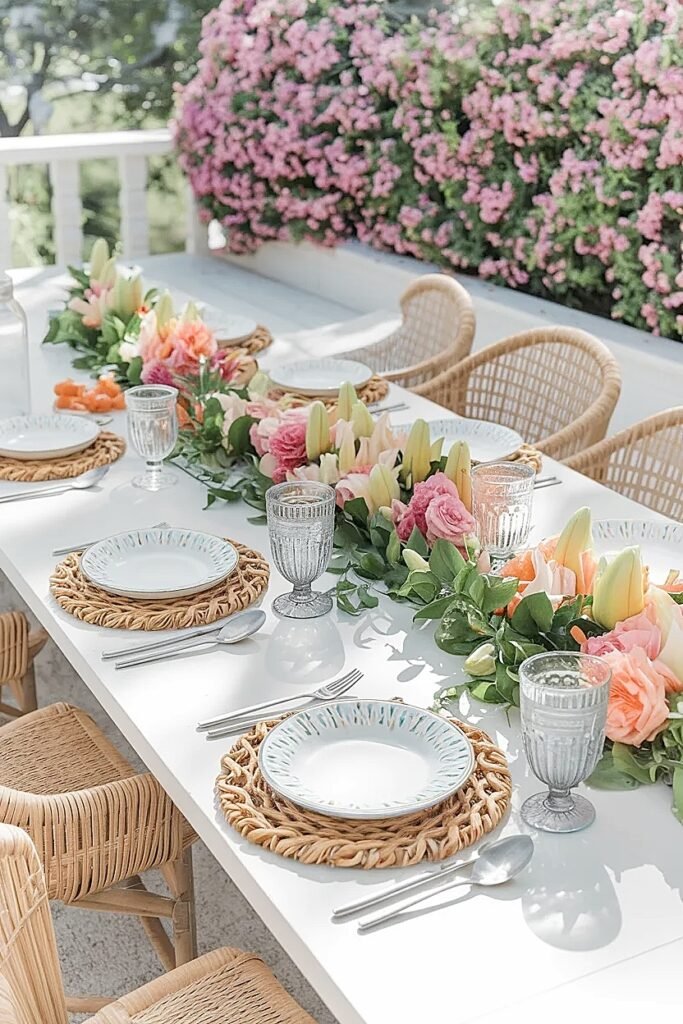
Outdoor snack tables create problems that indoor setups simply do not have: wind, direct sun, heat, and guests moving around from multiple directions. A garland that holds up beautifully indoors becomes a scattered mess outside if not designed for those conditions. The key outdoor principles are weight, water retention, and container security.
Every vessel needs to be heavy enough to resist a breeze, hold enough water to last through a warm afternoon, and sit flat on whatever patio surface you are working with. In practice, these constraints narrow your options in a genuinely useful direction.
1. Terracotta Saucer Cluster Row Place five terracotta saucers along the back edge, each filled with soaked floral foam topped with wet moss to keep particles contained. Press two or three short-stemmed blooms into each saucer and connect the row with seeded eucalyptus laid loosely between them. Terracotta is heavy enough to resist wind and sits flat on any outdoor surface. The moss layer makes the setup food-safe by fully covering the foam throughout the event.
2. Weighted Mason Jar Cluster Fill five short mason jars with an inch of gravel at the base, then add water and two to three stems cut to three inches. The gravel adds enough weight to keep jars stable in moderate wind without anchoring hardware. Space jars along the back edge and trail eucalyptus between the bases. Mason jars are clear, so you can monitor water levels and refill quickly without disrupting the garland.
3. Galvanized Tray Garland Set a long galvanized metal tray along the back edge and arrange a cluster garland inside it exactly as you would for an indoor tray zone setup. The galvanized metal reflects heat rather than absorbing it, extending flower life in direct sun. The tray weight keeps everything in place in a breeze, and the metal rim creates a clear physical boundary between the garland and the food.
4. Low Ceramic Bowl Anchors Use three wide, low ceramic bowls as anchor points across the table length rather than five smaller jars. Pack each bowl with a dense cluster of short-stemmed blooms sitting at the rim. Connect the bowls with trailing eucalyptus or lemon leaf. Ceramic is heavier than glass, sits more securely on outdoor surfaces, and wide bowls resist tipping in wind far better than taller narrow vessels throughout any summer event.
5. Ice Bucket Anchor with Side Clusters Place one low metal ice bucket at the center back edge as the primary anchor and two small jars on either side as secondary clusters. Fill the bucket with water and pack in a generous cluster of blooms sitting just above the rim. The bucket is weighted and stable, and its size makes it a natural focal point that the smaller flanking clusters support. This is the most wind-resistant outdoor configuration.
Keep reading for the buffet section, which uses a completely different spacing strategy.
How to Build Summer Flowers Snack Table Garlands That Stay Low and Food-Safe on Buffets
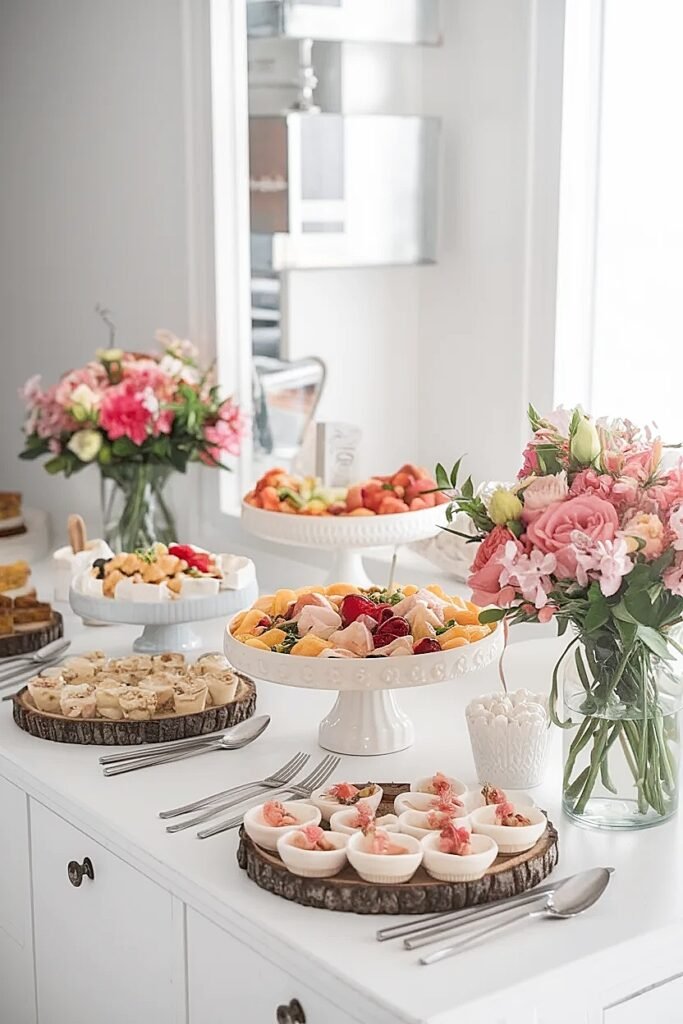
Buffets are higher-stakes than casual snack tables. Guests are serving themselves at close range over an extended period, and the food zone spans the entire surface. One loose stem drifting into a serving dish is a real problem. Every element has to be sealed, every trailing green anchored, and nothing can overhang a serving dish.
The most effective buffet approach is a bookend garland rather than a continuous back-edge runner. Two dense arrangements at each end of the buffet, anchored in heavy low vessels, with a single strand of eucalyptus or ruscus trailing along the very back edge between them. The vine connects the endpoints, the clusters anchor them, and the center stays clear for serving dishes.
For food safety on buffets, tuck the trailing vine under each vessel base rather than leaving it loose on the table. Tucked and weighted, it stays exactly where you placed it for the full duration of the party without any adjustment.
One more section worth reading before you shop for materials: the greens that do the most structural work in any snack table garland.
What are the Best Greens to Use with Summer Flowers Snack Table Garlands That Stay Low and Food-Safe?
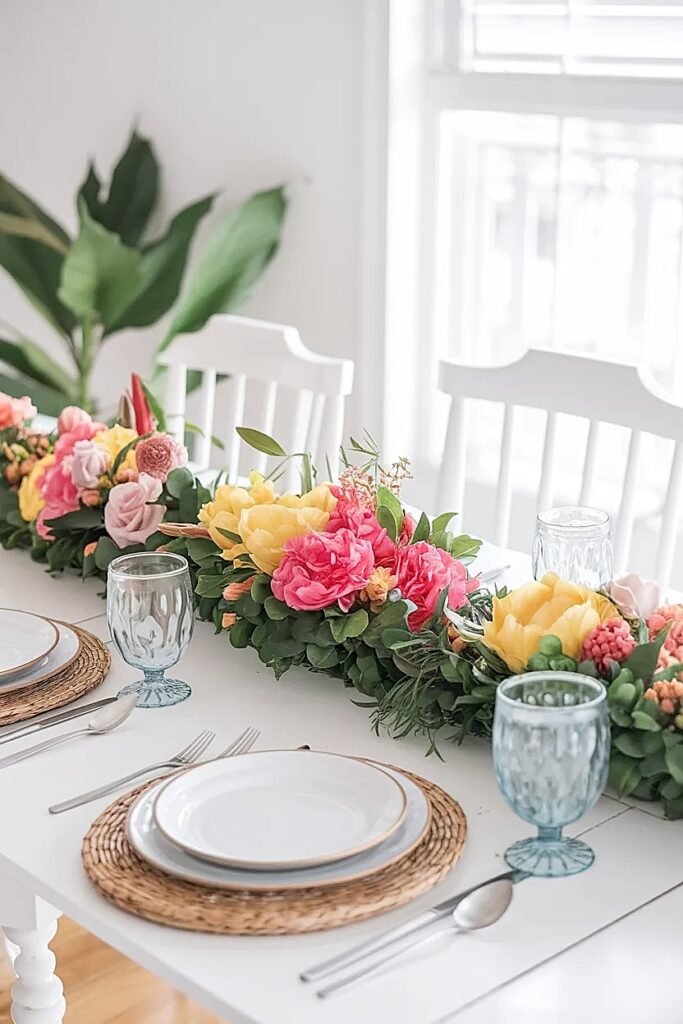
Greens are not filler in a snack table garland. They are the architecture. The trailing vine is what makes the whole setup read as a garland rather than a row of vases. Not all greens work equally well near food. Some have strong fragrance, some shed leaves constantly, and some release sap when cut near food surfaces.
1. Seeded Eucalyptus Seeded eucalyptus is the best all-around garland green for snack table applications. The small round leaves and soft seed clusters create beautiful texture at low height, the stems trail naturally between vessels, and the fragrance is mild enough to sit near food. It lasts four to six hours out of water, long enough for any party. The silvery-green color works with every flower palette, from warm corals to cool whites, making it the most universally useful foliage available.
2. Italian Ruscus Italian ruscus is the most structural garland green available at most florists and some grocery stores. The flat oval leaves grow densely along each stem, creating a lush runner that reads as intentional and polished from both sides of the table. It lasts up to eight hours out of water without drooping, the best choice for outdoor garlands in summer heat where refilling trailing stems is not practical. The deep green makes every bright flower pop.
3. Lemon Leaf (Salal) Lemon leaf, sold as salal at most floral suppliers, is a broad, glossy, dark foliage that adds a completely different texture from eucalyptus or ruscus. The large leaves create bold visual breaks between clusters and give the garland a more dramatic silhouette. It holds up extremely well in outdoor heat and has essentially zero fragrance, making it one of the most food-safe foliage options available. Use it as a base layer under lighter greens or as a standalone structural element.
4. Pittosporum Pittosporum is a dense, small-leafed green that fills gaps between clusters better than almost any other foliage at grocery stores or floral suppliers. The leaves grow in tight clusters along each stem and the stems branch repeatedly, giving substantial visual coverage from a small amount of material. Almost no fragrance, holds up well in heat, stays fresh-looking for the full duration of most events. Wholesale flower markets and many grocery store floral sections carry it reliably.
5. Variegated Ivy Variegated ivy most closely replicates a true garland because the stems are long, flexible, and covered in alternating green-and-cream leaves that create natural movement when laid between clusters. A single long ivy stem through a cluster garland makes the whole setup read as a flowing, designed arrangement rather than a row of vases. Use it sparingly, two or three stems maximum, because too much ivy visually competes with the flowers and overwhelms the blooms you selected.
Still more ahead on the buffet garland spacing strategy that protects the food lane throughout the event.
Conclusion
A summer flower snack table garland that stays low and food-safe comes down to five decisions: the right flowers, the right greens, sealed water vessels, a tray zone boundary, and a layout that keeps everything away from the food. Mini clusters in short jars, connected by trailing ruscus or eucalyptus, arranged within a tray zone, built from low-pollen blooms. Those principles hold on every surface in this article.
Start with the five-jar cluster garland on mason jars with seeded eucalyptus. It is the fastest to learn, the most forgiving to execute, and the easiest to adapt when you move to a kitchen island, a buffet, or a patio table. Get it right once and the rest makes immediate sense.
This website contains affiliate links, and some products are gifted by the brand to test. As an Amazon Associate, I earn from qualified purchases. Some of the content on this website was researched and created with the assistance of AI technology.