This website contains affiliate links, and some products are gifted by the brand to test. As an Amazon Associate, I earn from qualified purchases. Some of the content on this website was researched and created with the assistance of AI technology.
Key Takeaways
- Low, wide containers are the fastest single move for making grocery store flowers look high-end
- Splitting one bunch across multiple small vases almost always reads more expensive than one large arrangement
- Cutting stems short and packing tight eliminates the sparse look that gives away a budget buy
- Grocery store eucalyptus is massively underused as a filler and visual extender
- Round and coffee table arrangements need a keep-space-open rule to look polished
- Flower choice matters more than quantity: lisianthus, ranunculus, and sunflowers all punch above their price point
Turning grocery store summer flowers into expensive-looking decorations is something I figured out by accident. Forty-five minutes before a dinner party, nine dollars, two bunches of zinnias. By the time the first car pulled in, my table looked like a florist had been through it.
The gap almost never comes down to flower quality. It comes down to container choice, stem height, and decisions you make in the first five minutes.
Need your grocery store Summer Flowers to look expensive fast? This cheat sheet shows the quickest upgrades by zone—coffee tables, kitchen islands, buffets, round patio tables, and more. You’ll learn low-container swaps, color edits, and layout tricks that keep food space clear while your decor looks curated in minutes.
Grocery Store Summer Flowers: Fast “Looks Expensive” Cheat Sheet
Use low containers, a 2–3 color edit, and wide footprints to look designer in minutes while keeping food + hands clear.
| Zone | Fast Container Move | Make It Look Expensive | Do This / Avoid This |
|---|---|---|---|
|
Patio dining table serve spacelow + widesightlines |
Low bowl swap (shallow + wide) placed off-center
Goal: platter lane stays open.
|
Use short stems + tight pockets (cluster blooms, greens tucked under)
Pro: looks full without height.
|
Do: leave a serve lane. Avoid: tall center arrangements. |
|
Coffee table drink spacecompact |
Low tray or small shallow bowl placed to one side
Goal: coaster zone stays open.
|
Keep 2–3 colors max + one “hero” bloom repeated (tiny repeats look luxe) |
Do: define coaster/snack zones. Avoid: tray sprawl into drink space. |
|
Kitchen island prep laneoff-center |
Shallow oval bowl on the far side (lane stays clear)
Goal: cutting boards fit.
|
Trim stems very short; keep rim line visible for a clean “designed” look |
Do: keep a clear lane for plates/trays. Avoid: center placement. |
|
Outdoor buffet labels visiblegrab space |
Low trough placed on one end only
Goal: middle stays open.
|
“Edited” palette (2–3 colors) + pockets repeated; keeps buffet looking organized |
Do: keep label zone clear. Avoid: center clutter. |
|
Round patio table plate ringcomfort |
Small shallow round bowl (leave a plate ring around it)
Goal: no crowding.
|
Keep blooms just above rim; “donut” footprint (center tight, outer smooth) |
Do: preserve plate ring. Avoid: oversized containers. |
|
Kids + pets stablelow |
Heavy wide-base bowl placed away from edges
Goal: no tipping.
|
Short stems + compact pockets = stable + polished (no tall “grab points”) |
Do: keep it heavy + low. Avoid: light/tall shapes. |
Patio dining table (Low bowl swap + serve lane)
Coffee table (Low tray + coaster zone)
Kitchen island (Prep-lane style)
Outdoor buffet (Labels visible)
Round patio table (Plate-ring rule)
Kids + pets (Heavy low bowl)
How to Turn Grocery Store Summer Flowers into Expensive-Looking Decor Fast with a Low Bowl
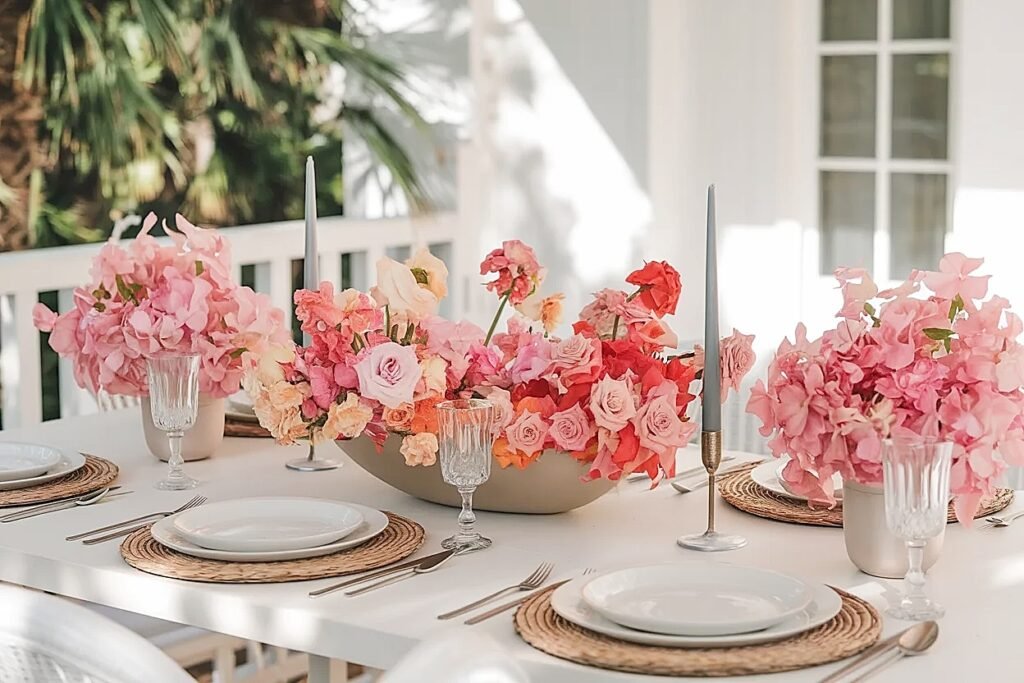
Most people grab a tall vase when they bring flowers home. Feels obvious. But that is exactly where grocery store flowers go to look cheap. The height exposes every gap and thinning spot. A low bowl fixes all of it in three minutes by forcing short stems, tightening everything automatically. Tight reads full. Full reads expensive.
Fill the bowl two-thirds with water before cutting. Trim each stem at an angle to about four inches. Start with the largest blooms in the center, rotate as you go, and tuck shorter stems at the rim so they spill slightly over the edge. Strip leaves from lower stems and use them as filler around the rim.
For a deeper look at which containers make grocery store flowers look their best, check out the best budget containers for summer flowers birthday centerpieces. Share it with a friend who decorates on a budget. Plenty more ahead worth reading.
Ideas for Turning Grocery Store Summer Flowers into Expensive-Looking Decor on Kitchen Islands (Prep-Lane Style)
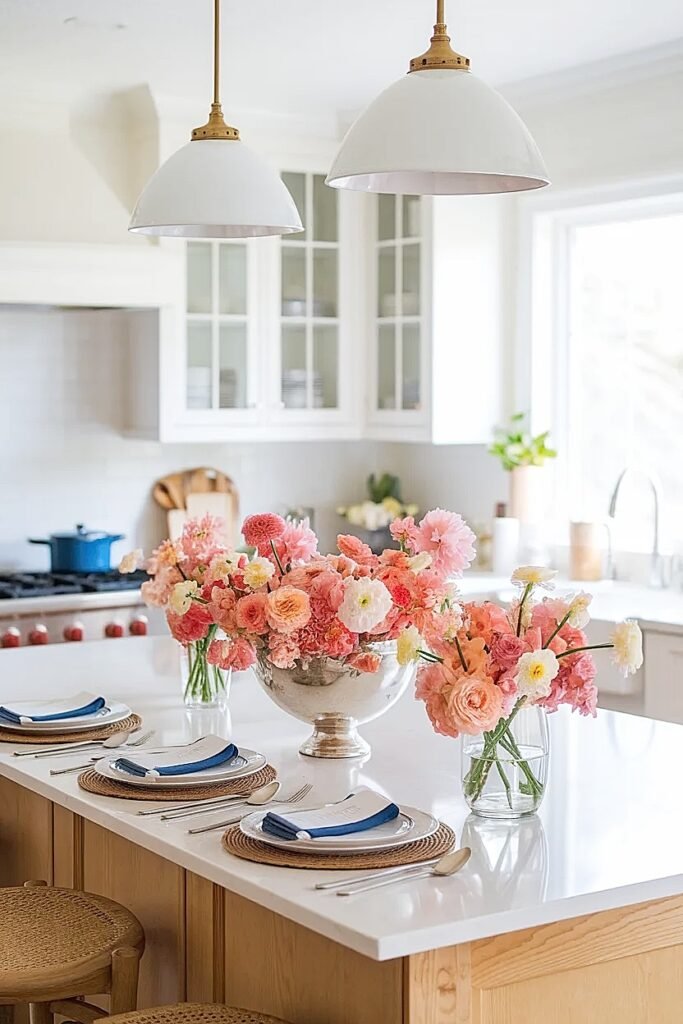
Kitchen islands are working surfaces. People prep on them and walk both sides. Prep-lane style is a long, low, linear display along the island edge that keeps the work lane clear, with flower heads low enough to see over from the opposite side.
5 Best Ideas for Turning Grocery Store Summer Flowers into Expensive-Looking Decor on Kitchen Islands (Prep-Lane Style)
1. Three-Vase Gradient Run Buy one bunch with a natural color range, like mixed zinnias from pale yellow to deep coral. Separate blooms by shade and place three small vases in a line, lightest on one end and deepest on the other. Cut stems to the same short length so each bloom sits just above the vessel rim. The gradient reads as intentional and sophisticated, holding together visually from anywhere in the kitchen.
2. Single-Stem Bud Vase Row Pick up one bunch of something architectural, like lisianthus or sunflowers, and place exactly one stem per vase across five or six small vessels spaced six inches apart. Single stems with consistent spacing look more expensive than any crowded arrangement. Use vases that are slightly different shapes but the same color family to add texture without visual noise. The restraint alone makes the whole island surface feel curated and designed.
3. Low Trough with Floating Blooms Fill a shallow rectangular container with water and float cut blooms face-up on the surface with no stems at all. Open zinnias or grocery store roses both work beautifully. Add a few floating petals for texture and keep the trough along the back edge so the prep lane stays clear. Genuinely luxurious in appearance, takes about four minutes, and one of the best effort-to-impact setups in this guide.
4. Herb and Bloom Mix Grab one small bunch of grocery store flowers and one bunch of fresh herbs, basil, rosemary, or mint, and arrange them together in two or three mismatched ceramic mugs along the island edge. Herbs add depth, fragrance, and casual confidence that pure flower arrangements lack. This reads as intentional rather than decorative, and the herbs stay fully usable while on display, a double function most decorating approaches overlook.
5. Color-Blocked Cluster Pairs Split one mixed bunch into two single-color clusters and place each in its own small vessel at opposite ends of the island. Yellow blooms on one end and coral on the other creates a bookend effect that makes the whole island feel designed. Use the same container shape at both ends. Works especially well when you want island color without anything competing with food prep in the center lane.
Keep reading for outdoor buffet and patio strategies that work by a completely different set of rules.
How to Turn Grocery Store Summer Flowers into Expensive-Looking Decor with Mini Bud Vase Clusters
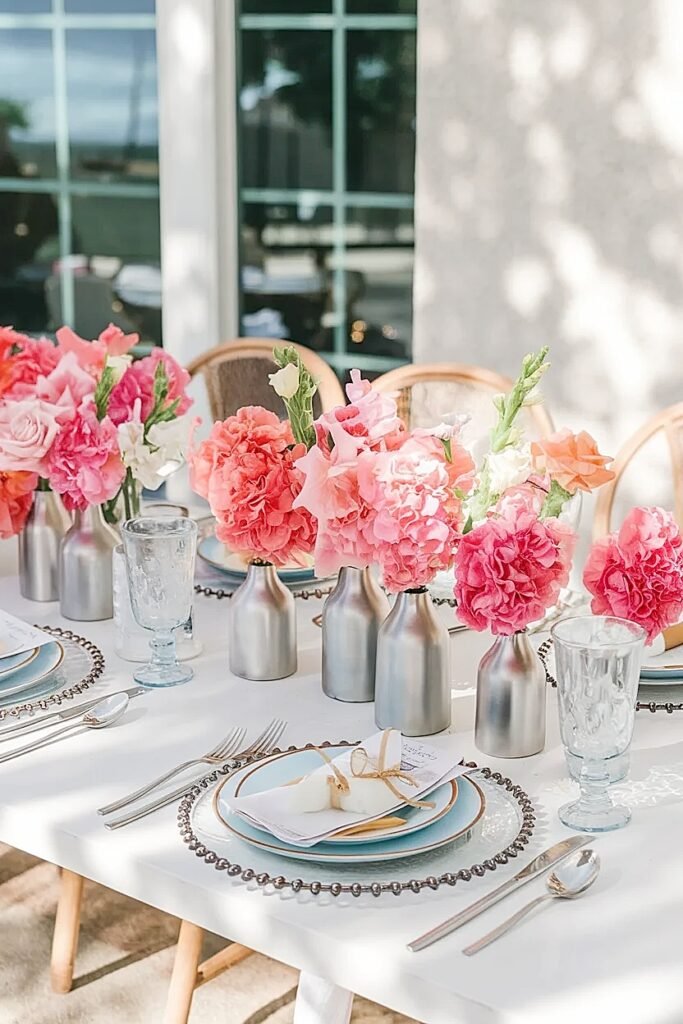
Five small thrift-store vases, one bunch of grocery store ranunculus, ten minutes. That was my first bud vase cluster, and it looked like something from a styled shoot. The secret is the clustering itself. Grouping small vessels at varying heights creates visual rhythm, and your eye moves across the group rather than landing on one static point.
Group five to seven small vessels close together, tallest at the back and shortest at the front, with one to three stems per vase. Leave one with just a single leaf. That variation keeps the cluster from feeling mechanical. One bunch fills a five-vase cluster easily.
There is a lot more ahead, including which flowers are actually worth buying.
Ways to Turn Grocery Store Summer Flowers into Expensive-Looking Decor for Outdoor Buffet Tables
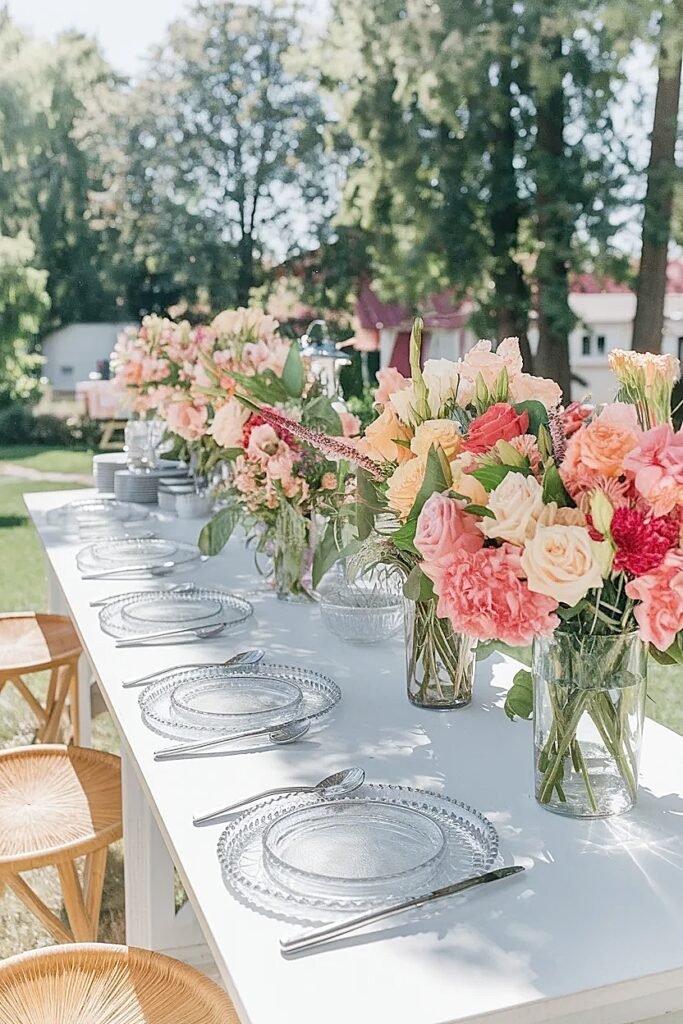
Outdoor buffet tables are hard on arrangements. Wind moves things, heat wilts fast, and guests reach across your decor constantly. The approach has to shift: low, heavy, spread to the edges rather than centered. Keep the center clear for food. That distribution is what makes a buffet look styled.
7 Best Ways to Turn Grocery Store Summer Flowers into Expensive-Looking Decor Fast for Outdoor Buffet Tables
1. Weighted Terracotta Saucer Clusters Fill a terracotta saucer with soaked floral foam and pack in short-stemmed grocery store blooms tightly enough that no foam shows. Heavy enough to resist wind and wide enough to anchor a buffet corner. Use two or three at different spots along the table rather than one large centerpiece. The look is grounded and earthy, genuinely difficult to distinguish from professional florist work at conversational distance.
2. Short Mason Jar Row Along the Back Edge Line three or four short mason jars along the very back edge of the buffet, each filled with a tight cluster of grocery store blooms in a single color. Guests reach forward toward food and the jars stay protected at the back. Fill each jar with pebbles before adding water. The weight keeps them stable on uneven outdoor surfaces and improves how each stem stays positioned.
3. Tucked Corner Arrangements in Ceramic Bowls Place a low ceramic bowl with a packed arrangement in each front corner of the table. Corners are structurally stable because guests rarely reach into them, and table legs shelter arrangements from direct wind. Sunflowers cut to four inches work especially well here. Their flat faces sit just above the bowl rim and hold their shape outdoors far longer than more delicate blooms in similar conditions.
4. Galvanized Tray with Mixed Heights Line a galvanized tray with wet floral foam covered in moss, then push in grocery store stems at varying heights, tallest at the back and shortest at the front. The tray keeps everything contained if the table gets bumped, the moss slows wilting in outdoor heat, and the whole setup moves as one piece if you need to rearrange the layout. One of the fastest outdoor setups once foam is ready.
5. Single-Color Jam Jar Clusters at Each End A tight cluster of three jam jars filled with same-color blooms at each end of the buffet marks its boundaries and makes the whole setup look deliberately designed. Use rubber bands to hold each cluster together at the base so they stay grouped when guests reach past them. One color family, both ends, matching jars. It looks far more considered than the five or so minutes it takes.
6. Low Tin Planter as a Table Runner Anchor A long, low tin planter running along the back of the buffet acts as a visual spine for the entire table. Fill it with alternating blooms and herbs, zinnias and mint, sunflowers and basil. The combination reads as styled rather than improvised. Heavy, low, and wide enough to stay put in a breeze, it works especially well on long folding tables where one element needs to unify the full display length.
7. Ice Bucket with Blooms Drop a bunch of grocery store flowers into a metal ice bucket with a few inches of water, trim stems so blooms sit just above the rim, and set it at a buffet corner. The metal reflects light, the blooms stay cool, and the whole thing reads as effortlessly chic. Sunflowers, ranunculus, and daisies all work well. The container does the heavy lifting and the flowers barely need to try.
The coffee table section ahead covers a drink-space strategy that changes how arrangements function in social settings.
Ideas for Turning Grocery Store Summer Flowers into Expensive-Looking Decor on Coffee Tables (Drink Space Open)
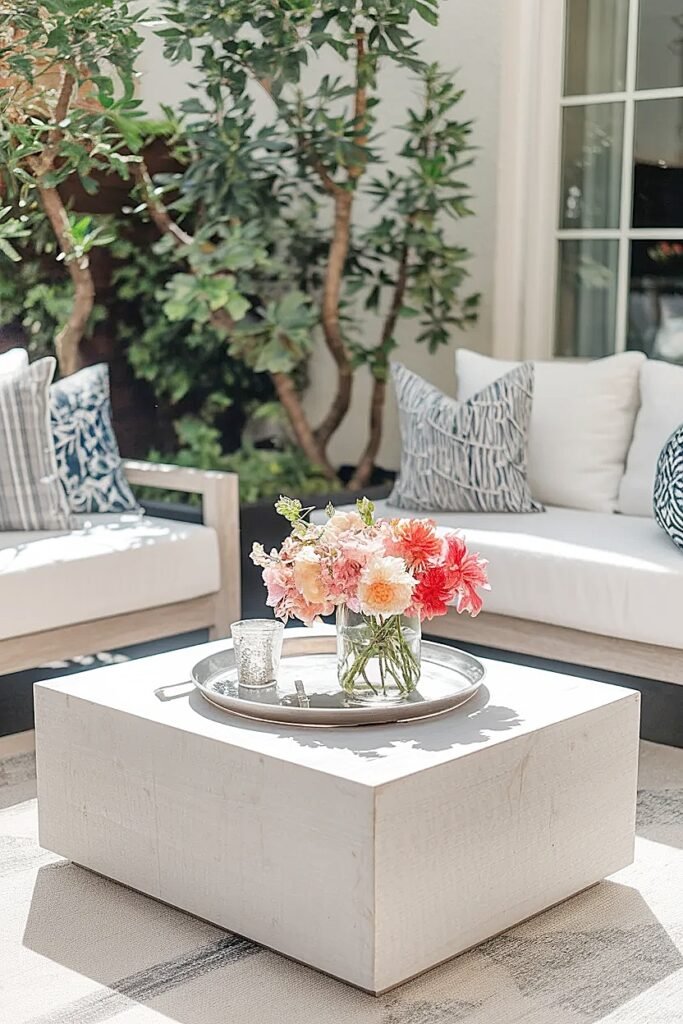
Coffee table arrangements fail for one reason: they eat the surface. Someone sets a glass down, knocks a stem, and it half-collapses. The drink-space-open principle solves this by placing the arrangement in one defined zone while leaving the table functional.
5 Best Ideas for Turning Grocery Store Summer Flowers into Expensive-Looking Decor on Coffee Tables (Drink Space Open)
1. Corner Cluster with Tray Boundary Place a small wooden or marble tray in one corner of the coffee table and set a tight bud vase cluster inside it. The tray creates a clear visual boundary that signals where the arrangement lives and where guests can set drinks. Three small vases with grocery store blooms, a candle, and one sprig of eucalyptus inside that tray looks more polished than a large loose arrangement taking up half the table.
2. Single Low Bowl at One End A shallow ceramic bowl with a packed arrangement of short-stemmed grocery store flowers at one end leaves a long clear diagonal of open surface. Choose the end farthest from the main seating so flowers serve as a backdrop rather than an obstacle. This reads as more intentional than a centered arrangement and keeps the table fully functional without anyone feeling guilty about setting down a glass.
3. Two-Stem Bud Vase at One Corner A single small bud vase with two or three stems in one corner at the back edge takes up almost no surface and reads as more styled than a bigger arrangement would. Choose the right stem: a single sunflower, lisianthus, or a few ranunculus heads. Short, tight, corner-placed arrangements let the table breathe while still delivering real color and life without crowding any space guests actually use.
4. Herb Jar with One Bold Bloom Fill a short jar with fresh grocery store herbs and tuck one large bloom into the center. Set it at one end of the coffee table. The fragrance adds a dimension that purely visual arrangements cannot match, and the whole setup keeps the entire rest of the surface completely clear. Basil and a sunflower, rosemary and a peony. Any pairing where bloom and herb contrast in size so both elements read clearly works beautifully.
5. Floating Bloom in a Short Glass Cut one large grocery store bloom down to almost no stem and float it in two inches of water in a short wide glass. Place it at one end of the table. This takes thirty seconds, costs almost nothing, and looks genuinely elegant. One deliberate choice at one end reads as confidence rather than economy, and leaves the rest of the table available for actual use throughout the evening.
The round patio table section covers why circular surfaces need a completely different approach.
How to Turn Grocery Store Summer Flowers into Expensive-Looking Decor for Round Patio Tables
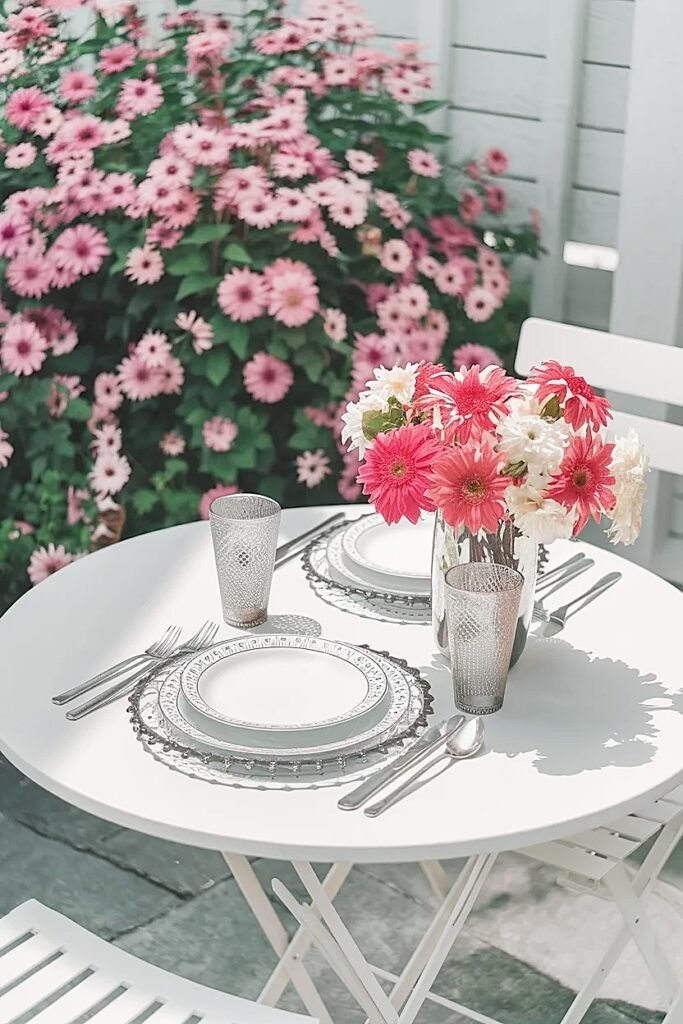
Round patio tables are tricky because there is no head of the table, no focal corner, no end to design toward. Whatever sits in the center has to look good from every angle simultaneously, and most people set something too tall and end up with a centerpiece that competes with conversation.
The answer is a low, round arrangement in a wide bowl at true table level. Blooms just above the surface let you see across to the person opposite without tilting your head. Cut every stem to four inches, pack them into a wide bowl using soaked floral foam, and angle stems slightly outward so the silhouette domes gently. Tuck greenery around the outer rim to hide foam and finish the look from every seat.
The last two sections cover which grocery store flowers are worth buying and how to make a small bunch look like twice as much.
What are the Best Grocery Store Summer Flowers for Expensive-Looking Centerpieces?
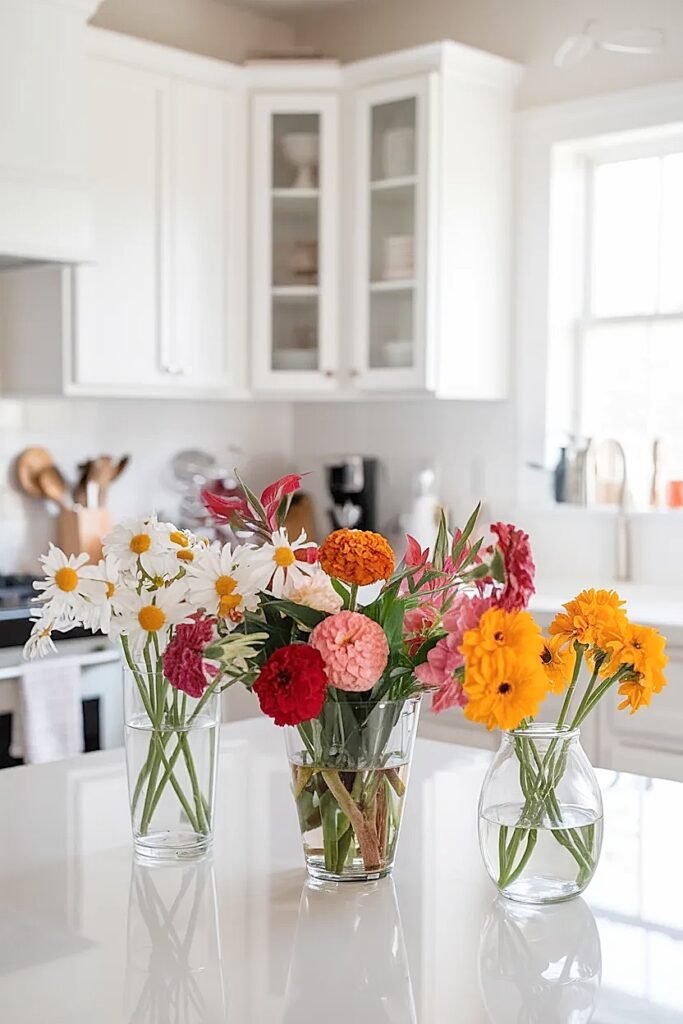
Not every grocery store flower performs equally. Some have petal structure and color saturation that reads as luxurious at close range. Others look flat or generic the moment you get them home. Knowing the difference saves real money.
5 Best Grocery Store Summer Flowers for Expensive-Looking Centerpieces
1. Lisianthus Lisianthus is the most underrated grocery store flower I know. The blooms are ruffled, layered, and complex-looking in a way most people associate with expensive garden roses, but it costs a fraction of the price and lasts nearly twice as long. It comes in white, purple, deep plum, and blush. The stems branch naturally, giving multiple blooms per stem, so a small bunch stretches further than the price suggests. Cut at an angle and change the water every two days.
2. Sunflowers Sunflowers punch so far above their price point it almost feels unfair. A grocery store bunch costs less than a single specialty flower at most florists, but the visual weight of a sunflower face is enormous. They fill space confidently, hold their shape for a week, and work in every container style. Making them look designed rather than casual is simple: cut stems short. Four-inch stems packed into a low bowl look completely intentional, while full-length stems in a tall vase read sparse.
3. Ranunculus Ranunculus has dozens of tightly layered petals and a painterly quality that makes people assume it came from a specialty florist. Grocery stores carry them in summer in peach, coral, yellow, and white, almost always priced below their visual value. They look exceptional in low bowls and bud vase clusters, hold their shape well in warm weather with fresh cold water, and consistently outperform standard carnations in comparable arrangements. Three stems in a small bud vase will reliably stop people mid-conversation.
4. Zinnias Zinnias are a summer staple for good reason. The color range is extraordinary, from bright orange and hot pink to deep burgundy and soft salmon, and the blooms have a density that reads intentional even in casual arrangements. They forgive beginners better than most blooms, tolerating slightly longer intervals between water changes without dramatic wilting. Mixed zinnia bunches are ideal for prep-lane kitchen island setups, where sorting by shade builds a curated gradient look from a single inexpensive bunch.
5. Eucalyptus Technically foliage rather than a bloom, eucalyptus does more visual work in a grocery store arrangement than almost any flower. It adds volume, depth, fragrance, and an organic naturalism that makes any arrangement look less arranged and more grown. Silver dollar eucalyptus is the most widely available variety. Use it to fill gaps between blooms, trail over a bowl rim, or pad out a bud vase cluster without buying more flowers. One bunch added to any bouquet elevates the result immediately.
One more section ahead that ties everything together in the most practical way.
How to Turn Grocery Store Summer Flowers into Expensive-Looking Decor Fast with Fewer Stems (Full Look)
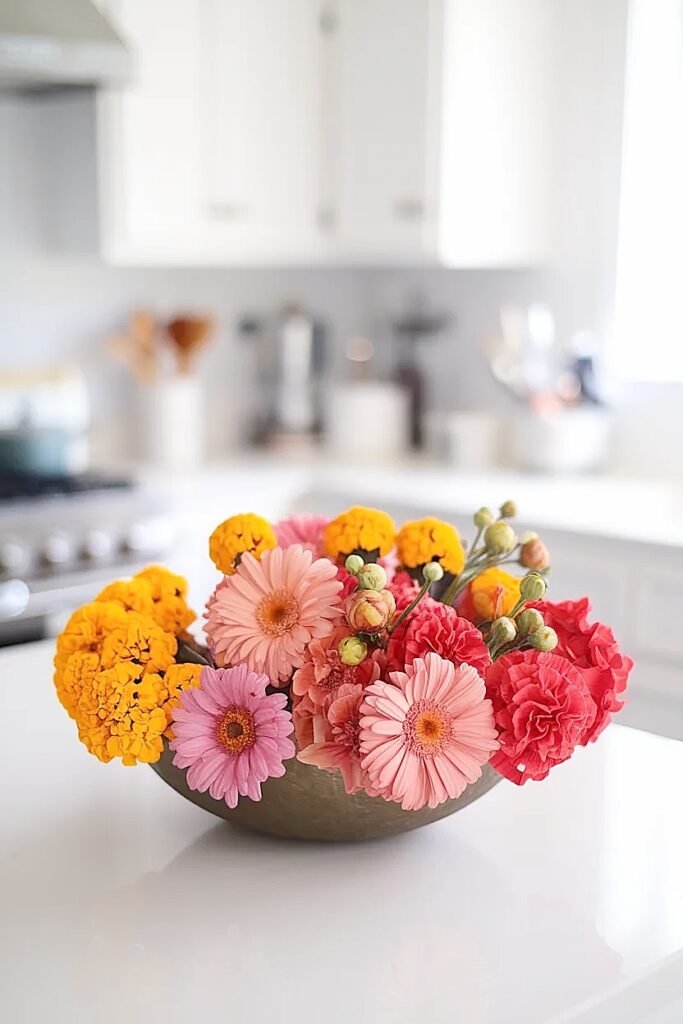
One bunch. That is often all you have, or all you want to spend. And it is enough. The mistake is putting every stem into one vessel and hoping for fullness. Spread too thin across a wide vase, one bunch just looks like not enough flowers.
The fix is mechanical: cut stems short, work in tight containers, and split the bunch across two or three smaller arrangements. Five stems in a small low bowl will look fuller than ten stems in a tall wide vase, every single time. A narrow opening forces stems together and creates the density that reads as abundance. Set foliage aside as filler, cut everything to a consistent short length, and pack tight enough that stems hold each other upright without foam. What remains covers a second arrangement elsewhere. A few stems on a bathroom counter, two in a bud vase on a windowsill, one floating in a glass. That distribution makes one bunch feel like a house full of flowers. Cold water slows wilting noticeably, and a pinch of sugar in the vase extends bloom life by a day or two.
Conclusion
Grocery store flowers are not a compromise. They are raw material. The transformation happens in the decisions you make after you get them home: which container you choose, how short you cut the stems, whether you split one bunch into three smaller arrangements instead of cramming everything into one vessel.
None of these moves are complicated. They just require knowing why they work. Grab a $10 bunch of zinnias, apply one or two of these principles, and see what happens when you stop treating grocery store flowers like a fallback.
This website contains affiliate links, and some products are gifted by the brand to test. As an Amazon Associate, I earn from qualified purchases. Some of the content on this website was researched and created with the assistance of AI technology.