This website contains affiliate links, and some products are gifted by the brand to test. As an Amazon Associate, I earn from qualified purchases. Some of the content on this website was researched and created with the assistance of AI technology.
Key Takeaways
- One grocery store bouquet strategically divided creates multiple centerpieces for different apartment zones
- Color palette coordination between roses and existing decor amplifies visual impact in tight spaces
- Dollar store glassware paired with grocery roses achieves florist-quality looks at fraction of the cost
- Proper rose care techniques extend bloom life through the entire Valentine week
- Coordinating roses with soft furnishings like pillows and throws creates cohesive romantic atmosphere
- Narrow table arrangements require low, compact designs that leave room for actual dining
Styling grocery-store valentine rose decorations for small apartment decor levels the playing field between fancy florist customers and budget-conscious romantics. I discovered this truth during my first Valentine’s Day in a cramped studio apartment, staring at florist price tags that exceeded my entire decorating budget. The grocery store roses behind me cost a fraction of those boutique blooms, yet somehow I’d convinced myself they were lesser. Wrong. Those twelve-dollar roses became three arrangements that transformed my tiny space into something genuinely romantic. The florist around the corner couldn’t have done better.
Here’s what the floral industry doesn’t advertise: grocery store roses come from the same farms as high-end florist stock. The difference lies primarily in presentation, not quality. That cellophane wrapper looks cheap. The rubber bands feel industrial. The bucket display lacks romance. But the actual roses? They’re often identical to what boutique shops sell for triple the price. Once you understand this, grocery stores become your secret Valentine decorating weapon. Your small apartment doesn’t need expensive flowers; it needs creative styling of affordable blooms. I’ve spent years perfecting these techniques, and I’m sharing everything that actually works.
Use this planner to match your grocery-store bouquet habits with the best Valentine rose strategy for a small apartment. Compare how often you shop, how much you’ll spend, and how many surfaces you want decorated, then pick the approach that really fits your everyday life.
| Bouquet Habit | Suggested Strategy | Key Surfaces | Best For You If… |
|---|---|---|---|
|
One bouquet, one trip $ low spend Single Valentine run, no repeats. |
Split-bouquet mini trio Trim stems short and divide the bouquet into: a hero jar on the coffee table, a mini jar on the dining table, and one or two tiny jars along a deep sill. |
|
Simple & done
|
|
Weekly grocery trips $$ ongoing Pick up a few stems each visit. |
Refillable hybrid bases Build bowls and jars with faux greenery and a few faux roses. Each week, swap in a handful of fresh stems on top for scent and life without rebuilding everything. |
|
All-month mood
|
|
Last-minute sale shopper $ markdowns Grab bouquets when they’re reduced. |
Rescue & refresh clusters Shorten stems, strip outer petals, and salvage the best blooms into small jars grouped on trays, boards, and shelves for a casual, collected look that hides imperfect pieces. |
|
Deal hunter
|
|
One big treat bouquet $$ one-time splurge Upscale supermarket bundle. |
Hero bowl + echo jars Showcase the bouquet in a large bowl on the coffee table. Use only a few stems in tiny echo jars at the sill or console so the main cluster stays rich and full. |
|
Showpiece lovers
|
|
Ultra-frugal or no bouquet yet $ petals & paper Maybe just one small bunch or leftovers. |
Dried petals + paper hearts Combine leftover or dried roses with printable paper hearts and tags around tiny jars so even a few stems feel like a complete Valentine story across your apartment. |
|
Creative scrimpers
|
How to Turn One Grocery-Store Rose Bouquet into Multiple Apartment Valentine Centerpieces
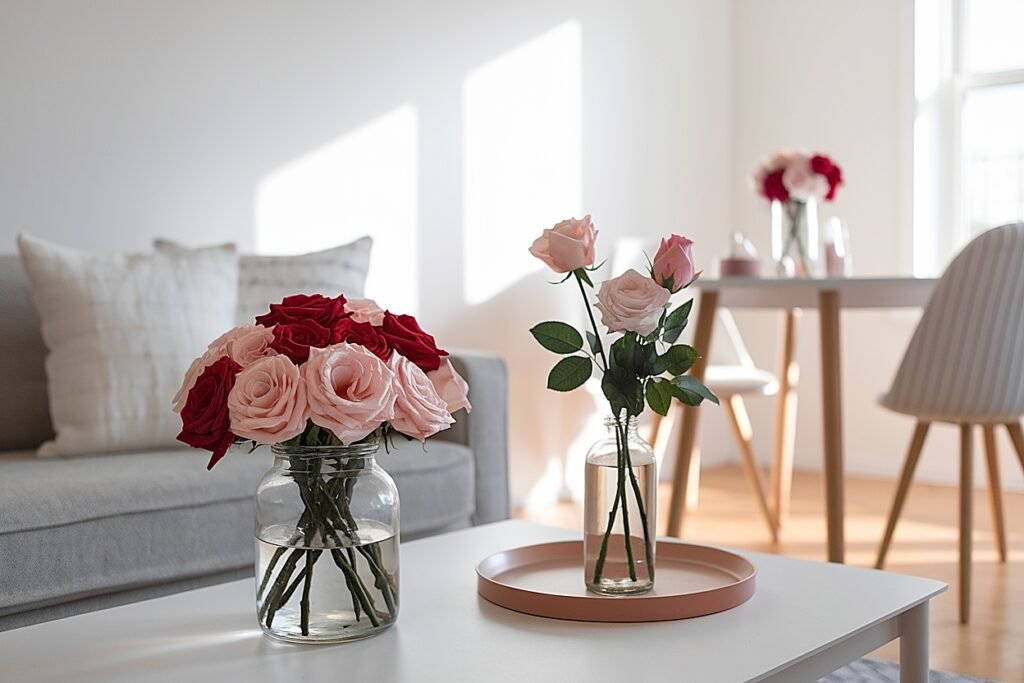
The single biggest waste in Valentine decorating happens when people put all their roses in one vase. One arrangement per purchase. Done. But grocery bouquets contain enough material for three, sometimes four, distinct centerpieces when you approach them as raw materials rather than finished products. This multiplication trick stretched my decorating budget during lean years and became permanent habit even after finances improved.
Unwrapping a grocery bouquet reveals more than roses. You’ll find greenery, usually leather leaf fern, Italian ruscus, or eucalyptus. There’s often filler like baby’s breath, wax flowers, or statice. Sometimes you get interesting accent stems. Separating these components and redistributing them across multiple vessels transforms one purchase into a comprehensive apartment decorating scheme.
Start by completely disassembling the bouquet. Remove all rubber bands, cellophane, and paper. Fill your sink with cool water and lay everything flat. Sort stems into categories: roses, greenery types, filler flowers. Now assess quantities. A dozen roses divides beautifully into groups of five, four, and three. Your main centerpiece gets five roses with substantial greenery. A secondary arrangement receives four roses with some filler. Your smallest piece, perfect for a bathroom counter or nightstand, gets three roses with minimal accents.
Cut stems progressively shorter for each arrangement. Main centerpiece roses stay at ten to twelve inches. Secondary arrangement stems cut to eight inches. Smallest grouping trims to five or six inches. This graduated approach ensures proper proportions for different vessel sizes while creating variety across your apartment. Each arrangement reads as intentionally designed rather than obviously subdivided from one source. Your grocery store investment now decorates multiple zones, creating Valentine atmosphere throughout your living space rather than concentrating in one spot.
For more strategies on maximizing limited flower budgets, explore these small apartment Valentine rose centerpiece ideas on a budget that stretch every dollar further. Found this helpful? Share it with friends who are planning their Valentine setup!
Continue reading to discover which grocery store rose bundles work best with your apartment’s existing color scheme.
What Are the Best Grocery-Store Valentine Rose Bundles for Small Apartment Color Palettes?
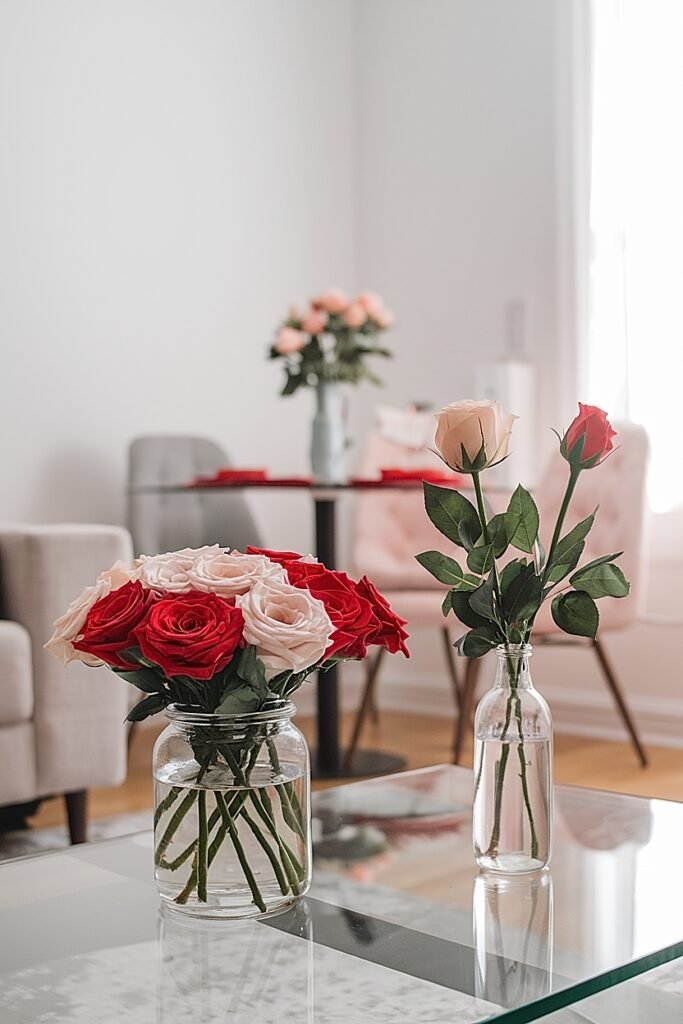
Color coordination matters more in small apartments than in larger homes. When everything sits within sight of everything else, clashing hues create visual chaos that makes tight spaces feel even more cramped. Roses that complement your existing decor amplify your space; roses that fight your color scheme create discord. I learned this after bringing home fire-engine red roses to an apartment decorated entirely in cool grays and blues. They looked like an emergency beacon rather than romantic decoration.
Most grocery stores offer several rose color options, especially approaching Valentine’s Day. Strategic selection based on your apartment’s palette creates cohesion that elevates the entire space. These five common grocery bundles suit different color schemes beautifully.
1. Classic Red Roses for Warm-Neutral Apartments
Traditional red roses work brilliantly in apartments featuring warm neutrals, beige, cream, tan, warm gray, or terracotta tones. The red becomes a striking accent against these backdrops without fighting existing warmth. Avoid classic red if your apartment skews cool-toned; the temperature clash creates visual tension. In warm-neutral spaces, red roses feel intentional and romantic rather than jarring. Most grocery stores stock red roses in greater quantity than other colors, giving you the most selection flexibility for stem quality and bloom freshness.
2. Blush Pink Roses for Cool-Gray Apartments
Soft blush pink roses complement cool gray apartments perfectly. The gentle warmth of blush balances gray’s coolness without introducing aggressive color competition. This combination reads as sophisticated and modern, perfect for contemporary apartment aesthetics. Blush roses also photograph beautifully against gray backdrops, ideal for capturing your Valentine setup for social media. Most grocery stores carry blush varieties, often labeled “light pink” or “champagne,” particularly during Valentine season.
3. White and Cream Roses for Any Apartment Palette
White roses work universally. They complement warm palettes, cool palettes, bold colors, and neutral schemes equally well. Their versatility makes them the safest grocery store choice when you’re uncertain about color coordination. Cream roses add slight warmth, suiting neutral and warm apartments especially well. Pure white brings clean crispness that works anywhere. Either option creates elegant romance without risk of palette conflict. Most grocery stores stock white roses consistently.
4. Orange and Coral Roses for Bohemian Apartments
Apartments decorated with rich, earthy tones, terracotta, rust, mustard, burnt orange, welcome coral and orange roses enthusiastically. These warm hues feel like natural extensions of bohemian color palettes rather than additions to them. The coordination creates collected-over-time vibes rather than decorated-for-Valentine appearances. Orange roses photograph dramatically and bring energy that softer colors can’t match. Grocery stores increasingly stock coral varieties as these shades gain popularity.
5. Deep Burgundy Roses for Moody Apartments
Dark, dramatic apartment palettes, navy, forest green, deep purple, charcoal, pair gorgeously with burgundy roses. The deep wine tones feel sophisticated and intentional against moody backdrops. Burgundy reads as elevated and artistic rather than obvious Valentine decoration. These roses suit apartments styled with velvet textures, dark wood, and jewel tones particularly well. Look for burgundy varieties labeled “black magic” or “deep red” at grocery stores with broader selections.
Read on to discover how dollar store glassware elevates grocery roses to florist-level presentations.
How to Pair Grocery-Store Valentine Roses with Dollar-Store Glass in Small Apartments
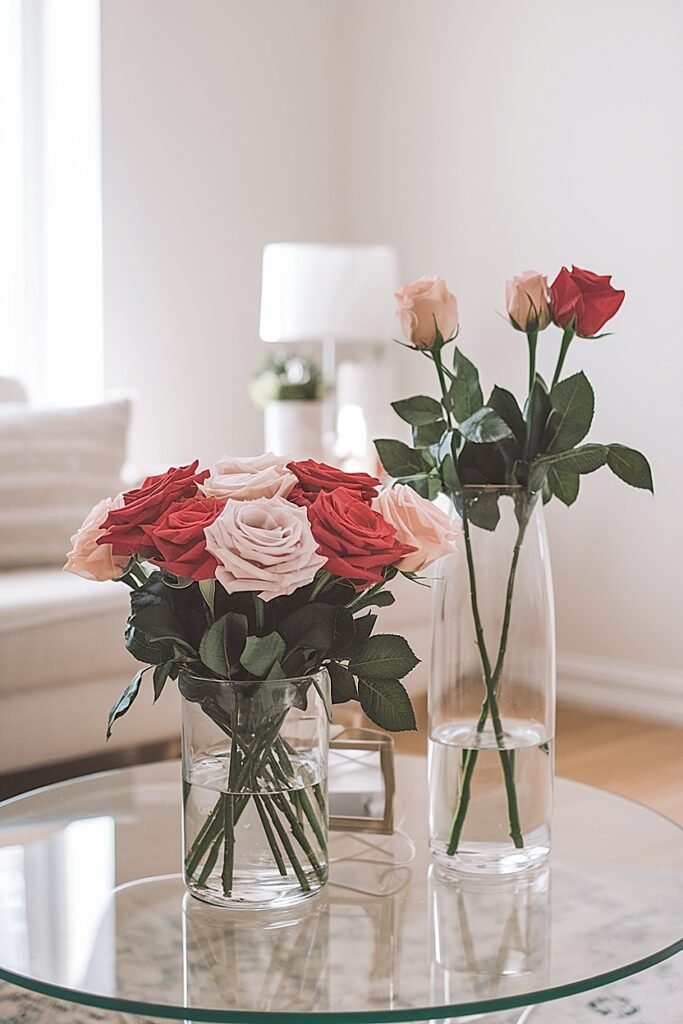
The vessel matters almost as much as the flowers, a truth that seems expensive until you discover dollar stores. I spent years buying overpriced vases before walking into a dollar store and finding glass cylinders identical to what home decor shops charge fifteen dollars for. That realization permanently changed my decorating economics. Dollar store glassware plus grocery store roses equals florist-quality arrangements at a fraction of florist costs.
Quality varies at dollar stores, so inspection matters. Look for clear glass without obvious bubbles, scratches, or clouding. Check rims for chips. Examine bases for stability. The best dollar store glass looks indistinguishable from expensive alternatives once flowers fill it. You’re not buying heirloom vessels, you’re buying functional containers that become invisible behind beautiful blooms.
Cylinder vases offer the most versatility. Their simple geometry suits any style, modern, traditional, farmhouse, bohemian. Heights around eight to ten inches accommodate most grocery rose stem lengths after cutting. Widths of three to four inches support substantial arrangements without requiring dozens of roses to avoid looking sparse. Buy multiples in varying heights for grouped displays that create compound impact without compound cost.
Beyond cylinders, dollar stores stock bud vases perfect for single stems, fish bowls ideal for floating rose heads, and various decorative containers that become interesting vessels with creative repurposing. Hurricane lanterns work beautifully with roses inside, the glass creates romantic magnification. Drinking glasses in interesting shapes become unexpected bud vases. The key lies in seeing potential rather than intended purpose. A dollar store trip with creative eyes yields vessel options rivaling any home decor boutique.
The following section reveals how to transform grocery rose packaging itself into simple, charming centerpieces.
Ideas for Turning Grocery-Store Rose Sleeves into Simple Apartment Valentine Centerpieces
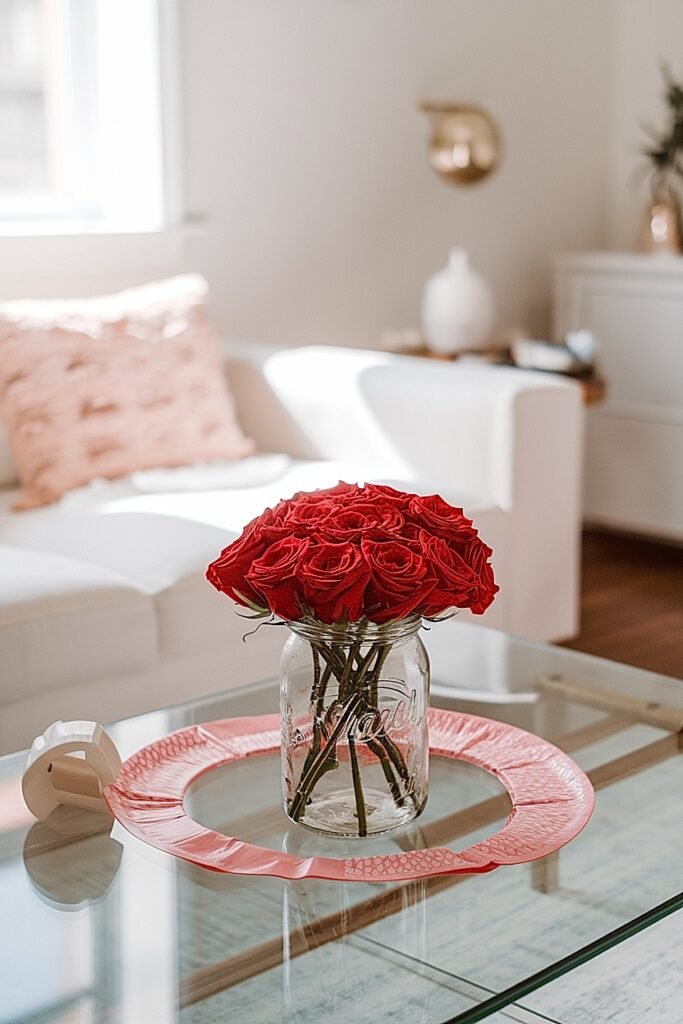
Sometimes the simplest approach works best. Those grocery store roses come wrapped in cellophane and paper that most people immediately trash. But that packaging actually protects flowers during transport and can become part of your display with minimal adjustment. I discovered this accidentally when a dinner guest arrived before I’d finished unwrapping roses. The half-opened bouquet sitting on my counter drew more compliments than my carefully arranged centerpiece in the dining area.
The wrapped-bouquet aesthetic carries its own romantic charm. It suggests roses just received, fresh from gifting. The presentation reads as spontaneous rather than fussed-over. For small apartments where elaborate arrangements feel overdone, this simplicity suits the scale perfectly. These five techniques transform grocery packaging into intentional displays.
1. The Kraft Paper Wrap
Remove cellophane but leave kraft paper wrapping intact if your bouquet includes it. Trim paper edges cleanly with scissors. Fold paper top down slightly for a casual, relaxed look. Lay the wrapped bundle horizontally across a table as if just received, or stand it in a wide-mouth vase. The brown paper adds rustic charm while requiring almost zero effort. Add a ribbon bow for finished polish.
2. The Cellophane Vase Trick
Keep cellophane wrapping intact but trim the bottom to shorten overall height. The cellophane becomes a water-holding vessel when you add an inch or two of water to the bottom section. The wrapped roses stand in their own packaging, creating a self-contained display. The slight industrial quality of cellophane reads as intentionally casual in modern apartment aesthetics.
3. The Unwrapped Horizontal Display
Remove all packaging, then lay your rose bunch horizontally on a decorative surface, a cutting board, a folded cloth napkin, a shallow tray. Add a ribbon loosely tied around stems. Scatter a few loose petals nearby. This gift-presentation style suggests romance and intention while avoiding any arrangement skill requirements. The horizontal orientation surprises and delights in ways upright bouquets don’t.
4. The Partial Unwrap Reveal
Peel back packaging partially, leaving the bottom half wrapped while roses fan open from the top. Stand this in a tall container, a champagne bucket, a large pitcher, a wide cylindrical vase. The half-wrapped presentation creates visual interest through the contrast between concealed stems and revealed blooms. This technique requires the least effort while appearing intentionally styled.
5. The Re-Wrapped Upgrade
Remove original packaging entirely, then rewrap your bouquet in prettier material, linen fabric, decorative tissue paper, vintage newspaper, fabric scraps. Secure with twine, ribbon, or raffia. The upgraded wrapping creates gift-quality presentation using materials you probably already own. Stand the rewrapped bundle in a vessel or lay it horizontally as a table display.
Continue reading to learn how coordinating roses with your existing soft furnishings creates cohesive Valentine atmosphere.
Ideas for Layering Grocery-Store Valentine Roses with Throw Pillows and Blankets in Tiny Rooms
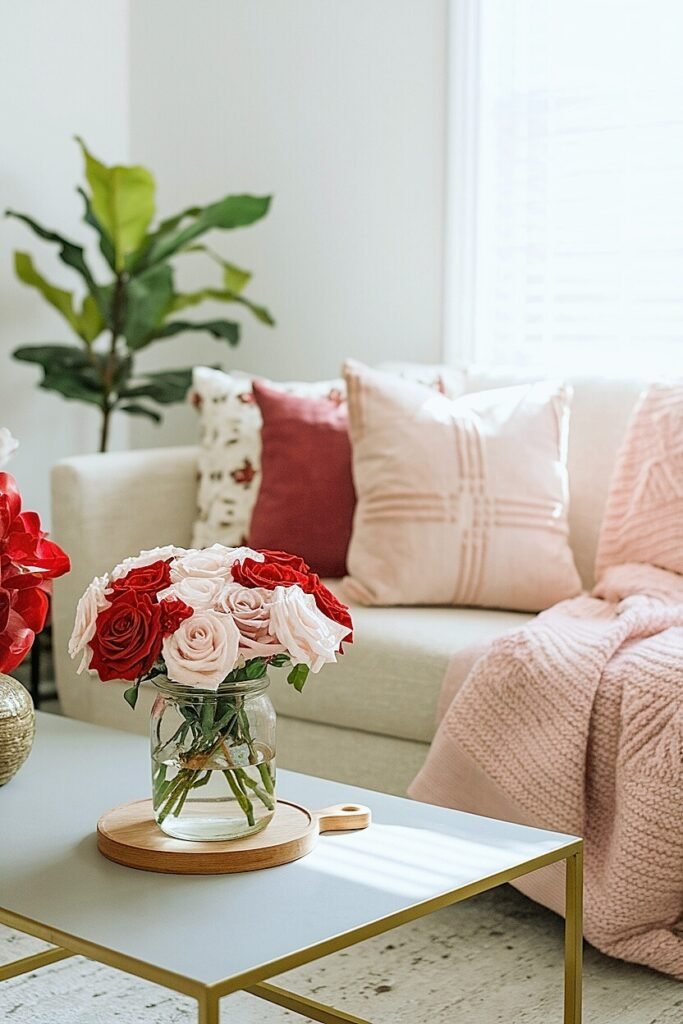
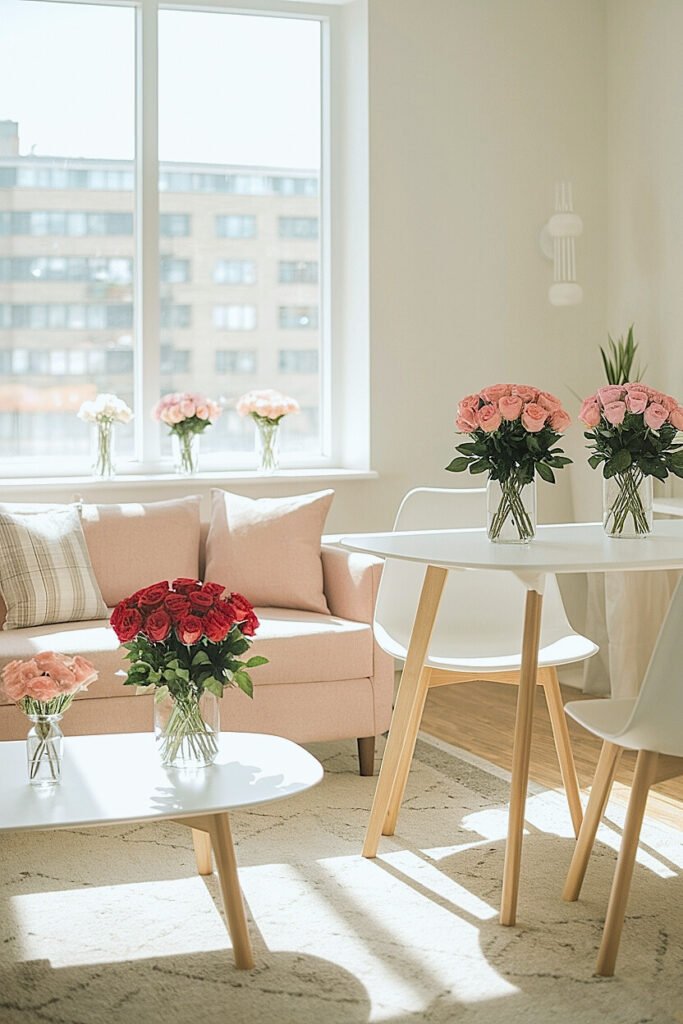
Small apartment decorating succeeds through coordination rather than accumulation. Adding roses to a space already filled with non-complementary elements creates visual noise. But roses that echo colors and textures already present in your room amplify existing beauty exponentially. This layering approach, connecting flowers to soft furnishings, creates cohesive romance that scattered decorating can’t achieve.
Your throw pillows and blankets are already doing color work in your space. They’ve established a palette, introduced textures, created mood. Grocery store roses should join that existing conversation rather than starting a new one. This coordination transforms individual elements into a unified Valentine atmosphere. These five layering strategies connect roses to soft furnishings effectively.
1. Color Echo Placement
Position roses in the same sightline as pillows or throws sharing their color. Blush roses near blush pillows. Red roses visible alongside a red throw blanket. This creates color relationships that the eye recognizes subconsciously as intentional design. The repetition builds rhythm across your space. Even opposite ends of a tiny room feel connected through coordinated color placements.
2. Texture Contrast Pairing
Place roses near contrasting textures, smooth petals against chunky knit blankets, delicate blooms near velvet pillows. The contrast heightens awareness of both elements. Your eye appreciates the blanket’s texture more because of the rose’s smoothness nearby. Neither element would pop as dramatically in isolation. This pairing adds richness without adding clutter.
3. The Pillow-and-Vase Vignette
Create intentional groupings that include both roses and pillows. A rose arrangement on an end table beside a couch with coordinating throw pillows creates a composed corner. A bud vase on a nightstand next to a bed with complementary bedding builds a romantic sleep space. These vignettes tell a story of thoughtful coordination rather than haphazard accumulation.
4. The Draped Frame Technique
Drape a throw blanket partially over furniture near your rose arrangement, creating a fabric backdrop that frames the flowers. The roses become focal points elevated by their textile setting. This works particularly well on console tables, sideboards, or dining surfaces near upholstered furniture. The draped textile adds softness and romance while connecting hard surfaces to soft ones.
5. The Scattered Color Repetition
Scatter rose petals on pillow surfaces, tuck single blooms into blanket folds, create multiple small connections between flowers and fabrics throughout your room. This distributed approach spreads Valentine atmosphere across your entire space rather than concentrating it in one arrangement. The repeated connections make the whole room feel romantically styled.
Read on for essential techniques that keep grocery store roses fresh through the entire Valentine week.
How to Refresh Tired Grocery-Store Roses So They Last Through Valentine Week
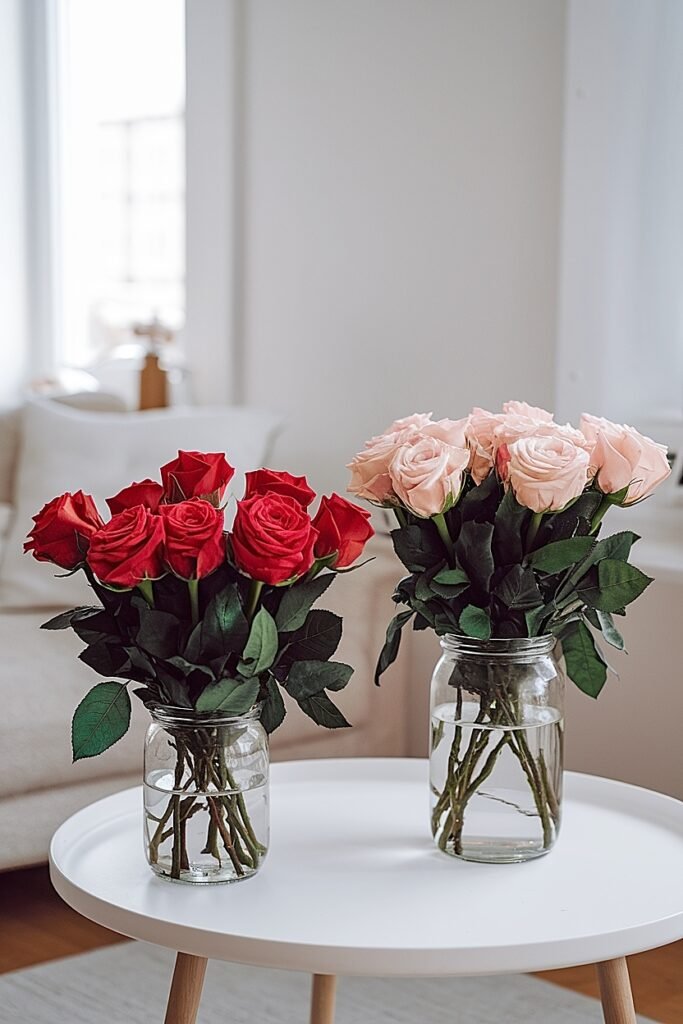
Grocery store roses face challenges florist roses don’t. They’ve sat in store buckets, possibly for days. They’ve endured fluorescent lighting and inconsistent temperatures. Shoppers have handled them, sometimes roughly. By the time you bring them home, they’ve already experienced stress that shortens their lifespan. Proper revival techniques extend their beauty from a few days to a full week, sometimes longer.
I’ve experimented with every rose-revival hack circulating online. Some work. Many don’t. A few actively harm flowers. The techniques below consistently deliver results based on years of personal testing. They address the specific challenges grocery store roses face.
Start with immediate hydration upon arriving home. Grocery roses often dehydrate during display. Fill a clean container with lukewarm water, not cold, which shocks stems. Add flower food if your bouquet included a packet; sugar and a drop of bleach work as substitutes. Cut at least one inch off each stem at a forty-five-degree angle using sharp scissors or pruners. Dull cuts crush stems, blocking water uptake. Make these cuts underwater if possible, air bubbles entering cut stems impede hydration.
Remove all foliage that would sit below water level. Submerged leaves rot quickly, creating bacteria that clogs stems and shortens bloom life. Strip leaves aggressively; roses don’t need many leaves to survive in a vase. Place roses in a cool location away from direct sunlight, heating vents, and fruit bowls, fruits release ethylene gas that accelerates wilting. Change water every two days, recutting stems each time. This consistent maintenance extends grocery rose life dramatically. When individual blooms fade, remove them rather than letting them contaminate remaining fresh flowers.
The next section covers the easiest rose and greenery pairings for maximum impact with minimum effort.
What Are the Easiest Grocery-Store Valentine Rose and Greenery Combos for Tiny Rooms?
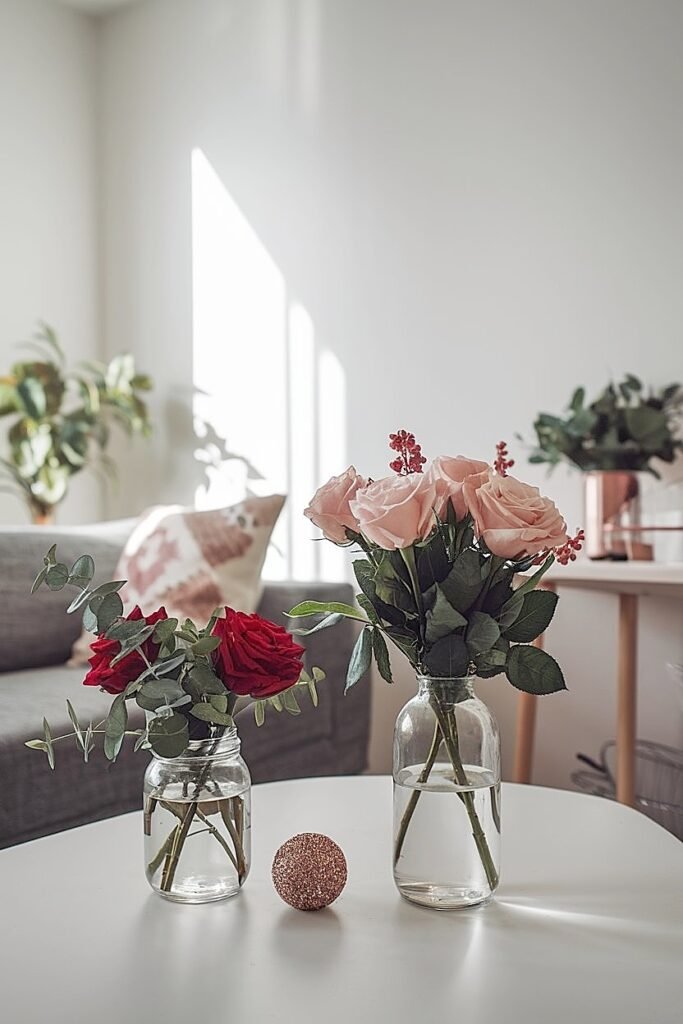
Greenery transforms sparse rose arrangements into lush displays while costing almost nothing compared to additional blooms. Grocery stores stock greenery bunches in their floral sections, often overlooked by shoppers focused on flowers. These humble stems become secret weapons for budget-conscious decorators. A five-dollar greenery bunch provides enough material to fill out multiple rose arrangements, creating abundance from minimal flower investment.
The right greenery choices require no arrangement skills. They fill space, add texture, and support roses without demanding precise positioning. These three combinations work foolproof in any setting.
1. Eucalyptus and Red Roses
Eucalyptus branches drape naturally, requiring zero arrangement technique. Their silver-green color complements classic red roses perfectly. The combination smells incredible, eucalyptus fragrance mingling with rose scent creates aromatherapy-level atmosphere. Simply stuff eucalyptus into your vessel first, building a loose foundation, then tuck roses into the greenery. The eucalyptus does the structural work while roses provide color punch.
2. Italian Ruscus and Pink Roses
Italian ruscus features sturdy stems with glossy leaves that cascade naturally over container edges. The deep green foliage makes pink roses pop dramatically. This combination suits modern aesthetics especially well, the clean lines of ruscus complement contemporary spaces. Build a ruscus framework first, letting stems arch outward, then position roses at the center focal point.
3. Baby’s Breath and White Roses
The classic combination works for good reason. Baby’s breath fills enormous volume for minimal cost, creating cloud-like fullness around white roses. The all-white palette feels romantic and timeless. This pairing suits traditional apartment styles and photographs beautifully. Use baby’s breath generously, it’s inexpensive enough to pile abundantly, then nestle white roses as precious focal points within the airy mass.
The final section addresses narrow dining tables, common in small apartments and challenging to decorate.
How to Style Grocery-Store Valentine Roses on Narrow Dining Tables for Two
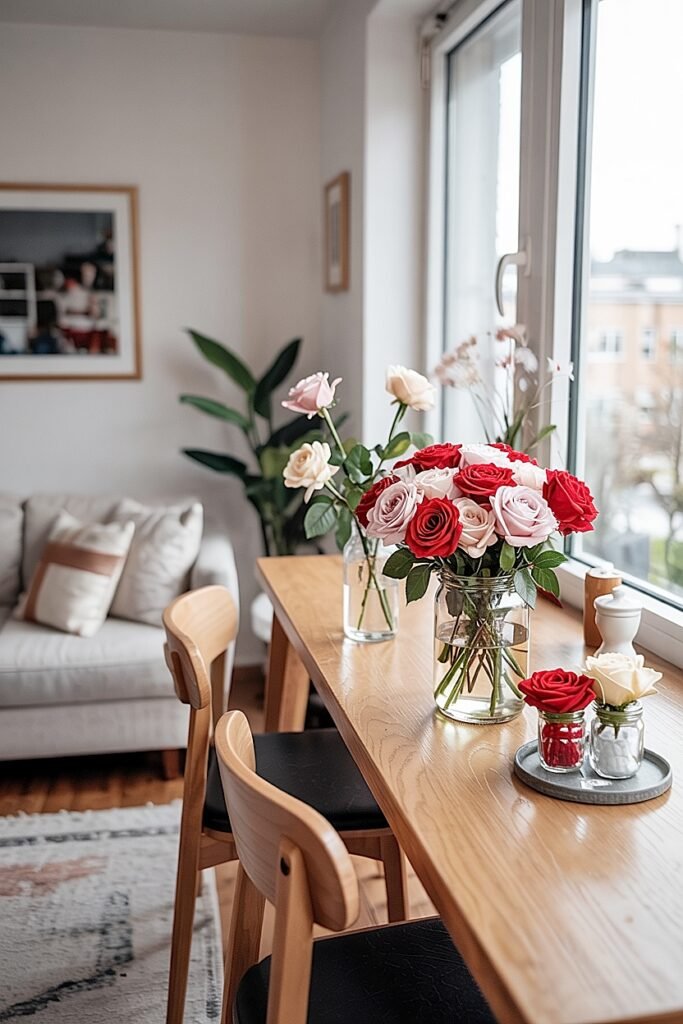
Narrow dining tables define small apartment eating. Those twenty-four to thirty-inch-wide surfaces barely accommodate two place settings, let alone elaborate centerpieces. Traditional arrangements overwhelm these tables, blocking sightlines and stealing space needed for actual dining. Yet leaving them undecorated during Valentine’s feels wrong. The solution lies in low, compact, linear arrangements designed specifically for tight dimensions.
I’ve tried countless approaches on my own narrow apartment table. Tall centerpieces that blocked conversation. Wide arrangements that left no room for plates. Candles that seemed romantic until someone’s sleeve caught a flame reaching for the bread basket. The techniques below avoid all those mistakes while delivering genuine Valentine ambiance.
Width should never exceed one-quarter of your table width. On a twenty-four-inch table, that means arrangements six inches across maximum. Length can extend further, linear arrangements along the table’s center axis work beautifully on narrow surfaces. Height must stay under eye level when seated, roughly eight inches maximum for most table heights. These constraints sound limiting but actually guide you toward elegant, appropriate designs.
A single low bowl with tightly clustered roses works perfectly. A rectangular wooden tray holding three small bud vases creates linear interest without width problems. A garland of greenery down the table center with individual roses tucked along its length provides romance without bulk. Floating rose heads in a shallow dish deliver maximum impact within minimal footprint. Battery candles tucked among these arrangements add evening glow without fire risks in tight quarters. The goal: romantic atmosphere that enhances dinner rather than complicating it. Your grocery store roses, properly scaled and positioned, achieve exactly that.
Conclusion
Grocery store roses carry unfair stigma. The same flowers that earn compliments in florist arrangements get dismissed as cheap alternatives when purchased from supermarket floral buckets. This prejudice costs people money and limits Valentine decorating unnecessarily. Your small apartment doesn’t need expensive blooms, it needs affordable roses styled thoughtfully.
Every technique in this guide comes from actual apartment living experience. The divided bouquets stretching single purchases across multiple zones. The dollar store vessels that look indistinguishable from boutique alternatives. The care techniques extending bloom life through the entire holiday week. The greenery combinations that create abundance from sparse flower investments. These aren’t theoretical suggestions; they’re tested solutions that work reliably. Grocery store roses, treated properly, deliver Valentine romance every bit as effectively as their pricier counterparts. Your apartment, your budget, and your Valentine celebration all benefit from understanding this truth.
This website contains affiliate links, and some products are gifted by the brand to test. As an Amazon Associate, I earn from qualified purchases. Some of the content on this website was researched and created with the assistance of AI technology.