
This website contains affiliate links, and some products are gifted by the brand to test. As an Amazon Associate, I earn from qualified purchases. Some of the content on this website was researched and created with the assistance of AI technology.
Key Takeaways
- Low dome arrangements under six inches tall preserve eye contact and conversation flow during dinner
- Wide, shallow containers naturally encourage horizontal arrangements rather than towering displays
- Runner-style linear arrangements maximize romantic impact while leaving table space functional
- Half-bouquet techniques create substantial presence using fewer roses positioned strategically
- Matching split centerpieces at table ends create symmetry without blocking center sightlines
- Tray bases define arrangement boundaries and add visual weight without adding height
Styling a low-profile valentines day rose centerpiece for a small dining table solves the eternal romantic dinner dilemma: how to create beautiful ambiance without building a floral wall between you and your Valentine. I learned this lesson the hard way during an anniversary dinner years ago, spending the entire meal craning around an elaborate arrangement I’d thought would impress. My partner and I could barely see each other. The roses looked gorgeous. The dinner felt ridiculous. That disaster taught me that height is the enemy of intimate dining.
Small dining tables, the two-seaters and compact four-person rounds that apartment dwellers know well, demand centerpieces that stay low. Under six inches total height. Ideally closer to four. This constraint seems limiting until you discover how many beautiful approaches exist within it. Low arrangements actually concentrate visual impact rather than dispersing it vertically. The roses become an intimate shared experience rather than a barrier dividing the table. Every technique in this guide emerged from that anniversary dinner failure and the years of correction that followed.
Pick the Best Low Centerpiece for Your Small Dining Table
Use this table to choose the best low-profile rose centerpiece for your small dining table. Compare table shape, container type, stem count, and “conversation comfort” so you can decorate without blocking faces or crowding plates. Each option stays low, tidy, and real-life usable.
| Low Centerpiece Style | Best Table Shape | Container + Stem Count | Conversation Comfort |
|---|---|---|---|
| Low Dome (Anchor) classic most popular |
Round • Square • Small rectangle | Wide short jar • 7–9 stems | Best stays below eye level |
| Mini-Jar Runner Line space-saving tidy |
Square • Small rectangle | 3 tiny jars • 1–2 stems each | Best low and spread out |
| Corner Centerpiece tiny table hack |
Very small square • Tiny rectangle | Short wide jar • 5–7 stems | Best keeps center open |
| Twin Low Jars balanced |
Square • Small rectangle | 2 matching short jars • 4–6 stems each | Good depends on spacing |
| Saucer Bowl (Ultra-Low) lowest height |
Any • best for tiny tables | Shallow bowl • 9–12 stems trimmed ultra-short | Best lowest possible profile |
| Edge-Weighted Jars center stays clear |
Tiny square • Tiny rectangle | 2 short jars near edges • 3–5 stems each | Good great for tight meals |
| Tray-Framed Low Jar contained clean |
Any | Low tray + jar • 7–9 stems | Best tidy, spill-contained |
| Jar-and-Plate Base budget |
Any | Pasta sauce jar + plate • 6–8 stems | Good stable and simple |
| Flat-Lay Petal Accent no height added |
Any | Low jar + a few petals • 5–9 stems | Best visual boost, no height |
| Ombre Low Dome designer feel |
Round • Square | Wide short jar • 8–10 stems red→blush fade | Best interest without bulk |
Container: wide, short jar + coaster
Comfort: Best
Container: 3 tiny jars + coasters
Comfort: Best
Container: short wide jar + coaster
Comfort: Best
How to Build a Low Dome Valentine Rose Centerpiece That Won’t Block Faces

The dome shape creates maximum visual impact within minimal height. Think half a sphere resting on your table, lush rose coverage spreading horizontally rather than reaching upward. This geometry puts blooms at the ideal viewing angle for seated diners: looking slightly down at a tapestry of petals rather than up at towering stems.
Building a proper dome requires understanding how rose heads fill space. Each bloom occupies roughly three inches of visual territory. Arranging them in a dome means positioning heads at graduated angles radiating from a center point.
Start with a low, wide vessel, a compote, shallow bowl, or wide-mouth container no taller than three inches. Fill with soaked floral foam or use a tape grid across the opening to support stems. Insert your center rose first, cutting the stem so the bloom sits about two inches above the container rim. This becomes your dome’s peak.
Add surrounding roses at progressively shorter stem lengths, angling each slightly outward so heads face the table edges rather than straight up. Work in concentric circles from center to perimeter. Outer roses cut shortest, positioned nearly horizontal. The finished dome should measure under six inches total height while spreading eight to ten inches across. Eyes meet freely above this lush mound. Conversation flows unimpeded. For more minimalist approaches to Valentine roses, explore these minimalist Valentine rose ideas for studio apartments that adapt beautifully to small dining situations. Found this helpful? Share with friends planning their Valentine dinner!
Continue reading to discover the best containers for achieving these low profiles naturally.
What Are the Best Containers for Low-Profile Rose Valentine Centerpieces?
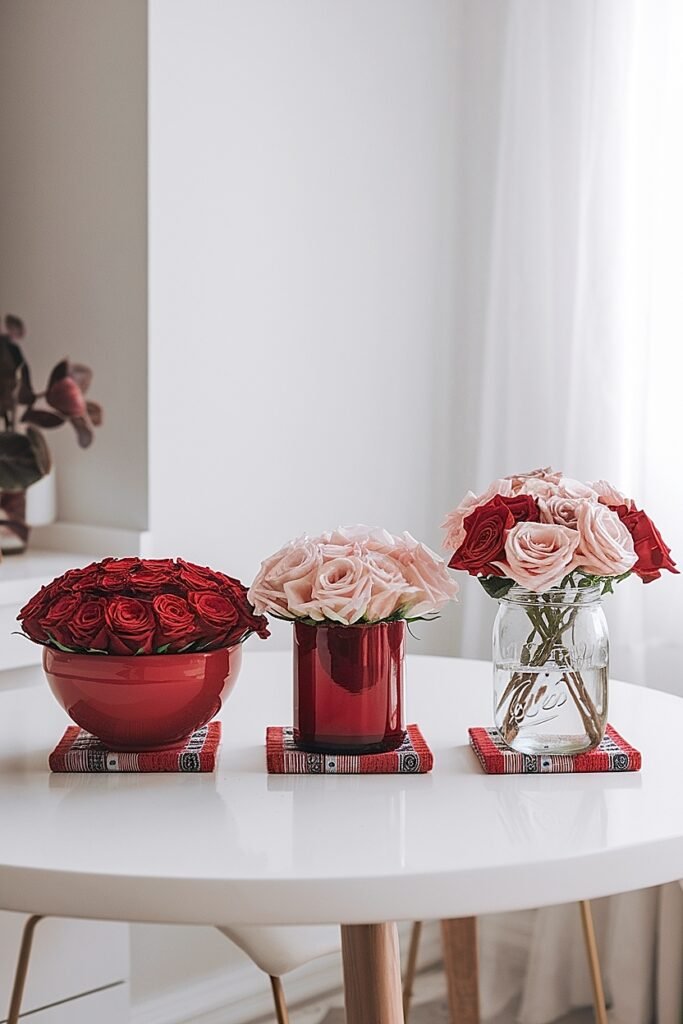
Container choice determines arrangement height before you’ve cut a single stem. Tall vessels encourage tall arrangements. Low vessels make low arrangements inevitable. Choosing the right container eliminates the temptation to build upward and naturally guides your roses into dinner-friendly profiles.
These five container types consistently produce successful low centerpieces.
1. Footed Compotes
Compotes, shallow bowls on short pedestals, lift arrangements just enough for elegance while keeping overall height minimal. The typical compote stands three inches tall with a bowl depth of two inches, allowing rose arrangements under six inches total. The pedestal base adds visual interest without vertical bulk. Vintage glass compotes from thrift stores cost almost nothing while delivering substantial style.
2. Wooden Dough Bowls
Shallow oval or rectangular wooden bowls create rustic low centerpieces perfectly suited to farmhouse aesthetics. Line with plastic and floral foam for water retention. The elongated shapes naturally encourage runner-style arrangements that follow the bowl’s length rather than building height. Dough bowls suit tables with rustic or natural decor themes.
3. Ceramic Baking Dishes
Rectangular ceramic baking dishes, the kind used for casseroles, become surprisingly elegant low containers. Their typical two-inch depth restricts rose height automatically. White ceramic reads as clean and intentional. The rectangular footprint suits smaller tables where round arrangements might overwhelm. Line with floral foam for easy arrangement.
4. Vintage Sugar Bowls and Compotes
Hunt thrift stores for vintage sugar bowls, small footed bowls, and petite compotes. These pieces typically measure two to four inches tall with proportionally small openings that hold three to five roses perfectly. The vintage character adds personality impossible to purchase new. Group several small vessels for compound low arrangements.
5. Clear Glass Cylinders (Short)
Short glass cylinders, under four inches tall, showcase rose stems beautifully while naturally limiting arrangement height. The transparency adds modern elegance. Choose cylinders with diameters of four to six inches for proper rose support. The cylinder’s vertical walls keep stems organized without requiring arrangement expertise.
The following section covers linear arrangements that run down your table’s length.
How to Create a Low “Runner-Style” Valentine Rose Line Down a Small Table
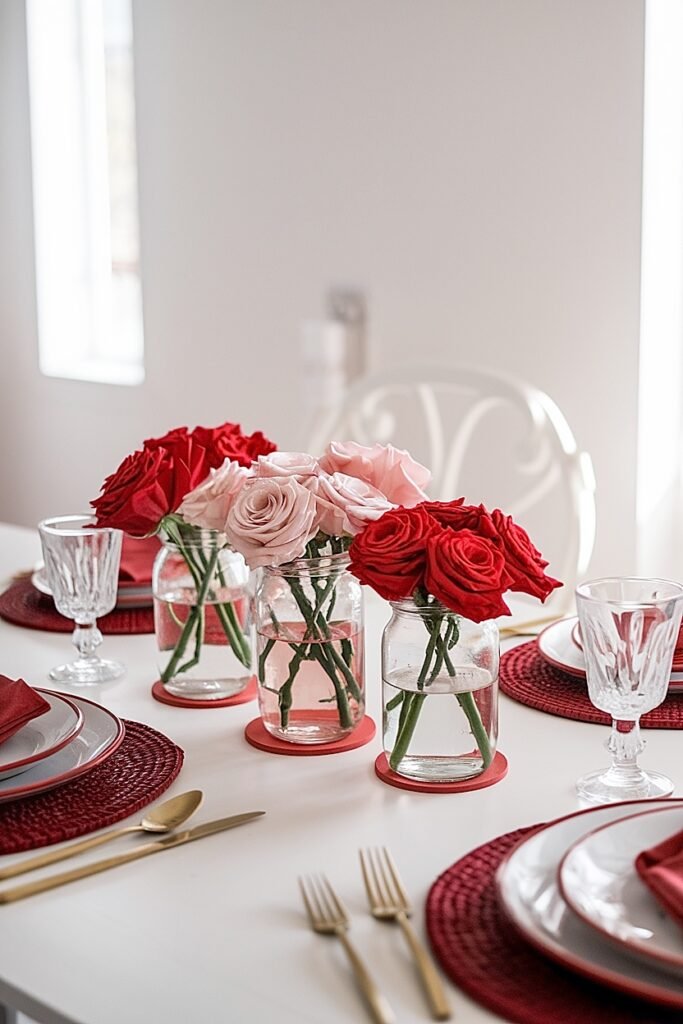
Runner-style arrangements follow your table’s long axis, creating a garland effect that decorates substantially without demanding center space. The linear approach suits rectangular tables especially well, transforming the centerpiece from a focal obstacle into an integrated table element.
Think of a table runner made from roses. Low. Long. Narrow. This geometry maximizes visual impact while minimizing the footprint that interferes with dining.
Start with a narrow vessel or series of small vessels arranged in a line. A bread loaf pan, three bud vases in a row, or a narrow wooden tray all work beautifully. The container width should span no more than four inches, narrow enough that plates easily pass over or around it.
Cut roses very short, four to five inches total stem length, and position them densely along your linear base. Angle blooms outward toward diners on each side rather than straight up. Fill any gaps with greenery tucked low. The finished runner sits under four inches tall while extending twelve to eighteen inches long. Diners see continuous rose coverage without any height barrier. Plates and serving dishes navigate around the narrow footprint easily.
Read on for half-bouquet techniques that maximize impact from minimal flowers.
Ideas for a “Half-Bouquet” Low Valentine Centerpiece That Leaves Table Space
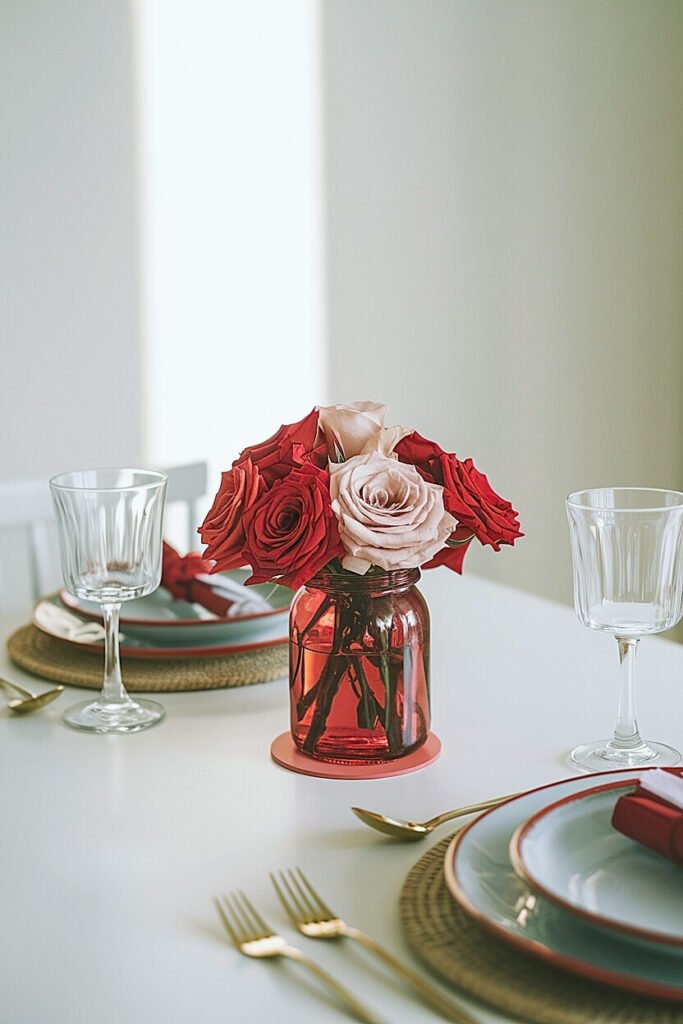
A half-bouquet uses fewer roses than traditional arrangements but positions them for maximum visual return. Instead of distributing flowers evenly throughout a vessel, you concentrate them on one side or in one section, creating lush density while leaving table surface functional.
These five approaches deliver substantial presence from modest flower counts.
1. The Front-Facing Crescent
Arrange all roses toward one side of your container, creating a crescent that faces primary seating. The back of the arrangement stays bare or holds only greenery. Diners see full lush coverage while the arrangement occupies less total space. Position the crescent facing your Valentine across the table for maximum romantic impact with maximum efficiency.
2. The Corner Cluster
Place your vessel at one corner of the table rather than center. Build a tight rose cluster that occupies that corner intensely while leaving the rest of the table completely clear. This asymmetrical approach looks deliberately styled rather than accidentally sparse. The corner becomes a statement; the remaining surface stays functional.
3. The One-Sided Spill
Arrange roses to “spill” over one edge of a low bowl, creating cascade effect that builds visually in one direction only. The opposite side remains low and minimal. This dynamic approach suggests movement and abundance while using half the roses a full arrangement would require.
4. The Elevated Half-Circle
Using a semicircular arrangement on a small riser, a book, a small platform, creates presence through strategic elevation of a modest display. The half-circle faces diners while the flat back rests against the riser. Height comes from the riser, not the roses themselves.
5. The Split-Focus Pair
Divide your roses between two very small vessels positioned at opposite table ends rather than creating one center arrangement. Each vessel holds three to four roses only, but the pair creates visual bookends that frame your dining experience. The center stays completely clear for serving and conversation.
Continue reading for techniques that achieve designer aesthetics through strategic simplicity.
Ways to Use Short Jars to Create Two Matching Low Valentine Centerpieces (Split Table)
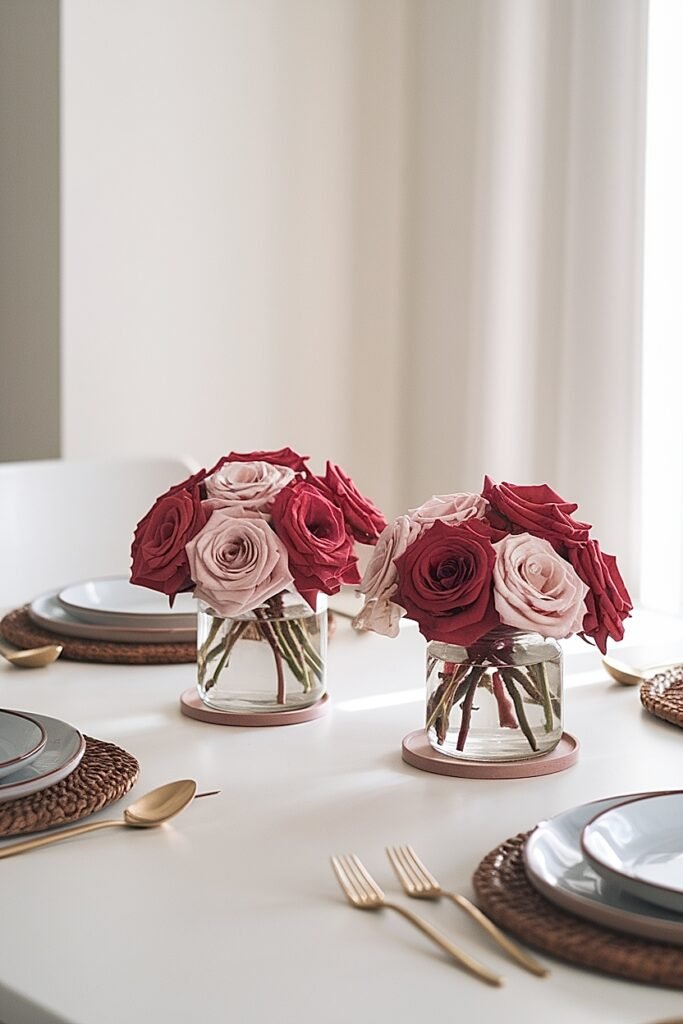
Split arrangements place matching centerpieces at opposite table ends, framing your dining experience while keeping the center completely clear. This approach works especially well for intimate dinners where center space matters for reaching across, holding hands, or simply maintaining unobstructed eye contact.
1. The Mirror-Image Pair
Create two identical arrangements using matching jars, same size, same rose count, same stem heights. Position at exact opposite table ends. The symmetry creates formal elegance while the duplication means neither arrangement needs to be large. Three roses per jar looks abundant when doubled across the table.
2. The Graduated Bookends
Use two jars of slightly different heights, perhaps a pint and a half-pint, positioned at table ends. Both stay under the low-profile threshold while the height variation adds visual interest. The asymmetrical symmetry looks deliberately styled rather than accidentally mismatched.
3. The Connected Pair
Place two matching jars at table ends with a low greenery strand connecting them across the center. The jars anchor each end while the minimal greenery creates visual continuity. The center remains clear above the greenery line while the overall display reads as one unified installation.
Below, learn how tray bases add presence without adding height.
How to Use a Low Tray Base to “Define” a Valentine Centerpiece Without Extra Height
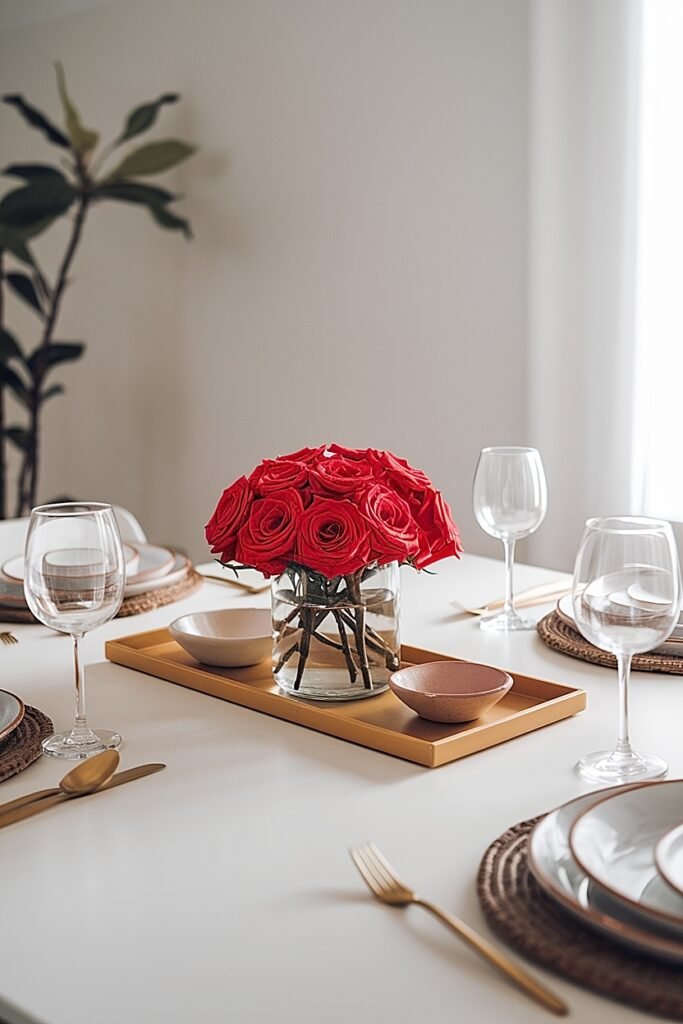
Trays add visual weight and intentionality to modest arrangements without contributing any problematic height. The defined boundaries transform simple rose vessels into composed vignettes. A jar of roses sitting directly on a table looks incidental. The same jar on a tray looks designed.
The tray creates territory, a designated zone that signals “this is the centerpiece” even when the roses themselves stay minimal. This psychological framing matters more than physical dimension.
Choose a tray that extends at least two inches beyond your vessel on all sides. The surrounding negative space emphasizes the roses at center while the tray edges create finished boundaries. Wooden trays suit rustic aesthetics. Metal trays add industrial edge. Mirrored trays double your roses through reflection.
Add small complementary elements to the tray surface around your vessel: a pair of votive candles, scattered petals, a meaningful small object. These additions occupy tray space without building height, creating a complete vignette from simple components. The tray unifies everything into a cohesive statement that reads as substantial despite staying under your critical height limit.
Conclusion
Low-profile centerpieces honor what Valentine’s dinner is actually about: the person across from you. No rose arrangement, however beautiful, improves upon clear sightlines to your partner’s face. The techniques throughout this guide, dome shapes, runner styles, half-bouquets, split arrangements, all share one commitment: keeping roses below the conversation line.
These approaches developed from that failed anniversary dinner and every corrected attempt since. The discovery that horizontal arrangements outperform vertical ones in intimate settings. The realization that tray bases add presence without height. The understanding that sometimes fewer roses, positioned strategically, create more romance than abundant flowers blocking the view. Your small dining table deserves Valentine beauty that enhances rather than obstructs the evening’s real purpose.
This website contains affiliate links, and some products are gifted by the brand to test. As an Amazon Associate, I earn from qualified purchases. Some of the content on this website was researched and created with the assistance of AI technology.