
This website contains affiliate links, and some products are gifted by the brand to test. As an Amazon Associate, I earn from qualified purchases. Some of the content on this website was researched and created with the assistance of AI technology.
Key Takeaways
- Keep it low and breathable: cap rose centerpieces at or below palm height so faces, plates, and serving hands move freely.
- Build in modules: create liftable rose clusters every 10–12 inches for fast setup, edits, and cleanup.
- Edit the palette: one anchor (crimson or burgundy), one diffuser (blush or cream), and one bridge tone (dusty rose or mauve) keep the table rich, not chaotic.
- Control texture and sheen: matte linens, brushed pewter, stoneware, olive, cedar, quiet backdrops that let petals glow.
- Protect the surface and flow: hide water tubes with moss, use felt-backed saucers or pewter plates, and leave clear lanes for plates, glassware, and serving.
Styling rustic Valentine rose centerpieces for dining tables starts with restraint and ends with rhythm. Dining is choreography, hands reach, eyes meet, plates land, so the flowers must partner, not compete. I treat roses like punctuation: commas of color, soft pauses of greenery, and the occasional exclamation of a pewter votive or velvet ribbon. Low, modular, and liftable wins every time.
I learned this the hard way on a long farmhouse table where my overbuilt arrangement turned dinner into a hedge maze. Now I design like a director: a slim green spine, clustered roses at rhythm points, and honest materials, linen, cedar, olive, pewter, to carry the rustic tone. The goal is a table that whispers romance while staying utterly usable.
How to Style a Wooden Crate Rose Valentine Centerpiece for Farmhouse Dining Tables

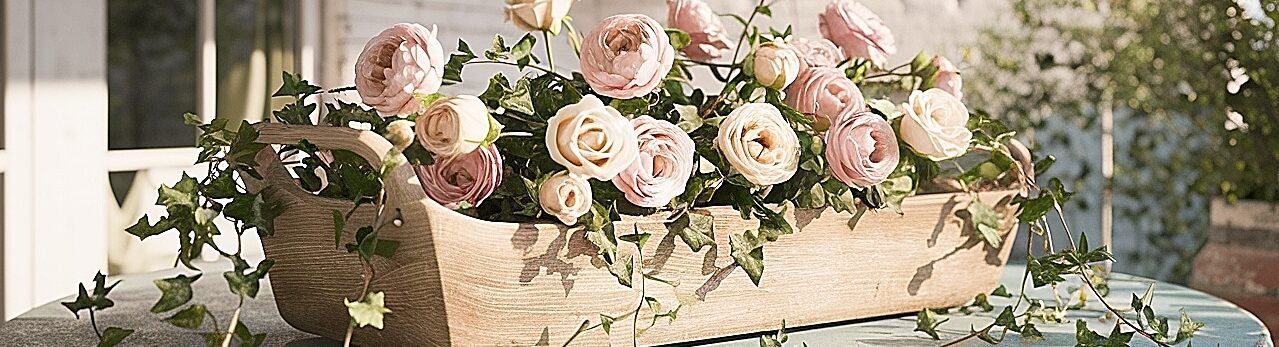
Farmhouse tables love pieces that feel handmade but disciplined. A wooden crate reads rustic without trying, yet scale matters. I choose a shoebox-length mini crate, line it with a watertight insert or narrow tray, and build a thin greenery spine down the middle using olive tips or cedar. Then I make compact rose pods: three blooms per pod, two in the anchor tone (crimson or burgundy), one diffuser (cream or blush), taped at staggered neck heights. Pods nestle shoulder-to-shoulder, keeping the profile under five inches so conversation stays fluid.
Mechanics stay invisible. I slip stems into micro water tubes, wrap the tubes with preserved moss to soften and conceal them, and stitch the pods with a touch of seeded eucalyptus for texture. I place frosted votives in the negative spaces beside the crate, not on top of it, to avoid glare and create side-light that flatters petals. The crate rides on a felt-backed pewter tray to protect wood and add a subtle frame.
Line the crate, lay a slim olive or cedar spine, seat moss-wrapped rose pods below palm height, and cross-light with frosted votives while leaving plate lanes open; for complementary coffee-table builds, see Ways to Style Rustic Valentine Rose Centerpieces for Coffee Tables, and share this post with a friend who loves a calm, handcrafted table. There’s more ahead, keep reading for container picks that flatter roses and behave during dinner service.
What Are the Best Rustic Containers for Valentine Rose Dining Centerpieces?

- Brushed Pewter Compote
A shallow, footed compote gives lift without height. I grid the mouth with clear tape or set a pin frog, then dome short stems tightly, crimson at the heart, blush and cream to feather edges, olive tips for silhouette. Pewter’s matte glow keeps reds velvety under candlelight and resists glare. The weighted base stays steady when someone leans in to pour wine. Felt pads underfoot protect wood and stop micro clinks from table vibrations. - Hand-Thrown Stoneware Bowl
Matte stoneware reads honest and warm. I tuck a mini frog in the center, hide mechanics with moss, and keep stems short for a low meadow of petals. One burgundy “heartbeat” at center adds depth, while blush and cream diffuse the edge. The shallow rim frames blooms like a picture, and the bowl slides aside in one move when platters arrive. Neutral glaze, bone or smoke, lets roses lead. - Low Zinc Planter (Lined)
Zinc adds an industrial counterpoint to romantic flowers. I drop in a watertight liner, then build compact pods with cedar for plush texture. Zinc’s cool patina makes crimson read velvety. Because metal conducts temperature, I keep it away from drafts and set it on a felt-backed base. Its rectangular footprint plays nicely with narrow runners. - Short Basket with Liner
Woven texture brings cozy rustic charm. A snug plastic insert prevents leaks; an olive halo hides the mechanics. I seat rose heads in tubes and let one spray rose trail a half inch for movement. The basket’s soft shadow line breaks up hard tabletops and photographs beautifully. Keep the overall profile very low to avoid snagging sleeves. - Vintage Jelly Jars (Clustered)
Narrow mouths mean easy control. I group an odd number of jars, three or five, down the runner, each with a tight trio of anchor, diffuser, and bridge tones. Twine collars nod to farmhouse without fuss. Place jars on felt-backed pewter saucers so they lift as modules during service. - Mini Enamel Pitchers
A squat enamel pitcher with a 2–3 inch mouth wrangles five short stems. I tape-grid the top, use olive for silhouette, and park the pitcher on a coaster to guard against condensation or tiny rust marks from chips. Great as accents flanking a main centerpiece. - Walnut Bread Board Platform
Not a vessel, a stage. I seat two tiny rose cups and one pinch bowl of olives or chocolates to “earn” the footprint. Boards create modularity: lift a cup to pass a dish, keep the other to hold the mood. Deep walnut grounds pale linens and echoes farmhouse wood.
Hint: Choose low, matte, weight-forward containers, pewter, stoneware, lined zinc, baskets, jars, enamel, and boards, to stabilize stems, hide mechanics, and preserve sightlines. Next, let’s build nest-style centerpieces that stay ultra-conversational.
How to Style Low Rose “Nest” Centerpieces for Conversation-Friendly Valentine Dinners

Nests hug the table and keep talk easy. I start with a plate-sized base, linen coaster, pewter saucer, or small board, and form a shallow halo with olive or cedar. Inside the halo, I seat three to five rose heads in short water tubes, wrapped with preserved moss so nothing looks clinical. The nest reads lush but never tall, and it lifts in one move when a roast or pasta bowl needs the space.
Lighting matters. I place frosted votives off to the sides, not inside the nest, to avoid heating petals. Color stays disciplined: deep crimson or burgundy as the anchor, blush or cream to soften edges, and a bridge like dusty rose or a whisper of mauve for nuance. The matte greens calm any shine from plates or glass.
Hint: Build a plate-sized olive or cedar halo, seat moss-wrapped rose heads inside, and light from the wings for a soft, low glow that never blocks faces. More ideas ahead, lanterns that bring structure without turning heavy.
Ideas for Styling Rustic Lanterns with Roses on Valentine Dining Tables

- Lantern-as-Frame with Rose Cup Inside
I place a brushed metal lantern with the door open and set a tiny stoneware rose cup inside, off-center. A frosted LED sits on the opposite side to cross-light. The lantern becomes architecture; the cup remains liftable. Keep height under palm level so sightlines hold. - Lantern Pair with Olive Garland Bridge
Two small lanterns anchor the runner’s thirds. I weave olive sprigs between them to create a slim “spine,” then tuck two or three rose pods along the bridge. The pair reads intentional and leaves the middle open for serving. - Lantern + Moss Base Collar
A single lantern gets a moss collar at its base with three rose heads wired low. The collar adds softness where metal meets linen. I avoid scented candles; stick to LEDs inside the lantern to protect petals from heat. - Lantern with External Pewter Saucers
I stage a lantern at center and flank it with pewter saucers holding tiny rose modules. The saucers lift instantly during service, and the lantern stays put as the sculptural constant. Repeat blush in the modules to echo candle glow. - Hanging-Style Lantern Laid Flat
A small hanging lantern with a ring handle lays flat like a low box. I seat a micro arrangement at its open side, letting petals peek in and out. The atypical angle feels editorial without adding height.
Hint: Use lanterns as low architectural frames, keep light frosted and cool, and keep all floral parts modular on saucers so service stays smooth. Next up, how to marry roses with patterned runners and placemats without visual chaos.
Ideas for Layering Valentine Roses with Patterned Runners and Placemats

- Neutral Runner + Patterned Placemats, Low Rose Pods
I run a bone linen runner and introduce pattern at the placemats, ticking stripe or small check. Rose pods sit on pewter saucers along the runner’s centerline. The neutral stripe down the middle calms the pattern perimeter; the saucers create order and easy lifts. - Patterned Runner + Solid Chargers, Disciplined Palette
When the runner carries the pattern (subtle floral or stripe), I quiet the tableware with solid chargers and keep roses to one anchor and one diffuser with a tiny bridge. Olive’s matte leaves flatten glare and prevent visual noise. - Double-Runner Layer with Narrow Rose Spine
Two narrow runners, overlapped, create a rustic seam. I run a pencil-thin greenery spine down that seam and seat tiny rose clusters every 10–12 inches, like commas in a sentence. The layered textile reads handcrafted; the clusters read rhythmic and low.
Let one surface carry pattern, keep roses disciplined in color and low in height, and use pewter saucers or a greenery spine to impose clean lines. Small tables next, two minis for an intimate dinner-for-two.
How to Style Two Mini Rose Centerpieces on Small Valentine Dining Tables for Two

A two-top needs breathing room. I place two identical mini arrangements on the left and right thirds, leaving the center open for plates and a shared dish. Each mini sits in a low cup, pewter or stoneware, with a tight trio of blooms (anchor, diffuser, bridge) and a single olive tip for silhouette. Heights match within a quarter inch for calm symmetry.
If I crave softness, I offset the pair by half an inch and add a linen-bound book stack or a tiny pinch bowl between them. The symmetry still reads, but the table gains depth. The magic is modularity: each piece lifts with one hand when a big bowl arrives, then returns without a fuss.
Park twin, low mini arrangements at the thirds, mirror heights and palette, and leave the center clear; add one small object for depth if desired. Hosting buffet-style? Roses need to earn their space and move fast.
What Are the Best Valentine Rose Centerpieces for Buffet-Style Dining Tables?

- Tray-Mounted Rose Modules
I build three to five micro arrangements on felt-backed pewter trays: compact rose pods with olive tips and hidden water tubes wrapped in moss. Trays slide along the buffet as dishes rotate, and staff, or you, can lift a full vignette in one move to clear space. Low height keeps labels visible. - Floating Rose Bowls at the Ends
At both buffet ends, I place shallow bowls with floating rose heads, cream and blush with one burgundy pulse, to signal start and finish without hogging the middle. They add glow near plates and utensils and move quickly when someone needs elbow room. - Lantern-and-Saucer Stations
Small lanterns with LED candles mark serving zones; pewter saucers with rose minis flank each lantern. When a hot dish arrives, the saucers lift instantly. The lanterns stay as navigation beacons, giving structure without crowding.
Hint: Use liftable trays, end-cap floating bowls, and low lantern stations to keep the buffet beautiful and efficient; repeat the same greenery and palette for cohesion across the line. You’ve got the framework, now the final polish.
Conclusion
Great Valentine dining centerpieces feel cinematic yet obedient. Keep roses below palm height, seat them in small, liftable clusters, and discipline your palette so the table reads warm and edited. Choose honest materials, linen, pewter, stoneware, olive, cedar, that flatter petals and kill glare. Protect the surface with felt pads and moss-wrapped mechanics, tuck micro-lights beneath foliage if you need glow, and place candles in frosted sleeves away from petals. On long tables, think in rhythm: clusters every 10–12 inches along a slim greenery spine. On small tables, mirror two minis and leave the middle open. For buffets, mount modules on trays and let floating bowls bookend the line. Edit once before guests sit, then let the roses whisper while the meal runs long and easy.
This website contains affiliate links, and some products are gifted by the brand to test. As an Amazon Associate, I earn from qualified purchases. Some of the content on this website was researched and created with the assistance of AI technology.