This website contains affiliate links, and some products are gifted by the brand to test. As an Amazon Associate, I earn from qualified purchases. Some of the content on this website was researched and created with the assistance of AI technology.
Key Takeaways
- Strategic floral placement prevents roses from blocking food access or creating service bottlenecks at your Saint Patrick’s Day buffet
- Corner anchor arrangements and back-edge positioning maximize table space while delivering visual impact
- The “one-point floral” rule creates a stunning focal point without cluttering serving surfaces
- Kitchen counter buffets require vertical elements that don’t interfere with plating zones
- Small apartment sideboards benefit from compact rose displays that enhance rather than overwhelm limited space
Saint Patrick’s Day buffet decor with roses that keeps food first transforms your celebration from chaotic to choreographed. I learned this the hard way three years ago when my gorgeous centerpiece arrangement forced guests to awkwardly reach around thorny stems for the corned beef, not exactly the festive vibe I’d envisioned. The real challenge isn’t making things look beautiful; it’s creating a setup where people can actually serve themselves without performing gymnastics or knocking over vases.
Here’s what most decorating guides won’t tell you: buffet styling follows completely different rules than table centerpieces. Your guests need clear sightlines to identify dishes, adequate elbow room to maneuver serving utensils, and unobstructed pathways that allow natural flow around the food. Roses absolutely belong in this equation, but they require intentional positioning that respects the functional demands of a serving station. Let me walk you through exactly how I approach this balance.
This color-coded table makes buffet styling stupid simple. Pick your buffet type, follow the exact rose placement rule, and match it with the best container and label strategy. You’ll get a food-first Saint Patrick’s Day buffet that serves fast, looks clean, and stays festive indoors or outdoors.
Saint Patrick’s Day Buffet Roses: Food-First Decision Table
Pick your buffet type, follow the placement rule, match the container, and lock in label visibility. The goal: food stays first, roses stay low, and guests move fast.
| Buffet Type | Food-First Rose Placement Rule | Best Containers + Green Mix | Label + Traffic Checklist |
|---|---|---|---|
|
Indoor Sideboard CleanReadable |
Corner anchors only: roses in back corners, never center. Keep a wide front lane for hands and plates. |
Heavy matte crocks (deep green). Tight greens trimmed low:
hunter depthemerald pop Roses: white main + optional 1 deep red accent |
Do this:
|
|
Kitchen Counterline FastSimple |
End-cap minis: tiny roses at the far ends only. Center stays open for trays + prep space. |
Matte cups/crocks with weight. Greens:
hunter baseemerald accents Keep stems short and compact. |
Do this:
|
|
Outdoor Picnic Table StableNo-Bump |
Back edge + corners: roses sit against the back edge. Never place roses in the front serving lane. |
Weight-first matte pots (painted deep green). Greens: hunter tight trimemerald small pops |
Do this:
|
|
Covered Patio Buffet CalmCozy |
One-point floral: a single rose anchor in a back corner. Repeat roses on a nearby side table instead of the buffet. |
One heavy crock + one tiny mini elsewhere. Greens: hunter heavy + emerald edge |
Do this:
|
|
Rain Plan (Canopy) SmartProtected |
Under-cover back edge: roses stay under canopy on the back edge. Food lane stays wide and dry-ish. |
Heavy matte crocks. Greens: hunter trimmedemerald minimal |
Do this:
|
|
Allergy-Friendly ThoughtfulClear |
No tabletop florals: buffet surface is floral-free. Roses live on side tables near seating. |
Side-table crocks only. Greens: hunter depthemerald pop |
Do this:
|
Indoor Sideboard Corners Only
Placement Rule
Back corners only. Keep the front lane wide open for hands and plates.
Containers + Greens
Heavy matte crocks. Hunter base + small emerald pops. White roses + optional 1 deep red accent.
Label + Traffic
Labels in front of trays, plates first, utensils last. Roses behind food zone only.
Kitchen Counterline End-Caps
Placement Rule
Ends only. Keep center open for trays and workspace.
Containers + Greens
Matte cups with weight. Hunter greens trimmed tight; emerald accents minimal.
Label + Traffic
One clear lane for hands. Labels near trays, not behind florals.
Outdoor Picnic Table Wind-Safe
Placement Rule
Back edge + corners. Never place roses in the front lane.
Containers + Greens
Weight-first matte pots (deep green). Hunter greens trimmed low and tight.
Label + Traffic
Plates first, trays centered, utensils last. Weight labels if breezy.
Rain Plan (Canopy) Under Cover
Placement Rule
Back edge under canopy. Food lane stays wide and clear.
Containers + Greens
Heavy matte crocks. Hunter greens trimmed; emerald minimal.
Label + Traffic
Labels in front and angled. Split drinks from food if possible.
Allergy-Friendly No Florals on Buffet
Placement Rule
Floral-free buffet surface. Roses live on side tables near seating.
Containers + Greens
Side-table matte crocks. Hunter depth + emerald pops for Saint Patrick’s Day color.
Label + Traffic
Labels pop because the buffet is clear. Traffic stays smoother.
How to Plan Saint Patrick’s Day Buffet Decor with Roses That Keeps Food First
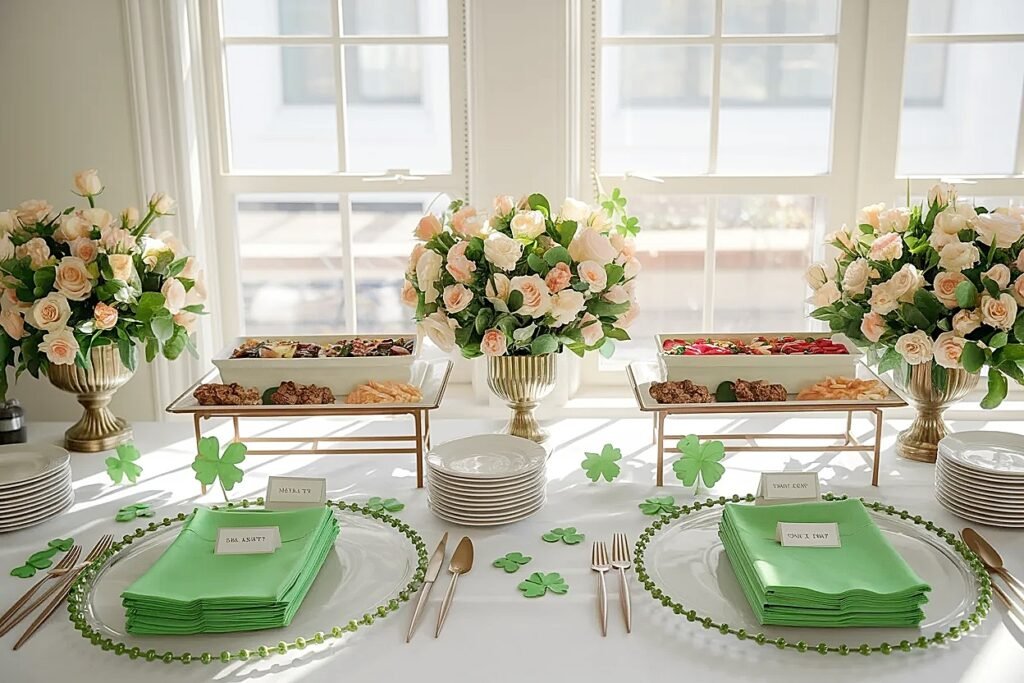
Planning starts with mapping your buffet’s “hot zones”, those critical areas where hands, plates, and serving spoons converge. I sketch a simple overhead view of my buffet table and mark where each dish will sit. Then I identify the dead spaces: corners, the back edge, and any gaps between serving platters. Those become my floral real estate.
The biggest mistake? Treating your buffet like a dining table. Centerpieces work when people sit around a table, but they’re disasters when folks need to reach across surfaces. I once watched a friend’s elaborate rose arrangement get bumped four times in ten minutes because it sat smack in the middle of the action.
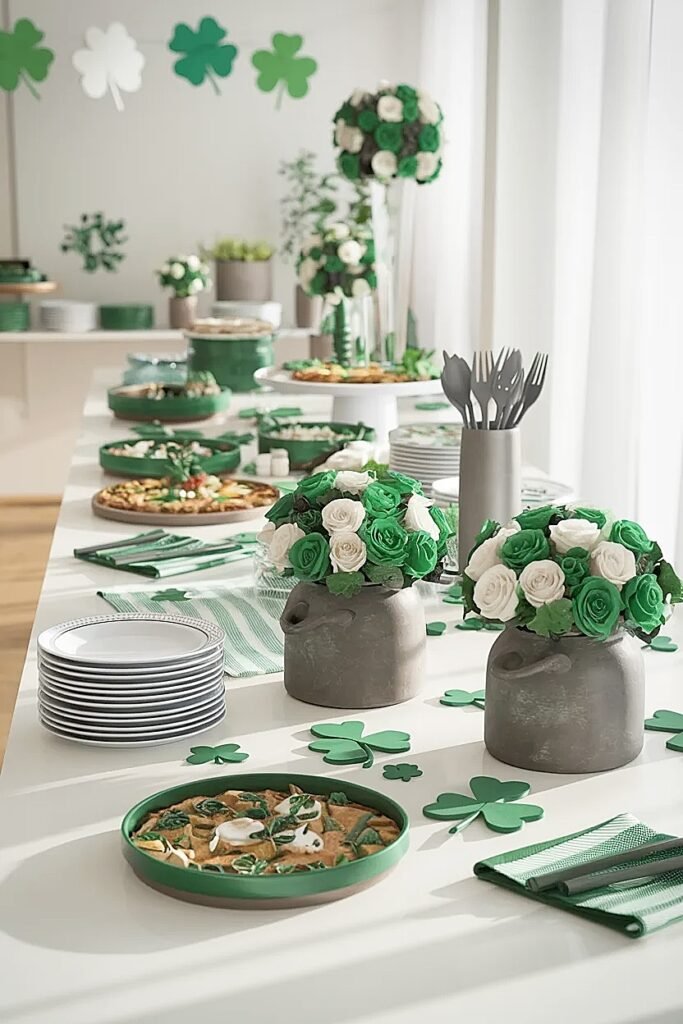
Your roses should enhance visibility, not block it. I think about sightlines constantly, can someone standing at one end see what’s available at the other? If a vase obscures a dish, you’ve already failed. Green roses with white accents create that Saint Patrick’s Day aesthetic without overwhelming the food presentation itself.
Start by placing your largest serving dishes first, then build floral elements around them. This reverses the typical decorating approach, but it ensures function drives form. The goal is creating moments of beauty that complement rather than compete with your culinary offerings. If you’re looking for more creative ways to incorporate roses into your Saint Patrick’s Day decorations, there are some brilliant ribbon-based techniques that work beautifully for buffets, and don’t forget to share this with anyone planning their own celebration!
The practical payoff extends beyond aesthetics; you’ll spend less time directing traffic and more time enjoying your party.
Ideas for Saint Patrick’s Day Buffet Decor with Roses Using Corner Anchor Arrangements Only
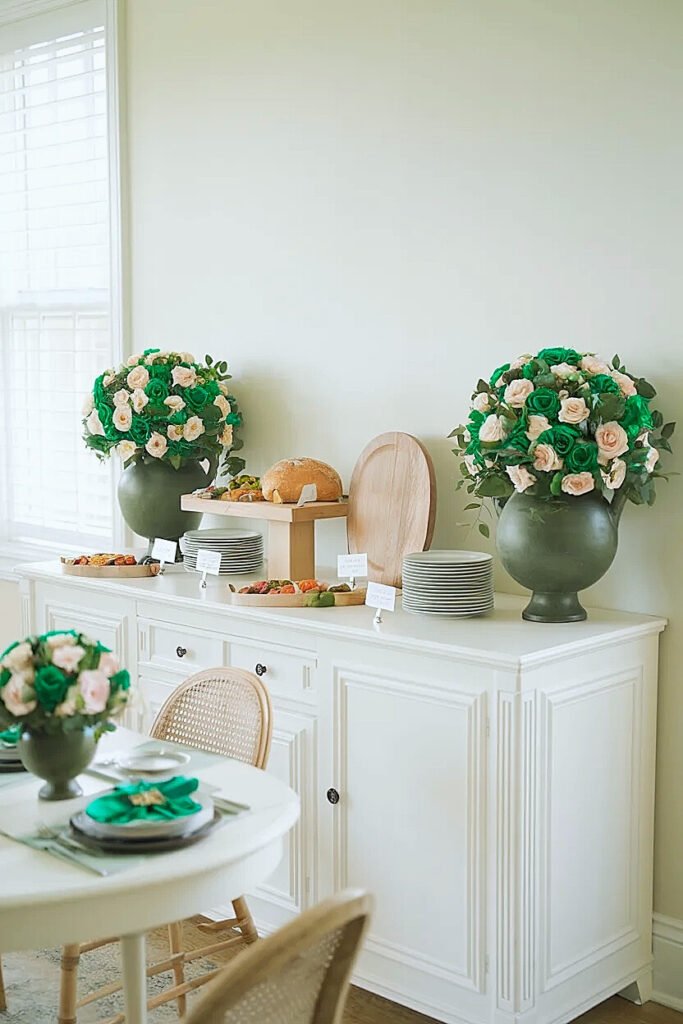
Corner placement solves multiple problems simultaneously. It utilizes otherwise wasted space, creates visual bookends that frame your food display, and keeps floral elements completely out of the serving pathway. I’ve relied on this strategy for years because it’s nearly foolproof.
The psychology here matters too. Corners naturally draw the eye without demanding attention, letting your food remain the star while roses provide supporting elegance. This approach works whether you’re using a rectangular table, an L-shaped counter configuration, or even a sideboard pushed against a wall.
1. Elevated Corner Pedestal with Cascading Green Roses
Position a twelve-inch pedestal at one corner loaded with green roses that spill slightly over the edge. The height draws eyes upward while the cascade creates movement without encroaching on horizontal serving space. I use fishing line to secure stems that naturally want to tumble sideways, preventing mid-party adjustments. Add white spray roses as filler and curly willow branches for that Irish whimsy. This arrangement commands attention from across the room but remains completely out of the way when guests approach with plates. The elevated positioning also means it won’t get hidden behind taller serving dishes.
2. Mirrored Corner Pair with Low Profile Roses
Create symmetry by placing identical low arrangements at opposite corners, no taller than six inches. I fill shallow bowls with floral foam, then mass green roses tightly together for a lush, controlled look. The mirrored effect creates cohesion without repetition since guests view each arrangement from different angles. This setup works brilliantly for rectangular tables where you want visual balance. I tuck in some eucalyptus leaves and baby’s breath to soften the edges. The low profile ensures sightlines remain clear across the entire buffet length, while the double placement establishes intentional design rather than afterthought decoration.
3. Corner Lantern with Rose Garland Weave
Anchor each corner with an Irish-themed lantern surrounded by a rose garland woven through the base. I construct these garlands using chicken wire as the foundation, weaving green rose stems through the wire mesh with some white blooms for contrast. The lanterns provide ambient lighting while roses soften the metal edges. This combination reads as both rustic and refined, perfect for Saint Patrick’s Day’s folk heritage. The garland stays flat against the table surface, creating zero interference with serving activities. Battery-operated LED candles inside the lanterns add that warm glow without fire hazards around food.
4. Stacked Vintage Book Corner Display with Roses
I hunt thrift stores for old green-bound books and stack them at varying heights in each corner, topping each stack with a single specimen rose in a bud vase. This literary approach adds personality and conversation starters while maintaining absolute functionality. The vertical stacking uses minimal footprint, and the single roses provide elegance without excess. Choose books with interesting titles or subjects related to Irish culture for an extra layer of meaning. This works exceptionally well for intellectual crowds or book club gatherings. The roses get showcased individually rather than competing in a dense arrangement, making each bloom truly special.
5. Corner Moss and Rose Nest Installation
Build a natural nest effect in each corner using sheet moss as your base, then nestling three to five green roses with stems cut short into the moss bed. I secure everything to a flat piece of cork or bark using floral wire. This organic approach brings outdoor freshness inside while staying completely flat and non-intrusive. Scatter a few white petals across the moss for tonal variation. The nest concept ties into spring renewal themes that align with March celebrations. It’s also incredibly forgiving, if someone bumps the table, nothing topples since everything’s secured low to the surface.
These corner strategies leave your entire central buffet area completely open for the functional demands of serving, and there’s additional guidance coming that builds on these foundational concepts.
How to Build Saint Patrick’s Day Buffet Decor with Roses Using a “One-Point Floral” Rule
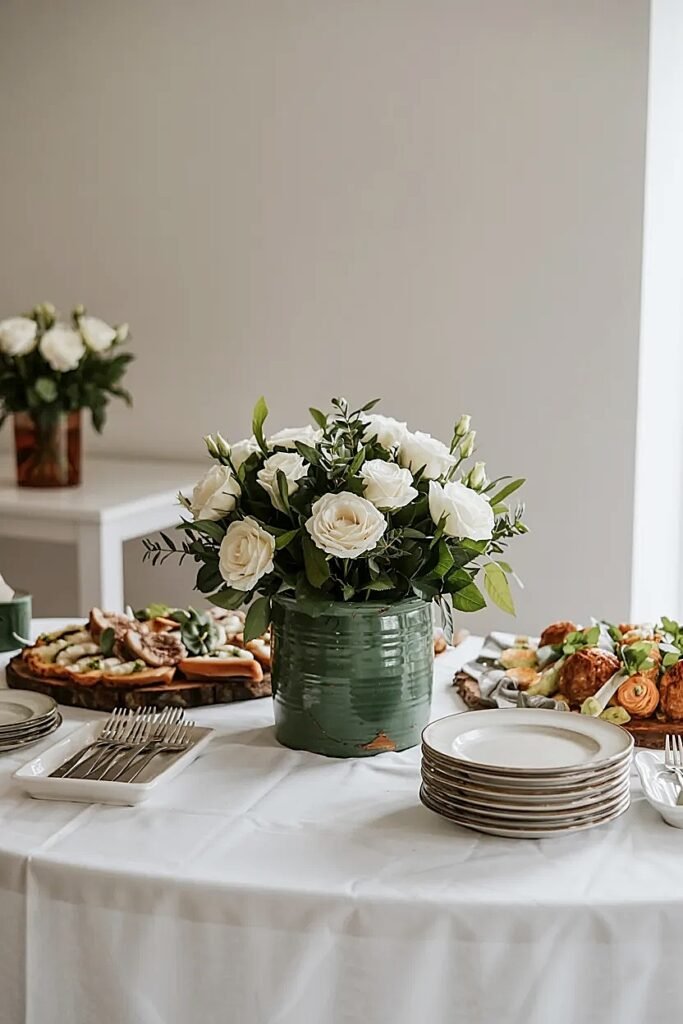
The one-point rule changed everything for me. Instead of scattering small arrangements everywhere, I invest in a single spectacular floral focal point positioned strategically at the buffet’s terminus, the place where the serving line naturally ends. This creates a visual destination that guides guest flow while keeping 95% of the table surface completely clear.
Think of it as punctuation. Your buffet line tells a story as people move from appetizers to mains to sides, and the rose arrangement serves as the exclamation point. I typically place this focal point at the far end of a rectangular table or at the highest point if I’m working with tiered surfaces.
My go-to execution involves a substantial arrangement, maybe eighteen to twenty-four green roses in a weighty vessel that won’t budge easily. I build height strategically, going twelve to fifteen inches tall so it’s visible from the buffet’s beginning. The density matters; this isn’t delicate, it’s abundant. I pack roses tightly, mixing in white blooms for contrast and some trailing ivy that drapes naturally without reaching into serving zones.
The brilliance lies in constraint. By channeling all your floral energy into one magnificent display, you eliminate decision fatigue about placement while maximizing impact. Guests notice the stunning arrangement, but it never interferes with their plate-filling mission. I’ve watched people photograph these one-point displays while barely registering scattered decorations that actually blocked food access.
Position this focal point at least eight inches from any serving dish edge. I learned this measurement through trial and error, any closer and you risk accidental contact with serving utensils or elbows. The arrangement should feel like a reward for making it through the buffet line rather than an obstacle course element. Test your positioning by walking through the serving sequence yourself with a plate before guests arrive.
This approach scales beautifully from intimate gatherings to large parties, and the techniques I’m sharing next will show you how to adapt these principles to specific buffet configurations.
Ways to Set Up Saint Patrick’s Day Buffet Decor with Roses on a Kitchen Counter
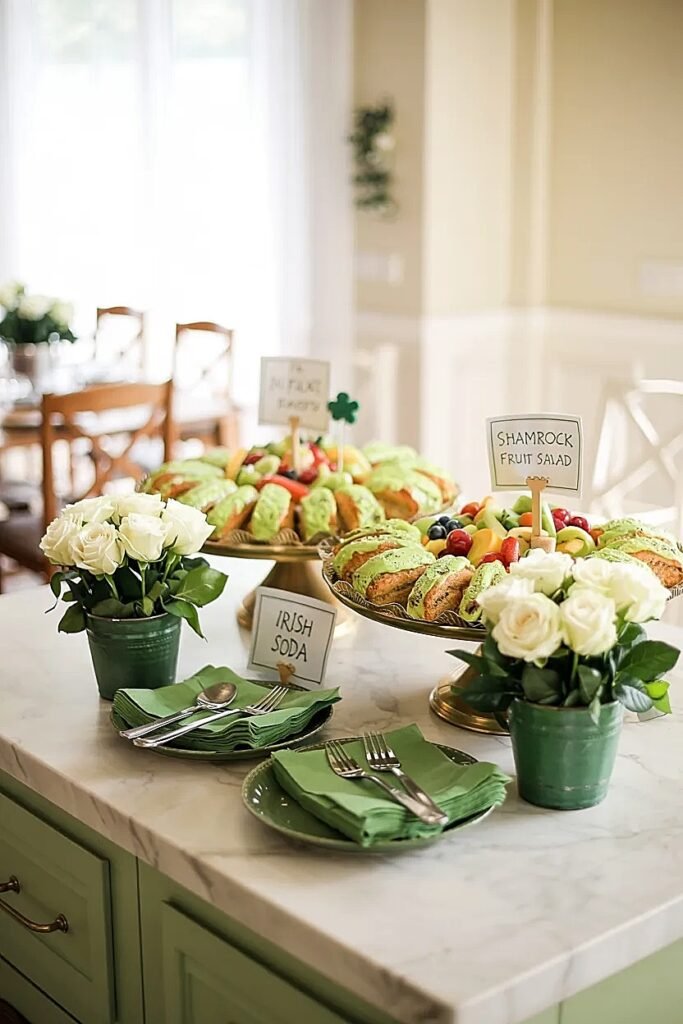
Kitchen counter buffets present unique challenges, you’re working with a narrow rectangular space where wall proximity eliminates back-of-counter access. People can only approach from one side, which means your décor strategy must respect that single-angle viewing perspective while maintaining generous serving clearance.
I’ve styled dozens of counter buffets, and the key insight is treating the wall as your backdrop rather than fighting against it. Your roses should enhance that vertical surface without claiming precious horizontal counter space. The depth limitation demands creativity but produces surprisingly elegant results.
1. Floating Shelf Rose Cascade Above Counter
Install a temporary floating shelf six to eight inches above your counter surface, then position bud vases with single green roses at intervals along the shelf. The visual interest happens above the food plane entirely, leaving the counter completely functional. I use museum putty to secure lightweight shelves without damaging walls, and ribbon loops to hang additional rose stems from the shelf edge. This creates a layered effect where roses appear to float above your serving dishes. The vertical dimension adds sophistication while the counter itself remains totally clear for platters and utensils.
2. Wall-Mounted Herb Boxes with Rose Additions
Hang rustic wooden herb boxes directly on the wall at eye level, filling them with a combination of fresh herbs and green roses. The herbs read as both decorative and functional, guests might actually use them for garnish. I plant small rose stems into the soil alongside rosemary and thyme, creating an edible garden aesthetic. The wall mount means zero counter footprint while the living element brings freshness that complements food presentation beautifully. This works especially well for casual Saint Patrick’s Day gatherings where garden-to-table vibes align with the celebration’s agricultural roots.
3. Vertical Ladder Display Leaning Against Wall
Prop a vintage wooden ladder against the wall behind your counter buffet, draping rose garlands across the rungs at varying heights. I construct these garlands the night before, keeping them in water until an hour before the party. The ladder creates architectural interest without touching the counter surface at all. Each rung becomes a display opportunity, top rungs hold roses, middle rungs might feature Irish-themed signs or menus, lower rungs stay clear to avoid interfering with serving. This vertical storytelling approach maximizes your wall real estate while keeping functional space pristine.
4. Magnetic Strip Rose Holders on Backsplash
If your counter has a tile or metal backsplash, attach magnetic strips that hold individual rose stems in water tubes. This modern approach distributes roses evenly across the wall surface without any counter obstruction. I space stems every eight to ten inches for rhythm without crowding. The minimalist aesthetic works for contemporary spaces, and the roses appear to emerge directly from the wall itself. This technique requires stems with magnetic tube holders, but the effect is striking, floating green roses that frame your food display without competing for surface area.
5. Corner-to-Corner String Light and Rose Weave
Run string lights from corner to corner above your counter at about eighteen inches from the wall, then weave rose stems through the light strand using floral wire. The combination of soft lighting and roses creates ambiance while occupying vertical space exclusively. I choose warm-toned LEDs that complement green roses beautifully. This setup transforms an ordinary kitchen counter into something magical for evening gatherings. The roses get backlit by bulbs, creating silhouettes and depth that photographs incredibly well. Everything stays above and behind the food, maintaining clear access.
These counter-specific approaches prove that limited space can actually inspire creative solutions, and the upcoming sections will explore even more spatial constraints with equally effective strategies.
Ideas for Saint Patrick’s Day Buffet Decor with Roses Using “Back Edge Only” Florals
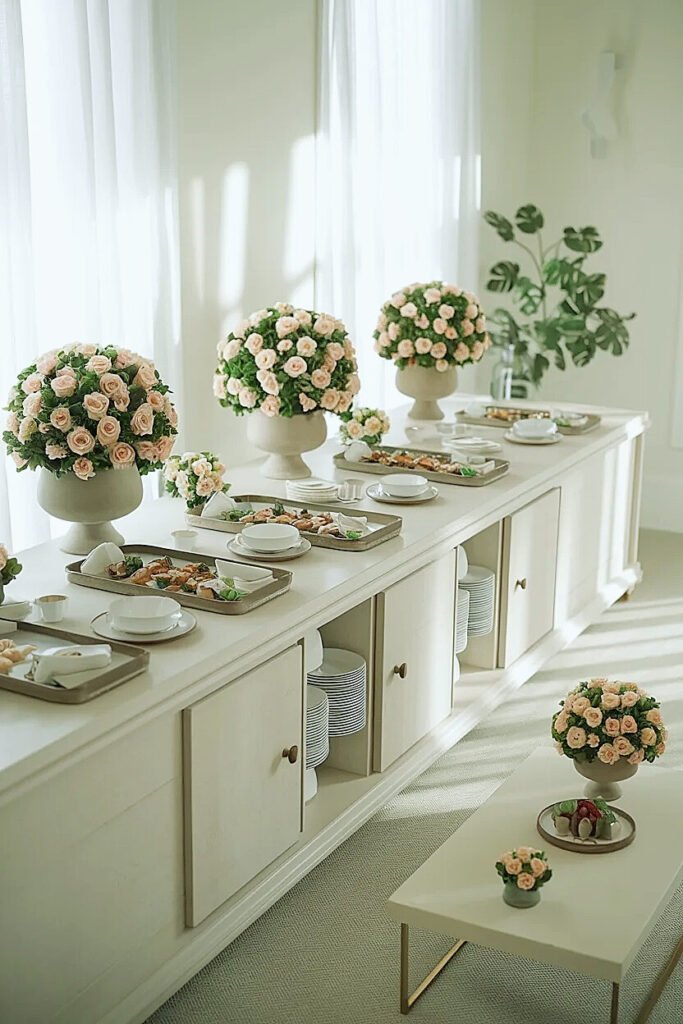
The back edge strategy might be my most-used technique. It positions all floral elements along the table’s rear perimeter, creating a lush backdrop while leaving the entire front and center areas completely accessible. This works phenomenally when your buffet table sits against a wall or when guests will circle a table from three sides.
I think of this as creating a living wallpaper effect. The roses establish atmosphere and color without claiming any real estate where plates need to land or serving spoons need to maneuver. It’s particularly effective for longer tables where you want continuous visual interest without interruption.
1. Continuous Back-Edge Garland with Rose Clusters
Create a running garland along the entire back edge using mixed greenery as your base, then cluster green roses at intervals of twelve to fifteen inches. I use floral foam in a cage system that runs the table length, keeping everything hydrated throughout the event. The garland height stays between six and nine inches, tall enough to create presence but low enough not to block wall decorations or sightlines. I accent with white spray roses every third cluster for tonal variation. This continuous approach unifies the buffet table into one cohesive display rather than fragmented sections. The clusters prevent monotony while maintaining that back-edge boundary.
2. Graduated Height Back Row with Bud Vases
Line the back edge with varying heights of bud vases, each holding one to three green roses. I start with four-inch vases at the table ends, gradually increasing to eight-inch vessels at the center for a subtle arc effect. This creates visual rhythm through vertical variation without horizontal sprawl. The graduated heights add sophistication and prevent the static appearance of uniform arrangements. Each vase becomes an individual statement while contributing to the collective display. I space vases about six inches apart for substantial coverage without crowding. The narrow vase footprints mean you’re using minimal depth while achieving maximum impact.
3. Mirror-Backed Rose Reflection Display
Position a long mirror horizontally along the back edge, then place rose arrangements directly in front of the mirror. The reflection doubles the visual impact while you’re only using single-depth space for actual flowers. I favor low, sprawling arrangements that appear to multiply in the mirror’s surface. This technique works brilliantly for smaller rose quantities, you get twice the perceived volume through strategic reflection. The mirror also bounces light around the buffet area, making everything feel brighter and more expansive. Choose frameless mirrors for a seamless look, or vintage ornate frames for traditional Irish cottage vibes.
4. Terraced Platform Rose Elevation System
Build a simple terraced platform along the back edge using risers or inverted boxes covered with table linens, creating two or three elevation levels. Position rose arrangements on these platforms for dramatic height variation entirely behind the serving zone. I construct these platforms the morning of the party, securing them so they don’t shift. The terracing creates depth perception and allows you to showcase roses at multiple heights without any of them occupying forward space. The highest platform might hold a spectacular rose arrangement at fifteen inches, while lower tiers feature smaller clusters. This three-dimensional approach adds architectural interest to what could otherwise be a flat display.
5. Back-Edge Window Box Planters with Roses
Arrange narrow wooden window boxes end-to-end along the back edge, planting them with soil and positioning rose stems as if they’re growing naturally. I supplement with real moss, small ferns, and trailing ivy to create a garden bed aesthetic. The window boxes contain the roses within a defined boundary that runs parallel to the table edge. This living installation approach brings organic texture to the buffet while maintaining strict spatial discipline. The boxes themselves become decorative elements, especially if you choose rustic wood or paint them green. Everything feels intentionally cultivated rather than just placed, which elevates the entire presentation.
These back-edge techniques demonstrate how boundary awareness creates both beauty and functionality, and the next section tackles outdoor serving scenarios with their own unique considerations.
How to Style Saint Patrick’s Day Buffet Decor with Roses on a Picnic Table Serving Line
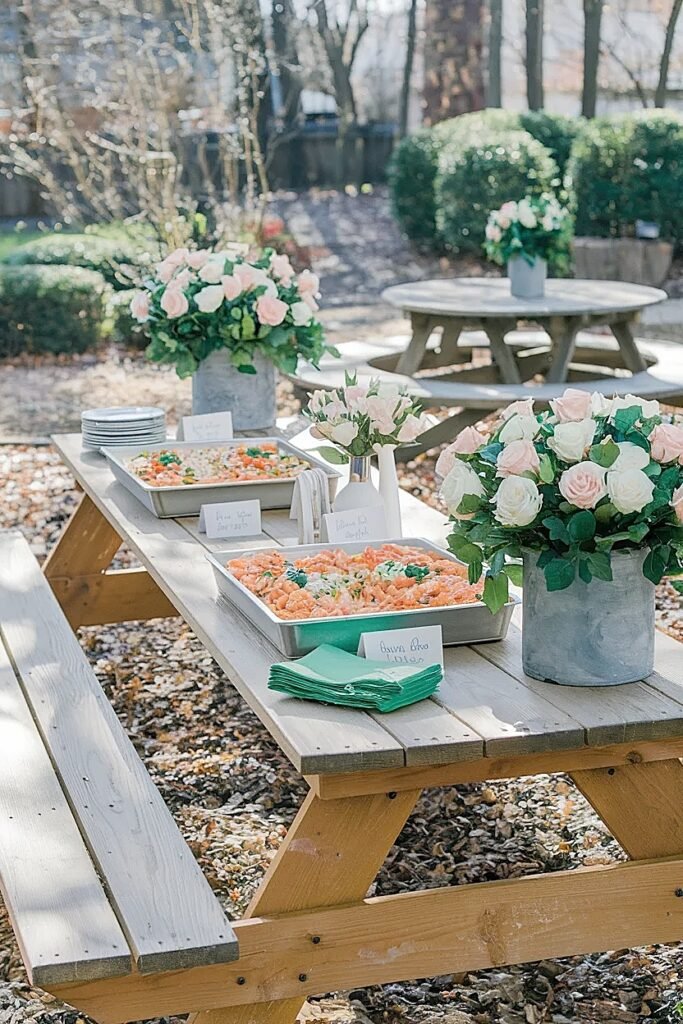
Picnic tables present fascinating opportunities because they’re inherently casual, which gives you permission to experiment with unconventional rose placements that would feel wrong on formal dining furniture. I love styling outdoor buffets because the natural setting complements roses so perfectly, you’re already working with organic elements, so florals feel integrated rather than imposed.
The wind factor changes everything, though. Indoor arrangements can be delicate and top-heavy, but outdoor setups demand stability and weight. I’ve watched beautiful rose displays topple in gentle breezes, so I now overengineer for security. The casual atmosphere of picnic table serving also means guests feel more comfortable reaching across surfaces, which actually increases your need for clear pathways.
My approach centers on long, low arrangements that run parallel to the picnic table’s length rather than perpendicular interruptions. I use chicken wire secured to the table with fishing line as my structural foundation, then build rose installations directly into that framework. This creates virtually topple-proof displays that hug the table surface. The roses stay below eight inches in height, maintaining sightlines across the buffet while providing color along the entire serving length.
I incorporate natural elements that wouldn’t work indoors, moss, bark, stones, and branches, to anchor the roses within a broader landscape aesthetic. The picnic table’s rustic character invites these organic additions. I’ll often create what I call “rose meadows,” where green and white roses nestle among wildflowers and grasses as if they simply grew there. This naturalistic approach feels effortless despite requiring substantial planning.
Practical execution means securing everything before guests arrive. I test my installation by gently shaking the table, if anything shifts, I reinforce it. For evening gatherings, I weave battery-operated fairy lights through the rose installations for magical illumination that won’t blow out like candles. The lights also help guests identify dishes clearly as natural light fades. Position serving dishes first, then build your rose elements around them just as you would indoors, but with extra attention to wind resistance and durability.
The outdoor setting actually amplifies roses’ natural beauty, and there’s valuable information ahead about adapting these principles to the tightest spaces imaginable.
Ways to Create Saint Patrick’s Day Buffet Decor with Roses for a Small Apartment Sideboard
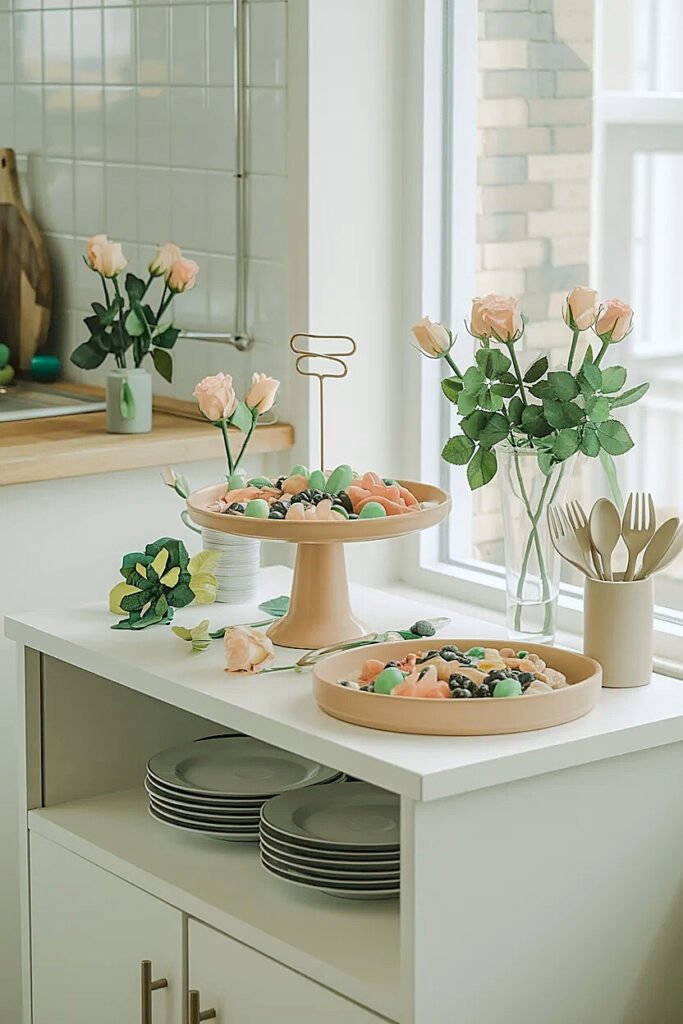
Small apartment sideboards might offer only thirty-six inches of linear space and fifteen inches of depth, a dimensional challenge that requires ruthless editing. I’ve styled countless compact buffets in urban apartments where every square inch matters exponentially more than in spacious homes. The pressure intensifies because you’re trying to serve a meal and showcase décor in a space designed for neither.
The strategy shifts from “where to put roses” to “which rose display deserves this precious real estate.” You’re choosing one excellent solution rather than combining multiple good ideas. Restraint becomes your greatest design asset because overcrowding a small sideboard creates chaos rather than charm.
1. Single Statement Vase with Asymmetric Rose Arrangement
Select one exceptional vase, maybe ten inches tall with visual interest through color, texture, or shape, and position it at the sideboard’s far left or right edge. Build an asymmetric rose arrangement that extends upward and slightly outward, using seven to nine green roses with white accents. The asymmetry creates movement without requiring horizontal space, and the edge placement keeps the center clear for serving dishes. I angle stems to create a diagonal sweep that draws the eye upward rather than outward. This single installation reads as intentional minimalism rather than insufficient effort. The quality of the vase matters enormously here, invest in something beautiful that earns its solo position.
2. Vertical Wall-Mounted Rose Display Above Sideboard
Install a slim vertical frame or trellis on the wall directly above your sideboard, weaving rose stems through the structure at varying heights. This completely eliminates surface footprint while creating a dramatic backdrop for your buffet. I use water tubes attached to individual stems to keep roses fresh throughout the event. The vertical installation appears to cascade down toward the food without actually touching the sideboard surface. Choose a frame width that matches your sideboard dimensions for visual coherence. This approach transforms your limitation, lack of horizontal space, into an asset by claiming vertical real estate that would otherwise go unused in a small apartment.
3. Multi-Level Cake Stand Rose Tower
Repurpose a three-tier cake stand as a rose display structure that maximizes vertical space while minimizing footprint. I position the stand at one end of the sideboard, placing small bud vases with individual roses on each tier. The circular tiers create visual interest through geometry rather than sprawl. This technique offers triple the display opportunities within a twelve-inch diameter footprint. I stagger the rose colors, perhaps green on the bottom tier, white on the middle, and mixed on top, for tonal progression. The cake stand itself becomes a decorative element, especially if you find vintage or Irish-themed metalwork. Everything occupies vertical space efficiently, leaving maximum surface area for your actual buffet items.
These compact solutions prove that spatial constraints can actually sharpen your design thinking rather than limiting it.
Conclusion
Getting buffet decor right isn’t about adding more, it’s about adding smarter. I’ve watched too many Saint Patrick’s Day celebrations where gorgeous rose arrangements became obstacles instead of enhancements. The principles I’ve shared here prioritize guest experience without sacrificing visual impact. Your roses can absolutely steal the show, but only after everyone’s successfully served themselves without navigating an obstacle course.
The buffet’s purpose is feeding people, full stop. Decoration enhances that mission but should never compromise it. Start with your serving dishes, map your hot zones, then build floral elements into the spaces that don’t interfere with function. Whether you’re working with a sprawling dining table or a cramped apartment sideboard, these strategies adapt to your specific constraints while maintaining that food-first philosophy. Your guests will remember both the beauty and the ease, and that’s exactly the balance we’re chasing.
This website contains affiliate links, and some products are gifted by the brand to test. As an Amazon Associate, I earn from qualified purchases. Some of the content on this website was researched and created with the assistance of AI technology.