This website contains affiliate links, and some products are gifted by the brand to test. As an Amazon Associate, I earn from qualified purchases. Some of the content on this website was researched and created with the assistance of AI technology.
Key Takeaways
- Outdoor rose arrangements face unique challenges from wind, temperature swings, and moisture that require strategic planning and hardy variety selection
- Covered porches and protected alcoves extend the life of fresh roses significantly compared to fully exposed locations
- Green roses like “Jade” and “Super Green” offer natural Saint Patrick’s Day color without relying on dyed blooms that fade unpredictably outdoors
- Combining roses with edible herbs creates dual-purpose arrangements that look beautiful while serving practical party functions
- Weight and stability matter enormously for outdoor displays, always anchor arrangements against unpredictable March weather
Creating Saint Patrick’s Day decoration using roses for outdoor arrangements opens up decorating possibilities that indoor spaces simply cannot match. There’s something magical about guests arriving to a porch or patio already dressed in festive florals, the celebration spilling beyond your front door before anyone even steps inside. I remember the first year I moved my Saint Patrick’s Day roses outdoors, the entire atmosphere of the party shifted toward something more expansive and welcoming.
Outdoor arrangements demand different thinking than their indoor counterparts. March weather can be fickle, swinging from mild afternoon sunshine to biting evening chills within hours. Wind becomes a genuine adversary. Moisture from morning dew or unexpected drizzle threatens both roses and containers. But these challenges, once understood and addressed, yield results that justify every extra consideration. Your outdoor spaces become extensions of the celebration rather than merely pathways to it.
Not sure where to put roses outside without making the porch feel crowded? Use this quick guide to choose the right container, greens, and placement for each outdoor zone—then copy the exact checklist for your party day. It’s built for emerald + hunter styling with white and blush roses.
Saint Patrick’s Day Outdoor Roses: Placement + Container Cheat Sheet
Built for covered porches, emerald + hunter greens, and white + blush roses using matte ceramic + painted terracotta.
| Outdoor Zone | Best Container Mix | Rose + Green Formula | Do This / Avoid This |
|---|---|---|---|
|
Covered porch party table emeraldhunterwhite rosesblush roses |
Matte ceramic bowl (main) + painted terracotta minis (support)
Goal: one “hero” bowl + 1–2 minis nearby.
|
Tight rose cluster (center) + short hunter green ring (trimmed)
Pro: greens do the framing; roses stay soft.
|
Do: keep low for conversation; leave serving space. Avoid: sprawling greenery that reaches plates. |
| Serving console kellyemerald |
Two-end styling: bowl on one end + terracotta mini on the other | Compact roses + trimmed greens; center stays open | Do: keep the middle clear for plates. Avoid: tall pieces that hide labels. |
| Seating coffee table hunterwhite roses |
Low matte bowl (small) + 1 terracotta mini on side table | Tighter footprint; slightly heavier green ring for structure | Do: keep snack space open. Avoid: wide sprawl that kills usability. |
| Entry steps emeraldkelly |
Terracotta pair (symmetry) + compact bowl at top | Mini clusters in pots; bowl stays low and tidy | Do: place off the walking line. Avoid: anything top-heavy. |
| Warm-day parties emeraldhunter |
Matte bowl (airflow) + terracotta minis kept shaded | Slight rose spacing for airflow + trimmed greens for support | Do: move minis to cooler corners. Avoid: heat-heavy zones. |
Covered porch party table (Hero centerpiece)
Serving console (Ends styled, center open)
Entry steps (Symmetry that stays safe)
Warm-day freshness (Airflow + shade)
How to Style a Saint Patrick’s Day Covered Porch Rose Centerpiece
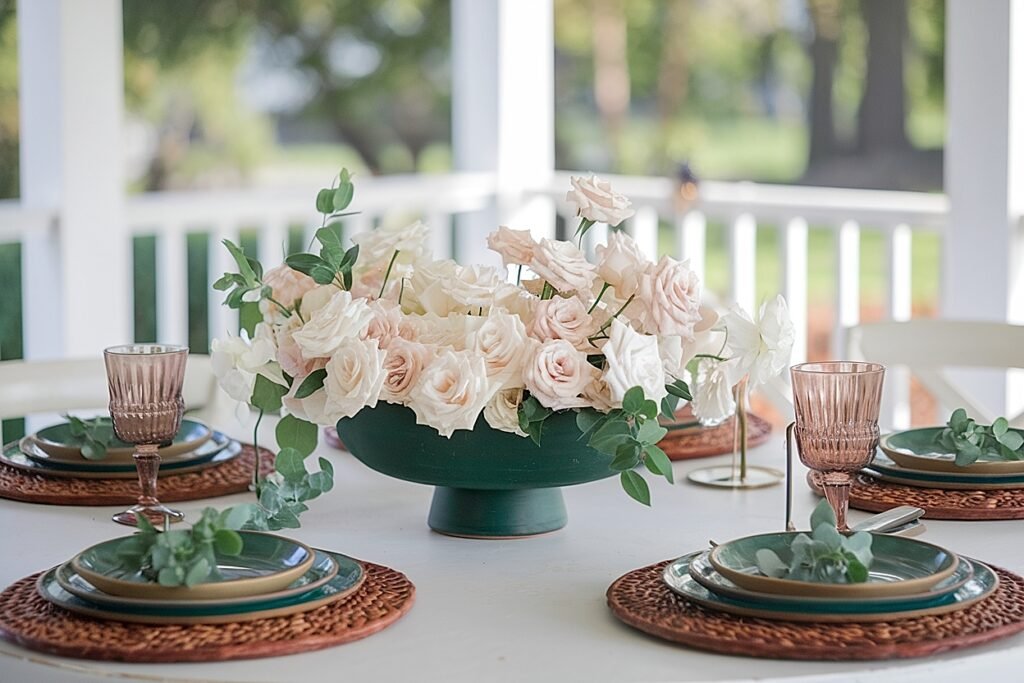
Covered porches occupy a sweet spot between fully protected interiors and exposed outdoor spaces. The roof overhead shields arrangements from direct rain and harsh sun while still allowing fresh air circulation and that distinctly outdoor ambiance guests appreciate.
I’ve styled countless porch centerpieces over the years, and the covered variety consistently outperform their exposed cousins in terms of longevity and visual impact. Protection matters more than most people realize.
Start by assessing your specific porch conditions. Where does afternoon sun hit? Which direction do prevailing winds come from? Is there an alcove or corner that stays particularly sheltered? These observations should drive your placement decisions. A gorgeous arrangement positioned in a wind tunnel or sun trap won’t survive your party, no matter how carefully you’ve selected and prepared the roses.
For the arrangement itself, choose substantial containers that won’t tip when breezes kick up. Fill the bottom third with decorative stones for added weight before adding water. Select rose varieties known for outdoor resilience, more on those shortly, and cut stems at angles underwater to maximize hydration. Surround your roses with hardy greenery like eucalyptus or fern fronds that handle temperature fluctuations gracefully. For stunning vessel options, explore Saint Patrick’s Day roses in painted terracotta pots that add rustic charm to any porch setting. If these outdoor styling ideas resonate with you, pass them along to friends planning their own March celebrations. Covered porches offer the best of both worlds, but choosing the right roses for any outdoor setting determines your success, keep reading for variety recommendations that truly perform.
What Are the Best Saint Patrick’s Day Roses for Outdoor Arrangements
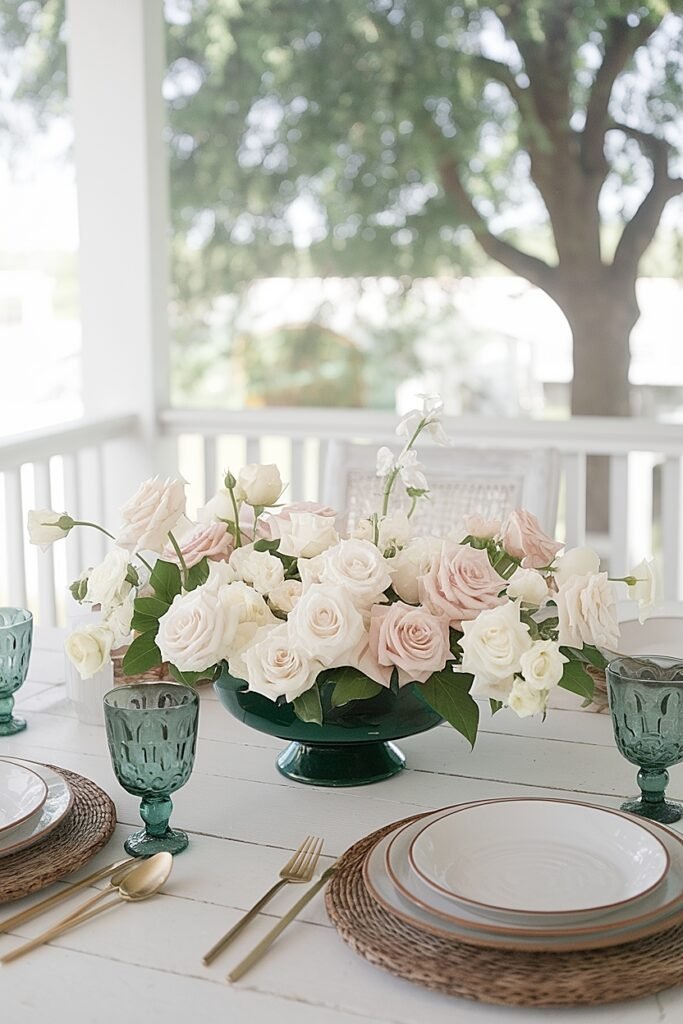
Not all roses tolerate outdoor conditions equally. Some varieties that look stunning in climate-controlled living rooms wilt within hours when exposed to March elements. Knowing which roses thrive outside separates successful outdoor decorating from expensive disappointments.
I’ve tested dozens of varieties over multiple Saint Patrick’s Day seasons, tracking which ones maintained their beauty and which ones became sad, drooping reminders of poor choices.
1. Super Green Roses These pale green beauties offer natural Saint Patrick’s Day color without artificial dyes that can bleed or fade unpredictably in outdoor moisture. Super Green roses feature thick, waxy petals that resist wind damage better than more delicate varieties. Their subtle color works beautifully with white and cream companion roses. The sturdy stems rarely bend or break even in gusty conditions, and the blooms maintain their shape for three to five days outdoors when properly hydrated.
2. Jade Roses Darker and more saturated than Super Green, Jade roses deliver rich emerald tones perfect for evening outdoor entertaining when deeper colors read better in low light. These roses originated from careful breeding specifically for durability, making them naturally suited to variable conditions. The compact bloom shape resists opening too quickly in warm afternoon sun, a common problem with more delicate tea rose varieties that look blown and past their prime within hours.
3. Spray Rose Varieties Multiple small blooms per stem mean spray roses offer abundant visual impact while individual flower loss goes largely unnoticed. If wind damages one bloom, five others remain perfect. This redundancy makes spray roses particularly valuable for exposed outdoor arrangements where some casualties are inevitable. Choose green-tinted or white spray varieties to maintain your color scheme while benefiting from their practical resilience.
4. Garden Roses (David Austin Types) Bred originally for outdoor garden performance, David Austin and similar garden roses handle temperature fluctuations and variable conditions far better than hybrid tea roses developed primarily for greenhouse production. Their loose, romantic form actually benefits from slight wind movement, which creates natural-looking arrangements rather than stiff, formal displays. Cream and blush tones complement green roses beautifully.
5. Lisianthus (Rose Alternative) Technically not roses, but lisianthus blooms look remarkably similar and vastly outperform true roses in challenging outdoor conditions. Their tolerance for heat, cold, and wind makes them invaluable for March decorating when weather remains unpredictable. Mix lisianthus freely with actual roses, most guests won’t notice the difference, and your arrangements will maintain their beauty dramatically longer than all-rose compositions.
Variety selection establishes your foundation, but patio dining tables present specific design challenges that deserve focused attention, read on for ideas that make outdoor meals memorable.
Ideas for Saint Patrick’s Day Outdoor Rose Arrangements on Patio Dining Tables
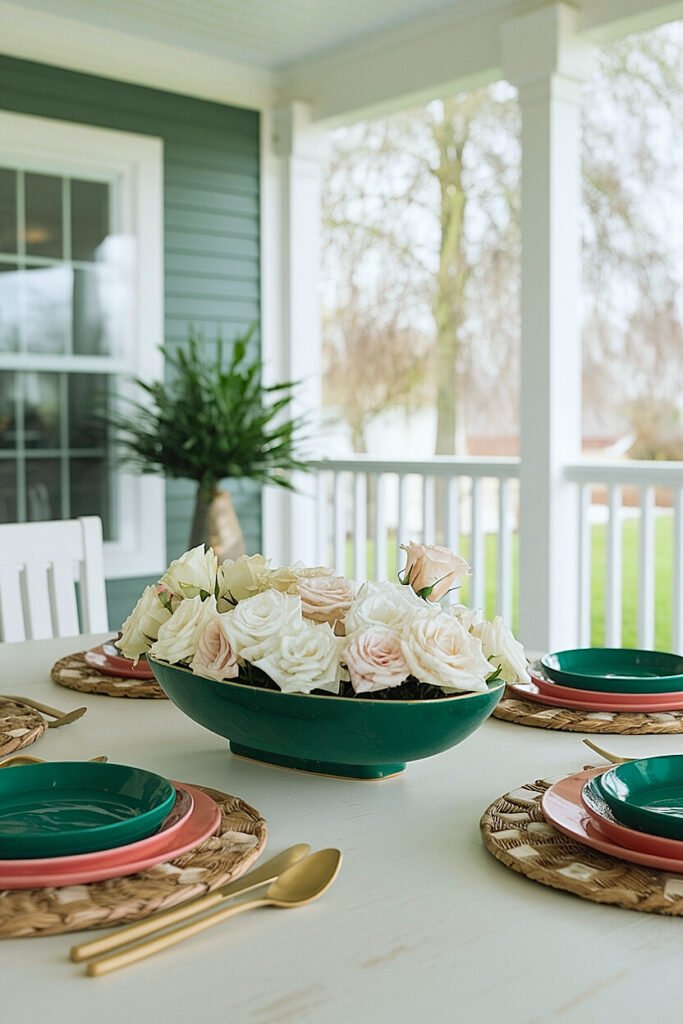
Patio dining tables serve dual purposes during Saint Patrick’s Day celebrations, they’re decorative surfaces and functional eating spaces simultaneously. Your arrangements must balance visual impact with practical considerations like sightlines, stability, and leaving room for actual food service.
I learned this balance the hard way when an elaborate centerpiece left guests craning around foliage to see each other and competing with my roses for plate space. Now I approach patio table decorating with specific strategies.
1. Low Bowl Collections Use three shallow bowls filled with tightly packed rose heads arranged in a loose line down the table center. The low profile maintains conversation sightlines while the scattered placement allows serving dishes between arrangements. This approach works particularly well for long rectangular tables common on patios.
2. Hurricane Lantern Surrounds Position a glass hurricane with a pillar candle at the center, then ring the base with roses in small water tubes hidden beneath moss. The lantern provides evening light while protecting the candle flame from wind. Roses cascade around the base without competing for vertical attention.
3. Weighted Corner Anchors Instead of a central arrangement that interferes with food service, place substantial rose displays at the table’s four corners. This design clears the entire center for platters and dishes while framing the dining space beautifully from every seat.
4. Garland Runner with Rose Clusters Lay a greenery garland down the table center with rose clusters wired in at intervals. The horizontal design hugs the table surface, staying out of the way while creating abundant festive presence across the entire length.
5. Tiered Cake Stand Display Repurpose a tiered serving stand as a centerpiece base. Each level holds a small rose arrangement, creating height without sprawling width that steals plate space. The vertical design draws eyes upward rather than outward.
6. Floating Rose Bowl A wide, shallow bowl filled with water and floating rose heads creates elegant simplicity that works on any table size. The weight of the water prevents tipping, and the contained design doesn’t encroach on dining space.
7. Individual Place Setting Buds Skip the central arrangement entirely and place a single rose in a tiny bud vase at each place setting. Guests feel individually welcomed, the table stays clear for serving, and the distributed design creates collective impact.
Dining tables feed your guests, but entry steps make their crucial first impression, the techniques differ significantly, so continue reading for step-specific strategies.
Ways to Make Saint Patrick’s Day Outdoor Rose Arrangements for Entry Steps
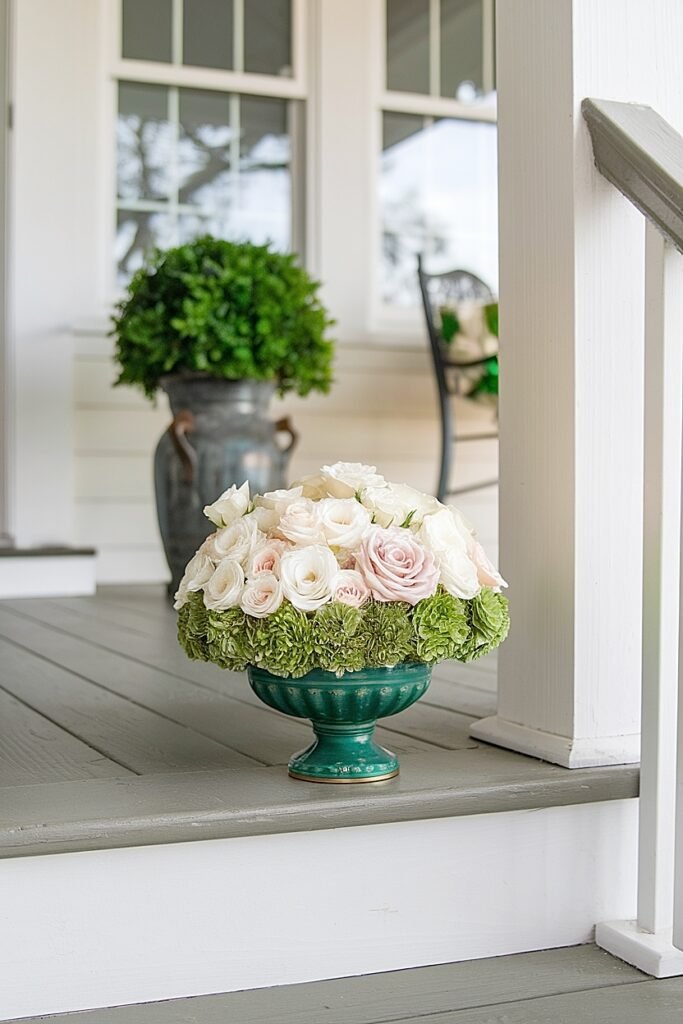
Front steps announce your celebration to everyone approaching. These arrangements need bold presence visible from the sidewalk, structural stability against foot traffic and weather, and enough style to set expectations for what awaits inside.
Entry steps present challenges unique to their position, people walk past constantly, deliveries arrive, pets investigate, and the exposure is typically complete.
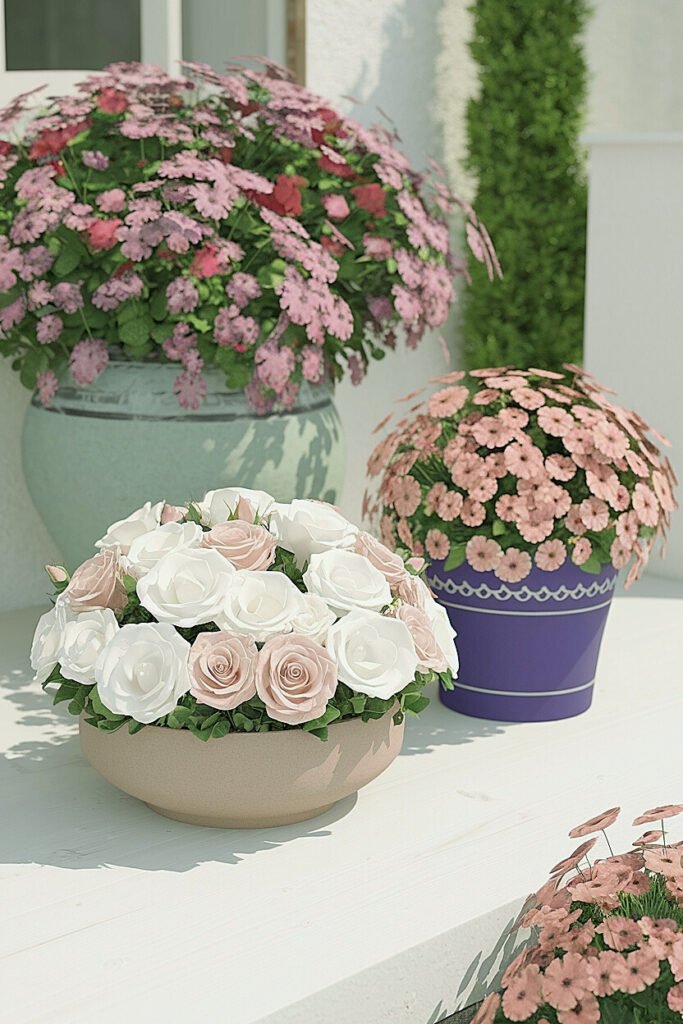
1. Flanking Urn Statements Position matching substantial urns or planters on either side of your front steps, creating a welcoming gateway effect. Paint or wrap urns in Saint Patrick’s Day colors, then fill with abundant green and white roses mixed with trailing ivy that softens the container edges. The symmetrical placement reads as intentional and elegant from approaching viewpoints, while the large scale ensures visibility from the street. Weight containers heavily, these arrangements must resist being knocked over by every passing delivery person or gust of wind.
2. Cascading Stair Runner Arrange progressively sized rose displays on each step leading up to your door, creating a floral pathway that guides guests upward. Start with the largest arrangement at the bottom step and decrease sizes as you ascend. This design creates dramatic visual impact while keeping the walking path clear on one side. Each arrangement should be substantial enough to hold its position if someone brushes against it while climbing, remember that guests carrying food or gifts may not see every container clearly.
3. Doorside Statement Piece Rather than distributing arrangements across multiple steps, concentrate your entire floral budget into one spectacular display positioned beside your front door. The massed impact outperforms scattered smaller arrangements for creating memorable first impressions. Choose a container large enough to make a statement, fill it abundantly, and position it where guests pause before entering. This focal point approach works particularly well for homes with narrow steps or limited landing space.
Entry arrangements welcome guests dramatically, but combining roses with herbs creates functional beauty that serves your party in multiple ways, discover those techniques next.
How to Create Saint Patrick’s Day Rose Arrangements with Herb Planters
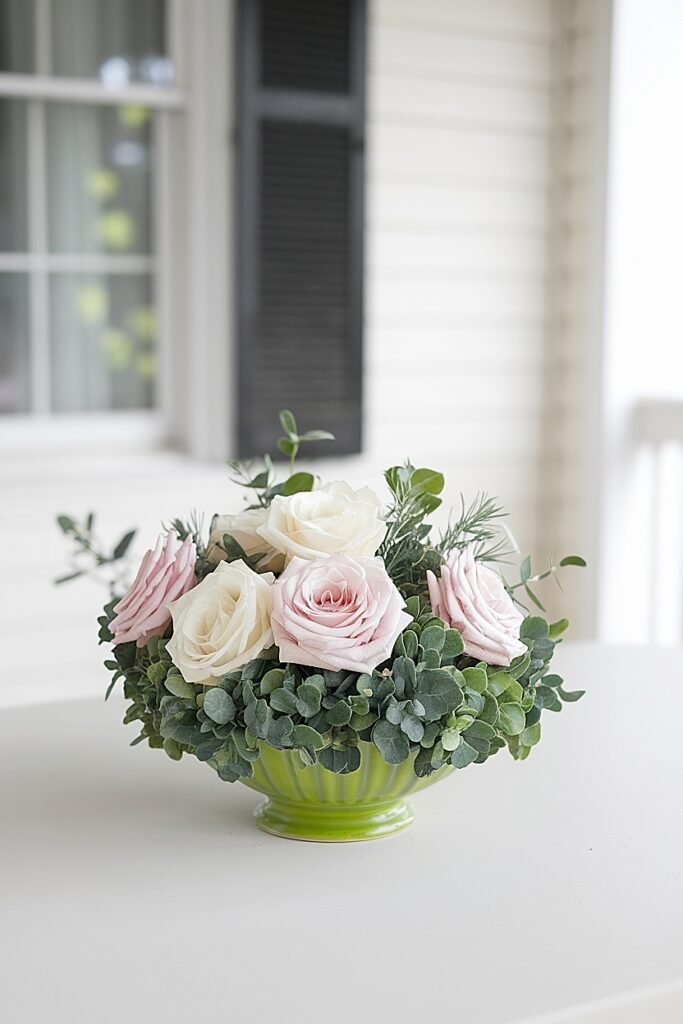
Integrating roses with edible herbs transforms decorative arrangements into practical party assets. Guests can snip mint for their drinks, rosemary for garnishing, or basil for appetizers, all from beautifully designed planters that happen to also showcase stunning roses.
This combination makes perfect sense when you think about it. Both roses and culinary herbs thrive in similar conditions, appreciate similar care, and complement each other visually.
Start with a container large enough to accommodate both plant types without overcrowding. Wide, shallow planters work better than narrow deep ones for this application. Position your herbs around the outer edges where guests can access them easily, reserving the center for your rose arrangement in a waterproof vessel hidden within the planter.
Choose herbs that match your party menu and your color scheme. Mint and rosemary provide the green tones Saint Patrick’s Day demands. Variegated sage adds visual interest. Purple basil creates unexpected contrast if you’re working with lighter rose tones. The herbs should look intentional rather than random, plant them in groups rather than scattered individuals. Your roses can sit in a concealed vase within the planter or, for longer-term installations, you can actually plant hardy rose bushes alongside established herbs. Either approach delivers the dual-purpose functionality that makes these arrangements so valuable. Serving consoles present different demands than planters, and outdoor buffet areas need specialized rose arrangements, keep reading for those specific techniques.
Ways to Use Saint Patrick’s Day Roses for Outdoor Serving Consoles
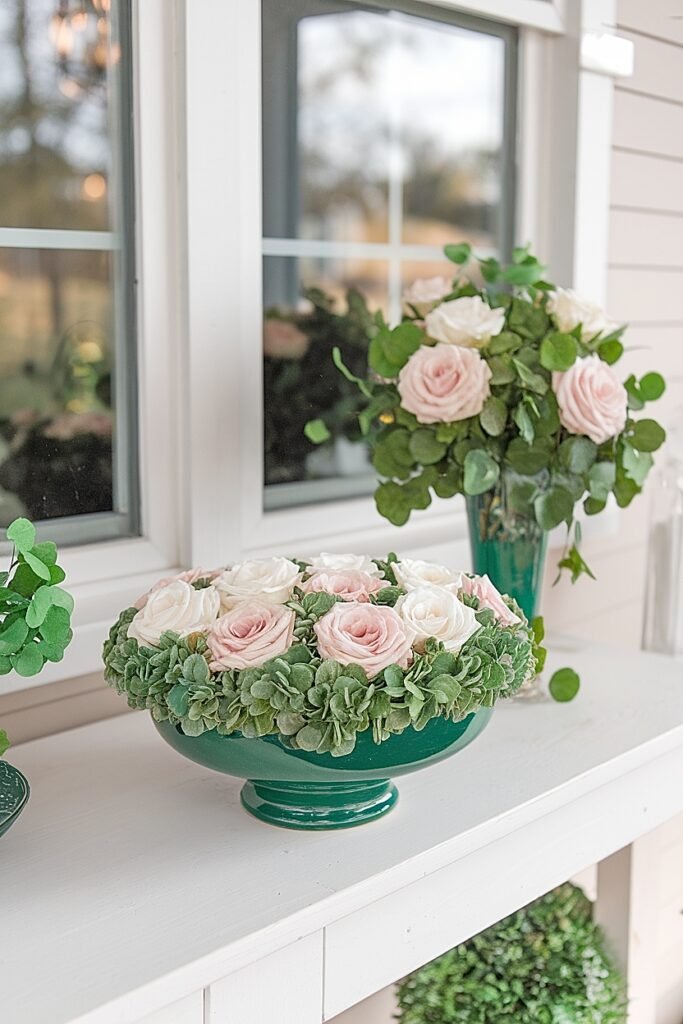
Outdoor serving consoles, whether permanent built-ins or temporary folding tables, become command centers during patio parties. Food flows from these surfaces, drinks get poured, and guests congregate around them throughout the celebration. Your rose arrangements must enhance without hindering these practical functions.
I’ve seen gorgeous arrangements become party obstacles when positioned poorly on serving surfaces. The goal is complementing the function, not competing with it.
1. Back Corner Anchors Position substantial rose arrangements at the back corners of your serving console where they frame the space without interfering with food access. These anchor points create visual boundaries while leaving the entire front and center clear for platters, chafing dishes, and beverage stations. Choose containers low enough that arrangements don’t block guests’ view of what’s being served, but substantial enough to make genuine visual impact.
2. Elevated Pedestal Displays Raise your rose arrangements on pedestals or cake stands positioned behind the serving area. The elevated height keeps flowers completely out of the food zone while adding vertical interest that draws eyes across the entire console. This approach works particularly well for long buffet-style setups where horizontal arrangements might get lost among all the serving dishes.
3. Integrated Garnish Stations Combine your rose display with a practical garnish station for beverages. Roses share space with lemon wedges, fresh mint, and cucumber slices, the flowers providing beauty while the edibles serve function. Guests appreciate the efficiency, and the combination looks intentionally designed rather than like you ran out of table space.
4. Under-Console Floor Arrangements Move your most substantial rose displays to the floor beneath the serving console. This unconventional placement clears the surface entirely for food and drink service while still incorporating florals into the overall design. Large urns or pots positioned at console leg bases frame the serving area dramatically without competing for precious surface space.
5. Hanging or Mounted Installations If your serving console sits against a wall or fence, mount rose arrangements above or beside the surface rather than on it. Wall-hung planters, hook-mounted baskets, or even a simple shelf above the console can hold your roses. This approach frees the entire console surface while adding vertical visual interest that complements the horizontal serving spread below.
Serving consoles feed your crowds, but porch coffee tables serve guests who want to relax, those arrangements need different qualities entirely, which we’ll explore next.
How to Build a Saint Patrick’s Day Outdoor Rose Arrangement for a Porch Coffee Table
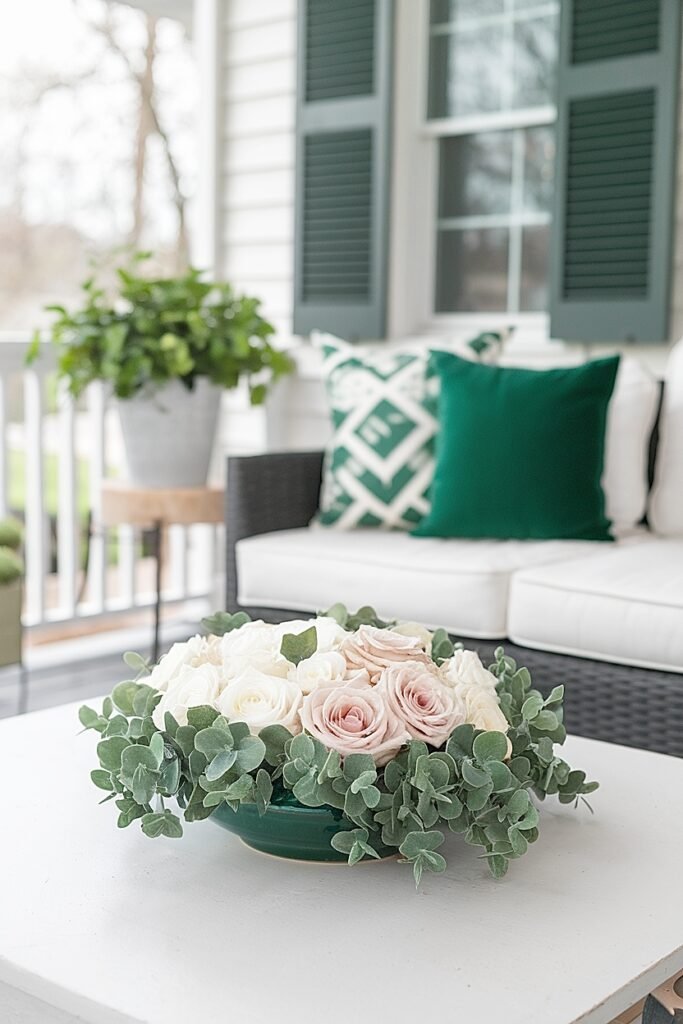
Porch coffee tables anchor relaxation zones where guests settle in for conversations, appetizers, and drinks. These arrangements need to be gorgeous from every angle, stable against casual bumps, and low enough to see over while seated.
I approach porch coffee table arrangements differently than any other outdoor display. The viewing position and social function demand specific design considerations.
Start by selecting a container no taller than six inches. Guests seated around the coffee table need to see each other across the arrangement, and anything taller creates barriers to comfortable conversation. Wide, shallow vessels work best, they provide surface area for abundant roses without building upward problematically.
Weight matters tremendously for coffee tables. These surfaces get bumped by gesturing hands, nudged by guests adjusting their seats, and occasionally used as footrests despite your best intentions. Fill containers with decorative stones before adding water, choose heavier ceramic or metal vessels over lightweight options, and consider setting the entire arrangement on a non-slip pad. For the roses themselves, select sturdy varieties and arrange them in a dome shape that looks intentional from every seated position around the table. Tuck in textural greenery like fern or eucalyptus around the edges, allowing some to trail slightly over the container rim for softness. Picnic tables present yet another outdoor challenge, casual, exposed, and often subject to the full force of March weather, so read on for strategies specific to those rugged surfaces.
Ways to Build Saint Patrick’s Day Outdoor Rose Arrangements for Picnic Tables
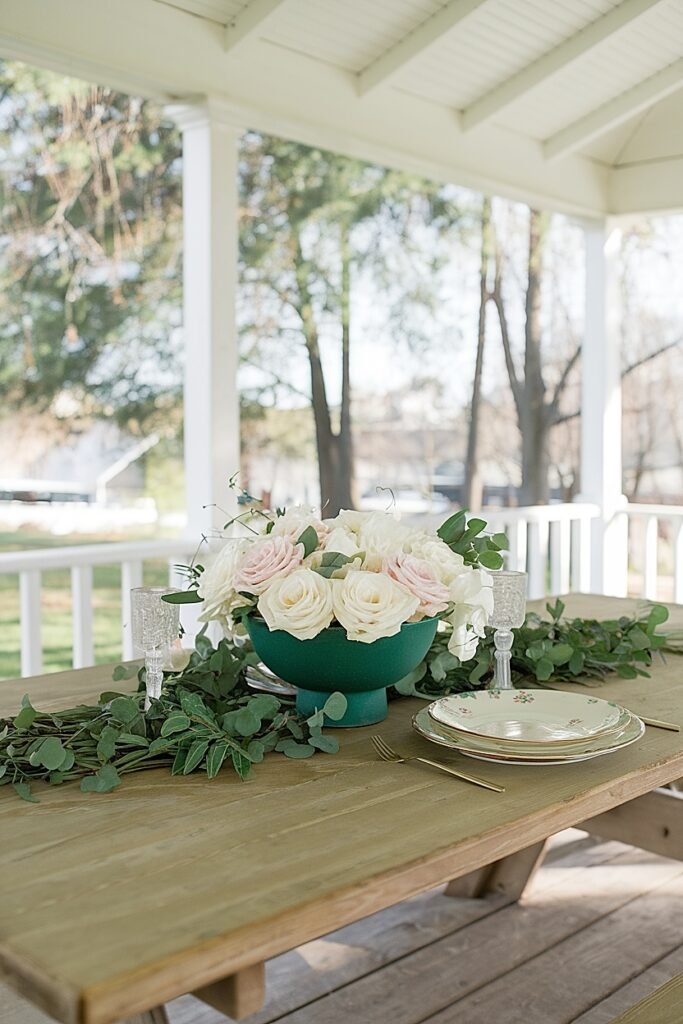
Picnic tables occupy a unique decorating category. These sturdy, casual surfaces handle weather exposure that would destroy delicate arrangements, and they accommodate eating styles, passed platters, elbow-to-elbow seating, that formal dining tables never see.
My picnic table arrangements have survived conditions that would horrify indoor decorators. The key is embracing the casual setting rather than fighting against it.
1. Mason Jar Clusters with Wire Carriers Group four to six mason jars in a wire carrier, fill each with water and a few roses, and place the entire unit at the table center. The carrier provides built-in stability and portability, pick it up to clear space for serving, then return it easily. Mason jars resist breakage, and if one tips, damage stays contained to that single jar rather than spreading across the table. This casual aesthetic suits picnic settings perfectly.
2. Galvanized Container Statements Large galvanized buckets or tubs handle outdoor conditions beautifully while offering the capacity for genuinely impressive rose displays. The farmhouse aesthetic matches picnic vibes naturally. Weight these containers heavily with stones, fill abundantly with hardy roses and sturdy greenery, and position where the container won’t interfere with bench access. The rustic vessel eliminates any worry about ruining “nice” containers in unpredictable outdoor conditions.
3. Weighted Wood Box Gardens Construct or purchase a weathered wooden box long enough to run down the table center. Line with plastic, add gravel for drainage and weight, then fill with moss and rose stems in hidden water tubes. The garden-bed appearance suits outdoor settings, the length fills narrow picnic tables proportionally, and the weight prevents movement during windy conditions. Add battery-powered fairy lights for evening celebrations.
4. Hurricane Candle and Rose Combinations Position glass hurricanes containing pillar candles at intervals down the table center, then surround each hurricane base with roses in small concealed water containers. The hurricanes protect candle flames from wind while the rose clusters add color and beauty at each point. This distributed approach works well for long picnic tables where a single centerpiece might not reach all guests visually.
5. Hanging Overhead Installations If your picnic area has overhead structures, pergolas, trees, or strung lines, consider hanging your rose arrangements above the table rather than placing them on the surface. This keeps the entire tabletop clear for food and gathering while adding a magical, unexpected floral presence overhead. Use sturdy hooks and waterproof containers, and position arrangements high enough that guests don’t bump their heads.
Conclusion
Taking your Saint Patrick’s Day roses outdoors transforms the entire celebration experience. The expanded decorating canvas, the fresh air backdrop, the welcoming atmosphere for arriving guests, these elements combine to create something more memorable than any purely indoor party can achieve.
Yes, outdoor arrangements require extra planning. You’ll need sturdier containers, hardier rose varieties, and strategic placement decisions that account for weather variables. But the results justify every additional consideration. When guests walk up your decorated entry steps, settle into chairs surrounded by porch roses, and dine at tables dressed in festive florals under open sky, they’re experiencing a celebration rather than just attending one. That’s worth the extra effort every single time.
This website contains affiliate links, and some products are gifted by the brand to test. As an Amazon Associate, I earn from qualified purchases. Some of the content on this website was researched and created with the assistance of AI technology.