
This website contains affiliate links, and some products are gifted by the brand to test. As an Amazon Associate, I earn from qualified purchases. Some of the content on this website was researched and created with the assistance of AI technology.
Key Takeaways
- Tray-based counter styling contains rose displays while preserving essential prep space
- Kitchen peninsulas offer prime decorating real estate that doesn’t interfere with cooking workflow
- Corner zones transform dead counter space into dedicated St. Patrick’s display areas
- Combining roses with functional elements like citrus bowls creates dual-purpose arrangements
- Serving station integration means decorations enhance entertaining rather than competing with it
- Green textiles beneath rose arrangements establish Irish atmosphere while protecting surfaces
Styling Saint Patrick’s Day kitchen counter decor using roses with limited space challenges everything traditional decorating advice assumes. Kitchens weren’t designed for floral displays, they exist for cooking, storage, and the controlled chaos of meal preparation. Counter space ranks among the most precious real estate in any home, and suggesting flowers belong there seems almost offensive to anyone who’s ever tried to prep dinner in a cramped galley kitchen. Yet kitchens anchor daily life. We start mornings there. We gather there during parties. We spend more waking hours in kitchens than almost any other room. Leaving them undecorated during St. Patrick’s Day means missing opportunities for holiday immersion.
I resisted kitchen rose displays for years, convinced they’d interfere with cooking routines and require constant relocation during meal prep. Then I discovered the secret: strategic positioning in zones that weren’t actually functional anyway. That awkward corner where nothing fits. The peninsula end nobody uses for prep. The windowsill collecting dust above the sink. These dead zones transform into St. Patrick’s display territory without sacrificing a single inch of working counter. The roses become part of kitchen life rather than obstacles to it.
Use this table to pick the best Saint Patrick’s Day kitchen counter rose setup for your space. Compare counter zone, best emerald/hunter/kelly prop combo, space footprint, and cleanup speed. Everything is designed for limited counters, bold festive green everywhere, and realistic daily life—no fragile glass, no fussy extras.
| Placement Zone (Limited Space) | Container + Festive Green Formula | Footprint + What to Keep Clear | Time-to-Done + Mess Level |
|---|---|---|---|
|
Corner Counter Micro-Zone
tiny tray
low dome roses
fast reset
|
Emerald crock (opaque)
Hunter linen
Kelly pinch bowl
Best for: small counters that need most space left open.
|
Footprint: Small
Keep clear: main prep lane + appliance landing zone.
|
5–8 min
Mess: Low
Wipe plan: tray lifts as one unit.
|
|
Sink-Side (Splash-Safe)
water zone
easy wipe
no glass
|
Emerald crock
Hunter cloth
Kelly stoneware dish
Best for: adding green near the sink without crowding it.
|
Footprint: Medium
Keep clear: faucet lane + sponge/soap lane.
|
6–10 min
Mess: Medium
Wipe plan: keep tray away from splash line.
|
|
Peninsula End (Serving Lane)
traffic spot
plates nearby
contained tray
|
Emerald crock
Hunter napkins
Kelly snack plate
Best for: quick hosting + daily snacks in small kitchens.
|
Footprint: Medium
Keep clear: center lane for serving + eating.
|
6–9 min
Mess: Low
Wipe plan: one tray = one reset.
|
|
Stove-Side (Heat-Aware)
safety spacing
low profile
easy move
|
Emerald crock
Hunter linen
Kelly spoon rest
Best for: you want green near cooking, but still safe.
|
Footprint: Medium
Keep clear: utensil zone + 10–12 in from burners.
|
7–12 min
Mess: Medium
Wipe plan: move tray before heavy cooking.
|
|
Backsplash Ledge (Space Saver)
tiny footprint
visual pop
prep stays open
|
Mini emerald crock
Hunter towel below
Kelly pinch bowl
Best for: counters that cannot spare any horizontal space.
|
Footprint: Small
Keep clear: entire work surface under ledge.
|
5–9 min
Mess: Low
Wipe plan: wipe under ledge, tray stays put.
|
|
Tiered Stand (Vertical Style)
stacked greens
tiny zone
clean look
|
Emerald mini crock
Hunter napkin stack
Kelly bowl top tier
Best for: adding “green everywhere” without spreading outward.
|
Footprint: Small
Keep clear: plate landing area + prep lane.
|
8–12 min
Mess: Low
Wipe plan: one wipe around base, done.
|
|
Serving Station Tray (Host-Ready)
snack plates
napkin stack
grab-and-go
|
Emerald crock
Hunter napkins
Kelly plates + limes
Best for: last-minute guests + small kitchen hosting.
|
Footprint: Medium
Keep clear: main cooking area + chopping lane.
|
7–10 min
Mess: Medium
Wipe plan: lift tray, wipe once, return.
|
|
Indoor–Outdoor Echo (Porch Match)
porch table
same kit
cohesive home
|
Emerald crock inside
Hunter runner outside
Kelly accents both
Best for: connecting kitchen counter + outdoor surfaces.
|
Footprint: Medium
Keep clear: doorway serving corner + counter prep lane.
|
10–14 min
Mess: Medium
Wipe plan: indoor tray + quick outdoor wipe.
|
How to Style a Saint Patrick’s Day Kitchen Counter Tray with Roses
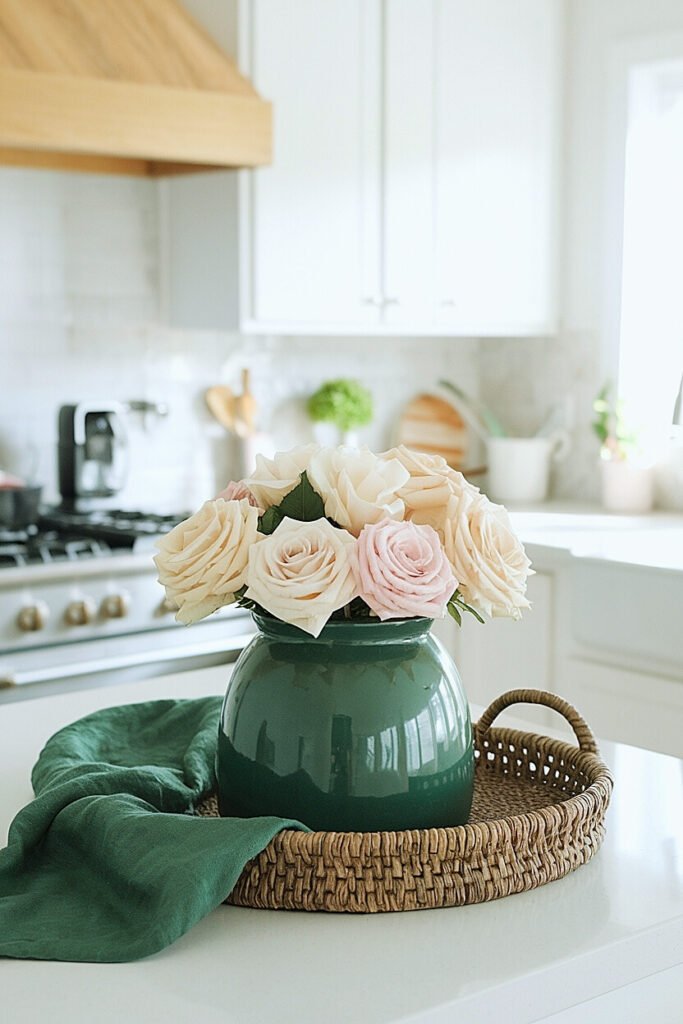
Trays create contained universes on counter surfaces, everything inside belongs together; everything outside remains available for kitchen function. This containment solves the fundamental tension between decoration and utility. The tray becomes dedicated St. Patrick’s territory while surrounding counter stays clear for actual cooking.
The tray itself contributes to Irish atmosphere when chosen thoughtfully. Green trays amplify the holiday theme. Wooden trays add warmth appropriate for kitchen settings. Metal trays suit modern kitchen aesthetics while surviving the moisture and spills that kitchen environments produce.
Select a tray sized to occupy no more than one-sixth of your available counter run. In a kitchen with four feet of usable counter, that means a tray roughly eight inches square. This modest footprint provides decorating opportunity without meaningful functional sacrifice. Position the tray in a corner zone, against a backsplash, or at a peninsula end, anywhere removed from primary prep areas.
Build your tray display with intentional restraint. One compact rose arrangement in a green vessel at center. One small candle beside it. Perhaps a tiny decorative object, a ceramic shamrock, a small Irish blessing sign. Leave breathing room around each element. The negative space within the tray prevents the cramped appearance that cluttered arrangements create. Your contained St. Patrick’s vignette coexists peacefully with kitchen function. For broader apartment decorating approaches, explore these Saint Patrick’s Day apartment decoration ideas using roses that extend Irish atmosphere throughout limited spaces. Found this helpful? Share with friends navigating similar kitchen challenges!
Continue reading for peninsula-specific techniques that leverage these often-underutilized surfaces.
Ideas for Saint Patrick’s Day Kitchen Peninsula Decor Using Roses
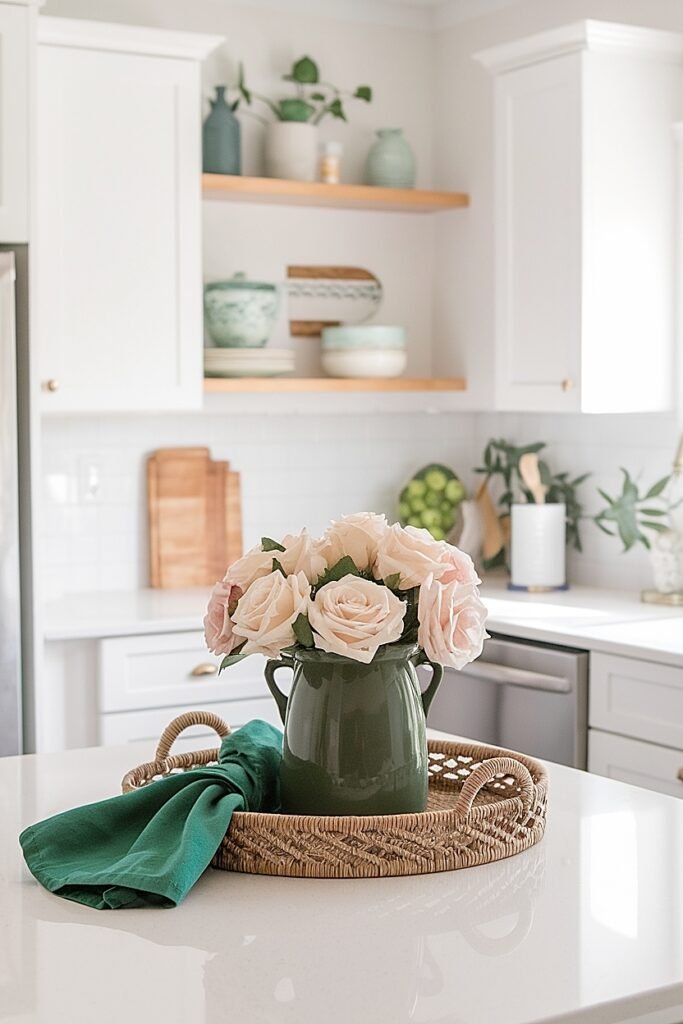
Peninsulas, those counter extensions connecting to islands or walls, offer unique decorating opportunities. Their positions typically separate kitchen work zones from adjacent living or dining areas, making them visible from multiple room angles while sitting slightly removed from active cooking. This transitional status suits decorative displays better than primary prep counters.
These five approaches maximize peninsula potential for St. Patrick’s rose displays.
1. The End-Cap Statement
Position your rose arrangement at the peninsula’s terminal end, the point furthest from kitchen workflow. This end-cap placement creates visual anchor visible from living areas while occupying zero prep-relevant space. Use a substantial green crock sized to the peninsula’s width, filled with cream or white roses that complement green beautifully. The end position naturally separates decoration from function.
2. The Breakfast Bar Integration
If your peninsula includes bar seating, position roses where they’ll be enjoyed during casual meals. A low arrangement at the bar’s center creates intimate dining atmosphere while remaining easily moveable for serving. Keep height under six inches to preserve conversation sightlines across the bar. This positioning means roses enhance eating experiences rather than merely decorating.
3. The Corner Tuck Approach
Where peninsula meets wall, a tucked-corner position keeps roses visible but completely clear of workflow. The corner naturally protects arrangements from accidental bumps during cooking activity. Even small kitchens can spare this dead corner for decorative purposes. A compact green vessel holding three to five roses fits most peninsula corners.
4. The Dual-Zone Division
Mentally divide your peninsula into functional and decorative territories. The two-thirds nearest the kitchen remains available for prep overflow and serving. The one-third furthest from workflow becomes dedicated St. Patrick’s display space. This explicit division prevents decoration from creeping into functional zones as additional items accumulate.
5. The Elevated Shelf Addition
If peninsula space truly can’t spare any surface area, add a small floating shelf above the peninsula for rose display. The vertical positioning claims no counter space whatsoever while keeping arrangements visible from kitchen and adjacent areas. This overhead approach suits the most space-constrained kitchens.
Read on for corner-specific techniques that transform dead zones into display opportunities.
How to Make Saint Patrick’s Day Corner Counter Decor with Roses (Tiny Zones)
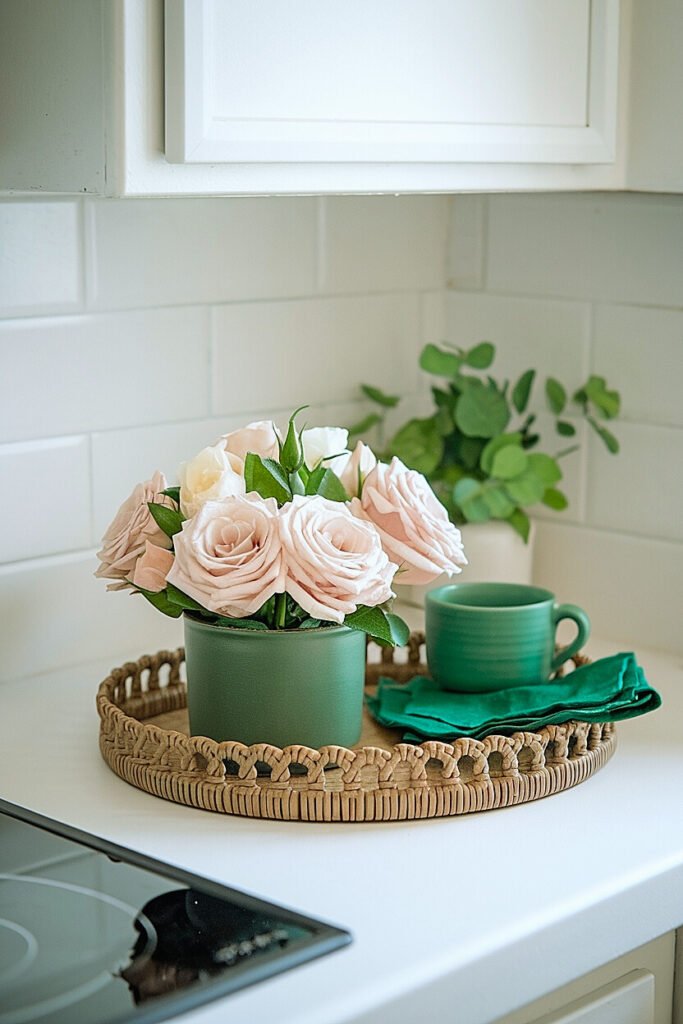
Counter corners where walls meet typically serve no functional purpose. The angle creates awkward space that accommodates neither cutting boards nor appliances. Most kitchens accumulate random items in these corners, rarely-used gadgets, mail that migrated from entries, objects without proper homes. Reclaiming these corners for intentional St. Patrick’s display brings order to chaos while adding seasonal beauty.
Corner positioning offers natural protection that exposed counter zones lack.
Assess your kitchen corners honestly. Which ones truly serve no purpose beyond collecting clutter? Which receive enough light to showcase roses attractively? Which remain visible during typical kitchen time rather than hiding behind appliances? The ideal St. Patrick’s corner combines accessibility for water changes with visibility for daily enjoyment.
Clear your chosen corner completely. Wipe the surface clean, corners accumulate surprising grime. Position a green container sized to the corner’s angle, triangular arrangements fit these spaces better than round ones, though round vessels work fine positioned against the corner’s back edges. Fill with roses cut short enough to avoid crowding overhead cabinet zones. The arrangement should feel tucked and contained rather than sprawling into adjacent functional space. Add a small candle or decorative object if the corner accommodates it; otherwise, let the roses alone command this reclaimed territory. The corner transforms from neglected dead zone to intentional St. Patrick’s moment.
The following section explores combining roses with functional fruit displays.
Ways to Do Saint Patrick’s Day Counter Decor with Roses + Green Citrus Bowl
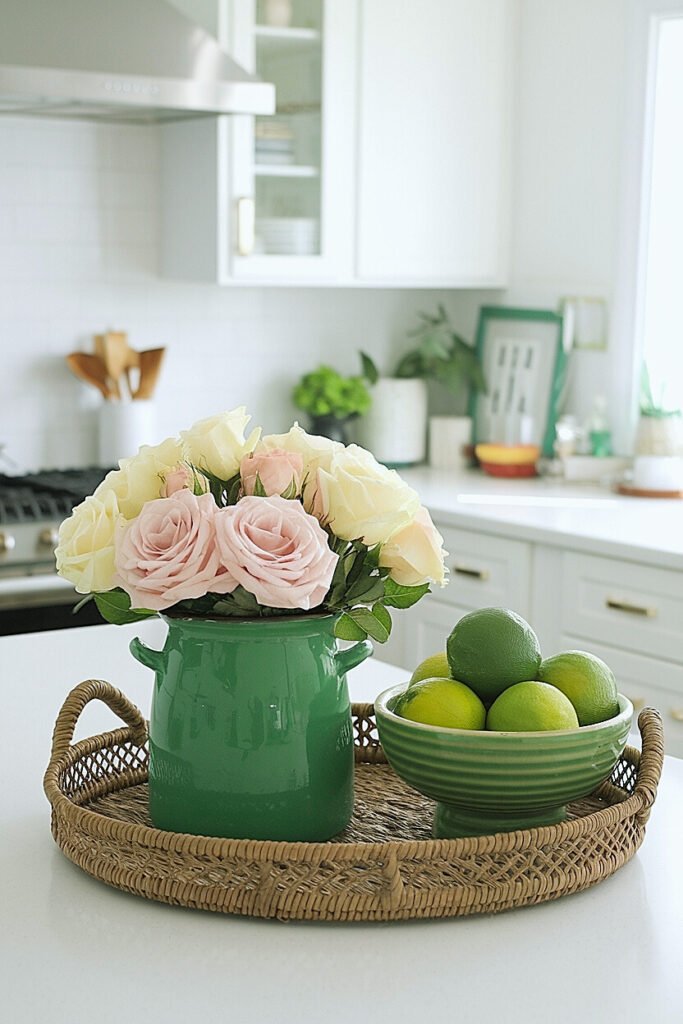
Combining decorative roses with functional fruit displays creates arrangements that serve dual purposes, beautiful to look at, practical to use. Green citrus, limes, green apples, unripe pears, establishes Irish color while providing actual food. The roses elevate the fruit display from utilitarian to festive. Neither element alone achieves what the combination delivers.
1. The Nested Bowl Arrangement
Place a small rose vessel inside or beside a larger bowl of green citrus. The roses emerge from the fruit mound like discovered treasures. Use a waterproof inner container to protect fruit from flower water. The single combined display occupies less space than separate arrangements while creating compound visual interest. Refresh fruit as you eat it; the roses benefit from the colorful, changing backdrop.
2. The Side-by-Side Pairing
Position a fruit bowl and rose arrangement as intentional neighbors sharing a tray or runner. The fruit bowl holds limes, green apples, or mixed green citrus. The adjacent rose vessel holds cream or white roses that complement the green fruit beautifully. The pairing creates a composed vignette from functional and decorative elements. Neither competes for attention; both contribute to St. Patrick’s atmosphere.
3. The Tiered Display Stack
Use a tiered fruit stand, positioning green citrus on lower tiers and a small rose arrangement on the top tier. The vertical structure claims minimal counter footprint while creating substantial visual presence. The roses crown the fruit display, elevating the entire composition from grocery storage to holiday statement. The tiered approach suits corners and peninsula ends particularly well.
Continue reading for serving station approaches that support entertaining.
Ways to Create Saint Patrick’s Day Kitchen Counter Decor That Doubles as a Serving Station
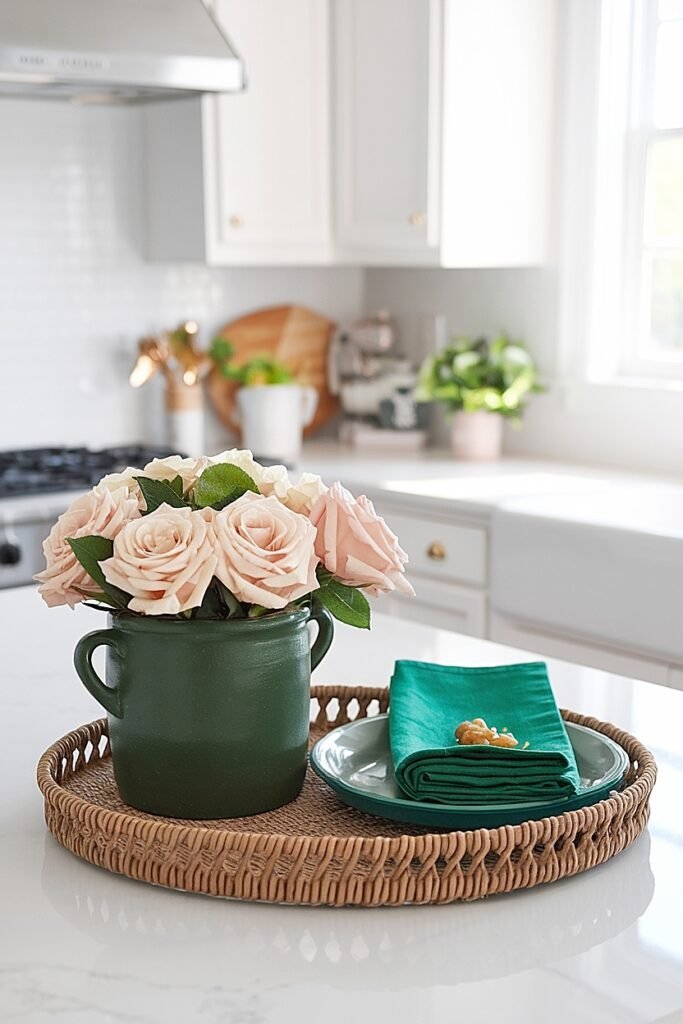
St. Patrick’s Day often involves entertaining, brunches, dinner parties, casual gatherings with Irish coffee. Counter decorations that transform into serving elements when guests arrive eliminate the frustrating moment of clearing pretty arrangements to make room for party function. Design dual-purpose displays from the start.
1. The Tray-Ready Conversion
Build your rose display on a serving tray that converts to food service during parties. The tray holds your green crock of roses and a few candles daily. When entertaining, slide the roses to the tray’s edge, positioning appetizers, napkins, and serving items in the cleared space. The roses become part of the serving station rather than competing with it.
2. The Buffet-Adjacent Anchor
Position your rose arrangement at one end of designated serving counter space, anchoring the buffet line you’ll create during parties. The roses mark the starting point where guests grab plates. When not entertaining, the roses simply decorate that counter zone. The positioning anticipates party function rather than requiring rearrangement.
3. The Centerpiece-to-Table Migration
Design counter rose displays for easy transport to dining tables during meals. A handled basket, a stable tray, a weighted container, all facilitate the counter-to-table journey. Daily, the roses live on the kitchen counter where you’ll enjoy them most. During meals or entertaining, they relocate to tables where guests experience them. The mobility makes ambitious decorating practical.
Below, discover how green textiles enhance rose displays while protecting surfaces.
Ways to Style Saint Patrick’s Day Counter Decor Using Roses with Green Pattern Textiles
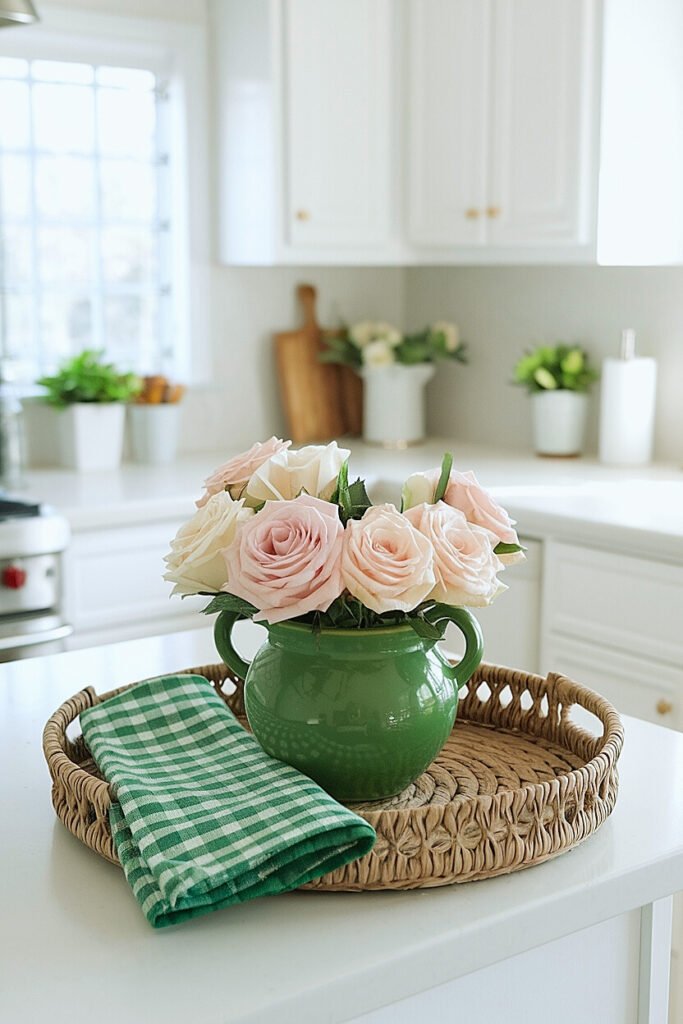
Textiles beneath rose arrangements serve multiple purposes: they establish Irish color before flowers are added, they protect counter surfaces from water drips and scratches, and they define arrangement territory within larger counter runs. The right textile transforms a simple rose vessel into a composed vignette.
1. The Green Plaid Runner Strip
Cut a narrow strip from green plaid fabric or use a pre-made table runner trimmed to fit your counter space. Position this textile beneath your rose arrangement, extending several inches beyond the vessel on all sides. The plaid pattern reads as distinctly Irish while the extended fabric defines the arrangement’s territory visually. The textile catches any drips, protecting counters from water damage.
2. The Shamrock-Print Napkin Base
A simple cloth napkin in shamrock print or green pattern creates instant arrangement foundation. Fold the napkin flat or gather loosely around your vessel’s base. The soft fabric adds texture while establishing unmistakable St. Patrick’s theme. Napkins cost almost nothing, store flat during off-seasons, and provide easy variety, switch patterns throughout March for refreshed looks.
3. The Layered Linen Approach
Layer multiple textiles for dimensional effect: a green solid napkin beneath, a patterned smaller square on top, roses positioned at the layered center. The textile stacking creates visual depth impossible with single-fabric bases. Coordinate colors across layers, different shades of green, or green with cream accents that echo rose colors. The layered foundation makes even modest arrangements appear more substantial.
Conclusion
Kitchen counter rose displays for St. Patrick’s Day succeed through strategic positioning rather than surface sacrifice. The techniques throughout this guide, tray containment, peninsula utilization, corner reclamation, fruit bowl combination, serving station integration, textile foundation, all share one commitment: decoration enhances kitchen life without impeding it.
These approaches emerged from actual limited-counter-space challenges. The galley kitchen with eighteen inches of usable prep surface. The apartment kitchen where the microwave claims half the counter run. The family kitchen where every inch serves an essential function. Each constraint became an opportunity for smarter, more intentional decorating. Your kitchen’s St. Patrick’s roses can absolutely coexist with cooking routines when positioned thoughtfully in zones that weren’t serving functional purposes anyway.
This website contains affiliate links, and some products are gifted by the brand to test. As an Amazon Associate, I earn from qualified purchases. Some of the content on this website was researched and created with the assistance of AI technology.