This website contains affiliate links, and some products are gifted by the brand to test. As an Amazon Associate, I earn from qualified purchases. Some of the content on this website was researched and created with the assistance of AI technology.
Key Takeaways
- One grocery store rose bunch strategically divided creates three distinct centerpieces for different apartment zones
- Thrift stores, dollar stores, and your own kitchen cabinets hold perfect containers that cost almost nothing
- Mixing fresh roses with faux stems stretches your flower budget while maintaining luxurious fullness
- Grocery store greens and fillers add volume to sparse rose arrangements for pennies per stem
- Two-stem arrangements look intentional and elegant when styled with the right vessels and accents
- A single statement centerpiece that moves between spaces eliminates duplicate decorating costs
Styling a small apartment valentine rose centerpiece ideas on a budget feels impossible when you’re scrolling through Pinterest boards showcasing hundred-dollar arrangements. I remember standing in the floral section of my grocery store during my broke apartment years, calculator app open, trying to figure out how to create any Valentine ambiance when roses cost four dollars per stem. The math never worked. Three arrangements times ten stems each times four dollars equaled more than my entire decorating budget for the month. So I got creative, out of necessity, not choice.
Those financial constraints taught me more about floral design than any expensive class ever could have. When you can’t throw money at a problem, you learn to see possibilities everywhere. That mason jar collecting dust in your cabinet? Perfect rose vessel. The single bunch of grocery roses you can actually afford? Enough for three arrangements when you know the tricks. The fake roses from last year’s clearance bin? Essential budget-stretching partners for fresh blooms. I’m sharing every money-saving strategy that transformed my Valentine decorating from aspirational to actually achievable. Your apartment deserves romance regardless of your bank balance.
Use this quick-glance guide to pick the cheapest Valentine rose strategy that still fits your small apartment layout. Compare cost level, storage needs, and maintenance. On a phone, the table stacks neatly so you can scroll, scan, and decide how far your bouquet really has to go.
| Budget Tier | Centerpiece Strategy | Best Surfaces | Perfect For You If… |
|---|---|---|---|
|
$ Single bouquet One grocery bunch stretched into the whole room. |
Split-bouquet trio Coffee table bowl + mini dining jar + tiny sill jar. Same roses repeated so everything feels coordinated but very low cost and easy to maintain. |
|
Most renters
|
|
$ Zero decor spend Flowers + items you already own. |
“Use what you have” bases Mugs, jars, measuring cups, pasta bowls and boards become instant centerpiece platforms with no new containers or trays required. |
|
No-storage households
|
|
$$ Stretch month-long Small weekly top-ups of fresh stems. |
Hybrid refillable bases Faux greenery + a few faux roses in bowls and jars, refreshed with a handful of new fresh stems each week for scent and realism. |
|
All-month romantics
|
|
$ Dollar-store mix Discount tins, tumblers, chargers and jars. |
Thrifty container makeover Paint, paper wraps and twine dress up cheap tins, snack cans and glasses so they become a matching centerpiece set for roses and greenery. |
|
DIY decorators
|
|
$ Ultra-frugal Dried roses + paper hearts and tags. |
Dried + paper volume Use dried blooms, loose petals and printable paper hearts or tags around very small fresh or faux arrangements to make everything look fuller than it is. |
|
Ultra-budget stylists
|
|
$/guest Shared cost Everyone brings one rose stem. |
“Bring-one-stem” party bowl Guests add a single stem to a shared bowl, building a lush, mismatched centerpiece you could never justify paying for alone in a small apartment. |
|
Social decorators
|
How to Turn a Single Grocery Rose Bunch into Three Apartment Valentine Centerpieces
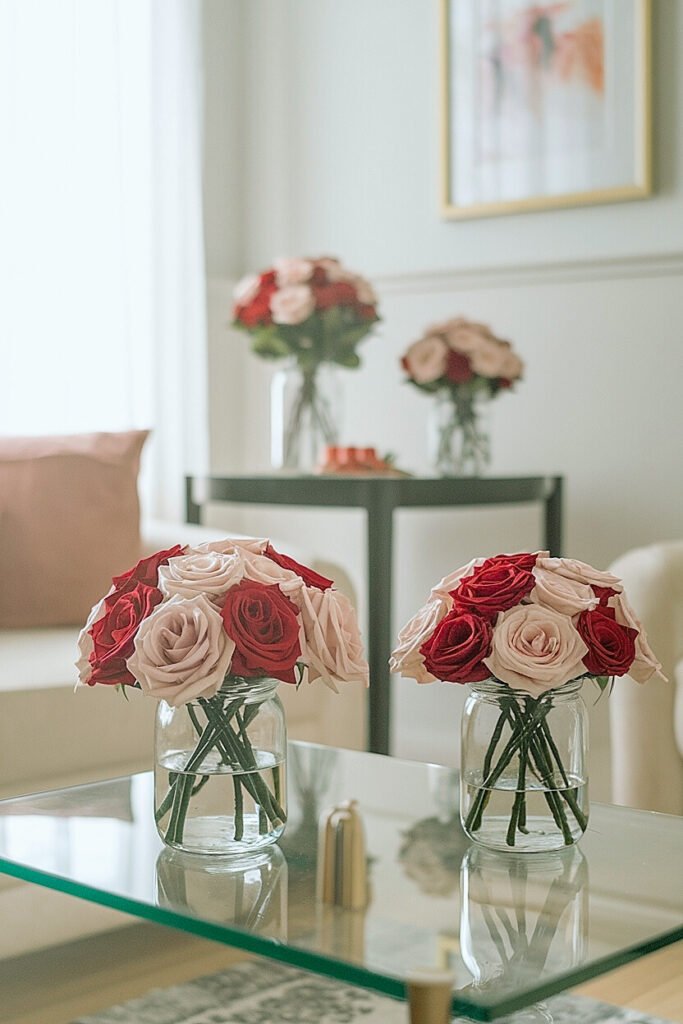
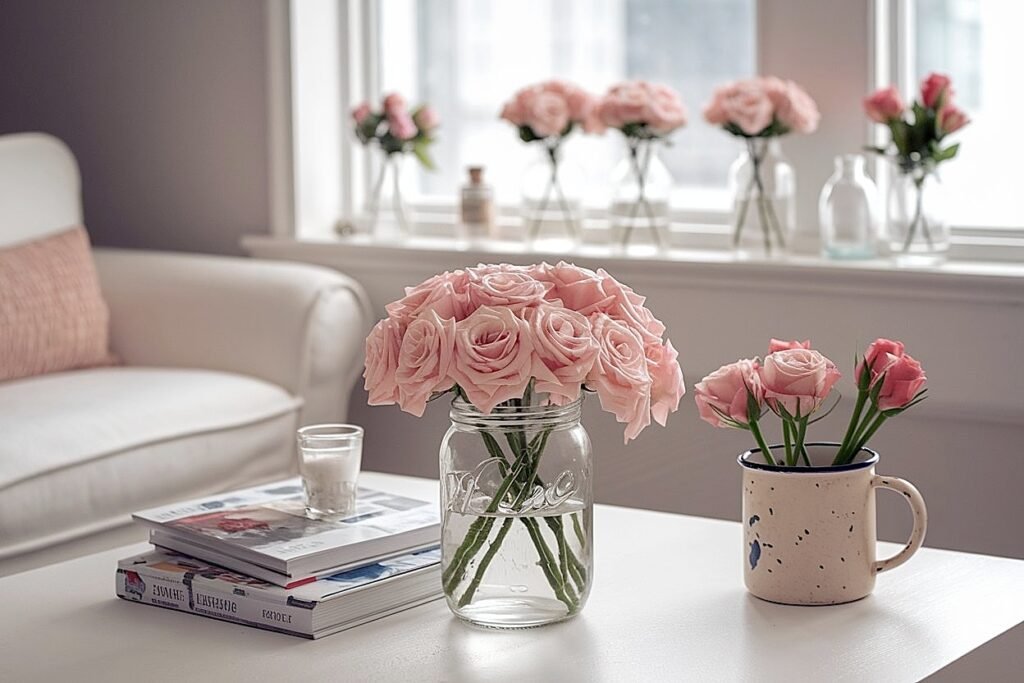
Most people buy roses, plop them in one vase, and call it done. That approach wastes both roses and money. A standard grocery store dozen contains enough blooms and greenery to create multiple distinct arrangements, you just need to think like a florist rather than a consumer. I figured this out accidentally when half my roses got crushed on the walk home from the store and I had to get creative with the survivors. The resulting three smaller arrangements looked better than any single bouquet ever had.
The secret lies in understanding what you’re actually buying. That grocery bunch isn’t just roses. It includes filler greens, usually leather leaf fern or Italian ruscus. It often contains baby’s breath or wax flowers. Sometimes there’s eucalyptus or other accent foliage. When you unbundle everything and separate by type, you suddenly see raw materials rather than one finished product.
Start by removing all packaging and rubber bands. Fill a sink with cool water and lay everything out. Separate roses from greens, group by stem type. Now inventory: you probably have ten to twelve roses, a substantial handful of greenery, and some filler flowers. From this pile, you’ll build three arrangements. Your main centerpiece gets five roses surrounded by greenery. A secondary arrangement gets four roses with filler flowers. Your smallest piece gets three roses tucked into a bud vase. Each stands independently as a complete design.
Cut stems at different heights for each arrangement, creating variety. The main centerpiece roses stay longest at ten to twelve inches. Secondary arrangement stems cut to eight inches. Bud vase roses trim to five or six inches. This graduated approach means each arrangement has proper proportions for its vessel size. Strip leaves that would sit below waterlines, add flower food to each container, and arrange roses in odd-number groupings for natural-looking clusters. Suddenly your fifteen-dollar grocery purchase decorates three zones in your apartment. For more ideas on maximizing small apartment decorating impact, check out these Valentine rose decorating ideas for small apartment family rooms that stretch limited spaces beautifully. Know other apartment dwellers watching their budgets? Share this post with them!
Continue reading to discover container options that cost next to nothing but look intentionally chosen.
What Are the Best Cheap Containers for Valentine Rose Centerpieces in Tiny Apartments?
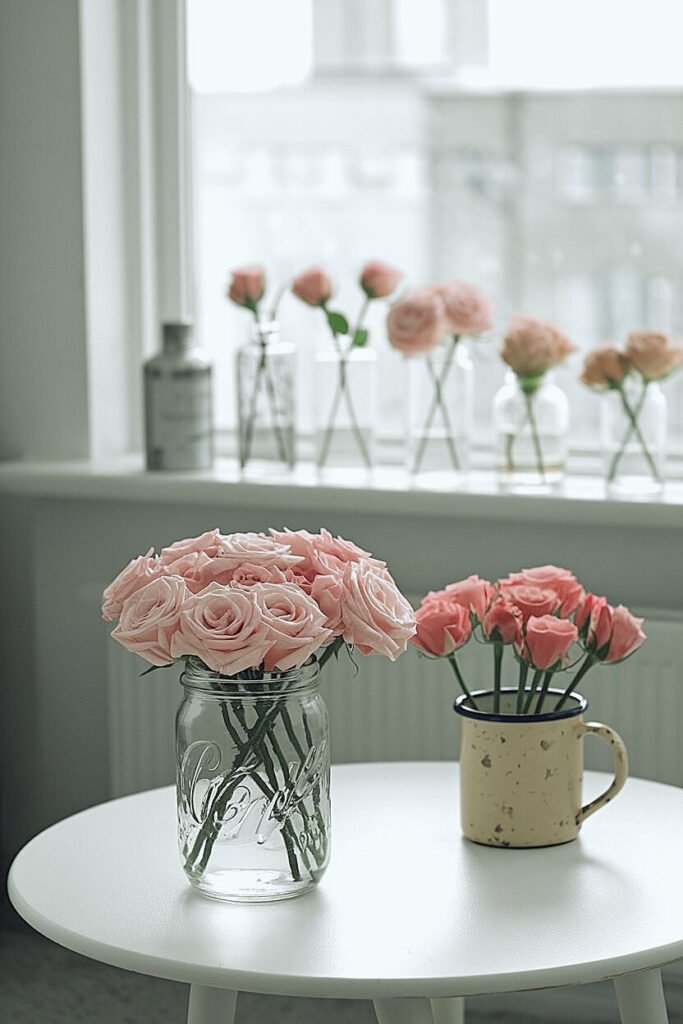
Container shopping trips to home decor stores deliver instant sticker shock. Those gorgeous ceramic vases? Forty dollars minimum. The trendy mercury glass vessels? Even more. But here’s what nobody in the floral industry wants you to know: containers barely matter once they’re full of flowers. The roses become the focus. The vessel just holds water. This realization liberated my decorating budget permanently.
Your home already contains multiple suitable rose containers. Your kitchen cabinets, your recycling bin, your random accumulated glassware, all hiding potential Valentine vessels. Thrift stores and dollar stores fill gaps for pocket change. The five options below cost under five dollars each and photograph every bit as beautifully as their expensive counterparts.
1. Mason Jars and Canning Jars
The ultimate budget vessel already lives in most kitchens. Wide-mouth quart jars hold substantial arrangements; pint jars suit smaller centerpieces perfectly. The clear glass showcases stems and water beautifully, embrace that rather than hiding it. For Valentine styling, wrap jars with burlap ribbon and twine, spray paint them matte white or blush pink, or leave them completely bare for farmhouse charm. Grouped in threes with varying heights, mason jars create collected-over-time vignettes that look curated rather than cheap.
2. Drinking Glasses and Tumblers
That set of water glasses you never use for actually drinking? Rose vessels. Tall Collins glasses suit long-stemmed arrangements. Short rocks glasses work for tight, compact centerpieces. Mismatched vintage glasses from thrift stores create eclectic charm at fifty cents each. The transparency works identically to expensive glass vases, nobody can tell you’re using drinkware unless you tell them. Group multiple glasses together for compound arrangements that look lavish while using fewer roses per vessel.
3. Tin Cans and Food Containers
Clean soup cans, coffee cans, and olive oil tins transform into rustic containers with zero investment. Remove labels, keep metallic finishes for industrial chic, or wrap with fabric, paper, or ribbon for softer aesthetics. Larger cans from institutional-size foods create substantial vessels for major centerpieces. Punch drainage holes in the bottom, add a jar inside for water, and the tin becomes purely decorative sleeve. The slight imperfection of repurposed materials reads as intentional in rustic or farmhouse styling.
4. Wine and Liquor Bottles
Empty wine bottles with interesting shapes become elegant bud vases instantly. Remove labels completely for clean aesthetics or leave partially for vintage character. Clear bottles showcase single stems beautifully; colored glass adds mood. Liquor bottles with square profiles or unusual proportions create visual interest no standard vase offers. Group multiple bottles at varying heights for a collected bar-cart vibe. Cost is literally zero if you drink wine anyway, you’re just keeping the package.
5. Thrift Store Ceramics
Thrift stores overflow with castoff vases, pitchers, and bowls for one to three dollars each. Ignore obvious vases, everyone grabs those. Instead, hunt for interesting vessels: old gravy boats, sugar bowls missing lids, cream pitchers, teapots, vintage planters. The character of aged ceramics adds dimension that new mass-produced containers simply can’t match. Mismatched patterns grouped together look intentionally collected. Even chipped or imperfect pieces work when roses fill them, the flowers hide flaws while benefiting from vintage charm.
Keep reading to learn how grocery store greens stretch sparse rose arrangements into lush displays.
How to Create Low-Cost Rose Valentine Centerpieces Using Grocery Greens and Filler
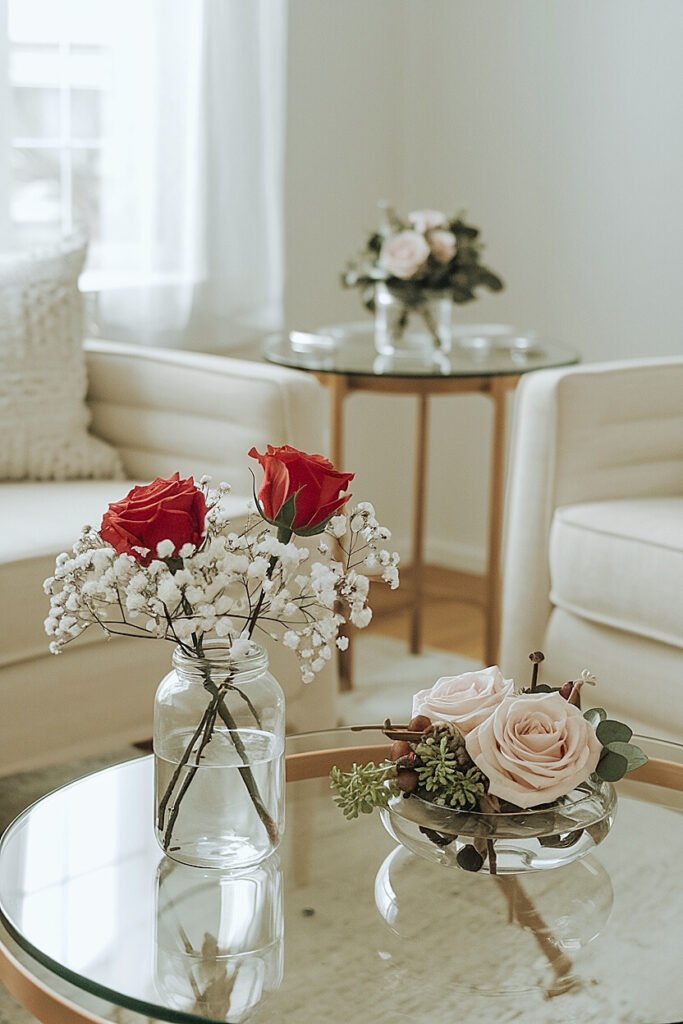
Roses cost real money. Greenery costs almost nothing. This price disparity becomes your budget’s best friend once you understand how to leverage it. A centerpiece that’s sixty percent greenery and forty percent roses looks just as lush as one packed solid with blooms, maybe lusher, actually. The green creates visual rest that makes rose colors pop more dramatically. I learned this from a florist friend who confessed that profit margins come almost entirely from greens, not flowers.
Grocery stores sell greenery bunches in their floral sections for three to five dollars each. These bunches contain enough stems to fill multiple arrangements. Some stores sell individual stems for under a dollar. The math transforms completely when you build arrangements green-first, adding roses as precious accents rather than structural bulk.
Start every arrangement with your greenery foundation. Italian ruscus provides height and cascading movement. Leather leaf fern offers lacy texture. Eucalyptus adds silvery color variation and incredible scent. Bay branches from the produce section deliver glossy substance for almost nothing. Build your vessel three-quarters full with greens alone, creating shape and volume. Only then add roses, tucking them into the greenery framework you’ve established.
Position roses strategically rather than uniformly. Cluster two or three together at the arrangement’s focal point, usually slightly off-center at the visual sweet spot. Let greenery frame and support these rose groupings. The roses become stars elevated by supporting cast rather than anonymous members of a crowd. A single rose nestled into abundant greenery often makes more impact than six roses crowded without breathing room. Your eyes naturally find the color among the green, making each bloom count maximally.
The sections ahead explore mixing fresh and artificial roses, another powerful budget strategy worth understanding.
Ideas for Mixing Fresh and Faux Roses to Save Money in Small Apartment Valentine Centerpieces
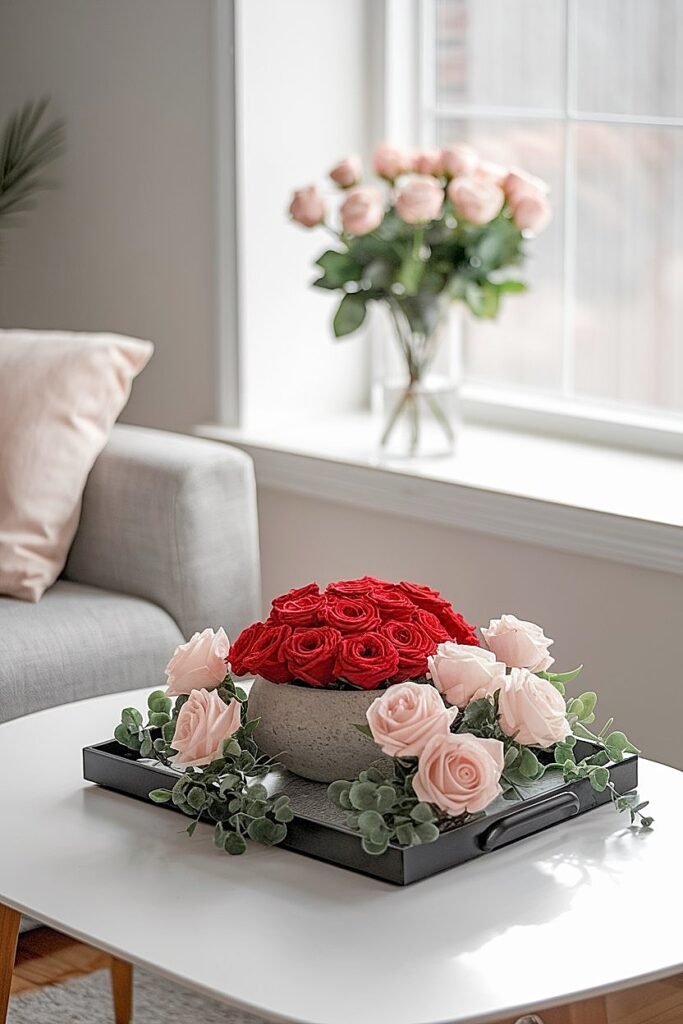
The fake-versus-real flower debate misses the point entirely. It’s not either-or. The smart approach combines both, using fresh roses’ undeniable beauty where it matters most while letting quality faux stems fill supporting roles. I resisted this strategy for years, convinced mixing would look obvious and cheap. Then I tried it. Nobody could tell which roses were real without touching them. Nobody.
Quality matters crucially for faux stems. Dollar store plastic roses fool no one. But mid-tier artificial roses from craft stores, especially during post-Valentine clearance sales, achieve remarkable realism. Real-touch latex roses feel genuine enough to confuse even people actively inspecting them. Investing twenty dollars in quality faux roses pays dividends across multiple Valentine seasons while slashing fresh flower needs annually.
1. The Center-Fresh Approach
Place fresh roses exclusively at the arrangement’s center focal point, surrounding them with faux roses at the perimeter. Eyes naturally draw to the center where real petals catch light authentically. Peripheral vision accepts the faux roses without scrutiny. This technique puts authenticity where attention lands while faux stems provide bulk and fullness economically. Three fresh roses centered among six faux creates an arrangement that reads as entirely real.
2. The Fresh-Accent Method
Build arrangements predominantly from faux roses, tucking two or three fresh blooms at strategic points throughout. Position fresh roses at varying heights where light hits most dramatically, these catch-light moments sell the entire arrangement as genuine. The fresh roses’ subtle movement and light interaction distract from faux stems’ comparative stillness. This method uses the fewest fresh roses while maintaining realistic overall appearance.
3. The Height Differentiation Strategy
Place fresh roses tall at arrangement centers, faux roses lower around the base. The eye travels upward to the fresh focal point, registering authenticity, then accepts lower peripheral roses without close inspection. This mimics natural floral arrangements where premium blooms tower over supporting elements. The faux roses disappear into the supporting structure visually while adding substantial volume.
4. The Variety Mix Technique
Use fresh roses in one color, faux roses in a complementary shade. The color difference explains textural differences, viewers assume variations result from rose variety rather than fresh-versus-artificial. Red fresh roses with pink faux roses, for instance, read as intentional color story rather than budget mixing. This approach adds visual interest while disguising the combination.
5. The Front-Fresh Display
Position fresh roses exclusively at the arrangement’s front, the angle viewers see most often. Faux roses fill the back and sides, visible only from angles rarely viewed. In apartment centerpieces typically positioned against walls or corners, back roses essentially disappear. You’re decorating the visible face only, using faux stems for structural volume nobody examines closely.
Discover below how just two roses become statement centerpieces with the right styling approach.
Ideas for Tiny Two-Stem Valentine Rose Centerpieces That Still Look Special
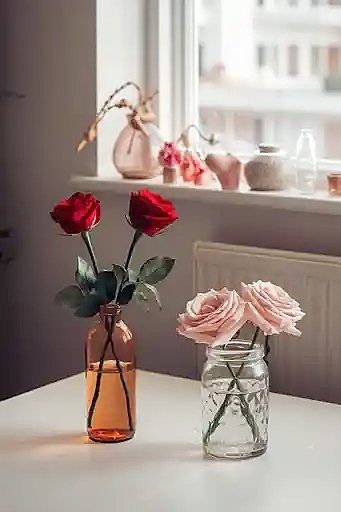
Sometimes the budget allows two roses. Period. I’ve been there, counting coins, choosing between roses and groceries, wondering if two stems even qualified as decorating. They absolutely do. Two-rose arrangements have elegance that larger displays can’t achieve. The constraint forces intentionality. Every element matters. Nothing hides behind abundance. Some of my most photographed arrangements used exactly two roses styled with precision.
The secret lies in everything surrounding those two roses. Vessel choice, supporting elements, presentation surface, these become primary design elements rather than afterthoughts. Two roses in a stunning container with thoughtful accents outperform a dozen roses shoved into a generic vase every time. Scarcity demands creativity; creativity produces beauty.
1. The Romantic Bud Vase Pair
Place each rose in its own slender bud vase, positioning the pair together but not touching. This creates intimate conversation between blooms, two individuals sharing space while maintaining identity. Vary vase heights slightly for visual interest. Add a single candle between them, perhaps a scattering of petals around the base. The pair reads as intentional minimalism rather than affordability constraints.
2. The Floating Rose Bowl
Cut both rose heads just below the bloom, float them facing upward in a shallow bowl of water. Add floating candles or scattered petals between the blooms. The water surface creates reflection that doubles visual impact. This presentation makes two roses feel abundant through mirroring effects. The technique transforms budget limitation into design statement, nobody floats roses by accident.
3. The Greenery Nest Approach
Build a substantial nest of greenery in a low bowl, then tuck both roses into the center as precious treasures. The abundant greens create volume and lushness while roses become focal gems rather than sparse components. This approach spends budget on greenery instead of roses, achieving fullness economically while positioning your two blooms as intentional stars.
4. The Wrapped Presentation Style
Lay both roses horizontally across a folded cloth napkin or piece of fabric as if just received. Add a ribbon bow, a small Valentine card, a scatter of petals. This gift-presentation style suggests romance and intention that upright arrangements don’t capture. The horizontal orientation breaks conventional expectations, making two roses feel like a meaningful gesture rather than minimal decorating.
5. The Specimen Display Method
Place each rose in a separate clear bottle, positioning bottles several inches apart with small decorative objects between, a candle, a tiny heart, a meaningful photograph. This specimen-display approach presents roses as individual art pieces worthy of separate showcasing. The spread creates presence across a larger area than clustered stems would occupy, making two roses sufficient for substantial visual impact.
Continue reading to learn how everyday household items become free centerpiece foundations.
How to Reuse Everyday Trays and Boards as Budget Rose Valentine Centerpiece Bases
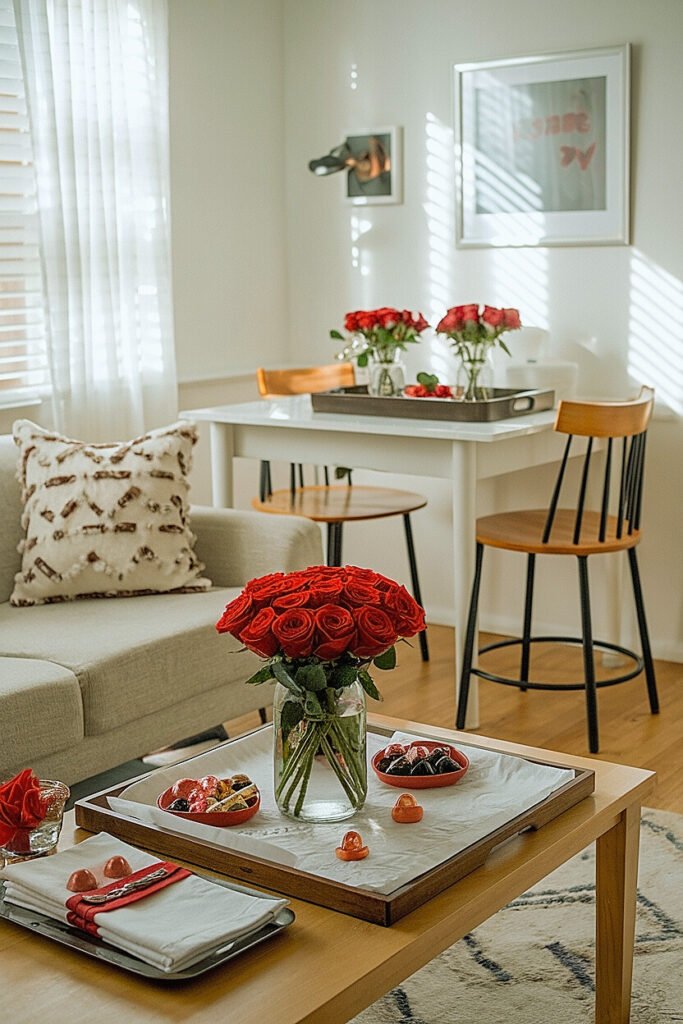
Bases transform simple arrangements into styled vignettes. They frame compositions, protect surfaces, and communicate intentionality. But decorative trays cost real money, often more than the roses themselves. The solution sits in your kitchen right now. Cutting boards, baking sheets, serving trays you already own become centerpiece foundations for exactly zero additional dollars.
I started using kitchen items as decor bases during particularly tight budget years and never stopped even when finances improved. The lived-in quality of actual used items adds authenticity that new decorative trays can’t match. That cutting board with knife marks tells stories. The baking sheet with character developed over years of actual baking feels genuine. These items ground rose arrangements in real life rather than catalog perfection.
Wooden cutting boards work beautifully, the natural grain complements roses’ organic beauty. Round boards suit compact centerpieces; long rectangular boards create trough-style displays. Baking sheets, especially vintage or aged ones, provide industrial charm beneath rustic arrangements. Serving trays you received as gifts but never use finally earn their cabinet space. Even old books stacked and topped with doilies become proper bases.
The base should extend at least two inches beyond your arrangement on all sides, creating visual frame without overwhelming. Position your rose vessel off-center on the base rather than dead middle, asymmetry feels more designed. Add candles, scattered petals, small decorative objects to fill base space around the main arrangement. Suddenly your single bud vase becomes a complete vignette. The base unifies elements that would look scattered without it, creating composition from components.
Below, discover how one centerpiece serves multiple apartment zones, doubling impact without doubling costs.
Ways to Share One Budget Valentine Centerpiece Between Family Room and Dining Nook
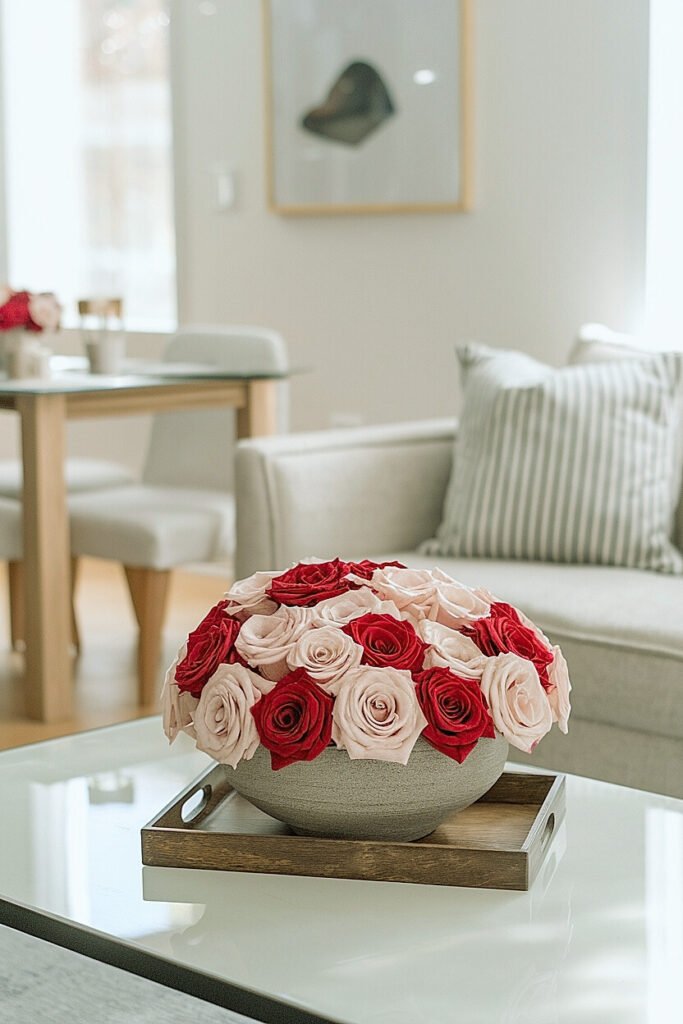
Apartment living means zones rather than rooms. Your dining area flows into your living space. Your coffee table sits fifteen feet from your kitchen counter. In this open reality, one mobile centerpiece can serve multiple locations throughout each day, eating breakfast at the kitchen counter, Valentine ambiance at dinner, cozy romance for movie night. Why buy three arrangements when one moves?
This strategy requires arrangements built for portability. The vessel must be stable enough to transport safely. The base needs handles or manageable dimensions. Nothing should spill, tip, or shed petals during transition. Once you design for mobility, a single investment decorates your entire apartment across all occasions.
1. The Handled Tray Transport
Build your centerpiece on a tray with handles, a serving tray, a basket, anything grippable. The entire arrangement lifts and moves as a unit without disturbing components. Morning coffee? Tray sits on kitchen counter. Dinner? Tray moves to dining surface. Evening? Tray lands on coffee table. The tray base protects every surface while enabling seamless transitions. Design the arrangement proportioned for your smallest intended surface; it will work everywhere larger.
2. The Compact Vessel Approach
Create a single substantial arrangement in one sturdy, weighted container that moves easily by hand. Avoid trays or bases entirely, just one portable piece. The vessel should have enough heft to resist tipping but remain manageable for carrying. A medium ceramic pitcher filled with roses fits this balance. Walk it from surface to surface throughout your day, placing it wherever you’re currently spending time.
3. The Staged Schedule System
Designate specific times for centerpiece positions rather than moving constantly. Morning through afternoon: kitchen or dining location. Evening onward: living room placement. This two-position approach minimizes handling while maximizing enjoyment. Choose a daily transition moment, dinner cleanup, perhaps, when the move becomes routine. The centerpiece lives intentionally in each space rather than feeling randomly displaced.
The final section reveals how one thrift store treasure becomes your apartment’s Valentine statement piece.
How to Use One Thrift-Store Find as a Statement Rose Valentine Centerpiece
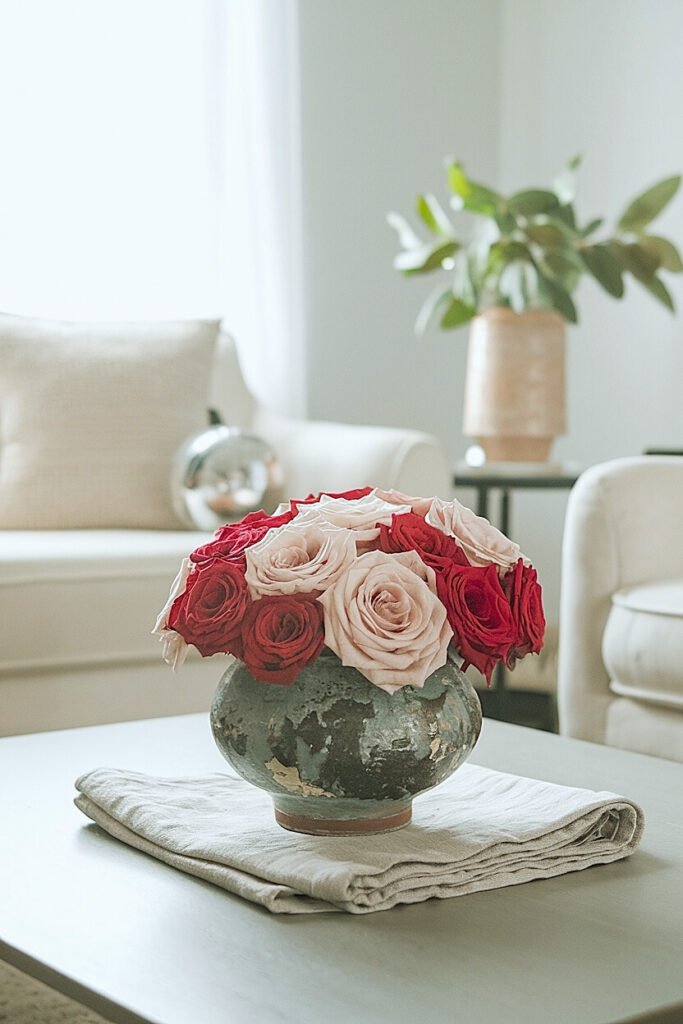
The best Valentine centerpieces I’ve ever created started with thrift store discoveries. A brass urn for six dollars. A vintage soup tureen for four. A ceramic pitcher with hand-painted roses for three. These vessels carry character that new containers simply don’t possess. Age adds patina. Previous lives add stories. Imperfections add authenticity. Mass-produced alternatives feel sterile by comparison.
Thrift store hunting requires different eyes than retail shopping. You’re not looking for perfect, you’re looking for potential. The tarnished silver bowl? Polish it or leave the tarnish for vintage charm. The vase with a chip? Position roses to hide the flaw. The pitcher missing its lid? Now it’s a vessel rather than a pitcher. Everything becomes raw material when budget necessity sharpens creativity.
Hunt in multiple stores across several trips. The perfect piece appears when you’re not desperately searching. Check housewares sections obviously, but also peek at holiday donations, Christmas items often include vases and containers. Estate sale weekends flood thrift stores with quality castoffs. January and June see donation spikes as people purge. The patient shopper finds treasures the rushed buyer misses.
When the right vessel appears, you’ll recognize it. Something unusual. Something with presence. Something that makes you stop scrolling through shelves. Buy it regardless of immediate plans, great containers emerge rarely. Back home, assess proportions. How many roses fit comfortably? What height stems work best? Build your arrangement to showcase the vessel as much as the flowers. The container becomes the statement; roses become its Valentine expression. For three to ten dollars, you’ll own a centerpiece foundation that outshines any fifty-dollar retail alternative. That’s budget decorating done right.
Conclusion
Budget Valentine decorating in small apartments isn’t about doing less, it’s about thinking differently. Every strategy in this guide comes from years of figuring out how to create beauty without money to throw at problems. Dividing single bunches into multiple arrangements. Discovering containers in kitchen cabinets. Stretching sparse roses with abundant greens. Mixing fresh and faux without anyone noticing. Making two stems feel like intentional minimalism. Repurposing everyday items as bases and vessels.
These approaches don’t just save money, they often produce better results than expensive alternatives. Constraints breed creativity. Limitations demand innovation. The centerpiece you puzzle together from thrift store finds and grocery store roses carries more personality than any premade arrangement from a fancy florist. Your apartment deserves Valentine romance at any budget level. The roses don’t know what you paid for them, and neither does anyone admiring your table. What they see is beauty, creativity, and care, none of which require wealth to achieve.
This website contains affiliate links, and some products are gifted by the brand to test. As an Amazon Associate, I earn from qualified purchases. Some of the content on this website was researched and created with the assistance of AI technology.