This website contains affiliate links, and some products are gifted by the brand to test. As an Amazon Associate, I earn from qualified purchases. Some of the content on this website was researched and created with the assistance of AI technology.
Key Takeaways
- One bouquet splits strategically into two coordinated arrangements for balanced table decoration
- Container choice determines success more than flower quantity when working with limited roses
- Corner cluster arrangements concentrate impact while preserving functional table space
- Individual place-setting posies create personalized romance from shared bouquet resources
- Chair tiebacks extend Valentine decorating beyond the table surface using the same bouquet
- Height control matters most for intimate dining, keep arrangements under six inches
Styling small dining table valentine decor using one rose bouquet transforms budget constraints into creative opportunities. I used to believe romantic tablescapes required multiple bouquets, elaborate vessels, and florist-level abundance. Then reality intervened, apartment budgets, grocery store purchases, tables barely big enough for two plates. The discovery that one bouquet could comprehensively decorate a small dining table changed everything about my approach to Valentine decorating.
The single-bouquet constraint actually produces better results than abundance in small dining settings. Forced limitation prevents the overcrowding that makes tight tables feel cluttered. One bouquet, thoughtfully distributed, creates coordinated elegance impossible when you’re tempted to add more and more. These techniques emerged from years of making one grocery store purchase stretch across entire Valentine dinner setups. Every approach assumes you’re working with a standard dozen roses plus whatever greenery the bouquet includes. That’s enough. More than enough, actually, when you know what to do with it.
| Placement Zone (Small Table Friendly) | How to Split One Valentine Rose Bouquet | Best Non-Glass Containers | Why It Works |
|---|---|---|---|
| Center (single low piece) classic clean |
Use 80–100% stems in one low, tight cluster | Wide ceramic crock • stoneware mug | Best Full look, low height, simple dining flow |
| Split center (two small pieces) balanced |
Split stems 50/50 into two low clusters | Two matching crocks • two enamel cups | Best Saves space and reduces bumping on tiny tables |
| Runner line (3–5 mini cups) repeat minimal |
1–2 stems per cup; distribute evenly | Small ceramic bud cups • enamel cups | Good Low footprint, keeps plates comfortable, looks styled |
| Table + sideboard two zones |
90% stems on table, 10% as nearby accent | Matching ceramic mug • small crock | Good Makes one bouquet feel bigger without crowding table |
Containers: wide ceramic crock, stoneware mug
Why: Best full look, low height, easy dining
Containers: two matching crocks or enamel cups
Why: Best less bumping, more eating space
Containers: small ceramic bud cups, enamel cups
Why: Good repeats color without clutter
How to Split One Valentine Rose Bouquet into Two Low Table Pieces
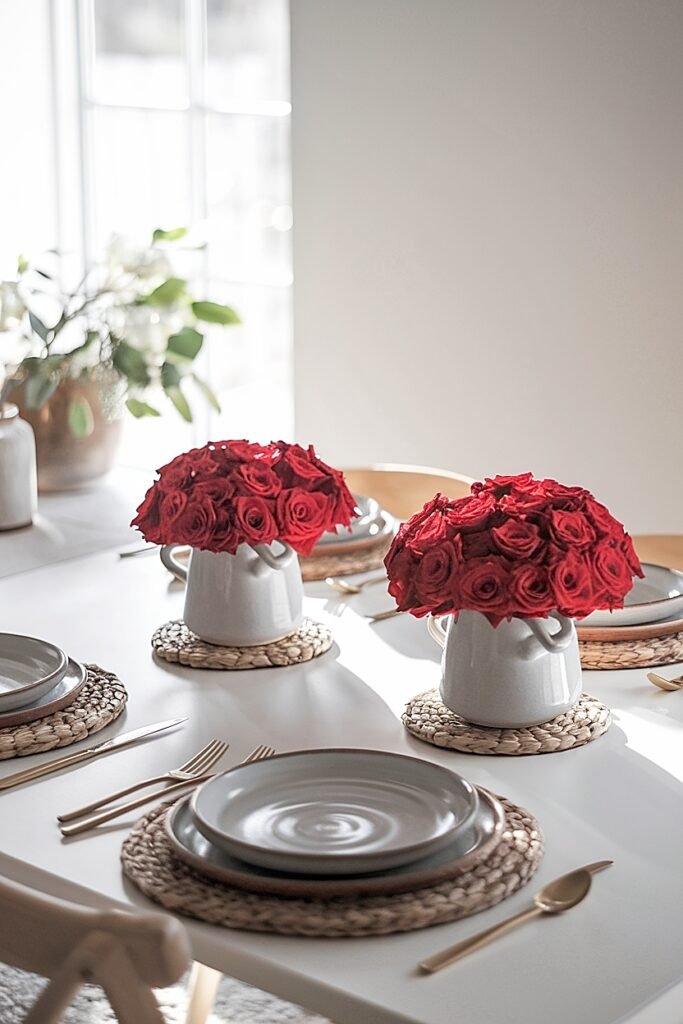
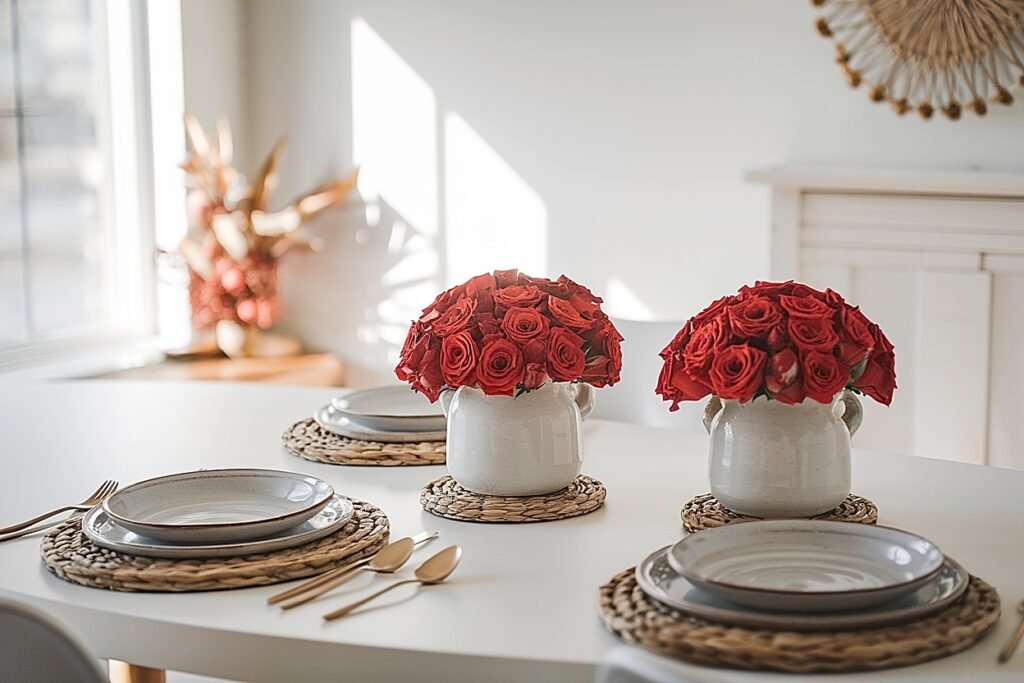
Dividing a single bouquet creates balance impossible with one central arrangement. Two matching pieces at opposite table ends frame your dining experience, establish visual symmetry, and leave the center clear for serving, reaching across, and the hand-holding that Valentine dinners deserve. The split approach doubles your decorating presence without doubling your flower investment.
Most people never consider division because the bouquet arrives as one unit. Breaking that unity feels counterintuitive. But symmetry in dining decoration creates formal elegance, and symmetry requires pairs.
Unwrap your bouquet completely and lay everything out. Separate roses from greenery and filler. Count your roses, probably ten to twelve. Divide evenly: six roses per arrangement for a dozen, five for a ten-stem bunch. Split greenery similarly between both groupings. Now you have raw materials for two coordinated pieces rather than one.
Cut stems for your first arrangement to seven inches. Cut the second arrangement’s stems identically, consistency matters for matched pairs. Use identical or very similar vessels for both arrangements. Build each piece using the same technique: greenery first as foundation, roses added in matching patterns. Position completed arrangements at opposite table ends, equidistant from center. The matched pair creates restaurant-quality presentation from grocery store materials. For more approaches to small table arrangements, explore these low-profile Valentine rose centerpieces for small dining tables that complement single-bouquet strategies beautifully. Know someone planning their Valentine dinner? Share this post with them!
Continue reading to discover which containers maximize single-bouquet impact.
What Are the Best Valentine Containers When You Only Have One Rose Bouquet?
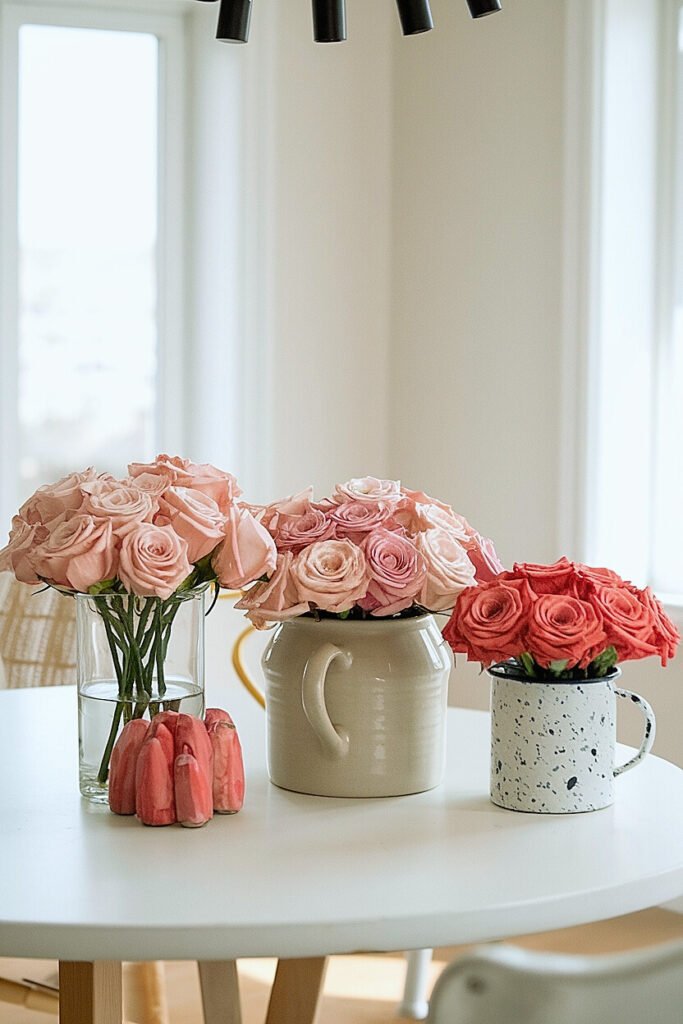
Container selection becomes critical when flowers are limited. The right vessel makes six roses look abundant. The wrong vessel makes twelve roses look sparse. When you’re stretching one bouquet across an entire dining setup, every container choice directly impacts perceived fullness.
These five options consistently deliver impressive results from modest flower counts.
1. Narrow Bud Vase Clusters
Group three to five slender bud vases together, placing one or two roses in each. The cluster approach creates compound presence while each individual vase requires minimal stems. Varying vase heights within the group adds dimension. The roses appear more numerous because they occupy more visual territory spread across multiple vessels rather than concentrated in one.
2. Wide Shallow Bowls
Low, wide bowls encourage horizontal spreading rather than vertical building. Roses naturally fan outward to fill the width, creating coverage that looks lush from limited stems. Cut roses short, five inches or less, and let heads rest near the bowl’s rim. Six roses in a shallow bowl appears fuller than twelve in a tall narrow vase.
3. Vintage Teacups and Sugar Bowls
Small vintage vessels suit small rose allocations perfectly. A teacup holding two roses looks intentionally styled rather than accidentally sparse. Group several teacups together, each with minimal stems, for collected charm. Thrift stores supply these vessels for under two dollars each.
4. Square or Rectangular Containers
Angular vessels create modern aesthetics that suit minimalist rose arrangements. The geometric structure provides visual interest that round vases lack, compensating for fewer flowers. Roses arranged in grid patterns within square containers look deliberately architectural rather than accidentally sparse.
5. Mercury Glass Votives
Small mercury glass vessels, originally designed for candles, become glamorous bud vases. Their reflective surface multiplies the roses visually, creating sparkle and apparent abundance. Group several votives, each with single stems, for compound impact. The reflective quality adds perceived value to modest arrangements.
Read on for corner clustering techniques that maximize impact while preserving table function.
How to Build a Valentine “Corner Cluster” Centerpiece Using One Bouquet
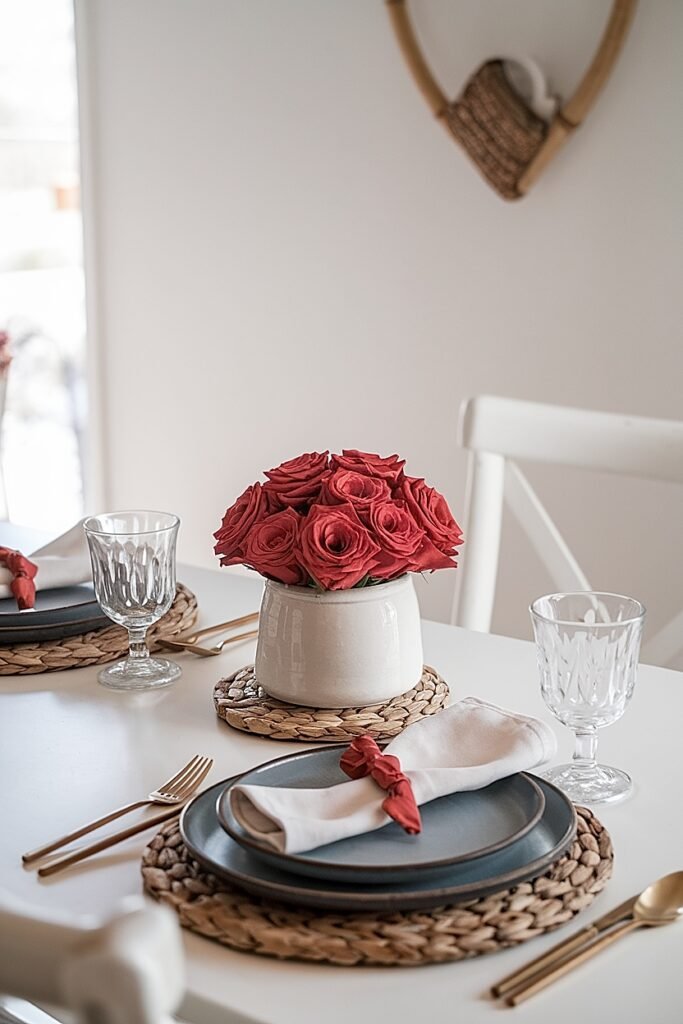
Corner clustering concentrates your entire bouquet investment in one table zone rather than spreading it thin across the center. This asymmetrical approach looks deliberately styled while leaving maximum functional space for actual dining. I discovered corner clustering when traditional center arrangements kept interfering with serving dishes at small table dinners.
The technique treats one corner as a dedicated decorating zone while the rest of the table remains clear for dining function.
Choose the corner furthest from your primary seating positions, you want to look toward the roses, not around them. Position your vessel at this corner, angled to face diners. Build your full bouquet arrangement here: all twelve roses, all included greenery, any additional elements you’re incorporating. The concentrated placement creates a lush statement that sparse center distribution couldn’t achieve.
Add complementary elements around your main vessel within the corner zone: two votive candles, scattered petals, a small meaningful object. The corner becomes a complete vignette while the remaining three-quarters of your table stays functional. Plates pass easily. Serving dishes fit comfortably. Conversation flows unobstructed. The asymmetry actually feels more sophisticated than traditional center placement once you experience it.
The following section explores individual place-setting decorations using your single bouquet.
Ways to Style Valentine Rose Place-Setting Mini Posies Using One Bouquet
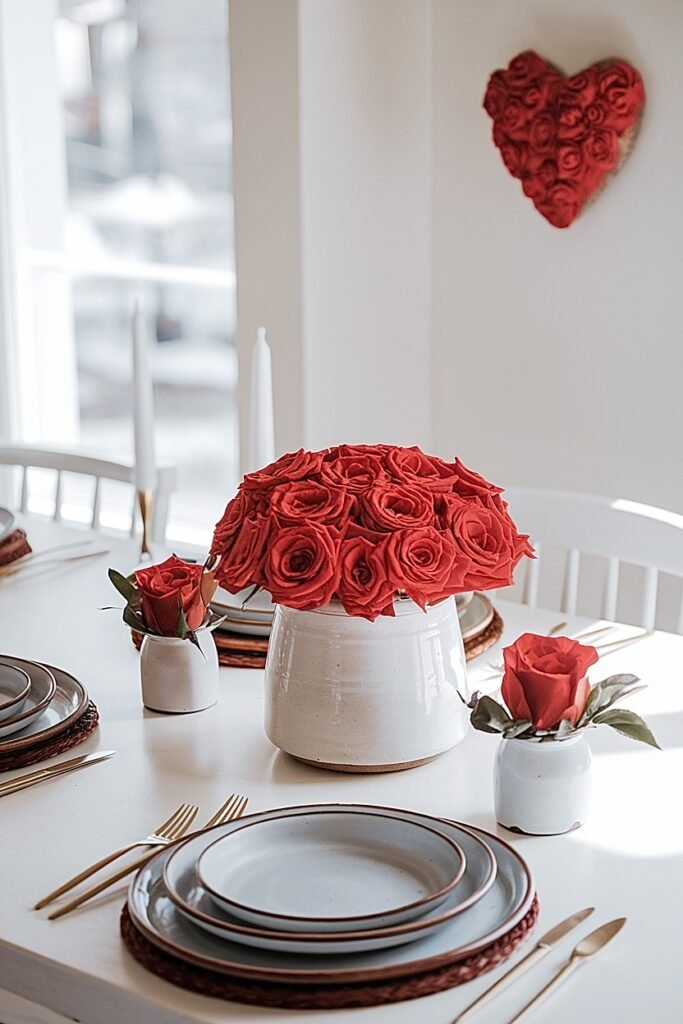
Mini posies at each place setting personalize Valentine dinner in ways centerpieces can’t. Each diner receives their own roses, a romantic gesture that transforms shared flowers into individual gifts. The approach works beautifully when you’re hosting two, feasibly when hosting four.
Dividing one bouquet into place-setting posies requires efficient stem allocation and tiny vessels that suit minimal flower counts.
1. The Two-Rose Personal Bouquet
Allocate two roses per place setting, reserving remaining stems for a modest center accent. Wrap each two-rose pair with a sprig of greenery, tie with ribbon, and lay across folded napkins. The wrapped presentation suggests flowers just given rather than merely decorating. Each diner’s personal bouquet becomes a take-home gift after dinner concludes.
2. The Single-Stem Specimen
Give each place setting exactly one perfect rose in a tiny individual vessel, a shot glass, cordial glass, or mini bud vase. The singular presentation emphasizes each bloom’s beauty rather than hiding it in crowds. Reserve remaining bouquet stems for one modest central arrangement. The combination of individual specimens plus central accent fully decorates your table from one purchase.
3. The Napkin Ring Tuck
Thread one short-stemmed rose through each napkin ring, stem tucked inside the rolled napkin. No vessel required, the napkin itself holds the bloom. This approach reserves most of your bouquet for centerpiece use while still giving each place setting floral presence. The unexpected placement delights when diners unfold napkins.
Continue reading for techniques that build impactful low centerpieces from single bouquets.
How to Make a Valentine Low Centerpiece Using One Bouquet and One Container
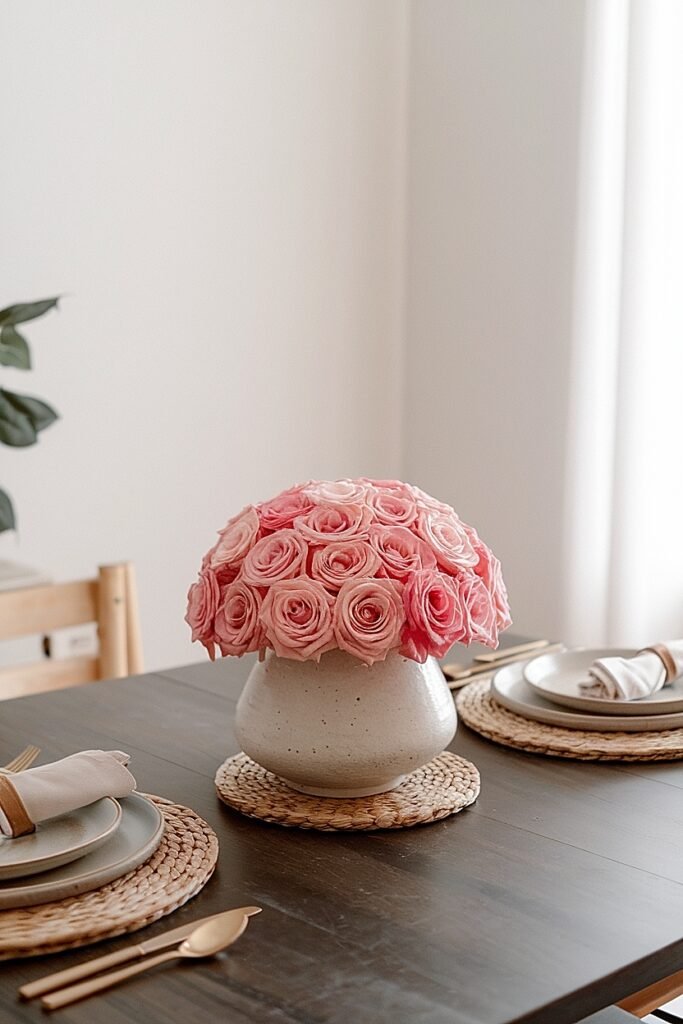
One bouquet in one container, the simplest possible approach, still requires technique to achieve low profile and visual fullness. Height matters critically on small dining tables. Keep total arrangement height under six inches to preserve conversation sightlines. This constraint shapes every cutting and positioning decision.
Low arrangements demand short stems, which means rose heads cluster closely rather than spreading vertically.
Select a container no taller than three inches. Fill with soaked floral foam or create a tape grid across the opening for stem support. Cut your first rose to approximately three inches below the bloom, this becomes your tallest point when inserted. Build outward from this center rose, cutting each subsequent stem slightly shorter so heads angle outward rather than up.
Work in circles around your center bloom, positioning roses so heads face outward toward table edges. Tuck greenery around the base, filling gaps and softening container edges. The finished dome should measure no more than six inches from table surface to highest bloom. All twelve roses, arranged this way, create lush coverage that stays below the conversation line. Eyes meet freely above the arrangement. Voices carry unobstructed.
The next section extends decorating beyond the table surface itself.
Ideas for a Valentine “Chair Tieback Rose” Using One Bouquet
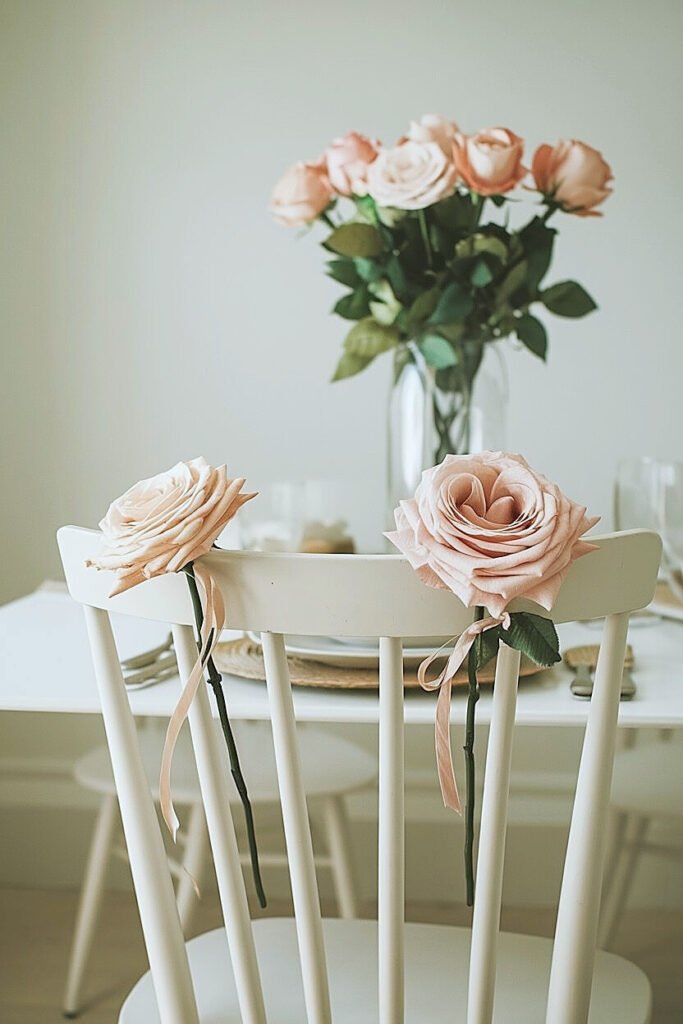
Chair decorations extend Valentine ambiance beyond tabletop limits while utilizing roses that might otherwise crowd small table surfaces. Allocating two to four roses for chair accents actually improves your centerpiece by preventing overcrowding while adding unexpected romantic touches to seating.
These three approaches transform ordinary chairs into part of your Valentine décor scheme.
1. The Ribbon-Tied Swag
Tie two roses together with coordinating ribbon, adding one greenery sprig. Attach this mini swag to chair backs using ribbon loops, positioning so the roses hang at upper-back height. The swag visible behind seated diners adds romantic framing to the dinner scene. Reserve remaining bouquet roses for your table arrangement.
2. The Single-Rose Statement
One perfect rose attached to each chair back creates understated elegance. Wire or ribbon-secure the stem to chair frames, bloom facing outward. The singular placement feels deliberate and sophisticated. Four roses for four chairs leaves eight roses for tabletop use, plenty for impressive arrangements.
3. The Tucked Napkin-Chair Combo
Tuck one rose through each chair’s existing slats or tie points, stem inserted so bloom emerges naturally. No additional securing required for many chair styles. The casual tuck looks effortlessly romantic. Combine with place-setting elements for comprehensive single-bouquet dining decoration.
Below, learn height control techniques essential for intimate dining.
Ways to Keep Valentine One-Bouquet Decor Low Enough for Easy Conversation
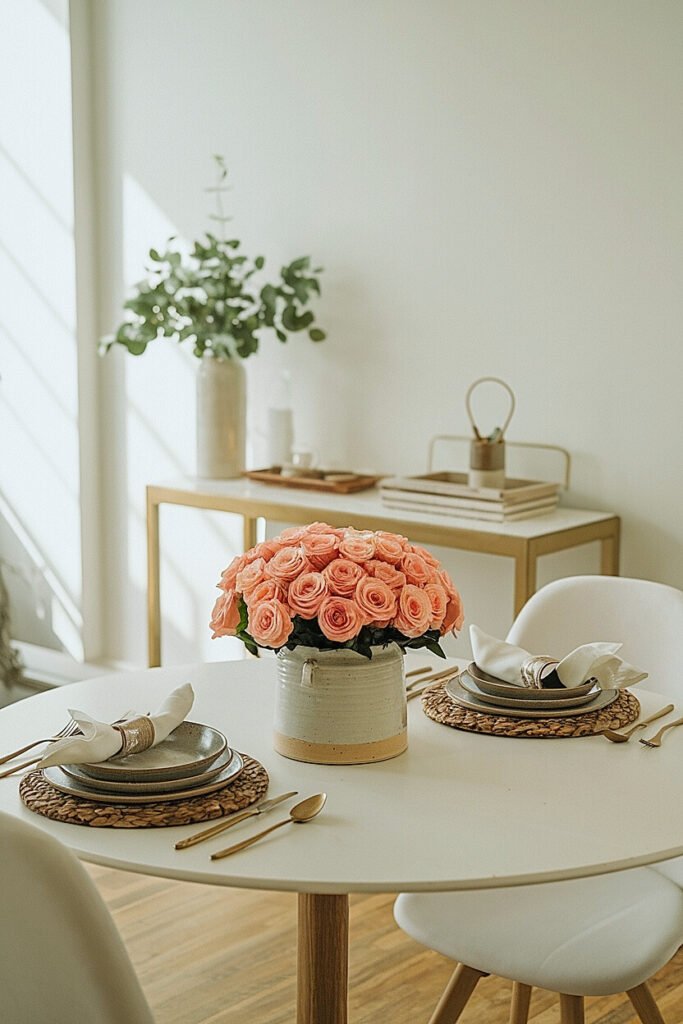
Height ruins more Valentine dinners than sparse flowers ever do. Tall arrangements create barriers that force diners to lean around, crane over, or simply accept blocked sightlines. When you’re working with one bouquet, no extras to redistribute, getting height right matters critically.
1. The Ruthless Cut Method
Cut every stem to six inches maximum before arranging. This non-negotiable limit ensures nothing towers regardless of arrangement style. The dramatic shortening feels wasteful initially, you’re discarding stem length you paid for. But those extra inches would only obstruct conversation. Embrace the short cut. Your dinner experience improves exponentially.
2. The Horizontal Spread Technique
Arrange roses to spread outward rather than upward. Use wide, low containers that encourage horizontal fanning. Position stems at angles, heads facing table edges rather than ceiling. Build width instead of height. The same twelve roses occupy more visual territory horizontally while staying completely below conversation level.
3. The Floating Head Approach
Cut rose heads with minimal stem, just enough to keep blooms upright, and float in shallow water-filled vessels. Zero height beyond the bloom itself, typically three inches maximum. The extreme low profile creates lush coverage at tabletop level where it enhances rather than obstructs dining. Add floating candles between rose heads for evening sparkle.
Conclusion
One bouquet decorates a small Valentine dining table completely when you understand distribution, container selection, and height control. The techniques throughout this guide, splitting for symmetry, corner clustering for impact, place-setting posies for personalization, chair accents for extended ambiance, all extract maximum romance from minimum roses.
These approaches developed from real Valentine dinners on real tight budgets at real small tables. The discovery that constraints improve rather than limit creative outcomes. The realization that one thoughtfully arranged bouquet outperforms three carelessly placed ones. Your small dining table deserves Valentine beauty that enhances the evening’s true purpose: connecting with someone you love across an intimate shared space.
This website contains affiliate links, and some products are gifted by the brand to test. As an Amazon Associate, I earn from qualified purchases. Some of the content on this website was researched and created with the assistance of AI technology.