This website contains affiliate links, and some products are gifted by the brand to test. As an Amazon Associate, I earn from qualified purchases. Some of the content on this website was researched and created with the assistance of AI technology.
Key Takeaways
- Low containers under 6 inches tall preserve conversation sightlines across dining tables
- Kitchen island centerpieces need maximum 8-inch width to preserve prep space
- Entryway console arrangements should use shallow bowls creating horizontal emphasis
- Bathroom counter centerpieces must occupy less than 25% of available surface area
- Sightline-safe flowers for rectangular tables include tulips, ranunculus, and low roses
- Nightstand arrangements need compact 4–6-inch vessels maintaining bedside functionality
- Buffet centerpieces require back-positioning or end-placement to prioritize food service
- Outdoor patio containers need weighted bases resisting wind without tipping
Choosing the best spring flower centerpiece low container for serving surfaces means abandoning every instinct you have about creating “impressive” arrangements. I spent my first two years arranging flowers building tall, dramatic compositions that looked stunning in photos but functioned terribly in actual homes, blocking conversations, claiming excessive counter space, and generally annoying everyone who had to work around them. The turning point came during a dinner party when my sister-in-law politely asked if she could move my “beautiful centerpiece” so she could actually see the person across the table. Ouch.
Low containers solved problems I didn’t initially recognize I was creating. They preserve sightlines during conversations, claim minimal surface area on functional spaces like kitchen islands and bathroom counters, and create horizontal visual interest rather than competing for vertical attention. But “low container” encompasses massive variety, from ultra-shallow 2-inch saucers to substantial 6-inch compotes, and choosing appropriately for your specific serving surface determines whether your arrangement enhances or undermines the space’s functionality. Getting this right requires understanding how people actually use different surfaces, not just how pretty you can make flowers look.
Not sure what low container to use or where it should go? This guide makes it simple. Pick your surface, choose the right low container shape, grab a short list of Spring Flowers, and follow a quick placement rule so your centerpiece looks full—without taking over the space. Tap rows on mobile to expand.
Spring Flowers Low Container Guide for Serving Surfaces
Fast picks for low centerpieces that look full, stay out of the way, and work on real-life surfaces.
| Surface + Container | Spring Flowers | Build (3 steps) | Quick Rules |
|---|---|---|---|
Dining Table
Low bowl
|
Ranunculus
Anemones
Tulips (short)
|
|
|
Kitchen Island
Low compote
|
Anemones
Tulips (short)
Mini daffs
|
|
|
Coffee Table
Low tray
|
Ranunculus
Muscari
Mini tulips
|
|
|
Entry Console
Low bowl
|
Anemones
Ranunculus
Mini daffs
|
|
|
Kids + Pets
Heavy bowl
|
Ranunculus
Muscari
Short tulips
|
|
|
How to Style Spring Flowers in a Low Container for a Dining Table Centerpiece
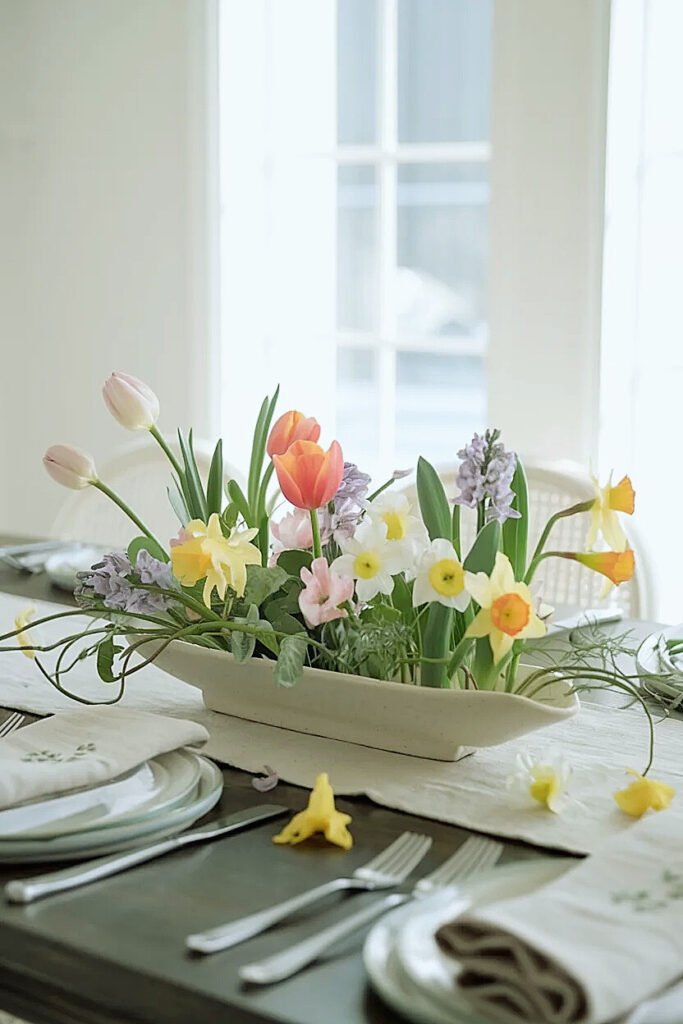
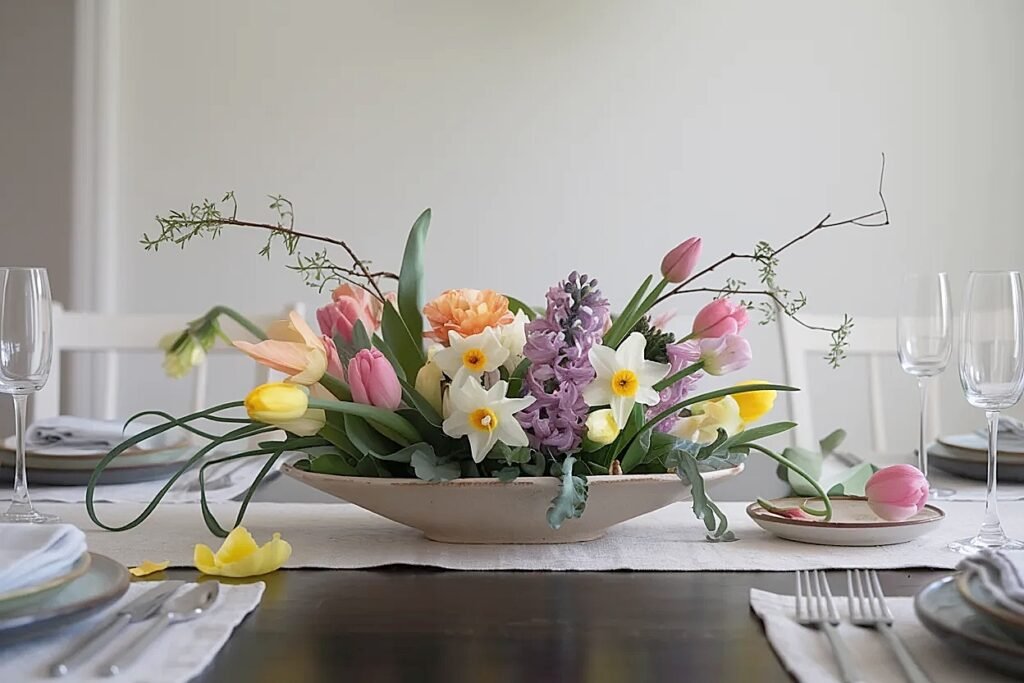
Dining table centerpieces live or die based on one criterion: do they obstruct conversation? I’ve created gorgeous arrangements that guests literally couldn’t see around, forcing people to lean sideways or crane their necks to make eye contact across the table. No amount of floral beauty compensates for that fundamental failure.
The maximum height for dining centerpieces is 12 inches total, that’s container plus stems plus blooms. Anything taller creates visual barriers during seated conversation. I learned this by actually sitting at my table during arrangement creation, checking sightlines from normal seating positions rather than standing and admiring from above where everything looks different.
Low bowls work brilliantly here, I favor wide shallow vessels between 10-14 inches diameter with 3-4 inch depths. The generous width creates substantial presence through horizontal spread rather than problematic vertical height. I fill these with spring flowers cut short, maybe 6-8 inches from stem base to bloom top, creating lush but low compositions.
The arrangement style matters too. I build outward from center, positioning stems at varying angles creating rounded dome shapes that look attractive from all viewing positions around the table. Dense packing prevents that “sparse” look while keeping everything comfortably under the sightline threshold. Floral foam secured to bowl bottom provides structure supporting angled stems, and considering all the variables involved in buffet and serving surface centerpiece planning, there are comprehensive strategies worth exploring, share this with anyone tackling spring flower arrangements!
The dining table principles establish sightline awareness as foundational, and the kitchen island options ahead address functional surfaces with different spatial demands.
What are the Best Low Containers for Spring Flowers on Kitchen Islands?
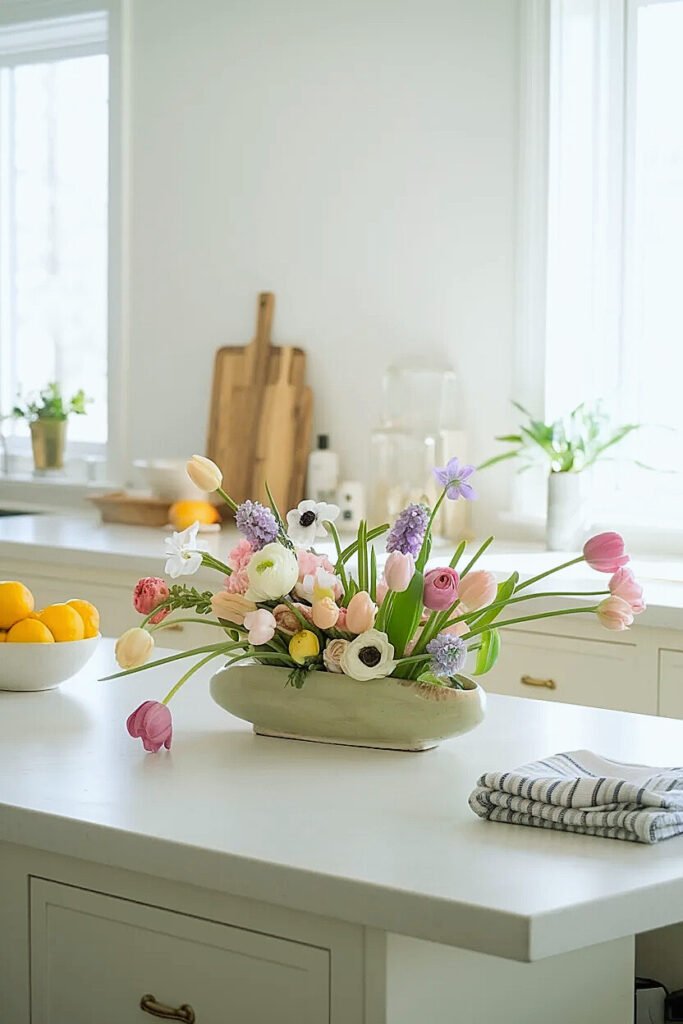
Kitchen islands serve as work surfaces first, decorative displays second, a hierarchy many arrangers forget when creating centerpieces that claim excessive space. I’ve positioned flowers on my island only to find myself shoving them aside repeatedly during meal prep, proving the arrangement failed regardless of beauty.
Maximum width for island centerpieces: 8 inches. Anything wider starts interfering with the island’s primary function as food preparation surface. The length can extend more generously if your island runs long, but width must stay disciplined.
1. Rectangular Ceramic Baker (12×6 inches, 3-inch depth)
The elongated form claims minimal width while the 12-inch length creates meaningful presence along island length. The ceramic weight provides stability resisting bumps from active cooking. Position lengthwise on island creating linear arrangement that doesn’t obstruct work zones. Fill with 10-12 short-stemmed daffodils or tulips. The neutral ceramic color works universally without competing with kitchen finishes.
2. Low Metal Trough (14×5 inches, 4-inch depth)
Modern metal creates contemporary aesthetic matching stainless appliances and fixtures. The ultra-narrow 5-inch width preserves maximum prep space while 14-inch length provides visual substance. The metal durability handles kitchen humidity and temperature fluctuations. Position with 8-10 ranunculus creating tight clusters. The reflective surface adds ambient light to work areas.
3. Shallow Terra Cotta Bowl (8-inch diameter, 3-inch depth)
The compact circular form suits smaller islands where linear vessels would overwhelm. Terra cotta brings warmth to kitchen environments while the porous material handles moisture well. The 8-inch diameter creates presence without domination. Fill with 6-8 anemones in mixed spring colors. The rustic material feels authentically kitchen-appropriate rather than importing formal dining aesthetics.
4. White Stoneware Compote (7-inch diameter, 5-inch total height)
The pedestal base elevates arrangement slightly while shallow bowl maintains low profile. White stoneware provides clean backdrop for colorful spring blooms. The compact 7-inch diameter suits islands with limited space. Position 5-7 hyacinths creating fragrant focal point. The elevated presentation creates interest through vessel form rather than requiring tall stems.
5. Concrete Geometric Bowl (10×6 inches, 3-inch depth)
Contemporary concrete creates industrial edge with substantial weight preventing shifts during active kitchen use. The geometric angular form adds modern sculptural interest. The narrow 6-inch width preserves work space. Fill with 8-10 white tulips creating clean sophisticated composition. The gray neutral complements any kitchen color scheme.
The island containers balance decoration with function, and the entryway console techniques ahead address surfaces prioritizing first impressions.
How to Build Spring Flowers in Low Bowls for Entryway Console Tables
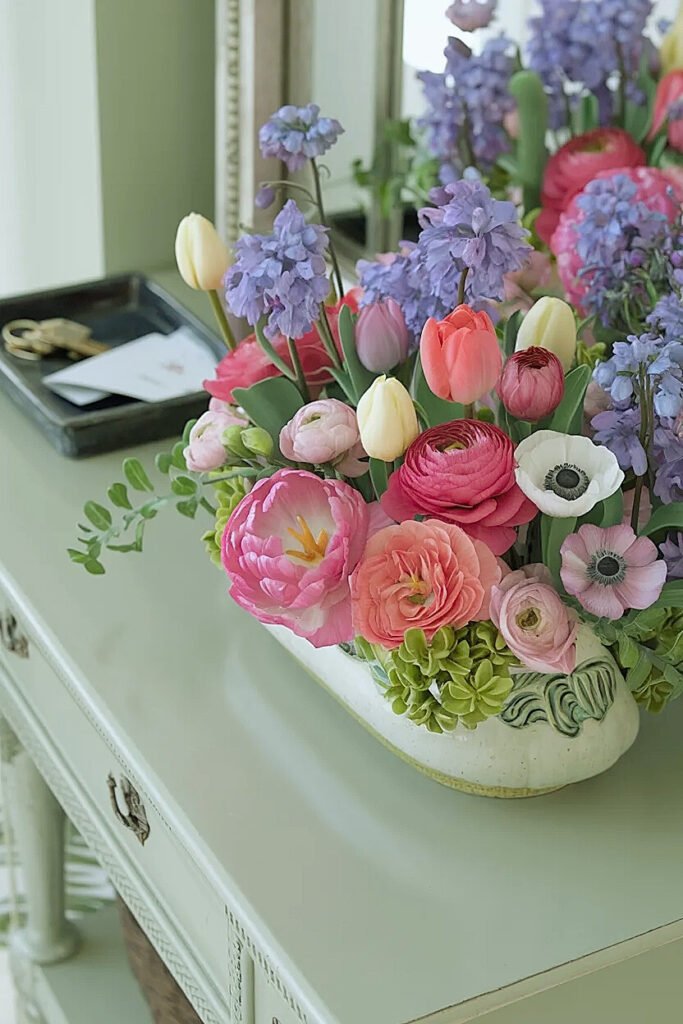
Entryway consoles create first impressions, the initial view guests see entering your home. These surfaces don’t serve meals or support work activities, giving you more creative freedom than functional spaces demand. But they still benefit from low arrangements creating welcoming horizontal emphasis rather than intimidating vertical drama.
I use entryway arrangements to establish home aesthetic immediately. The flowers, container, and styling communicate your design sensibility before guests penetrate further into living spaces. This makes container choice particularly important, it’s not just holding flowers, it’s making design statements.
Wide shallow bowls work beautifully here, capitalizing on the freedom from sightline concerns that dining tables impose. I use 14-16 inch diameter bowls with 4-5 inch depths, creating substantial presence appropriate for greeting spaces. The generous size signals welcome and abundance without demanding the vertical height that can feel imposing in entry areas.
I build these arrangements with more dramatic flair than functional spaces allow. Asymmetric compositions, trailing elements that spill over bowl edges, and generous stem counts creating lush abundance, all techniques that might overwhelm a dining table work perfectly in entryways where nobody’s trying to eat dinner or prep food around them.
The key: positioning the bowl toward the console’s back edge rather than front-center. This leaves front surface clear for keys, mail, and the random items that accumulate on entry surfaces despite best intentions. The back positioning also creates depth, making the arrangement feel integrated with the wall behind rather than floating awkwardly in space.
The entryway approach prioritizes visual impact over function, and the bathroom counter strategies ahead return to practical space preservation.
Ways to Make Spring Flowers Centerpieces for Bathroom Counters Without Blocking Space
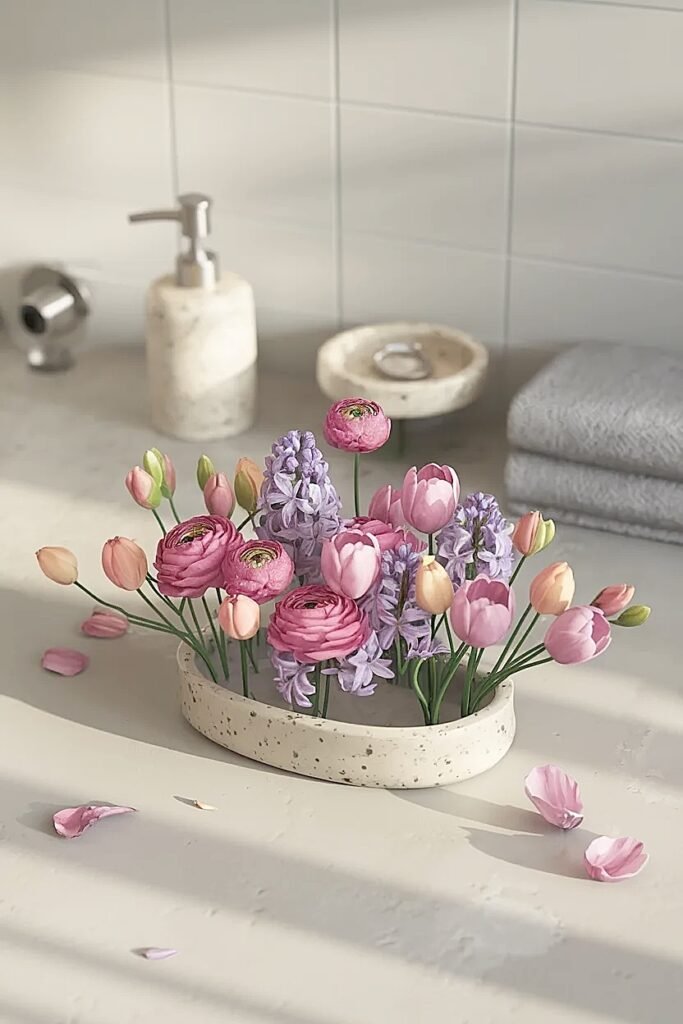
Bathroom counters present extreme space constraints, every square inch matters for toiletries, cosmetics, and daily routines. Flowers must enhance without ever interfering, which means ultra-compact vessels and strategic corner positioning.
Maximum footprint for bathroom arrangements: 6 inches diameter. Seriously. Anything larger starts competing with toothbrushes and hand soap for precious counter real estate.
1. Corner-Position Single Bud Vase
Place one small 3-inch bud vase in counter corner holding single perfect tulip or hyacinth. The corner location claims otherwise underutilized space while leaving main counter expanse clear. The single stem creates focused elegance rather than attempting abundance impossible in tight quarters. Rotate stem color weekly maintaining freshness without complicated arrangements.
2. Ultra-Shallow Dish with Floating Blooms
Use 4-inch diameter shallow dish (1-inch depth) with 2-3 flower heads floating, stems removed entirely. The minimal depth occupies negligible vertical space while floating blooms create spa-like aesthetic. Position near faucet where water access makes daily changes easy. Choose fragrant flowers like hyacinths adding sensory dimension.
3. Dual Mini Vessels on Opposite Corners
Position matching 3-inch vessels in opposite corners each holding 2-3 short stems, creating balanced presence without claiming central space. The dual placement distributes visual weight while corner positions preserve functional counter area. Choose coordinating spring colors creating color conversation across the space.
4. Back-Edge Linear Mini Trough
Use 8×3 inch narrow trough positioned along counter’s back edge against mirror, creating linear arrangement visible in reflection while occupying minimal depth. The back positioning leaves front counter completely clear. Fill with 4-5 ranunculus. The mirror reflection doubles perceived fullness while actual footprint stays minimal.
5. Elevated Shelf Installation Above Counter
Mount small floating shelf above counter holding 5-inch bowl with spring arrangement, creating floral presence without any counter occupation. The overhead position maintains full counter functionality while flowers enhance bathroom aesthetic. Choose moisture-tolerant flowers handling bathroom humidity.
The bathroom solutions maximize tight spaces, and the sightline-safe flower guidance ahead identifies specific blooms working best in low arrangements.
What are “Sightline-Safe” Spring Flowers for Low Centerpieces on Rectangular Tables?
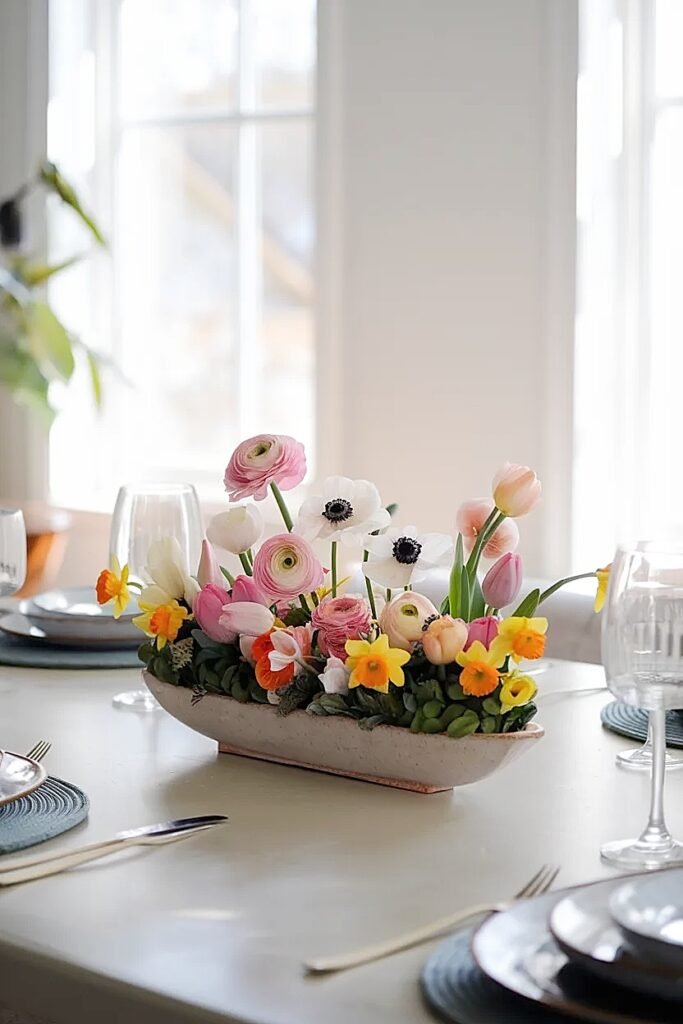
Not all spring flowers work equally well in low arrangements. Some naturally grow tall with blooms atop long rigid stems, fighting your efforts to keep them low. Others possess flexible stems and compact bloom structures perfect for low-profile compositions.
Sightline-safe means flowers that look beautiful and natural when cut to 6-8 inches total height, maintaining proper proportions rather than looking awkwardly stunted.
1. Tulips for Versatile Low Arrangements
Tulips excel in low containers through flexible stems that curve gracefully rather than standing rigidly upright. Cut to 6-8 inches, they create organic flowing compositions. The substantial blooms provide visual impact even at short heights. The wide color range lets you match any décor. Position 9-12 stems in low bowls creating lush rounded shapes perfect for rectangular table sightlines.
2. Ranunculus for Layered Petal Luxury
Ranunculus’ densely layered petals create substantial visual presence even when stems stay short. The blooms measure 2-3 inches diameter, generous enough to anchor low arrangements effectively. The variety of spring colors from white through coral to burgundy provides design flexibility. Use 7-10 stems cut to 5-7 inches creating romantic low compositions maintaining perfect sightlines.
3. Garden Roses for Compact Elegance
Modern spray roses and garden varieties produce compact blooms on flexible stems ideal for low work. Unlike long-stemmed florist roses that look wrong when cut short, garden roses maintain natural proportions at 6-8 inch heights. The full blooms create romantic presence. Choose fragrant varieties adding sensory dimension. Position 5-8 stems creating textured low arrangements.
The flower selection ensures your low arrangements look intentional rather than compromised, and the nightstand ideas ahead address bedroom-specific requirements.
Ideas for Spring Flowers in Low Containers on Nightstands for a Calm Bedroom
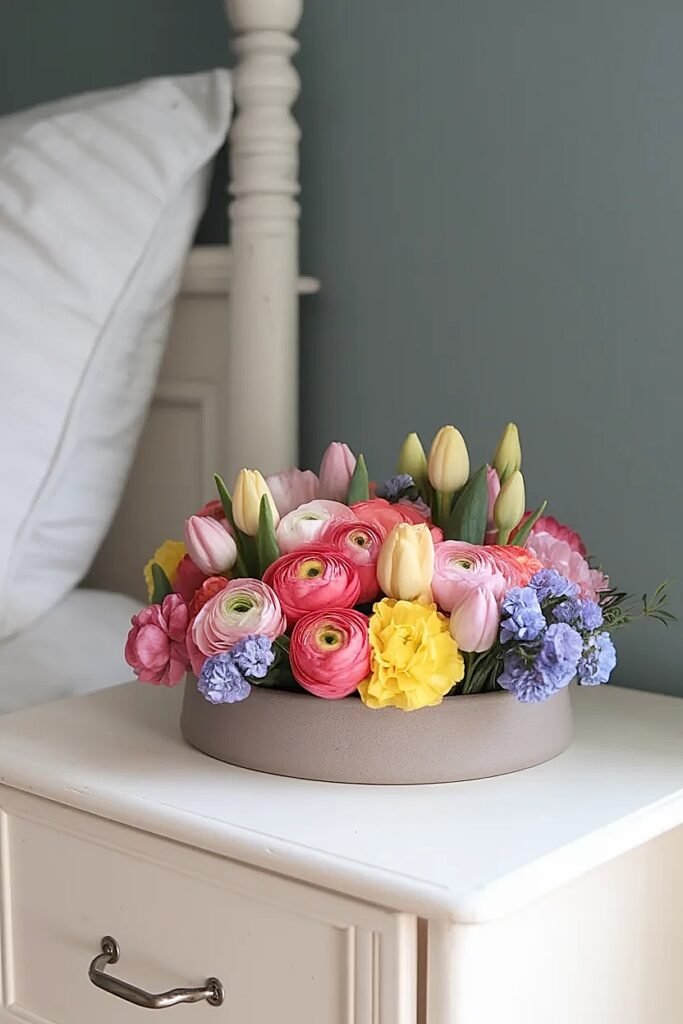
Nightstands serve intimate personal spaces where flowers should soothe rather than stimulate. The arrangements need staying compact enough to leave room for lamps, books, water glasses, and phones while creating calming presence supporting restful sleep.
I’ve found bedroom flowers require different color and fragrance considerations than public spaces, what energizes a dining room might disrupt bedroom tranquility.
1. Single-Color Compact Bowl for Visual Calm
Use 5-inch diameter bowl with 4-6 stems of one single tulip color creating monochromatic serenity rather than multi-color stimulation. The unified color creates peaceful visual simplicity appropriate for sleep spaces. Choose soft colors like blush pink, cream, or pale lavender promoting relaxation. Position on nightstand corner preserving surface for functional items. The simplicity supports bedroom’s restful purpose rather than demanding visual attention.
2. Fragrant Hyacinth Cluster for Aromatherapy
Position 4-inch bowl with 3-4 fragrant hyacinth stems creating gentle natural aromatherapy. The compact blooms suit small nightstands while fragrance adds sensory dimension supporting relaxation. Avoid overly strong scents that might disrupt sleep, white or pale pink hyacinths tend toward gentler fragrance than deep purples. The natural scent creates healthier alternative to synthetic air fresheners.
3. Trailing Jasmine Vine for Romantic Drape
Use 6-inch bowl positioned at nightstand edge with jasmine vine trailing over side, creating romantic cascading effect. The trailing growth adds movement without height. The delicate white blooms create elegant simplicity. The subtle fragrance promotes relaxation. The unconventional cascading form adds bedroom-appropriate romanticism impossible with upright arrangements.
4. Miniature Daffodil Cluster for Cheerful Awakening
Position 4-inch vessel with 5-6 miniature daffodils creating cheerful optimism for morning awakening. The compact blooms suit nightstand scale while sunny yellow energizes morning routines without overwhelming evening relaxation. The smaller scale daffodil varieties work better in intimate bedroom contexts than standard large-bloom types.
5. Low Succulent and Flower Combination
Create 5-inch shallow bowl with 3-4 small succulent plants surrounding 2-3 spring flower stems, building living arrangement requiring minimal maintenance. The succulents provide permanent structure while rotating flowers add seasonal interest. The low-maintenance nature suits bedrooms where daily flower care might feel burdensome. The mixed planting creates textural interest within compact scale.
The nightstand approaches prioritize tranquility over impact, and the buffet styling ahead returns to entertaining contexts.
How to Style Spring Flowers in Low Containers for Buffets and Sideboards During Brunch
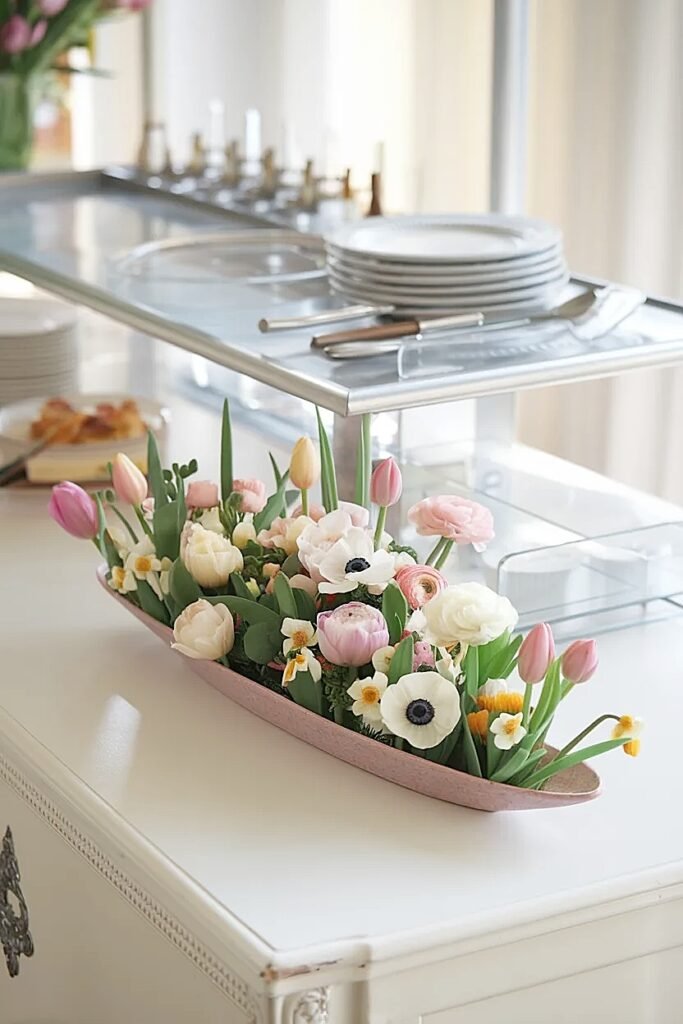
Buffets demand flowers enhancing food presentation without ever competing for space or attention. The food must remain the star, with florals playing supporting roles through strategic positioning and disciplined scale.
I position buffet flowers exclusively at table ends or along back edges, never center positions that would interfere with serving dishes. This creates framing effect without obstruction.
Low troughs work brilliantly here, running parallel to buffet length creating linear emphasis. I use 18×6 inch vessels with 10-12 stems creating substantial presence through length while the narrow 6-inch width preserves depth for serving platters.
The color choices matter for buffets more than other contexts. I coordinate floral colors with the food being served, soft peach tulips complementing salmon dishes, yellow ranunculus echoing lemon desserts. This creates cohesive presentation where flowers and food feel intentionally paired rather than accidentally adjacent.
Height discipline becomes critical, I keep buffet arrangements under 5 inches total to prevent any sightline obstruction of food displays. People need to identify dishes easily, and tall centerpieces create barriers preventing clear food visibility.
The buffet styling prioritizes food service, and the outdoor patio concepts ahead address weather-resistant arrangements.
Ideas for Spring Flowers in Low Containers for Outdoor Patio Dining Tables
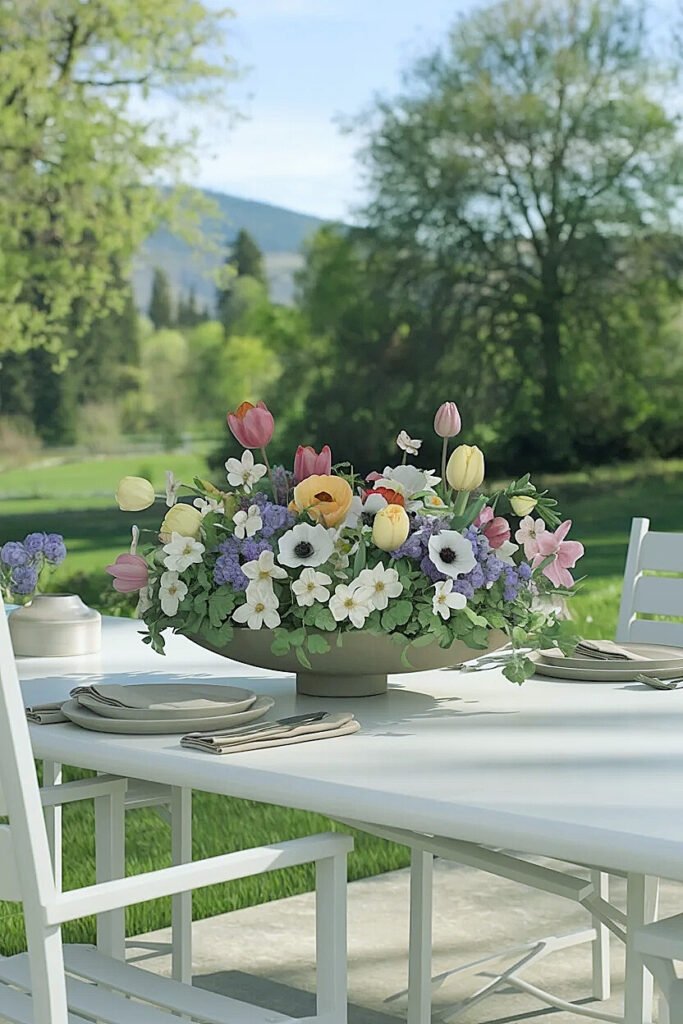
Outdoor arrangements face environmental challenges indoor flowers never encounter, wind, sun exposure, temperature fluctuations, and insects all threaten arrangements that would thrive indoors.
Container selection becomes crucial outdoors. I use only weighted vessels, minimum 5 pounds empty, preventing wind disasters.
1. Weighted Concrete Bowl with Wind-Resistant Flowers
Use substantial 10-inch concrete bowl (8-10 pounds) with low-growing flowers like ranunculus or anemones that resist wind damage better than tall tulips. The concrete weight prevents tipping during breezes while low flower profile reduces wind resistance. Position 12-15 stems creating dense wind-resistant mass. The neutral concrete works with any outdoor furniture style. The substantial construction handles outdoor temperature extremes without cracking.
2. Terra Cotta Bowl with Drainage for Weather Changes
Position 12-inch terra cotta bowl with drainage holes accommodating sudden rain without drowning roots if using potted spring bulbs. The porous material handles moisture fluctuations. The natural material feels garden-appropriate. Plant 6-8 tulip bulbs creating living arrangement lasting weeks. The drainage prevents water accumulation from unexpected weather. The earthy aesthetic suits outdoor settings perfectly.
3. Low Metal Trough with Anchored Foam Base
Use 16×8 inch metal trough with floral foam secured heavily to bottom using waterproof tape, creating stable base resisting wind and table bumps. Fill with 12-15 sturdy-stemmed daffodils or tulips. The metal durability handles outdoor conditions while anchored foam prevents arrangement shifts. Position lengthwise on rectangular patio tables. The modern metal suits contemporary outdoor furniture.
Conclusion
Choosing low containers for spring flower centerpieces on serving surfaces requires prioritizing function over pure aesthetics, a discipline that initially feels restrictive but ultimately produces better results. Start with height restrictions: 12 inches maximum for dining tables, 5 inches for buffets, 6 inches for bathroom counters. Match container width to surface function: 8 inches maximum for kitchen islands, 6 inches for nightstands. Position strategically: back-edge or corners on functional surfaces, more centered on purely decorative consoles. Choose flowers naturally suited to low arrangements: tulips, ranunculus, and compact roses rather than fighting tall-growing varieties. These practical guidelines create centerpieces enhancing spaces rather than complicating them, which is precisely what successful flower arranging should achieve.
This website contains affiliate links, and some products are gifted by the brand to test. As an Amazon Associate, I earn from qualified purchases. Some of the content on this website was researched and created with the assistance of AI technology.