This website contains affiliate links, and some products are gifted by the brand to test. As an Amazon Associate, I earn from qualified purchases. Some of the content on this website was researched and created with the assistance of AI technology.
Key Takeaways
- Wind stability requires weighted baskets and low-profile arrangements that won’t topple during outdoor entertaining
- Small balcony tables demand compact basket sizes that maximize beauty without overwhelming limited surface area
- Poolside centerpieces need waterproof materials and chlorine-resistant placement strategies
- Outdoor buffet styling must prioritize food access while baskets provide decorative backdrop elements
- Natural materials and earth-toned baskets harmonize with outdoor environments better than painted or artificial options
Styling spring tulips basket centerpieces for outside tables presents challenges that indoor arrangements never face, wind gusts that topple vases, direct sunlight that wilts blooms prematurely, and unpredictable weather that can ruin hours of careful work. I’ve learned these lessons through some spectacular outdoor centerpiece failures, including the time a sudden breeze sent my beautiful tulip basket rolling across the patio mid-dinner party. That moment taught me that outdoor floral styling demands completely different strategies than indoor decorating.
The basket format actually solves several outdoor problems simultaneously. Their wider bases provide inherent stability that tall vases lack, their natural materials harmonize with outdoor settings more authentically than formal crystal or ceramic, and their rustic aesthetic feels appropriately casual for al fresco dining. But baskets introduce their own complications, they dry out faster in sun and wind, they can harbor insects if not managed properly, and their organic materials sometimes degrade when exposed to moisture. Getting outdoor tulip basket centerpieces right means respecting both the flowers’ needs and the environment’s demands while creating something that still looks intentionally beautiful rather than just functional.
This table makes Spring Tulips baskets easy to plan fast. Pick your outside table type, match it with the right basket size, choose a tulip palette that stays calm outdoors, and follow quick placement rules that keep food first. Tap “Copy checklist” to save a simple action list.
Spring Tulips Basket Centerpieces for Outside Tables — Quick Planner
Pick your outside table type, then follow the matching basket size, tulip palette, and placement rules below.
| Outside Table Scenario | Basket Shape + Size | Tulip Palette + Add-ins | Placement + Pro Tips |
|---|---|---|---|
| Windy patio Best for breezy days |
Low oval (10–14″) + hidden crock | White + pale yellow; base greens only |
Keep the basket low; set it back from the edge; leave plate lanes open.
|
| Rainy porch Covered + cozy |
Shallow round (9–12″) + dry liner fold | Cream + blush; minimal greens |
Keep liner edges dry above the rim; place under cover; wipe base quickly.
|
| Sunny heat Bright + warm |
Compact oval (10–12″) placed in partial shade | White + pale yellow; no tall add-ins |
Use partial shade; keep tulip dome low; refresh water in hidden crock.
|
| Buffet table Food first |
Small center basket + 2 tiny end minis | One calm palette across all baskets |
Keep serving lanes wide; set center basket back; use end minis to frame.
|
| Long table Gathering setup |
2–3 low baskets spaced down center line | White + blush + pale yellow (repeat) |
Repeat footprints; match liner folds; leave gaps for boards and plates.
|
How to Anchor Spring Tulips Basket Centerpieces on Windy Outside Tables 🌷
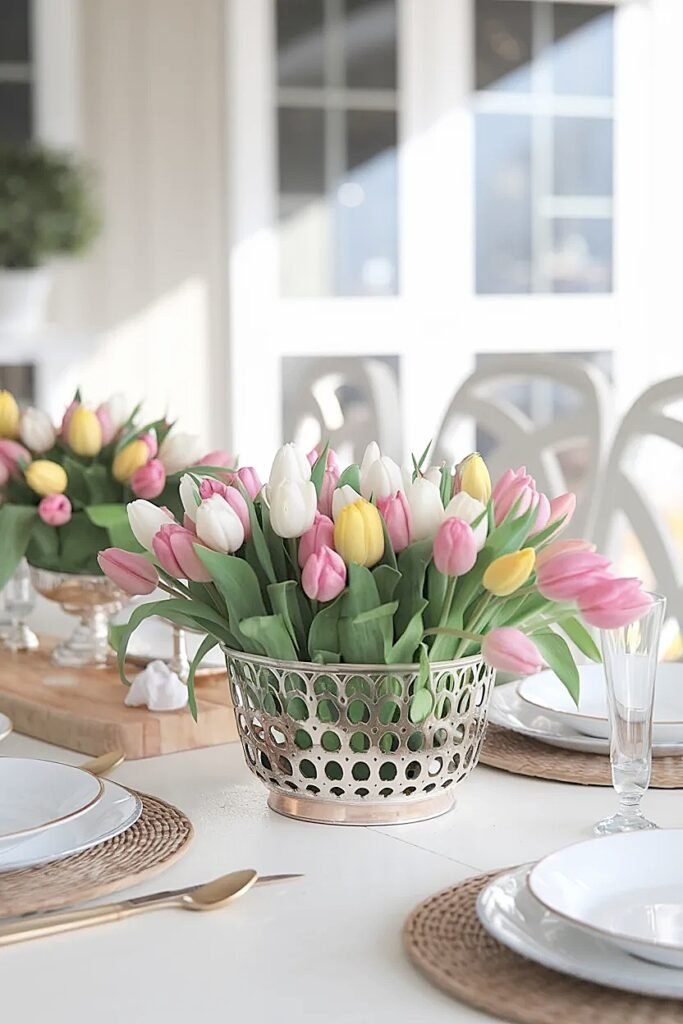
Wind turns elegant centerpieces into projectiles faster than you’d believe possible. I’ve watched a gorgeous tulip basket slide six feet across a glass-topped patio table during what seemed like a gentle breeze, taking wine glasses with it. That disaster convinced me that outdoor centerpiece anchoring isn’t optional, it’s absolutely essential for any exposed table location.
The physics are simple: baskets filled with flowers and water create top-heavy arrangements that wind catches easily. Even moderate gusts generate surprising force against the vertical surface area of upright tulips. Your anchoring strategy needs to lower the center of gravity while increasing the base weight beyond what the basket alone provides.
I’ve developed a multi-layer approach that’s saved countless outdoor events. First, I choose baskets with the widest possible bases, at least ten inches diameter even for modest arrangements. Inside that basket, I position a heavy ceramic or glass vessel filled with water and tulips. Before adding water, I drop smooth river rocks or clean gravel into the vessel’s bottom third, creating ballast that substantially increases total weight. This hidden weight sits low in the arrangement, maximizing stability.
For particularly exposed locations, I use museum putty under the basket base, adhering it temporarily to the table surface. This putty holds firmly during events but removes cleanly afterward without damaging finishes. I’ve tested this method through sustained twenty-mile-per-hour winds without movement. Alternatively, for very heavy baskets on tables with umbrella holes, I’ll run a bungee cord through the hole and loop it around the basket, creating an invisible tether that prevents shifting.
The tulips themselves contribute to wind resistance when arranged thoughtfully. I keep overall height under twelve inches in windy locations, building wider rather than taller arrangements. Lower profiles present less surface area for wind to catch while still delivering visual impact. I also ensure tulips pack densely enough that they support each other, loose, sparse arrangements allow individual stems to catch wind and pull the entire mass off balance. These anchoring techniques transform baskets from potential hazards into reliably stable centerpieces, and if you’re interested in more sophisticated approaches to basket styling that maintain elegance outdoors, there are excellent refinement techniques worth exploring, share this with anyone planning outdoor entertaining!
The wind-proofing principles establish safety foundations, and the balcony-specific strategies ahead address space constraints unique to elevated outdoor areas.
What Are the Best Spring Tulips Basket Centerpieces for Small Balcony Outside Tables?
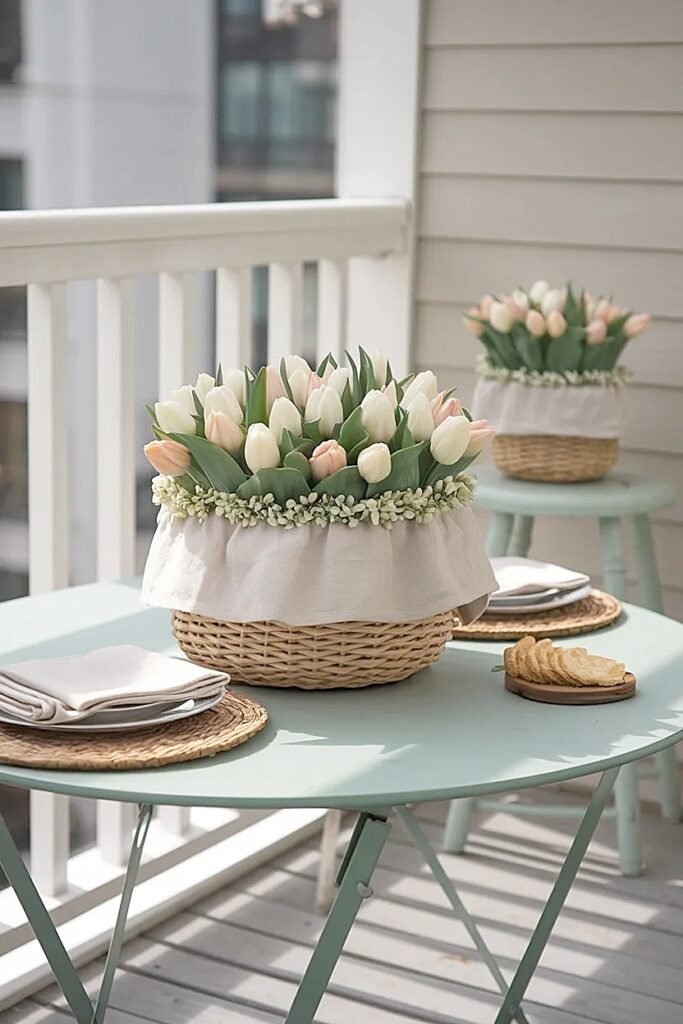
Small balcony tables demand ruthless editing, you’re working with maybe twenty-four to thirty-six inches of surface diameter where every square inch counts for both function and aesthetics. The basket centerpiece needs to deliver meaningful beauty without dominating the table or preventing its use for drinks, plates, and the inevitable balcony snacking that happens during pleasant weather.
I approach balcony centerpieces by first measuring the table and claiming no more than one-quarter of the surface area for florals. This leaves generous space for functional use while ensuring the flowers register as intentional rather than afterthought.
1. Miniature Rectangular Basket with Seven Tulips
Choose a basket no larger than six by eight inches, filling it with exactly seven tulips in a single color. The compact rectangular shape fits easily on small surfaces while the odd number creates visual interest without bulk. I position the basket at the table’s center but slightly offset toward one edge, leaving maximum usable space. The single color, maybe soft yellow or pale pink, creates impact through simplicity rather than variety. This minimal approach respects the balcony’s intimate scale, providing beauty that enhances rather than overwhelms the limited outdoor space.
2. Round Low-Profile Basket with Bulbs and Moss
Use a shallow round basket approximately eight inches diameter and four inches deep, planting tulip bulbs directly in soil topped with decorative moss. The living installation lasts weeks rather than days, justifying the space commitment through longevity. I plant five to seven bulbs, allowing them to bloom naturally at staggered times for extended interest. The low profile, under ten inches total height including blooms, maintains sightlines across the small table, crucial for conversation. The moss-topped soil looks finished and garden-like, appropriate for outdoor balcony settings.
3. Corner-Positioned Half-Moon Basket
Select a half-moon shaped basket designed to sit against table edges, positioning it at one corner to maximize remaining surface area. These specialty baskets typically measure six inches deep but provide eight to ten inches of display width while claiming minimal table territory. I fill with nine to eleven tulips arranged to face outward from the corner, creating generous floral presence that doesn’t compete for central table space. This shape maximizes beauty while respecting functionality, perfect for balconies where every inch matters.
4. Hanging Basket Suspended Above Table
Eliminate table surface use entirely by suspending a basket from the balcony’s overhead structure directly above the table. This creative approach adds floral beauty without claiming any precious table real estate. I use baskets about ten inches diameter filled with twelve to fifteen tulips, hanging at approximately five feet height, low enough to appreciate but high enough to clear heads. The suspended arrangement creates vertical interest in the typically flat balcony environment while leaving the entire table surface available for functional use.
5. Ultra-Compact Square Basket with Five Statement Tulips
Choose the smallest basket that still reads as intentional, maybe five inches square, filling it with exactly five oversized tulip blooms in dramatic colors. The tiny footprint claims almost no table space while the substantial blooms and saturated colors create disproportionate impact. I select varieties like ‘Red Impression’ or ‘Purple Prince’ with large heads that command attention. Position this micro-arrangement at the table’s very center or tucked against the railing edge, proving that small spaces can absolutely accommodate floral beauty when executed with appropriate scale awareness.
These balcony-specific solutions prove that space limitations inspire creative approaches rather than preventing floral styling, and the covered patio strategies ahead leverage protection that roofed structures provide.
How to Create Spring Tulips Basket Centerpieces for Covered Patio Outside Tables 🌷
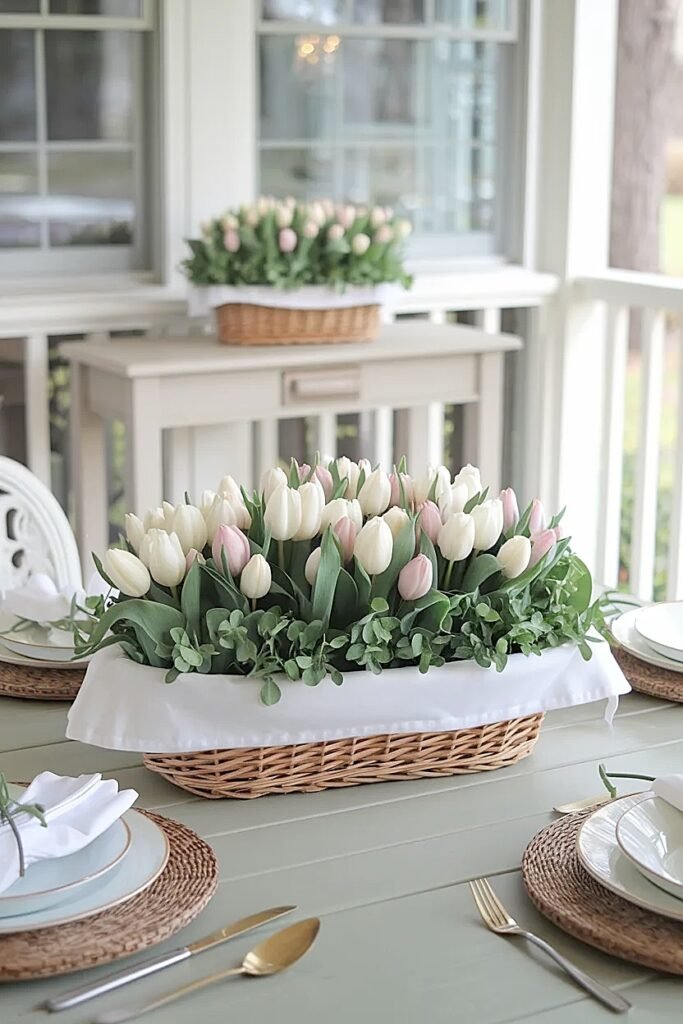
Covered patios occupy that sweet spot between indoor protection and outdoor ambiance. You get shelter from direct rain and intense sun while maintaining the fresh air and natural light that define outdoor living. This partial protection dramatically expands your tulip basket possibilities compared to fully exposed locations.
I treat covered patios as outdoor rooms rather than true exterior spaces, which means I can employ techniques that wouldn’t survive on uncovered tables. The roof blocks the most destructive weather elements while the open sides maintain that essential outdoor character.
My covered patio approach starts with larger, more elaborate baskets than exposed locations could handle. I’ll use fourteen to sixteen inch baskets filled with twenty-five to thirty tulips, creating abundant arrangements that would be too top-heavy for windy exposure. The overhead coverage means I can build height, fifteen to eighteen inches including blooms, without worrying about wind catching the vertical surface area.
I also relax my water-change schedule slightly. Direct sun accelerates bacterial growth in water, requiring daily changes on exposed tables. Under cover, where temperatures moderate and light stays gentler, I can extend to every other day without flowers suffering. This makes covered patio centerpieces more practical for extended entertaining periods.
The basket materials themselves benefit from coverage. Woven baskets that might degrade rapidly in direct rain or intense sun last seasons under patio roofs. I invest in higher-quality baskets for these protected locations, knowing they’ll survive multiple uses across years rather than being sacrificed to harsh weather after one event.
I style covered patio centerpieces with slightly more refinement than fully outdoor arrangements warrant. Maybe I’ll add a linen liner in soft cream or incorporate a subtle ribbon wrap on basket handles, details that would feel too precious for picnic tables but work beautifully in these protected semi-outdoor spaces. The environment invites bridging indoor elegance and outdoor casualness.
These covered patio techniques leverage structural protection while maintaining outdoor freshness, and the brunch-specific concepts ahead address daylight dining’s particular aesthetic and functional requirements.
Ideas for Spring Tulips Basket Centerpieces for Outdoor Brunch Outside Tables
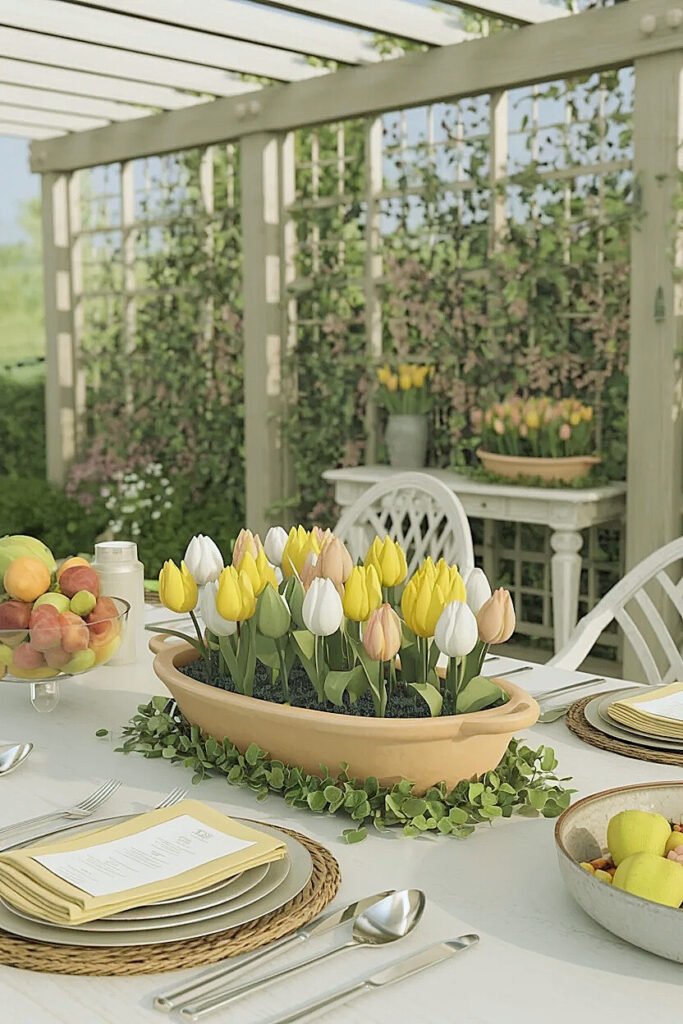
Brunch tables demand brightness and freshness that mirrors the morning meal’s optimistic energy. The daylight context means your tulip baskets get viewed in full sun, showing every detail with clarity that evening dining’s softer light forgives. I approach brunch centerpieces as celebratory statements that enhance the meal’s inherent cheerfulness.
The timing matters too, brunch happens during tulips’ peak daily performance. These flowers close slightly at night and reopen with morning light, meaning your brunch guests see them at their most vibrant and fully opened.
1. Butter Yellow Tulips in Natural Wicker with Citrus Accent
Fill a generous wicker basket with twenty butter yellow tulips, tucking fresh lemon halves among the stems at the waterline. The yellow tulips create sunshine on the table regardless of actual weather, while the citrus adds unexpected textural interest and subtle fragrance. I use Meyer lemons when available for their sweeter scent and golden color. The fruit coordinates with brunch’s fresh, morning energy while the yellow color scheme reads as optimistic and energizing. This combination feels appropriate for casual weekend entertaining where creativity and playfulness enhance rather than detract from sophistication.
2. White Tulips in Galvanized Bucket with Herb Bundle Ties
Arrange pure white tulips in a rustic galvanized metal bucket, tying small bundles of three to four stems together with fresh herb sprigs, maybe rosemary or thyme. The white provides clean palette perfect for morning light, while the herbs add aromatic dimension appropriate for food-focused brunch settings. I position the bucket on a simple wooden cutting board, creating a farmhouse vignette that suggests garden-to-table freshness. The metal bucket’s utilitarian character keeps things casual while the white tulips maintain elegance, balancing brunch’s dual nature as both relaxed and special.
3. Mixed Pastel Tulips in Shallow Basket with Egg Cup Ring
Create a low arrangement of mixed pastel tulips, soft pinks, creams, and lavenders, in a wide, shallow basket, surrounding the basket base with a ring of vintage egg cups. The pastel palette feels inherently spring-like and brunch-appropriate, while the egg cups cleverly reinforce the meal context without being heavy-handed. I position six to eight egg cups in cream ceramic around the basket, leaving some empty and filling others with single blooms or small pussy willow stems. This creates conversation-starting composition that celebrates brunch’s essence while providing substantial floral beauty.
These brunch-specific approaches recognize how meal context and daylight viewing affect centerpiece requirements, and the poolside solutions ahead address water proximity’s unique challenges and opportunities.
What Are the Best Spring Tulips Basket Centerpieces for Poolside Outside Tables?
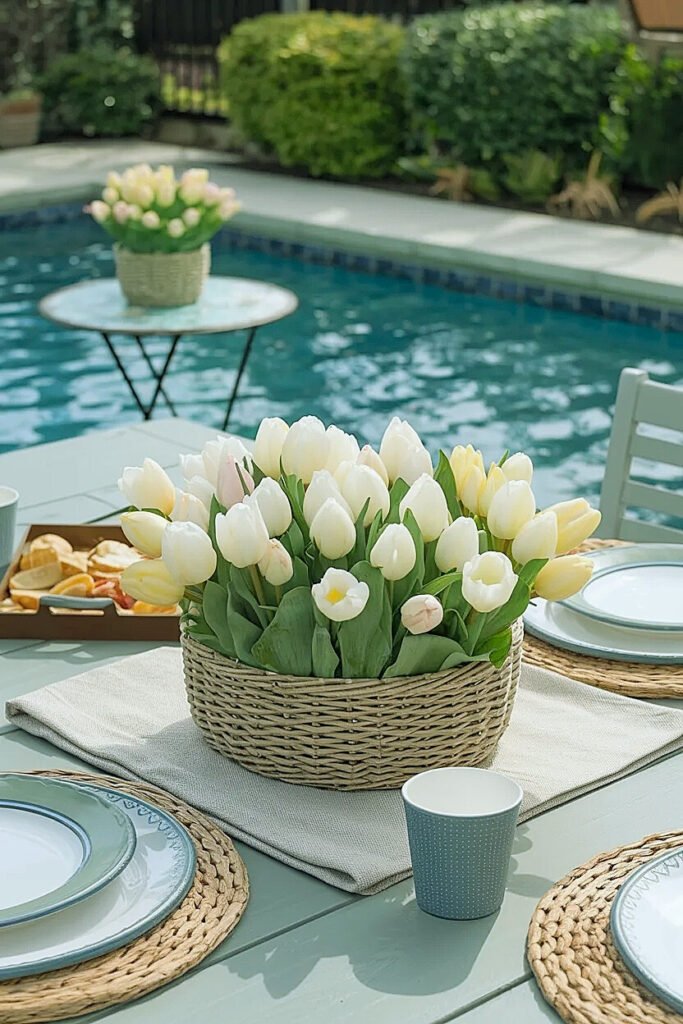
Poolside presents complications that garden or patio tables never face. Chlorinated water splashing onto arrangements causes discoloration and damage, the moisture-heavy environment accelerates basket material breakdown, and the recreational atmosphere demands casual styling that doesn’t feel precious or fragile. I’ve learned to treat poolside centerpieces as semi-disposable, designed to look great for one event rather than preserved across multiple uses.
The key lies in choosing materials that tolerate moisture while styling arrangements that feel appropriately relaxed for a pool setting where people are literally in swimsuits.
1. Resin Wicker Basket with Coral-Peach Tulips
Use synthetic resin baskets that mimic natural wicker but resist water damage completely. Fill with coral-peach tulips that coordinate with typical poolside colors, terracotta tiles, warm woods, sunset tones. I position these baskets at least four feet from the pool edge to minimize direct splashing while keeping them visually connected to the pool area. The resin material handles inevitable moisture without degrading, while the warm tulip colors feel vacation-like and celebratory. The synthetic basket might lack natural wicker’s authenticity, but poolsides prioritize durability over organic materials. This practical choice allows gorgeous floral styling without worrying about basket longevity.
2. Galvanized Metal Trough with White Tulips and Waterproof Base
Select a long galvanized metal trough naturally resistant to water, filling it with white tulips for clean, resort-like aesthetic. The metal won’t absorb moisture or degrade from chlorine exposure, making it ideal for pool environments. I create a waterproof barrier inside the trough using heavy plastic sheeting before adding the water-filled vessel and tulips, protecting the metal from interior corrosion. White tulips against silver metal reads as fresh and sophisticated, appropriate for poolside entertaining that aims for upscale rather than casual vibes. The trough shape works beautifully on rectangular pool deck tables.
3. Weighted Basket with Lavender Tulips and Stone Ballast
Choose a substantial basket with thick walls and fill its base with smooth river stones before adding the vessel and lavender tulips. The stones create ballast that prevents wind from catching the arrangement, crucial around pools where breezes move constantly. Lavender tulips bring unexpected color sophistication to poolsides typically dominated by blues and whites. I use at least three pounds of stones for stability, ensuring the arrangement won’t shift if someone bumps the table while reaching for towels or refreshments. The stones also serve aesthetic purpose if visible through basket sides, adding natural texture appropriate for outdoor pool settings.
4. Ceramic Bowl Basket Insert with Yellow Tulips
Position a waterproof ceramic bowl inside a natural fiber basket, preventing any water contact between vessel and basket material. Fill the bowl with cheerful yellow tulips that reflect sunlight beautifully during daytime pool use. This double-vessel approach protects the basket from moisture damage while maintaining the organic aesthetic that natural materials provide. I ensure the ceramic bowl sits slightly below the basket rim so it remains hidden, creating the illusion that tulips grow directly from the basket. Yellow feels inherently sunny and pool-appropriate, enhancing the recreational atmosphere without fighting against it.
5. Low-Profile Basket with Mixed White and Pink Tulips
Create a sprawling, low arrangement in a wide, shallow basket, maybe sixteen inches diameter but only six inches tall including flowers. Mix white and pink tulips in roughly equal proportions for soft, romantic poolside styling. The low profile prevents wind issues and ensures the arrangement doesn’t obstruct views across pool areas. I position this at table centers on pool decks, where its horizontal spread creates substantial presence without vertical drama. The mixed colors feel more interesting than single tones while maintaining the sophisticated restraint appropriate for upscale poolside entertaining.
These poolside strategies account for moisture, recreational context, and casual atmosphere that water proximity creates, and the coffee table techniques ahead address low-surface styling challenges.
How to Style Spring Tulips Basket Centerpieces on Outdoor Coffee Outside Tables 🌷
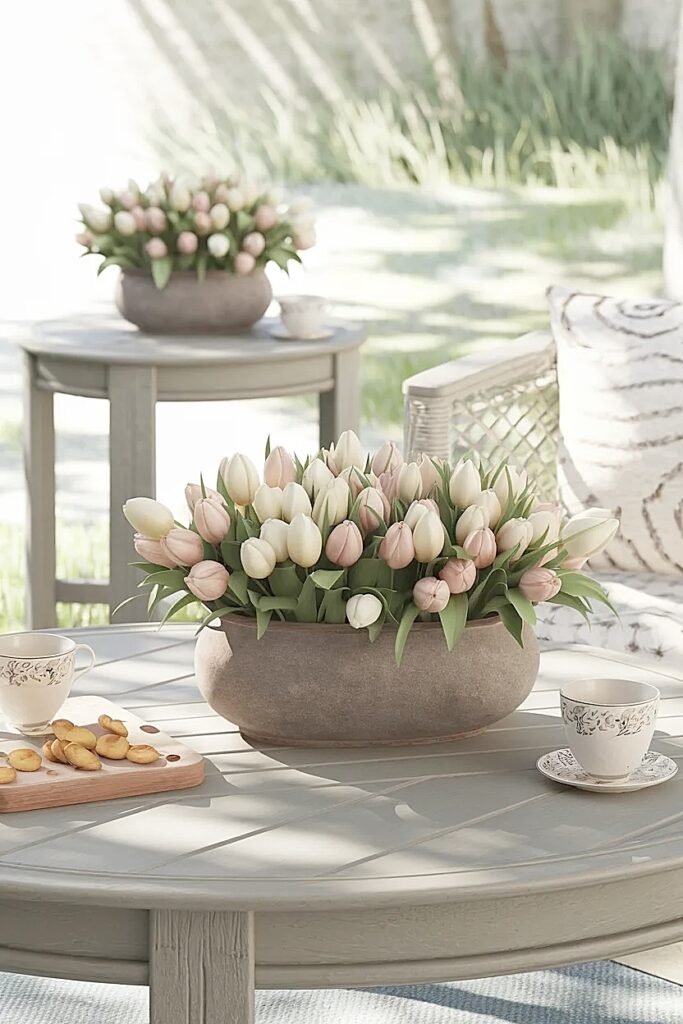
Outdoor coffee tables sit low, typically sixteen to eighteen inches from the ground, creating unique viewing angles where arrangements get seen from above rather than at eye level. This perspective change demands different proportions and styling approaches than dining height tables require.
I approach coffee table centerpieces as decorative elements viewed while lounging rather than focal points for upright diners. The relaxed seating positions around coffee tables mean people look down onto arrangements, making the top view crucial while side perspectives matter less.
My coffee table baskets stay compact, eight to ten inches diameter maximum, because these low surfaces offer limited real estate that must accommodate drinks, snacks, and the inevitable propped-up feet. The basket’s top surface becomes the primary design plane. I arrange tulips in circular patterns radiating from the center or in gentle spirals that create interesting compositions when viewed from above.
Height stays restrained at eight to ten inches total including blooms. Taller arrangements block conversation across coffee tables and feel disproportionate to the table’s low profile. I build outward rather than upward, creating rounded, dome-like forms that showcase tulip blooms arranged to face upward toward viewers sitting on surrounding sofas or chairs.
The basket style itself can be more decorative for coffee tables than dining surfaces warrant. Since these arrangements don’t compete with food presentation, I might choose baskets with interesting weaving patterns or subtle painted finishes that add visual texture. The casual seating context around coffee tables invites slightly more creativity than formal dining demands.
I position the basket slightly off-center rather than precisely centered, creating asymmetric balance that feels more relaxed and appropriate for lounge seating areas. This also leaves maximum surface area clear for functional use while the basket provides decorative interest without dominating the low table.
These coffee table approaches recognize how viewing angles and seating styles affect centerpiece requirements, and the picnic table concepts ahead embrace casual outdoor dining’s rustic charm.
Ideas for Spring Tulips Basket Centerpieces for Picnic-Style Outside Tables
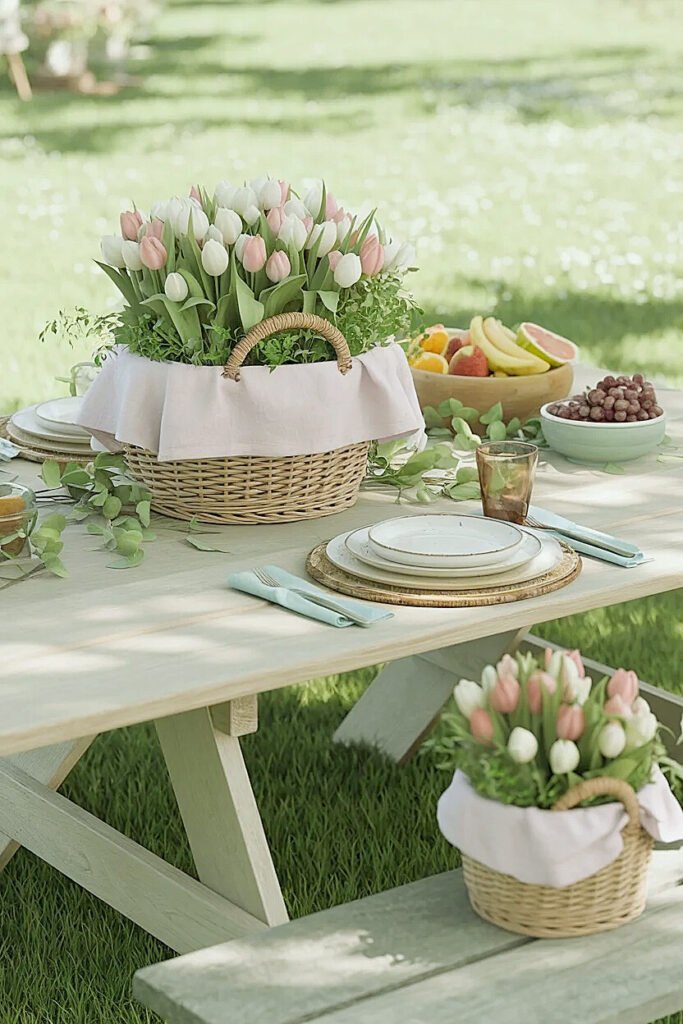
Picnic tables invite unabashedly casual styling where rustic charm trumps refined elegance. The benched seating, weathered wood surfaces, and outdoor recreational context call for centerpieces that embrace rather than fight this informal atmosphere. I love styling tulip baskets for picnic tables because the low-stakes environment encourages creativity.
The table’s inherent casualness gives you permission to experiment with unexpected approaches that might feel too quirky for formal settings.
1. Mason Jar Filled Basket with Mixed Tulip Colors
Fill a rustic basket with six to eight wide-mouth mason jars, each holding three to four tulips in different colors. The jars create a collected, informal look perfect for picnic contexts, while the varied colors, maybe yellow, pink, white, and coral, add playful energy. I use jars of varying heights for visual interest, positioning taller jars toward the arrangement’s center. The mason jars reference canning and food preservation, cleverly tying the centerpiece to picnic dining’s casual food focus. This approach also allows easy transport since each jar functions independently.
2. Vintage Basket with Checkered Cloth Liner and Red Tulips
Line a weathered basket with red and white checkered fabric, the ultimate picnic pattern, then fill with vibrant red tulips. The color coordination between liner and flowers creates intentional cohesion while the checkered cloth immediately signals casual outdoor dining. I let the fabric drape over the basket’s rim, creating soft folds that add textural dimension. Red tulips against the checkered pattern feels both nostalgic and fresh, evoking classic Americana picnic aesthetics while remaining sophisticated through restraint and quality materials.
3. Wire Basket with Terra Cotta Pot Insert and Purple Tulips
Position a terra cotta pot filled with purple tulips inside an open wire basket, letting the pot remain visible through the wire structure. The transparency creates interesting layered visual effect while the terra cotta brings garden authenticity appropriate for outdoor picnic settings. I choose deep purple tulips, varieties like ‘Negrita’, for their dramatic color that stands up to bright outdoor light. The wire basket’s industrial character balances the organic pot and flowers, creating that perfect casual-but-curated aesthetic picnic tables can absolutely pull off.
4. Natural Basket with Bundled Tulips in Twine Wraps
Arrange tulips in a simple basket as small bundles of five to seven stems each, wrapping each bundle with natural jute twine before positioning them in the basket. This creates texture through the repetition of wrapped bundles rather than one uniform arrangement. I use three to four bundles in varying heights, mixing tulip colors within each bundle for variety. The twine wrapping adds rustic detail appropriate for picnic contexts while the bundling technique prevents the arrangement from reading as too carefully composed or formal.
5. Flat Basket Tray with Tulips Laid Horizontally
Break completely from vertical arrangement traditions by laying tulips horizontally in a flat basket tray, creating an unexpected low-profile centerpiece. I use a shallow rectangular basket, maybe eighteen by twelve inches, laying fifteen to twenty tulips on their sides with blooms facing outward from the tray’s long edges. This unconventional approach suits picnic tables perfectly because it maintains clear sightlines across the table while creating substantial floral presence. The horizontal orientation feels relaxed and playful, exactly right for casual outdoor dining where traditional rules don’t apply.
These picnic-specific approaches embrace casual outdoor dining’s inherent informality, and the buffet table strategies ahead prioritize food access above all other considerations.
Ways to Style Spring Tulips Basket Centerpieces on Outdoor Buffet Outside Tables (Food First)
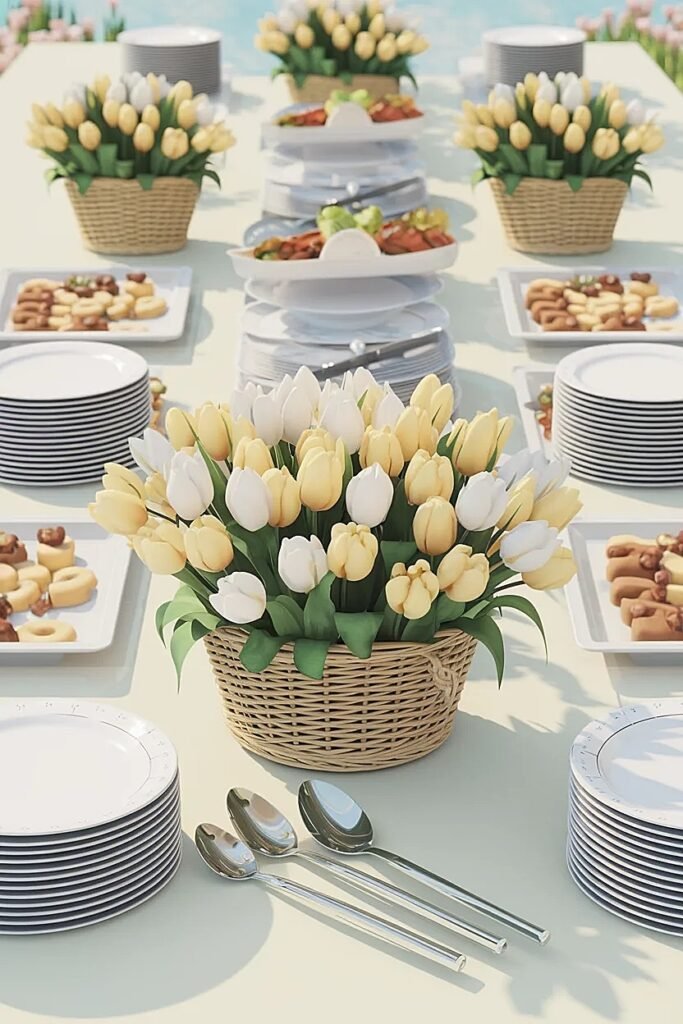
Outdoor buffets present the ultimate function-over-form challenge. Food must remain completely accessible while tulip baskets provide atmospheric beauty without interfering with serving logistics. I approach buffet centerpieces as supporting players, they enhance the food presentation but never compete with or obstruct it.
The food-first mandate means every placement decision gets filtered through the question: does this help or hinder guests serving themselves?
1. End-Cap Corner Basket Placement
Position tulip baskets exclusively at the buffet table’s far ends, leaving the entire central area completely clear for food platters. The end placement frames the buffet without claiming functional space, creating bookend effect that defines boundaries. I use substantial baskets, twelve to fourteen inches, filled generously with tulips since these end positions can handle larger arrangements without interfering with serving flow. This strategy works for any buffet length, with baskets anchoring both endpoints while food dominates the middle run.
2. Behind-Line Basket Row Against Back Edge
Arrange three to five small baskets along the buffet’s back edge against any wall or backdrop, positioning them behind serving platters rather than among them. The baskets provide visual backdrop that elevates food presentation without entering the serving zone. I use matching baskets approximately eight inches diameter filled with identical tulip colors for cohesive, non-competitive aesthetic. The rear positioning means guests see flowers framing their food choices without navigating around floral obstacles when reaching for plates or serving utensils.
3. Elevated Basket on Riser Behind Centerpiece Dish
Place one dramatic basket arrangement on a riser or upturned crate positioned behind the buffet’s featured dish, creating height drama without horizontal spread. The elevation pulls eyes upward while the platform’s footprint stays minimal, claiming zero functional buffet surface. I build this focal arrangement with twenty-five to thirty tulips in a large basket, making it substantial enough to justify its elevated position. This technique suits buffets with architectural backdrops, walls or fences, where vertical elements enhance rather than obstruct.
4. Hanging Basket Suspended Above Buffet End
Eliminate surface use entirely by suspending a tulip-filled basket from overhead structure directly above one buffet end. The aerial positioning provides floral beauty without any table footprint sacrifice, perfect for cramped buffet situations. I hang baskets at roughly six feet height, low enough to register visually but high enough to clear the tallest serving pieces and any reaching guests. This works only with sturdy overhead support like pergola beams or patio roof structures capable of supporting the basket’s weight.
5. Ground-Level Basket Beside Buffet Table Base
Position a large floor basket beside the buffet table rather than on its surface, creating adjacent floral presence that complements without competing. The ground-level placement claims zero functional space while substantial sizing, maybe eighteen inches diameter, ensures the basket registers visually despite low positioning. I fill these floor baskets abundantly with thirty-plus tulips, creating lush installations that enhance the buffet’s overall aesthetic without interfering with its primary food-serving purpose. This approach suits outdoor buffets with adequate surrounding floor space.
These buffet-focused strategies demonstrate that even the most function-driven surfaces can accommodate thoughtful floral styling when placement respects operational priorities.
Conclusion
Spring tulips basket centerpieces transform outdoor tables from purely functional surfaces into beautiful gathering spaces that celebrate the season’s renewal. The strategies I’ve shared address real challenges, wind, moisture, space constraints, food service demands, with practical solutions that maintain aesthetic sophistication. Whether you’re styling an intimate balcony table or a sprawling poolside buffet, the principles remain consistent: respect the environment’s unique conditions, prioritize function alongside beauty, and let tulips’ natural elegance shine without over-styling. Start with one approach suited to your specific outdoor situation, then adapt based on what works in your particular climate and entertaining style. The outdoor context actually enhances tulips’ fresh, spring character when you work with rather than against the environment’s demands.
This website contains affiliate links, and some products are gifted by the brand to test. As an Amazon Associate, I earn from qualified purchases. Some of the content on this website was researched and created with the assistance of AI technology.