This website contains affiliate links, and some products are gifted by the brand to test. As an Amazon Associate, I earn from qualified purchases. Some of the content on this website was researched and created with the assistance of AI technology.
Key Takeaways
- Round containers suit circular and square tables through geometric harmony
- Oval dishes create visual flow on rectangular tables by echoing linear forms
- Troughs deliver modern linear arrangements perfect for buffets and counters
- Table shape dictates optimal container shape more than personal preference
- Bistro tables need compact 6-8 inch round bowls to avoid overwhelming small surfaces
- Long dining tables benefit from 14-18 inch oval dishes emphasizing table length
- Coffee tables work with either rounds or ovals depending on table geometry
- Outdoor counters favor troughs for their space-efficient linear footprints
Choosing the best shape of low-profile container for your spring tulips patio centerpiece determines whether your arrangement enhances or fights against your table’s inherent geometry. I spent four years defaulting to round bowls for everything, because rounds felt “classic” and “safe”, before finally testing an oval dish on my rectangular dining table and experiencing an almost embarrassing revelation about how much better the geometric relationship looked. The oval emphasized my table’s linear nature in ways the round never could, creating visual harmony I’d been unknowingly sabotaging through lazy container selection.
Container shape isn’t about aesthetics in isolation, it’s about creating relationships between vessel and surface that either feel intentional or accidental. Round, oval, and trough forms each excel in specific contexts while failing in others, and understanding these context-specific strengths transformed my patio centerpieces from “fine I guess” to genuinely impressive compositions that guests actually comment on. The shape decision affects everything downstream: how you arrange stems, how much table space gets claimed, how the composition photographs, and whether the whole setup feels cohesive or randomly assembled.
This table makes the round vs oval vs trough choice easy for Spring Tulips patio centerpieces. Match container shapes to table types, learn the best low layouts for fullness, and keep serving space open. Copy the checklists to plan faster, shop smarter, and style a cozy patio that still works.
Spring Tulips Patio Centerpieces: Round vs Oval vs Trough
Use this guide to pick the right container shape for your surface. Round bowls fit round tables, oval dishes fit long tables, and troughs fit buffets/sideboards. Build fullness with dense cluster pockets, keep height low, and protect a serving lane.
| Container Shape | Best Surfaces | Why It Works | Do / Avoid |
|---|---|---|---|
| RoundLow Round Bowl | Round bistro tables, round kitchen tables, small spaces | Compact footprint, dense “full circle” look | DO: tight circular cluster + outer ring AVOID: oversized bowl on small table |
| OvalLow Oval Dish | Long patio dining tables, rectangular indoor tables | Spreads color along length, keeps sightlines open | DO: 3 sectioned clusters AVOID: one long thin line |
| TroughLow Rectangular Trough | Buffets, sideboards, outdoor serving consoles | Food-first placement, long low spread, stable | DO: dense pockets + back placement AVOID: crowding front serving edge |
| Quick FixSwap Shape Before Adding Stems | Any table that feels “off” | Shape solves awkward gaps or crowding fast | DO: round→oval (long table), round→trough (buffet) AVOID: adding more tulips first |
Round bowls (best uses + rules)
Round tables, bistro tables, small patios.
Tight circular cluster + slightly wider outer ring for fullness.
Oval dishes (best uses + rules)
Long dining tables, rectangular indoor tables.
3 sectioned clusters (left/center/right) to avoid a thin line.
Troughs (best uses + rules)
Buffets, sideboards, serving consoles.
Dense pockets + place toward the back edge to keep food first.
How to Match Round vs Oval vs Trough for Spring Tulips Patio Centerpieces
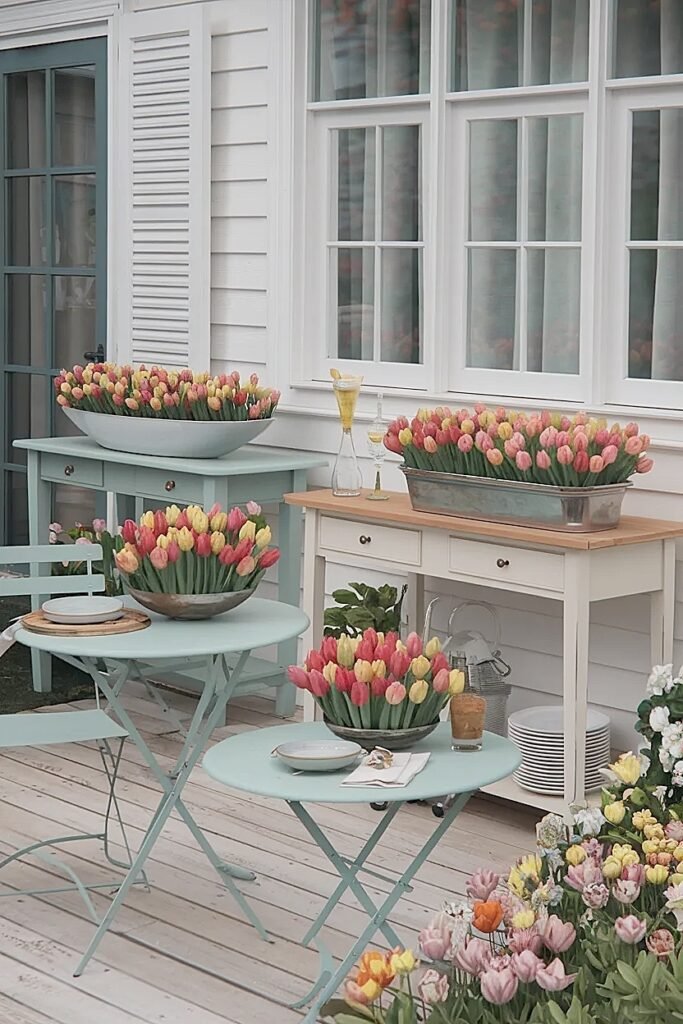
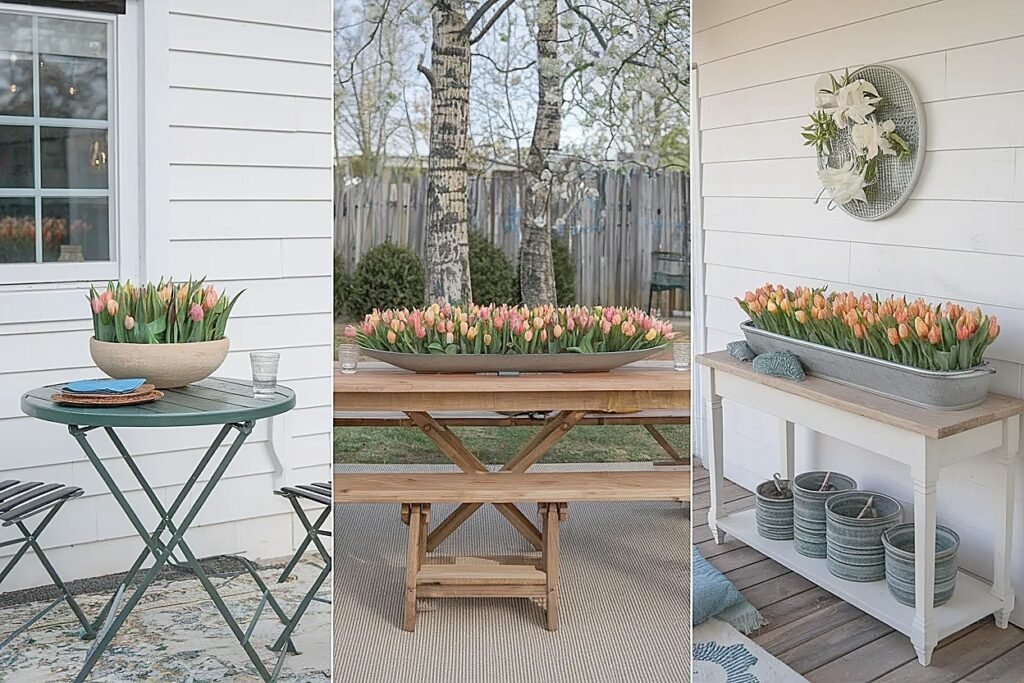
The matching decision should happen in seconds once you internalize the core principle: geometric echo creates visual harmony. Circular tables demand circular containers. Rectangular tables want linear vessels, ovals or troughs. Square tables accept either rounds or squares. This isn’t subjective taste; it’s spatial relationships that either reinforce or contradict each other.
I violated this principle religiously for years, placing my favorite round ceramic bowl on every table regardless of shape because I loved that specific bowl. The compositions never looked quite right, but I couldn’t identify why until a designer friend visited and immediately pointed out the geometric mismatch. “Why are you fighting your table’s shape?” she asked, gesturing at my round bowl on a distinctly rectangular surface. Boom. Instant clarity.
The echo concept means your container’s primary axis should align with your table’s primary dimension. Rectangular tables stretch lengthwise, so oval dishes running parallel to that length create harmony. Round tables radiate equally in all directions, so round containers mirror that omnidirectional quality. Troughs take the linear emphasis even further than ovals, creating strong horizontal lines perfect for buffets and counters where space efficiency matters more than traditional centerpiece aesthetics.
Testing this principle requires trying wrong combinations intentionally. Put a trough on a round table and notice how awkward it feels, the rigid linearity fights the table’s curves. Place a round bowl on a long rectangular table and observe how it creates a stopping point rather than flowing with the table’s length. These deliberately wrong pairings make the right matches obvious through contrast, and for comprehensive guidance on selecting low containers that work with these shape principles, there are detailed specifications on heights, weights, and materials, share this with anyone tackling outdoor centerpiece projects!
The geometric matching establishes your foundation, and the bistro table round bowl options ahead show how compact circles work on intimate surfaces.
What Are the Best Round Low Bowls for Spring Tulips Patio Centerpieces on Bistro Tables
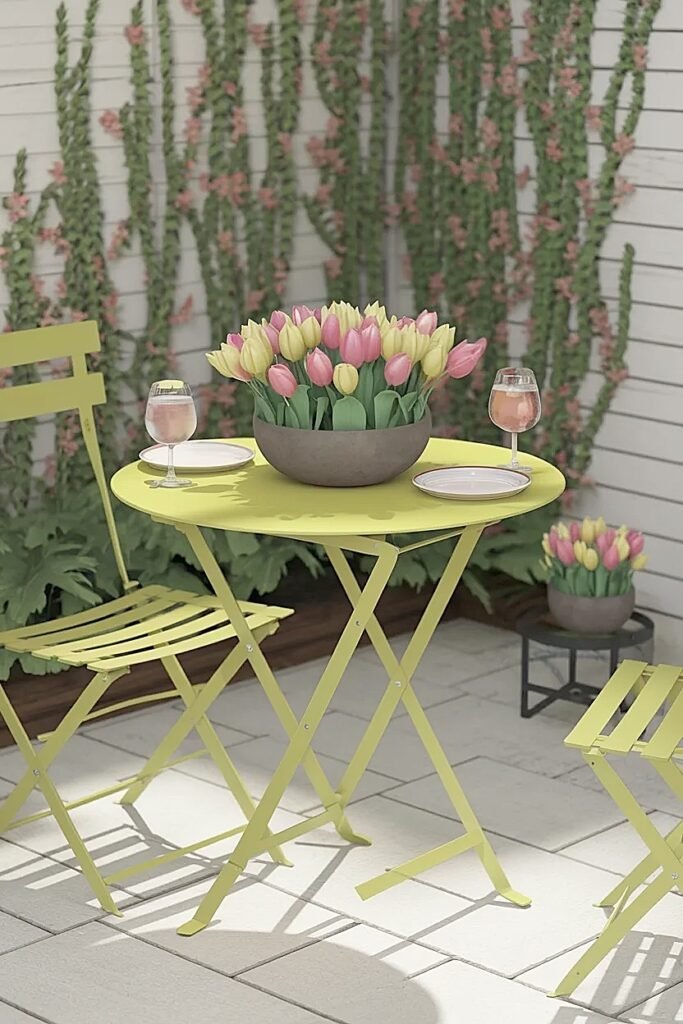
Bistro tables, those compact 24-30 inch diameter surfaces, present the ultimate test for round container selection because there’s zero margin for size miscalculation. Too large and you’re eating off your laps. Too small and the arrangement disappears into insignificance. The sweet spot runs 6-8 inches diameter, creating presence without domination.
I learned bistro proportions through spectacular failure: positioning a gorgeous 12-inch bowl on my 28-inch bistro table, leaving approximately 8 inches of usable surface per person. Completely unworkable for actual dining, despite looking impressive in photos before food appeared.
1. Shallow Terracotta Bowl (6-inch diameter, 3-inch depth)
The earthy terracotta creates rustic warmth perfect for casual bistro dining while the compact 6-inch diameter leaves generous table space for plates and glasses. The shallow 3-inch depth forces short stem cuts, 5-7 inches maximum, creating inherently low arrangements. The porous material breathes, preventing overwatering issues. Position 5-6 tulips in tight clusters. The natural clay color flatters any tulip shade.
2. White Ceramic Compote (7-inch diameter, 4-inch total height)
The pedestal base adds elegance while the shallow bowl maintains low profile. White ceramic provides neutral backdrop letting tulip colors dominate. The 7-inch diameter suits slightly larger bistros (28-30 inches). The weight, typically 3-4 pounds, resists wind on exposed patios. Fill with 6-8 stems cut to 6 inches, creating lush but compact compositions.
3. Concrete Modern Bowl (6-inch diameter, 2-inch depth)
Ultra-shallow concrete creates contemporary minimalist aesthetic with substantial weight providing excellent stability. The industrial gray suits modern bistro furniture perfectly. The extreme 2-inch depth demands very short stems, 4-5 inches, creating ground-hugging arrangements with unique appeal. Position 4-5 blooms floating almost directly on concrete surface. The modern edge suits urban outdoor spaces.
4. Vintage Brass Bowl (6-inch diameter, 3-inch depth)
Antique brass brings instant character through patina and age. The metal reflects light beautifully during evening bistro dining, adding ambient sparkle. The compact size suits intimate two-person tables perfectly. Use 5-7 stems in single-color clusters, the brass provides enough visual interest that simple floral arrangements work best.
5. Stoneware Bowl with Reactive Glaze (7-inch diameter, 3-inch depth)
Reactive glazes create unique color variations making each bowl one-of-a-kind. The artisanal quality elevates bistro settings. The stoneware weight resists tipping. Choose glaze colors complementing your outdoor cushions or furniture. Position 6-8 tulips in loose natural arrangements. The handcrafted aesthetic brings personality mass-produced bowls lack.
6. Black Matte Ceramic Bowl (6-inch diameter, 3-inch depth)
Matte black creates dramatic contrast making tulip colors appear more vivid and saturated. The dark neutral works with any color scheme. The compact diameter maximizes usable bistro surface. Fill with white or pale pink tulips for maximum color pop against dark background. The modern finish suits contemporary outdoor furniture.
7. Speckled Earthenware Bowl (7-inch diameter, 4-inch depth)
Natural speckled earthenware creates organic aesthetic connecting outdoor dining to garden origins. The texture adds visual interest beyond smooth ceramic. The 7-inch size works for larger bistros. Position 7-9 stems creating generous fullness within compact footprint. The earth tones complement natural outdoor settings beautifully.
The bistro round options show how compact circles work on small surfaces, and the table shape rule ahead codifies the geometric principles governing all container selection.
How to Use the “Table Shape Rule” for Spring Tulips Patio Centerpieces
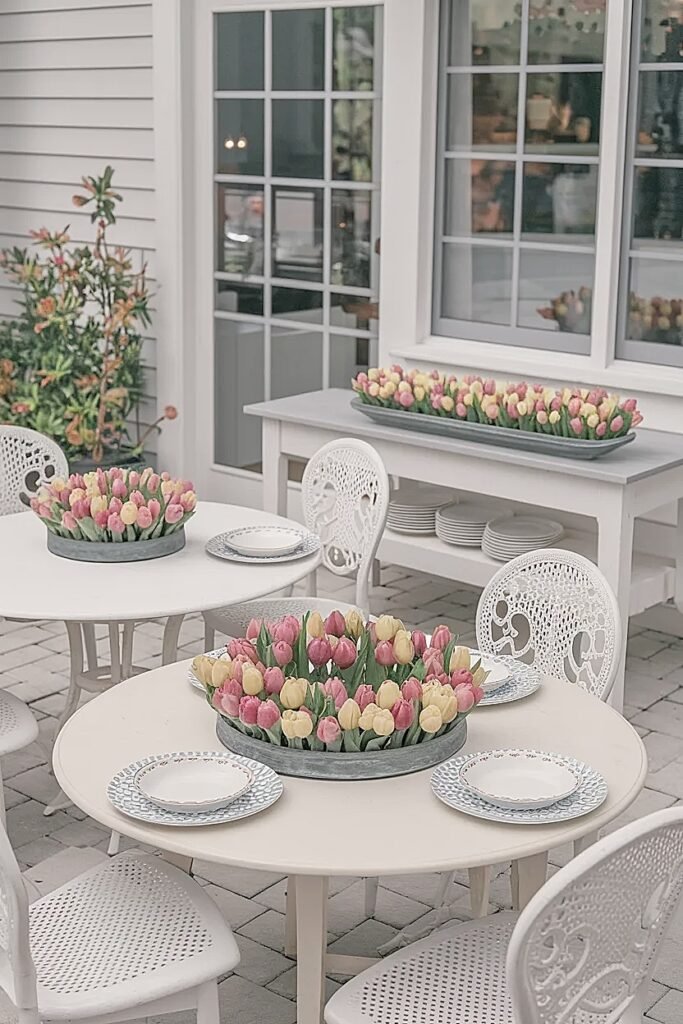
The Table Shape Rule sounds bureaucratic but it’s actually liberating once you embrace it: your table’s shape determines your container’s shape, removing decision paralysis and guaranteeing visual harmony. Round tables get round containers. Rectangular tables get oval or rectangular containers. Square tables accept round or square. Done.
This rule eliminates the overwhelming container options flooding garden centers and home stores. Instead of considering every vessel, you immediately filter to only shape-appropriate choices, dramatically simplifying selection while improving outcomes. I wish someone had taught me this rule five years ago, would’ve saved hundreds of dollars on wrong-shaped containers currently gathering dust in my garage.
The rule works because geometric relationships create subconscious visual satisfaction or discord. When container shape echoes table shape, viewers perceive intentional design even if they can’t articulate why it works. The harmony feels “right” without demanding conscious analysis. Conversely, mismatched shapes create subtle tension, not enough to be obviously wrong, but enough to prevent the composition from feeling genuinely successful.
Exceptions exist but they’re rare and require deliberate skill. A highly experienced designer might place a rectangular trough on a round table as provocative design statement, creating tension intentionally. But that’s advanced work requiring confidence and vision. For the rest of us learning outdoor centerpiece design, following the shape rule guarantees better results than trying to be provocatively unconventional.
The practical application: measure your table’s shape and dominant dimension before shopping for containers. Rectangular table measuring 72×36 inches? Hunt oval dishes running lengthwise. Round 48-inch table? Seek round bowls. The shopping clarity this provides transforms container hunting from overwhelming to straightforward.
The table shape rule creates your decision framework, and the oval dish ideas ahead demonstrate how elongated forms enhance long dining tables specifically.
Ideas for Low Oval Dishes as Spring Tulips Patio Centerpieces on Long Dining Tables
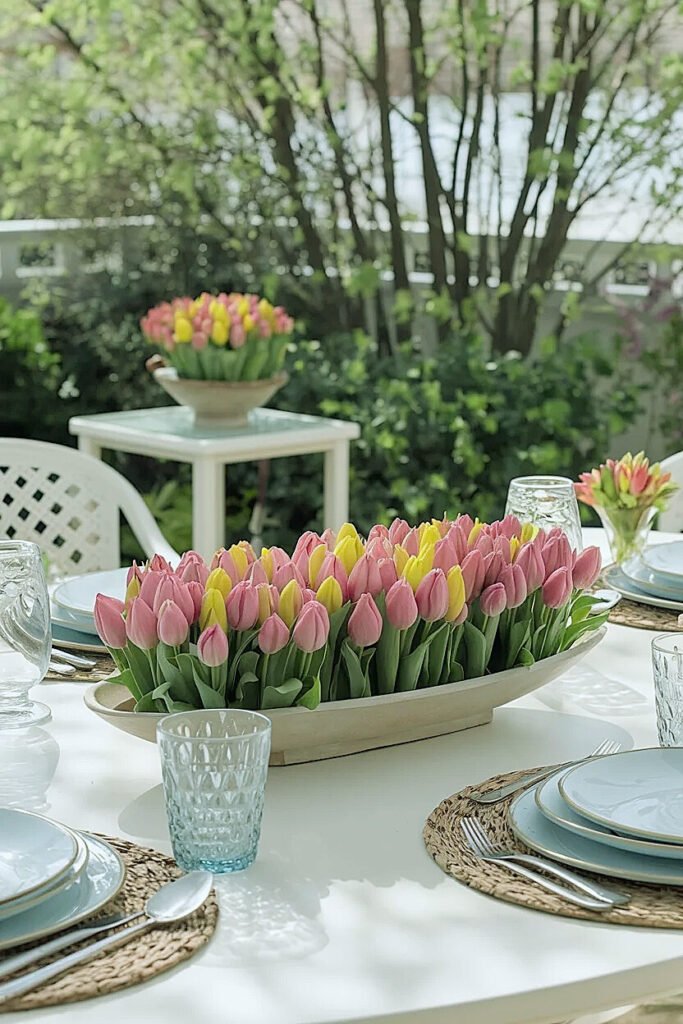
Long dining tables, those stretching 60+ inches, benefit enormously from oval containers running parallel to table length, creating visual flow emphasizing the linear dimension rather than interrupting it with circular forms. The elongated shape creates movement drawing eyes along the table’s primary axis.
I resisted ovals for years despite having a 72-inch rectangular dining table, stubbornly using round bowls because they felt “traditional.” The switch to an 18-inch oval dish created immediate improvement, the arrangement suddenly felt integrated with the table rather than randomly positioned on it.
1. White Ceramic Oval Baker (16×10 inches, 4-inch depth)
Classic white ceramic provides elegant neutral backdrop while the generous 16-inch length creates substantial presence on long tables. The oval form runs parallel to table length. Position 15-18 tulip stems creating horizontal arrangements. The ceramic weight resists wind. The baker’s depth accommodates floral foam providing excellent stem support for complex arrangements.
2. Rustic Wood Dough Bowl (20×8 inches, 3-inch depth)
The extended 20-inch length creates dramatic linear emphasis perfect for tables 72+ inches. The narrow 8-inch width claims minimal table width. Line with plastic before water. The rustic wood brings farmhouse charm. Position 12-15 stems in loose natural arrangements. The shallow depth forces appropriate low profiles.
3. Terracotta Serving Platter (14×9 inches, 3-inch depth)
Earthy terracotta creates Mediterranean warmth. The moderate 14-inch length suits tables 60-66 inches. Position lengthwise on table creating horizontal flow. Fill with 10-12 stems. The porous terracotta requires plastic liner. The natural material feels authentically outdoor-appropriate rather than importing indoor formality.
4. Glazed Stoneware Oval (15×8 inches, 4-inch depth)
Reactive glazes create unique color variations. The 15-inch length works for tables 66-72 inches. Choose glaze colors coordinating with outdoor textiles. Position 12-14 stems. The stoneware weight provides wind stability. The artisanal quality elevates arrangements beyond mass-produced vessels.
5. Metal Galvanized Trough (18×6 inches, 3-inch depth)
Industrial galvanized metal creates farmhouse aesthetic. The narrow 6-inch width maximizes usable table surface. The 18-inch length creates generous linear presence. Position 10-12 stems in rows emphasizing length. The metal durability handles outdoor conditions brilliantly. Line with plastic preventing eventual corrosion.
6. Vintage Ironstone Platter (16×9 inches, 3-inch depth)
Antique ironstone brings character through age and subtle wear. The cream color works universally. Hunt estate sales for unique pieces. The 16-inch length suits tables 66-72 inches. Position 14-16 stems creating abundant arrangements. The vintage quality adds personality new pieces lack.
7. Concrete Elongated Bowl (18×7 inches, 4-inch depth)
Modern concrete creates contemporary edge with substantial weight providing exceptional wind resistance. The gray neutral complements any tulip color. The 18-inch length emphasizes table linearity. Position 15-18 stems. The industrial aesthetic suits urban outdoor spaces. The material ages beautifully developing subtle patina.
The oval applications show linear form advantages, and the trough buffet uses ahead demonstrate how rectangular vessels excel in food-service contexts.
Ways to Use Low Rectangular Troughs for Spring Tulips Patio Centerpieces on Buffets
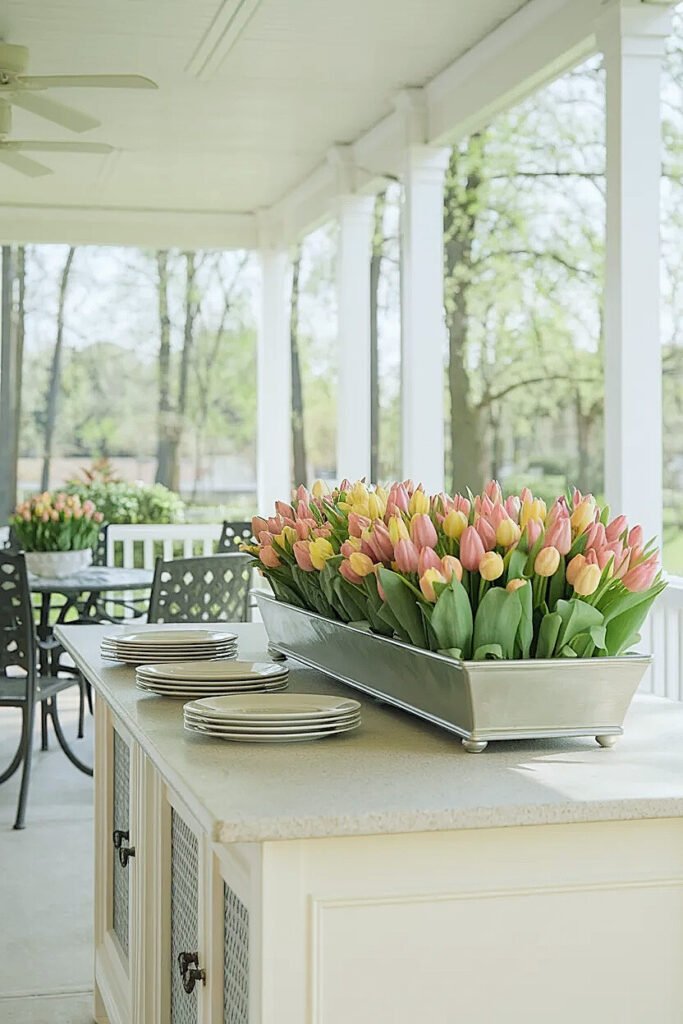
Buffets demand space efficiency, containers must add beauty without claiming precious surface needed for serving dishes. Rectangular troughs excel here through narrow widths creating linear arrangements occupying minimal width while their length provides meaningful floral presence.
Troughs positioned lengthwise on buffets create visual flow along the serving line rather than interrupting it with circular or oval forms that don’t align with the buffet’s linear service organization.
1. Back-Edge Positioning for Maximum Serving Space
Position trough along buffet’s back edge against any wall or backdrop, creating floral presence while leaving entire front area clear for serving dishes. Use 24×6 inch troughs with 12-15 stems. The back positioning means arrangement gets viewed frontally, so build density toward front. This maximizes functional serving space.
2. End-Cap Placement as Buffet Bookend
Place trough at one buffet end creating floral punctuation without interrupting serving flow. Use 18×8 inch troughs with 10-12 stems. The end positioning leaves central area completely clear for food. The trough creates visual anchor signaling buffet’s endpoint. Works brilliantly on L-shaped or extended buffets.
3. Elevated Platform Installation Above Serving Height
Mount trough on a platform or riser elevating it 6-8 inches above buffet surface, creating vertical presence without claiming horizontal serving space. Use 16×6 inch troughs with 8-10 stems. The elevation positions flowers above food presentation creating backdrop rather than competition for space.
4. Multiple Small Troughs Creating Rhythmic Repetition
Use three to four narrow troughs (12×4 inches each) spaced evenly along buffet length creating rhythmic pattern. Each holds 5-6 stems. The repetition creates visual interest through multiplication. The narrow 4-inch width minimizes space claims. Position between serving dish zones creating floral accents without obstruction.
5. Single Long Trough as Continuous Linear Element
Use one extended trough (30×6 inches) running significant buffet length creating unified linear installation. Position 20-25 stems creating continuous floral presence. The narrow width preserves serving space while length creates impact. This works on dedicated buffet tables where the trough becomes primary decorative element.
The buffet trough strategies maximize space efficiency, and the coffee table round versus oval choices ahead address low viewing angles.
What Are the Best Round vs Oval Choices for Spring Tulips Patio Centerpieces on Outdoor Coffee Tables
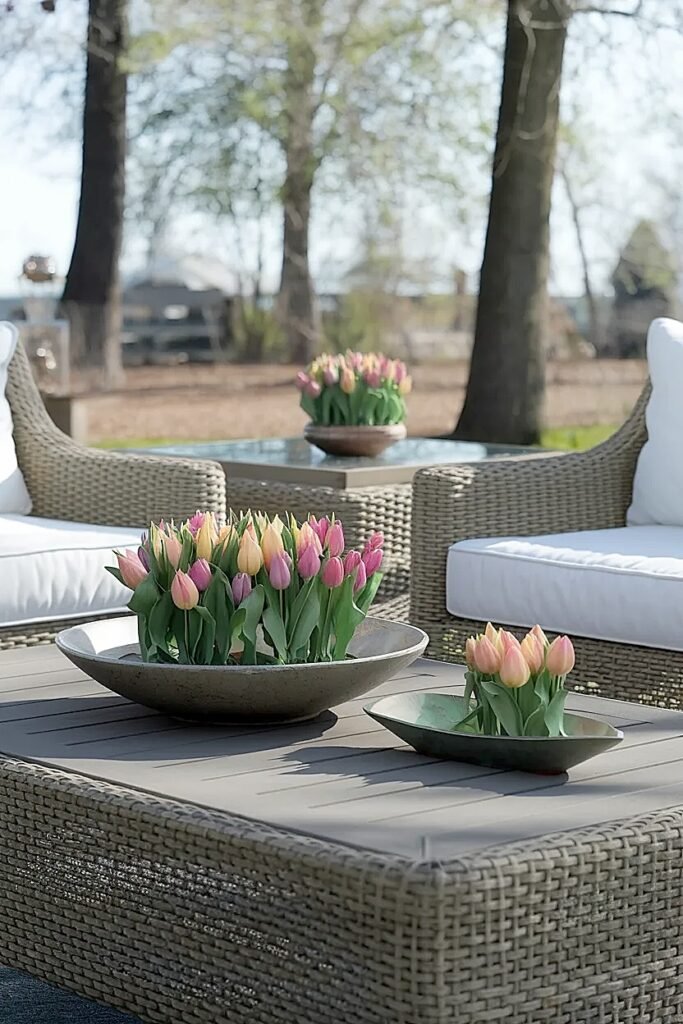
Coffee tables present unique challenges: low viewing angles from seated positions, compact surface areas, and dual-purpose use requiring space for both decoration and function. Container shape selection depends entirely on coffee table geometry, round tables want rounds, rectangular tables prefer ovals.
The viewing angle differs dramatically from dining tables. You’re looking across or slightly down onto coffee table surfaces rather than across them at eye level, changing how shape reads visually.
1. Round Bowl on Round Coffee Table (8-inch diameter, 3-inch depth)
Perfect geometric echo creates harmony. The 8-inch diameter suits 36-42 inch round coffee tables. Ultra-low 3-inch depth maintains sightlines across table. Position 6-8 stems cut to 4-5 inches creating carpet-like arrangement viewed from above. The round-on-round pairing feels naturally balanced from seated positions surrounding the table.
2. Oval Dish on Rectangular Coffee Table (12×6 inches, 3-inch depth)
The 12-inch length emphasizes rectangular table’s linear form while narrow 6-inch width preserves surface space. Position lengthwise creating visual flow. Fill with 8-10 stems cut short. The oval-on-rectangle pairing creates cohesion through geometric relationship. Works for coffee tables 40+ inches long.
3. Square Bowl on Square Coffee Table (8×8 inches, 3-inch depth)
The square-on-square creates perfect geometric harmony. The 8-inch size suits 32-36 inch square coffee tables. The angular form creates contemporary aesthetic. Position 8-10 stems creating even distribution across square surface. The matched geometry creates sophisticated minimalism appropriate for modern outdoor lounge furniture.
4. Small Round Bowl on Rectangular Coffee Table (6-inch diameter, 3-inch depth)
While ovals technically match better, small round bowls work acceptably on rectangular coffee tables through sheer compactness, the small size prevents geometric mismatch from becoming visually problematic. Position off-center leaving maximum surface clear. Fill with 5-6 stems. This compromise works when you already own a perfect round bowl.
5. Ultra-Shallow Oval on Round Coffee Table (10×6 inches, 2-inch depth)
Another acceptable geometric compromise: the extreme shallowness (2 inches) creates such low profile that the oval-on-round mismatch becomes less noticeable. Position with oval’s long axis running toward primary seating position. Fill with 6-8 blooms floating almost directly on surface. The ultra-low profile minimizes the shape conflict.
The coffee table options show how geometry and function intersect, and the counter trough versus oval comparison ahead addresses kitchen-adjacent surfaces.
Ideas for Trough Centerpieces vs Oval Dishes for Spring Tulips Patio Centerpieces on Outdoor Counters
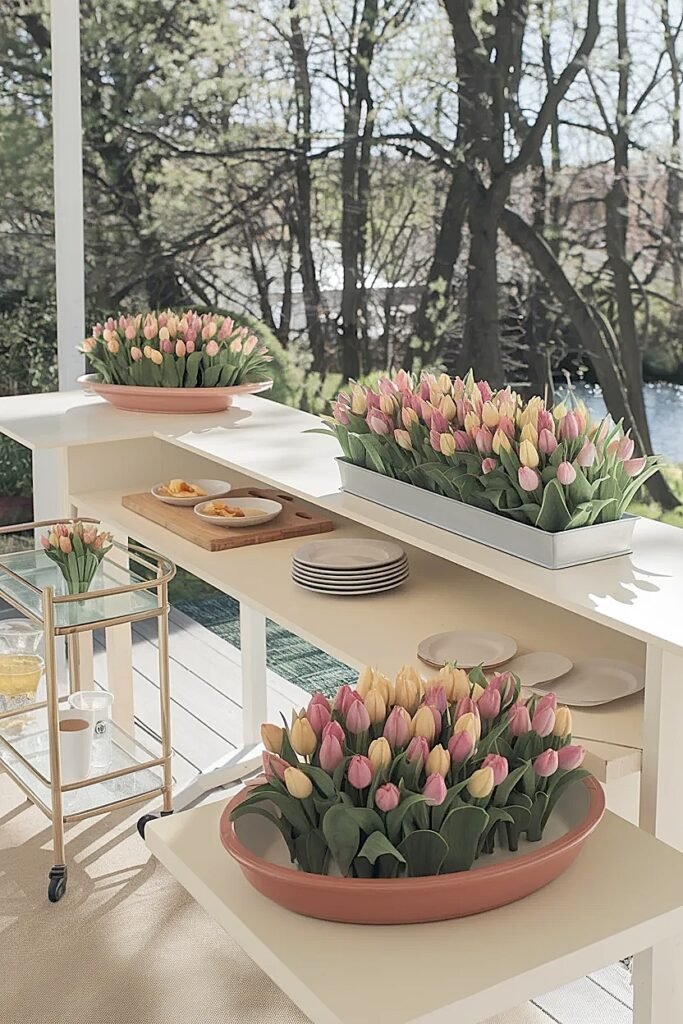
Outdoor kitchen counters and serving bars favor troughs over ovals through space efficiency, the narrow rectangular footprint claims minimal depth while creating linear presence along counter length. Ovals work but troughs typically function better in these utilitarian spaces prioritizing efficiency.
Counters operate more like buffets than tables, demanding arrangements that enhance without obstructing food prep, serving, or casual dining at counter height.
1. Narrow Trough for Maximum Counter Depth Preservation
Use ultra-narrow troughs (18×4 inches, 3-inch depth) positioned along counter’s back edge preserving entire front area for food prep or casual dining. The 4-inch depth claims minimal counter depth, crucial when counter width runs just 24-30 inches total. Fill with 10-12 stems creating linear arrangements. The narrow footprint maximizes functional space while the length creates meaningful floral presence. This setup works brilliantly on galley-style outdoor kitchens where every inch of counter depth matters functionally.
2. Oval Dish for Corner Counter Placement
Position oval dishes (12×8 inches, 3-inch depth) in counter corners where they occupy otherwise underutilized space. The oval form works in corners better than troughs’ rigid rectangles which feel awkward in angled positions. Fill with 8-10 stems creating rounded arrangements. The corner placement claims zero prime counter frontage while adding beauty to typically dead zones. This works when your outdoor counter has defined corner areas at L-shaped junctions or endpoint terminations.
3. Trough for Linear Counter Island Top
On counter islands viewable from all sides, position trough (24×6 inches, 3-inch depth) running the island’s length creating centerpiece visible from multiple angles. Fill with 15-18 stems arranged to look attractive from all viewing directions. The linear form emphasizes the island’s length while the narrow width preserves peripheral counter space for serving or dining. The trough creates focal element without obstructing the island’s functional utility for casual outdoor dining or buffet-style entertaining.
Conclusion
Container shape selection for spring tulips patio centerpieces should be dictated by table geometry first, personal preference distant second. Round containers harmonize with circular and square tables through geometric echo. Oval dishes emphasize rectangular tables’ linear dimensions. Troughs maximize space efficiency on buffets and counters while creating modern linear aesthetic. Master the Table Shape Rule, match container geometry to surface geometry, and your centerpiece compositions will immediately improve through intentional spatial relationships rather than accidental arrangements. Start by honestly assessing your table shapes, then shop exclusively for geometrically appropriate containers rather than whatever catches your eye regardless of fit.
This website contains affiliate links, and some products are gifted by the brand to test. As an Amazon Associate, I earn from qualified purchases. Some of the content on this website was researched and created with the assistance of AI technology.