
This website contains affiliate links, and some products are gifted by the brand to test. As an Amazon Associate, I earn from qualified purchases. Some of the content on this website was researched and created with the assistance of AI technology.
Key Takeaways
- Tray-based arrangements create dedicated rose zones while preserving space for everyday items like remotes
- Low containers keep arrangements below sightlines and reduce tip-over risks during family activities
- Two-zone tray systems separate decorative elements from functional items within shared surfaces
- Bowl centerpieces under four inches tall maximize visual impact without blocking TV views
- Movie night setups require sturdy, compact arrangements positioned at table corners
- Kid-friendly approaches prioritize unbreakable containers, stable bases, and strategic placement
Styling valentine rose decor for coffee tables without clutter sounds like an oxymoron if you’ve ever lived with an actual coffee table. These surfaces collect everything, remotes, coasters, half-finished drinks, kid stuff, random mail that never made it to its proper home. Adding flowers to this chaos seems destined to either create more mess or result in knocked-over vases and water-soaked magazines. I thought this way for years, keeping Valentine roses on mantels and dining tables while my coffee table remained a decorative wasteland.
Then I figured out the systems. The tray tricks. The container choices that actually work in lived-in spaces. Coffee tables can absolutely host Valentine roses without becoming impractical or looking like a cluttered disaster. The key lies in designing arrangements that coexist with daily life rather than demanding a cleared, pristine surface that real families never maintain. These approaches assume your coffee table does actual work, holding things, surviving foot traffic, serving snacks during movie nights. Romance and reality can share the same surface.
Use this table to pick the best Valentine rose coffee table setup based on your space, your habits, and your mess tolerance. It compares time-to-set, what surfaces it fits, how much clutter it creates, and how easy it is to reset—so your decor stays romantic and livable.
| Valentine Setup Type | Best Surfaces + Rooms | Clutter Level + Reset Speed | Budget + “Mess Risk” |
|---|---|---|---|
| Two-Zone Tray roses + catchall |
Coffee table • ottoman tray • studio living area | Low clutter • Reset: 30 seconds | $–$$ • Medium mess (petals) |
| One-Book + One-Rose minimal |
Small coffee tables • reading corners • shared rooms | Very low • Reset: 10 seconds | $ • Low mess |
| Low Bowl Dome wide + stable |
Main coffee table • small living rooms • open layouts | Medium • Reset: 60 seconds | $$ • Medium mess |
| Nested Table Move-Off side surface |
Living rooms • game nights • movie nights • small studios | Low clutter • Reset: 20 seconds | $–$$ • Low mess |
Clutter: Low • Reset: 30 seconds
Budget: $–$$ • Mess risk: Medium
Clutter: Very low • Reset: 10 seconds
Budget: $ • Mess risk: Low
How to Style a Valentine Rose Tray That Still Holds Remotes

Trays solve the fundamental coffee table problem: competing uses. Without boundaries, roses fight remotes for territory. Drinks crowd arrangements. Everything intermingles messily. A tray creates a defined zone, roses live here, daily items live there, bringing order to surfaces that naturally trend toward chaos.
The trick is choosing trays sized to leave substantial table space for everything else your coffee table handles.
Measure your coffee table first. The tray should occupy no more than one-third of the total surface. On a forty-eight-inch coffee table, that means a tray roughly sixteen inches across. This ratio leaves two-thirds completely free for remotes, drinks, snacks, and the general debris of actual living. The roses get a dedicated home without colonizing the entire table.
Build your tray arrangement with intentional negative space. Roses in a compact vessel occupy one section. A small catch-all dish for remotes claims another section. A candle fills a third spot. Leave some tray surface empty, the breathing room makes everything look curated rather than crammed. Now your remotes have a proper home that keeps them accessible, your roses have protected territory that prevents accidental knock overs, and your coffee table serves both romance and practicality. For households with pets navigating coffee table challenges, check out these Valentine rose decor ideas for homes with pets that address similar multi-use concerns. Found this approach helpful? Share it with friends dealing with the same decorating dilemmas!
Continue reading to discover which containers work best on busy coffee tables.
What Are the Best Valentine Rose Containers for Coffee Tables?

Container selection matters more on coffee tables than any other surface. These tables endure bumps, reaches, and occasional collisions from feet, elbows, and enthusiastic pets. Tall vessels tip. Fragile glass shatters. Narrow bases wobble. The best coffee table containers prioritize stability and durability while still looking beautiful.
These five options consistently survive real coffee table life.
1. Wide Low Ceramic Bowls
Broad, shallow ceramic bowls create stable, low-profile arrangements nearly impossible to tip. Their wide base distributes weight evenly. The low rim keeps rose heads visible while minimizing height that could block TV sightlines. Even direct bumps rarely disturb properly weighted bowls. Fill with rocks before adding water for extra stability. The casual ceramic aesthetic suits everyday living room décor.
2. Heavy Glass Cylinders (Short)
Short glass cylinders under five inches tall combine visibility with stability. The substantial glass weight resists casual bumps. The low profile stays below sightlines during movie watching. Clear glass showcases stems beautifully while the cylindrical shape accepts roses without elaborate arranging. Choose thick-walled versions for maximum durability.
3. Wooden Box Planters
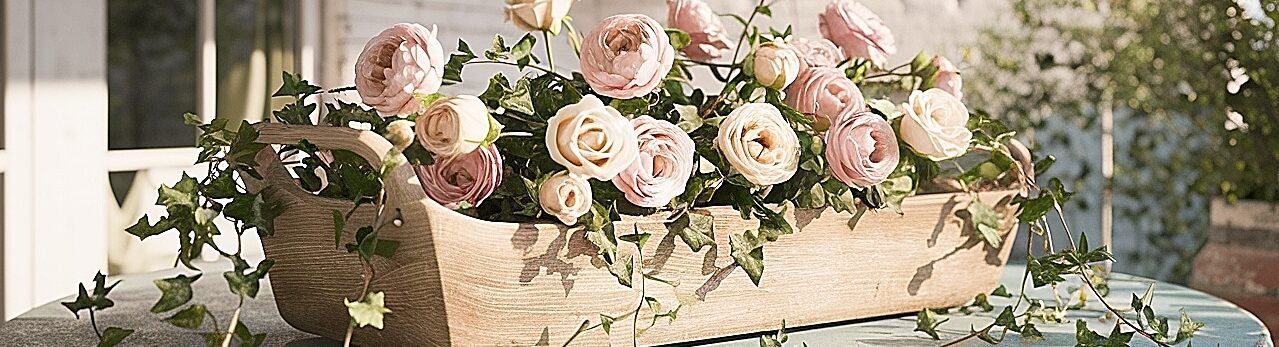
Rustic wooden boxes with waterproof liners inside offer excellent stability from their broad, flat bases. The rectangular shape fits coffee table geometry better than round vessels. Wood survives drops without shattering. The container’s sides protect rose stems from reaching hands. These boxes suit farmhouse aesthetics while solving practical coffee table challenges.
4. Galvanized Metal Buckets (Mini)
Small galvanized buckets bring farmhouse charm with serious durability. Metal doesn’t break. The weighted bottom resists tipping. The casual vibe suits relaxed living room settings. Bucket handles even allow easy temporary removal when the table needs clearing for game night or pizza delivery.
5. Squat Stoneware Crocks
Traditional stoneware crocks offer maximum weight in compact packages. Their low, wide proportions create inherent stability. The thick walls survive practically anything. Neutral colors complement any rose variety. These virtually indestructible vessels handle years of coffee table service without showing wear.
Read on for the two-zone tray system that keeps décor and daily items peacefully separated.
How to Build a Valentine Rose “Two-Zone” Tray for Clutter Control

The two-zone tray elevates basic tray styling into a genuine organization system. One zone holds decorative elements, roses, candles, pretty things. The second zone corrals functional items, remotes, coasters, small necessities. The physical separation prevents aesthetic and practical uses from interfering with each other.
This system acknowledges that coffee tables must actually work while still looking nice.
Select a rectangular tray long enough to create two distinct sections. An eighteen-inch tray divides nicely into two nine-inch zones. Visual dividers help, a small decorative object at the center boundary, or simply leaving an inch of empty tray between zones. The separation can be implied rather than literal.
Build your rose zone first. Compact vessel, three to five roses, maybe a small candle. Keep everything contained within half the tray’s length. Now build your functional zone. A small dish or box for remotes. A coaster stack. Whatever your household actually needs at hand during coffee table time. The two zones coexist within the tray’s boundaries, each serving its purpose without competing. Guests see an intentionally styled surface. Your family maintains full functionality. Everyone wins.
The following section tackles height, keeping arrangements low enough for comfortable viewing.
Ways to Make a Valentine Rose Bowl Centerpiece That Stays Low

Height causes most coffee table arrangement problems. Tall roses block TV screens during movie night. Elevated arrangements require craning around during conversations. On surfaces designed for gathering and viewing, anything over six inches tall becomes an obstacle. Low bowl centerpieces deliver visual impact without vertical interference.
These three approaches maximize beauty while minimizing height.
1. The Floating Head Display
Cut rose heads from stems entirely, leaving just a half-inch stub. Float heads face-up in a wide, shallow bowl filled with two inches of water. Total height: under four inches. The horizontal presentation displays petals at their most beautiful angle while eliminating all vertical obstruction. Add floating candles between roses for evening sparkle. This technique makes six roses look surprisingly abundant through concentration and reflection.
2. The Moss Bed Tuck
Fill a low wooden box or ceramic dish with preserved moss, creating a textured bed. Insert roses very short, stems cut to three inches, tucking them into the moss so heads rest just above the surface. The moss hides mechanics while adding earthy texture. Total arrangement height stays under five inches. The garden-like presentation suits rustic or natural décor styles.
3. The Tight Dome Cluster
Use a low, wide bowl and cut roses to graduated short lengths, center roses tallest at four inches, outer roses progressively shorter, outermost roses nearly horizontal. This builds a dome profile that concentrates roses into a lush mound under six inches tall. The tight clustering creates visual density that compensates for reduced height. The arrangement reads as abundant and intentional.
Continue reading for setups designed to survive family movie nights.
How to Style Valentine Roses for Family Movie Night Coffee Tables

Movie nights transform coffee tables into snack staging areas, drink holders, and foot rests. Decorations must coexist with popcorn bowls, beverage glasses, and the general chaos of family viewing. Rose arrangements need strategic positioning, bomb-proof stability, and compact footprints to survive these conditions.
Design for the worst-case scenario: excited kids, reaching arms, low lighting, and distracted attention.
Position your arrangement at the table’s back corner, the spot furthest from primary seating and least likely to encounter reaching hands. This corner placement removes roses from the active snacking zone while keeping them visible as background ambiance. The back-corner position also creates maximum distance from swinging feet and accidental kicks.
Choose your sturdiest container option. Weight it with stones before adding water. Keep the arrangement compact, nothing extending beyond the container’s footprint. Avoid dangling ribbons, trailing greenery, or any elements that might catch grabbing hands. The goal is a tidy, contained display that survives movie night without anyone needing to think about protecting it. Romance persists in the background while family activity claims the foreground.
The final section addresses the toughest audience: households with kids.
Ways to Place Valentine Roses on Coffee Tables When Kids Live There

Kids change every decorating calculation. They grab. They run. They bump. They’re curious. Coffee table roses in kid-occupied homes require extra consideration for safety, durability, and strategic placement that accounts for child behavior.
These three approaches let roses and kids coexist peacefully.
1. The Unbreakable Corner Setup
Position roses in a heavy, unbreakable container, metal, thick plastic, or wood, at the table corner nearest a wall and furthest from play zones. The corner placement creates natural protection. The wall backing prevents approaches from one direction. The unbreakable container survives any accidental contact without creating dangerous shards.
2. The Elevated Tray Island
Place your rose tray on a short stack of coffee table books, creating a slight elevation that signals “don’t touch” to kids while remaining visible. The book platform adds height that discourages casual grabbing while the tray boundaries define protected territory. Kids learn to navigate around this designated zone.
3. The Touch-Safe Floating Display
Use a heavy, shallow bowl for floating rose heads, no stems, no tall vessels, minimal water depth. If kids do touch the arrangement, there’s nothing to tip catastrophically. The shallow water poses minimal spill risk. The lack of stems means no poking hazards. This nearly foolproof setup survives kid curiosity without disaster.
Conclusion
Coffee tables earn their clutter honestly. They’re the workhorses of living room life, handling everything from remote storage to snack service to impromptu foot rests. Adding Valentine roses to these hardworking surfaces requires respecting their multi-use reality rather than pretending they exist solely for decoration.
The techniques throughout this guide, tray zoning, low arrangements, strategic corner positioning, kid-proof setups, all share one assumption: your coffee table will continue doing its job while hosting flowers. The roses become part of daily life rather than demanding a cleared stage. Romance integrates into reality. That’s sustainable Valentine decorating for homes where people actually live, relax, watch movies, and yes, occasionally put their feet up. Your coffee table can absolutely be both functional and beautiful.
This website contains affiliate links, and some products are gifted by the brand to test. As an Amazon Associate, I earn from qualified purchases. Some of the content on this website was researched and created with the assistance of AI technology.