This website contains affiliate links, and some products are gifted by the brand to test. As an Amazon Associate, I earn from qualified purchases. Some of the content on this website was researched and created with the assistance of AI technology.
Key Takeaways
- Strategic height placement keeps roses above typical dog reach and cat jumping zones
- Heavy, stable containers prevent tip-overs from tail wags, curious noses, and accidental bumps
- Console tables positioned behind furniture create natural barriers between pets and flowers
- High shelves above five feet typically exceed most cats’ comfortable jumping range
- Coffee table setups require weighted vessels and strategic positioning near table edges
- Each room offers specific pet-safe zones when you understand pet behavior patterns
- Cat-proof arrangements combine elevation, stability, and elimination of dangling temptations
Styling valentine rose decor for homes with pets (safe placement ideas) requires thinking like both a decorator and an animal behaviorist. I learned this the hard way after my golden retriever’s enthusiastic tail sweep sent a crystal vase crashing across the living room floor, water everywhere, glass shards in the carpet, roses scattered like crime scene evidence. That disaster cost me a vase, an afternoon of cleanup, and a trip to the vet to check for paw injuries. The roses survived. My confidence in traditional decorating approaches did not.
Pet ownership changes every decorating calculation. Dogs wag tails with zero spatial awareness. Cats consider every elevated surface a personal challenge. Both species investigate new objects with enthusiasm that destroys careful arrangements. Yet pet owners deserve Valentine romance just as much as pet-free households. The solution isn’t hiding beautiful things away until pets reach middle age and mellow out. The solution is understanding pet behavior patterns and designing around them. Every technique in this guide emerged from cohabiting with various four-legged family members while refusing to sacrifice holiday ambiance.
Use this table to choose the safest Valentine rose placement based on your pet type, your room, and your furniture. It compares placement zones, container choices, risk level, and quick safety upgrades—so you can decorate with grocery-store roses while keeping your home calm, functional, and cleaner.
| Pet Behavior + Risk | Best Placement Zones | Best Containers (Opaque + Stable) | Quick Safety Upgrades |
|---|---|---|---|
| Curious cat swatsclimbs Higher risk
|
High shelf with lip • tall cabinet top • console away from jump lines | Heavy ceramic crock • wide stoneware bowl • enamel cup on shelf coaster | Push back from edges • keep props minimal • compact low blooms • thorn removal |
| Chewer dog mouthygrabs stems Higher risk
|
High furniture zones • sideboards • closed-door rooms when needed | Wide-base stoneware • heavy crock • low bowl (less stem exposure) | Keep blooms compact • avoid low tables • remove thorns • keep stems short |
| Calm dog / calm cat sniffsrarely jumps Medium risk
|
Dining table back edge • sideboard • rolling cart away from traffic paths | Opaque crock • shallow bowl • stable enamel pitcher | Use coasters • keep arrangement low • avoid edge placement • tidy surfaces |
| Multi-pet home busymore motion Higher risk
|
Split bouquet into zones: sideboard + high shelf + console behind pet paths | Two small heavy crocks + one enamel cup • all opaque, low-profile | Zone plan • keep walkways clear • minimal props • quick move option (cart) |
Containers: heavy crock, wide bowl, enamel cup on coaster
Risk: Higher
Containers: wide-base stoneware, heavy crock, low bowl
Risk: Higher
Containers: two small heavy crocks + one enamel cup
Risk: Higher
How to Place a Valentine Rose Centerpiece Out of Pet Reach

Height becomes your primary tool when pets share your home. Dogs can’t reach what sits above their head height. Cats typically won’t jump to surfaces without clear landing zones. Understanding these behavioral limits creates safe placement opportunities throughout your home.
Most dogs can’t access surfaces above counter height, roughly thirty-six inches for large breeds, lower for smaller dogs. Cats present more challenge but generally avoid jumps exceeding five feet, especially to narrow or cluttered destinations.
Start by mapping your pet’s actual reach in each room. Stand where your dog typically moves and note what surfaces their nose, tail, and paws can contact. Watch where your cat actually jumps versus where they theoretically could. Most cats have preferred routes and ignore surfaces outside their established patterns. This behavioral mapping reveals safe zones specific to your particular pets.
Position Valentine roses in identified safe zones: high mantels, tall bookshelves, surfaces behind furniture barriers, locations without nearby launching platforms for cats. The roses remain visible and beautiful while staying beyond casual pet contact. A centerpiece on a high shelf creates the same romantic impact as one on a coffee table, arguably more, since elevated arrangements draw eyes upward and feel intentionally styled rather than casually placed. For more creative placement ideas in challenging spaces, explore these Valentine rose decor solutions for small nooks and breakfast corners that adapt well to pet-safe positioning. Know other pet owners planning Valentine decorating? Share this post with them!
Continue reading to discover containers designed to survive pet encounters.
What Are the Best Valentine Rose Containers for Pet-Safe Decor?
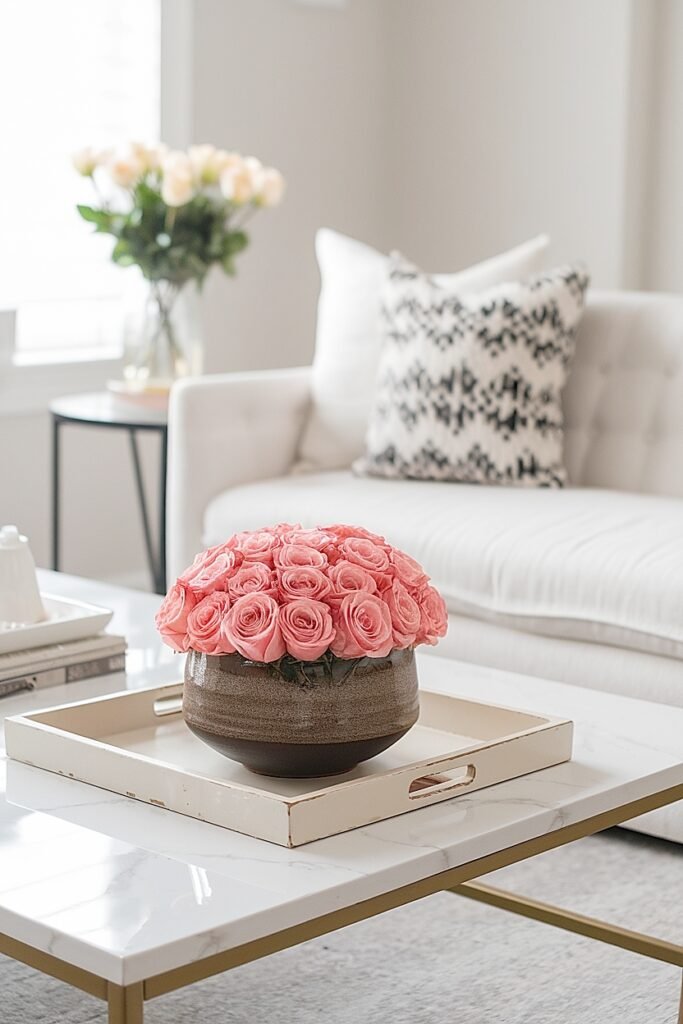
Container choice directly impacts disaster probability. Lightweight vessels tip from minor bumps. Glass shatters when knocked to floors. Tall, narrow profiles topple from tail swipes. Pet-safe containers prioritize stability and durability over fragile elegance.
These seven options survive pet-household realities while still looking beautiful.
1. Cast Iron Urns
Nothing tips a cast iron container. These heavyweight vessels require deliberate lifting to move, no accidental tail-swipe disasters possible. The substantial weight keeps arrangements stable even during enthusiastic pet zoomies nearby. Vintage cast iron urns from antique stores add character while providing maximum stability. Position on any surface without worrying about pet-induced tipping.
2. Heavy Ceramic Crocks
Thick-walled ceramic crocks offer significant weight in more accessible price ranges than cast iron. Their low, wide profiles resist tipping naturally. The pottery aesthetic suits farmhouse and traditional décor beautifully. Even cats pushing against these vessels rarely generate enough force to overturn them. Chips and scratches from pet encounters add rustic character rather than ruining appearance.
3. Weighted Metal Pitchers
Galvanized or copper pitchers filled with water become surprisingly heavy, stable enough to resist most pet interference. The metal construction survives falls without shattering if the worst happens. Their casual aesthetic suits everyday decorating while their weight provides practical pet-proofing. The pitched spout adds visual interest impossible with standard vases.
4. Concrete Planters
Small concrete planters offer extreme weight in compact packages. Modern geometric shapes suit contemporary homes. The material’s durability means drops and bumps cause no damage. Water won’t harm concrete, making flower use perfectly suitable. These industrial-aesthetic vessels withstand anything pets throw at them, sometimes literally.
5. Stoneware Crocks
Traditional stoneware crocks provide historic charm alongside practical weight. Their wide bases and thick walls create inherent stability. The neutral tones complement any rose color. Stoneware survives generations of use precisely because it’s nearly indestructible, ideal for pet households where survival matters.
6. Wooden Boxes with Jar Inserts
Wooden box planters with hidden jar inserts inside combine rustic aesthetics with practical stability. The box’s wide footprint resists tipping. If knocked over, wood and contained jars survive the fall intact. The combination looks intentionally styled while solving multiple pet-safety concerns simultaneously.
7. Low Terracotta Bowls
Wide, low terracotta bowls keep arrangements close to surfaces, minimizing tip potential. Their heavy clay construction adds weight. The broad base distributes roses horizontally rather than building vulnerable height. Mediterranean aesthetics suit many home styles. Even if displaced, terracotta’s durability usually survives the incident.
Read on for strategic furniture positioning that creates natural pet barriers.
How to Use Valentine Roses on Console Tables Behind Pet Zones
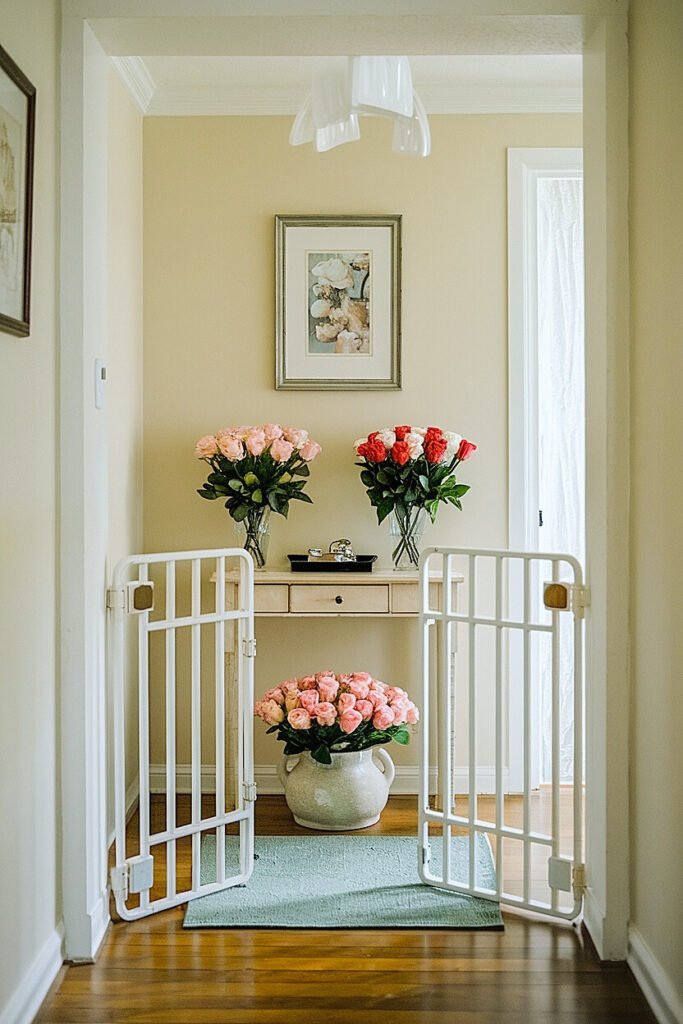
Console tables positioned behind sofas or between furniture pieces create natural barriers that discourage pet access. Dogs typically don’t navigate the narrow gap between sofa backs and walls. Cats rarely choose these awkward zones for exploration. This furniture geography protects roses without requiring elevation or special containers.
The key lies in understanding how your pets move through rooms and placing obstacles in their natural paths.
Map your dog’s typical routes through living spaces. Note where they run during excited moments, where they settle during calm times, where they never go. The zones behind furniture often register as “dead space” to dogs, not part of their mental room map. Console tables in these dead zones hold arrangements dogs essentially never contact.
Position a narrow console table behind your sofa, in the gap between seating and wall. Place Valentine roses here, visible from entry points and seating areas but physically blocked from pet access by the sofa itself. The furniture barrier works continuously without requiring training or vigilance. Your roses sit in plain sight, contribute to room ambiance, yet remain protected by your own furniture arrangement.
The following section explores elevated placement strategies for maximum pet-proofing.
Ideas for Valentine Roses on High Shelves Pets Can’t Access
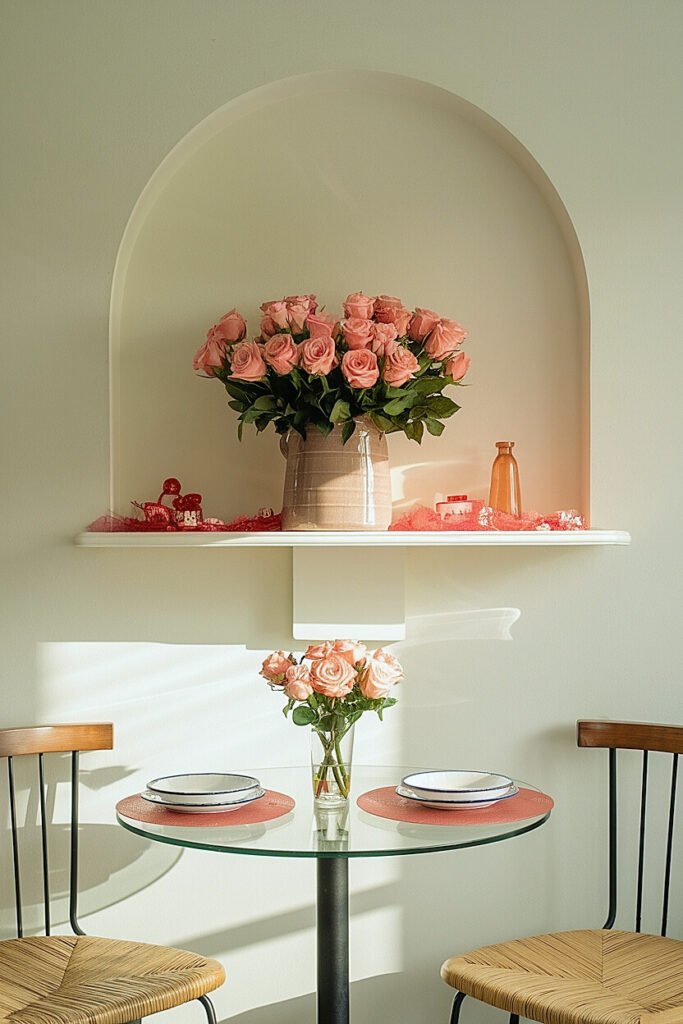
High shelves exceed most pets’ comfortable reach, creating genuinely safe display zones. Even athletic cats typically prefer destinations under five feet unless specifically motivated. High placement removes roses from pet awareness entirely, out of sight, out of mind, out of danger.
1. Crown Molding Shelf Installation
Install a narrow shelf just below ceiling height, running along one wall. This architectural feature creates display space cats won’t attempt reaching and dogs couldn’t access if they tried. Build a Valentine rose arrangement spanning part of the shelf’s length, positioned for viewing from below. The extreme elevation looks dramatic and intentional while solving pet-safety concerns completely.
2. Tall Bookcase Top Display
The top surfaces of tall bookcases, typically six to seven feet high, remain unused in most homes. Transform this wasted space into Valentine rose territory. Position arrangements centered on bookcase tops, visible from room entries and seating areas. The height prevents pet access while the visibility maintains decorative impact. Group several bookcases’ tops for a comprehensive high-zone decorating scheme.
3. Wall-Mounted Floating Shelves
Install floating shelves at five feet or higher, specifically for seasonal decorating. These purpose-built platforms accept Valentine arrangements without pet-accessibility concerns. Position shelves above furniture that blocks floor access, no launching platforms available means no cat attempts. The wall-mounted stability survives any vibrations from pet activity below.
Continue reading for coffee table strategies in pet households.
How to Create a Valentine Rose “No-Jump Zone” Coffee Table Setup
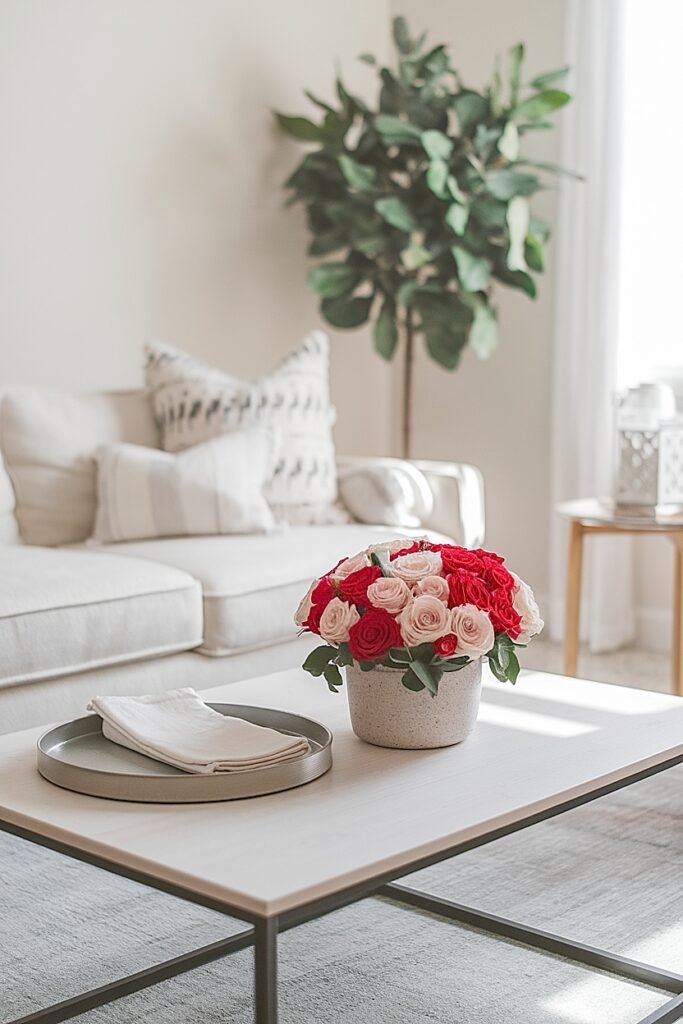
Coffee tables sit at peak pet-interference height. Dogs walk past and wag into them. Cats consider them convenient stepping stones. Creating pet-resistant coffee table arrangements requires combining multiple protection strategies.
The approach layers weighted containers, strategic positioning, and arrangement design that discourages interaction.
Start with the heaviest container your table surface can handle, something that requires deliberate effort to move. Position this container at the table’s back corner, furthest from typical pet traffic patterns. This corner placement reduces accidental contact while keeping roses visible from seating.
Build a low, compact arrangement without dangling elements that invite play. Cats especially target hanging ribbons, trailing greenery, or swaying stems. Keep everything tight and contained within the vessel’s footprint. Add weight inside the container before adding water, river rocks or decorative stones increase stability substantially. The completed setup resists casual contact while avoiding features that actively attract pet attention.
Below, discover the safest spots for roses in every room of your home.
What Are the Best Pet-Safe Valentine Rose Decor Spots in Each Room?
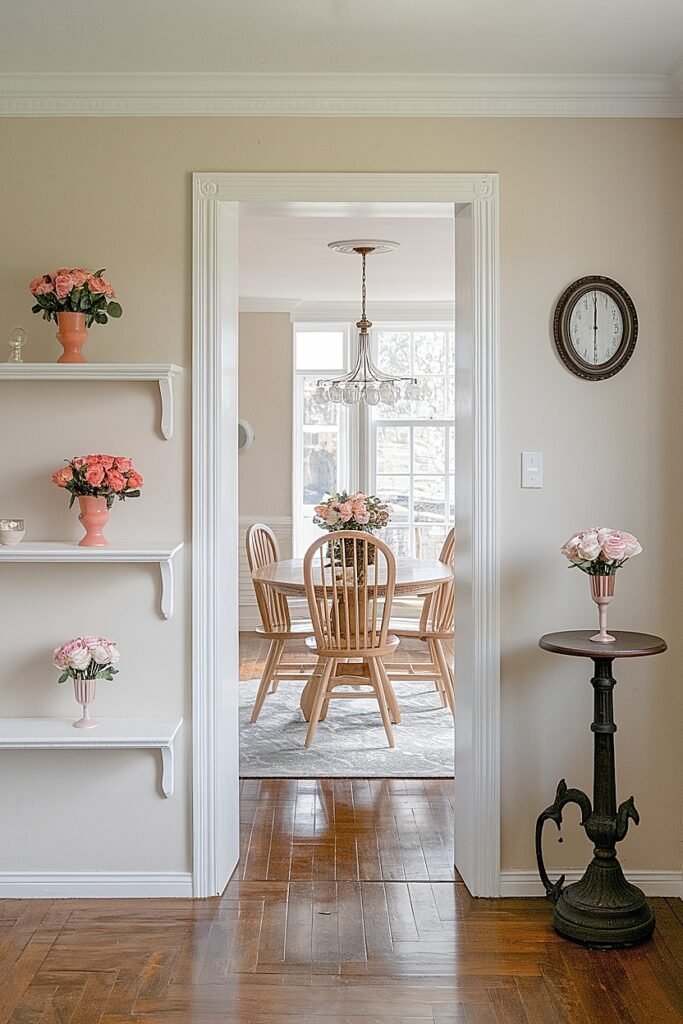
Each room offers specific opportunities when you understand pet behavior and furniture geography. These seven locations consistently provide pet-protection across different home layouts.
1. Mantel Centerpieces
Mantels sit above dog height and typically lack cat-accessible launching platforms nearby. Position Valentine roses centered on the mantel, surrounded by candles or decorative objects. The elevation and central positioning create focal impact while remaining genuinely pet-safe.
2. Bathroom Counter Arrangements
Bathrooms often stay closed to pets, creating completely protected decorating zones. A small rose arrangement on the bathroom counter adds unexpected Valentine romance to private spaces while staying isolated from pet access.
3. Bedroom Dresser Displays
If pets stay off bedroom furniture, enforceable through closed doors, dressers become safe rose destinations. Position arrangements toward the back of dresser surfaces, visible from the bed but removed from edges pets might contact.
4. Kitchen Cabinet Tops
The space above kitchen cabinets rarely serves any purpose yet remains highly visible. Install Valentine roses here for dramatic impact completely beyond pet reach.
5. Dining Room Hutch Shelves
Enclosed hutches or high hutch shelves protect roses behind glass or elevation. Position arrangements at eye level or above for best visibility while maintaining pet separation.
6. Entryway Console Surfaces
Entry areas often feature console tables positioned against walls, creating natural pet barriers. Roses here greet everyone arriving while staying protected from casual pet contact.
7. Home Office Desk Corners
If pets aren’t allowed in home offices, desk surfaces become safe Valentine zones. Position roses in back corners where work activities don’t disturb them.
The final section addresses the ultimate decorating challenge: cat-proofing.
How to Build a Valentine Rose Setup That Survives Curious Cats
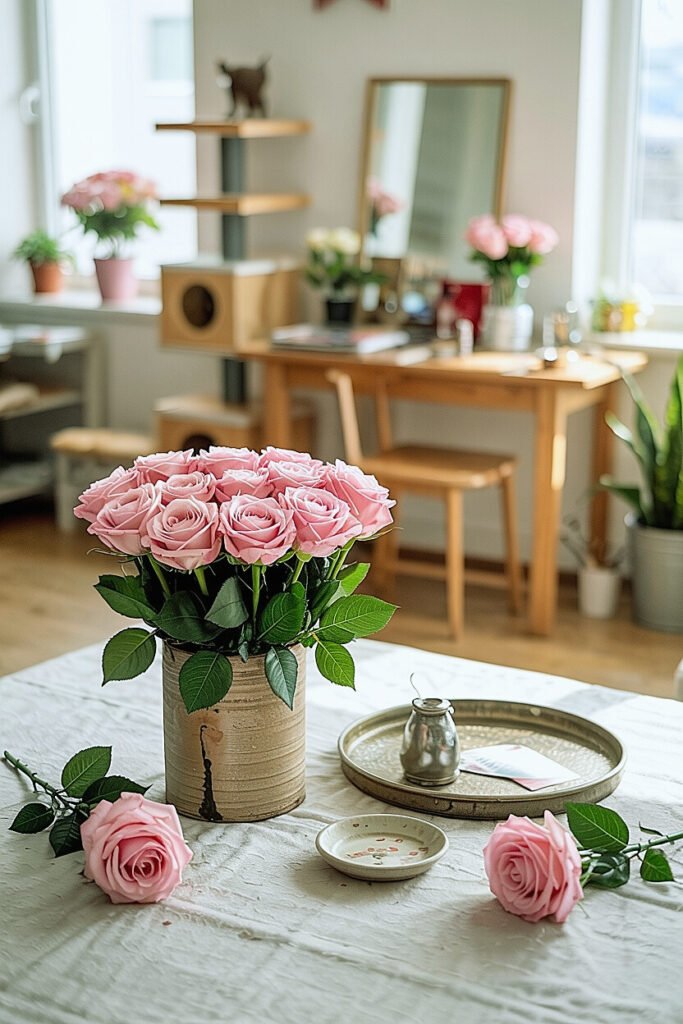
Cats present unique challenges. They jump. They climb. They investigate. They knock things over seemingly for entertainment. Cat-proofing roses requires eliminating both access and attraction.
Height alone doesn’t guarantee cat-proofing, cats can reach surprising destinations when motivated. The key lies in combining elevation with landing-zone elimination and attraction reduction.
Position roses on surfaces with no nearby launching platforms. Cats jump from furniture, not from floor level for heights over four feet. A shelf with no nearby furniture denies cats their preferred launch points. The additional effort required often exceeds their interest level, especially for temporary decorations that will disappear in a few days.
Eliminate dangling, swaying, or trailing elements that activate hunting instincts. Tight, compact arrangements without ribbons, hanging greenery, or moving parts bore cats quickly. Secure everything firmly, no wobbly vases, no precarious positions, nothing that moves when bumped experimentally. Weight containers heavily and position at the very back of surfaces, against walls. The combination of difficulty accessing, boring appearance, and stable construction makes rose arrangements invisible to most cats’ mischief radar.
Conclusion
Pet ownership and Valentine decorating coexist beautifully once you understand the behavioral principles involved. Height, weight, positioning, barrier furniture, and attraction elimination work together to protect roses from even the most curious four-legged family members.
These strategies emerged from years of trial and error in multi-pet households, the disasters that taught hard lessons, the successes that became permanent practice. Your pets aren’t obstacles to romance; they’re family members whose presence simply requires creative problem-solving. The Valentine roses you display this year can absolutely survive your household’s specific pet challenges. The techniques exist. The safe zones are waiting. Your romantic ambiance and your pets’ safety both get protected when you plan with intention rather than hope.
This website contains affiliate links, and some products are gifted by the brand to test. As an Amazon Associate, I earn from qualified purchases. Some of the content on this website was researched and created with the assistance of AI technology.