This website contains affiliate links, and some products are gifted by the brand to test. As an Amazon Associate, I earn from qualified purchases. Some of the content on this website was researched and created with the assistance of AI technology.
Key Takeaways
- Bistro nooks require ultra-compact arrangements that leave room for plates, cups, and elbows
- Banquette corners offer unique decorating opportunities using bench backs and built-in ledges
- Tray-based styling keeps rose arrangements contained and easily moveable for mealtime clearing
- Coffee station accents extend Valentine ambiance to functional nook areas beyond the table
- Two-seat corners benefit from asymmetrical arrangements positioned toward walls rather than center
- Corner-only decorating works when table surfaces can’t spare any space for flowers
Styling valentine rose decor for small dining nooks and breakfast corners presents challenges that standard dining rooms never face. These tucked-away spaces, the banquette wedged into a kitchen corner, the bistro table squeezed beside a window, the breakfast bar carved from apartment galley real estate, play by different rules. Standard centerpiece advice fails completely. I learned this decorating my first apartment’s breakfast nook, a space so tight that a traditional arrangement left no room for actual breakfast. The cereal bowl sat on my lap that morning.
Nooks and corners demand creative solutions that honor their spatial constraints while still delivering Valentine romance. The good news: these intimate spaces respond beautifully to minimal, thoughtfully placed decorations. A single rose in the right spot creates more impact here than elaborate arrangements in formal dining rooms. The concentrated sightlines mean every decorative element registers. Nothing gets lost in visual distance. Your small nook becomes an advantage once you understand how to work within its boundaries rather than against them.
Use this table to pick the best Valentine rose setup for your small dining nook or breakfast corner. It compares nook layouts, the best low rose approach, where roses should live (table vs furniture), and why each option works—so your nook stays cozy, romantic, and still totally usable for real meals.
| Nook Layout | Best Valentine Rose Setup | Where Roses Should Live | Why It Works |
|---|---|---|---|
| Tiny round bistro table 2 seats |
One low dome in a wide opaque crock | Table center or slightly off-center | Best Low height + full look; plates still fit |
| Banquette / built-in nook fixed seating |
Split into two low pieces (mugs/crocks) | Table back edge + clear serving lane | Best Protects elbow room; less bumping |
| Narrow nook table tight surface |
Runner line of small opaque cups | Centered line with even spacing | Good Styled look; low footprint; easy eating |
| Ultra-tiny table no centerpiece space |
Corner-only accents (shelf/cart/sideboard) | Nearby furniture zones, not the table | Best Keeps table clear; nook still feels decorated |
Place: center or slightly off-center
Why: Best full look, plates fit
Place: toward back edge, keep serving lane clear
Why: Best less bumping
Place: shelf, cart, sideboard near nook
Why: Best table stays usable
How to Style a Valentine Rose Centerpiece for a Tiny Bistro Nook
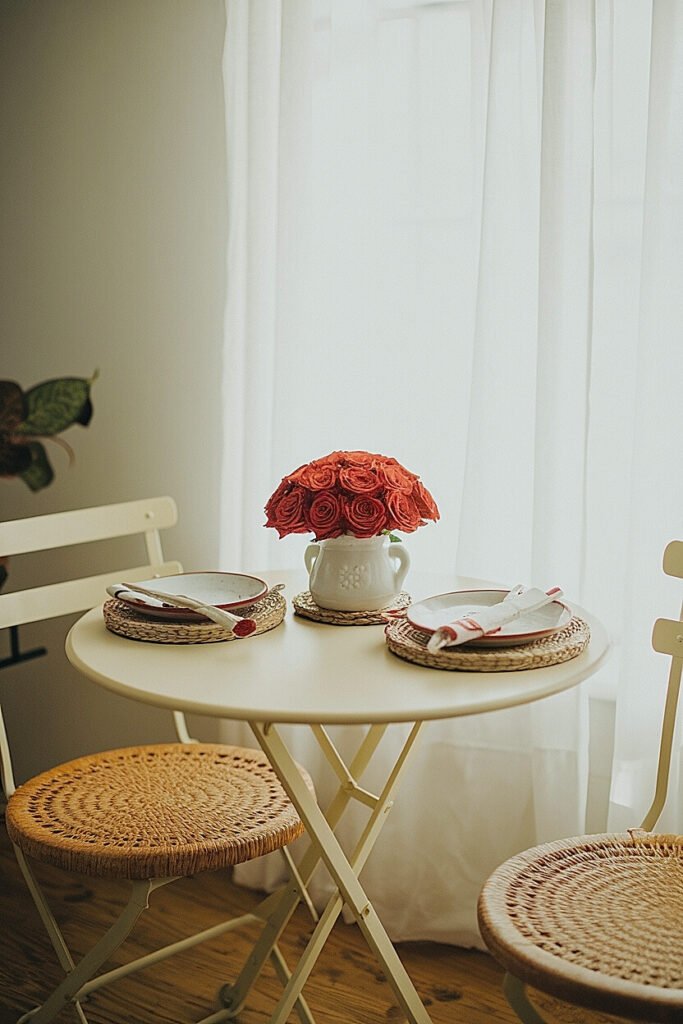
Bistro nooks, those two-person café-style setups, barely accommodate dinner for two, let alone dinner plus flowers. The typical thirty-inch round or twenty-four-inch square table leaves inches, not feet, for decorating. Traditional centerpieces would require diners to eat around an obstacle. Yet leaving bistro tables bare during Valentine’s feels like missed opportunity.
The solution lies in extreme scale reduction combined with intentional positioning. You’re not scaling down normal arrangements, you’re inventing bistro-specific approaches.
Select a vessel no larger than four inches in diameter. A short bud vase, a vintage cordial glass, a miniature ceramic pot. Fill with one to three roses maximum, stems cut to six inches or less. This modest arrangement occupies approximately the same footprint as a salt shaker, genuinely insignificant table real estate.
Position your micro-arrangement at the table’s back edge, against the wall or window. This placement removes it from the active dining zone entirely. Diners see the roses as backdrop rather than obstacle. Plates, glasses, and elbows occupy the front two-thirds of the table without conflict. The roses provide constant Valentine presence without demanding any functional space. A single candle beside the arrangement completes the atmosphere. For more techniques maximizing one bouquet across small table settings, explore these small dining table Valentine ideas using one rose bouquet that work beautifully in bistro contexts. Found this helpful? Share with friends who navigate similar small-space challenges!
Continue reading for layout options designed specifically for banquette seating arrangements.
What Are the Best Valentine Rose Layouts for Banquette Breakfast Corners?
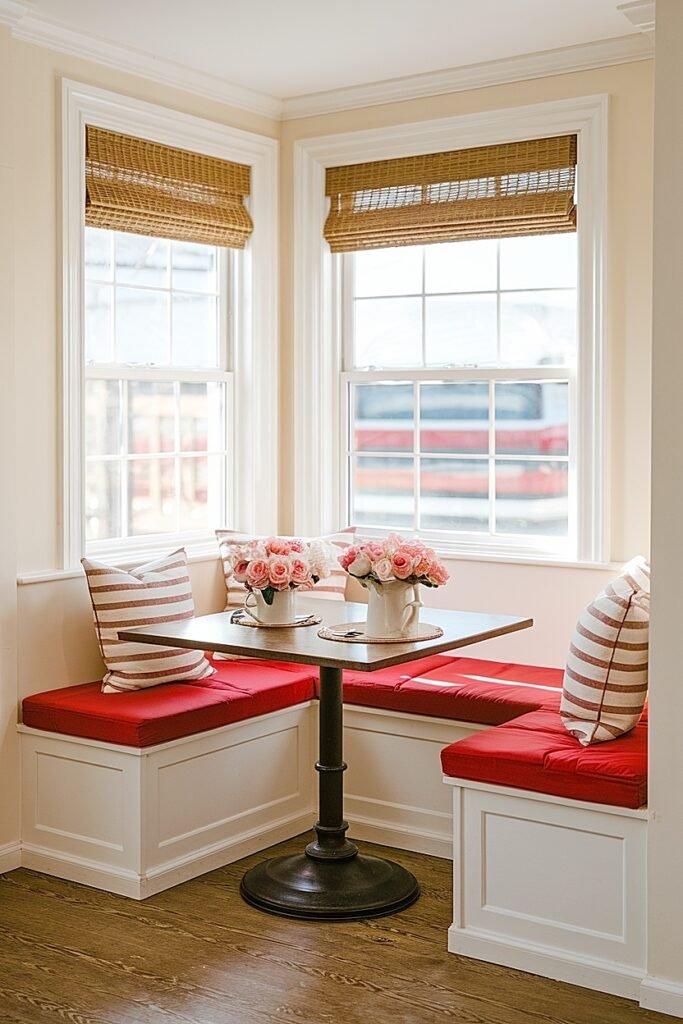
Banquettes transform corner spaces into cozy dining retreats, but their built-in nature creates decorating constraints, and opportunities, unique to this seating style. The bench back behind diners, the wall surfaces flanking the corner, the often-narrow table trapped between seats all factor into layout decisions.
These five approaches leverage banquette architecture rather than fighting it.
1. The Bench-Back Ledge Display
Many banquettes feature narrow ledges where bench backs meet walls. This overlooked surface becomes prime rose territory. Position a small arrangement on this ledge behind one diner’s head, visible to the person seated across. The roses occupy zero table space while remaining constantly visible during conversation. The elevated position creates backdrop romance without any dining interference.
2. The Corner Shelf Cluster
If your banquette corner includes floating shelves or built-in display niches, cluster your Valentine roses here rather than on the table. The architectural integration looks intentional and permanent rather than temporarily decorated. Group small vessels at varying heights for compound visual interest. Reserve the table entirely for dining function.
3. The Wall-Side Linear Runner
Position a narrow arrangement along the table’s edge closest to the wall, creating a runner effect that occupies the least-used table zone. Banquette diners rarely reach toward the wall side, that’s dead space during meals. Claim it for roses. A three-inch-wide linear arrangement adds substantial Valentine presence without touching functional table areas.
4. The Split-Corner Bookends
Place matching small arrangements at the two corners where table meets banquette bench, flanking diners with symmetrical rose accents. These corner positions stay clear during eating while framing the dining experience. The visual effect suggests abundance while actual flowers occupy only corner inches.
5. The Pendant-Height Arrangement
If pendant lighting hangs above your banquette, create a table arrangement that visually connects with the fixture’s height zone. This draws the eye upward, making compact table arrangements feel part of larger vertical design. The perceived scale increases without actual footprint expansion.
Read on for creative ways to incorporate roses into banquette bench seating itself.
How to Style Valentine Roses on Bench Ends and Corner Seats
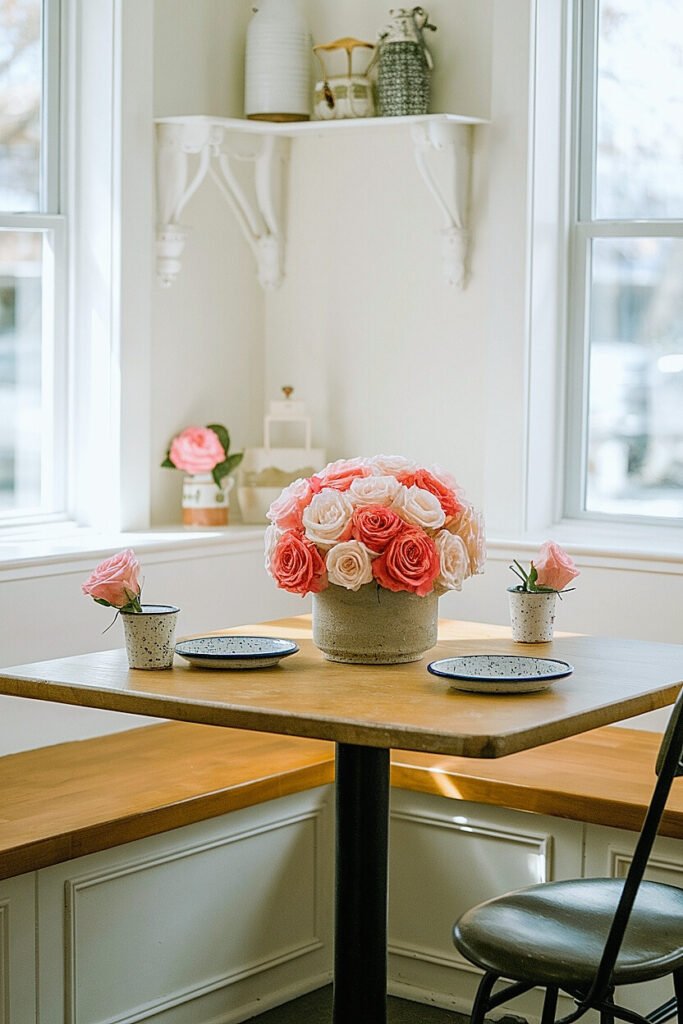
Bench seating creates opportunities centerpieces can’t, the benches themselves become decorating surfaces. Those bench ends, corner angles, and seat edges offer placement options that keep roses completely off eating surfaces while maintaining intimate proximity to diners.
Thinking beyond the table reveals surprising decorating real estate within arm’s reach.
Bench ends, the visible sides of banquette seating, accept small mounted or resting arrangements. A tiny shelf bracket supporting a bud vase, a hook holding a hanging vessel, or simply a weighted arrangement resting on the bench end itself. These positions stay clear of seating while remaining visible throughout meals.
Corner seats often feature small triangular zones where bench backs meet at right angles. These awkward corners typically collect crumbs and forgotten items. Transform them into Valentine flower stations instead. A compact arrangement sized to fit the triangle creates purpose for wasted space. The roses sit behind and beside diners, providing ambient romance without demanding table territory or seating area.
The following section explores tray-based approaches that keep nook decorating contained and practical.
Ways to Use Valentine Roses on a Breakfast Nook Tray (Contained + Tidy)
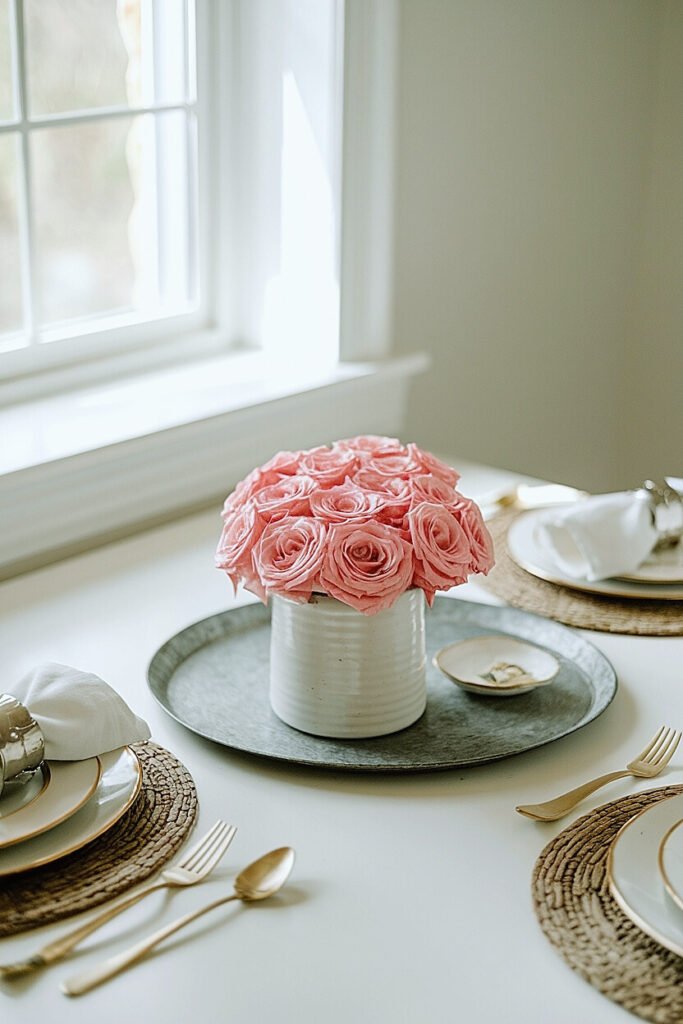
Trays solve the fundamental nook problem: decorations that need to disappear quickly when meal service requires the space. A tray-based arrangement lifts off in seconds, clears for breakfast, then returns when the meal concludes. This practical flexibility suits real nook life better than permanent centerpieces ever could.
These three approaches maximize tray functionality for nook-specific needs.
1. The Complete Lifting Vignette
Build your entire Valentine display on a handled tray: rose vessel, candle, small decorative accent. Everything lives on the tray. When breakfast arrives, grab the handles and move the complete vignette to a nearby counter. After eating, return it to the table. The arrangement never requires reassembly because nothing separates. This single-motion clearing makes daily meals practical alongside Valentine decoration.
2. The Proportional Nook Tray
Size your tray to occupy exactly one-quarter of your nook table surface. This ratio leaves three-quarters functional while providing meaningful decorating presence. Build a rose arrangement scaled to the tray’s dimensions, typically a four-inch vessel on an eight-inch tray. The contained proportion looks intentional rather than cramped. The tray boundaries create finished edges that standalone vessels lack.
3. The Multi-Purpose Serving Tray
Use a tray that serves double duty: Valentine display during non-meal times, actual serving tray during breakfast. Roses in a stable vessel remain in place while the surrounding tray surface holds toast, jam, butter. The flowers participate in the meal rather than conflicting with it. This integration approach embraces nook reality rather than pretending decorations and dining don’t compete for space.
Continue reading for coffee station styling that extends Valentine ambiance beyond eating surfaces.
How to Create a Valentine Rose “Coffee Station Nook” Accent
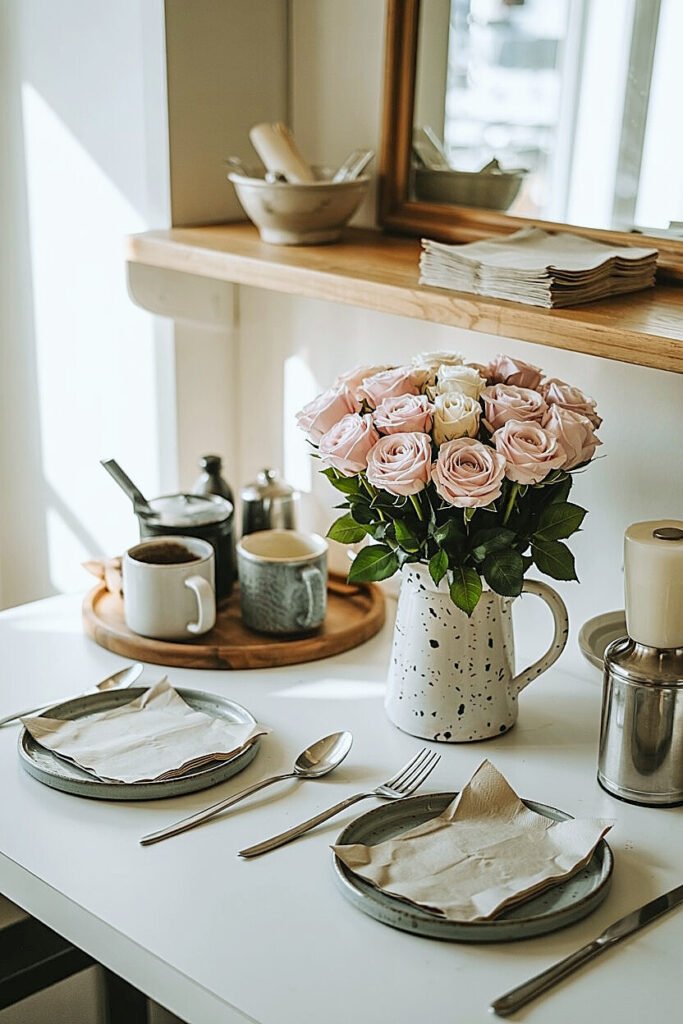
Many breakfast nooks include adjacent coffee stations, countertop zones for the maker, mugs, supplies. These functional areas rarely receive decorating attention, yet they anchor morning rituals that Valentine’s Day should celebrate. A rose accent here extends romantic atmosphere to the first moments of shared mornings.
Coffee station decorating requires understanding workflow. Arrangements can’t interfere with the actual coffee-making process.
Identify the dead zone in your coffee station: the corner where nothing functional lives, the shelf too high for daily reaching, the space beside the maker that collects random items. These neglected spots accept rose arrangements without impacting your caffeine routine.
Choose vessels that suit kitchen environments, something stable, not easily knocked over during the scramble for morning coffee. A short, weighted container works better than a tall, tippy vase. Fill with three to five roses, stems cut short. Position in your identified dead zone. The roses greet you during coffee preparation, adding unexpected romance to utilitarian mornings. The placement feels discovered rather than decorated, a small lovely surprise that makes February 14th mornings special before you’ve even reached the breakfast table.
The next section addresses centerpieces designed specifically for intimate two-person corners.
What Are the Best Valentine Rose Centerpieces for Two-Seat Breakfast Corners?
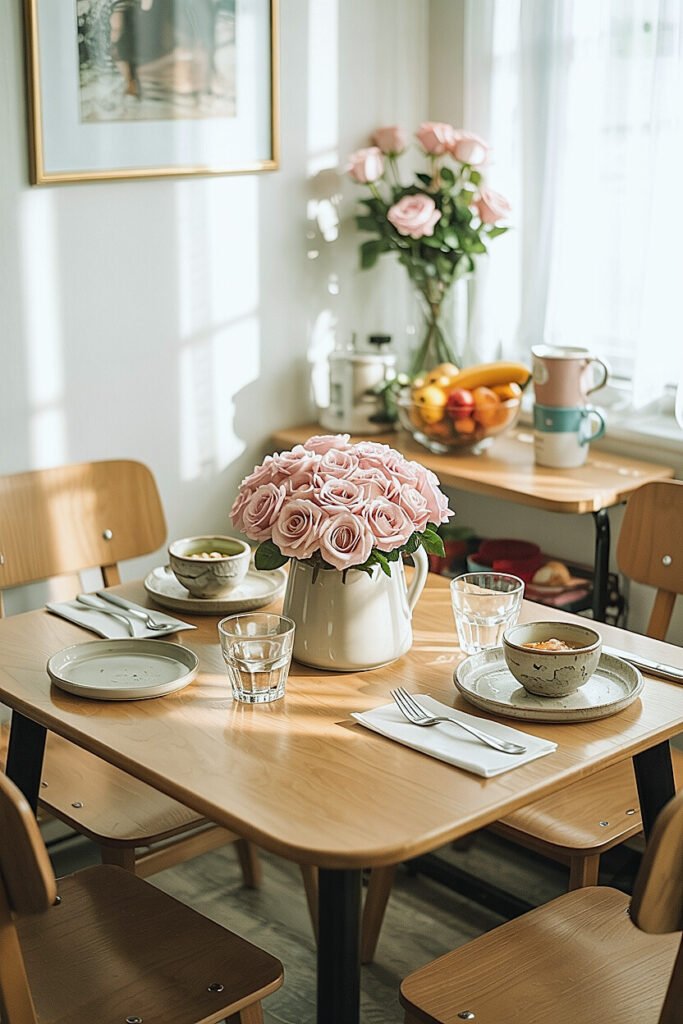
Two-seat corners, the smallest possible dining configurations, require the most restrained centerpiece approaches. These intimate settings can’t absorb elaborate arrangements. Yet their coziness actually amplifies romantic atmosphere, making even modest decorations feel significant.
1. The Shared Single-Stem
One perfect rose in a slender bud vase, positioned where both diners can see it equally. The singular bloom carries outsized romantic weight in intimate settings. The restraint reads as meaningful intention rather than budget limitation. Position at table’s back edge for maximum visibility with minimum interference.
2. The Asymmetrical Corner Cluster
Build a small arrangement at one table corner, the corner nearest the wall, furthest from diner movement. Three to five roses clustered tightly create a lush micro-display that stays completely out of dining function. The asymmetrical placement looks sophisticated rather than accidental.
3. The Floating Duo
Two rose heads floating in a shallow bowl of water, positioned at table center but occupying minimal height. The horizontal presentation stays below sightlines while occupying under four inches of footprint. Add a floating candle between blooms for evening sparkle.
Below, discover decorating solutions when tables truly can’t spare any surface space.
Ways to Create Valentine “Corner-Only” Decor When the Table Is Too Small
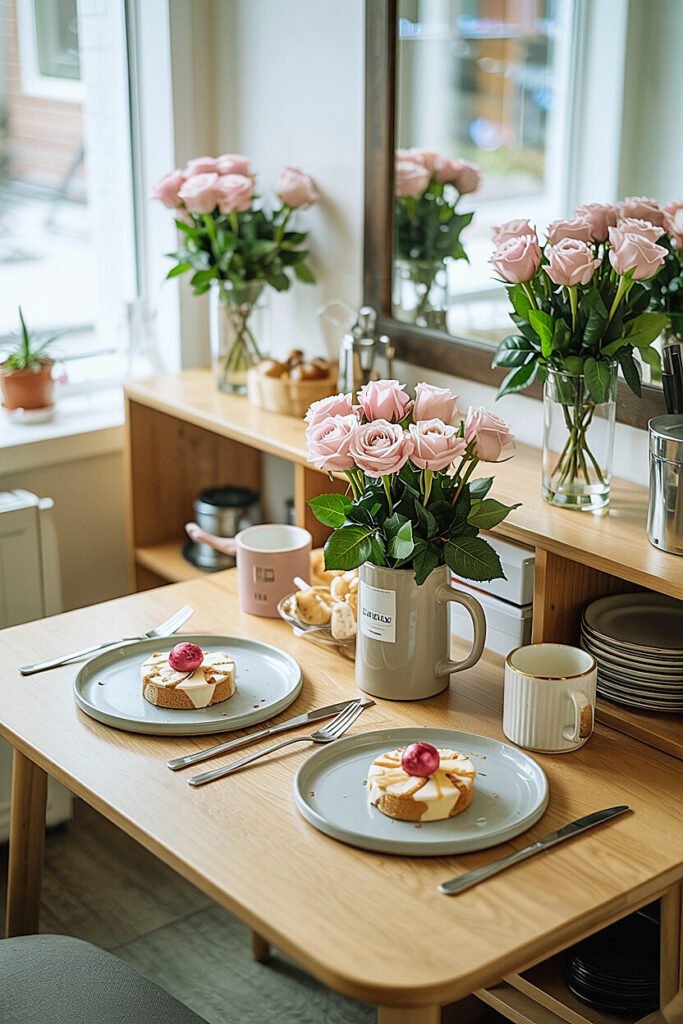
Some nook tables genuinely cannot accommodate any centerpiece. The surface fits plates and nothing more. Rather than forcing flowers where they don’t fit, relocate Valentine decorating to the corner itself, the architectural space surrounding the table.
1. The Window Sill Statement
If your nook adjoins a window, make the sill your primary rose display zone. Build a substantial arrangement here, more generous than any table centerpiece could be. The roses become backdrop visible throughout meals, framing diners against Valentine beauty. The table stays completely clear while roses remain constantly present in peripheral vision.
2. The Wall-Mounted Accent
Install a small wall shelf or hanging vessel on the wall nearest your nook table. Position at seated eye level so diners naturally see the roses during conversation. This vertical placement claims no table space whatsoever while keeping flowers intimate and visible. The arrangement becomes part of the room’s architecture rather than competing with dining function.
3. The Adjacent Surface Overflow
Identify the nearest surface to your nook that isn’t the table itself: a kitchen counter edge, a nearby bookshelf, a windowsill. Build your Valentine display there, positioned to be visible from nook seating. The roses occupy a different zone entirely while still providing romantic atmosphere for every meal. The separation actually creates interest, your eyes move between dining and decoration rather than competing for the same cramped territory.
Conclusion
Breakfast nooks and dining corners concentrate living into minimal square footage. The intimacy that makes these spaces charming also makes them challenging to decorate. Standard Valentine approaches, generous centerpieces, elaborate arrangements, multiple decorative elements, overwhelm rather than enhance compact corners.
The techniques throughout this guide embrace nook reality rather than fighting it. Micro-arrangements for bistro tables. Bench and ledge utilization for banquettes. Tray-based mobility for practical daily life. Coffee station extensions for morning romance. Corner-only solutions when tables truly can’t contribute surface space. Each approach emerged from actual small-space living and the creative problem-solving that compact dining demands. Your breakfast corner deserves Valentine beauty scaled to its dimensions, intimate, intentional, and genuinely workable within the space you actually have.
This website contains affiliate links, and some products are gifted by the brand to test. As an Amazon Associate, I earn from qualified purchases. Some of the content on this website was researched and created with the assistance of AI technology.