This website contains affiliate links, and some products are gifted by the brand to test. As an Amazon Associate, I earn from qualified purchases. Some of the content on this website was researched and created with the assistance of AI technology.
Key Takeaways
- Wooden dough bowls create elongated centerpieces perfect for rectangular tables and rustic aesthetics
- Wooden crates transform into portable coffee table trays that combine function with Valentine romance
- Tool caddies offer built-in compartments for creating organized, multi-element arrangements
- Proper waterproof liners protect wooden containers from moisture damage while preserving their charm
- Bread boxes and napkin caddies repurpose beautifully as unexpected Valentine rose vessels
- The contrast between rough wood grain and soft rose petals creates visual tension that elevates both elements
Styling valentines day decoration with roses using wooden containers brings warmth that glass and ceramic simply can’t match. There’s something about the combination, delicate petals against rough grain, romantic reds nestled in weathered brown, that feels both elegant and approachable. I discovered this pairing accidentally while searching my garage for a vase during a last-minute Valentine’s setup. An old wooden tool caddy caught my eye. On impulse, I lined it with plastic, added water tubes, and stuffed it with grocery store roses. The result outperformed every traditional arrangement I’d ever made.
Wood tells stories that manufactured containers can’t. The dents record history. The grain patterns create natural artwork. The weathering adds character that mass-produced décor lacks entirely. When you combine these authentically aged surfaces with fresh Valentine roses, you’re creating contrast that photographs beautifully and feels genuinely romantic rather than commercially styled. These techniques work whether you’re using heirloom wooden pieces passed down through generations or bargain finds from weekend antique hunts. The wood does half the decorating work simply by existing.
| Wood Container Type | Best Placement Zones + Rooms | Rose Count + Liner Needed | Reset Speed + Mess Risk |
|---|---|---|---|
| Wooden Dough Bowl sealed finish |
Dining table • sideboard • kitchen island | 8–14 roses • Liner: Yes | Reset: 60s • Mess: Medium |
| Wooden Crate tray style |
Coffee table • ottoman tray • family room | 6–10 roses • Liner: Yes | Reset: 30s • Mess: Low |
| Wooden Box (long) clean edges |
Dining table • console • shelf ledge | 7–12 roses • Liner: Yes | Reset: 60s • Mess: Medium |
| Wood Caddy / Organizer compartments |
Dining nook • entry console • kitchen counter | 2–6 roses • Liner: Optional | Reset: 20s • Mess: Low |
Roses: 6–10 • Liner: Yes
Reset: 30s • Mess: Low
Roses: 2–6 • Liner: Optional
Reset: 20s • Mess: Low
How to Make a Valentine Rose Centerpiece in a Wooden Dough Bowl
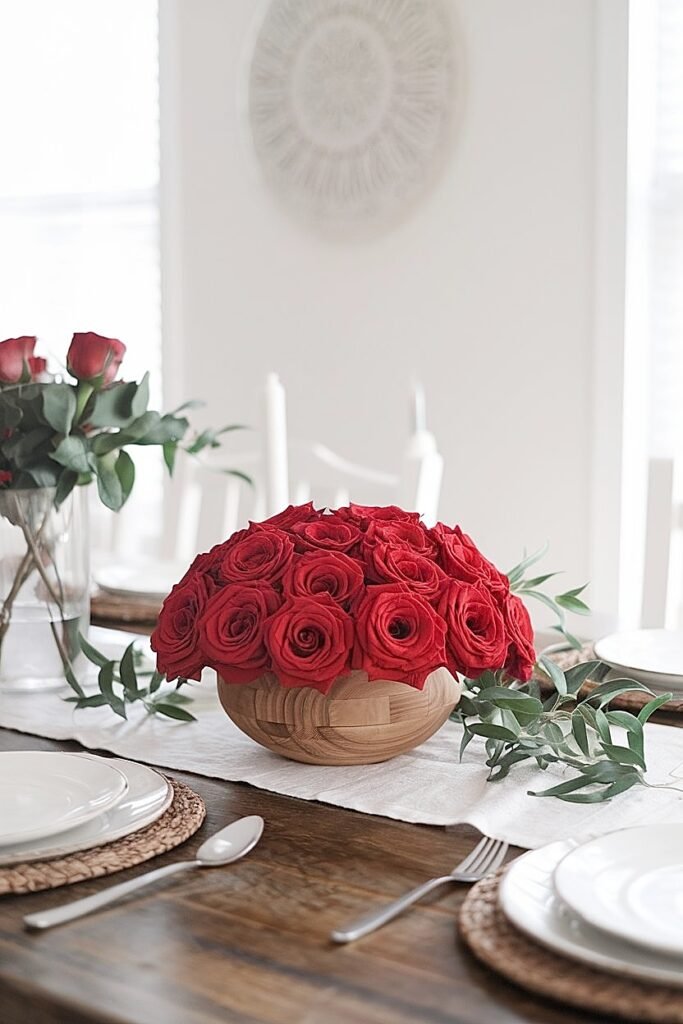
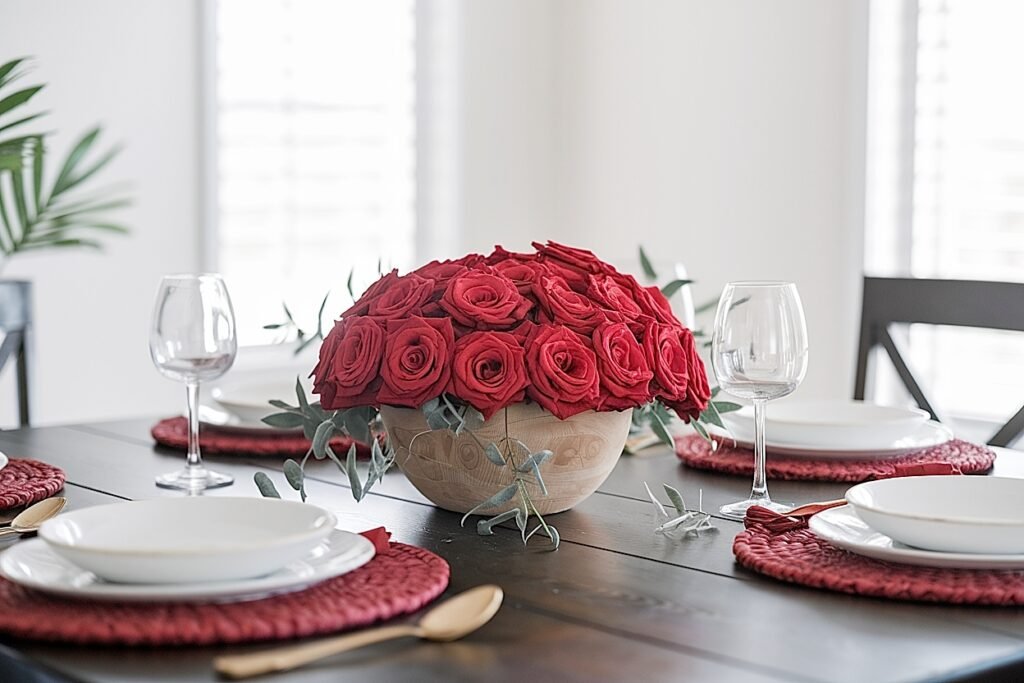
Dough bowls, those elongated wooden vessels originally used for bread-making, create centerpieces perfectly proportioned for dining tables. Their oblong shape follows table geometry naturally. Their shallow depth encourages horizontal arrangements that stay below conversation sightlines. I’ve used the same antique dough bowl for seven Valentine’s Days now, and it improves with each year’s patina accumulation.
The rustic character of weathered dough bowls contrasts beautifully with romantic rose colors. Deep reds against pale aged wood. Blush pinks nestled in dark walnut grain. The combination reads as sophisticated rather than precious.
Start by protecting your dough bowl with waterproof liner, plastic sheeting, a fitted plastic container, or floral liner material. Position this liner to follow the bowl’s interior contours. Add soaked floral foam blocks, cut to fit the liner’s shape. The foam provides both water retention and stem support for your arrangement.
Build your arrangement low and long, following the dough bowl’s natural proportions. Insert roses at slight outward angles so heads face the bowl’s long edges rather than straight up. Fill the length of the bowl rather than concentrating in the center. Tuck greenery around rose bases to hide foam and soften transitions between flowers and wood. The finished piece should measure under six inches tall while spanning the bowl’s full length, substantial presence without vertical obstruction. For more clutter-free centerpiece approaches, explore these Valentine rose ideas for coffee tables without clutter that share similar low-profile principles. Found this approach helpful? Share with friends who appreciate rustic styling!
Continue reading for wooden crate techniques that transform ordinary containers into stunning coffee table displays.
Ways to Style Valentine Roses in a Wooden Crate for a Coffee Table Tray
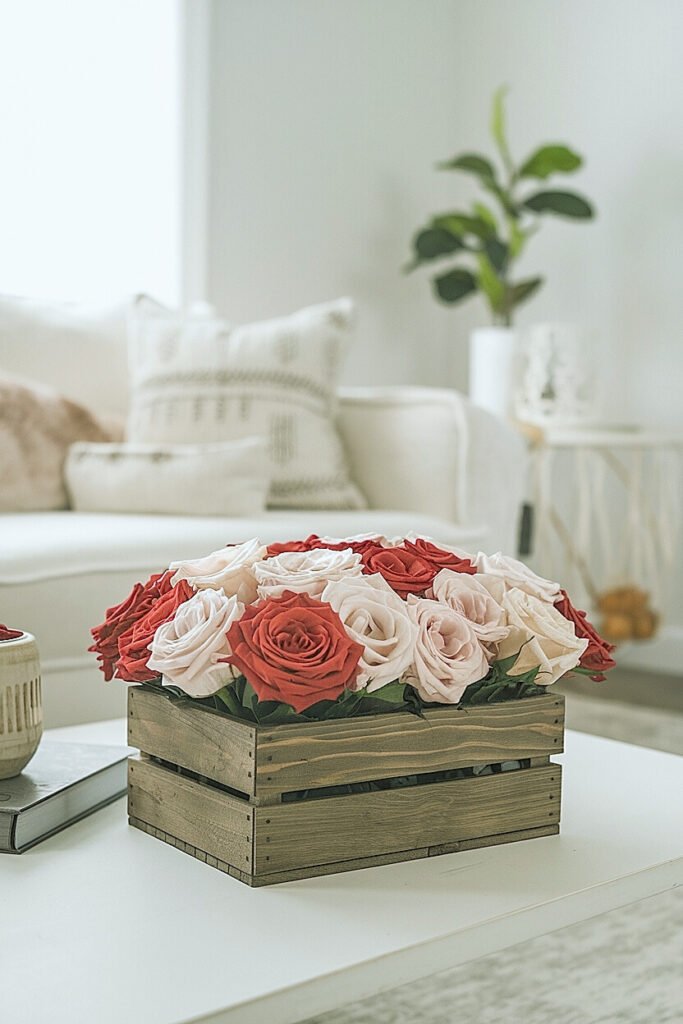
Wooden crates do double duty as both containers and trays, their built-in walls corral arrangements while their broad bases create serving surfaces. This dual function suits coffee tables perfectly, where roses must coexist with remotes, coasters, and everyday items.
These five approaches maximize crate potential for coffee table Valentine displays.
1. The Divided Compartment Setup
Use a crate with interior dividers, or add your own using small wooden boards. Dedicate one compartment to roses in a waterproofed insert. Fill remaining compartments with candles, decorative objects, and a small catch-all for remotes. The divisions create intentional zones that keep function and decoration peacefully separated.
2. The Central Jar Anchor
Position a mason jar at the crate’s center, surrounded by decorative filler, moss, river rocks, or fabric. The jar holds your roses while the surrounding materials hide mechanics and add texture. The crate walls protect the jar from bumps while framing the arrangement attractively.
3. The Multiple Mini-Vase Cluster
Arrange three to five small bud vases throughout the crate, each holding one or two roses. Scatter the vases among candles and decorative elements. This distributed approach creates lush coverage without requiring elaborate arranging skills. The crate contains the cluster into a cohesive display.
4. The Horizontal Laid Rose Display
Line the crate bottom with moss or fabric. Lay roses horizontally across this bed, stems tucked under heads at one end. Add scattered petals and small candles around the laid roses. This unexpected presentation feels gift-like and romantic without requiring any water, perfect for display-only arrangements.
5. The Functional Tray Integration
Position roses in one crate corner, leaving the remaining surface for actual tray function, coasters, a small dish for keys, room for setting down drinks. The roses become part of a working tray rather than claiming the entire surface.
Read on for creative sideboard styling using repurposed bread boxes.
How to Style Valentine Roses in a Wooden Bread Box on a Sideboard
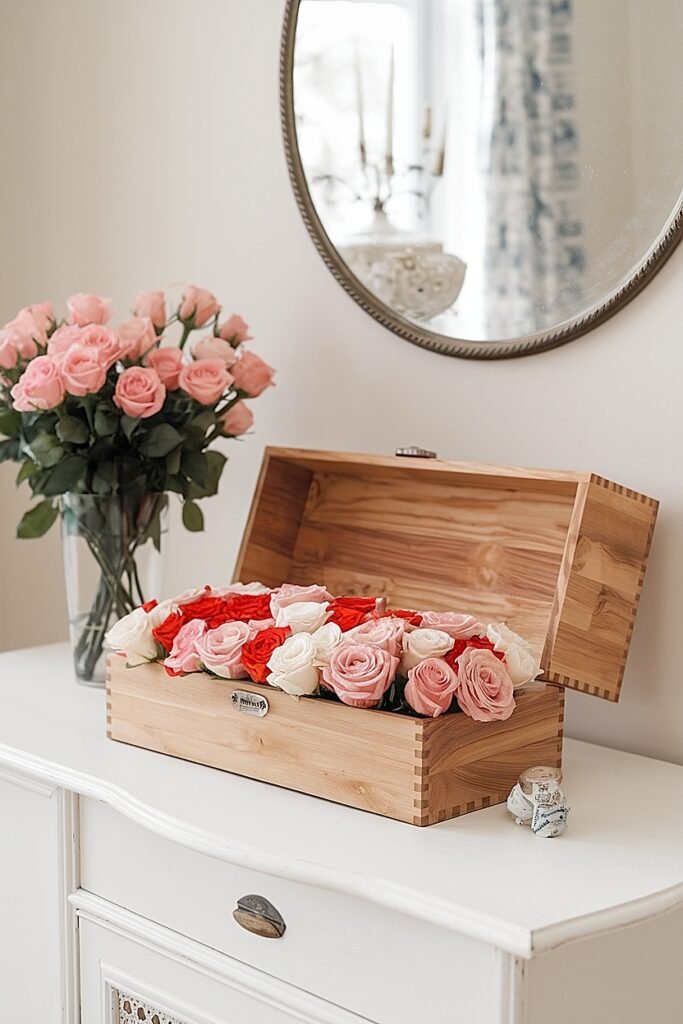
Vintage wooden bread boxes, the kind with hinged lids or roll-top covers, create unexpected Valentine vessels with built-in drama. The enclosed structure adds mystery. The opened lid frames roses theatrically. I found my favorite bread box at an estate sale for eight dollars, and it’s become my go-to Valentine container for sideboard displays.
Sideboards offer ideal positioning for bread box arrangements, elevated above dining activity, visible from multiple room angles, protected from the casual bumps that endanger coffee table displays.
Select a bread box with an interior deep enough to hold a modest arrangement, typically six inches minimum depth. Remove any interior shelving that might interfere with flower height. Line the bottom with waterproof material, then position a low container inside to hold water and stems.
Stage the bread box with its lid open, positioned so the raised lid frames your roses from behind. The wooden enclosure creates a backdrop that makes modest arrangements feel more substantial. Build a compact rose cluster inside, keeping height proportioned to the box’s opening, you want roses visible without spilling over the front edge. Add greenery trailing slightly over the box’s front lip for natural softening. The finished display looks like a discovered treasure rather than standard decoration.
The following section explores tool caddies, my personal favorite wooden container for Valentine arrangements.
Ideas for a Valentine Rose Arrangement in a Wooden Tool Caddy
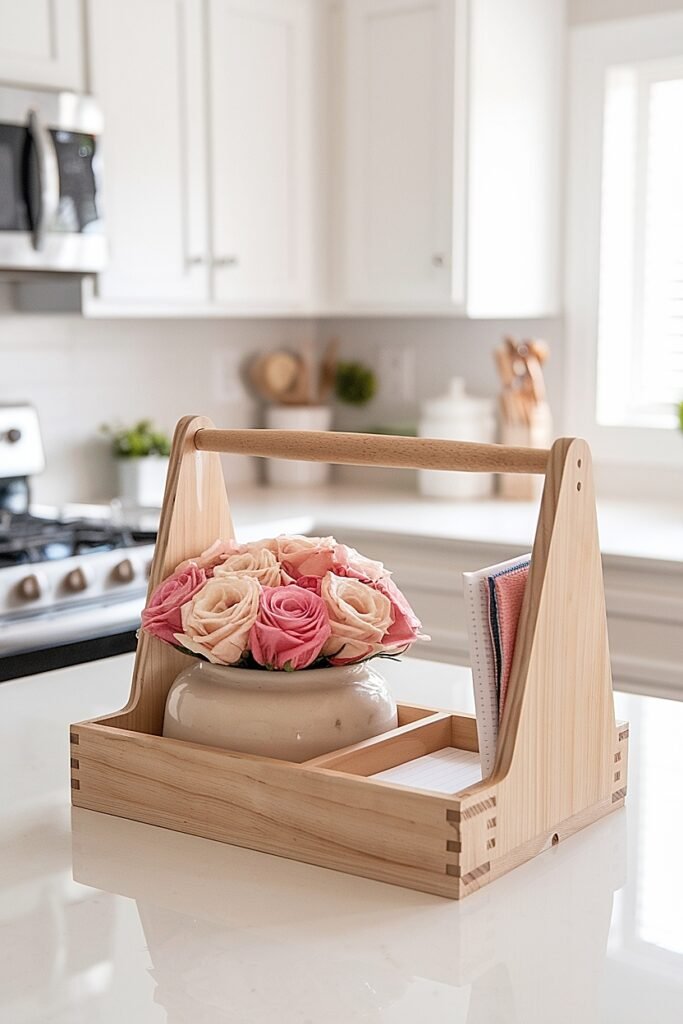
Tool caddies offer what other wooden containers lack: built-in organization. The central handle divides the container naturally. The compartmented design suggests arrangement structure without requiring elaborate planning. These utilitarian objects become surprisingly elegant when filled with roses.
1. The Handle-Straddling Centerline
Build a low arrangement that straddles the central handle, roses clustered on both sides with greenery arching beneath the handle to unify the display. The handle becomes a design element rather than obstacle. The symmetry across the dividing line creates balanced visual weight.
2. The Compartment Color Story
Assign different rose colors to each caddy compartment, deep red on one side, blush pink on the other. The physical division becomes color separation that feels intentional and designed. Add neutral greenery as buffer between the color zones. The organized palette reads as sophisticated rather than random.
3. The Roses-Plus-Elements Division
Fill one compartment entirely with roses. Fill the other with complementary elements, candles, decorative objects, small frames, meaningful trinkets. The division creates a vignette that tells a story rather than simply displaying flowers. The roses become one element among several curated pieces.
4. The Graduated Height Approach
Use the handle as a visual center point, building taller roses nearest the handle and progressively shorter roses toward the outer edges. This graduation creates a mountain profile that draws eyes to the center while keeping outer edges low. The handle anchors the peak naturally.
5. The Trailing Greenery Frame
Concentrate roses at the caddy’s center, then allow greenery to trail over all edges, softening the wooden container’s hard lines. The trailing elements transform the utilitarian shape into something organic and romantic. Eucalyptus works particularly well for this cascading effect.
Continue reading for dining table box centerpieces sized for formal settings.
Ways to Create a Valentine Rose Wooden Box Centerpiece for Dining Tables
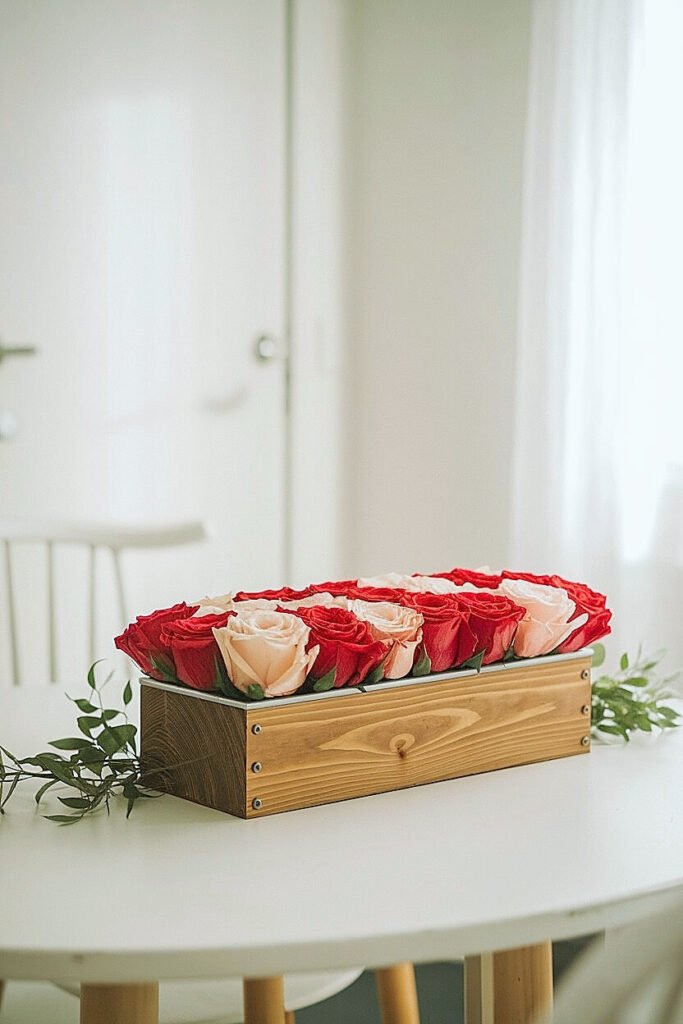
Wooden boxes designed for centerpiece use, or repurposed from other functions, suit dining table proportions when sized appropriately. The rectangular geometry follows table shapes naturally. The substantial presence commands attention without overwhelming place settings.
1. The Low Trough Runner
Select a long, narrow wooden box, roughly four inches wide and eighteen to twenty-four inches long. Line with waterproof material and fill with soaked floral foam. Build a continuous low arrangement spanning the box’s full length, creating a rose runner effect. Keep height under five inches for unobstructed conversation. The elongated proportion draws eyes along the table’s axis while leaving ample room for place settings on either side.
2. The Elevated Footed Display
Mount a modest wooden box on short wooden feet or blocks, creating a pedestal effect that adds presence without increasing flower height. The elevation separates the arrangement from the table surface visually, making even compact displays feel more significant. The raised positioning also improves visibility for diners at further table positions.
3. The Three-Box Graduated Set
Use three matching or coordinating wooden boxes in graduated sizes. Arrange in a row with the largest box centered, smaller boxes flanking. Build matching arrangements in each, proportioned to box size. The trio creates compound presence while each individual box remains manageable. The graduated sizing adds visual rhythm impossible with single containers.
4. The Moss-Lined Garden Box
Line a shallow wooden box with moss before adding roses, creating a garden-bed effect. Insert roses short so heads rest just above the moss surface. Add small decorative elements tucked among stems, tiny pinecones, small ornaments, meaningful objects. The garden presentation suits farmhouse and natural aesthetics while keeping overall height minimal.
5. The Candle-Integrated Romance Box
Build a wooden box arrangement that incorporates candles among roses. Position battery candles at box corners or ends, roses filling the center. The integrated lighting transforms dinner into romantic occasion without requiring separate candle holders competing for table space. The box contains everything, flowers and light, in one cohesive display.
Read on for napkin caddy repurposing that creates charming nook-sized arrangements.
Ways to Use Valentine Roses in a Wooden Napkin Caddy for Dining Nooks
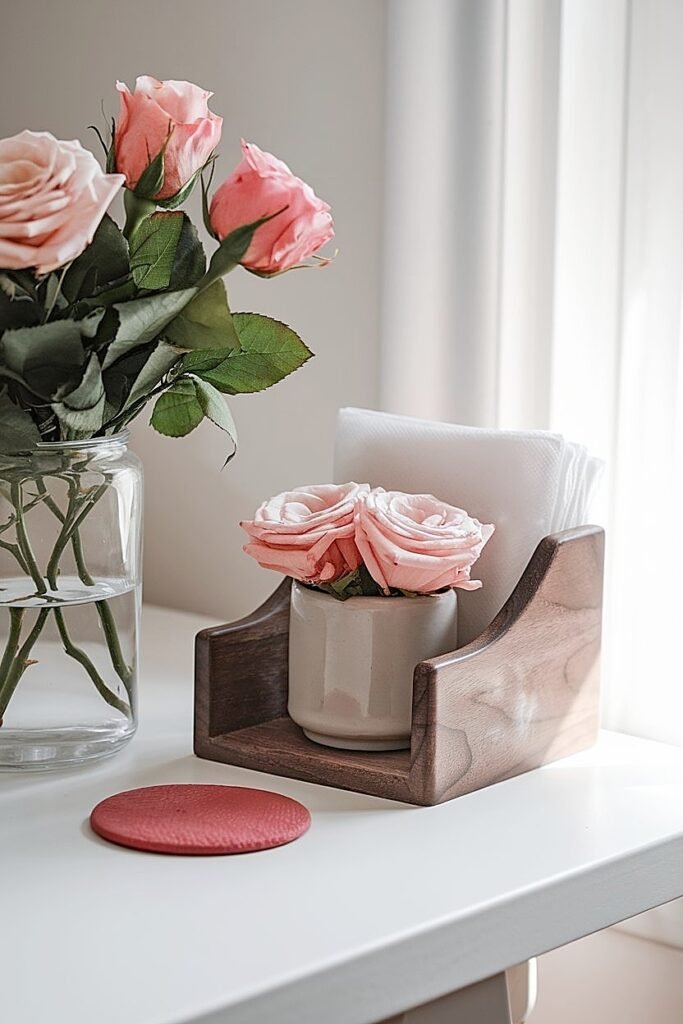
Napkin caddies, those small wooden boxes designed to hold folded napkins upright, create perfectly scaled arrangements for breakfast nooks and intimate dining spaces. Their modest dimensions suit tight tables. Their familiar form adds approachable charm.
1. The Napkin-and-Rose Hybrid
Keep the caddy functional while adding romance. Position napkins in half the caddy as intended. Fill the other half with a small water-holding insert and three to four roses. The hybrid use maintains the object’s original purpose while transforming it into Valentine décor. Diners grab napkins beside beautiful roses.
2. The Fully Converted Arrangement
Dedicate the entire caddy to roses, abandoning napkin function entirely. Line with waterproof material, add a small container for water, fill with roses cut short enough to sit just above the caddy’s top edge. The familiar shape in unfamiliar use creates pleasing surprise. The compact size suits the smallest dining surfaces.
3. The Horizontal Petal Display
Remove the napkin function entirely and lay the caddy on its side. Line the now-horizontal interior with moss or fabric. Lay rose heads and scattered petals across this bed. Add tiny candles or decorative elements among the roses. The unexpected orientation transforms utilitarian object into romantic display piece.
The final section covers the critical topic of protecting wooden containers from water damage.
What Are the Best Valentine Rose Liners for Wooden Containers?
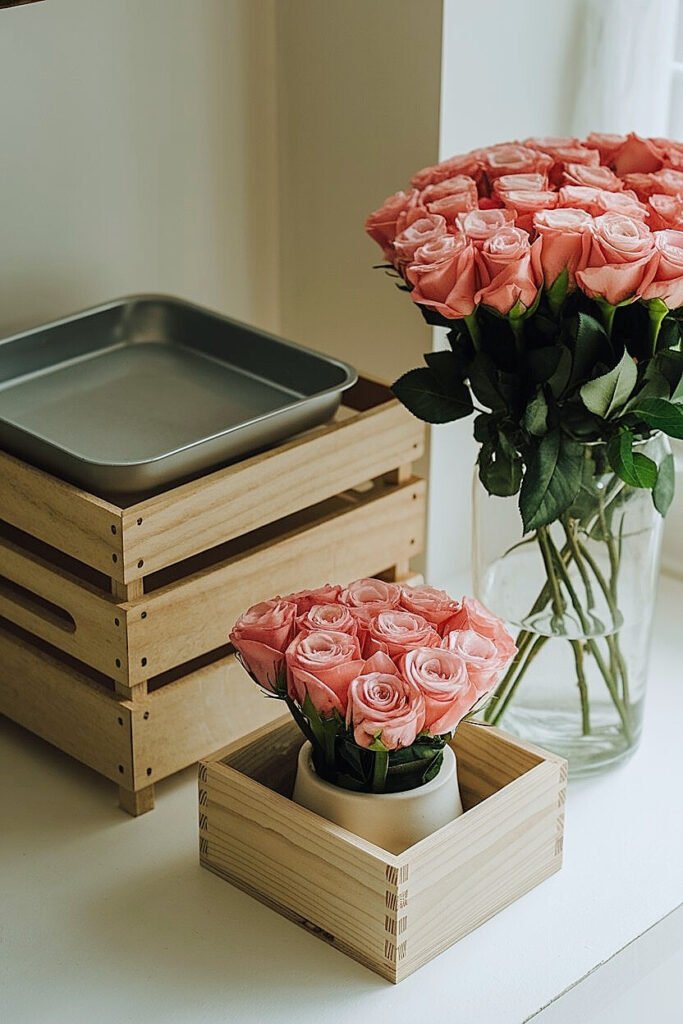
Water destroys unprotected wood. Every wooden container arrangement requires waterproofing between moisture and material. Proper lining preserves your vessels for years of repeated Valentine use while preventing the warping, staining, and rot that unprotected exposure causes.
1. Plastic Nursery Pot Inserts
Plastic pots designed for nursery plants fit inside many wooden containers perfectly. Their rigid structure holds shape independently. Their manufactured waterproofing requires no additional treatment. Select pots sized slightly smaller than your wooden container’s interior, shimming with moss or fabric to fill gaps. The pot holds water and roses; the wooden container provides only visual shell.
2. Heavy-Duty Plastic Sheeting
Cut heavy plastic sheeting, painter’s drop cloths or pond liner material, to fit your container’s interior. Press into corners and secure with staples hidden below the container’s rim line. The custom fit accommodates any container shape while providing reliable waterproofing. Replace annually if staple holes compromise the seal.
3. Floral Foam Trays
Plastic trays designed to hold floral foam provide contained waterproofing in shallow containers. The tray holds water while the foam provides arranging structure. Select tray dimensions smaller than your container interior, hiding edges beneath greenery or moss. These purpose-built inserts suit shallow dough bowls and low wooden boxes particularly well.
Conclusion
Wooden containers transform Valentine rose arrangements from standard to distinctive. The material’s natural warmth, visible history, and textural character elevate simple flowers into styled displays that feel personal rather than purchased. Dough bowls, crates, bread boxes, tool caddies, napkin caddies, each brings unique proportions and personality to rose arrangements.
These techniques emerged from years of hunting antique stores, raiding garages, and experimenting with wooden objects never intended for floral use. The best arrangements often come from the least obvious containers. That forgotten bread box. The tool caddy gathering dust. The crate stacked in the basement. With proper waterproofing and creative vision, these humble wooden vessels become Valentine statement pieces that glass vases can never match.
This website contains affiliate links, and some products are gifted by the brand to test. As an Amazon Associate, I earn from qualified purchases. Some of the content on this website was researched and created with the assistance of AI technology.