This website contains affiliate links, and some products are gifted by the brand to test. As an Amazon Associate, I earn from qualified purchases. Some of the content on this website was researched and created with the assistance of AI technology.
Key Takeaways
- Roses must never touch food directly, food safety isn’t optional, regardless of how gorgeous the Instagram shot might be
- Corner anchor positioning keeps roses visible while leaving the entire board surface available for grazing
- Round tables require radial thinking where roses orbit the board rather than flanking it linearly
- Backdrop lines create depth and visual framing while maintaining complete separation between florals and edibles
- Crowded tables demand narrow, stable containers that resist tipping when jostled by enthusiastic grazers
Styling Saint Patrick’s Day roses around a charcuterie spread creates a stunning presentation that elevates grazing boards from casual snacking to genuine entertaining art. I discovered this combination during a Saint Patrick’s Day gathering where my charcuterie looked delicious but photographed as just another meat-and-cheese arrangement. Adding green and white roses around, not on, the board transformed the entire scene into something guests actually stopped to admire before diving in.
The challenge lies in the “around” part of this equation. Roses cannot touch food. Period. Flowers carry bacteria, pesticides, and other substances that have no business near anything your guests will eat. But the visual harmony of roses framing artfully arranged cheeses, cured meats, and accompaniments creates presentation impact that food alone cannot achieve. The trick is integrating florals into your charcuterie scene while maintaining absolute separation between decorative elements and edible ones. Done correctly, roses and charcuterie become dance partners that never actually touch.
Here’s the part readers always get stuck on: where to put the roses so the charcuterie still feels easy to grab.
This table makes it simple. It’s a placement + sizing + “don’t-block-hands” cheat sheet you can follow in 60 seconds, whether you’re styling a dining table, kitchen counter, porch console, or patio setup.
Saint Patrick’s Day Roses + Charcuterie: Food-First Placement Guide
Pick a setup fast. Keep roses low, stable, and out of the grab zone. Indoors + outdoors.
| Surface | Best Placement | Container + Size | Do / Don’t |
|---|---|---|---|
| ● Dining Table |
Best two far corners OR low “back line” behind board Avoid roses beside bowls/dips |
Low wide bowl or squat crock. Hunter greens trimmed tight. |
Do keep board perimeter clear Don’t let foliage drape toward food |
| ● Island/Counter |
Best tray buffer behind board + tiny minis on tray corners Avoid decor in front of board |
Tiny matte cups + heavier bases. No overhang. |
Do roses on tray, tools nearby Don’t block the counter lane |
| ● Outdoor Patio |
Best low heavy “end points” on edge + mini on serving console Avoid tall pieces (wind + wobble) |
Heavy matte vessels. Low + wide for stability. |
Do keep center for food Don’t crowd a round table |
| ● Porch Console |
Best roses as end caps only; open middle lane Avoid center flowers (hands collide) |
Low crocks, wide base, tucked back. |
Do frame like bookends Don’t place flowers beside dips |
| ● Crowd Control |
Best end caps + separate refill sideboard station Avoid center clutter |
Squat crocks + short greens. Elbow-safe. |
Do split serve vs refill Don’t put roses by bowls |
● Dining Table▼
● Island/Counter▼
● Outdoor Patio▼
● Porch Console▼
● Crowd Control▼
How to Build a Saint Patrick’s Day Charcuterie Board with Roses That Don’t Touch Food
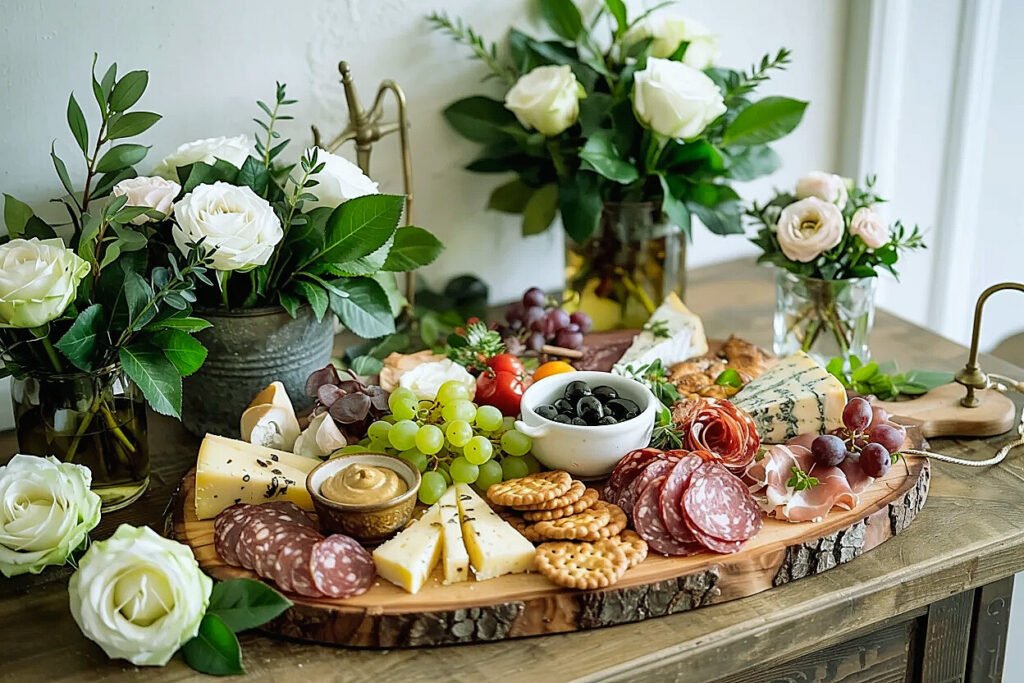
Food safety isn’t negotiable, yet I see Instagram posts constantly featuring roses literally tucked into charcuterie arrangements. Those creators either don’t understand the risks or don’t care, neither excuse works for responsible hosts who value their guests’ wellbeing.
I approach rose-and-charcuterie styling with a simple rule: if a rose petal could fall onto food, the rose is too close.
The separation principle extends beyond obvious direct contact. Rose petals drop. Leaves shed. Water drips from stems and vessels. Positioning roses where any of these possibilities could contaminate food creates risk that no aesthetic benefit justifies. Maintain minimum distances of six inches between any floral element and the nearest food item, and consider prevailing air currents, that ceiling fan might carry petal fragments farther than you’d expect.
Build your charcuterie first, completely and finally, before introducing any floral elements. This sequence ensures food placement drives the design rather than forcing awkward food arrangements around pre-positioned roses. Once your board is complete and beautiful on its own merits, identify surrounding spaces where roses can enhance without endangering. The frame around a painting never touches the canvas, your roses should relate to your charcuterie the same way. For more food-first decorating strategies, explore these Saint Patrick’s Day buffet decor ideas with roses that prioritize function alongside beauty. If this safety-conscious approach resonates with your hosting philosophy, share it with friends who might benefit from the reminder. But corner anchoring offers specific techniques for achieving gorgeous separation, keep reading for those detailed strategies.
Ways to Style Saint Patrick’s Day Roses as “Corner Anchors” Around a Charcuterie Spread
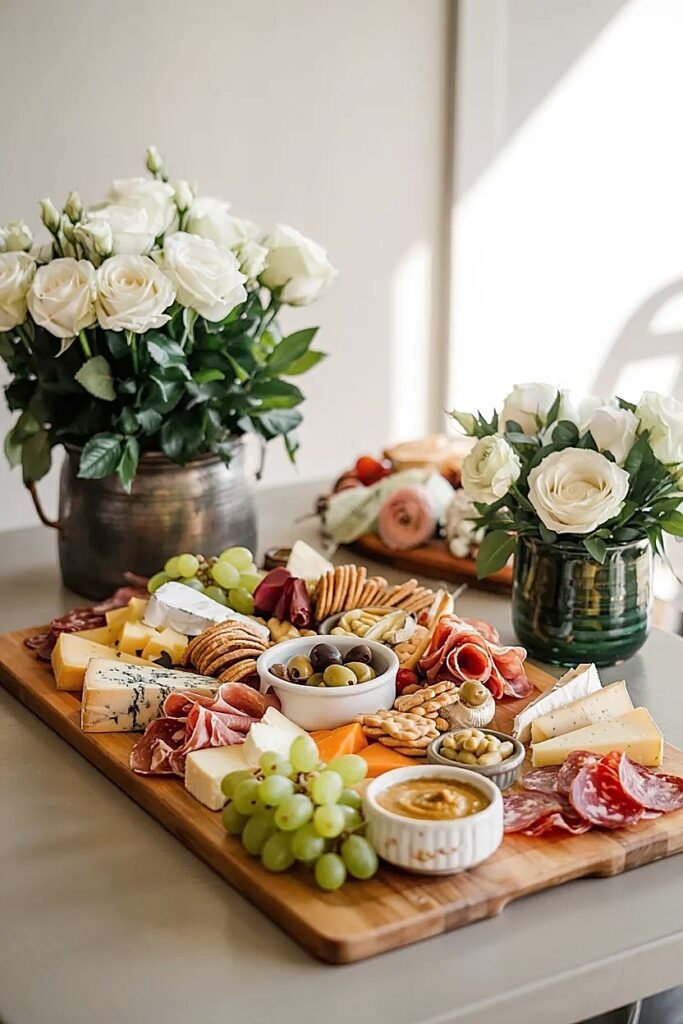
Corner anchor positioning places roses at the four points surrounding your charcuterie where they frame without encroaching. The corners of your serving surface, whether that’s a table, counter, or dedicated board, provide natural staging areas that feel intentional rather than random.
I’ve found corner anchoring the most reliable approach for achieving visual impact while maintaining food-safe distances.
1. Matched Pair Diagonal Placement
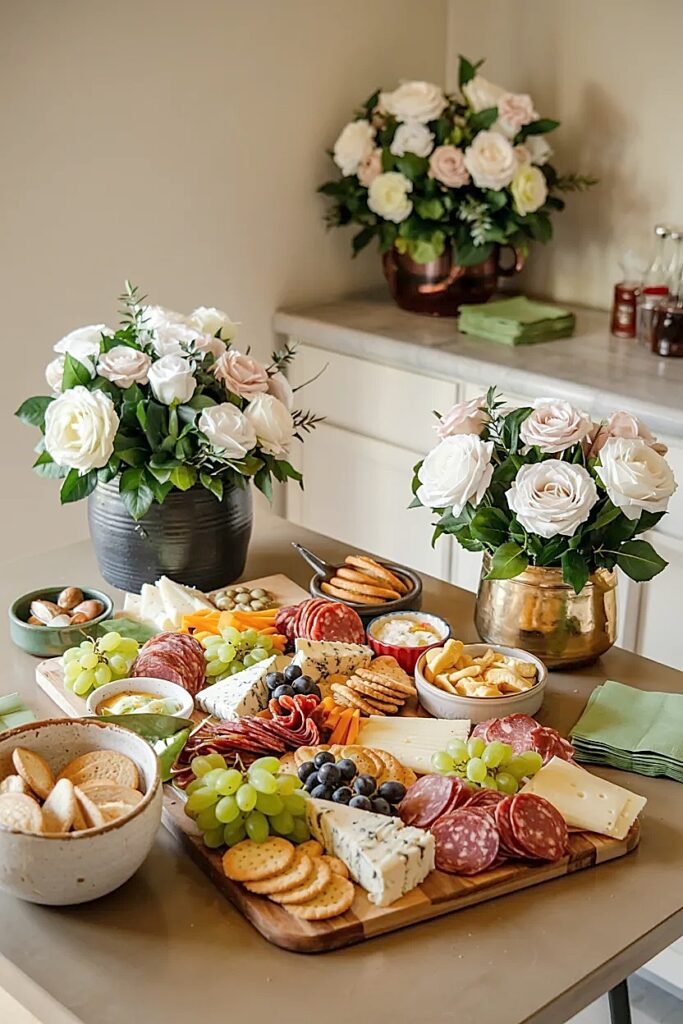
Position identical rose arrangements at two diagonal corners of your charcuterie setup, upper left and lower right, or upper right and lower left. The diagonal relationship creates visual tension that draws eyes across the entire scene while the matching arrangements communicate intentional design. This asymmetrical symmetry feels more dynamic than placing arrangements at all four corners, which can appear boxy and static. Choose containers that complement your board’s material, brass for wooden boards, white ceramic for marble or slate.
2. Single Statement Corner Focus
Rather than distributing roses across multiple corners, invest everything in one spectacular arrangement at whichever corner receives the most visual attention from your entertaining space. The concentrated impact creates a clear focal point that anchors the entire scene without surrounding your charcuterie with competing floral moments. This approach works particularly well when table space is limited or when you want your food to remain the undisputed star with roses playing a supporting role.
3. Graduated Size Corner Cascade
Place your largest arrangement at one corner, medium at an adjacent corner, and smallest at a third corner, leaving the fourth corner empty for visual breathing room. The graduation creates flowing movement around your charcuterie that guides guests’ eyes in a specific direction. Start the cascade from whichever corner guests approach first, leading their gaze across your spread to the final empty corner where they naturally begin reaching for food.
Corner anchoring works beautifully for rectangular setups, but round tables require entirely different thinking, those techniques follow.
How to Style Saint Patrick’s Day Roses Around Charcuterie on a Round Outdoor Patio Table
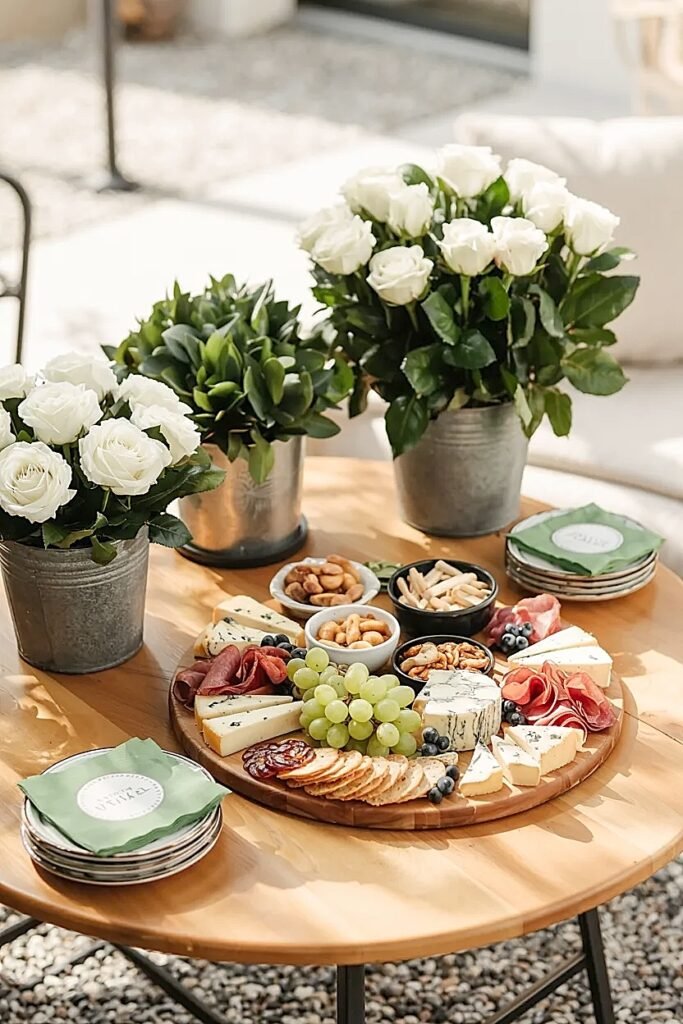
Round tables eliminate the corners that rectangular surfaces provide for anchor positioning. The circular geometry demands radial thinking where roses orbit your charcuterie rather than bracketing it from defined endpoints.
I initially struggled with round table charcuterie styling until I stopped fighting the shape and started working with its natural flow.
Place your charcuterie board at dead center, then imagine your roses positioned like numbers on a clock face surrounding it. You don’t need arrangements at every “hour”, three positions at 12, 4, and 8 create balanced triangular framing, while two positions at 3 and 9 establish simple bilateral symmetry. The circular table surface naturally connects these points visually, creating cohesion that rectangular tables require corners to achieve.
Outdoor patio conditions add complexity. Wind threatens lightweight arrangements, temperature fluctuations stress roses, and direct sunlight fades colors while wilting petals. Weight your containers adequately for gusty conditions, choose hardy rose varieties that tolerate outdoor exposure, and position arrangements where partial shade protects them throughout your gathering. The table’s round shape actually helps here, you can rotate the entire setup to follow shade as the sun moves, keeping both food fresh and roses vibrant. Consider the approaching direction guests will use, position your most impressive arrangement where arriving guests will see it first, creating immediate wow factor before they notice the charcuterie itself. Backdrop lines offer another powerful styling approach, continue reading for those specific techniques.
Ideas for Saint Patrick’s Day Roses Styled Behind a Charcuterie Spread as a “Backdrop Line”
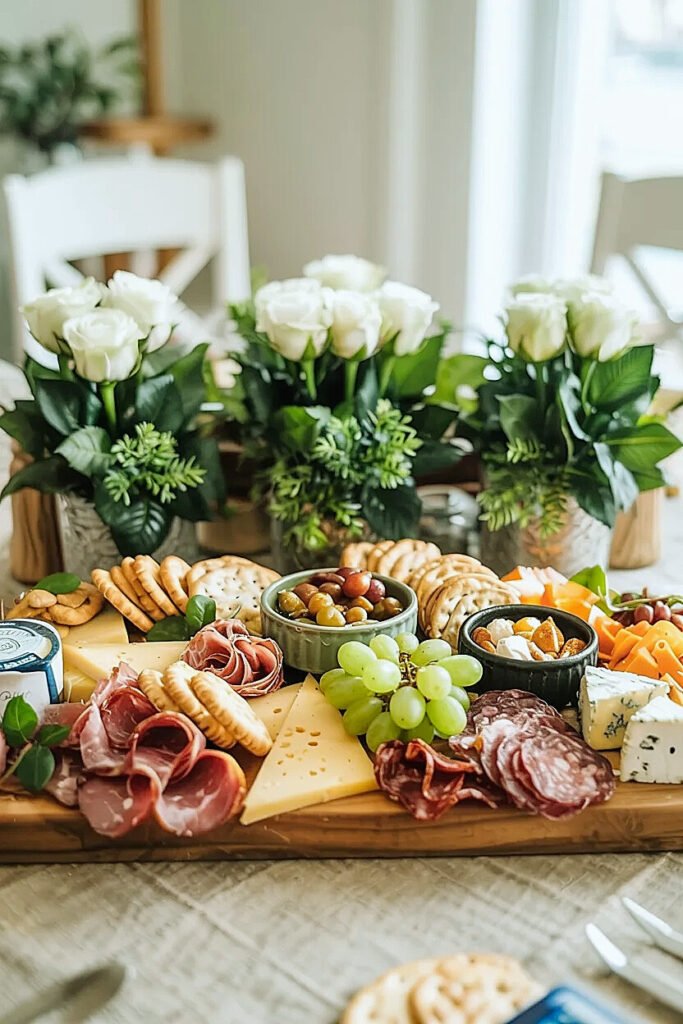
Backdrop positioning places roses behind your charcuterie, creating depth and visual framing while maintaining maximum forward separation between florals and food. The roses become scenery that enhances rather than elements that compete.
I consider backdrop lines the safest and most visually effective approach when table space allows the depth this technique requires.
1. Continuous Low Hedge Effect
Create a continuous low arrangement running the full width behind your charcuterie board. Keep heights under six inches so roses frame rather than tower over your food. The horizontal mass establishes a living backdrop that makes your charcuterie appear to emerge from a garden setting, particularly effective with green and white Saint Patrick’s roses.
2. Tiered Height Progression
Position three arrangements behind your board at varying heights, shortest on the ends, tallest at center, or graduated from one side to the other. The height variation adds dimensional interest while maintaining clear backdrop positioning. This approach suits longer charcuterie spreads where a single flat backdrop might appear monotonous.
3. Interval Bud Vase Rhythm
Place identical small bud vases at regular intervals behind your charcuterie, each holding a single rose or small cluster. The repeated elements create rhythm that feels designed rather than random. The spacing between vases prevents any single floral moment from dominating while collectively establishing strong backdrop presence.
4. Elevated Rail Display
Use a narrow raised surface, a board on small risers, a cake stand, or a dedicated display shelf, positioned behind your charcuterie to elevate roses above the food plane entirely. The physical separation created by different surface heights makes the distinction between decorating zone and food zone absolutely clear.
5. Mixed Greenery Integration
Combine roses with abundant greenery, eucalyptus, fern fronds, ivy, to create a lush backdrop that extends green presence beyond the roses themselves. The greenery fills space economically while the roses provide color punctuation. This mixed approach suits Saint Patrick’s Day particularly well given the holiday’s green emphasis.
Backdrop positioning creates beautiful depth, but crowded tables demand container choices that survive jostling, those recommendations follow.
What Are the Best Saint Patrick’s Day Rose Containers for Charcuterie Tables That Get Crowded?
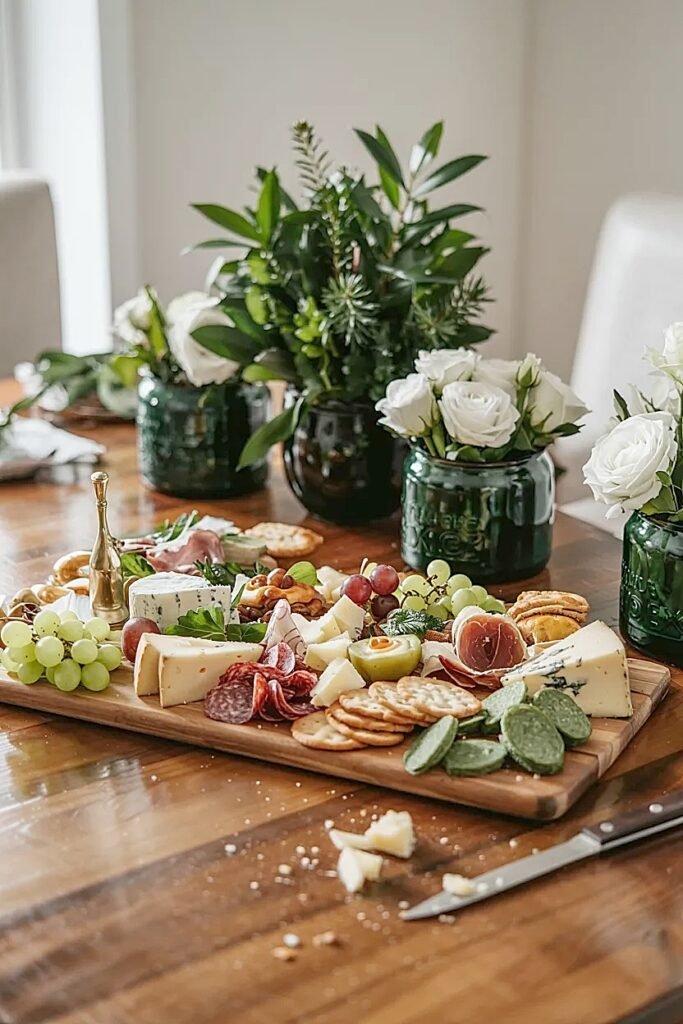
Charcuterie tables see traffic that centerpiece tables never experience. Guests reach, grab, lean, and occasionally bump while enthusiastically grazing. Your rose containers must survive this activity without tipping, spilling, or becoming obstacles.
I’ve learned through unfortunate experience that beautiful vessels mean nothing if they end up overturned on a cheese plate.
1. Weighted Ceramic Bud Vases
Ceramic bud vases with thick, heavy bases resist tipping far better than lightweight glass alternatives. The substantial construction survives casual bumps that would topple flimsier vessels. Choose bud vase shapes, narrow at top, wide at bottom, that inherently lower center of gravity. Fill remaining interior space with decorative stones before adding water for additional weight that stabilizes without visible modification.
2. Low, Wide-Mouthed Bowls
Shallow bowls filled with floating rose heads eliminate the tipping risk entirely, there’s nothing tall to topple. The low profile stays below reaching arms while the wide mouth distributes water weight across a stable footprint. Floating rose heads also look stunning from above, which is exactly how guests view your table while reaching for charcuterie. Add small floating candles for evening gatherings.
3. Metal Containers with Broad Bases
Brass, copper, or galvanized metal containers offer inherent weight that glass and ceramic cannot match. The metal construction also dents rather than shatters if accidents occur, easier cleanup and safer for guests. Choose containers with base diameters wider than their openings for maximum stability. The metal finish adds warmth that complements both roses and the earthy tones of most charcuterie ingredients.
4. Secured Vessel Groupings
Rather than relying on individual container stability, secure multiple small vessels together within a tray or box that distributes any impact across the group. A wooden box holding three bud vases resists tipping better than any individual vase could. The grouped presentation looks intentionally designed while the collective weight provides practical stability benefits.
5. Square and Rectangular Profiles
Square or rectangular containers inherently resist rolling and sliding that round containers experience when bumped. The angular footprints grip table surfaces better and don’t rotate when contact occurs. Position the flat sides parallel to table edges for maximum stability. The geometric shapes also complement the typically angular presentation of charcuterie boards themselves.
Container choice prevents disasters, but porch consoles present unique charcuterie-and-rose styling opportunities, those final techniques follow.
How to Style Saint Patrick’s Day Roses Around a Charcuterie Spread on an Outdoor Porch Console
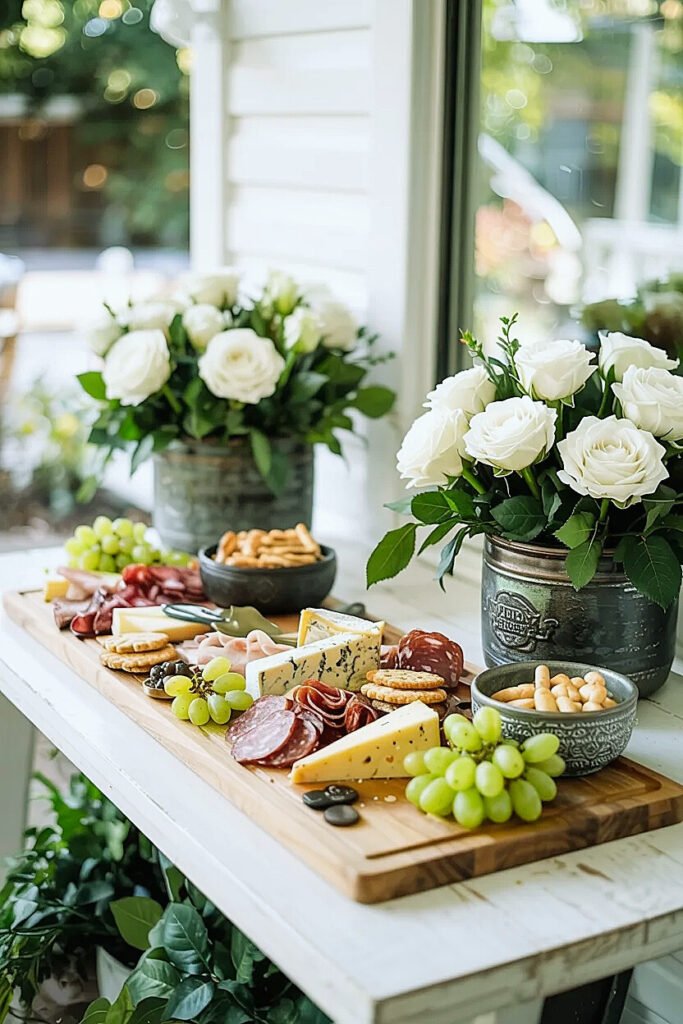
Outdoor porch consoles serving charcuterie bridge indoor entertaining sophistication with outdoor casual atmosphere. The narrow depth typical of console tables concentrates your design while weather exposure demands outdoor-appropriate choices.
I particularly enjoy porch console charcuterie presentations because they create grazing stations separate from main dining areas, encouraging guests to circulate rather than cluster.
Console tables typically measure twelve to eighteen inches deep, significantly less than standard dining tables. This limited depth means your charcuterie board consumes most of the surface, leaving minimal room for roses on the console itself. The solution lies in utilizing adjacent spaces: the wall above the console, the porch floor beside it, or elevated surfaces flanking the furniture piece. Wall-mounted arrangements, hanging baskets, or roses on nearby plant stands keep florals present without competing for limited console surface.
If roses must share the console surface with charcuterie, position them at the console’s extreme ends where they anchor the presentation without crowding your board. Choose containers narrow enough to occupy minimal depth, bud vases over wide bowls, tall cylinders over spreading arrangements. The console’s wall-adjacent positioning typically provides a natural backdrop, so consider whether roses are even necessary on the surface itself or whether wall-mounted options might serve better. Outdoor conditions require wind-resistant containers, hardy rose varieties, and positioning that protects arrangements from afternoon sun. The covered porch provides some shelter, but air movement and temperature exposure still exceed indoor conditions significantly.
Conclusion
Roses and charcuterie create stunning presentations when styled thoughtfully with food safety as the non-negotiable foundation. The separation principle, never allowing florals to touch or potentially contaminate food, must drive every decorating decision regardless of how gorgeous the proximity shot might look for social media.
Corner anchors, backdrop lines, stable containers, and surface-appropriate positioning all solve the fundamental challenge of integrating roses into charcuterie scenes without endangering guests or interfering with grazing flow. Choose approaches that suit your specific table shape, available space, and environmental conditions. When executed correctly, your Saint Patrick’s Day roses frame and enhance the charcuterie experience, creating presentations that guests admire before eating and remember long after the last cheese has disappeared.
This website contains affiliate links, and some products are gifted by the brand to test. As an Amazon Associate, I earn from qualified purchases. Some of the content on this website was researched and created with the assistance of AI technology.