This website contains affiliate links, and some products are gifted by the brand to test. As an Amazon Associate, I earn from qualified purchases. Some of the content on this website was researched and created with the assistance of AI technology.
Key Takeaways
- Back edge only, always: no buffet flower placement belongs anywhere but the rear third of the table
- Zero-pollen flowers are non-negotiable at food proximity: zinnias, statice, marigolds, and gomphrena are the reliable standards
- Gravel in every outdoor vessel before water: buffet tables get more incidental contact than any other party surface
- Nothing above the vessel rim projects into the reach zone: blooms at or below rim height eliminate the drift-into-food problem
- Bright, saturated colors register against the visual competition of food displays; pastels disappear
- One vessel per end of the buffet plus one center element is the complete three-point buffet flower approach
Choosing the best summer flowers for a backyard patio party buffet table is a genuinely different design problem from choosing flowers for a dining table, a mantle, or any surface where guests are seated and stationary. The buffet table is in constant motion. Guests approach it from multiple angles, reach across it to serve themselves, set plates and tongs down wherever space opens, and generally treat it as a working surface first and a display second. The flowers here have to earn their position by staying out of the way while simultaneously making the table look designed and intentional.
The specific challenge I have run into more than once on buffet tables is choosing a flower that looks beautiful in the kitchen and then watching it drift into the potato salad. Not a hypothetical: I spent thirty minutes at a party a few summers ago fishing chamomile stems out of the condiment tray after a generous arrangement I had built along the buffet edge proved less stable than I had assumed. Every buffet flower decision I have made since then starts from the question of what happens when a guest reaches across it. Zero-pollen, non-shedding, back-edge-only, and gravel in every vessel: those four rules now precede every other decision.
Use this backyard patio buffet table guide to match each buffet need with the right Summer Flowers and layout choice. It helps readers decide the most important part of buffet styling: how to keep food first while still making the table look bright, festive, and easy to use. Extension-style guidance supports low designs, durable summer flowers, and leaving enough room for buffet traffic and serving areas.
| Buffet Goal | Best Summer Flowers | Why It Helps | Best Styling Tip |
|---|---|---|---|
| Food-First Layout Keep dishes and serving tools easy to reach. |
Zinnias + Marigolds Bright rounded blooms that show color fast in small low accents. |
Extension guidance notes that buffet tables may not have much room left once the food is set, so compact blooms work better than big designs. :contentReference[oaicite:3]{index=3} | Place flowers only between serving zones, not in front of stacked plates, utensils, or shared bowls. |
| Heat-Friendly Styling Keep the buffet looking fresh during warm outdoor parties. |
Gomphrena + Zinnias Strong warm-season flowers with useful outdoor durability. |
Gomphrena is supported by extension horticulture guidance as a tough annual that stands up to high heat and humidity. :contentReference[oaicite:4]{index=4} | Use the toughest flowers closest to sun-exposed parts of the buffet table. |
| Texture Without Bulk Add depth without blocking serving space. |
Gomphrena + Celosia Texture-rich flowers that make even small accents feel layered. |
Floral-design guidance emphasizes line, form, texture, and space, which matters a lot on a narrow buffet surface. :contentReference[oaicite:5]{index=5} | Use one textural flower type per cluster so the buffet still feels clean and relaxed. |
| Airy Softness Keep the buffet from feeling stiff or heavy. |
Cosmos + Small Fillers Airier stems help brighten edges without making big shadows. |
Annual flower guidance supports cosmos as a useful summer flower, and lighter forms visually soften stronger rounded blooms. :contentReference[oaicite:6]{index=6} | Place airy stems at the outer edges of the buffet, not near serving utensils. |
| Low Sightlines Let guests see food choices fast. |
Compact Mixed Clusters Short, rounded flowers work best for fast visual access to the buffet. |
Extension-style event guidance says flowers must be seen to have value, but traffic flow and walkway blocking still matter. :contentReference[oaicite:7]{index=7} | Keep all flowers below the height of stacked side plates whenever possible. |
| Budget-Friendly Color Make the buffet bright without overspending. |
Marigolds + Zinnias + Cosmos Easy annuals that still create strong buffet color. |
Extension annual-flower guidance notes that annuals are inexpensive and highly effective for strong seasonal color. :contentReference[oaicite:8]{index=8} | Repeat just two or three flower types across the buffet instead of mixing too many blooms. |
| Kid-Friendly Buffet Use Leave room for quick reach and easy movement. |
Low Sturdy Blooms Cheerful flowers that do not feel fragile or fussy. |
Compact floral details are easier to live with at real family-style gatherings where people move quickly around food. :contentReference[oaicite:9]{index=9} | Leave extra open space near the first plate stack and the dessert end of the buffet. |
| Whole-Buffet Color Balance Make the serving table feel tied together from end to end. |
Repeat 2–3 Main Tones Try yellow, coral, and white or peach, pink, and orange. |
Color harmony is one of the most important floral-design tools for repeated small arrangements. :contentReference[oaicite:10]{index=10} | Match one flower color to fruit, napkins, or servingware so the buffet looks planned but still relaxed. |
What Are the Best Summer Flowers for a Backyard Patio Party Buffet Table?
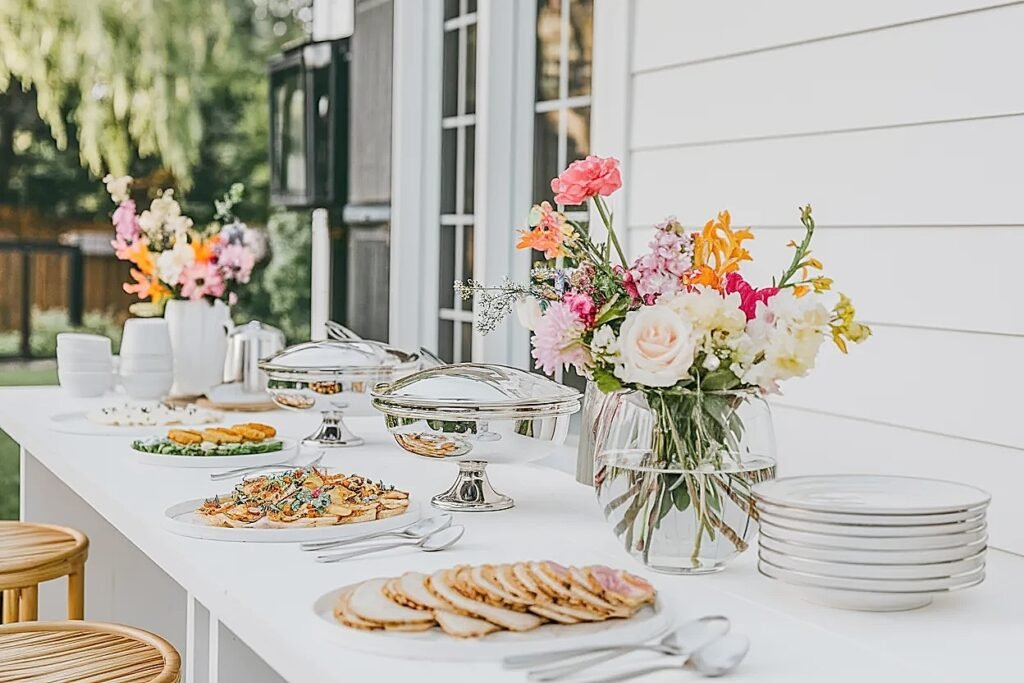
A buffet table flower needs to win on four criteria simultaneously: food-safe at close proximity, visually present enough to register against a loaded food display, structurally stable enough to hold position through repeated table contact, and zero-pollen at the range where guests are leaning over serving dishes. Most flowers can manage two of those criteria. A smaller group of flowers can manage all four.
Zinnias lead this category decisively. The dense petal structure means zero accessible stamen at any bloom stage, the flat face reads clearly from every approach angle, the color range covers every party palette, and they hold full saturation in direct afternoon sun longer than almost any other grocery store cut flower. One bunch fills three to four back-edge vessels for under five dollars. That value-to-performance ratio is genuinely unmatched at a buffet table where practical requirements narrow the field so sharply.
Marigolds are the second answer. Zero accessible stamen, sun resilience that outlasts the party, and vivid color that reads from across the yard rather than requiring a guest to approach to see it. The fragrance is the one variable worth noting at a buffet specifically: the strong marigold scent pairs well with savory food situations but competes with dessert stations. Positioning matters. Use marigolds at the far ends of a savory buffet and reserve the scent-neutral flowers like statice and zinnias for positions adjacent to sweets.
For a comprehensive buffet garland approach that keeps everything at rim height and food-safe, check out how to build a summer flower snack table garland that stays low and food-safe. Share this with anyone planning a backyard party buffet setup. More ahead on specific bright flower ideas, low profiles, and kid-safe options throughout the article.
Ideas for Bright Summer Flowers on a Backyard Patio Party Buffet Table
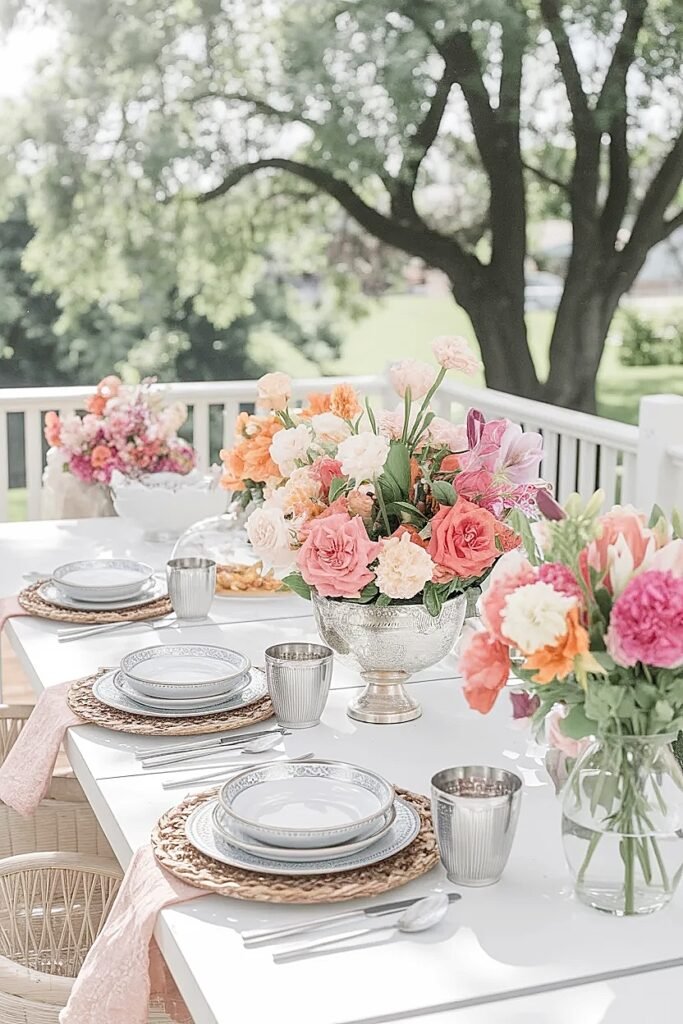
Bright, saturated colors are not just aesthetic preferences at a buffet table: they are functional requirements. A buffet table loaded with colorful food, patterned serving dishes, and multiple textures creates an intensely competitive visual environment. A soft peach ranunculus at the back edge of that table disappears completely. A vivid coral zinnia or deep orange marigold holds its visual presence and reads as part of a designed display rather than a stray object that someone put behind the pasta salad.
1. Single Bold Zinnia Mug at Each Back Corner Place one short ceramic mug packed with gravel and three vivid zinnia stems at each back corner of the buffet table. Two mugs, two corners, nothing else. The corner positions are as far as possible from every serving dish while still being visible from every approach angle. The gravel makes each mug too heavy to.
2. Marigold and Eucalyptus Back-Edge Garland Five short gravel-weighted mugs spaced at even intervals across the back edge of the buffet, each holding two marigold stems at rim height, connected by seeded eucalyptus tucked under each mug base. The garland reads as one continuous display from across the yard. The marigold-and-eucalyptus color combination, vivid orange and silvery green, creates maximum contrast.
3. Coral Zinnia and Statice Mixed Vessels Fill three short vessels with a mix of coral zinnias and white statice, two zinnia stems per vessel with one statice spray filling the gaps. The statice doubles visual density without adding height. Position all three vessels at the back center of the buffet in a tight cluster. The mixed texture reads as more designed.
4. Single Sunflower Per Back-Corner Vessel One grocery store sunflower cut to four inches in a heavy gravel-weighted vessel at each back corner of the buffet table. The overscaled flat face reads as bold and celebratory from across the party area and creates immediate visual presence at the buffet without requiring any supporting material. One sunflower per vessel, gravel fill to.
5. Strawflower Mixed-Color Row Five to seven individual strawflower stems in mixed warm colors, orange, yellow, burgundy, and red, each tucked into their own small bud vase across the back edge of the buffet. The varied colors create a vivid, informal row that reads as festive and abundant. Zero pollen, no shedding, and the papery blooms hold vivid color.
6. Bold Gomphrena Ball Cluster Three small vessels grouped in a tight cluster at one back corner of the buffet, each holding two gomphrena stems at rim height. The repeating ball structure within one tight cluster creates a graphic, designed look at corner position. Vivid pink or deep purple gomphrena holds its saturated color in direct outdoor heat throughout the.
7. Herb and Bloom Back Center Statement One wide, low ceramic crock at the back center of the buffet holding a mixed arrangement of rosemary sprigs, basil, and bright zinnia stems all pressed to rim height. The herb-and-bloom combination adds fragrance that reads as seasonal and intentional beside the food display. The rosemary fragrance specifically pairs with savory food aromas. The crock.
More ahead on the low-profile approach that specifically addresses the sightline and food-safety requirements of a heavily loaded outdoor buffet table.
How to Choose Low Summer Flowers for a Backyard Patio Party Buffet Table
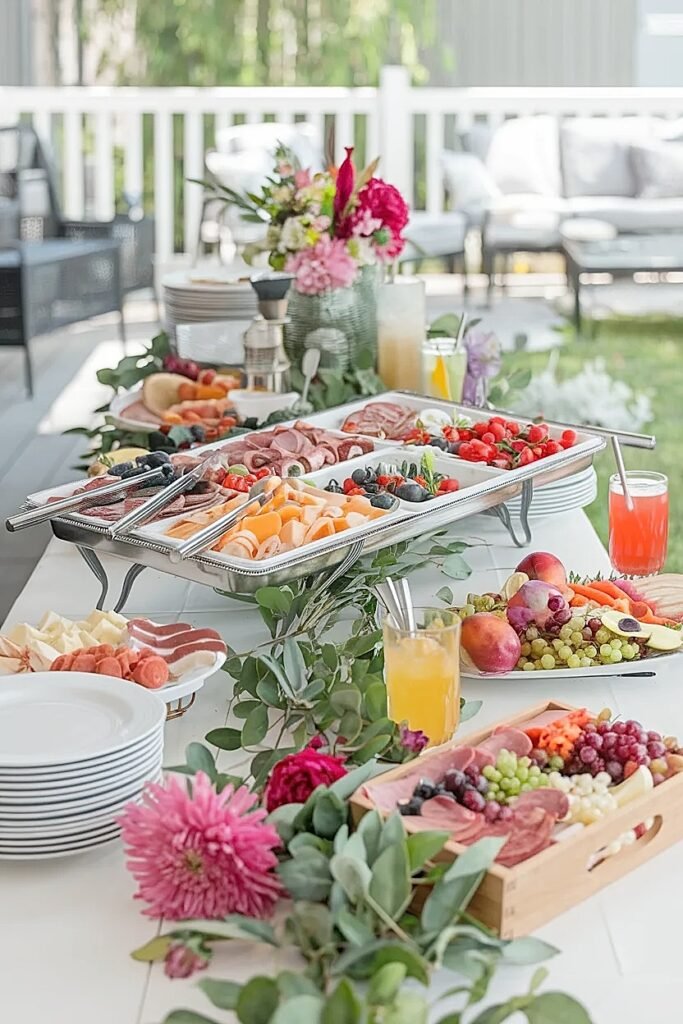
Low-profile flowers for a buffet table serve a specific function beyond aesthetics: they stay below the functional plane of the buffet surface where hands, tongs, and serving spoons operate. At rim height or below, a flower element exists in a separate plane from the serving activity above it. Any stem that rises above the vessel rim is operating in the same physical zone as the food, which means it is one accidental brush from becoming part of the meal.
The practical definition of low at a buffet table is anything at or below the vessel rim. That means stems cut short enough that the bloom face sits at the very top of the vessel rather than projecting above it. For a four-inch tall mug, that means cutting stems to three to four inches of stem length total, bloom included. It sounds almost absurdly short. The visual effect is genuinely beautiful: bloom faces nested at vessel height catch overhead outdoor light from directly above and read as dense and abundant rather than sparse.
The vessels themselves are part of the low-profile strategy. A short, wide ceramic mug is a better buffet table vessel than a narrow glass jar because the wider mouth lets you pack three to four stems at rim height in a compact footprint. A wide terracotta saucer is better still for the lowest possible profile: blooms float at the exact surface level of the saucer rim and the wide flat base makes it effectively impossible to tip through normal buffet contact. The saucer approach specifically suits the pressed-to-rim-height technique.
For any buffet table where the food display is particularly tall, such as a tiered cake stand, a bread board with elevated items, or a charcuterie tower, the low flower profile creates important visual breathing room between the vertical food elements and the display detail at the table edges. The contrast between the tall food elements and the low flower vessels makes both read more clearly than they would at the same height.
More ahead on which specific flowers perform best when the food setup is the clear priority and the flower detail is genuinely secondary.
What Are the Best Summer Flowers for a Backyard Patio Party Buffet Table with Food First?
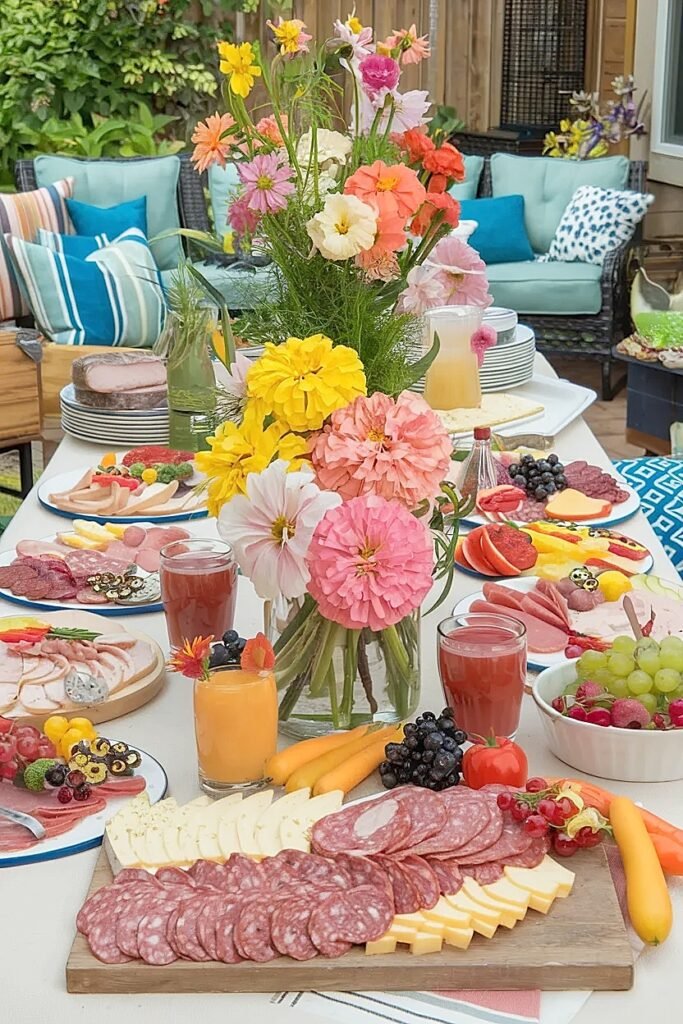
Food-first buffet styling means the flowers occupy one specific visual role: framing the food display without competing with it. The flower element here is a supporting character. The menu is the star. Everything about the flower choice, scale, color, fragrance, and positioning, should amplify the food presentation rather than drawing attention toward itself.
1. White Statice White statice at the back edge of a food-first buffet creates the most visually neutral flower framing available. The clean white color reads as freshness and lightness beside any food setup without pulling the eye away from the menu. Zero fragrance, zero pollen, and the.
2. Pale Waxflower Pale pink or white waxflower tucked into a small vessel at each back corner creates delicate framing that registers as intentional without asserting itself visually. The fine texture adds interest at close range without competing with food colors at distance. Zero pollen, minimal fragrance, and.
3. Chamomile Fresh chamomile at back-edge positions reads as naturally fresh and seasonal beside food in a way that more assertive flowers do not. The small daisy-like blooms are visually gentle enough to frame food without pulling focus. Pre-hydrate one hour; holds two hours in outdoor conditions.
4. Single Zinnia Per Corner (Muted Tones) Pale cream or soft apricot zinnias, the quieter end of the zinnia color spectrum, provide food-first framing with enough color presence to register from across the yard. The muted tones complement rather than compete with food colors. Zero pollen, long-lasting, and available at any grocery.
5. Trailing Seeded Eucalyptus Only Sometimes the right food-first buffet flower treatment is no flower at all: just seeded eucalyptus laid along the back edge of the buffet table, anchored by a small vessel at each end. The eucalyptus adds color, texture, and a subtle fragrance without any bloom competing.
More ahead on how to balance decoration and function so the buffet stays genuinely practical throughout the party while still looking styled.
How to Make a Backyard Patio Party Buffet Table with Summer Flowers Feel Festive but Practical
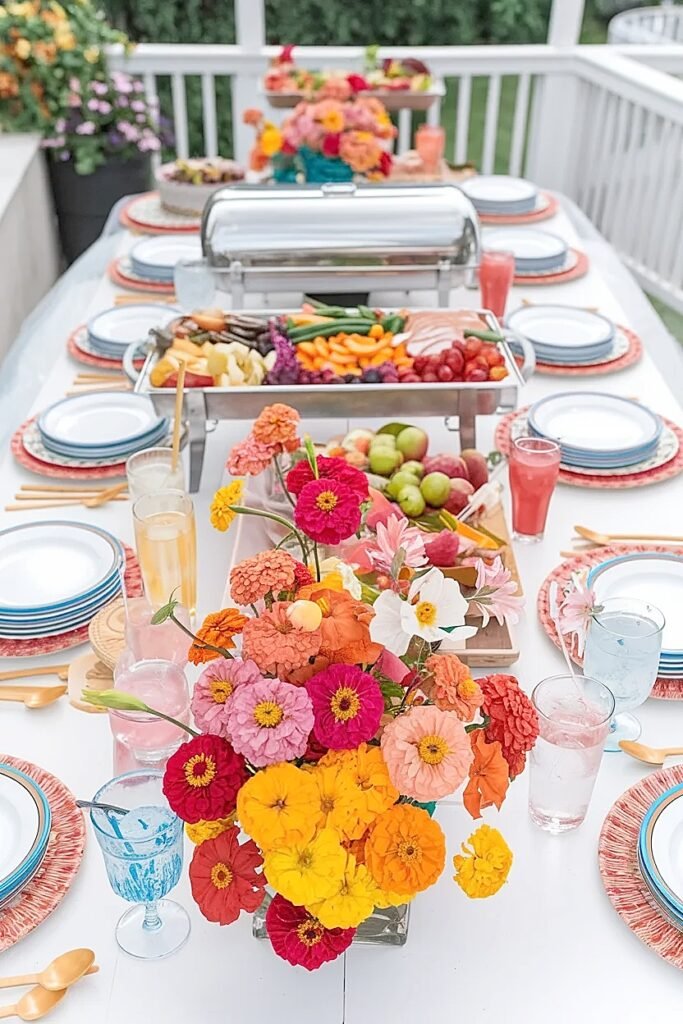
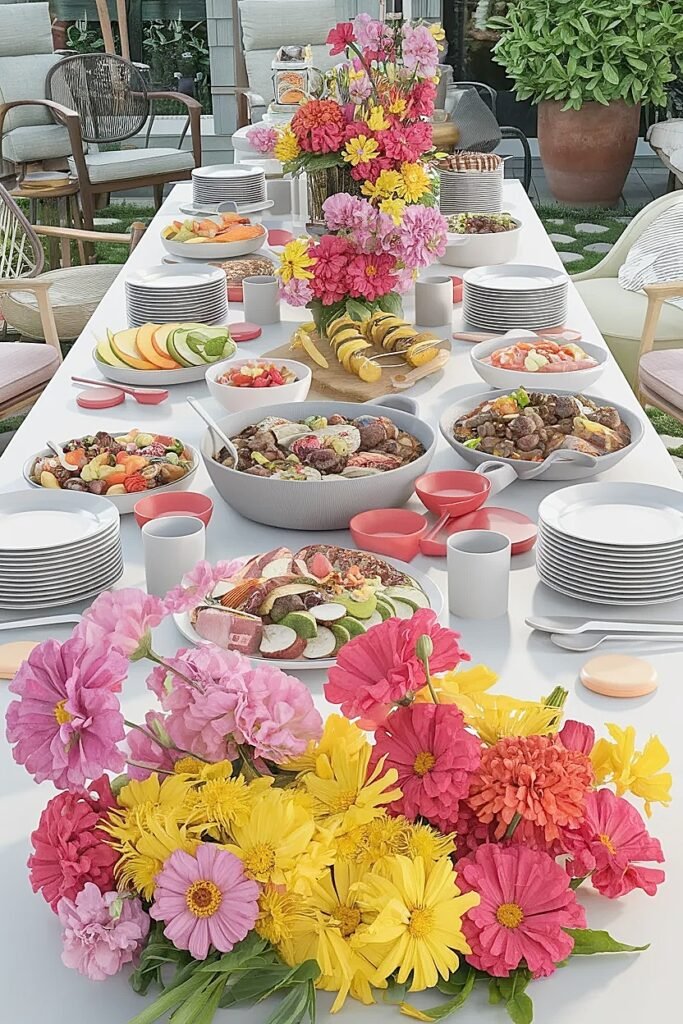
The most useful single rule for a festive-but-practical outdoor buffet: every flower element has a designated position that guests do not use for anything else. When the flower zone and the functional zone are clearly separate, both can exist without conflict. The back edge is the flower zone. The front two-thirds of the table are the working surface. That boundary, maintained consistently, eliminates every conflict between the decorative and the practical.
Vessel weight is the practical variable most buffet flower guides overlook. At a working surface where guests set plates, retrieve serving utensils, and occasionally stack empty dishes, incidental contact with any vessel is guaranteed. A glass jar on a back-edge buffet position will be knocked over at least once per party if it is not weighted. A gravel-filled ceramic mug in the same position will be nudged and settle back. Two very different guest experiences. Gravel is free, invisible inside any vessel, and completely changes the risk profile of any outdoor buffet flower placement.
Color coordination between the flower element and the serving vessels or the tablecloth is the detail that makes a buffet look designed rather than decorated. If the tablecloth is a warm neutral linen, coral zinnias and seeded eucalyptus at the back edge complete a warm, organic palette. If the serving dishes are a strong cobalt blue, white statice and pale waxflower at the edges provide visual breathing room rather than adding more saturation. The flower element mirrors or complements the rest of the table’s visual story rather than existing independently of it.
One technique worth using specifically at outdoor buffets: build the flower arrangement at the back edge and then load the food around it rather than the reverse. Setting the flowers first and then building the food display outward from them ensures the flower zone never gets crowded by serving dishes that drift backward as the table fills up. It sounds obvious. Most people do it the other way and wonder why the flowers ended up inside the mac and cheese.
What Are the Best Summer Flowers for a Kid-Friendly Backyard Patio Party Buffet Table?
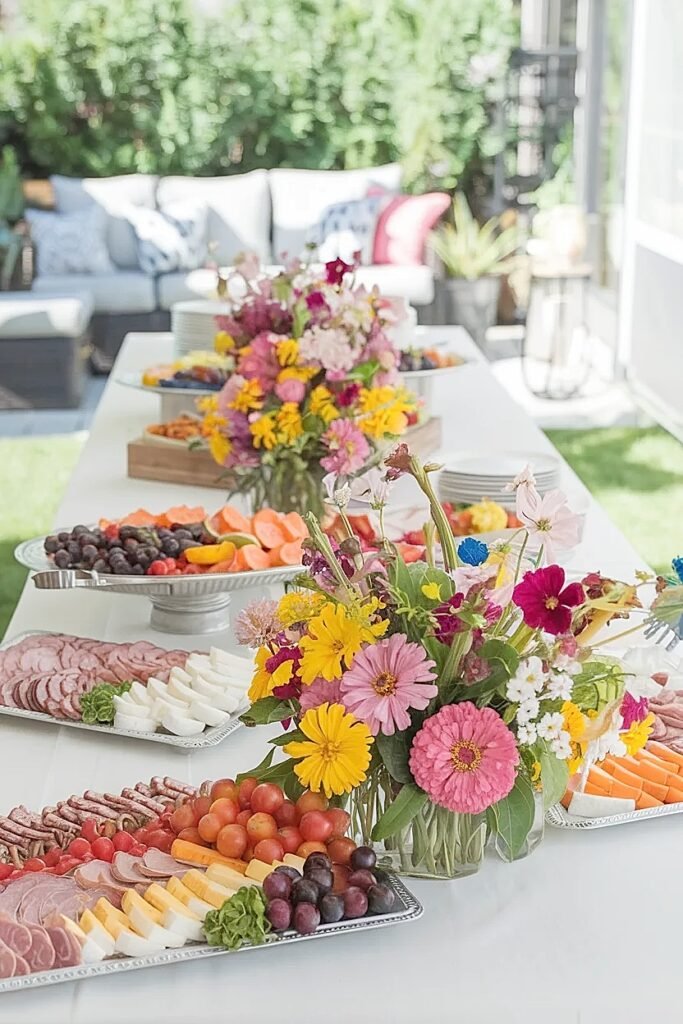
A kids’ party buffet table is the most demanding flower safety scenario in outdoor party styling. Kids approach a buffet at different heights than adults, move less predictably, and interact with the table in ways that adults do not: leaning against the edge, reaching from unexpected angles, and occasionally deciding to smell whatever is at the back of the table. Zero pollen and zero shedding are the only acceptable standards at a kids’ buffet position.
1. Zinnias One zinnia stem per back-edge vessel creates vivid color at kids’ buffet scale with zero accessible stamen at any bloom stage. The densely packed petal structure cannot release pollen through normal handling or accidental contact. They do not drop petals when bumped or reached past. One grocery store bunch covers the full back edge of.
2. Statice Statice is the most contact-proof buffet flower available. The papery blooms shed nothing, release no pollen regardless of how forcefully they are handled, and hold their form indefinitely in outdoor conditions. Zero fragrance near food, vivid purple and white color, and structural stability through any incidental contact from any direction. The most straightforward zero-risk kids’.
3. Gomphrena The compact ball structure of gomphrena resists deformation when bumped or brushed, has no accessible stamen, and sheds no material under any handling conditions including direct contact by curious kids reaching past it for food. The vivid pink or purple color reads as fun and celebratory to children without requiring explanation. One stem per vessel,.
4. Strawflowers Strawflowers are specifically suited to a kids’ buffet because the papery petals cannot release pollen and do not shed under any circumstances including being directly touched, squeezed, or smelled at close food-adjacent range. A strawflower vessel at the back edge of a kids’ buffet looks as intact at the end of the party as at.
5. Waxflower Waxflower has essentially zero accessible pollen and the barely perceptible fragrance does not compete with food at buffet distance. The tiny clustered blooms resist shedding when touched or brushed. Two or three waxflower stems in a back-edge vessel create a full-looking, completely kid-safe buffet position. White waxflower specifically adds a clean visual note beside food.
More ahead on how to style a genuinely tiny outdoor buffet table with summer flowers without crowding the limited working surface.
What Are the Best Summer Flowers for a Tiny Backyard Patio Party Buffet Table?
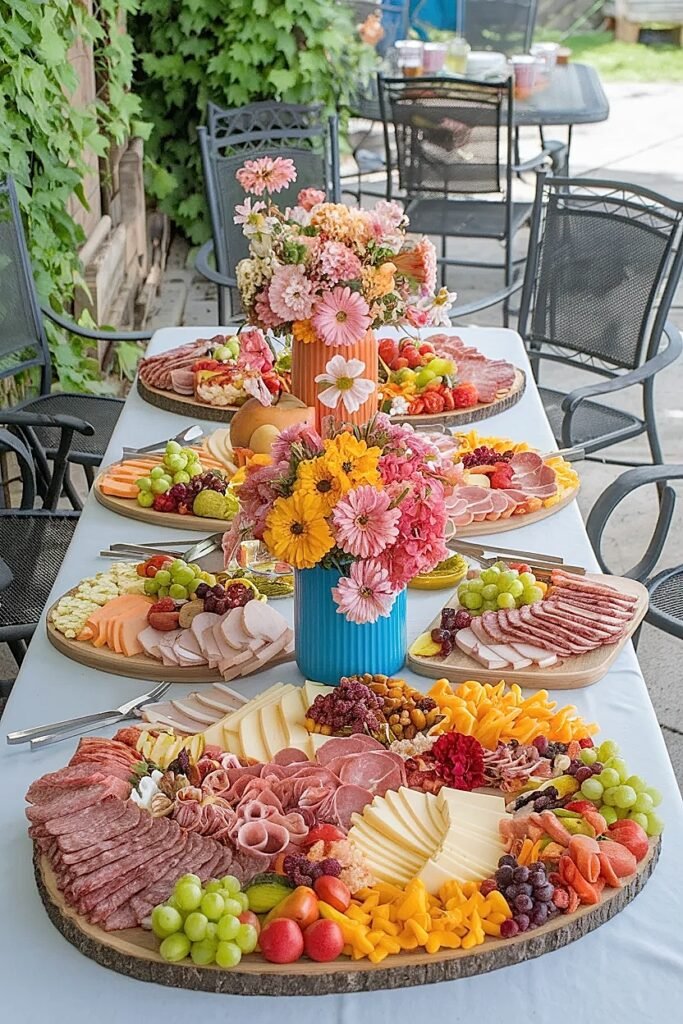
A tiny buffet table, four feet or shorter, has essentially no room to spare. Every inch of surface is needed for food. The flower treatment here is not a garland, not a three-point framework, not even a vessel at each end. It is one small element in one specific position that adds the visual detail of styled intention without consuming any working surface that the food needs.
1. Single Herb Pot at Back Center One compact potted rosemary or basil plant placed at the very back center of the tiny buffet table creates a styled, food-safe visual anchor with zero surface footprint beyond the pot itself. Living herb pots have no loose elements, add genuine fragrance that complements food,.
2. Two Single-Stem Bud Vases at Back Corners Two small heavy bud vases, one per back corner, each holding one zinnia or gomphrena stem at rim height. Two corners, two stems, zero surface impact on the working zone. The bookend treatment defines the buffet as a designed surface from any approach angle without.
3. Back-Edge Eucalyptus Strand with One Pinned Bloom A short seeded eucalyptus strand laid flat along the back edge of the tiny buffet table with one zinnia or marigold face pinned face-up into the vine at the center. Anchor each end under the back-corner edge of the table. The entire treatment occupies zero.
Conclusion
Choosing the best summer flowers for a backyard patio party buffet table comes down to four decisions made in the right order: back-edge-only placement first, zero-pollen flowers second, gravel in every vessel third, and bold saturated color fourth. Get those four decisions right and the specific flower variety becomes a secondary choice among genuinely excellent options.
Zinnias and marigolds from any grocery store cover the full practical brief. Start with those, build the back-edge framework, then refine from that foundation. The buffet table is the one party surface where the food is the centerpiece. The flowers frame it. That supporting role, played well, is exactly what makes the whole setup look like it was designed by someone who understood what they were doing.
This website contains affiliate links, and some products are gifted by the brand to test. As an Amazon Associate, I earn from qualified purchases. Some of the content on this website was researched and created with the assistance of AI technology.