This website contains affiliate links, and some products are gifted by the brand to test. As an Amazon Associate, I earn from qualified purchases. Some of the content on this website was researched and created with the assistance of AI technology.
Key Takeaways
- Napkin and rose coordination requires restraint, one focal floral element prevents cluttered table surfaces
- Green napkins serve as color foundation, allowing roses to function as accents rather than competing elements
- Consistent napkin folding across all place settings creates visual order that offsets floral variety
- Simple napkin rings with minimal rose embellishment maintain elegance without overwhelming the table
- Strategic rose placement at table edges or elevated centerpieces keeps functional dining space clear
Styling Saint Patrick’s Day green napkins with roses without making the table look messy demands understanding a principle most people overlook: your napkins are already making a bold color statement. I learned this after setting a table with vibrant kelly green napkins, then adding green roses, white roses, shamrock confetti, and various Irish-themed trinkets. The result? Visual chaos that made my dinner guests’ eyes hurt before they’d taken a single bite. The table screamed rather than sang.
The mess factor escalates quickly when you’re combining strong green textiles with fresh flowers. Your instinct might be to add more, more roses, more decorative elements, more color variations, but restraint is actually your secret weapon. I’ve found that the most elegant Saint Patrick’s Day tables pair those brilliant green napkins with carefully curated rose moments that enhance rather than overwhelm. The napkins become your foundation, and the roses provide strategic punctuation. Getting this balance right transforms your table from cluttered craft project into sophisticated celebration.
This quick Saint Patrick’s Day table guide makes styling easy. Pick a clean kelly-green napkin move, place roses where they won’t steal serving space, and follow one simple “mess-prevention” rule. On mobile, tap a row to expand, then hit “Copy checklist” to grab a ready-to-use setup for indoor tables, snack stations, or outdoor patios.
Want a Saint Patrick’s Day table that looks bold but not messy? Use this quick guide to pick a napkin fold, keep roses low, and protect serving space. Tap a row on mobile to expand, then hit “Copy checklist” and go.
| Look You Want | Kelly Napkin Move | Rose Placement | Mess-Prevention Rule |
|---|---|---|---|
| Clean + Calm “Same fold, every seat” |
Fold flat rectangles; align direction at all seats | One low wide bowl center, pushed slightly back | Repeat > variety. Keep center open for food. |
| Outdoor Wind-Safe Patio / picnic tables |
Tuck napkins under plate edge (no loose ends) | Heavy matte bowl; compact low roses | Low + heavy wins. No tall pieces. |
| Snack Station (Food First) Island / buffet |
Napkins stacked in one tray or holder | Back-corner mini OR one low bowl at the far end | Decor goes to edges. Middle stays usable. |
| Small Round Table Tight space |
Simple triangle fold; all facing same way | Small circular low rose bowl | Match the table shape. No sprawl. |
| Kid-Proof Setup Indoor or outdoor |
Napkins under plates (pinned down) | Sturdy mini at table end, not center | End placement prevents bumps. |
| Polished Minimal One-tone look |
One kelly shade only; same fold everywhere | White roses + minimal trimmed greenery | Fewer colors = less visual noise. |
Clean + Calm Same fold, every seat
Clean + calm table that feels planned.
Fold flat rectangles; align direction at every seat.
One low wide bowl center, pushed slightly back.
Repeat > variety. Keep the middle open for food.
Outdoor Wind-Safe Patio / picnic
Outdoor table that stays neat in a breeze.
Tuck napkins under plate edge—no loose ends.
Heavy matte bowl; compact low roses.
Low + heavy wins. Skip tall pieces.
Snack Station (Food First) Island / buffet
Snack zone that’s festive but functional.
Stack napkins in one tray or holder.
Back-corner mini or low bowl at far end.
Decor to edges. Middle stays usable.
Small Round Table Tight space
Small table that still feels balanced.
Triangle fold; all facing the same direction.
Small circular low rose bowl.
Match the table shape. No sprawl.
Kid-Proof Setup Less bumps
Festive kid table that survives real use.
Napkins under plates (pinned down).
Sturdy mini at table end, not center.
End placement prevents bumps.
Polished Minimal One-tone style
Clean “designer” look with less visual noise.
One kelly shade only; same fold everywhere.
White roses + minimal trimmed greenery.
Fewer colors = cleaner table.
Tip: If the table ever starts to look messy, remove one item—never add one.
How to Style Saint Patrick’s Day Green Napkins with Roses Using One “Hero” Centerpiece Only
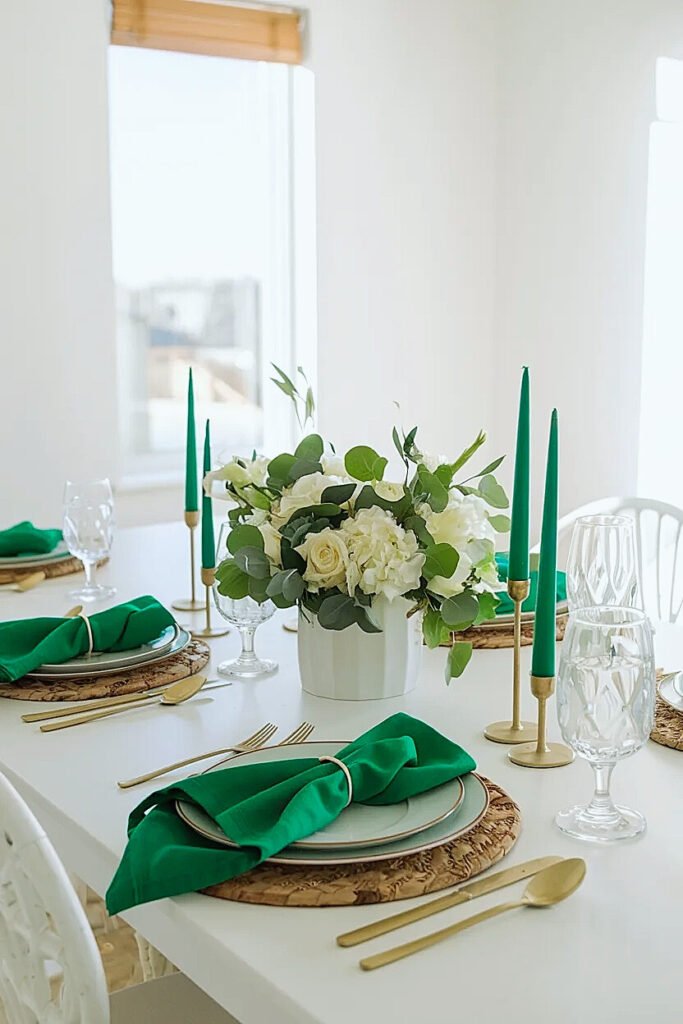
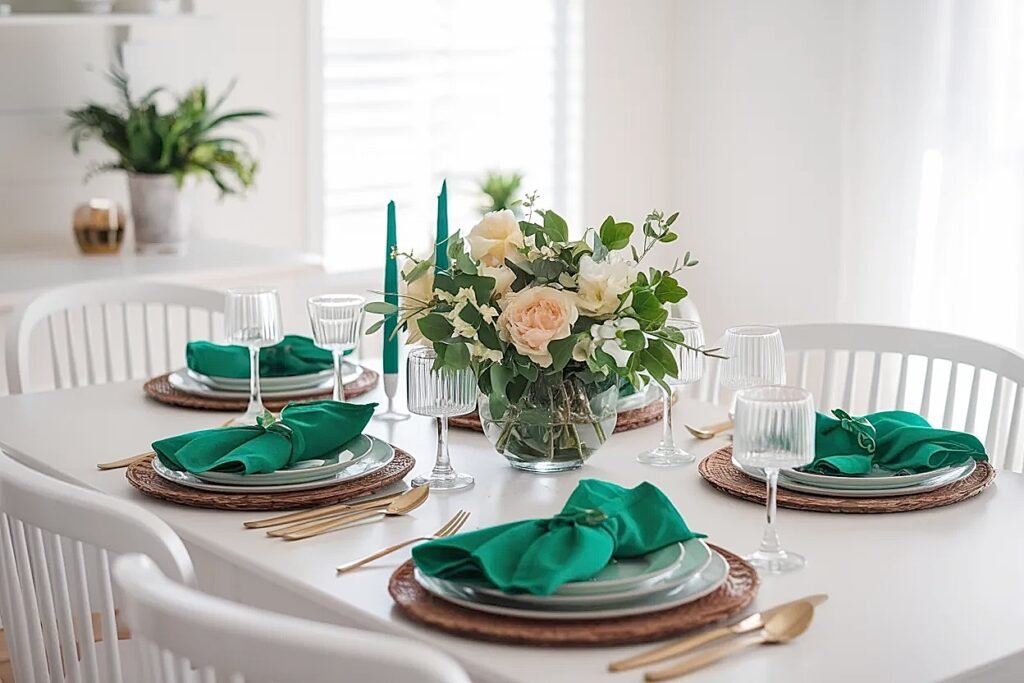
The single hero centerpiece strategy revolutionized my approach to holiday tables. Instead of scattering small arrangements or placing roses at every setting, I channel all floral energy into one spectacular focal point. This creates immediate visual hierarchy, your eye knows exactly where to land, then appreciates the supporting elements like those green napkins.
I position this hero piece at the table’s absolute center, building it tall enough to command attention without blocking conversation across the table. We’re talking twelve to fifteen inches of height using a substantial arrangement, maybe twenty-five to thirty roses in varying shades of green with white accents. The abundance concentrated in one location feels intentional and luxurious rather than scattered and chaotic.
The green napkins at each place setting echo the centerpiece’s color story without competing for attention. I keep the napkin fold simple, maybe a classic rectangle or basic triangle, so the fabric’s color makes the statement while the shape remains understated. This prevents the napkins from creating additional visual noise that would fragment the table’s cohesiveness.
What makes this approach brilliant is the negative space it creates. Between the hero centerpiece and the napkin-topped plates, you’ve got clean table surface that allows the eye to rest. I don’t add placecards dripping with ribbons, scattered rose petals, or shamrock coasters, the simplicity amplifies both the centerpiece’s impact and the napkins’ saturated color. If you’re exploring other Saint Patrick’s Day snack station approaches with green roses, you’ll find complementary techniques worth trying, and definitely share this with anyone planning their celebration!
This foundational approach sets the stage for more specific styling scenarios, and the buffet configurations ahead demonstrate how matched elements create visual order even when roses appear in multiple locations.
Ideas for Saint Patrick’s Day Green Napkins with Roses Using “Matched Minis” on a Buffet
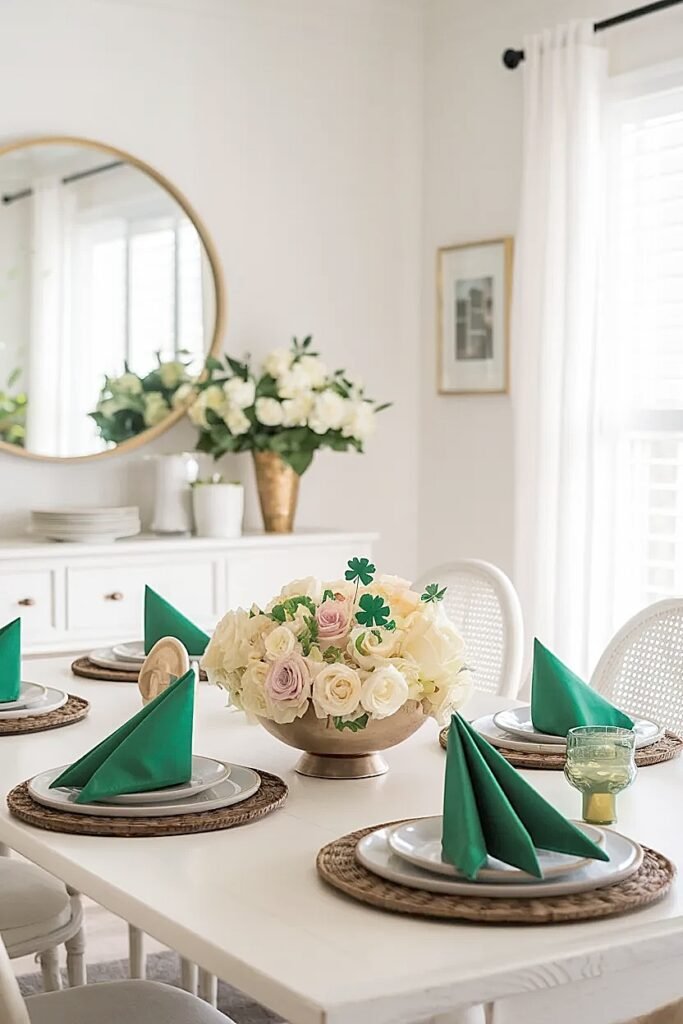
Buffet settings change the napkin equation entirely because guests grab napkins from a stack rather than finding them preset at individual seats. The challenge becomes incorporating roses near those napkin stacks without creating a cluttered buffet line where people struggle to navigate serving dishes.
Matched minis, small, identical rose arrangements positioned strategically around the buffet, solve this problem through repetition and consistency. I create three to five tiny arrangements using the exact same vessels, identical rose counts, and matching color ratios. This disciplined repetition reads as intentional design rather than random decoration.
1. Identical Bud Vase Trios at Buffet Intervals
Position three matching bud vases along the buffet’s back edge, spacing them evenly with one near the napkin stack. Each vase holds exactly three roses, two green, one white, in the same arrangement pattern. I use clear glass bud vases about six inches tall so they don’t obstruct sightlines to serving dishes. The trio creates rhythm through repetition while the placement near napkins subtly directs guests to grab one. The matched nature of these arrangements signals thoughtful planning rather than haphazard scattering. I ensure each vase sits at least four inches from any plate edge to prevent accidental knocks during serving. The simplicity of three roses per vase prevents overcrowding while the color ratio maintains consistency. This approach works beautifully when your buffet stretches across a long sideboard or counter.
2. Matching Miniature Rose Wreaths Beside Napkin Station
Create three small rose wreaths, each exactly five inches in diameter, using chicken wire foundations covered with tightly packed rose heads. Position one wreath flat on the table beside the napkin stack, another near the main dish, and the third at the dessert end. These mini wreaths use perhaps eight to ten small rose blooms each, mixing green and white in identical proportions across all three. The repetition through exact sizing and identical construction creates cohesion even when wreaths appear separated by several feet. I keep these wreaths completely flat against the table surface to avoid any height that might interfere with serving activities. The circular shape offers visual interest that square or rectangular vessels can’t match, while the matched sizing prevents any one wreath from dominating.
3. Uniform Tea Light Holders with Single Rose Accents
Line up five identical tea light holders along the buffet, placing one green rose stem cut to four inches beside each holder. The matched tea lights, I prefer simple glass cylinders, create a consistent base element, while the single rose beside each holder adds floral connection without mass or clutter. This minimalist approach works when you want rose presence without substantial arrangements. I position these tea light and rose pairs at regular intervals, creating a dotted line effect along the buffet’s length. The single stems stay compact, the tea lights provide ambient glow for evening events, and the strict repetition prevents randomness. The napkin stack gets positioned near one of these tea light stations, tying it into the overall decorative scheme.
These matched mini concepts prove that multiplication through consistency creates order rather than chaos, and the outdoor patio scenarios coming next introduce environmental factors that influence napkin and rose coordination.
How to Style Saint Patrick’s Day Green Napkins with Roses on a Covered Patio Table
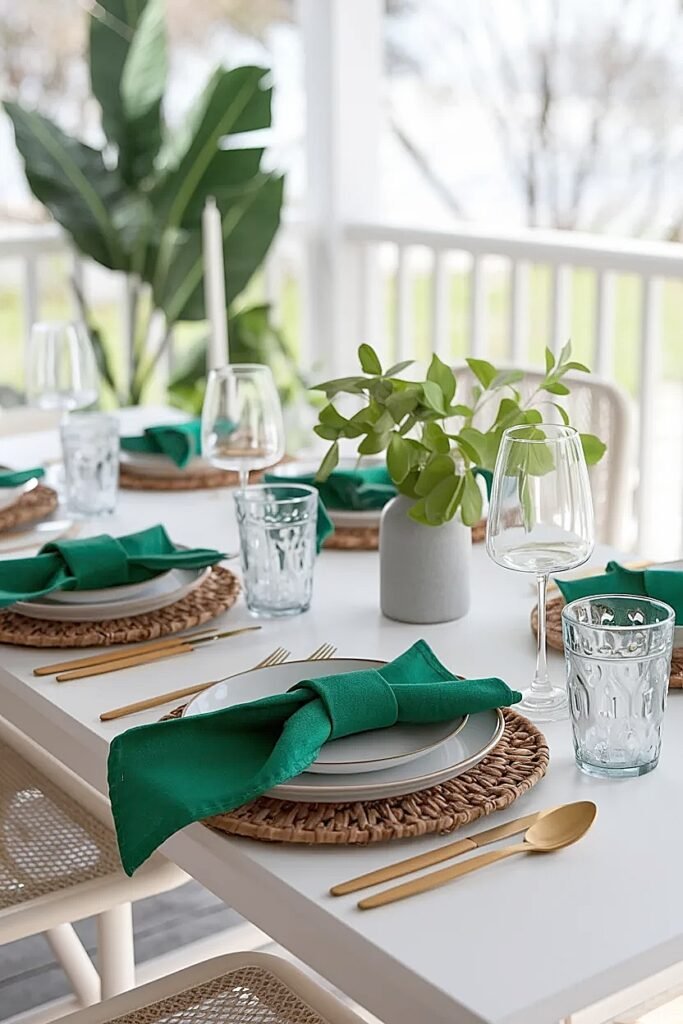
Covered patio tables occupy that wonderful middle ground between indoor formality and outdoor casualness. You’ve got weather protection from the covering but still benefit from natural light and fresh air that changes how colors appear. Green napkins look more vibrant in natural daylight than under artificial indoor lighting.
The covered structure allows me to be slightly more adventurous with rose arrangements than fully exposed outdoor setups demand. I don’t worry about wind scattering petals, but I still consider durability since outdoor furniture often gets bumped more casually than indoor dining tables.
I favor a long, low arrangement running the table’s center length, maybe forty inches long but only six inches tall. This horizontal rose installation complements the linear patio table while staying below conversation sightlines. I pack green roses tightly in this narrow bed, using floral foam in a cage system for stability. The green napkins at each place setting flank this central installation, their folded forms creating vertical punctuation against the horizontal rose line.
For napkin presentation, I roll each green napkin and secure it with natural jute twine, tucking a single white rose bloom into the twine knot. This brings the rose element to individual place settings without requiring complex folding or multiple flowers per seat. The rolled format feels casual and appropriate for outdoor dining, and the single white bloom prevents color oversaturation, you’ve already got green from the napkin itself.
The covered patio’s relaxed atmosphere lets me incorporate organic elements I’d skip indoors. I scatter a few eucalyptus leaves around the base of the central rose arrangement and tuck small pieces of moss between place settings. These natural additions feel authentic to the outdoor environment, bridging the gap between your floral centerpiece and the landscape visible beyond the patio covering. The green napkins anchor each place setting firmly enough that these organic extras don’t tip the table into messy territory.
This outdoor approach demonstrates how environment influences design choices, and the napkin ring techniques ahead offer solutions for various settings while maintaining that crucial order-versus-mess balance.
Ways to Style Saint Patrick’s Day Green Napkins with Roses Using Simple Napkin Rings
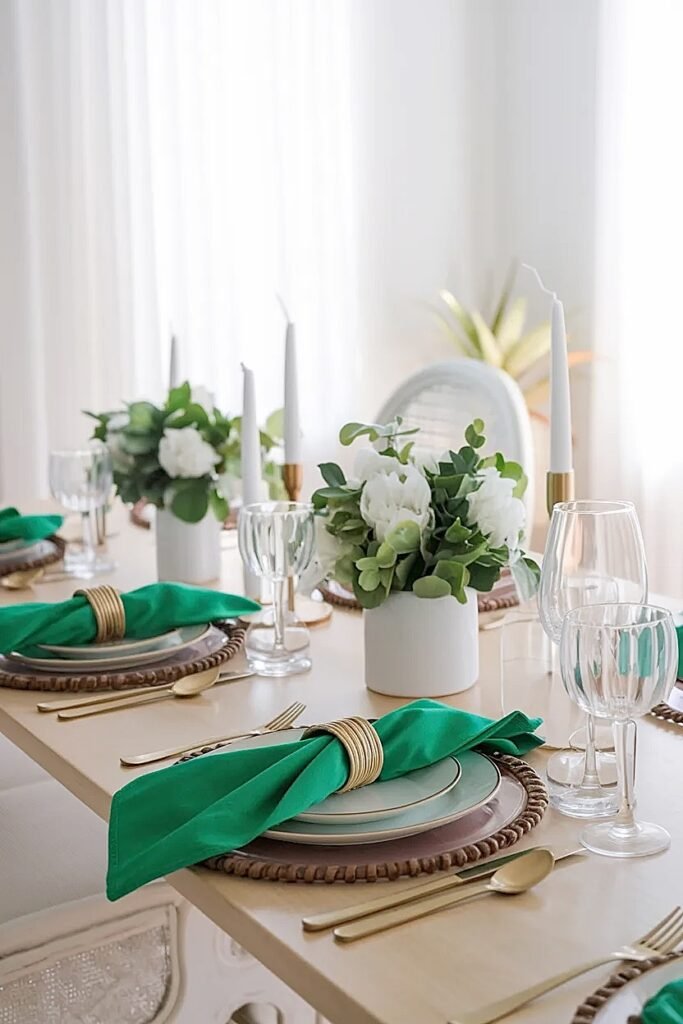
Napkin rings solve multiple problems simultaneously when you’re combining green napkins with roses. They create defined napkin forms that prevent fabric from sprawling across the table, they offer opportunities for subtle rose incorporation, and they establish consistency across all place settings through identical presentation.
I gravitate toward simple rings rather than ornate ones because the green napkin color already makes a strong statement. The ring’s job is containment and structure, not additional decoration. That said, strategic rose integration transforms basic rings into Saint Patrick’s Day elements.
1. Jute Wrapped Rings with Miniature Rose Tuck
Wrap plain wooden or metal napkin rings with natural jute cord, then tuck one small white rose bloom into the wrapped jute at each ring. I cut rose stems to about one inch, securing them with a dab of floral glue against the jute. The natural fiber texture softens metal or wood harshness while creating a perfect pocket for the rose. Each napkin gets rolled or folded through its ring, and the single white rose provides delicate accent without bulk or mess. This approach keeps the green napkin as the primary visual element while the white rose adds just enough floral connection to your larger table scheme. The jute wrap costs pennies and takes minutes to execute across all rings.
2. Wire Rings with Single Green Rose Leaf Insertion
Use simple silver or gold wire napkin rings, threading one fresh rose leaf through the wire at each setting. The leaf stays green but offers different texture and shape than the fabric napkin itself. I choose perfect, unblemished leaves and slide them onto the ring before rolling the napkin through. The leaf acts as natural decoration that complements rather than competes with your centerpiece roses. This subtle approach works beautifully when you want rose-family connection without actual blooms at every seat. The wire rings stay sleek and minimal, the green leaf adds organic element, and the green napkin completes a monochromatic scheme that feels cohesive and intentional.
3. Ribbon-Tied Bundles with Pressed Rose Petal Detail
Skip traditional rings entirely and tie each rolled green napkin with white satin ribbon, pressing one dried green rose petal into the ribbon knot using craft glue. The ribbon creates the containment function of a ring while the pressed petal adds delicate rose reference. I press petals several days before the event, flattening them between heavy books until completely dried. The flattened petal lies smooth against the ribbon, creating sophisticated detail without three-dimensional bulk that could get crushed or disheveled. This works especially well for formal Saint Patrick’s Day dinners where you want elegance alongside the holiday theme.
These napkin ring strategies show how small interventions create significant organizational impact, and the buffet-first setup tricks coming next prioritize function while maintaining floral beauty.
What Are the Best Saint Patrick’s Day Green Napkins with Roses Tricks for a Buffet-First Setup
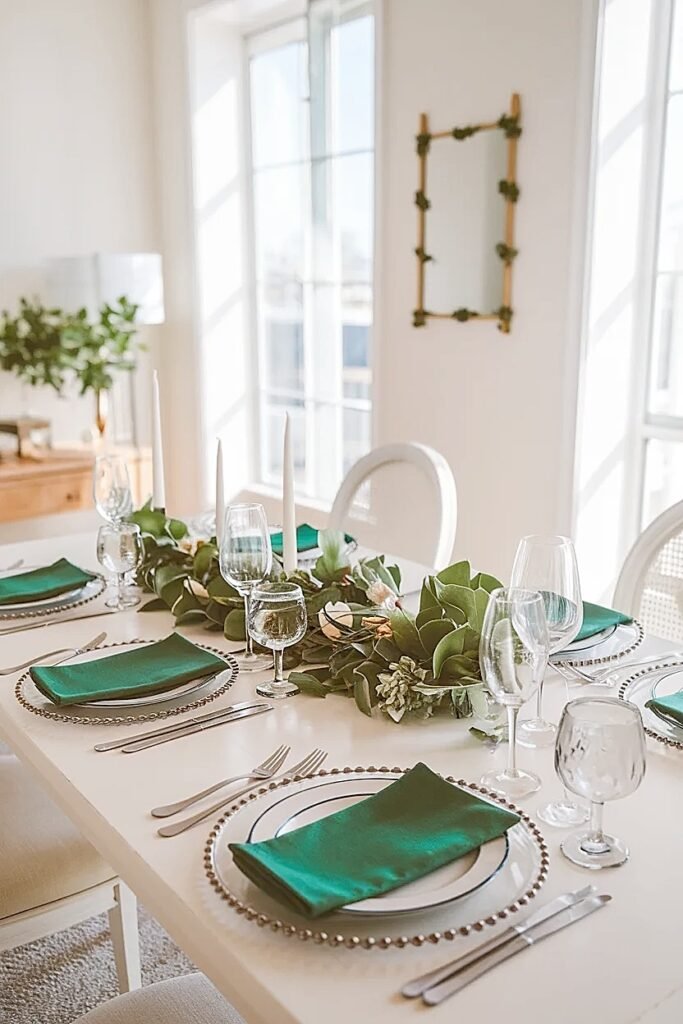
Buffet-first thinking means every decorative decision gets filtered through the question: does this help or hinder people serving themselves? Green napkins stacked at a buffet need to be easily grabbed with one hand while someone’s juggling a plate in the other. Roses need to beautify without blocking access or creating obstacles.
I approach buffet napkin and rose coordination differently than seated dining because the interaction patterns change completely. Guests move around buffets, approach from various angles, and need clear sightlines to napkin stacks so they remember to grab one before loading their plates.
1. Elevated Napkin Presentation with Roses Underneath
Stack green napkins on a small pedestal or cake stand raised four to six inches above the buffet surface, then arrange a compact ring of roses around the pedestal base. The elevation makes napkins highly visible and easy to grab from the top of the stack, while roses at the base create a floral foundation without interfering with napkin access. I use perhaps eight to twelve roses arranged in a tight circle directly on the buffet surface surrounding the pedestal foot. This creates a nest effect where napkins appear to rise from a bed of flowers. The roses stay completely below the pedestal rim, preventing any interference when hands reach for napkins. The elevated presentation also means your green napkins become a visual landmark in the buffet line, helping guests remember to grab one.
2. Napkins Fanned on Tray with Rose Corner Anchors
Arrange green napkins in a decorative fan pattern on a large rectangular tray, then position small rose clusters at two opposite corners of the tray. The fan layout showcases the napkins’ color beautifully while making individual napkins easy to pluck from the display. I place four to six roses in each corner cluster, keeping them compact and low-profile. The tray defines boundaries that prevent napkins from migrating across the buffet surface, while corner roses anchor the composition without blocking napkin access. This works phenomenally when you’ve invested in quality linen napkins whose texture and color deserve showcasing. The tray also makes repositioning easy if buffet flow patterns require adjustment mid-party.
3. Napkin Pocket Fold with Rose Bud Insertion at Stack Top
Fold all green napkins into pocket-style configurations before stacking them at the buffet, inserting one small rose bud into the pocket of only the top three napkins in the stack. This creates immediate visual interest when guests approach, they see roses integrated into actual napkins, without requiring rose insertion for every single napkin in your stack. I use small white rose buds cut to two-inch stems that nestle perfectly into the pocket fold. As guests remove the top napkins with roses, subsequent plain napkins become accessible. This technique signals that napkins and roses coordinate intentionally while being wildly practical, you’re only decorating three napkins rather than twenty or thirty.
4. Behind-Stack Rose Wall Using Vertical Frame
Position the napkin stack at the buffet’s front edge, then create a vertical rose installation directly behind it using a slim frame or trellis mounted temporarily. The frame stands upright, holding rose stems in water tubes at varying heights to create a living wall effect. This backdrop makes the napkin location unmissable while keeping roses completely separate from the actual napkin grab zone. I use frames approximately fifteen inches tall and twelve inches wide, packing them with mixed green and white roses. The vertical installation claims zero horizontal buffet space while creating substantial visual impact. Guests clearly see where napkins live, and the roses enhance without obstructing.
5. Napkin Weight with Floral Base Integration
If your buffet is outdoors or near air conditioning vents where napkins might blow, use a decorative weight on top of the napkin stack, choosing a weight with a floral base. I favor clear glass or crystal weights that showcase a few rose petals sealed inside, or metal weights shaped like flowers. The weight prevents napkin chaos while the floral element connects visually to your larger rose scheme. This serves purely functional purpose, keeping napkins stable, while maintaining aesthetic coherence. The weight sits atop the stack, adding elegant detail that guests notice when reaching for napkins.
These buffet-specific approaches demonstrate how understanding user behavior informs design decisions, and the kitchen island snack table scenario ahead tackles casual serving situations with their own unique requirements.
How to Style Saint Patrick’s Day Kelly Green Napkins with Roses on a Kitchen Island Snack Table
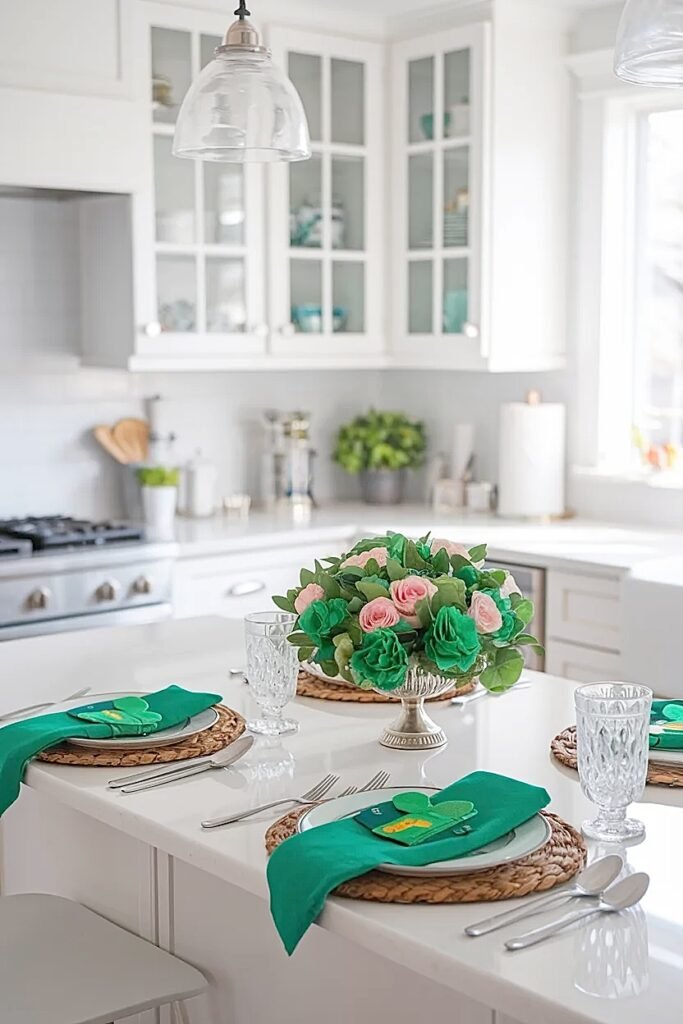
Kitchen islands functioning as snack tables create fascinating styling challenges. They’re inherently informal, people graze while standing, circling the island from all sides. Kelly green napkins at an island snack setup need to be accessible from multiple approach angles, and roses need to look attractive from 360-degree viewing.
I stack napkins at one island end in a simple, stable pile rather than fanning or arranging them decoratively. The casual snacking context means people grab napkins quickly, often without looking carefully, so complicated arrangements just get destroyed within the first ten minutes.
The rose element happens at the island’s opposite end, one substantial arrangement that doesn’t compete spatially with the napkin stack or snack bowls. I build this arrangement in a low, wide vessel that won’t tip when people lean against the island or reach across surfaces. Maybe fifteen roses packed densely in a bowl that stays under eight inches tall. The kelly green napkins and the green roses create color continuity across the island’s length without crowding the functional center where snacks actually sit.
For extra rose reference without additional arrangements, I’ll place individual rose leaves under the napkin stack as a decorative mat. Three to five large leaves laid flat create a natural placemat effect, connecting the napkin station visually to the rose arrangement at the island’s far end. This subtle detail costs nothing and takes seconds but establishes intentional design.
The island’s all-side access means I can’t create a “back” where unattractive elements hide. Everything needs to look finished from every angle. I keep the napkin stack edges aligned perfectly, position the rose arrangement so it shows beautifully from all sides, and eliminate any structural mechanics, floral foam, tape, wire, that might be visible from certain viewpoints.
This island-specific thinking reinforces how physical space usage patterns dictate decorating approaches, and the consistent folding techniques ahead solve the visual chaos problem through disciplined repetition.
Ideas for Saint Patrick’s Day Kelly Green Napkins with Roses Using “Same Fold, Every Seat”
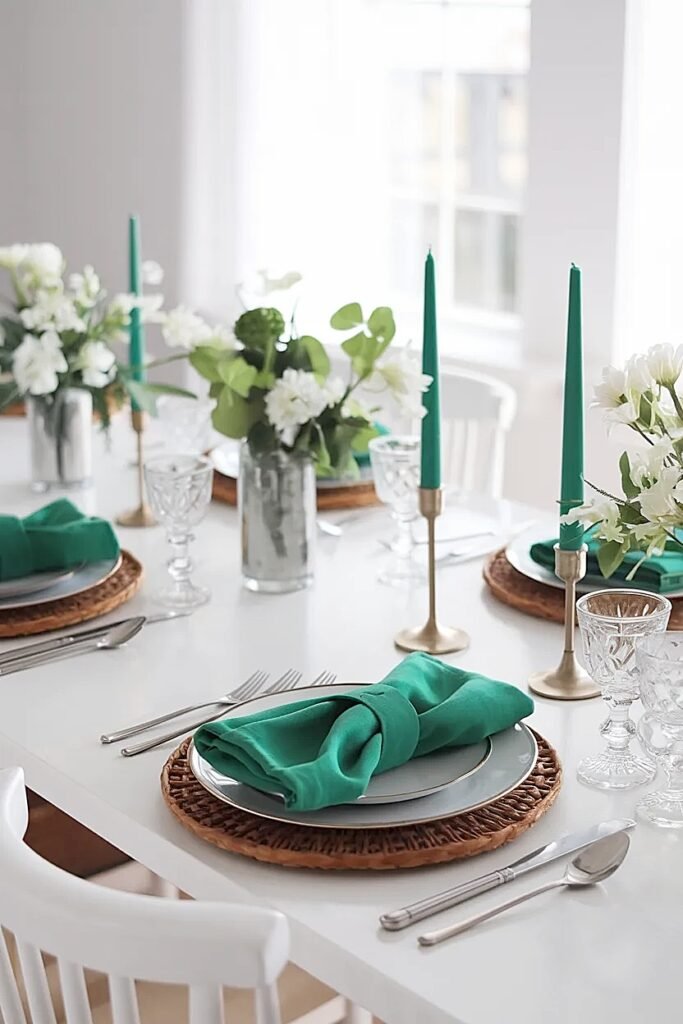
Consistent folding across every single place setting creates instant visual order that allows you to incorporate roses without tipping into messy territory. I cannot overstate this principle’s importance. Varied napkin folds at different seats, even when executed beautifully, fragment the table’s cohesion and make rose additions feel random.
Choose one fold style and execute it identically at every seat. This repetition creates rhythm and expectation, letting your eye recognize the pattern and rest within it. Roses then function as controlled accents rather than additional chaos generators.
1. Basic Rectangle Fold with Rose Laid Diagonally Across
Fold each kelly green napkin into a simple rectangle about four by ten inches, placing one long-stemmed white rose diagonally across each folded napkin at every seat. The uniformity comes from identical fold dimensions and identical rose placement angle, I aim for approximately forty-five degrees across each rectangle. The rose stem extends beyond the napkin edges at both ends, creating graceful lines that add movement without disorder. This works beautifully for casual dinners where simple elegance trumps complex presentation. The kelly green rectangles establish color foundation, white roses provide contrast, and the diagonal placement adds subtle sophistication to an otherwise basic fold.
2. Pyramid Fold with Single Rose Bud at Peak
Create a standing pyramid fold with each kelly green napkin, tucking one small rose bud into the pyramid’s peak point at every seat. The three-dimensional fold stands approximately six inches tall, and the rose bud crowns the structure naturally. I use small white or pale pink rose buds with stems cut to one inch, tucking them into the fold’s top opening. The pyramid fold has been around forever, but the rose bud addition personalizes it for Saint Patrick’s Day without requiring complicated origami. Every guest sees an identical presentation, same fold height, same rose color, same placement, which creates satisfying uniformity across the table. The standing fold also means napkins occupy vertical rather than horizontal space, leaving more room for plates and flatware.
3. Fan Fold with Rose Stem Tucked Through Center Pleat
Execute a classic fan fold with each kelly green napkin, threading one green rose stem with leaves through the fan’s center pleat at every seat. The fan creates approximately seven to nine pleats radiating from a center point, and the rose stem slides through the middle pleat, securing itself naturally through friction. I cut stems to about six inches so they don’t overwhelm the fan structure. The rose leaves spread across the fan pleats, integrating flower and napkin organically. This approach showcases both the napkin’s texture and the rose’s natural form. The identical fan size and rose placement across every seat prevents visual fragmentation. Guests see their own napkin fan with rose, then recognize the same presentation at every other seat, creating cohesive tablescape.
4. Envelope Fold with Rose Tucked in Pocket Opening
Fold each kelly green napkin into an envelope configuration with a pocket opening at the top, tucking one white rose bloom into that pocket at every seat. The envelope fold creates clean geometric lines approximately six by six inches square, and the pocket naturally holds the rose without additional securing. I cut rose stems to three inches so blooms sit just above the pocket edge. This fold style feels slightly more formal than basic rectangles but remains approachable. The pocket serves functional purpose, it could hold utensils or placecards, while creating the perfect receptacle for your rose accent. The identical execution across all seats establishes order, while the white rose against kelly green fabric creates the color pop you want for Saint Patrick’s Day.
5. Simple Roll with Ribbon and Rose Leaf Accent
Roll each kelly green napkin tightly, securing it with white ribbon tied in a simple bow, then tucking one fresh rose leaf under the ribbon at every seat. The rolled format stays compact, the white ribbon creates contrast bands against green fabric, and the single rose leaf adds organic element without bulk. I use satin or grosgrain ribbon about half an inch wide, tying identical bow sizes at each napkin. The rose leaf slides under the ribbon before tying, positioning it to display prominently against the rolled napkin’s curve. This casual approach works for both indoor and outdoor Saint Patrick’s Day gatherings. The leaf reference connects to any rose centerpiece without requiring actual blooms at every setting, which keeps costs down and maintenance minimal.
These consistent folding strategies demonstrate how disciplined repetition creates the visual framework that prevents messiness, and the porch coffee table scenarios ahead apply these principles to intimate, casual settings.
Ways to Style Saint Patrick’s Day Kelly Green Napkins with Roses on a Porch Coffee Table
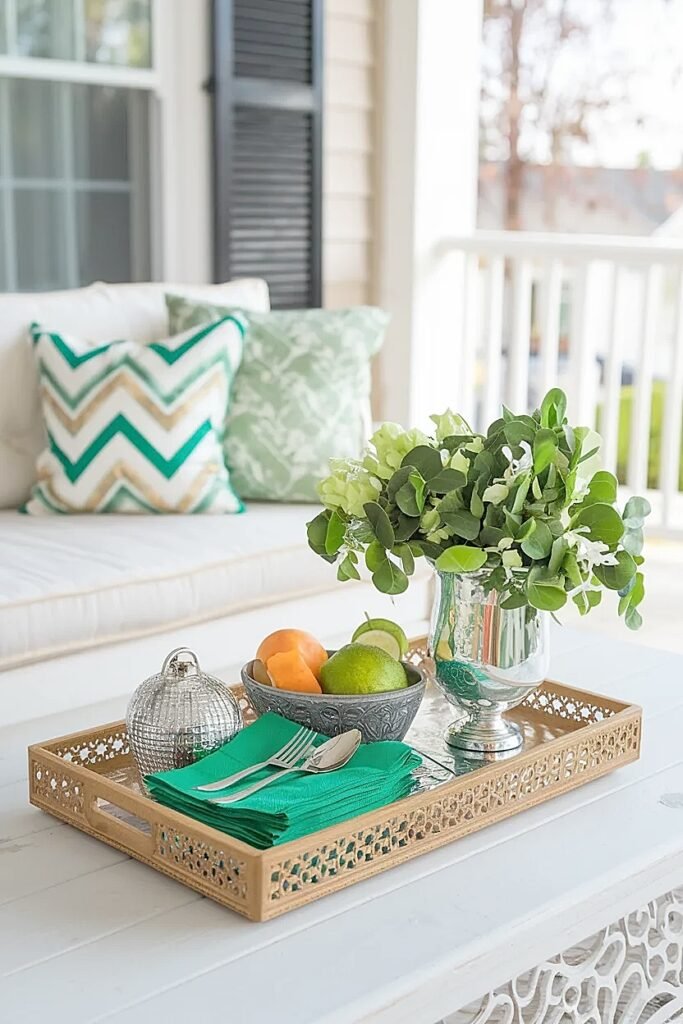
Porch coffee tables serve snacks and drinks in ultra-casual contexts, we’re talking movie nights, game gatherings, or lazy afternoon hangouts. The low table height and relaxed seating around it create informal vibes where fussy napkin presentations would feel ridiculous. Yet you can still incorporate roses elegantly.
Kelly green cocktail napkins work better than large dinner napkins for coffee table contexts. The smaller size suits the casual format, and people can grab them one-handed while balancing drinks. I keep napkins simple and roses minimal on porch coffee tables, letting comfort drive design.
1. Napkin Stack in Vintage Book with Bud Vase Companion
Stack kelly green cocktail napkins inside an opened vintage book positioned flat on the coffee table, placing a small bud vase with one green rose beside the book. The book creates an unexpected napkin holder that adds character while defining boundaries. I choose books with green covers or Irish-related subjects for thematic connection. The single rose in a three-inch bud vase echoes the napkin color without overwhelming the small coffee table surface. This pairing occupies minimal footprint, maybe eight by ten inches total, leaving plenty of room for snack bowls and drink coasters. The quirky book detail gives guests a conversation starter while serving functional napkin-holding purpose.
2. Woven Basket Napkin Presentation with Rose Garland Rim
Arrange kelly green napkins loosely in a small woven basket, draping a delicate rose garland around the basket’s upper rim. The basket feels appropriately casual for porch settings, and the garland adds floral element without requiring vase or water. I create this rim garland using floral wire as foundation, attaching small rose blooms and leaves along six to eight inches of wire that wraps partially around the basket edge. The garland stays lightweight so it doesn’t pull the basket off balance. This approach brings roses directly into the napkin presentation itself rather than separating them into distinct arrangements. The woven texture also adds organic warmth appropriate for outdoor porch environments.
3. Napkins Tucked in Terra Cotta Pot with Trailing Rose Ivy
Roll kelly green napkins and tuck them upright in a small terra cotta pot, adding trailing ivy woven with miniature roses around the pot’s exterior. The terra cotta immediately signals casual, garden-inspired styling perfect for porches. I position napkins standing vertically like flowers in a pot, filling any gaps with tissue paper to keep them stable. The trailing ivy and roses wrap around the pot’s outside, creating living decoration that complements the green napkins inside. This works especially well for spring Saint Patrick’s Day celebrations when garden themes feel seasonally appropriate. The pot itself can be painted white or left natural terra cotta depending on your aesthetic preference.
4. Simple Napkin Fan on Tray with Corner Rose Accent
Fan kelly green napkins in an overlapping pattern on a small rectangular tray, positioning one perfect rose bloom at the tray’s corner. The fan showcases the napkins’ color and texture while the single rose provides elegant accent without competing for attention. I use a tray just large enough to hold the fanned napkins, maybe ten by fourteen inches, keeping the overall footprint coffee-table appropriate. The single rose sits in a tiny water tube secured at the tray corner, staying fresh throughout your gathering. This minimalist approach lets the kelly green color dominate while rose adds refinement. The tray also makes passing napkins easier if someone across the coffee table needs one.
5. Napkin Holder with Single Rose Stem Threaded Through
Use a simple napkin holder, metal, wood, or ceramic, to contain stacked kelly green napkins, threading one long-stemmed rose through the holder’s decorative openings. Many napkin holders feature lattice or cutout designs perfect for weaving stems through. I choose one white or pale pink rose with a flexible stem that can thread through openings without breaking. The rose becomes integrated architectural element of the napkin holder itself rather than separate decoration. This creates unity between functional object and floral accent. The threaded rose can curve along the holder’s top or side, adding graceful lines that soften the holder’s rigid structure.
These porch coffee table approaches prove that even the most casual settings benefit from thoughtful napkin and rose coordination when executed with restraint and spatial awareness.
Conclusion
The difference between messy and elegant when combining Saint Patrick’s Day green napkins with roses comes down to discipline and restraint. Every technique I’ve shared prioritizes consistency, whether through matched mini arrangements, identical napkin folds, or strategic single-centerpiece approaches. Your kelly green napkins already make a bold statement; roses should enhance that color story rather than competing with it.
Start with your napkins as the foundation, then add roses strategically in places that create visual interest without fragmentation. Whether you’re setting a formal dining table or styling a casual porch coffee table, the same principles apply: repetition creates order, simplicity prevents chaos, and functional considerations guide every decorative choice. Your guests will notice the cohesive beauty without feeling overwhelmed, exactly the sophisticated balance worth achieving.
This website contains affiliate links, and some products are gifted by the brand to test. As an Amazon Associate, I earn from qualified purchases. Some of the content on this website was researched and created with the assistance of AI technology.