This website contains affiliate links, and some products are gifted by the brand to test. As an Amazon Associate, I earn from qualified purchases. Some of the content on this website was researched and created with the assistance of AI technology.
Key Takeaways
- The urn’s narrow neck creates automatic stem support: no floral foam needed if the neck opening is six inches or smaller
- The vessel’s silhouette demands generous volume: a sparsely filled urn looks unfinished in a way that a sparse jar does not
- Trailing elements are essential for an urn: they break the visual boundary between the arrangement and the vessel and create movement
- Gravel in the base before water is non-negotiable outdoors: the tall, narrow profile makes an urn among the most tip-prone outdoor party vessels
- Bold, warm tones suit the urn’s inherently formal character: vivid coral, deep orange, and golden yellow create the festive contrast the vessel needs
- The urn position matters as much as the arrangement: flanking positions at entry points and beside seating areas outperform center-table positions for urn scale
Styling an urn planter with summer flowers for a backyard patio party is a project that rewards understanding what an urn does that no other vessel can. The hourglass silhouette, the narrow neck that widens at the base, creates a natural visual tension: the arrangement above the rim looks almost suspended, as if it is floating rather than sitting in a pot. That floating quality, combined with the urn’s inherent visual weight and formality, makes it one of the most dramatic single flower vessels available for any outdoor party setup.
The urn has a reputation for being intimidating to style. People assume it requires professional arranging skill or expensive flowers to look intentional. It does not. An urn that is packed generously with vivid zinnias and trailing eucalyptus looks genuinely designed. The narrow neck actually makes arrangement easier than a wide-mouth vessel because it holds the stems upright automatically and brings them together at the base into a naturally composed cluster. The challenge is not technique. It is knowing which flowers suit the urn’s specific visual scale.
This urn planter guide helps the reader match each decorating goal with the right Summer Flowers and planter style. It focuses on one of the most important parts of the post: choosing flowers that stay balanced, durable, practical, and appropriately scaled for a decorative raised urn at a real patio party. Extension-style guidance supports sturdy annuals for containers and highlights height, scale, and container fit as key design decisions.
| Urn Goal | Best Summer Flowers | Why It Helps | Best Styling Tip |
|---|---|---|---|
| Main Urn Color Create a cheerful focal point without making the planter look top-heavy. |
Zinnias + Marigolds Rounded blooms that show strong color quickly in urn-style plantings. |
Extension guidance supports annuals as versatile and sturdy, and flowers like zinnia and marigold are especially useful for sunny container color. :contentReference[oaicite:3]{index=3} | Use one strong main bloom and repeat it around the urn instead of mixing too many focal flowers. |
| Texture and Detail Add richness so the urn planter feels layered instead of flat. |
Gomphrena + Celosia Texture-rich flowers that make even simple urn designs feel fuller. |
Flower guidance highlights the value of height, texture, and placement in mixed designs, especially where visual structure matters. :contentReference[oaicite:4]{index=4} | Use texture flowers in smaller amounts around the edge so the arrangement still feels clean and intentional. |
| Hot-Weather Reliability Keep the urn planter looking fresh during warm patio parties. |
Gomphrena + Zinnias Strong warm-season flowers that handle outdoor conditions better. |
Gomphrena stands up to high heat and humidity and resists weather damage, making it especially useful outdoors. :contentReference[oaicite:5]{index=5} | Put the toughest flowers near the top and outer edge where sun and airflow hit hardest. |
| Low Party-Friendly Shape Make the urn planter work near real patio activity. |
Compact Mixed Blooms Low rounded flowers help the planter stay guest-friendly and visually open. |
Extension flower guidance notes that annuals come in many heights, colors, and textures, which helps match plants to container scale. :contentReference[oaicite:6]{index=6} | Keep flowers below drink-glass height when the urn sits close to food, drinks, or conversation zones. |
| Color Harmony Make the whole patio setup feel tied together. |
Repeat 2–3 Main Tones Try yellow, coral, and white or peach, pink, and orange. |
Grouped color, height, and texture choices create stronger design rhythm in mixed annual plantings. :contentReference[oaicite:7]{index=7} | Echo one flower tone in fruit, napkins, or dishes so the urn planter feels connected to the patio-party setup. |
References:
- Annual and Perennial Flowers for Mississippi Gardens | Mississippi State University Extension Service
- Gomphrena ‘Fireworks’ – Wisconsin Horticulture
How to Style an Urn Planter with Summer Flowers for a Backyard Patio Party
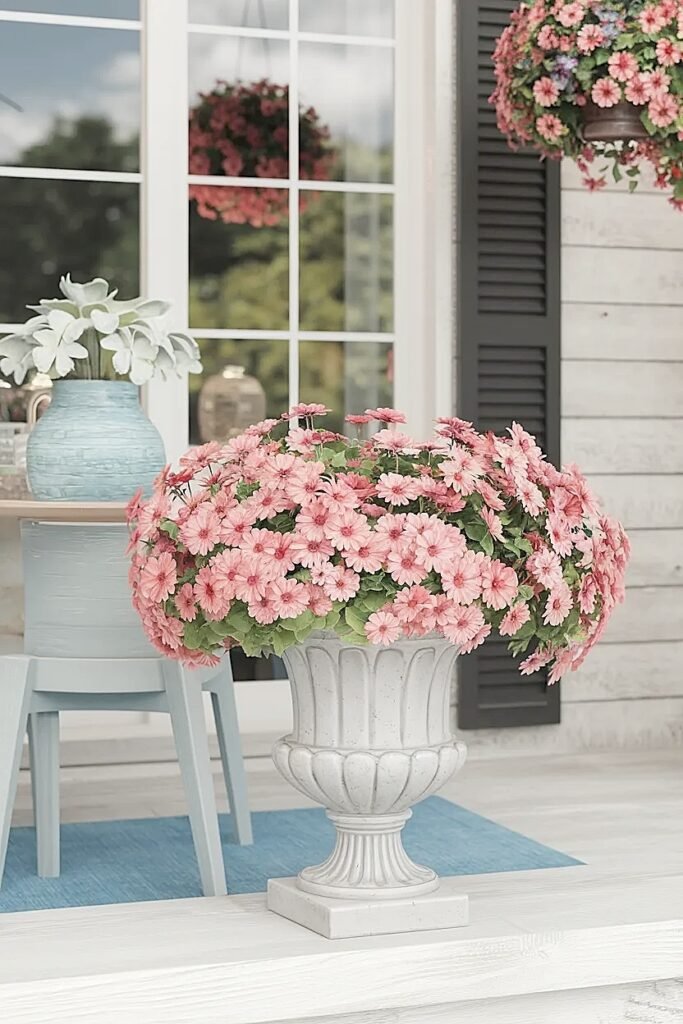
The narrow neck of a standard urn planter is both its greatest limitation and its greatest structural advantage. Stems inserted through the neck emerge at angles that naturally create a splayed, outward-facing arrangement without any deliberate positioning. The urn does the arranging work that a wide-mouth vessel requires you to do manually. But the narrow opening also caps the stem count you can fit, which means every stem has to earn its position in the display.
My approach for any urn arrangement starts with five to seven stems of the primary focal flower, cut to three to five inches above the rim, inserted at even radial spacing through the neck so each faces outward in a different direction. This base layer creates the shape of the arrangement. Then three to four seeded eucalyptus strands, inserted between the focal stems, trailing out and down over the urn shoulder. That trailing element is the detail that transforms a tight formal arrangement into something that looks organic and abundant.
The urn’s base stability is worth specific attention. Most urn planters are tall and narrow at the foot even when they widen at the shoulder. Outdoors, a party wind or a guest brushing past tips an unweighted urn immediately. Fill the base with two to three inches of coarse gravel before adding cold water. The gravel settles below the neck and creates significant ballast exactly where the urn needs it. I have had urn planters survive afternoon gusts in that configuration that would have toppled an unweighted version instantly.
For more on pedestal planters as a complementary tall-vessel approach, check out how to decorate a pedestal planter with summer flowers for a backyard patio party. Share this with anyone building an outdoor party flower display. More ahead on every specific flower choice, placement strategy, and budget approach.
Ways to Use Bright Summer Flowers in an Urn Planter for a Backyard Patio Party
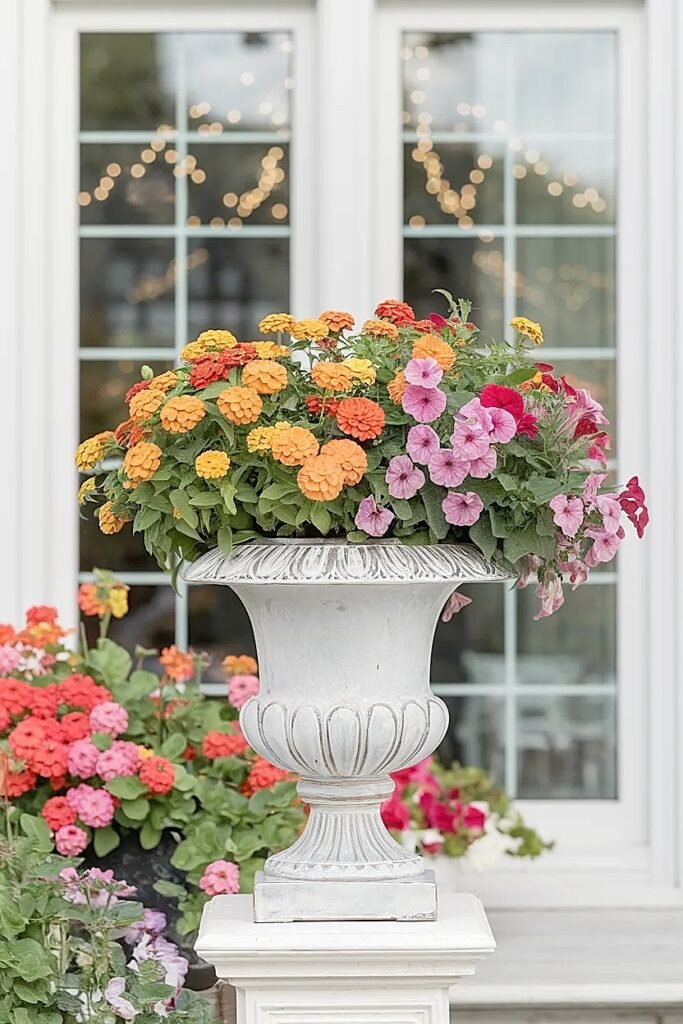
An urn planter reads against outdoor backgrounds from a distance, which means bright, saturated colors are not just a stylistic preference: they are a practical requirement. Pastels and soft tones disappear against a garden fence or patio wall from ten to fifteen feet away. Bold coral, vivid orange, and deep burgundy hold their visual presence at that distance.
1. Single-Color Saturated Zinnia Urn Pack the urn with one vivid zinnia color at maximum stem count, eight to ten stems in deep coral or bold orange. Trail four seeded eucalyptus strands over the urn shoulder. The single-color approach creates a graphic, bold display that reads as designed from across the yard. The eucalyptus silver-green creates the one color contrast that makes the zinnia tone look even more saturated against.
2. Sunflower-Led Mixed Arrangement Insert two or three grocery store sunflowers at the back and center of the urn at the tallest position, then fill the remaining neck space with eight to ten zinnia or marigold stems at medium height. The sunflowers rise above the secondary blooms, creating a tiered silhouette visible from across the yard. Trail eucalyptus over the urn shoulder between the lower stems. The sunflower elevation.
3. Bold Marigold and Statice Urn Fill the urn neck with eight to ten vivid orange marigold stems plus four to five statice stems pressed between them. The statice doubles visual density at the arrangement base without adding height. Trail a single strand of seeded eucalyptus over each side of the urn shoulder. The marigold and statice combination provides visual fullness that a single-flower arrangement at the same stem count cannot.
4. Coral Gradient Mixed Urn Fill the urn with a gradient from pale peach at the front edge to deep coral at the back: three pale stems, three mid-coral stems, three deep coral or orange stems. The depth gradient creates visual distance within the arrangement that reads as dimensional from close range. A trailing eucalyptus strand at each side of the urn shoulder anchors the gradient and prevents it from.
5. Strawflower and Marigold Warm Pairing Alternate strawflower and marigold stems throughout the urn neck, one strawflower for every two marigold stems. The papery texture of the strawflower creates interesting contrast against the smooth pom-pom marigold at close viewing range while both flowers hold their vivid warm tones equally well in direct outdoor afternoon sun. Trail two eucalyptus strands over the shoulder. A completely heat-stable pairing suitable for any outdoor party.
6. Dahlias as Statement Focal Three large pompom or ball dahlia stems at the front and center of the urn neck plus six to eight zinnia or waxflower supporting stems around them create the most sophisticated outdoor birthday party urn arrangement available. The dahlia faces at urn height read clearly from across the yard. The supporting flowers create the color mass that makes the dahlia stems look like deliberate design.
7. Herb and Bloom Welcome Urn Fill the urn neck with two rosemary sprigs, two basil stems, one chamomile bunch, and six zinnia stems at varying heights. The herb-and-bloom combination creates a fragrant, kitchen-garden quality that reads as intentionally festive at party entry or buffet positions. The herb fragrance at urn height disperses pleasantly around the immediate area without creating food concerns. The arrangement costs under eight dollars in purchased materials.
More ahead on how to balance the urn’s inherent formal character with the casual, festive energy of a backyard patio party.
How to Make an Urn Planter with Summer Flowers Feel Festive but Practical for a Backyard Patio Party
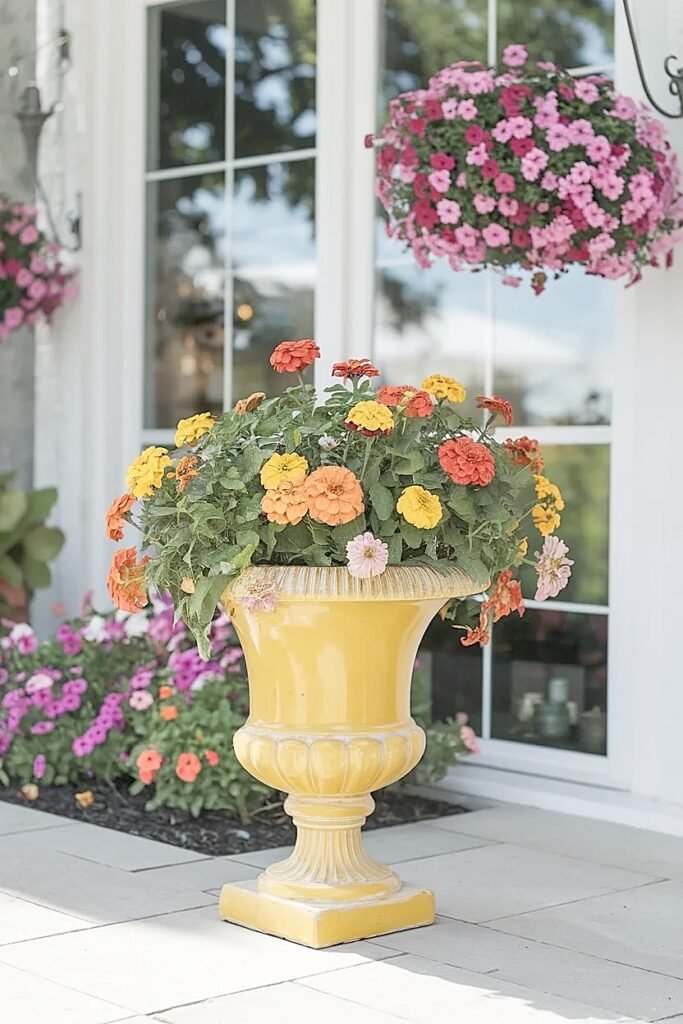
An urn without the right flower approach reads as a garden decoration that wandered into a party. Too formal, too static, too quiet for a birthday or summer gathering. The detail that unlocks the urn’s festive potential is movement: trailing elements that reach over the shoulder and create organic, dynamic quality against the structured vessel silhouette. A static urn arrangement, however beautifully arranged, reads as formal. An urn arrangement with trailing eucalyptus or ivy moving gently in the afternoon breeze reads as alive.
Practical means stable and positioned correctly. The tall profile of an urn creates a higher center of gravity than any other common outdoor party vessel. Gravel ballast in the base, confirmed stability before the party starts, and a position where the urn is not in a primary traffic path are the three practical decisions that prevent every urn-at-a-party accident I have ever witnessed. I once watched a beautiful stone urn tipped by a guest’s bag strap at a graduation party. Gravel would have saved it.
The urn position within the party setup determines whether it reads as festive or formal. At the base of steps, flanking the entry gate, or beside a seating area corner, an urn reads as a celebration marker. In the center of a dining table or at the back of a buffet, the same urn reads as architecture. Party urns work at the threshold and the corner. They work as arrival markers and visual anchors. They do not work as conversation-height focal points where the vessel’s formality competes with the casual energy of the event.
Keep the urn accessible for mid-party refreshing. An urn arrangement that wilts noticeably mid-party and cannot be reached to refresh reads as a neglected detail. Position urns where you can reach the neck without moving furniture or guests.
There is more ahead on which flowers are specifically safest when kids are part of the party and will be within arm’s reach of the urn.
What Are the Best Summer Flowers for a Kid-Friendly Urn Planter at a Backyard Patio Party?
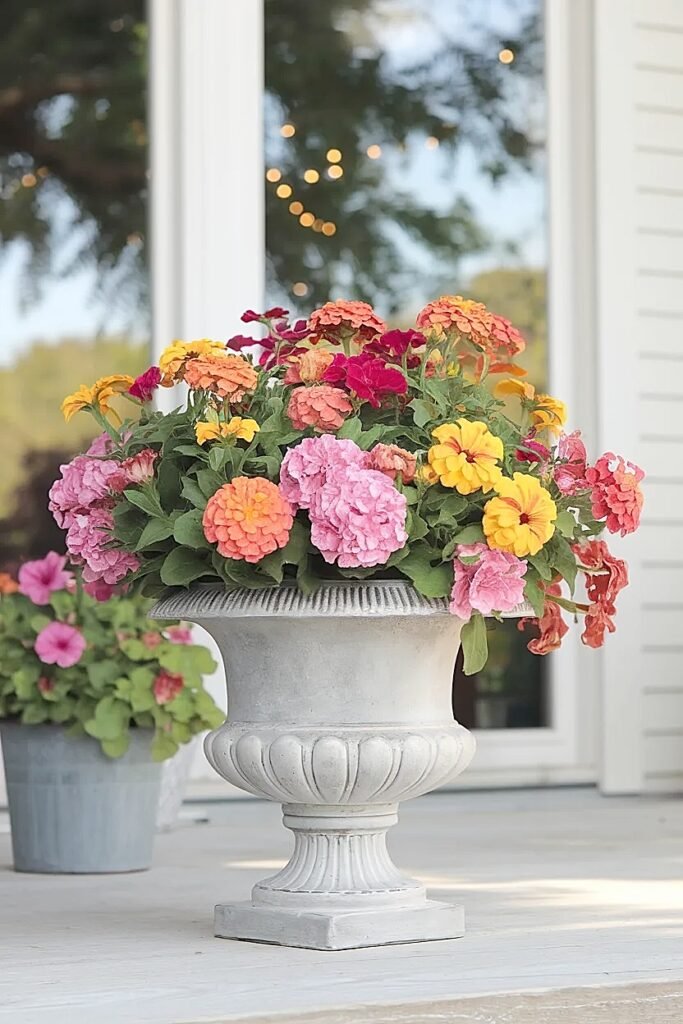
A party urn that kids will pass closely needs zero accessible pollen and zero shedding potential. Kids at urn height will smell, touch, and occasionally try to pick the flowers. The flowers below survive that interaction completely safely and hold their appearance through it.
1. Zinnias Zero accessible stamen at any bloom stage means no pollen risk regardless of contact. Dense petals do not drop when touched or bumped by passing children. One grocery store bunch fills the urn neck with vivid color. Holds in direct outdoor heat through any party.
2. Gomphrena The compact ball structure has no accessible stamen and no fragrance. Kids find the texture interesting but the flower produces nothing they can inhale or transfer to their eyes. Vivid pink or purple holds in outdoor heat. One stem carries multiple bloom heads. Two to.
3. Statice Papery blooms shed nothing and release zero pollen under any handling conditions including direct grabbing. Holds color and form indefinitely in outdoor heat without any attention. Purple and white statice mixed with a few zinnia stems creates a complete, beautiful, and completely kid-safe urn arrangement.
More ahead on the welcome urn, the most impactful single flower positioning decision at any backyard patio party.
How to Style a Welcome Urn Planter with Summer Flowers for a Backyard Patio Party
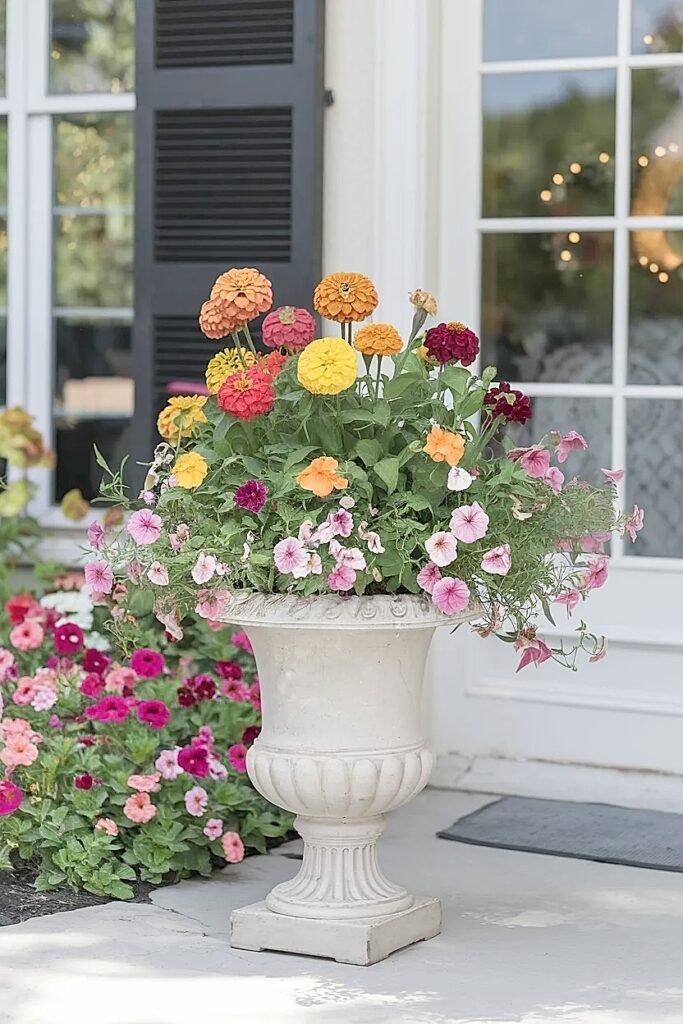
The welcome urn is the vessel that gets the first and the last view from every guest at the party. First as they arrive, last as they leave. Both moments matter. An urn at the entry point communicates intentionality: whoever styled this party thought about the threshold experience, not just the table.
A pair of matching urns flanking the entry gate or door creates the most impactful welcome arrangement. Both urns identical in flower variety and color, both with matching trailing eucalyptus strands over the shoulder, both positioned symmetrically at the threshold. The symmetrical pair reads as definitively designed rather than casually assembled. If the budget permits one urn, position it at the first point of contact with the party path and face the fullest arrangement face toward the guest approach direction.
The welcome urn earns the highest stem count and the most vivid flower selection in the full party setup. This is not a position for restraint. Sunflowers at the back of the welcome urn neck, marigolds and zinnias packed at mid-height, eucalyptus trailing over the shoulder on both sides: that specific build makes the welcome urn the visual statement that the party entry moment deserves. The arrangement needs to be visible from twenty to thirty feet away as guests approach the property.
One specific detail that makes a welcome urn more effective: position the trailing eucalyptus strands on the side facing the guest approach path specifically, rather than distributing them evenly. The movement of the trailing element in the direction guests are walking creates an unconscious welcoming gesture that a static arrangement does not provide.
More ahead on which specific flowers suit the smaller urn format, which requires different scale thinking from the standard party urn.
What Are the Best Summer Flowers for a Small Urn Planter at a Backyard Patio Party?
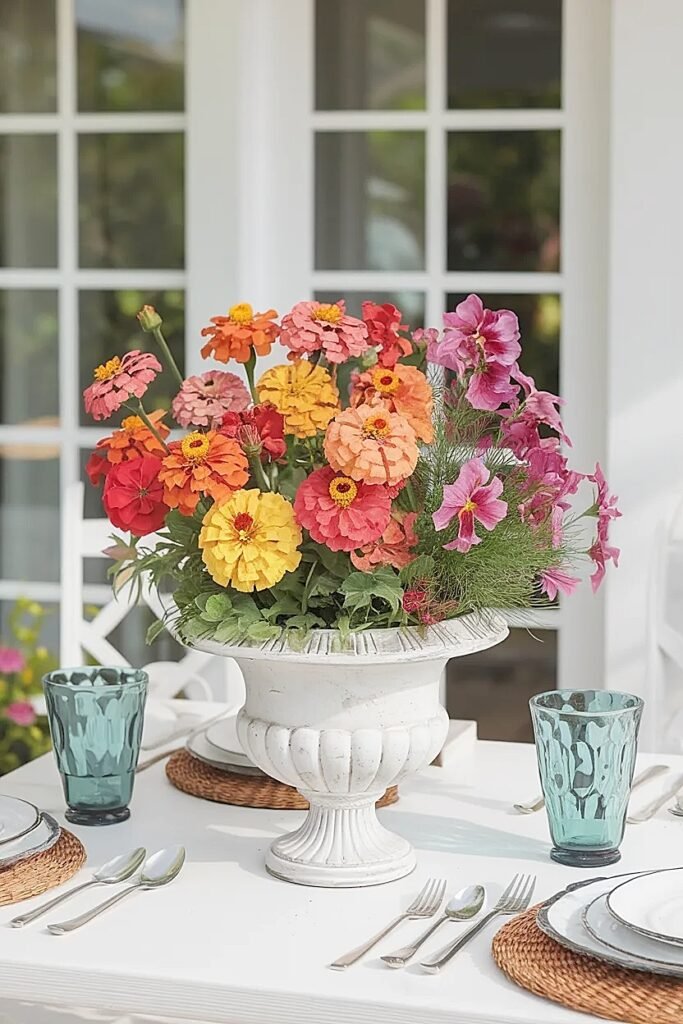
A small urn, anything under eight inches in height, is a different instrument from its larger counterpart. The narrow neck opening is smaller, accommodating fewer stems, and the arrangement height above the rim needs to be proportionally shorter to avoid looking top-heavy. Small urns reward precision: one to three focal stems plus one trailing element is often the complete arrangement.
1. Single Zinnia with Eucalyptus Trail One vivid zinnia stem at four inches above the small urn rim plus two trailing eucalyptus strands over the shoulder creates a complete, beautiful small urn arrangement. The single bloom reads as deliberately chosen rather than sparse. The eucalyptus trails create proportional trailing movement. One stem, two trails, total cost under two dollars from one.
2. Gomphrena Cluster Two or three gomphrena stems inserted through the small urn neck create a multi-bloom display within the limited space. Each stem carries three to five ball blooms, making three stems look like twelve to fifteen individual elements at close range. The compact ball scale suits the small urn’s proportions perfectly. Vivid pink or purple gomphrena.
3. Single Sunflower One grocery store sunflower cut to four inches in a small gravel-weighted urn creates the most dramatically impactful per-stem small vessel treatment available. The overscaled flat face reads as deliberately bold rather than incidental when the proportional contrast between the large bloom and the small vessel is treated as the design intention. Position the sunflower.
4. Chamomile and Waxflower Two chamomile stems and three waxflower stems create a delicate, layered small urn arrangement with genuine visual fullness at fine-textured scale. The chamomile daisy faces provide the focal element. The waxflower cluster fills the supporting visual space. One trailing eucalyptus strand over the shoulder completes the arrangement. The mild honey fragrance from both flowers at.
5. Strawflower Single Stem One strawflower stem with three to four branching bloom heads in a small gravel-weighted urn creates a complete multi-element display from one stem. Zero water management, zero heat concern, and the papery texture contrasts beautifully against any small urn material. Available in mixed warm tones from June through September. The most maintenance-free small urn treatment.
More ahead on bright mini flower ideas that suit the urn format specifically, whether standard or small scale.
Ideas for Bright Mini Summer Flowers in an Urn Planter for a Backyard Patio Party
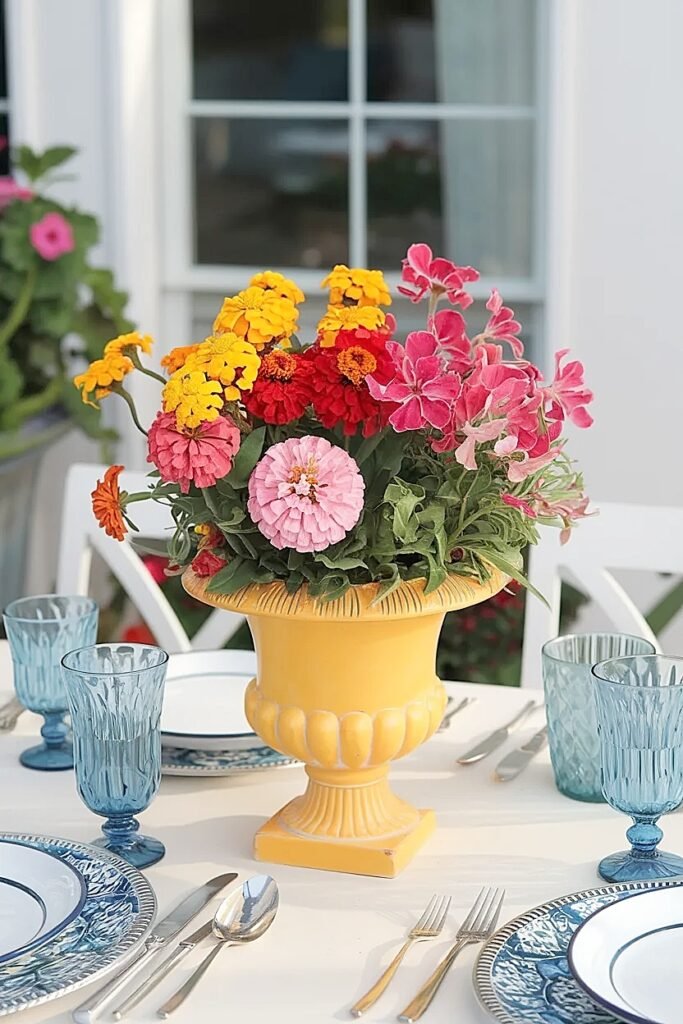
Mini flowers in an urn work when they are deployed generously enough that the urn’s visual weight is met by the arrangement’s flower mass. Three gomphrena stems in a large urn looks lost. Twelve gomphrena stems in the same urn, packed at the neck with trails of waxflower over the shoulder, creates a rich, textured display. Volume is the only rule.
1. Gomphrena Fully Packed Urn Fill the complete urn neck capacity with gomphrena stems, ten to fifteen depending on urn size, alternating vivid pink and deep purple. No other flower needed. Trail seeded eucalyptus over the shoulder on both sides. At full packing density, gomphrema creates a visually rich, fully designed urn arrangement that reads as bold and deliberate from.
2. Waxflower and Statice Layered Urn Pack the urn neck with three bunches of waxflower used as the primary display flower plus two statice sprays between the stems. Waxflower at high stem count transforms from a supporting element into a lush, cloud-quality primary arrangement. The statice adds structured color contrast. Trail two eucalyptus strands over the shoulder. The combination creates extraordinary.
3. Mixed Mini Warm Gradient Urn Fill the urn neck with chamomile at the front edge, waxflower at mid-range, and gomphrema at the back, creating a layered depth gradient from delicate at the closest point to bold at the farthest. The gradient reads as dimensional at close viewing and as a rich warm color mass from distance. Trail seeded eucalyptus over.
Conclusion
Styling an urn planter with summer flowers for a backyard patio party rewards one quality above all others: confidence about the vessel. The urn’s formality demands a bold response. A generous arrangement packed to the neck and trailing over the shoulder reads as designed. Anything less reads as an afterthought.
Start with five to seven vivid zinnia stems, four trailing eucalyptus strands, gravel in the base, and a welcome entry position. Get the arrangement right once and the principle carries through every urn position in the setup. The narrow neck does the structural work. The flowers provide the celebration.
This website contains affiliate links, and some products are gifted by the brand to test. As an Amazon Associate, I earn from qualified purchases. Some of the content on this website was researched and created with the assistance of AI technology.