This website contains affiliate links, and some products are gifted by the brand to test. As an Amazon Associate, I earn from qualified purchases. Some of the content on this website was researched and created with the assistance of AI technology.
Key Takeaways
- Dried grass goes in first, always — it creates the structural skeleton that fresh stems arrange around, not the other way
- One grass type per arrangement prevents visual chaos; pampas and bunny tail and panicum together read as unfocused, not abundant
- Volume matters more for dried grass than for fresh flowers: dried grass needs to be used sparingly precisely because its airy texture multiplies visually at high stem counts
- The “too boho” problem comes from too much dried grass relative to fresh flowers — flip the proportion so fresh flowers lead and grass accents, not the reverse
- Entry decor rewards tall dried grasses more than any other position because the vertical height reads from a distance, which is exactly how an entry gets seen
- Pampas grass specifically needs one restraint rule: one plume per vessel, maximum, at a dining or party table setting — more than that overwhelms everything else in the composition
Nobody taught me this. I figured it out by accident.
Mixing fresh flowers and dried grasses for fall decor is the combination that took my autumn arrangements from “nice seasonal display” to something guests actually stopped to look at. The dried grass adds what fresh flowers structurally cannot: height without water, movement without mechanics, and a texture so fine and atmospheric that it makes every bloom beside it look more considered. The fresh flowers add what dried grass obviously lacks: color, fragrance, and the specific quality of being alive.
Together, they create fall decor that looks like it took real thought. It does not take real thought. It takes about fifteen minutes and the right sequence.
Use this quick guide to choose the right dried grass for fresh Fall Flowers. Each grass creates a different look, from soft and cozy to bold and dramatic. The table helps readers match grass texture, flower color, arrangement style, and the best place to use it in fall decor.
| Dried Grass | Best Fresh Fall Flowers | Design Effect | Best Place to Use It |
|---|---|---|---|
| Bunny tail grass | Cream mums, mauve asters, rust carnations | Soft rounded texture that feels gentle and cozy. | Mini vases, low bowls, place settings, coffee tables. |
| Pampas grass | Burgundy dahlias, bronze mums, cream carnations | Large plumes that add warmth, drama, and height. | Entry tables, console tables, larger fall decor surfaces. |
| Fountain grass | Orange zinnias, rust mums, cream chrysanthemums | Curved movement that softens low arrangements. | Low bowls, coffee tables, small dining centerpieces. |
| Feather reed grass | Bronze mums, burgundy carnations, mauve asters | Upright structure that gives arrangements clean height. | Entry decor, console tables, narrow vertical arrangements. |
| Switchgrass plumes | Cream dahlias, rust chrysanthemums, soft orange zinnias | Airy natural texture that feels light and relaxed. | Apartment tables, small vases, relaxed fall arrangements. |
Resources:
- How to Create a Floral Arrangement | Yard and Garden
- Cut Flower Care – Gardening Solutions
- Flower Arrangement Ideas & Tips | Southern Living
How to Mix Fresh Fall Flowers With Dried Grasses Without Overcrowding Arrangements
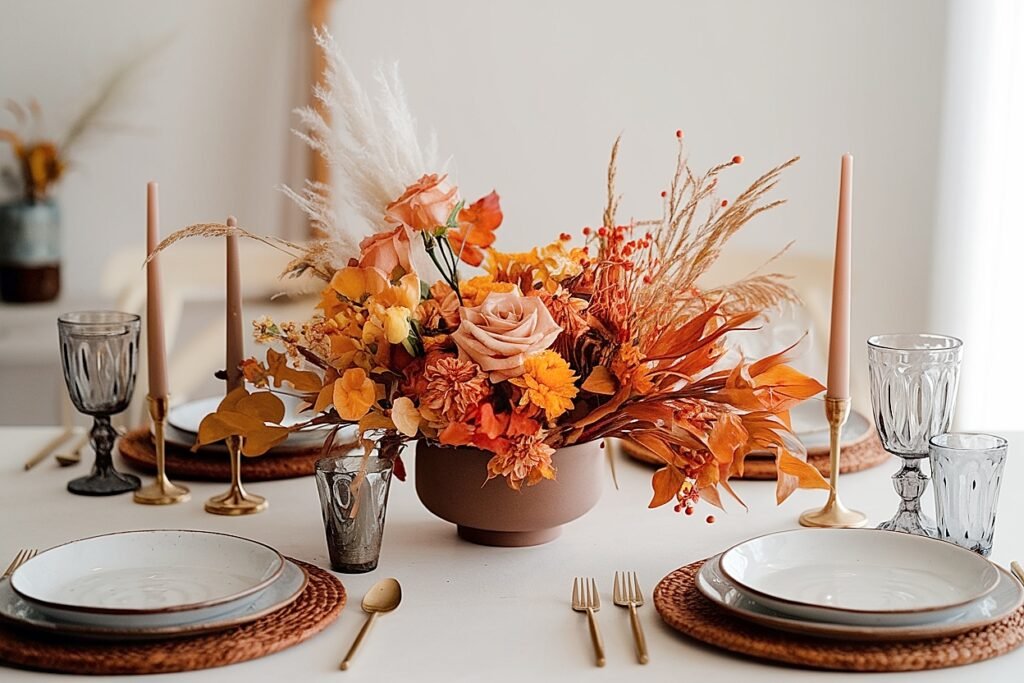
Here is the mistake almost everyone makes.
They buy a bundle of pampas, add some dahlias, realize it needs something else, add more dried grass, notice the flowers are disappearing, add more flowers — and end up with a vessel so packed with competing materials that nothing reads as intentional anymore. The arrangement looks busy. Not abundant. Busy.
The sequence that actually works: dried grass first, then fresh flowers, then nothing else. Two to three dried grass stems maximum per arrangement, positioned before any flower goes in. Set the grass angles, let the stalks find their positions in the gravel or the vessel opening, and then build the fresh flower arrangement around and through the grass structure. The grass creates spatial depth. The flowers fill the color and bloom zone. Those are two different jobs, and when each element does its one job without trying to do both, the arrangement breathes.
The overcrowding failure almost always comes from not trusting the dried grass to do enough with a small amount. Four pampas plumes in one vessel looks like it came from a costume shop. One pampas plume beside five deep burgundy dahlias looks like a deliberate design decision. The grass needs to be a minority element by volume, which feels counterintuitive when you are holding a big bundle of it and trying to fill a vessel.
Different grasses require different quantities to read at their best. Bunny tail grass — the small, soft oval puffs on thin stems — reads as a complete filler element at four to six stems, because the rounded puffs are compact and do not generate much visual space individually. Pampas, on the other hand, generates enormous visual mass from a single plume. One pampas plume in a vessel is not minimal. It is correct. Two is usually already too much.
For more on using dried grains specifically — wheat, rye, millet, and barley — in fall flower arrangements, including the outward-lean technique and proportion rules that keep the look sophisticated rather than rustic, check out how to use dried grains in fall flower centerpieces. Share this with someone who decorates for fall. More ahead on which specific grasses work, how to handle entry decor, and what fresh flowers belong in dried grass arrangements.
What Are the Best Dried Grasses to Pair With Fresh Fall Flowers?
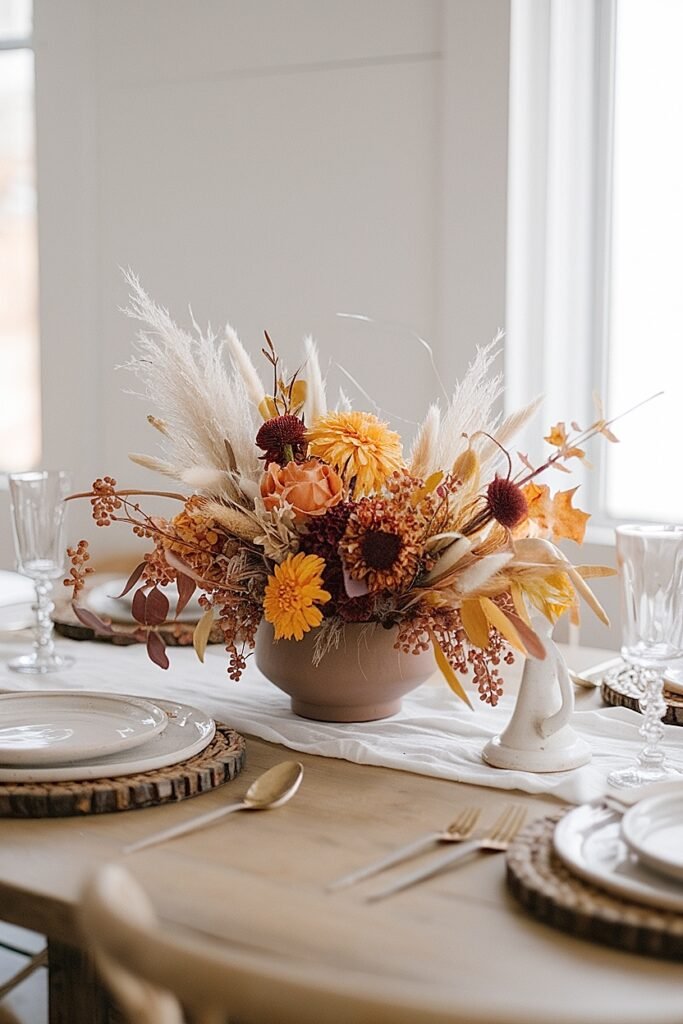
Dried grasses sold at craft stores vary wildly in quality. The ones worth using in fall arrangements have natural color retention, minimal shedding when handled, and structural integrity that holds for months at room temperature. The ones to avoid feel brittle and drop debris on the table within hours. Worth knowing before you buy.
1. Pampas Grass (Cortaderia selloana) The most visually dramatic dried grass available in autumn, and the one most commonly overused. A single full pampas plume — the large feathery cream or blush head — generates substantial visual mass from one stem, which is exactly the property that makes it so easy to use too much of. At its best alongside fresh fall flowers, pampas creates a feathery aerial backdrop that no fresh flower can replicate.
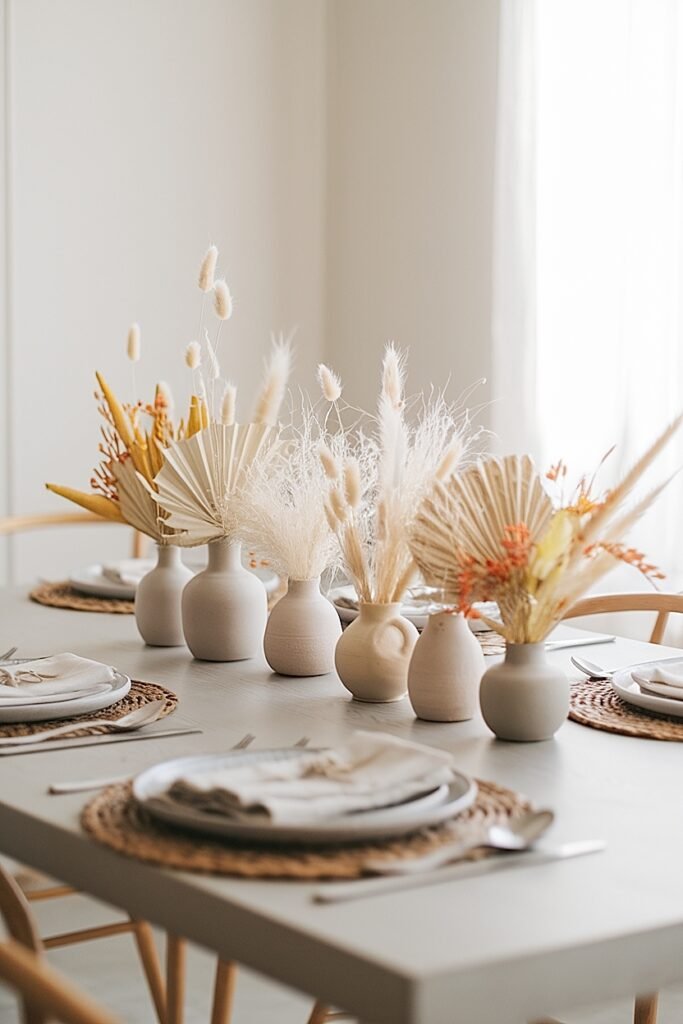
2. Bunny Tail Grass (Lagurus ovatus) Bunny tail’s small, oval, soft seed heads on fine arching stems create the gentlest, most tactile dried grass texture available for small fall arrangements and intimate table settings. The soft puffs invite touch in a way that coarser dried grasses do not, which suits the close viewing range of a dinner or coffee table display specifically. The pale cream tone suits every fall color palette. Four to six stems creates.
3. Panicum Grass (Panicum virgatum) Panicum’s loose, feathery seed head sprays create a mist-like texture that fills the visual space between denser arrangement elements without adding any structural weight. Where pampas creates statement and bunny tail creates softness, panicum creates atmosphere — a fine-textured cloud that makes the fresh blooms beside it appear more deliberate by contrast. The seed spray moves in any air current, which adds live movement to an arrangement that would otherwise.
4. Dried Pennisetum (Fountain Grass) Fountain grass seed heads, the cylindrical fuzzy spikes that look like soft bottlebrushes, create a linear vertical texture unlike any other common dried grass. Each spike is directional — pointing upward from the end of an arching stem — and that directional quality creates movement lines through an arrangement that spherical or spray-type seed heads cannot provide. The warm buff-brown color suits the full autumn palette. Two to four stems.
5. Millet Spray (Setaria italica) Millet spray occupies a visual middle ground between grain and grass. The heavy, drooping seed head cluster hangs from a strong central stem rather than spreading outward like a spray grass. That hanging quality creates a downward movement at the top of a tall arrangement that other dried materials do not produce. The warm amber-brown reads as harvest-specific. One to two millet sprays adds seasonal depth to any fresh flower.
More ahead on entry decor, where tall dried grasses and fresh fall flowers create the most impactful first impression of any arrangement position in the home.
How to Balance Fresh Fall Flowers With Tall Dried Grasses in Entry Decor
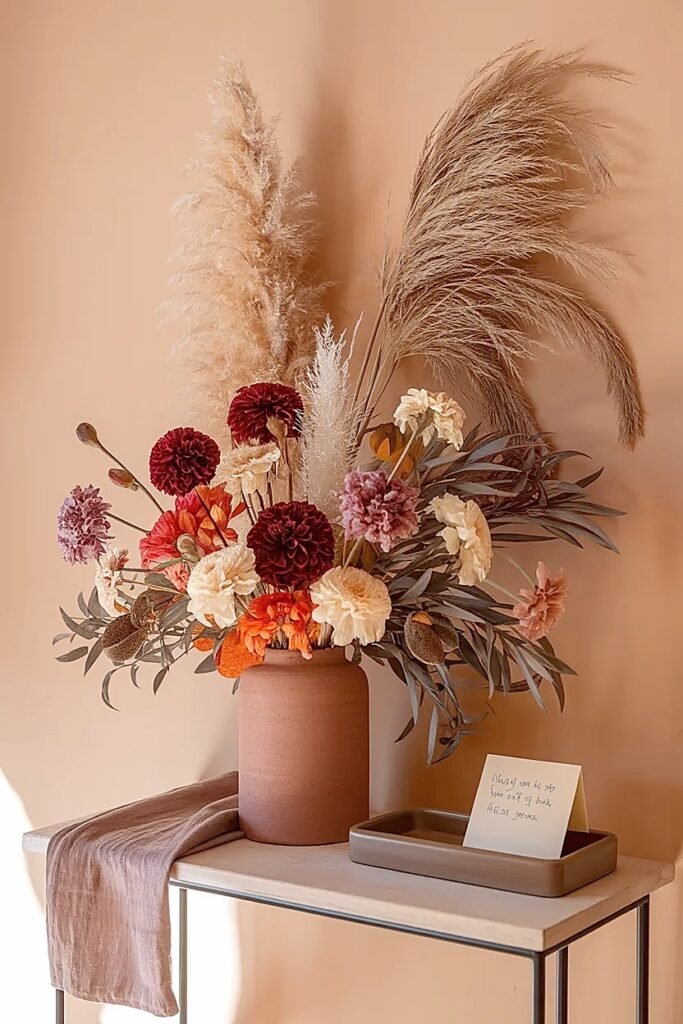
An entry is a transition space. It is not where people stay. It is where they arrive, register their surroundings in about three seconds, and move on.
That three-second window changes the design brief completely. Entry arrangements need to read at a distance of ten to twenty feet, which means fine texture and subtle color relationships are irrelevant. Height, silhouette, and strong color read at that distance. Nothing else does.
Tall dried grasses serve entry decor better than any other position in the home for exactly this reason. A three-foot pampas plume in a weighted floor vessel beside a front door reads as intentional from the sidewalk. The same plume in a dining table centerpiece overwhelms every guest within four feet of it. Position is everything with dramatic dried grass.
The balance technique for entry decor specifically: tall dried grass as the vertical structure, fresh fall flowers as the color mass at the mid-height zone. Place the dried grass first in a tall, heavy-based vessel — ceramic, stone, or a wide-base galvanized bucket with gravel ballast. Let the grass set the height. Then build a fresh flower arrangement at the lower two-thirds of the vessel with stems long enough to sit in the water but short enough to leave the grass silhouette visible above the blooms. The grass reads from the hallway. The flowers read at close approach range.
Ideas for Fresh Fall Flowers With Bunny Tail Grass for Soft Texture
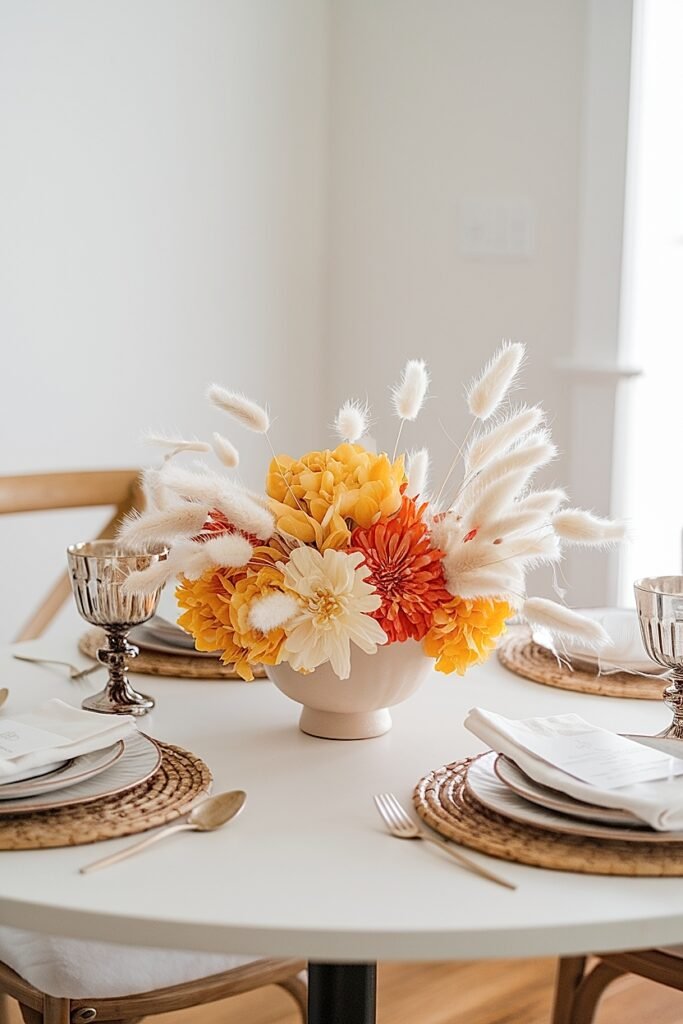
1. Cream Dahlias and Bunny Tail in a Dark Ceramic Crock Six bunny tail stems plus three cream pompom dahlias in a short dark ceramic crock with gravel base. The soft oval puffs fill the mid-arrangement zone between the dahlia blooms with tactile pale texture. The dark vessel amplifies the cream dahlias while the bunny tail creates floating softness between them.
2. Deep Burgundy Mums and Bunny Tail in a Brass Vessel Four bunny tail stems plus four deep burgundy pompom mums in a small brass or copper vessel with gravel and cold water. The soft pale bunny tail puffs beside the dark wine-red mum blooms create a warm-pale contrast that reads as specifically autumn. The brass vessel amplifies both the warm.
3. Rust Zinnias and Bunny Tail Scattered Low Along a Runner Five rust zinnia stems in individual water picks plus eight to ten bunny tail stems laid loosely along a table runner, all without a central vessel. The zinnias provide color anchors. The bunny tail distributes soft texture between them. The whole display lies at table surface level with zero height.
4. Single Bunny Tail Stem Per Place Setting Bud Vase One bunny tail stem plus one fall flower stem in a small bud vase at each place setting. The tiny oval puff beside a single bloom reads as a personal detail at close dinner range that larger dried grass varieties cannot achieve at the same intimate scale. Total cost per.
5. Bunny Tail and White Anemone Floating Bowl Eight bunny tail stems cut short and pressed into a gravel base in a wide, low bowl alongside three white anemone heads at the same rim height. From above at a seated dinner table viewing angle, the soft puffs and the graphic anemone faces create a combined soft-and-graphic surface that.
More ahead on pampas grass, which requires the most discipline of any dried grass to use well at a fall arrangement.
Ways to Use Pampas Grass With Fresh Fall Flowers Without Overdoing It
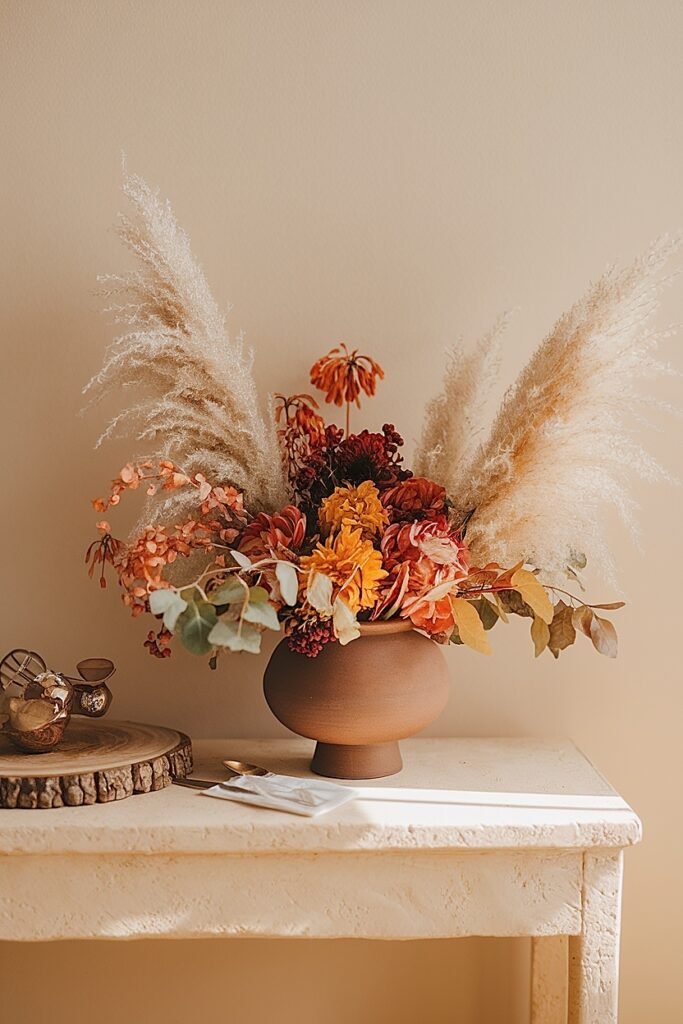
1. One Pampas Plume in a Tall Vessel, Fresh Flowers Below One full-sized pampas plume in a tall weighted vessel with five to six fresh fall flower stems in the lower vessel zone. The pampas creates the upper silhouette. The fresh flowers create the lower color mass. Two elements, two height zones, one complete fall display. The plume sits in the.
2. Small Pampas Sections Rather Than Full Plumes Cut a full pampas plume into three to four shorter sections, eight to ten inches each. Use one section per small vessel alongside two to three fresh flower stems. The smaller pampas section reads as a deliberate grass accent rather than the dominant plume that full-sized pampas becomes. The bloom-to-grass.
3. Pampas as a Single Stem in a Floor Vessel One full pampas plume in a tall floor vessel with no flowers at all, positioned in a corner of the room as a standalone fall accent rather than as part of a mixed arrangement. This separates the pampas from the fresh flower arrangement entirely and lets each element read in.
4. Blush Pampas With Cream Flowers Only Blush-dyed pampas plumes, the soft pink-toned variety available at craft and floral supply stores, paired only with cream or ivory fresh fall flowers. The blush and cream palette reads as soft and specifically edited. The color restraint prevents the dramatic pampas silhouette from feeling overwhelming. One blush pampas section plus.
5. Pampas Behind the Arrangement, Not In It Place one pampas plume in a separate narrow vessel directly behind the main fresh flower arrangement rather than inside it. The pampas reads as a backdrop element visible from the front viewing angle. The fresh flower arrangement occupies the foreground. Guests experience the flowers first and the pampas as an.
More ahead on keeping this look away from the boho aesthetic that dried grass arrangements so easily default to.
How to Style Fresh Fall Flowers and Dried Grasses Without Looking Too Boho
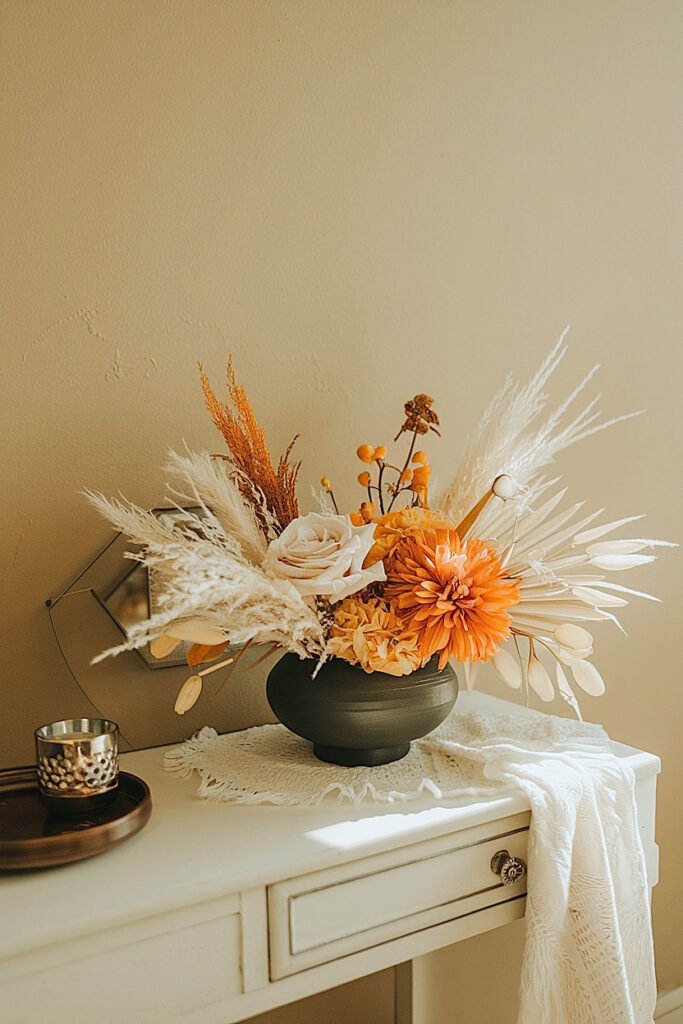
There is a look that dried grass arrangements often default to and it is not bad, it is just very specific. Rattan vessels. White walls. Linen throws. Macramé within fifteen feet. That is a coherent aesthetic, and if it is your aesthetic, lean into it.
If it is not your aesthetic, there are four decisions that shift dried grass arrangements out of the boho register entirely.
First: vessel material. Dark ceramic, matte metal, aged terracotta, or heavy stone immediately reads differently from the light-toned vessels and baskets that the boho look relies on. The same pampas plume beside dahlias in a matte black crock reads as contemporary fall decor. In a natural rattan basket, it reads as a specific style reference.
Second: flower choice. Dahlias, anemones, and pompom mums have a structure and density that grounds dried grass in a contemporary rather than bohemian context. Cosmos, sweet peas, and delicate sprays reinforce the soft-and-organic quality that boho arrangements tend toward. The flower choice sends a clear signal about the register you are working in.
Third: grass quantity. Keep dried grass to twenty percent or less of the total arrangement volume by visual mass. Below that threshold, the grass reads as a specific accent within a flower arrangement. Above it, the arrangement reads as a dried grass display with flowers in it — and dried-grass-forward displays read as boho almost regardless of any other decision you make.
Fourth: vessel color. One more time. Dark matters. It is the single fastest way to move a dried grass arrangement from one register to another.
What Are the Best Fresh Fall Flowers for Dried Grass Centerpieces?
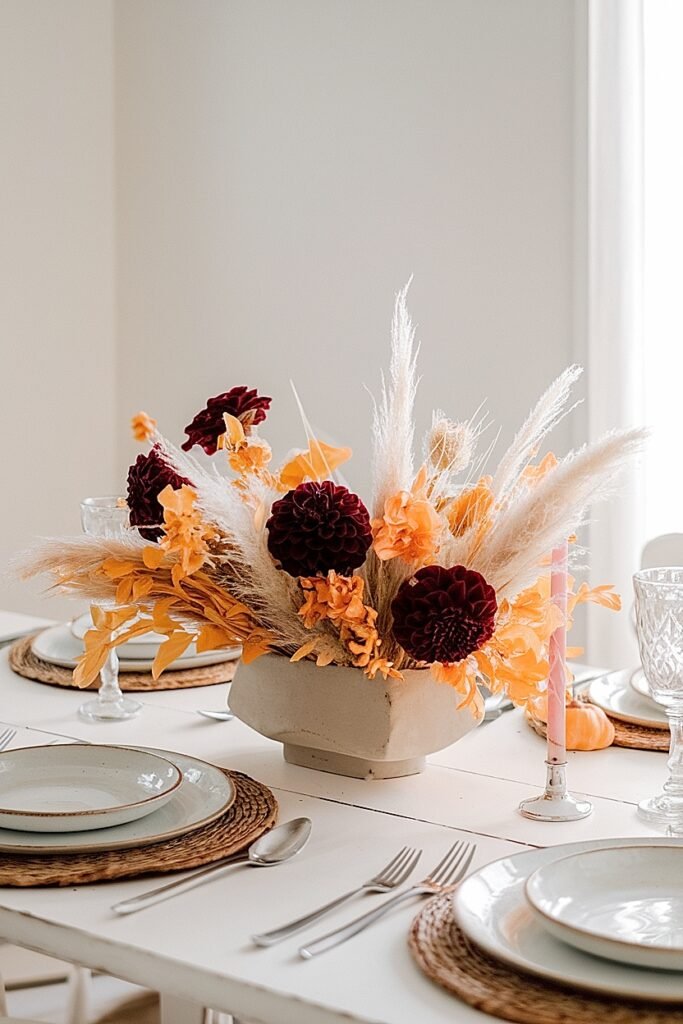
1. Deep Burgundy Ball Dahlias The dense spherical structure and deep wine-red color of a ball dahlia sits at the opposite end of every visual spectrum from fine dried grass texture. That opposition — dense bloom versus airy grass — creates the visual tension that makes both elements more visible and more interesting. Two to.
2. Cream or White Pompom Chrysanthemums The warm cream tone of pompom mums reflects ambient light in a way that makes them visible and luminous beside the matte neutral tones of dried grass. The dense rounded pom-pom structure contrasts directly with the fine linear or spray quality of most dried grasses, which creates the pairing’s visual.
3. Deep Orange or Rust Zinnias Rust and burnt orange zinnias bring the warmest, most harvest-specific color available at grocery store pricing alongside dried grass amber and cream tones. The flat-faced zinnia disc structure reads as graphic and clear at close range, creating a visual contrast with the fine, atmospheric dried grass texture behind and around.
4. White Anemones with Dark Centers The graphic two-tone quality of a white anemone — clean white outer petals against a near-black center ring — reads as the most deliberately designed bloom in any dried grass combination. The graphic center ring creates a visual anchor point within the fine, atmospheric dried grass texture. The dark center.
5. Pale Mauve or Dusty Rose Asters Mauve and dusty rose asters beside dried cream or buff grass create an autumn palette that reads as soft and considered rather than vivid and seasonal-predictable. The dusty quality of the aster’s color suits the muted tones of most dried grasses more naturally than saturated fall colors do. One bunch.
Conclusion
Fresh flowers and dried grasses need each other in fall decor in a way that they do not need each other in any other season.
The fresh flower provides life — color, fragrance, the specific quality of something still growing. The dried grass provides history — the harvest moment, the field at the end of October, the texture that no cultivated bloom creates. Neither one fully communicates autumn alone.
Dried grass first. Fresh flowers second. One grass type. More flowers than grass. A dark vessel. That is the complete formula, and it works every time.
This website contains affiliate links, and some products are gifted by the brand to test. As an Amazon Associate, I earn from qualified purchases. Some of the content on this website was researched and created with the assistance of AI technology.