This website contains affiliate links, and some products are gifted by the brand to test. As an Amazon Associate, I earn from qualified purchases. Some of the content on this website was researched and created with the assistance of AI technology.
Key Takeaways
- A dark vessel does more for a carnation-and-wheat arrangement than any flower upgrade ever could, start there before spending anything on fancier blooms
- Strip the leaves off the lower half of every carnation stem before it goes in water, this one step adds three to four days to how long the arrangement holds
- Wheat goes in first. Set the stalks at an outward angle in gravel before any carnation stem touches the vessel
- Rust, cream, burgundy, peach, and deep wine red are the five carnation colors that actually work with golden wheat, the pink-and-purple supermarket bundles do not
- One standard carnation bunch from the grocery store, around twelve to fifteen stems, is enough for two or three complete fall arrangements
- Total cost including vessel, flowers, and wheat: ten to fourteen dollars, and it lasts up to ten days
I spent years walking past the carnation bucket at the grocery store. Total waste of time.
Building a budget carnation and wheat centerpiece for fall tables is one of the smartest decorating moves you can make in October, and the reason most people don’t do it is purely about perception. Carnations have a reputation problem. They’re the flower people send when they don’t know what to send. But that reputation has nothing to do with what carnations actually look like when you put them in the right vessel with golden wheat beside them. Put a handful of rust-orange carnations in a dark navy bowl with three wheat stalks angled out over the rim, light a candle, and step back. People ask where you got the arrangement. I tell them the grocery store, and they don’t believe me. That’s the whole pitch.
Use this budget-friendly guide to choose the best carnation color for wheat centerpieces on fall tables. Each row helps readers match carnation color, wheat placement, low-cost support stems, and table mood before arranging. The goal is a centerpiece that looks full, seasonal, practical, and affordable for real autumn meals.
| Carnation Color | Best Wheat Placement | Budget Support Stem | Best Fall Table Mood |
|---|---|---|---|
| Cream carnations | Short wheat around the outer rim | Pale sedum or cream spray mums | Soft neutral, calm, warm, and simple |
| Rust carnations | Wheat tucked into a low clay bowl | Bronze button mums | Classic autumn warmth for family meals |
| Burgundy carnations | Wheat angled low at the edges | Mauve asters | Moody, cozy, rich, and intimate |
| Peach carnations | Wheat grouped lightly beside blooms | Cream mini mums | Soft, gentle, romantic, and affordable |
| Muted orange carnations | Wheat framing clustered carnations | Rust spray mums | Cheerful harvest color without high cost |
Resource:
- How to Care for Cut Flowers | Yard and Garden
- Mums and asters: Fall favorites for a colorful landscape | Flowers, Fruits, and Frass | Illinois Extension | Illinois
- The Principles & Elements of Design w/ Sharon McGukin
- Tigard Florist – Flower Delivery by Flowers By Donna
- St. Louis Florist | Flower Delivery in St. Louis MO by Irene’s Floral Design
How to Make Budget Carnation Fall Flowers Look Fuller With Golden Wheat
Here’s the thing about carnations that nobody explains: they look bigger next to wheat.
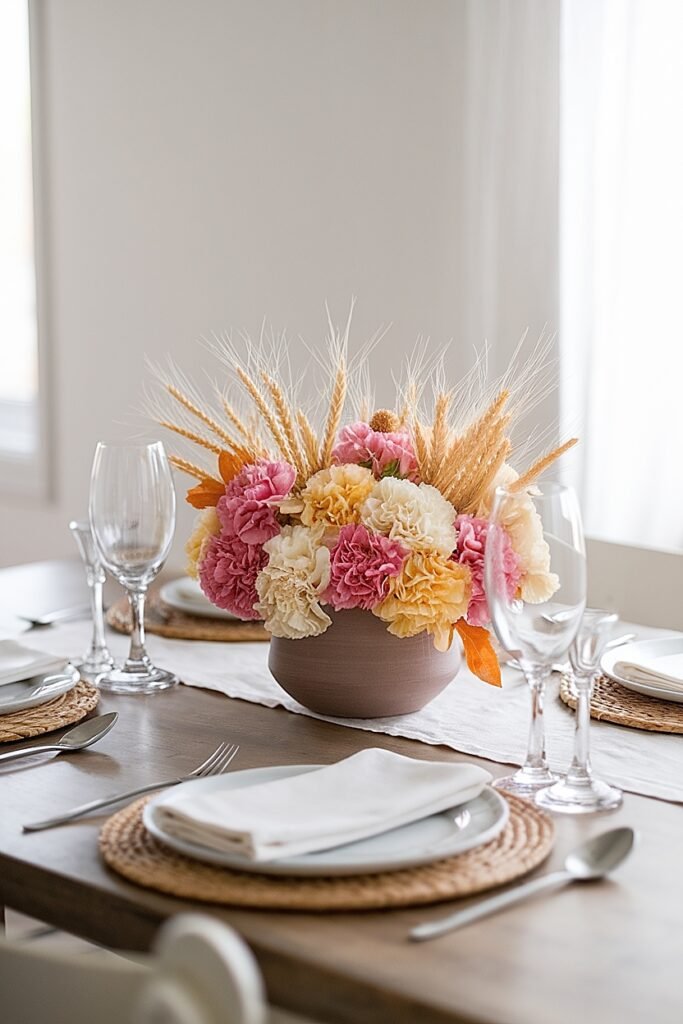
Not actually bigger. But the visual contrast between a dense, fringed carnation bloom and a fine, bristled wheat grain head makes your eye read the carnation as bold and intentional rather than filler-y and generic. The wheat is doing something here that no other element can replicate at this price. It makes the carnation look chosen.
This only works if the proportions are right. Two or three wheat stalks alongside five or six carnation stems, that’s the ratio. The carnations outnumber the wheat. They lead. The wheat frames the outside edge. Flip it, and suddenly the whole thing reads as a wheat bundle with some grocery store flowers shoved in. That’s not what you want.
The prep makes or breaks this combination. Strip every leaf from the lower half of every carnation stem. Not some of them, all of them. Submerged leaves start feeding bacteria in the water within about a day, and that bacteria clogs up the stem and cuts off water flow to the bloom. That’s why carnations go limp and droopy before their time, not because carnations are fragile, but because people skip this step. Strip the leaves, make a diagonal cut at the bottom of each stem, drop them in cold water with a half-teaspoon of flower food. You get seven to ten days of solid, upright carnations. Skip the prep and you’re looking at four days before things start going sideways.
Wheat goes into the gravel base first. That’s non-negotiable. Angle each stalk outward at roughly thirty degrees from the center, grain heads extending past the vessel rim. Then add the carnations around and through that structure. The wheat stabilizes the arrangement from the outside in. The carnations fill the center.
For more on pairing fresh flowers with golden wheat, including mums, zinnias, asters, and sunflowers, take a look at best fresh flowers to pair with golden wheat for fall dining decor. And if this helped, pass it along. More ahead on which carnation colors actually work with wheat and how to build specific arrangements that hold up.
What Are the Best Carnation Fall Flowers Colors to Pair With Wheat?
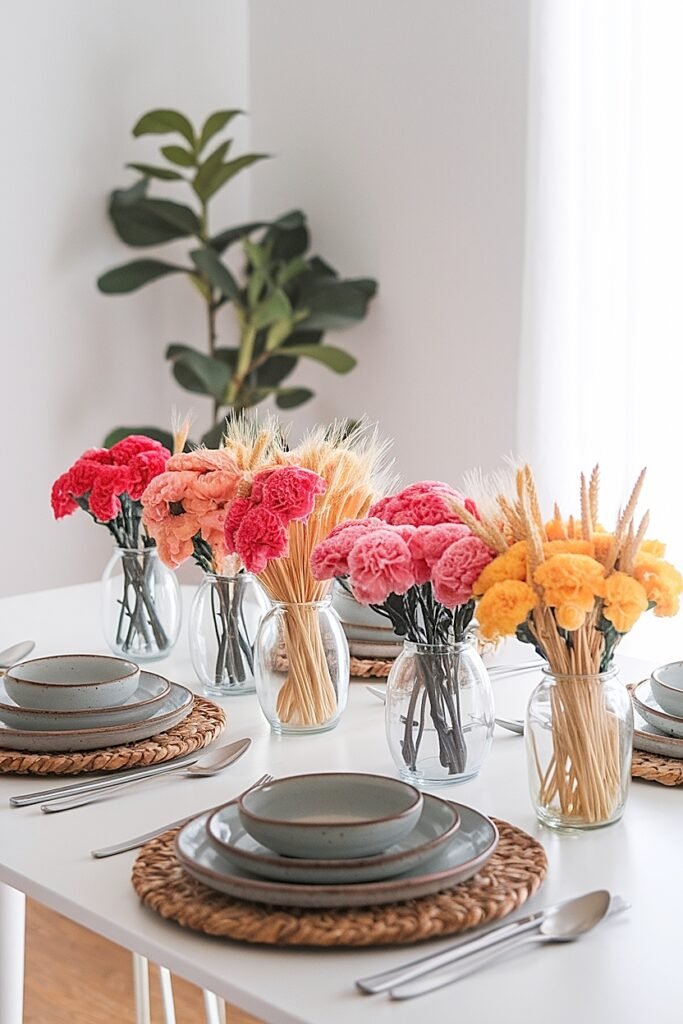
Skip the mixed bunches. Grab a single-color bunch and actually think about what it’s going to look like next to warm amber wheat.
These five colors work. The rest, not so much.
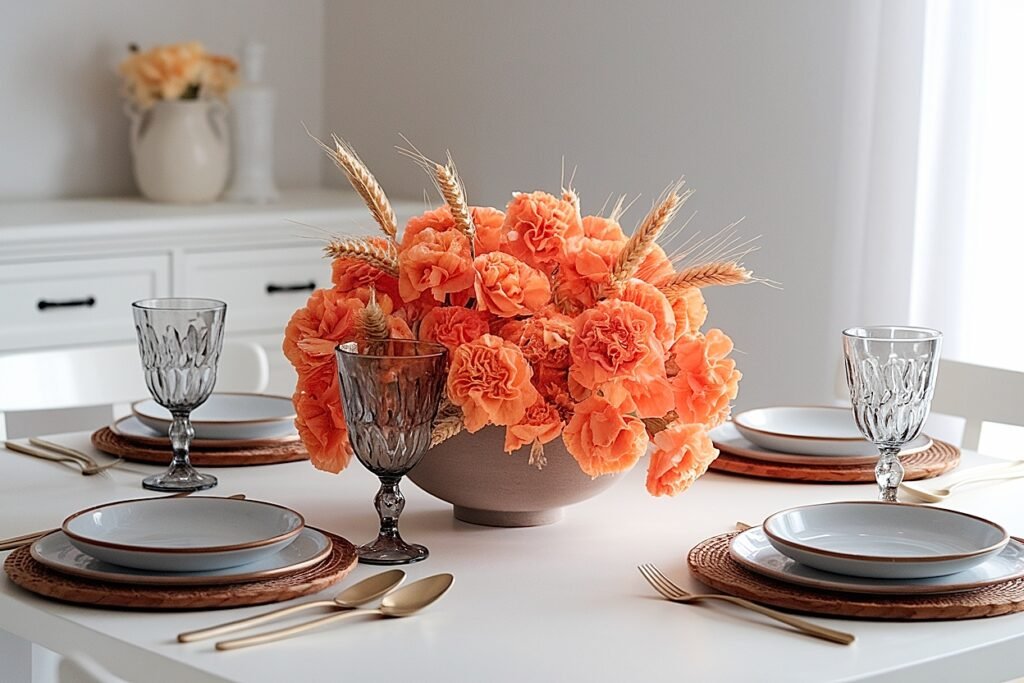
1. Rust Orange Carnations Rust orange and golden wheat amber are close in color family but not identical, the carnation leans red-orange while the wheat leans yellow-amber. That slight difference between them is what makes the pairing work. They look related without looking like the same thing. Three rust carnation stems alongside three outward-angled wheat stalks in a dark crock or a heavy terracotta pot creates a warm, cohesive fall arrangement that reads.
2. Deep Burgundy Carnations This one surprises people more than any other. Deep burgundy carnations next to golden wheat in a dark matte vessel create the moodiest, most atmospheric fall table you can put together for under twelve dollars. The cool wine-red bloom against the warm amber grain sets up a color contrast that makes each element look richer than it actually is. In candlelight at a close dinner table, this combination has a.
3. Cream or Ivory Carnations Cream carnations alongside golden wheat in a dark vessel are the most luminous option of the five. In candlelight, cream petals shift toward golden-ivory, which aligns with the warm amber of the wheat in a way that cool-white carnations never quite pull off. The fringed edge of a cream carnation petal is visible at close dinner table range and adds a surface detail that most people do not expect from.
4. Peach or Apricot Carnations Peach carnations with golden wheat create a September feeling, warm and soft rather than deep and moody. The peach tone sits between orange and cream in a way that reads as welcoming and gentle rather than dramatically fall. At a smaller dinner table where guests are close to the arrangement, the subtle peach color comes through clearly and reads as a deliberate, considered choice. It’s probably the most underused.
5. Deep Wine Red Carnations Darker than burgundy and closer to near-black in low light, deep wine red carnations alongside golden wheat produce the most dramatic contrast of any carnation color on this list. In candlelight the dark bloom almost recedes while the amber wheat catches the warm directional light, and the visual effect of that contrast is surprisingly striking for a ten-dollar table arrangement. One bunch, one wheat bundle, one dark vessel. That’s.
More ahead on peach carnations specifically, they deserve more attention than they get, and the specific setup that makes them look their best is worth knowing.
How to Mix Peach Carnation Fall Flowers With Wheat for Soft Autumn Color
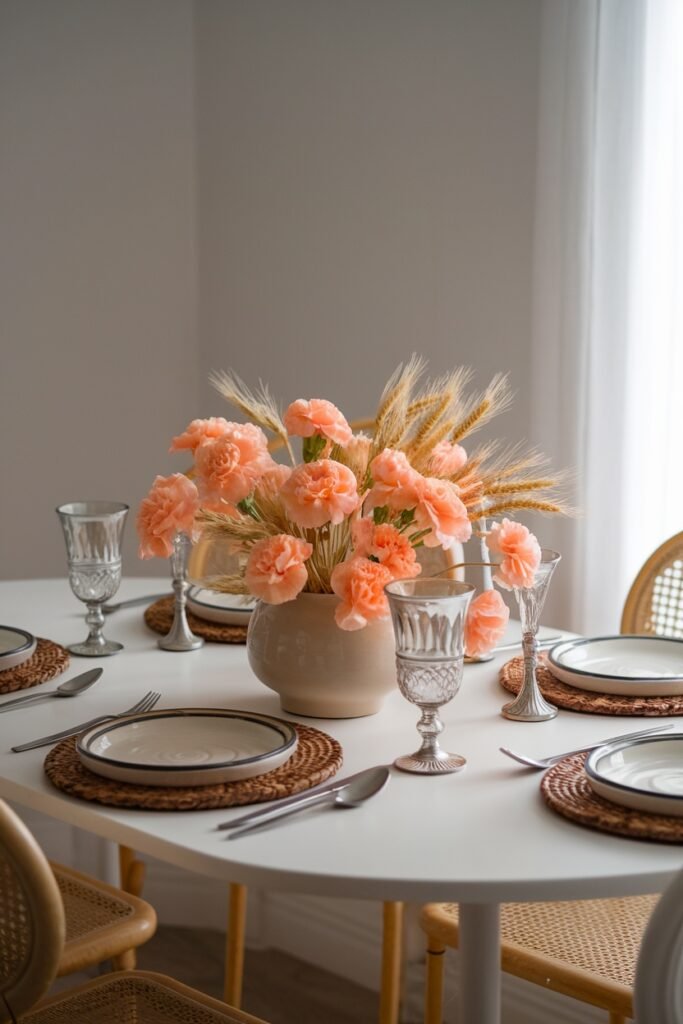
Peach carnations get overlooked because they don’t shout “fall.”
That’s exactly why they work. Walk into any fall dinner in October and you’ll see burgundy, rust, and burnt orange. Walk in with a soft peach-and-wheat arrangement on the table and it reads as someone who actually thought about it rather than grabbed the expected colors.
The peach-and-wheat combination stays in the warm family without getting heavy. Peach reads as warm orange lightened toward cream. Wheat reads as warm yellow lightened by age. Side by side in a dark vessel, they create a fall arrangement that feels light and welcoming rather than harvest-heavy. Good for brunches, good for daytime dining, good for any gathering where you want the atmosphere warm but not dramatic.
One thing to avoid with peach carnations and wheat: terracotta vessels. The terracotta’s buff-orange tone competes with the peach carnation instead of contrasting with it, the two colors are too close in the warm-orange range and the arrangement loses its definition. Go dark. Navy, charcoal, matte black, deep green. The dark vessel creates the contrast that makes the soft peach bloom face visible and distinct.
Five peach carnation stems to two wheat stalks in a medium dark vessel. The peach is subtle enough that it needs to lead numerically. The wheat supports and frames from the outside. That’s the whole arrangement.
DIY Ideas for Rust Carnation Fall Flowers and Wheat in Low Bowls
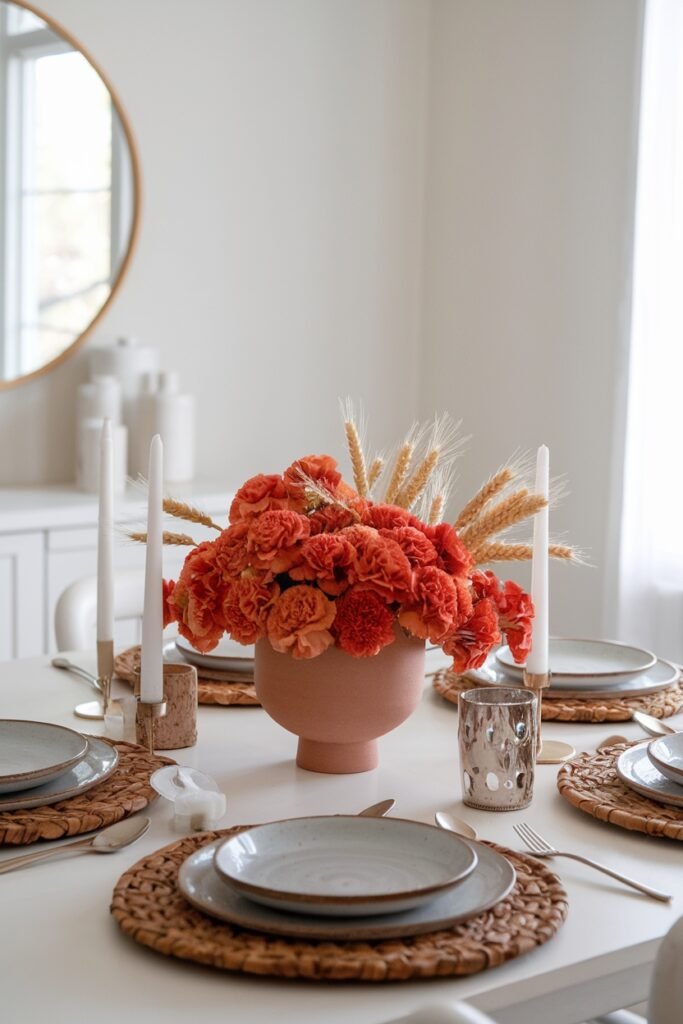
1. Five Rust Carnations and Three Wheat Stalks in a Wide Dark Stoneware Bowl Gravel base, cold water, three outward-angled wheat stalks in the gravel first, then five rust carnation stems cut to two to three inches above the rim. The dark stoneware amplifies both the rust bloom and the amber grain head. From the seated overhead angle at a dinner table, this reads.
2. Rust Carnations and Wheat as a Flat Table Runner Four rust carnation stems in individual water picks distributed along the table center, with three dried wheat stalks laid flat between them. No bowl at all. This flat runner format is perfect for narrow dining tables where a bowl creates a sightline problem. The water picks keep the carnations fresh.
3. Rust Carnations, Wheat, and One Sage Sprig Per Bowl Four rust carnation stems plus two wheat stalks plus one fresh sage sprig in a short dark ceramic bowl. The sage adds a genuine autumn-herb fragrance at close dinner range, not a decoration, a sensory element. The grey-green of the sage against rust orange and golden amber creates three.
4. Single Rust Carnation and One Wheat Stalk Per Guest One rust carnation stem plus one wheat stalk in a small dark weighted bud vase at each dinner place setting. The wheat rises two to three inches above the carnation bloom. At close dinner table distance, the fringed carnation petal edge and the bristled grain head are both visible in.
5. Rust Carnation Bowl with Floating Wheat Grain Heads Five rust carnation stems cut to rim height in a wide low bowl, with two to three wheat grain heads snipped from their stalks and floated on the water surface between the blooms. The floating grain heads add autumn texture at the same level as the carnation faces. From the.
More ahead on cream carnations with wheat, softer and more versatile than they get credit for.
Easy Ideas for Cream Carnation Fall Flowers and Wheat for Neutral Fall Tables
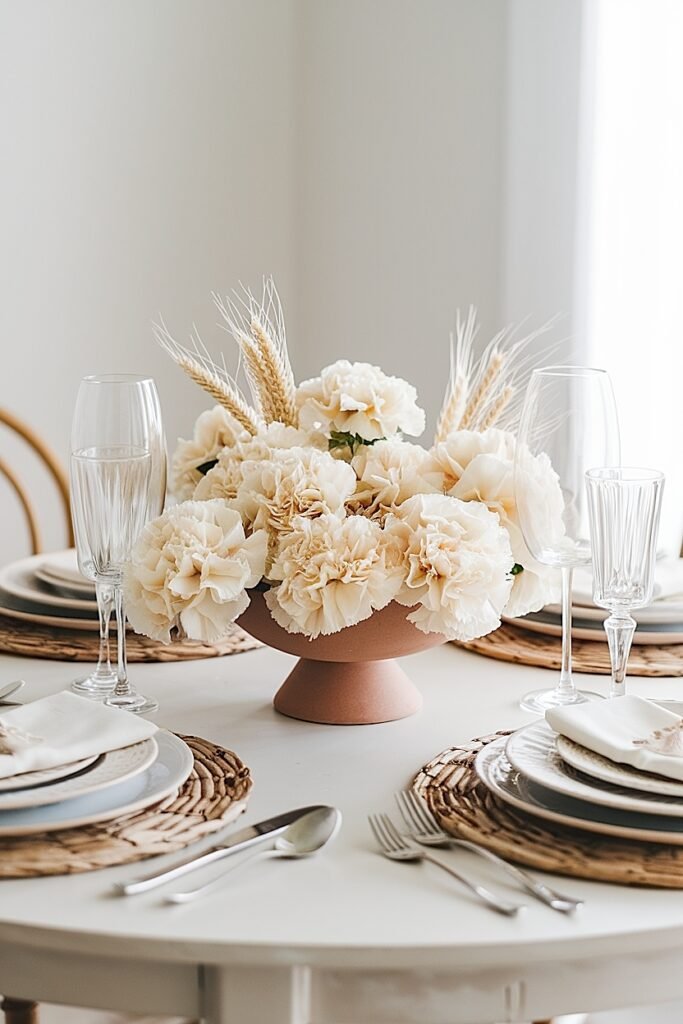
1. Cream Carnations and Wheat in a Dark Navy Compote Five cream carnation stems plus two outward-angled wheat stalks in a small dark navy ceramic compote with gravel and cold water. The navy creates sharp contrast with the cream bloom. The compote’s raised foot adds visual presence without building height. The whole arrangement stays below conversation sightline. Genuinely elegant for.
2. Cream Carnations, Wheat, and Dried Eucalyptus in a Dark Crock Four cream carnation stems plus two wheat stalks plus two seeded eucalyptus strands in a short dark ceramic crock. The eucalyptus trails slightly over the crock rim. The silver-grey eucalyptus connects the cream carnation and amber wheat tones without competing with either. Holds seven to ten days without much attention.
3. Single Cream Carnation and Wheat at Each Place Setting One cream carnation stem plus two wheat stalks alongside a small water tube at each dinner plate, the tube keeps the carnation fresh while the wheat holds dry. The cream-and-gold combination at close personal dining range is a specific, welcoming detail. Under a dollar per place setting.
More ahead on bringing asters into the mix, they add a third texture that changes the whole feel of the arrangement.
How to Pair Carnation Fall Flowers With Wheat and Asters for Texture
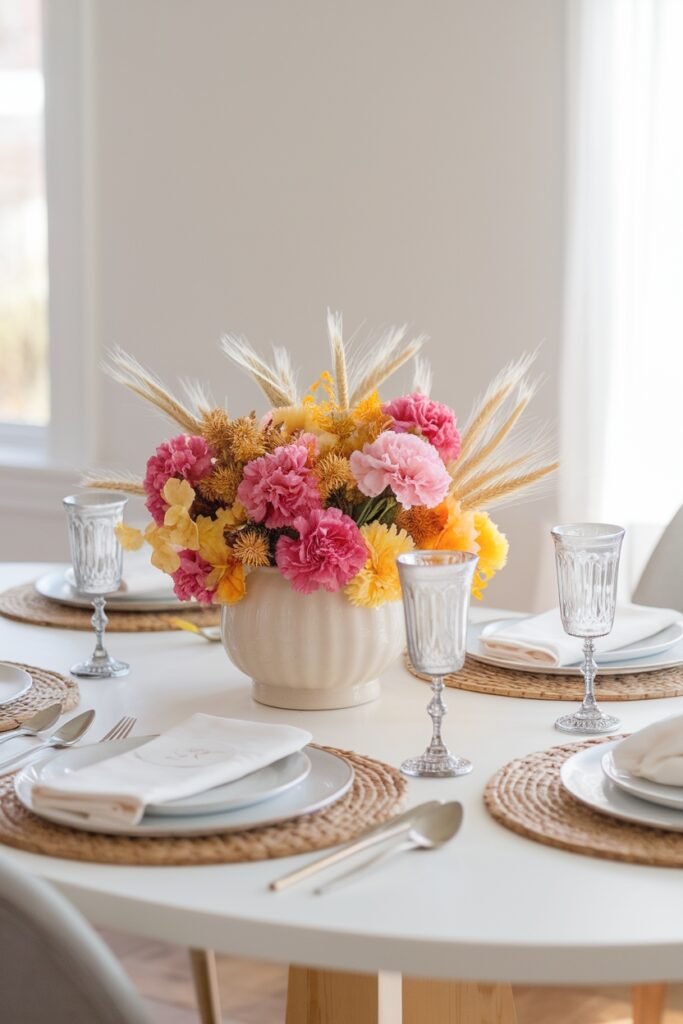
Adding asters to a carnation-and-wheat arrangement is the move that makes the arrangement look more layered without making it more complicated.
The aster’s small flat daisy face occupies a visual zone that neither the carnation nor the wheat fills. The carnation is dense and rounded. The wheat is upright and linear. The aster is flat, small, and open, it fills the space between the other two. Four carnation stems, two wheat stalks, six aster stems: three distinct shapes, one arrangement that looks genuinely thought-through at close range.
Color matters more with three materials than with two. Pale mauve asters alongside rust carnations and golden wheat, warm but varied, and each element reads clearly on its own. Deep purple asters alongside burgundy carnations and wheat, the darkest, most atmospheric fall table combination in this article. White asters alongside cream carnations and wheat, the softest and most neutral option, good for a fall table that doesn’t want to lean heavily into harvest tones.
One practical thing: asters hold five to seven days in cold water, which is a bit shorter than carnations at seven to ten. The asters will start to show wear before the carnations do. Just pull and replace the aster stems after day five. The carnations and wheat stay in place. The asters refresh.
Creative Ways to Pair Carnation Fall Flowers With Wheat and Mums
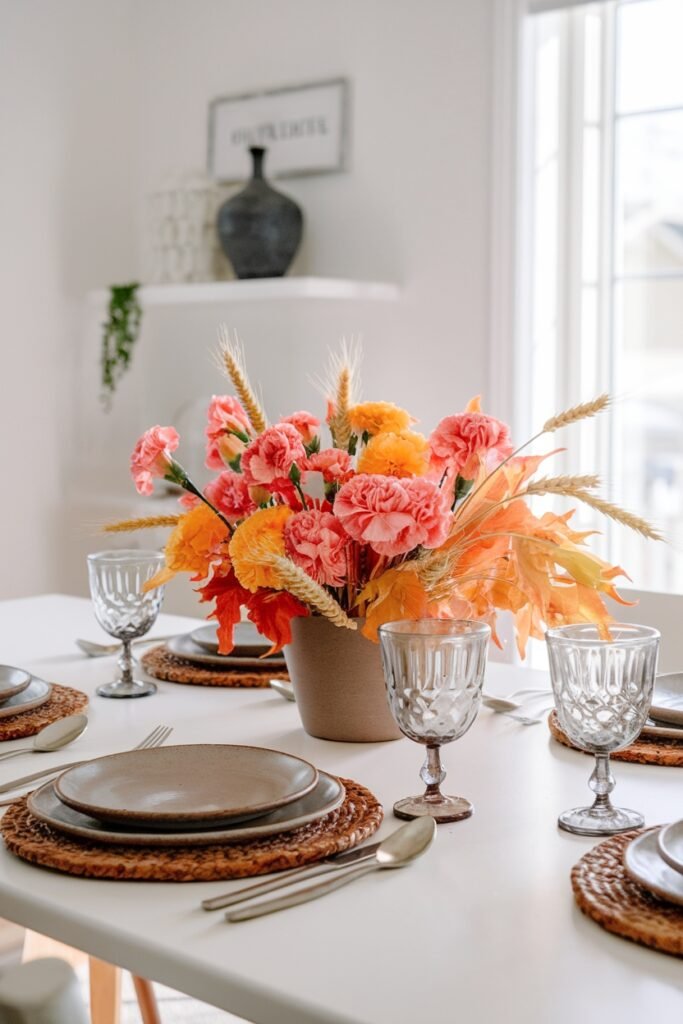
1. Cream Carnation, Cream Button Mum, and Wheat in a Dark Navy Vessel Three cream carnation stems plus three cream button mum stems plus two wheat stalks in a dark navy ceramic vessel. Two cream bloom types at different sizes, one wheat structure. The button mum’s tiny clustered faces and the carnation’s fringed bloom create complementary detail alongside the wheat grain at close.
2. Rust Carnation and Claret Mum with Wheat in a Wide Dark Bowl Three rust carnation stems plus three deep claret pompom mum stems plus two wheat stalks in a wide dark ceramic bowl. Rust and claret sit in adjacent warm-dark color positions, they look related without looking the same. The golden wheat ties them together. Best combination in this list for.
3. Burgundy Carnation, White Mum, and Wheat in Three Matched Vessels Three matched short dark vessels in a row down the table center. First vessel: two burgundy carnation stems and two wheat stalks. Second vessel: two white pompom mum stems and two wheat stalks. Third vessel: one burgundy carnation and one white mum and two wheat stalks together. The single-material outer.
4. Mixed Carnation and Mum Heights with Wheat for an Entry Table For an entry table or sideboard, not a dining table, four carnation stems and four mum stems at two slightly different heights plus three wheat stalks in a medium-height dark vessel. The height variation between the two bloom types creates depth. The wheat frames the outer edge at.
5. One Carnation, One Mum, and One Wheat Stalk Per Place Setting One carnation stem plus one mum stem plus one wheat stalk in a small dark bud vase at each dinner place. The two bloom types at personal scale create variety and genuine warmth at close range. Under a dollar fifty per setting using grocery store materials. One of the best.
Conclusion
Carnations are not the boring option. They’re the smart option.
Dark vessel. Diagonal-cut stems in cold water. Leaves stripped below the waterline. Wheat in the gravel first at an outward angle. Ten dollars of materials, ten minutes of setup, a week of genuinely good-looking fall table.
The grocery store carnation bucket has been there this whole time. It’s time to start using it.
This website contains affiliate links, and some products are gifted by the brand to test. As an Amazon Associate, I earn from qualified purchases. Some of the content on this website was researched and created with the assistance of AI technology.