This website contains affiliate links, and some products are gifted by the brand to test. As an Amazon Associate, I earn from qualified purchases. Some of the content on this website was researched and created with the assistance of AI technology.
Key Takeaways
- Cream and rust work because they contrast without clashing. The pale cream makes the warm rust look more vivid, and the warm rust makes the cream look more luminous
- A dark vessel is non-negotiable here. Navy, charcoal, matte black. Light or clear containers flatten both tones and the contrast disappears
- Strip the lower leaves off every stem before placing in cold water. This is the step that determines whether the arrangement lasts four days or ten
- The two-to-three ratio works in most vessels: two cream mum stems for every three rust carnation stems, or the reverse. Equal amounts look balanced. Unequal amounts look designed
- Golden wheat beside this combination is the easiest upgrade. Two or three stalks angled outward in the gravel before the flowers go in
- One lit taper candle beside the vessel changes what this arrangement looks like completely. Warm candlelight makes cream glow and rust deepen in a way overhead lighting never does
Two grocery store flowers, one dark bowl, ten minutes. That is all this takes.
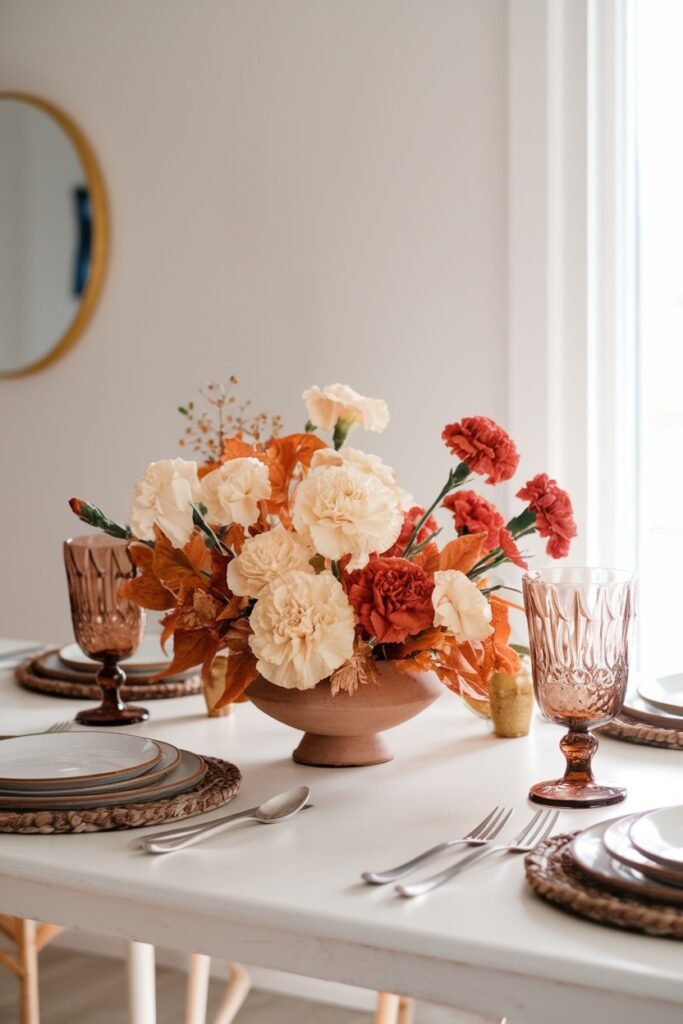
Creating a cream mum and rust carnation centerpiece for cozy fall tables is the kind of thing that looks like you spent way more time and money than you actually did. The cream pompom mum and the rust carnation do not seem like obvious partners. One is pale and soft. The other is warm and bold. But side by side in a dark-toned vessel, that contrast is exactly what makes the whole arrangement work. The cream reads as luminous. The rust reads as warm. Together they create the cozy autumn feeling that most expensive fall arrangements are trying to manufacture but rarely pull off this well.
I stumbled onto this combination after someone cleared out a grocery store floral section near closing and I grabbed what was left. A cream mum bunch and some rust carnations, both half-price. I put them in the same dark blue crock I use for everything and thought I’d sort it out properly the next day. Nobody let me change it. It stayed on the table for the rest of the week.
Use this guide to choose the right support details for cream mum and rust carnation Fall Flowers. Each row helps readers match accent stems, table colors, vessel style, and mood before arranging. The goal is a cozy fall table centerpiece that feels warm, soft, balanced, affordable, and practical for dining.
| Design Choice | Best Pairing | What It Fixes | Best Fall Table Mood |
|---|---|---|---|
| Bronze button mums | Cream mums and rust carnations | Adds small round texture without high cost | Full, warm, cheerful, and cozy |
| Mauve asters | Rust carnations with cream mum brightness | Adds cooler contrast and delicate detail | Soft, romantic, balanced, and gentle |
| Golden wheat | Short stems around the bowl rim | Adds harvest texture without more flowers | Classic, casual, seasonal, and affordable |
| Taupe linens | Cream plates and matte brown side plates | Softens rust so it does not look too orange | Calm, neutral, warm, and polished |
| Clay ceramic bowl | Low cream mum and rust carnation centerpiece | Keeps the flowers grounded and table-friendly | Earthy, cozy, practical, and welcoming |
Resources:
- How to Care for Cut Flowers | Yard and Garden
- Mums and asters: Fall favorites for a colorful landscape | Flowers, Fruits, and Frass | Illinois Extension | Illinois
- How to Propagate Mums, According to Gardening Experts
- Mums and Asters for Fall Beauty :: Melinda Myers
How to Style Cream Mum and Rust Carnation Fall Flowers in Low Centerpieces
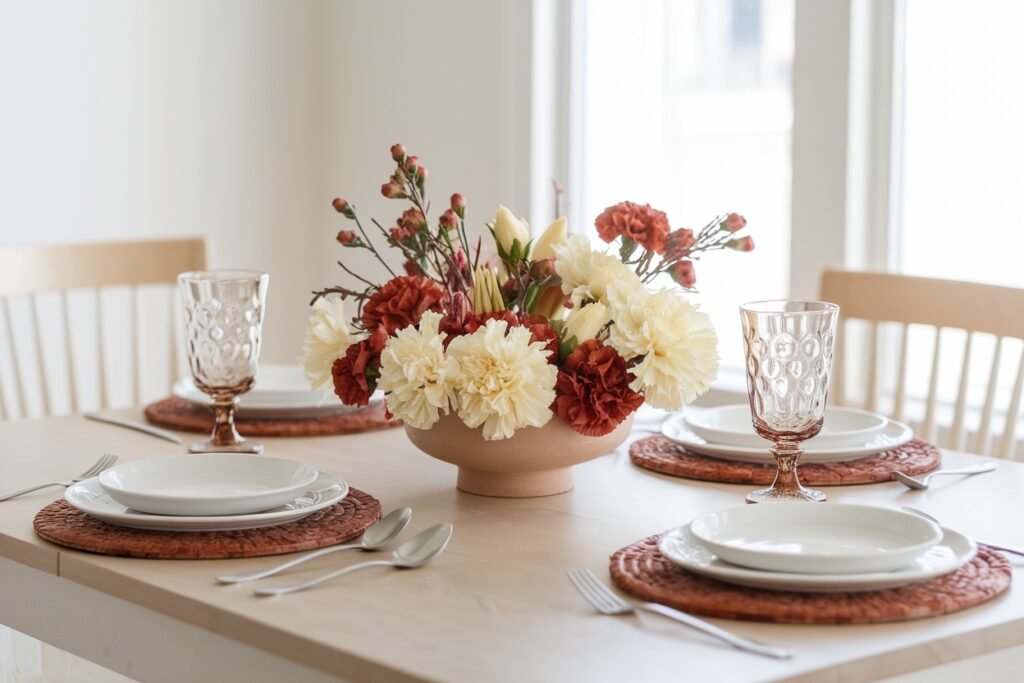
If the arrangement is taller than the people sitting across from each other at the table, it is too tall.
That sounds obvious. But most people build fall centerpieces that are way too tall for an actual dining table and then wonder why the dinner felt weirdly formal. The whole point of a low centerpiece is that it lets people see each other. Two to three inches above the vessel rim. That is the target height for any dining table flower arrangement.
For cream mums and rust carnations, the low bowl format works better than a pitcher or vase because the wide mouth lets you angle the bloom faces outward rather than pointing everything straight up. Pressed into a two-inch gravel base at an outward angle, the cream mum faces tilt slightly toward the guests seated around the table and the rust carnation faces do the same. From the seated viewing angle, the whole arrangement reads as a full warm surface at table level. It feels like the flowers are facing you. Because they are.
Two cream mum stems and three rust carnation stems in a six-inch wide dark ceramic bowl is a complete arrangement. Not a starting point. An actual complete arrangement. Add one wheat stalk angled outward at the vessel edge and it is genuinely good-looking. You do not need ten stems to fill a low bowl at dining table scale. You need the right vessel and the right stem height.
Cold water, gravel base, diagonal stem cuts, lower leaves stripped. Do those four things and this arrangement holds seven to ten days without much attention. Skip the leaf-stripping step and you’re looking at four or five days before things start going soft and the whole vessel starts smelling like stagnant water. The leaves rot in the water, the bacteria builds up fast, and the stems can’t drink properly. Strip the leaves. It takes two minutes.
For more on rust carnation centerpieces including the full lineup of accent flowers that work best beside them, check out best rust carnation centerpieces for cozy autumn dining decor. Share this with a friend who decorates for fall. More ahead on golden wheat pairings, peach softening, and everything else that makes this combination work.
Ideas for Cream Mum and Rust Carnation Fall Flowers With Golden Wheat
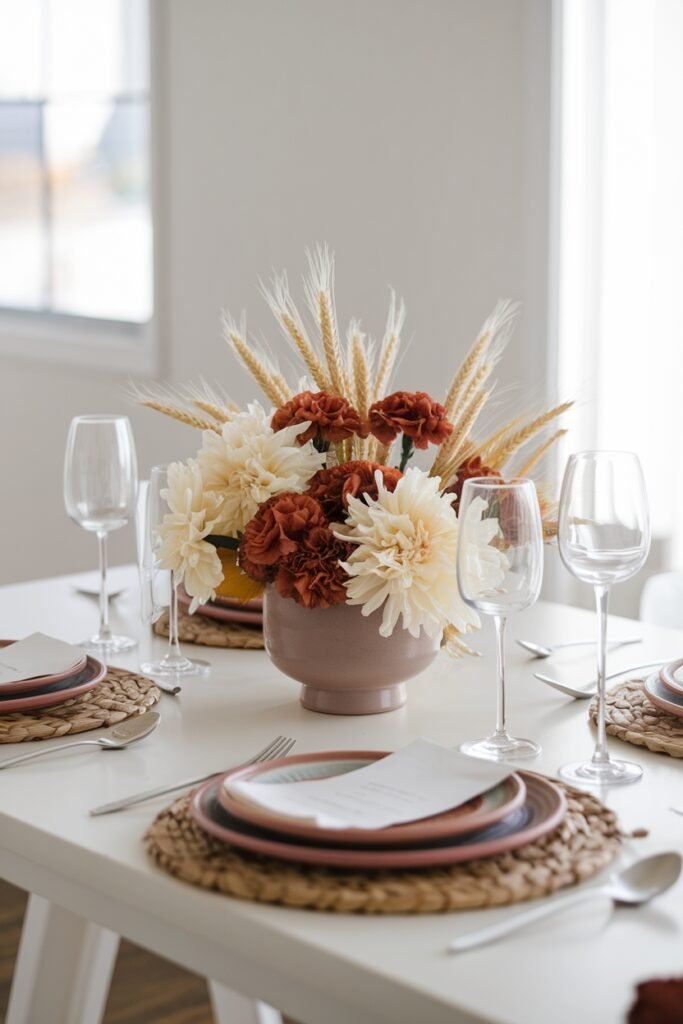
Adding wheat is the one upgrade that actually changes the arrangement rather than just adding more flowers.
The wheat brings something that neither the mum nor the carnation provides: a bristled, linear grain texture that is completely different from any petal surface. At close dining range, the contrast between the soft cream mum bloom, the fringed rust carnation edge, and the fine wheat awn is visible and genuinely interesting in a way that a three-flower arrangement of similar-textured blooms is not.
1. Three Rust Carnations, Two Cream Mums, and Two Wheat Stalks in a Dark Navy Crock Two cream pompom mum stems and three rust carnation stems cut to two inches above the rim, with two outward-angled wheat stalks pressed into the gravel first, in a dark navy crock. The navy creates contrast with both the cream bloom and the amber wheat while amplifying the rust tone. All stems at the same low height. From the seated dinner angle, the arrangement reads as a warm three-material surface.
2. Cream Mum, Rust Carnation, and Wheat Flat Runner Without a Vessel Three cream mum stems and three rust carnation stems in individual water picks along the table center, with two wheat stalks laid flat between them on the table surface. No bowl at all. The flat runner format is perfect for narrow tables where any vessel height creates a wall between seated guests. The wheat connects the individual water picks visually and makes the whole runner read as a designed display.
3. Single Cream Mum, Single Rust Carnation, and One Wheat Stalk Per Place Setting One cream mum branch, one rust carnation stem, and one wheat stalk in a small dark bud vase at each dinner seat. The wheat stalk rises two to three inches above the two bloom faces. At close personal dining distance, the grain head detail and both bloom textures are visible. Under a dollar fifty per setting from grocery store materials. Each guest gets their own fall arrangement instead of sharing.
4. Wide Low Bowl with Floating Cream Mum, Rust Carnation, and Wheat Grain Heads Two cream mum heads and two rust carnation heads with stems removed, floating face-up in a wide low bowl alongside two wheat grain heads snipped from their stalks. All elements at the water surface level. From the overhead seated angle, the floating warm-and-cream surface with the wheat grain texture between the blooms reads as a deliberately composed arrangement with no height at all. Perfect for very small tables.
5. Rust Carnation and Cream Mum Compote with Wheat at the Outer Edge Four rust carnation stems and three cream mum stems in a low ceramic compote, with two wheat stalks pressed into the gravel so the grain heads extend just past the compote rim edge. The compote’s raised foot gives the arrangement visual presence without adding stem height. The wheat at the rim edge creates a horizontal frame. The cream and rust in the compote center create the warm fall color story.
More ahead on how to bring peach blooms into this combination when the rust reads as slightly too bold for the table or occasion.
How to Soften Cream Mum and Rust Carnation Fall Flowers With Peach Blooms
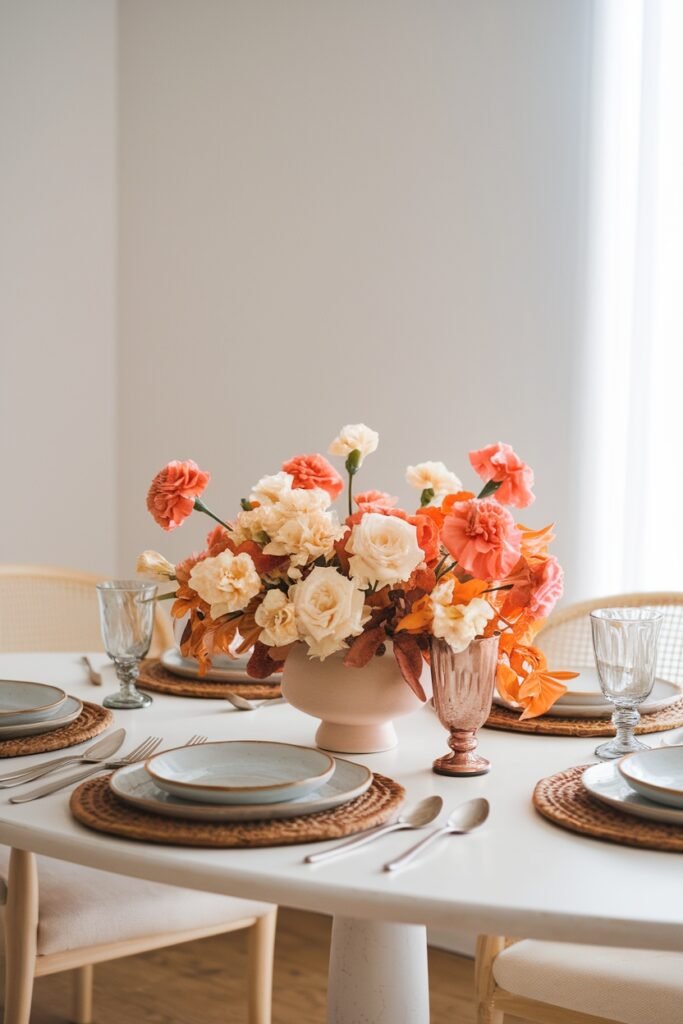
Sometimes rust orange is more than the table needs.
For a formal autumn dinner, a brunch setting, or a table that leans toward soft and welcoming rather than warm and bold, three rust carnations alongside two cream mums can tip slightly orange-heavy depending on the tablecloth and the lighting. One peach carnation or a peach ranunculus stem tucked in beside the rust and cream shifts the whole palette back toward balance.
Peach sits between rust orange and cream in the color spectrum. It bridges the two. A peach bloom in the arrangement acts as a visual midpoint that makes the cream and rust feel like they belong to the same palette rather than sitting in tension with each other. Two cream mum stems, two rust carnation stems, and two peach carnation stems in a dark navy bowl: the three tones read as a warm gradient rather than a two-tone contrast. It is a softer look that suits daytime dining specifically.
The peach tone also affects the vessel choice. Terracotta and rust orange compete with each other because they sit too close in the warm-orange family. Adding peach to the arrangement means terracotta works again as a vessel because the peach bridges the terracotta’s buff-orange tone toward the cream side of the palette. A wide terracotta bowl with cream mums, rust carnations, and peach carnations reads as harvest-warm without the orange-on-orange clash that rust carnations alone produce in a terracotta vessel.
One peach element is enough. Two peach stems softens. Three or four peach stems and the arrangement has shifted from rust-and-cream with peach accent to a peach arrangement with rust and cream on the side. The rust needs to stay as the bold warm element. The peach just takes the edge off.
Ways to Balance Cream Mum and Rust Carnation Fall Flowers Without Too Much Orange
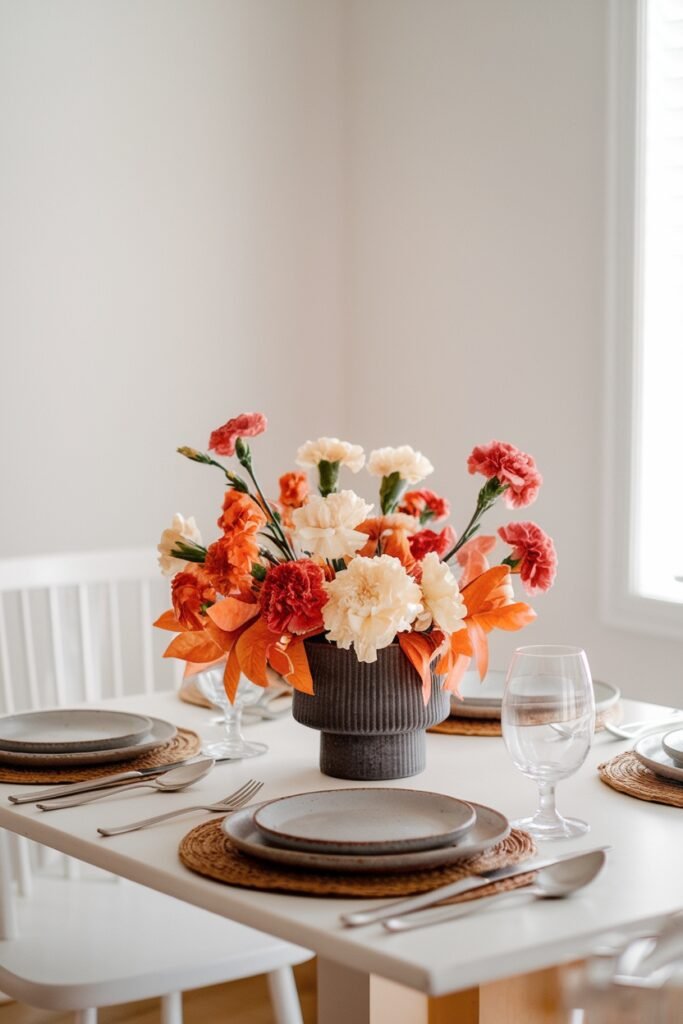
1. More Cream Mum Stems Than Rust Carnation Stems Use three cream mum stems for every two rust carnation stems. The numerical dominance of the cream keeps the arrangement feeling soft and warm rather than orange-heavy. The rust still reads as the warm bold element but the cream leads visually and sets the overall palette tone. In a dark.
2. Add One Neutral Green Herb Alongside the Orange Two fresh sage sprigs or two rosemary sprigs alongside the cream and rust arrangement pull the palette toward a cooler neutral tone that prevents the orange from dominating. The grey-green herb foliage sits between the warm rust and the pale cream on the color spectrum, acting as a visual buffer.
3. Use a Dark Vessel to Pull Focus Away From the Rust Tone A matte black or deep charcoal vessel absorbs the rust orange and amplifies the cream simultaneously. The visual weight of the dark vessel shifts the whole arrangement toward sophisticated rather than harvest-vibrant. The same rust carnations in a light-toned or clear vessel read as louder and more orange-dominant. The vessel.
4. Add Dried Wheat to Create a Third Neutral Warm Tone Two golden wheat stalks alongside cream mum and rust carnation provide a warm amber neutral that reads alongside both bloom tones without amplifying either one. The amber wheat is in the orange family but at a muted, dry tone that does not compete with the rust carnation. It adds autumn.
5. Lower the Stem Count Overall Three cream mum stems and two rust carnation stems in a small dark bowl reads as refined and deliberate. The same stem count doubled in a larger vessel reads as abundant but with the rust more prominent simply because there is more of it. Smaller, tighter arrangements read as controlled.
More ahead on ceramic bowls specifically, because the bowl format is where this combination really shows its best quality.
DIY Ideas for Cream Mum and Rust Carnation Fall Flowers in Ceramic Bowls
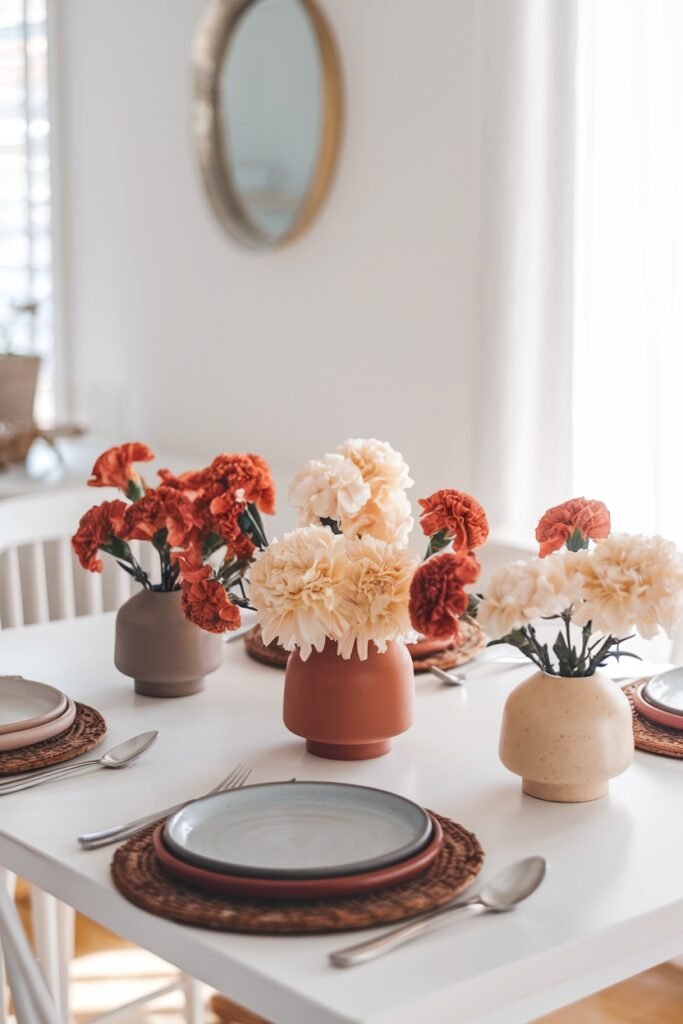
1. Wide Dark Stoneware Bowl with Three Rust Carnations, Two Cream Mums, and Gravel Base Three rust carnation stems plus two cream mum branches cut to two to three inches above the rim, pressed into a gravel base with outward-angled faces in a wide dark stoneware bowl with cold water. All stems at the same height. The stoneware amplifies both tones. From the seated overhead.
2. Low Forest Green Compote with Cream Mum Forward and Rust Carnation Accent Four cream mum stems at the front and sides of a low forest-green glazed compote with two rust carnation stems pressed in toward the center back, plus two wheat stalks at the outer edge. The cream leads visually and the rust provides warm depth behind it. The forest-green glaze creates.
3. Wide Shallow Terracotta Bowl with Cream Mum, Rust Carnation, and Peach Carnation Two cream mum branches plus two rust carnation stems plus two peach carnation stems in a wide shallow terracotta bowl with gravel and cold water. All stems at rim height or just below. The three-tone warm gradient reads as the most harvest-specific combination of the three ideas here. The terracotta.
More ahead on sage foliage, which changes the sensory experience of this combination in a way that no other accent element can.
Creative Ways to Use Cream Mum and Rust Carnation Fall Flowers With Sage Foliage
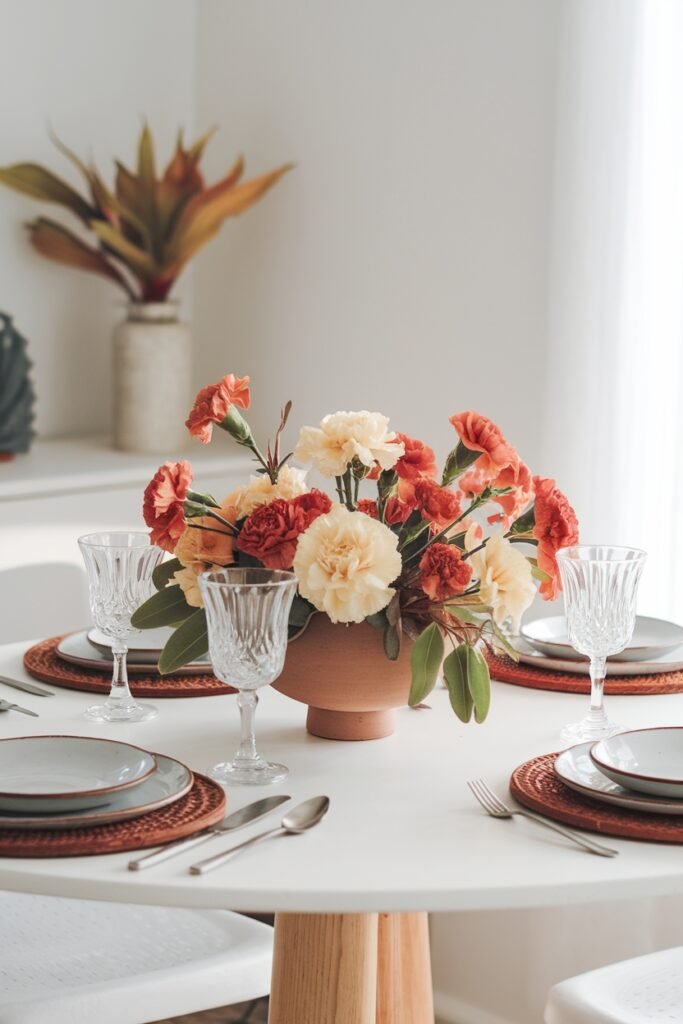
1. Cream Mum, Rust Carnation, and Sage in a Dark Ceramic Bowl with the Sage at the Outer Rim Four cream mum stems plus three rust carnation stems in a dark ceramic bowl, with three fresh sage sprigs pressed into the gravel around the outer rim edge so the sage leaves extend slightly over the vessel boundary. The sage at the perimeter softens the bowl edge and adds an.
2. Cream Mum, Rust Carnation, Wheat, and Sage as a Grouped Still Life at Each Place Setting One cream mum branch, one rust carnation stem, one short wheat stalk, and one sage sprig placed together as a loose group directly on the table surface beside each plate with no vessel. No water. No bowl. The sage and wheat hold for the duration of a dinner without water.
3. Sage Sage Bundle Beneath the Vessel as an Aromatic Base Layer Five or six fresh sage stems laid flat on the table surface beneath the main cream mum and rust carnation arrangement vessel, extending outward from under the bowl like a green table-level frame. The sage does not go in the water. It sits on the table. The fragrance rises from.
Conclusion
Cream mums and rust carnations together on a fall table is one of those combinations that looks harder than it is and costs less than it appears.
Dark bowl. Gravel base. Diagonal cuts. Cold water. Stripped leaves. Wheat if you have it. Sage if you want the fragrance.
That is everything. The grocery store has both flowers. The whole thing takes fifteen minutes. And it lasts the better part of two weeks if you do the prep right.
This website contains affiliate links, and some products are gifted by the brand to test. As an Amazon Associate, I earn from qualified purchases. Some of the content on this website was researched and created with the assistance of AI technology.