This website contains affiliate links, and some products are gifted by the brand to test. As an Amazon Associate, I earn from qualified purchases. Some of the content on this website was researched and created with the assistance of AI technology.
Key Takeaways
- Garden sage and white chrysanthemums create the most specifically autumn bouquet combination available at grocery store and garden budget: both materials peak in fall and both suit cool outdoor conditions
- The felt-like texture of sage leaves against the smooth pompom mum surface creates close-range visual interest that no other common herb-and-flower combination produces in fall
- White mum stems must be conditioned in cold water for two to three hours before arrangement — skipping this step is the single most common cause of early wilt in mum bouquets
- The sage fragrance at fall gathering close range intensifies in cool air rather than diminishing the way many herb fragrances do in warmth — the cooler the environment, the more specifically pleasant the sage scent
- Wheat and dried grasses added to a white mum and sage hand-tied bouquet create the texture variation that prevents the combination from reading as too simple or underdeveloped
- The hand-tied technique works specifically for white mums because the stiff, self-supporting stems hold their angles during and after binding without requiring any mechanical support structure inside the vessel
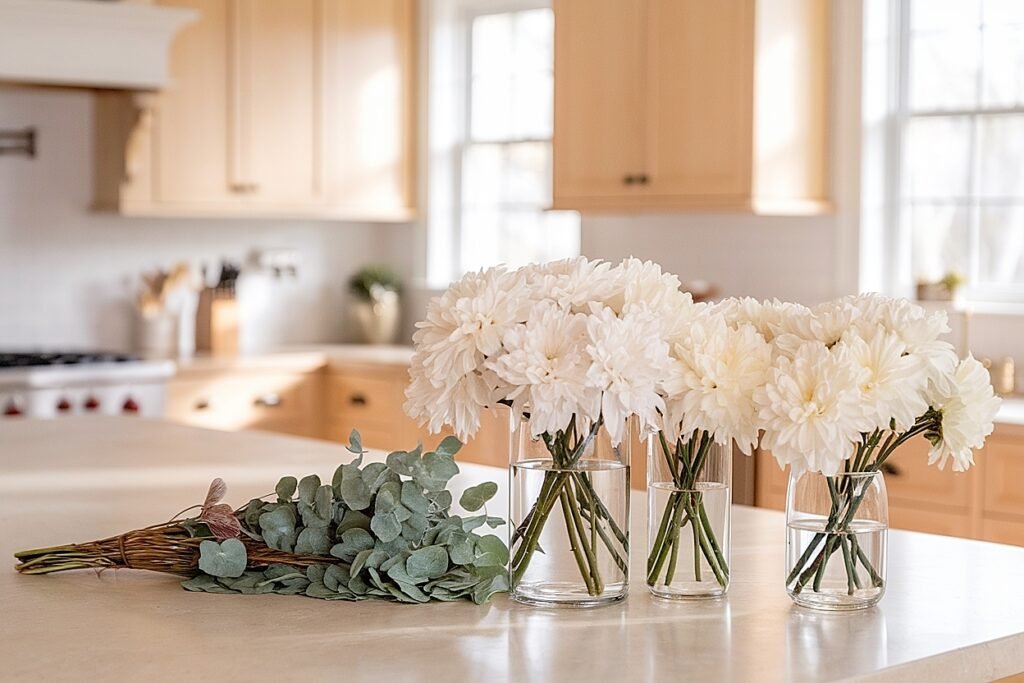
Creating DIY white mum and sage bouquets for fall gatherings is the combination I return to every autumn without fail, and it consistently produces the most visually and aromatically satisfying fall gathering arrangements I know how to build. The mum brings structural confidence: dense, long-lasting, available everywhere, and white in a season when everyone else is reaching for orange and burgundy. The sage brings the season in a way no ornamental foliage can replicate: the specific felted grey-green texture, the warm herbal fragrance that intensifies in cool fall air, the slightly dusty quality that reads as specifically autumnal rather than generically green.
The combination also costs almost nothing. A grocery store mum bunch and a handful of garden sage is the complete material list for a bouquet that looks designed and intentional. There is no specialty florist material involved. No advance ordering. No flower market trip at six in the morning. What makes the mum-and-sage bouquet work is not the materials — it is the understanding of what each element contributes and how they interact with each other at close autumn gathering range.
Use this table to help readers pick the right bouquet style before they start cutting stems. It keeps the choice simple: where the bouquet will go, how full it should be, what container works best, and which small detail makes it feel finished for a fall gathering.
| Bouquet Use | Best Mum Style | Sage Amount | Finishing Detail |
|---|---|---|---|
| Guest take-home bouquet Small, sweet, easy to carry. |
Button mums or daisy mums. | Two to three short sage sprigs. | Wrap with tan paper and cream twine. |
| Dinner table bouquet Low, full, and conversation-friendly. |
Cushion mums mixed with small mums. | Four to six sage sprigs around the edge. | Place in a low matte ceramic bowl. |
| Hostess bouquet Polished but still homemade. |
Decorative mums with tight centers. | Sage tucked between larger blooms. | Add oatmeal ribbon and a blank kraft tag. |
| Outdoor fall gathering Relaxed, sturdy, and natural. |
Hardy cushion mums with firm stems. | Use extra sage for texture and scent. | Pair with stoneware and linen napkins. |
| Small apartment bouquet Compact, neat, and space-saving. |
Mini mums or trimmed spray mums. | One sage sprig per small cluster. | Use an opaque cream ceramic cup. |
Resources:
- Garden Plants That Make Good Cut Flowers | Yard and Gardenhttps://yardandgarden.extension.iastate.edu/how-to/garden-plants-make-good-cut-flowers
- Growing Salvias in the Garden (And for Floral Design) — the kokoro garden
- Cutting and Arranging Chrysanthemums – Flower Magazine
- How To Care For Mums In Pots: Expert Advice | Gardening Know How
How to Choose White Mum and Sage Fall Flowers for Soft Autumn Gathering Bouquets
Choosing the right mum form matters more than most bouquet guides acknowledge.
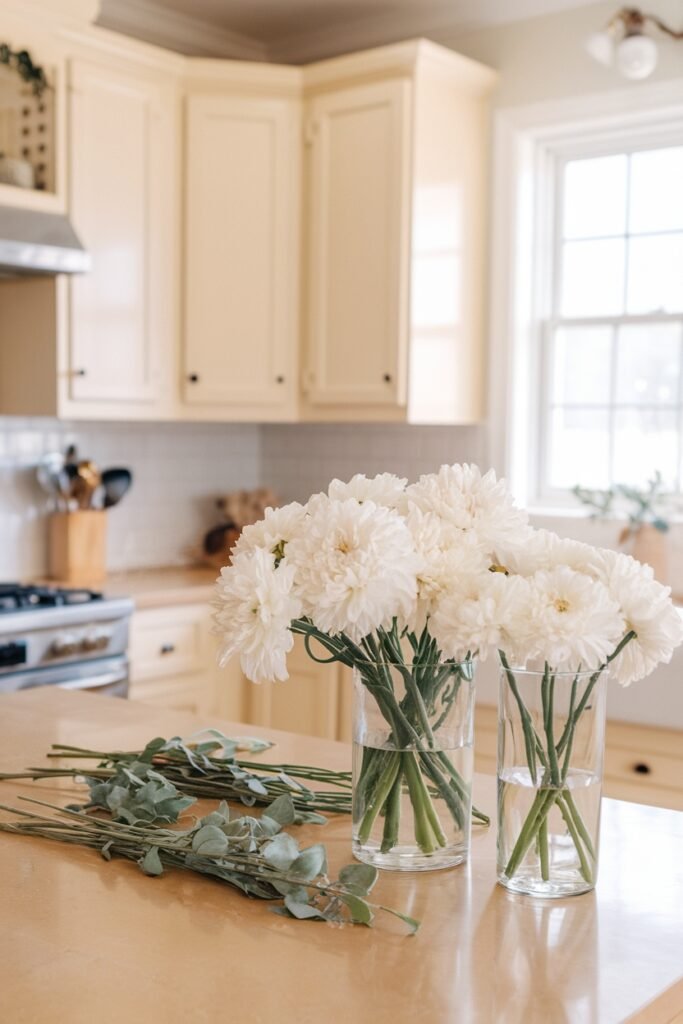
White chrysanthemums come in several forms with dramatically different visual characters: the dense pompom, which creates a compact, rounded bloom face with maximum visual density; the spider mum, which creates elongated tubular petals that radiate outward from the center in a dramatic starburst; the daisy mum, which creates a flat face with a visible yellow center; and the cushion mum, a compact, dome-shaped form intermediate between the pompom and daisy. Each form reads differently in a hand-tied bouquet and creates a different relationship with the sage companion.
For a soft, gathering-quality autumn bouquet, the pompom and cushion forms suit white mum and sage combinations best. The rounded form of both creates a bloom scale and visual density that complements sage’s own rounded leaf clusters. Spider mums, though beautiful, have an architectural drama that works against the soft, abundant quality of the mum-and-sage gathering bouquet — save the spider mum for more minimal, dramatic single-stem vessel arrangements.
Fresh sage choice matters equally. Common garden sage, Salvia officinalis, is the correct variety for a gathering bouquet: the broad, slightly felted grey-green leaves create the visual and aromatic quality the combination depends on. Purple sage adds a warm lavender-grey color note that creates subtle tonal depth within the white-and-green palette. Golden sage’s variegated green-and-cream foliage adds light without adding complexity. Standard grey-green common sage is the correct choice for maximum fragrance and the most authentically autumnal leaf character.
Harvest sage the morning of the gathering. Cut stems four to six inches long, strip the leaves from the bottom two inches, and place immediately in cold water. Sage wilts faster than it appears to, particularly in warm indoor conditions, and freshly cut morning sage holds its fragrance and structure significantly longer than sage cut the previous evening.
For more on white mum fall arrangements across party table contexts including the branching stem cutting technique and vessel selection for fall outdoor conditions, check out easy white mum flower arrangements for fall party tables. Share this with anyone building fall gathering flower displays. More ahead on layering techniques, prep, budget approaches, and every specific mum-and-sage detail.
Easy Ideas for Layering White Mum Fall Flowers with Sage for Full Hand-Tied Bouquets
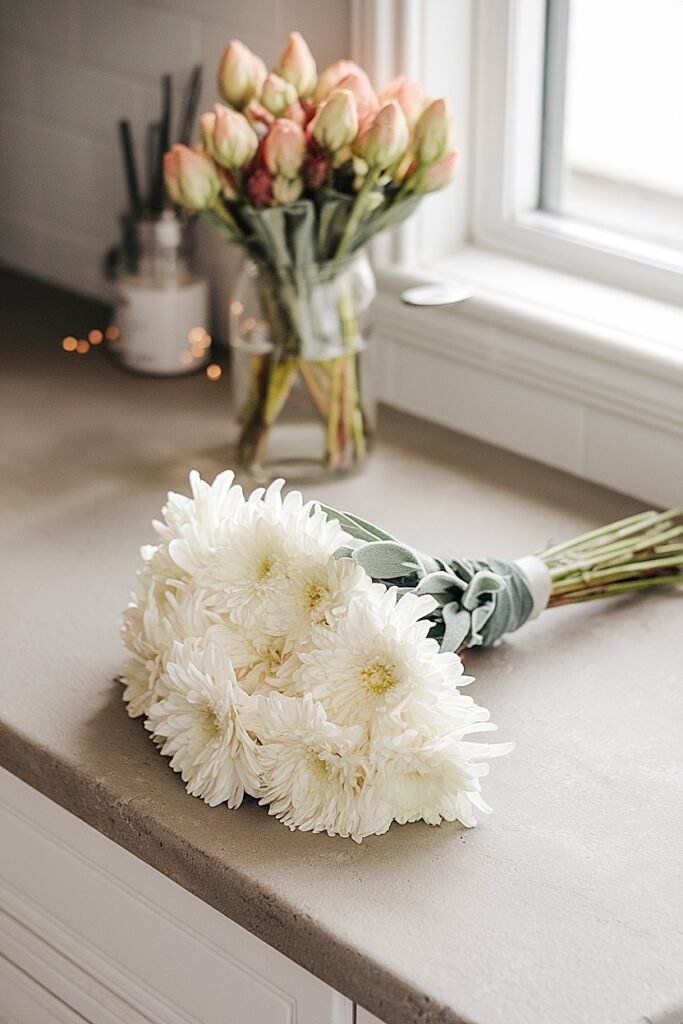
Hand-tied bouquets need a layering sequence to produce a result that looks like more than flowers held together. The sequence that works for white mum and sage specifically: build the sage layer first as a structural base, then add mum stems through the sage mass so the blooms rise above the grey-green foliage while the mum stems brace against the sage stems at the binding zone. That mutual bracing is what makes white mums specifically suited to the hand-tied format: the stiff mum stems create their own support structure as they rest against each other and the sage.
1. Pompom Mum Crown with Sage Collar
Build a compact sage spray collar by holding four to five sage stems in a roughly circular arrangement at the hand position, leaves facing outward. Insert five to six pompom mum stems through the center of the sage collar so the mum blooms rise three to four inches above the sage leaf level. Bind at the hand position. The sage frames the white mum mass.
2. Mixed Height Mum and Sage Hand-Tied
Alternate mum stems and sage sprigs at three different heights within one hand-tied bouquet: tall mum stems at the back, mid-height sage and mum stems in the middle zone, and shorter sage-forward stems at the front. The graduated height creates dimensional depth that flat hand-tied bouquets lack. Bind at a single hand position. The bouquet reads as composed from the front and three-dimensional from the.
3. Spider Mum and Sage Minimal Hand-Tied
Three white spider mum stems with their dramatic starburst petals plus four to five sage sprigs in a loose, minimal hand-tied gathering. The spider mum’s architectural character suits the minimal stem count where the pompom form might look sparse. The sage’s rounded leaf clusters create a visual contrast against the spider mum’s elongated petals that reads as designed rather than accidental. Bind loosely at the.
4. Daisy Mum, Sage, and Rosemary Three-Herb Bouquet
Five daisy mum stems with their warm yellow centers plus four sage sprigs plus three rosemary sprigs in one hand-tied bouquet creates a layered herbal fragrance combination alongside the white bloom mass. The rosemary’s needle foliage adds a third texture contrast between the daisy mum’s flat faces and the sage’s broad leaves. The combined sage-rosemary fragrance at gathering close range creates a complex, specifically autumnal.
5. White Cushion Mum and Purple Sage Tonal Bouquet
White cushion mum pompoms plus purple sage, Salvia officinalis ‘Purpurascens’, in a hand-tied combination creates a white-and-warm-lavender palette that reads as a deliberately considered tonal arrangement rather than a simple white-and-green combination. The purple sage’s slightly darker foliage adds depth behind the white blooms. The combined visual palette suits evening fall gathering contexts specifically, where the subtle purple-grey tones read beautifully in candlelight.
More ahead on the stem preparation process, which is where most mum and sage bouquet failures originate before the arrangement is even built.
How to Prep White Mum and Sage Fall Flowers So Bouquets Stay Fresh Longer
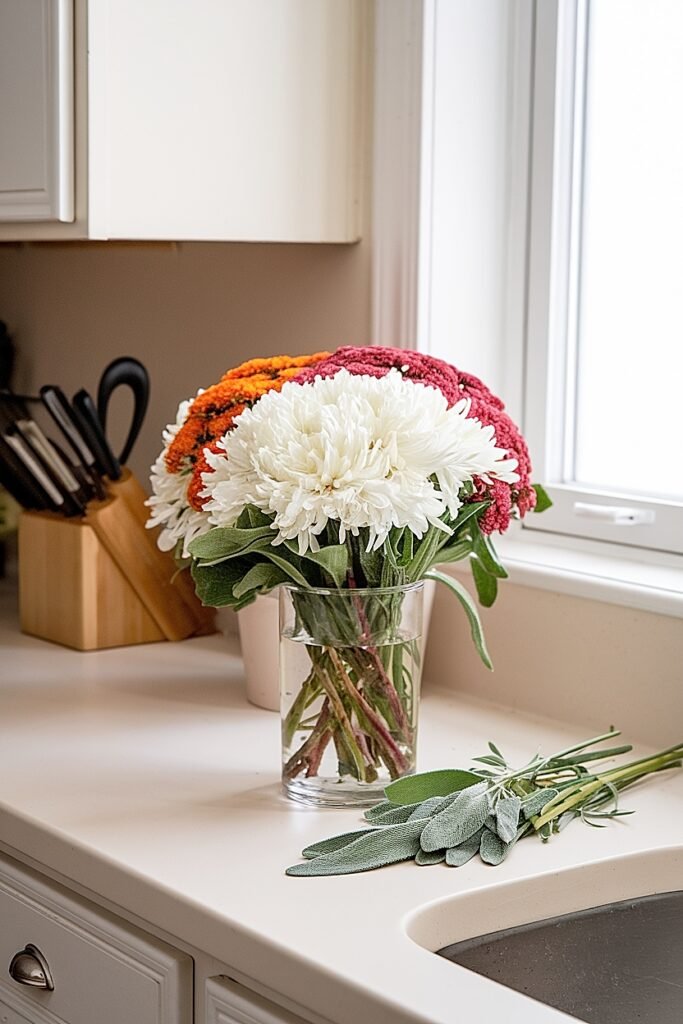
The conditioning step is the difference between a bouquet that holds for a week and one that wilts by the second day.
Every white mum stem needs a two-to-three-hour cold water conditioning soak after the initial diagonal cut before going into any bouquet or arrangement. This is not optional. Chrysanthemums have a well-documented tendency to wilt early when cut stems are exposed to air for more than a few minutes before reaching water. The diagonal cut, made with sharp scissors and immediately submerged, opens the maximum possible water uptake surface area. The three-hour soak saturates the stem tissue before the arrangement is built.
Strip every leaf from the lower half of each mum stem before the conditioning soak. Submerged foliage creates bacterial growth in the vessel water faster than any other single preparation failure, and bacterial growth in the water blocks stem uptake progressively, accelerating the decline that the conditioning soak was meant to prevent. A stripped, clean lower stem in cold water is the correct configuration for every mum stem, every time.
Sage preparation is different. Strip the lower two inches of leaves from each sage stem and make a clean cut at the base. Then do something that many guides skip: crush or gently bruise the cut end of the sage stem with the flat of a heavy knife before placing in cold water. Sage stems have a slightly woody structure that benefits from this mechanical preparation — the crushed end absorbs water more efficiently than a smooth-cut woody stem alone. The sage fragrance at gathering close range is also briefly intensified by the bruising process, which can be used intentionally to evaluate fragrance strength before building the bouquet.
Change the vessel water every two days and trim half an inch from each stem at each water change. With this maintenance routine, a white mum and sage bouquet built correctly holds seven to ten days. Without it, the same materials begin showing stress at three to four.
More ahead on making this combination look polished and designed at genuinely minimal cost.
DIY Ideas for Making White Mum and Sage Fall Flowers Look Elegant on a Small Budget
1. Dark Vessel with Minimal Stems
Three white pompom mum stems and four sage sprigs in a short dark navy or charcoal ceramic vessel. The dark vessel creates high contrast with the white blooms that reads as specifically designed. The minimal stem count in a dark vessel reads as deliberate minimalism.
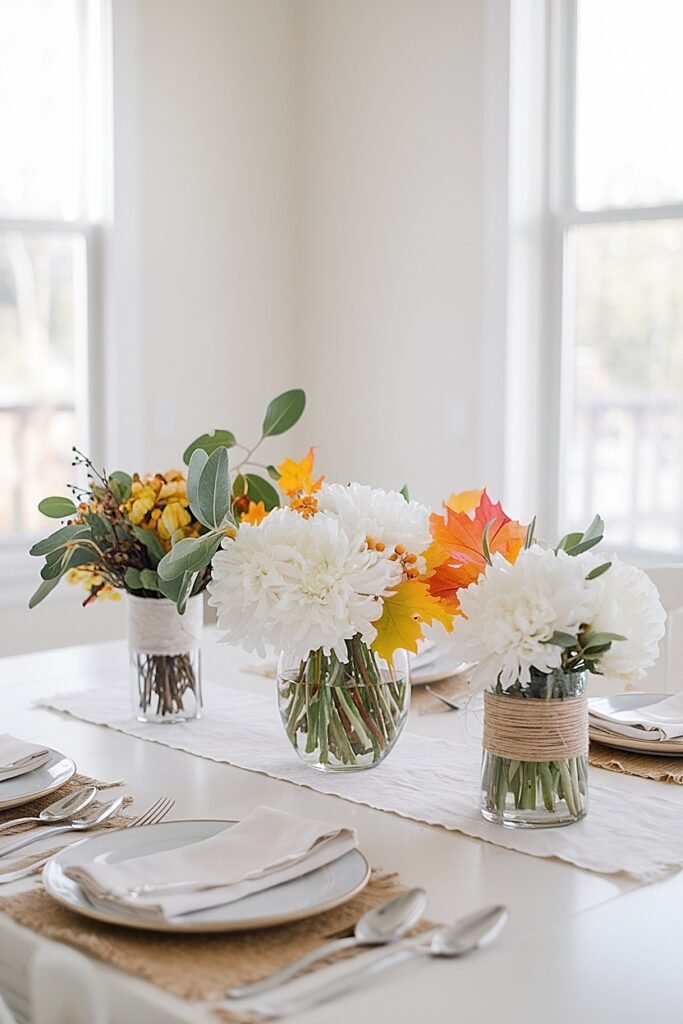
2. Linen-Wrapped Jar with White Mum and Sage
One to two white mum stems and three sage sprigs in a clear glass jar wrapped tightly at the base with natural jute twine or a small piece of undyed linen. The textile addition transforms a grocery store jar into a styled vessel without any.
3. Garden Harvest Stem Bundle
Three white mum stems, four sage sprigs, two rosemary branches, and one sprig of dried lavender or thyme seedheads from the autumn garden, bound with jute twine as a flat bundle arrangement rather than a conventional upright bouquet. Lay the bundle across a serving board.
More ahead on the wheat and dried grass combinations that extend the mum-and-sage palette into the broader autumn seasonal material spectrum.
Ideas for Mixing White Mum Fall Flowers with Sage, Wheat, and Soft Autumn Greens
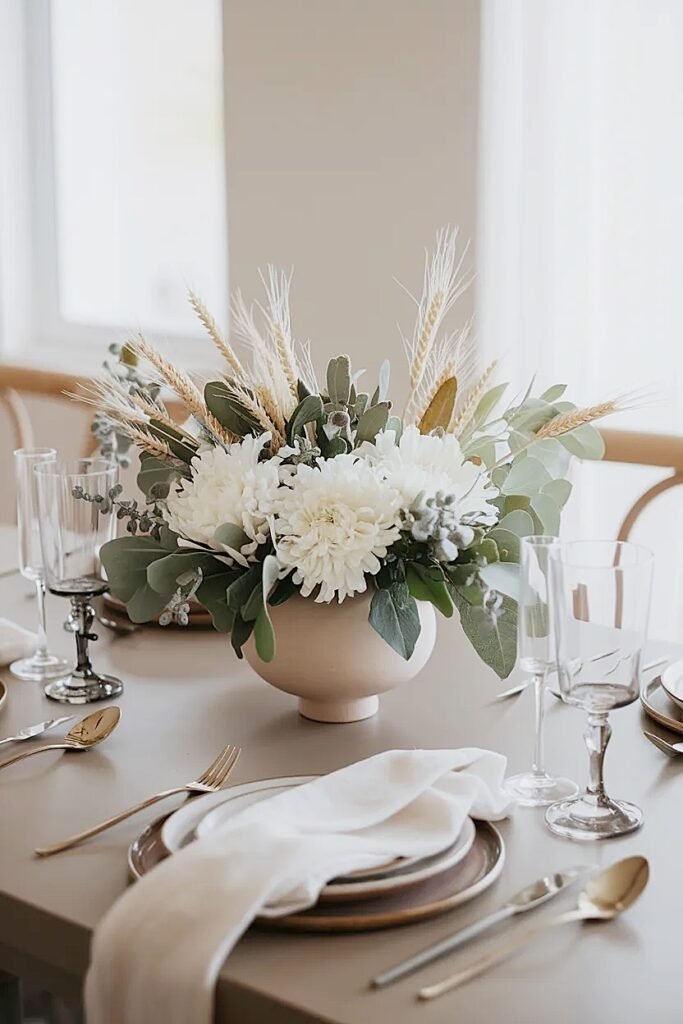
1. White Mum, Sage, and Dried Wheat Spray
Three white pompom mum stems plus four sage sprigs plus two dried wheat stalks in one vessel creates the most specifically harvest-season arrangement of any material combination on this list. The dried wheat’s warm amber color and upright grain structure add a vertical accent that.
2. White Mum, Sage, and Dried Pampas Grass
One to two white mum stems plus three sage sprigs plus one pampas grass plume creates a dramatic, movement-oriented arrangement where the pampas plume sways gently in any air current while the mum and sage provide stable structure. The pampas plume’s feathery white texture creates.
3. White Cushion Mum and Dried Fern Frond
White cushion mum stems plus pressed or dried autumn fern fronds, available at craft stores or dried naturally in fall garden cleanup, create an interesting fresh-and-dried textural combination. The dried fern’s warm brown or golden tone creates the one warm color accent in the otherwise.
4. White Mum, Sage, and Eucalyptus Branch
White pompom mums plus fresh sage plus a seeded or silver dollar eucalyptus branch create a three-element arrangement where each element occupies a distinct textural register: smooth rounded mum blooms, felted broad sage leaves, and fine silver-grey eucalyptus. The eucalyptus branch creates trailing movement at.
5. White Mum with Ornamental Grass Seed Heads
Three white mum stems plus four sage sprigs plus two to three stems of dried ornamental grass seed heads, such as millet spray or panicum ‘Shenandoah’, create an arrangement where the delicate grass seed heads add fine-textured movement above the stable mum bloom level. The.
More ahead on building white mum and sage combinations specifically for outdoor fall gathering conditions, where temperature and light quality change the arrangement’s visual character significantly.
How to Make White Mum Fall Flowers and Sage Bouquets for Outdoor Fall Gatherings
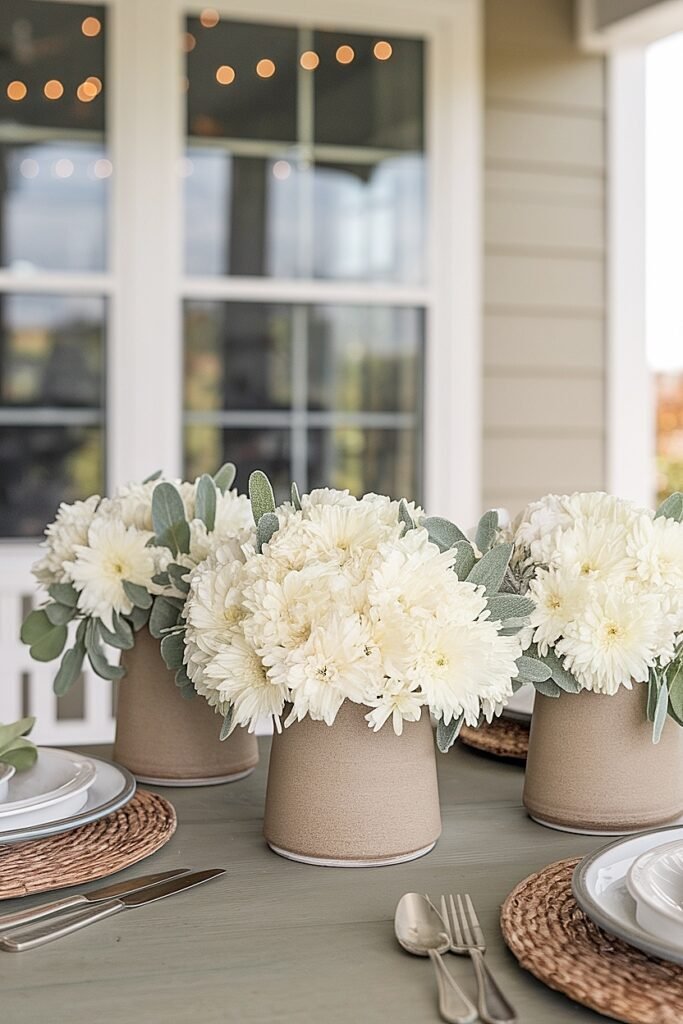
Outdoor fall gatherings are different from indoor ones in the specific ways that matter most for flower arrangements.
The light is lower in the sky and warmer in tone. The temperature is cool enough that cut flowers last without the heat stress that summer outdoor arrangements face. The breeze is more variable and potentially stronger as the afternoon moves toward evening. And the background against which the arrangement is seen, golden foliage, wooden fence, dried garden border — is rich and warm in a way that amplifies white rather than competing with it.
White mum and sage arrangements in outdoor fall light do something genuinely beautiful that indoor lighting cannot replicate. The low-angle afternoon sun catches the felted sage leaf surface and creates a silvery shimmer. The same light makes white mum pompoms appear almost luminous rather than simply white, the bloom surface reflecting warm afternoon sun in a way that reads as an active light source rather than a passive white object. Build the arrangement knowing this light quality will work for you in the afternoon hours.
The wind consideration: sage sprigs in a hand-tied bouquet or loose vessel arrangement respond to outdoor fall breeze in a way that adds life to the display. The sage’s slightly stiff stems sway without collapsing, the leaves flutter gently, and the combined movement creates a living quality that static indoor arrangements do not achieve. Position the arrangement where air movement reaches it rather than in a dead-air corner of the gathering space.
The cool fall temperature extends the arrangement’s outdoor display life significantly beyond what the same flowers would achieve at a summer outdoor event. White mums in outdoor sixty-degree fall air hold their appearance for six to eight hours of gathering time without visible stress, provided they were correctly conditioned before the event and placed in cold water in a weighted vessel at the gathering start.
Ways to Build Low White Mum and Sage Fall Flowers Bouquets for Dinner Tables
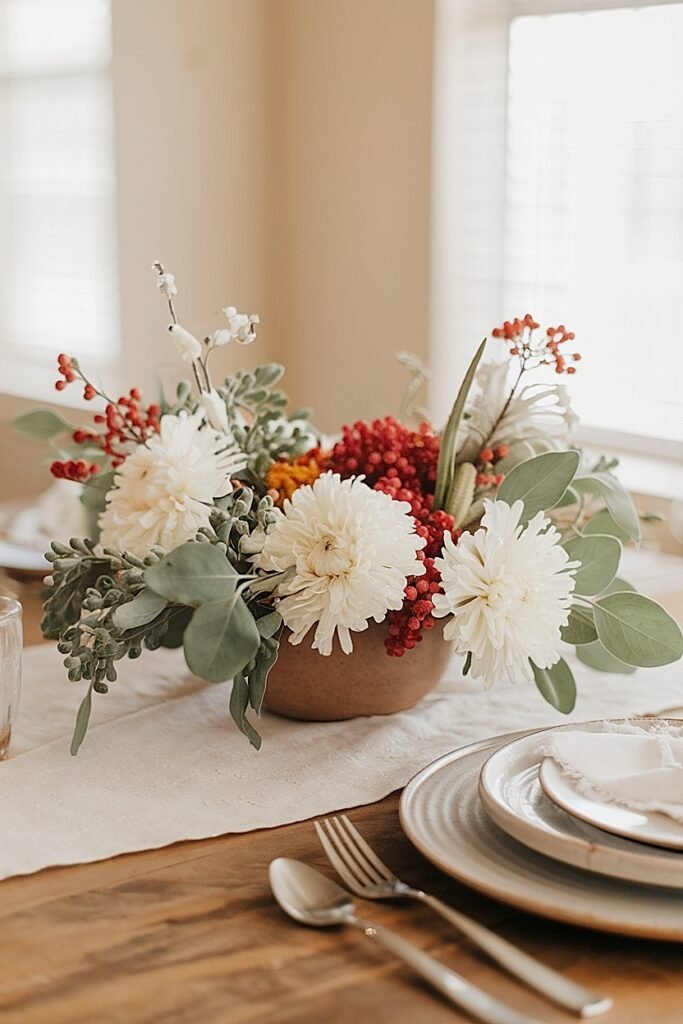
1. Wide Bowl with Mum Branches and Sage at Rim Height
Fill a wide ceramic bowl with mum bloom branches cut to one to two inches above the rim, pressed shoulder-to-shoulder in gravel. Tuck three to four sage sprigs around the outer bowl perimeter so the sage drapes slightly over the rim edge. The sage overhang.
2. Three-Vessel Cluster with Alternating Mum and Sage Emphasis
Three matched short ceramic vessels in a row at the dinner table center: the two outer vessels each holding three white mum stems with one sage sprig; the center vessel holding four to five sage sprigs with two mum stems. The alternating proportion creates visual.
3. Single Wide Mum and Sage Bowl on a Wooden Board
One wide white mum and sage bowl arrangement placed on a small wooden serving board at the dinner table center. The wooden board creates a defined visual base that makes the arrangement read as a composed table element rather than a vessel dropped on the.
4. Mum Pompom and Sage Flat Bundle on the Table
A flat bundle of four white mum stems and six sage sprigs, bound with jute at the hand position, laid flat across the dinner table center rather than placed upright in a vessel. The flat bundle creates a flower detail at table surface level with.
5. Small Jam Jar Per Place Setting with Two Mum Blooms and Sage
One small jam jar per place setting, each holding two to three white mum bloom branches and one sage sprig, creating a personal fall arrangement at each guest’s dinner position. The per-place-setting scale makes each guest’s seat feel individually considered rather than generically served by.
Conclusion
White mum and sage. Two materials. One compelling fall gathering bouquet concept.
The mum provides durability, density, and the visual clarity of white in a season of warm harvest color. The sage provides fragrance, texture, and the specific autumnal quality that no ornamental foliage produces at the same cost. Together they create something that costs almost nothing to build and that consistently reads as designed, seasonal, and personally considered.
Condition the stems. Crush the sage cut ends. Use a dark vessel. Lay the sage in first. The rest takes care of itself.
This website contains affiliate links, and some products are gifted by the brand to test. As an Amazon Associate, I earn from qualified purchases. Some of the content on this website was researched and created with the assistance of AI technology.