This website contains affiliate links, and some products are gifted by the brand to test. As an Amazon Associate, I earn from qualified purchases. Some of the content on this website was researched and created with the assistance of AI technology.
Key Takeaways
- The proportion rule for herbs in fall bouquets: one herb stem per every three to four flower stems — above that ratio, the herb fragrance overtakes the visual arrangement and competes with the flowers for attention
- Rosemary, thyme, and sage are the most fragrance-stable herbs for fall bouquets: their woody structure holds in cool conditions where soft-stemmed herbs like basil and mint deteriorate faster
- Basil’s dark leaf color creates a visual contribution to fall arrangements beyond fragrance: it is the only commonly available herb whose foliage reads as a color element rather than a neutral green
- Dill’s feathery frond texture creates a visual airy quality in fall arrangements that no other common herb produces — its job is textural, not structural
- The Thanksgiving table creates the most fragrance-sensitive herb use context: food is the center of the event and herb fragrance that overpowers food aromas is a hosting failure, not a design success
- Strip lower leaves from all herb stems before conditioning in cold water: submerged foliage causes bacterial buildup that degrades herb fragrance faster than any other single preparation mistake
Using fresh herbs in fall flower bouquets is a design decision with a very clear failure mode: the arrangement ends up smelling like a kitchen rather than a garden. I have made this mistake more times than I am comfortable admitting — packed too much rosemary into a chrysanthemum bouquet, over-loaded a fall centerpiece with sage until the fragrance at dining table range was genuinely competitive with the food, used dill as the structural base of an arrangement in quantities that made it read as a produce display rather than a flower composition. The overdone herb bouquet is a real and consistent risk, and it is almost always the result of treating herbs as an unlimited resource rather than as a carefully measured accent.
The correctly proportioned herb-and-fall-flower combination is one of the most distinctive and most specifically seasonal arrangements available anywhere in the autumn calendar. The herbs anchor the arrangement in place and time: rosemary in fall air smells like a specific October Sunday. Fresh sage beside a white chrysanthemum reads as the garden in its final productive weeks. These associations are specific and powerful. They require the herb to be present enough to register and restrained enough not to overwhelm.
Choosing the right herb is easier when you start with the bouquet’s job. Some herbs add scent. Some add shape. Some soften the edge. This quick table helps readers pick the best fresh herb for Fall Flowers without turning a pretty autumn bouquet into a messy bundle of greenery.
| Herb | Best Use | Use Lightly With | Avoid Overdoing By |
|---|---|---|---|
| Rosemary Woody, fragrant, structured. |
Adds upright shape and a cozy fall scent. | Mums, dahlias, zinnias, marigolds. | Use short angled sprigs near the edge. |
| Sage Soft, muted, velvety. |
Softens warm blooms and neutral palettes. | Cream flowers, burgundy blooms, rust tones. | Keep it low so flowers stay visible. |
| Thyme Tiny, delicate, trailing. |
Adds small texture to petite bouquets. | Mini mums, low bowls, place setting bouquets. | Let only a few sprigs drape naturally. |
| Mint Fresh, bright, scented. |
Adds freshness to compact fall bouquets. | Peach roses, cream mums, golden blooms. | Use fewer stems near food or drinks. |
| Dill Airy, feathery, light. |
Adds height without heavy greenery. | Dahlias, mums, marigolds, loose bouquets. | Leave open space between feathery stems. |
Resources:
- Cut Flower Care – Gardening Solutions
- 9 Herbs You Should Be Growing for Flower Arranging
- Favorite Herbs to Grow as a Flower Farmer — the kokoro garden
- Six Culinary Herbs to Incorporate into Floral Arrangements – Cedar House Living LLC
- The Complete Guide to Arranging Garden Flowers & Herbs – On Sutton Place
How to Use Fresh Herbs in Fall Flowers Without Making Bouquets Look Busy
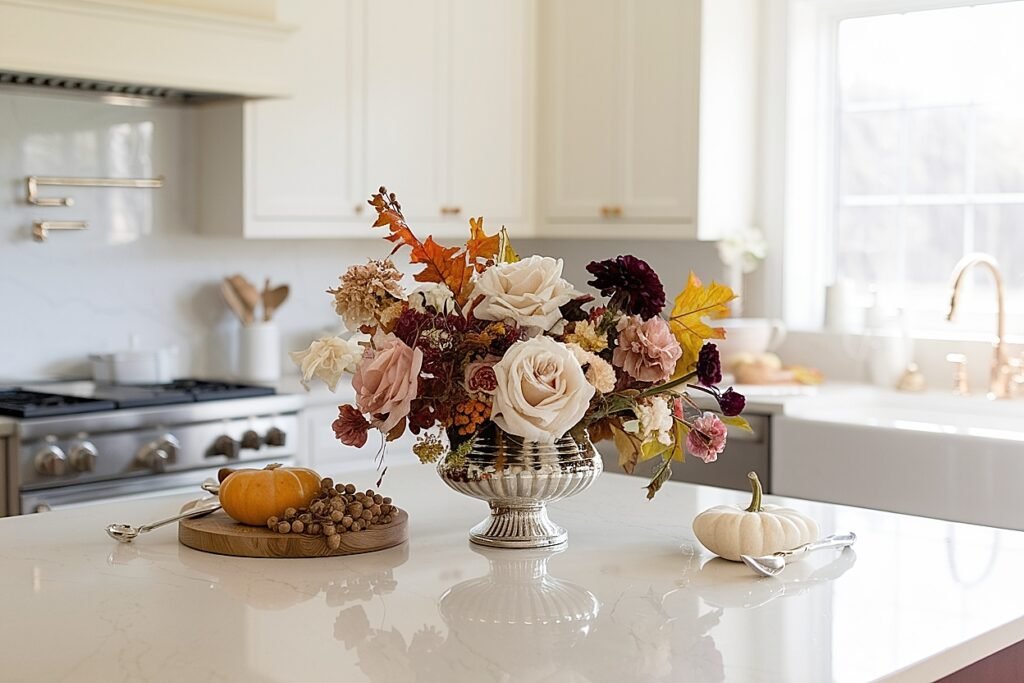
Busy is the word that describes the visual failure mode of over-herbed fall bouquets.
Multiple herb varieties, multiple leaf forms, multiple fragrance contributions, all at high volume relative to the flower stems: the result is a bouquet where no single element has visual hierarchy, where the eye cannot find a resting point, and where the fragrance, rather than creating a subtle ambient dimension, hits the viewer as a concentrated blast. The bouquet looks and smells like it is trying too hard.
One herb variety per arrangement. That is the rule I apply without exception. Not because multiple herbs cannot be beautiful together, but because the fall flower bouquet already contains multiple flower forms, colors, and textures. Adding multiple herb forms layers complexity onto complexity rather than the simplicity-onto-complexity that makes an herb a genuine design addition rather than a design problem.
The proportion ceiling is one herb stem per three to four flower stems. At that ratio, the herb reads as a deliberate accent: visible, fragrant, specific to the arrangement without claiming visual leadership. Above it, the herb becomes competitive. The arrangement reads as mixed herbs that happen to have flowers, rather than a flower arrangement that has been specifically enhanced by one seasonal herb choice.
Leaf stripping discipline matters more for fall arrangements than for any other herb bouquet use because fall arrangements often need to hold for several days. Every submerged leaf is a bacteria source. Every bacteria source in the vessel water shortens the effective life of both the flowers and the herbs themselves. Strip the lower half of every herb stem completely clean before conditioning. This is a two-minute preparation step that changes the arrangement’s longevity by multiple days.
For more on white mum and sage fall combinations including the hand-tied sage-collar technique and specific mum form selection for gathering bouquets, check out DIY white mum and sage bouquets for fall gatherings. Share this with anyone building fall flower arrangements this season. More ahead on every specific herb and fall flower pairing technique.
Easy Ideas for Pairing Rosemary with Fall Flowers in Small Accent Amounts
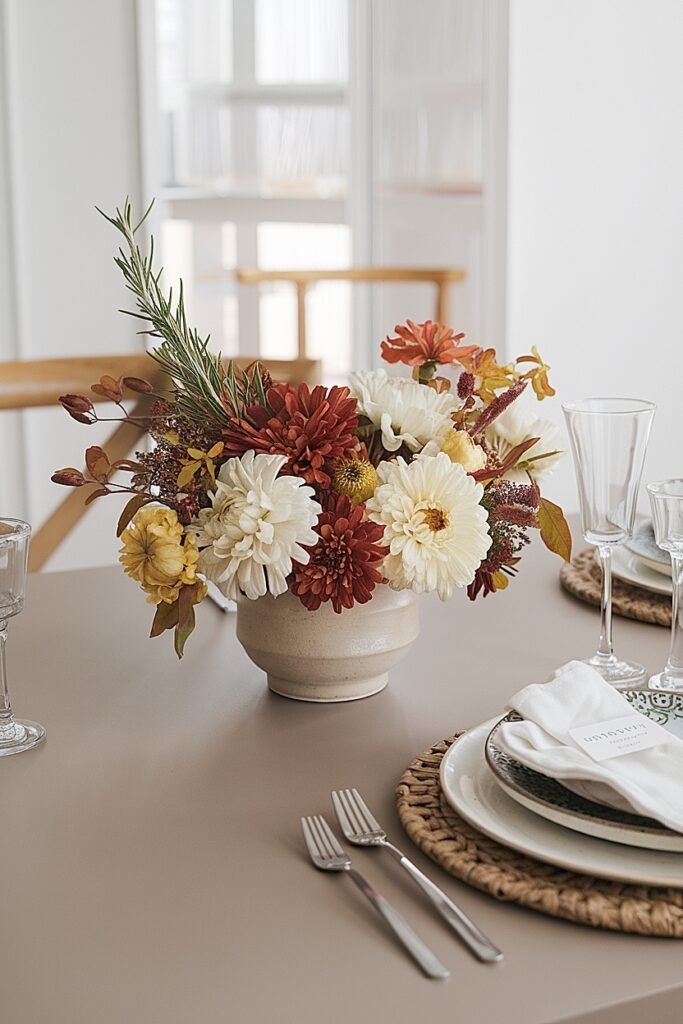
Rosemary is the safest herb entry point for fall bouquet building precisely because its fragrance intensity is relatively predictable. At one to two sprigs per arrangement, it contributes a clean, piney-herbal note that reads as autumnal without any risk of overwhelming the floral elements. At five or six sprigs, it begins to dominate everything else in the arrangement including the flowers. That range is narrow enough that measured control matters.
1. One Rosemary Sprig Per Bud Vase at a Fall Table Setting One single rosemary sprig alongside two to three fall flower stems in a slim bud vase at each place setting. At this intimate scale, the rosemary fragrance is detectable to the specific guest at that setting without distributing across the whole table. The needle-leaf rosemary foliage creates fine-textured structural contrast against the broader petals of chrysanthemums or dahlias at close dining range.
2. Two Rosemary Sprigs as a Structural Base Layer Two rosemary sprigs inserted at the vessel base before any flower stems create a structural support layer that flower stems can lean into and against. The rosemary sprigs’ stiff woody stems hold their position in gravel and provide lateral bracing for softer-stemmed flowers above them. The fragrance contribution at this quantity is subtle and appropriately background-level for a dining table context.
3. Rosemary as the Trailing Rim Element Insert one long rosemary sprig at the vessel rim so the top half of the sprig drapes outward and downward over the vessel edge while the cut end stays in the water below. The trailing rosemary creates a visual softening of the vessel edge that ornamental trailing plants create in planted arrangements. The fragrance from the dangling portion is released gently into the air around.
4. Short Rosemary Sprigs as Gap Fillers Cut rosemary into two-inch sections and press them into any visible gaps between flower stems in the gravel vessel base. The short sections are invisible from most viewing angles but create a fragrant layer at the vessel’s interior visual zone and continue releasing fragrance as the water movement stirs them. This gap-filling technique allows very precise herb quantity control because you add exactly as many.
5. Rosemary Tied Into the Bouquet Binding Zone When building a hand-tied fall bouquet, include one or two rosemary sprigs specifically at the binding zone, the point where the hand holds the stems together. The stems at the binding zone are the ones most consistently in contact with the hand during carrying or presenting the bouquet. The rosemary fragrance is released specifically in the moments when the bouquet is being held closely, creating.
More ahead on balancing basil’s visual color contribution in fall arrangements, which is different from every other herb because basil’s dark leaves function as a color element rather than a neutral green foliage addition.
How to Balance Basil with Fall Flowers for Warm Autumn Color
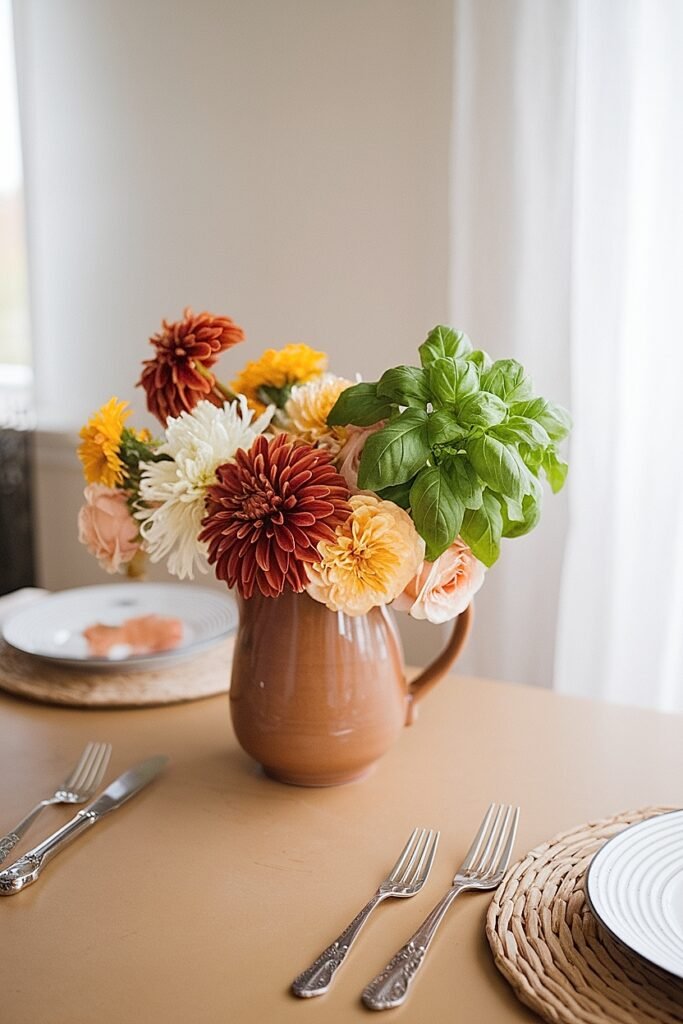
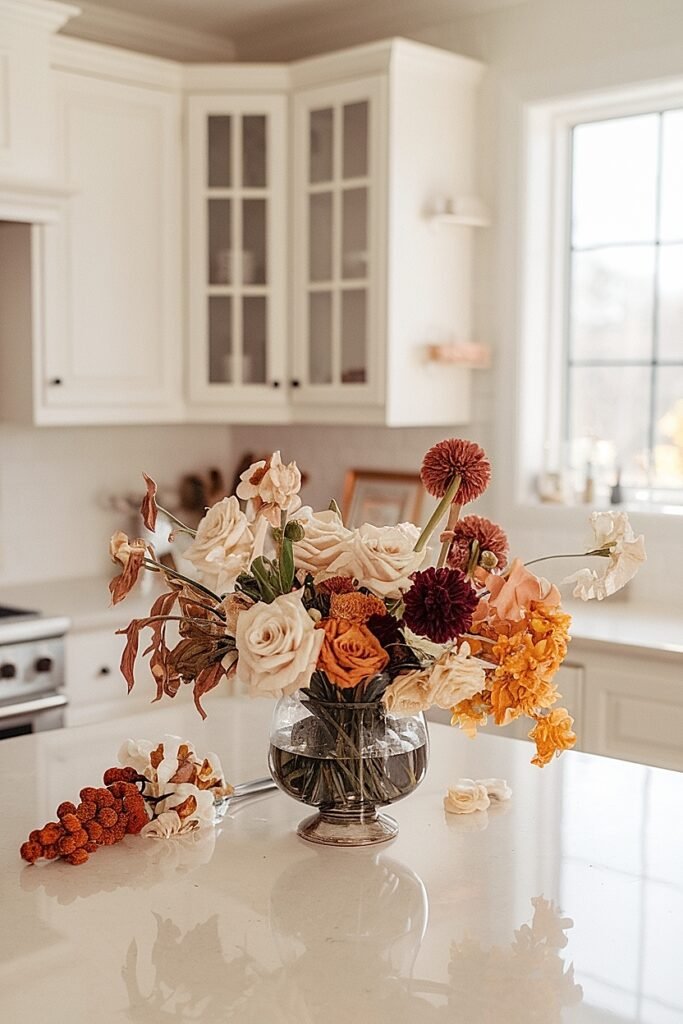
Basil is the only common culinary herb whose foliage reads as a color in a fall arrangement rather than as neutral green.
Deep purple basil, specifically, creates a warm near-burgundy leaf color that sits within the fall palette in a way that no other herb achieves. Against white chrysanthemums, the dark basil leaves create a specific visual depth that makes the white blooms appear brighter by contrast. Against orange dahlias or amber marigolds, the deep purple basil creates a complementary color relationship that reads as designed rather than accidental.
The management challenge with basil in fall bouquets is its rapid wilt rate. Basil does not hold in cold water with the durability of rosemary, sage, or thyme. Even in cool fall outdoor conditions, cut basil stems show visible wilting within twenty-four hours at room temperature. For a fall gathering arrangement that needs to hold for multiple days, basil is a day-of addition, not a build-ahead material. Add it the morning of the event and replace it if the gathering runs past the first day.
For Thanksgiving specifically, where the arrangement may be assembled a day or two in advance, use purple basil as a same-day-of-the-event addition rather than incorporating it into the initial arrangement build. The fall flowers conditioned properly can be built two days ahead. The basil goes in the morning of Thanksgiving itself, when it is at peak fragrance and its dark leaf color is fully saturated.
There is more ahead on sage specifically, and the specific techniques that add sage fragrance and texture to fall arrangements without the green-dominance that over-sage’d bouquets consistently produce.
Creative Ways to Add Sage to Fall Flowers Without Turning the Bouquet Green
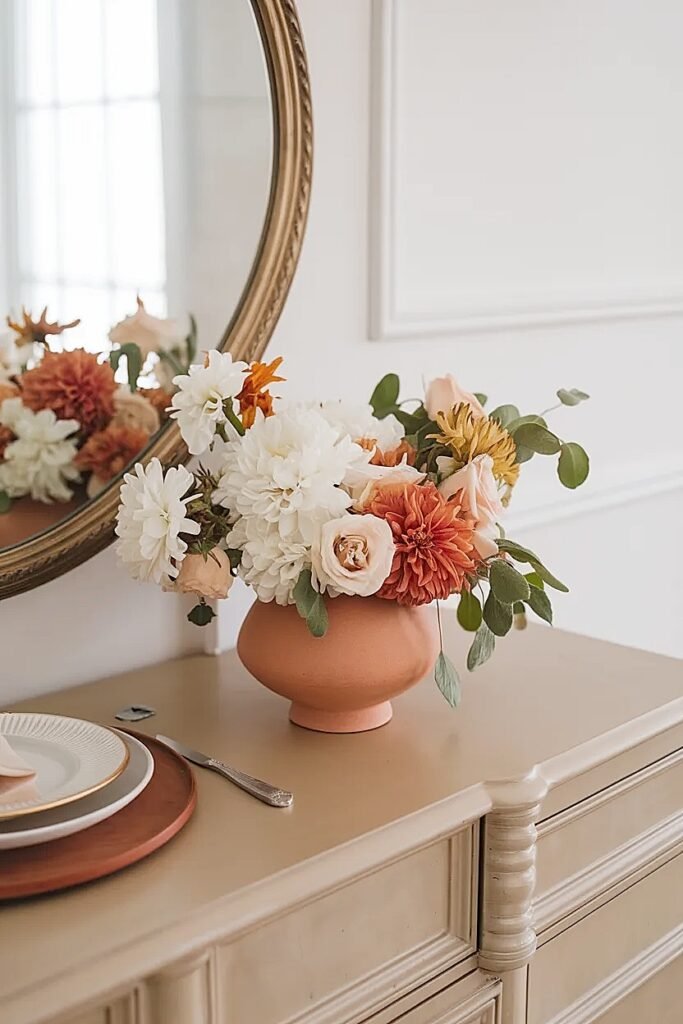
1. Single Sage Sprig at the Arrangement Back Position one sage sprig toward the rear of the arrangement, behind the primary flower stems, so the sage leaf color reads as background foliage rather than as a competing visual element. The sage fragrance disperses from the arrangement regardless of position, but the single-rear-placement limits.
2. Short Sage Sections as Gravel Filler Cut sage into three-inch sections and press them into the gravel base between flower stems, oriented with leaves pointing downward. The sage’s grey-green is visible at the arrangement base rather than mid-height or upper zone, creating a visual ground layer rather than a competing element.
3. Sage Behind Clear Glass Walls Use a clear glass vessel and position two to three sage sprigs against the interior glass walls, stem-ends in the water and leaves spread flat against the glass. From outside, the sage leaves create a green-and-grey interior visual layer visible through the glass. The arrangement.
4. One Purple Sage Sprig for Tonal Contribution Purple sage, Salvia officinalis ‘Purpurascens’, used at one sprig per arrangement adds a warm lavender-purple leaf tone that sits within the fall color palette rather than reading as a green intrusion. The purple sage’s leaf color bridges between the cool white of chrysanthemums and the.
5. Sage Leaf Floaters on Water Surface In a wide, low bowl arrangement with floating blooms, place three to four individual sage leaves flat on the water surface between the floating flower heads. The sage leaves at water level create a grey-green surface pattern visible from above without rising into the bloom.
6. Single Sage Stem in a Separate Small Vessel Place one sage stem in its own small separate vessel beside the primary flower arrangement rather than incorporating it into the main arrangement. The separated sage vessel creates two distinct arrangement elements on the table: the primary flower display and the supporting herb accent. The.
7. Dried Sage for Extended Arrangements For arrangements that need to hold longer than three to four days, use dried sage instead of fresh. Dried sage loses its fresh fragrance but retains the grey-green leaf color and felted texture that makes it visually distinctive in fall arrangements. Dried sage is available.
More ahead on the best fresh herbs specifically for arrangements that need soft texture rather than strong fragrance or color contribution.
What Are the Best Fresh Herbs for Fall Flowers That Need Soft Texture?
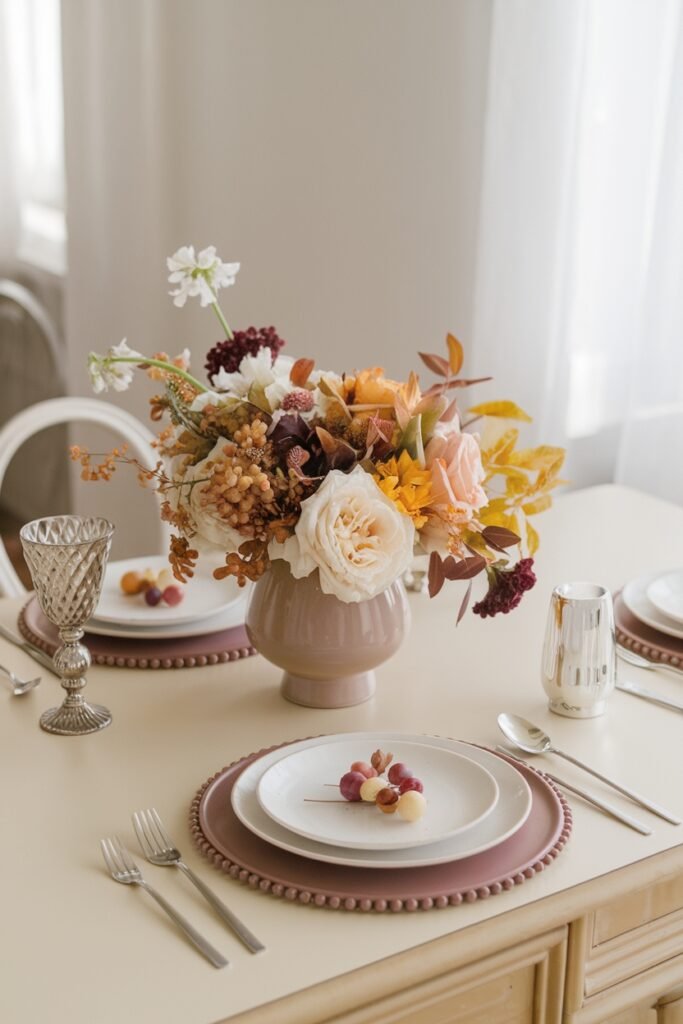
1. Dill Fronds Dill’s feathery yellow-green fronds create the softest, most airy textural addition available from the herb garden for fall bouquets. The fronds fill visual gaps between fall flower stems with a light-catching fine texture that has no equivalent among ornamental foliage options at the same cost.
2. Fennel Fronds Bronze fennel fronds create a warm coppery-green fine texture that reads as specifically autumnal alongside fall flower arrangements. The anise fragrance is similar to dill but slightly more complex and lasting. The bronze color tone fits the fall palette directly, adding a warm accent within.
3. Lemon Verbena Lemon verbena’s narrow bright-green leaves and citrus fragrance create the most specifically clean, soft textural addition of any herb companion for fall flowers. The leaf form is finer and more delicate in visual scale than sage or basil, adding lightness rather than weight to the.
4. Thyme Sprigs Thyme creates the smallest-scale, most delicate foliage texture available from a woody culinary herb for fall arrangements. The tiny oval leaves on slender branching stems create a coverage quality similar to fine ornamental fillers like waxflower but with the added dimension of thyme’s mild herbal.
5. Fresh Chamomile (Herb Form) Fresh chamomile grown as a herb, rather than purchased as a cut flower, creates a dual visual-aromatic contribution: the small daisy-like blooms add fine white bloom texture while the feathery foliage adds fine green texture simultaneously. The honey fragrance at fall gathering range is pleasant.
More ahead on dill specifically, which creates the airy filler texture that most fall arrangements need but frequently achieve with the wrong material.
How to Use Dill in Fall Flowers for Airy Filler Without Messiness
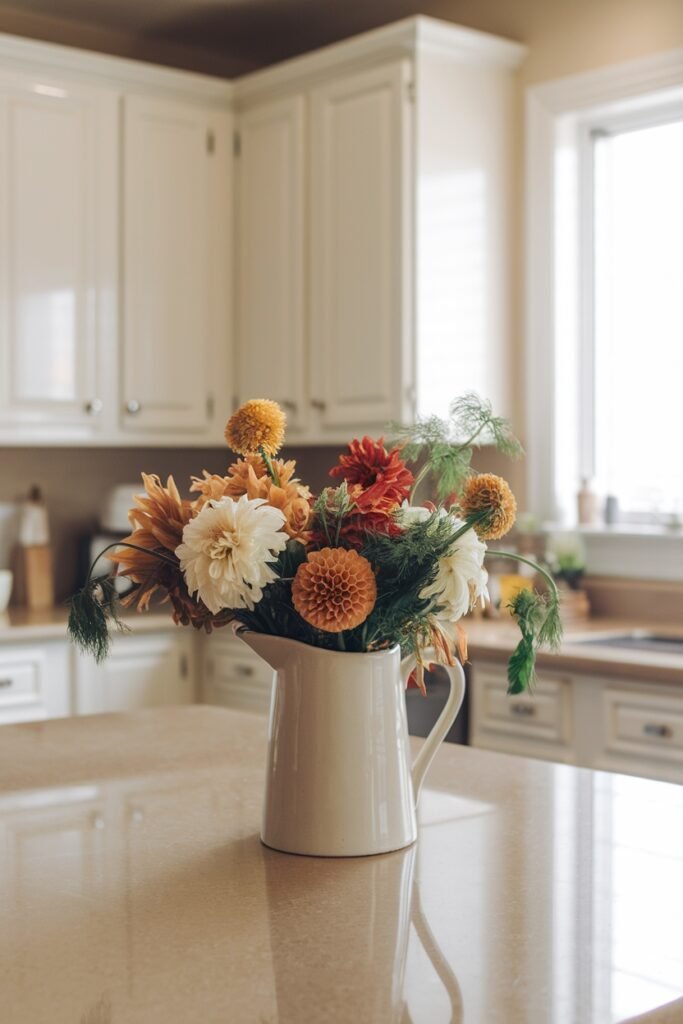
Dill works as a fall flower filler only when the quantity is controlled and the position within the arrangement is specifically managed.
The failure mode is high-volume dill pressed throughout an arrangement at maximum stem count. At that quantity, the feathery fronds create a confused, wispy mass that reads as disorganized and distracting rather than airy and light. The fronds catch and hold in each other and in the flower stems, creating tangled clumps rather than distributed fine texture.
Low-volume, specific-position dill is the correct approach. Two to three frond sections, cut from a dill plant stem rather than used as whole stems, placed at the arrangement’s outer perimeter at the vessel rim level. The fronds create a fine-textured halo at the arrangement’s visual boundary without penetrating the interior arrangement zone where tangling is most likely. The outer-perimeter position also places the dill fronds where any outdoor air movement can animate them gently, creating the specific movement quality that makes fine herb foliage appealing in outdoor autumn arrangements.
Dill as a cut herb has the shortest holding time of any common herb in this list. It wilts visibly within a few hours in warm conditions and within twenty-four hours in cool fall conditions without adequate cold water conditioning. Condition dill stems in cold water for one to two hours immediately after cutting, use only freshly conditioned stems in arrangements, and replace with fresh fronds after the first day in any arrangement that needs to hold for multiple days.
Easy Ideas for Using Fresh Herbs in Fall Flowers for Thanksgiving Tables
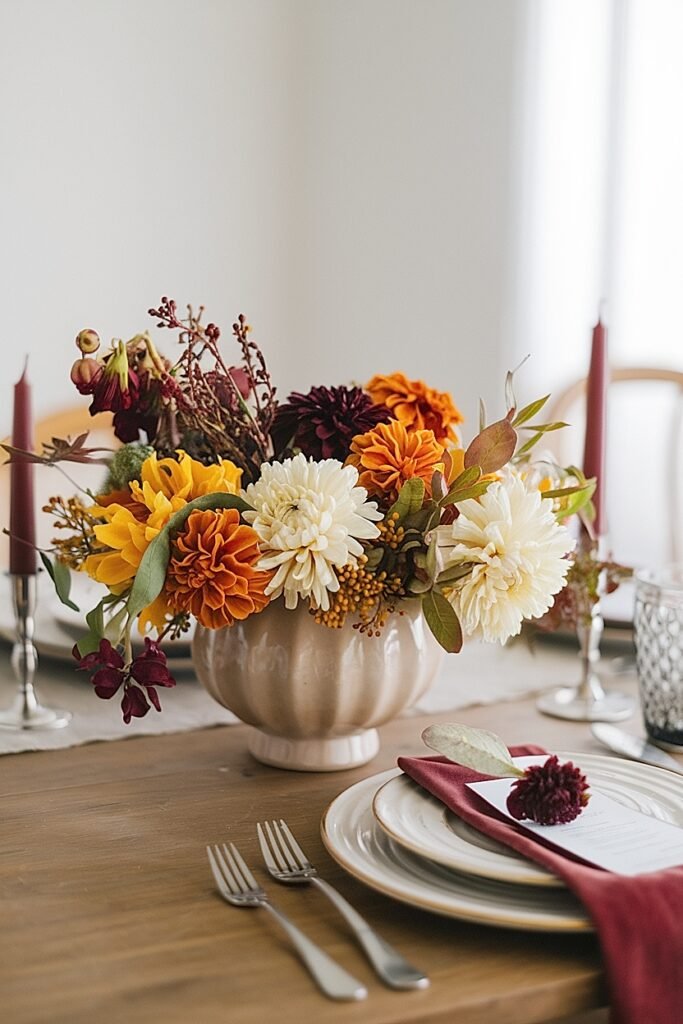
The Thanksgiving table has the most demanding herb use context of any fall gathering: the fragrance competition is the most intense it will be anywhere in the season. The entire kitchen and dining environment is saturated with roasting, baking, and cooking aromas. Herb fragrance from the table arrangement needs to be genuinely subtle to avoid competing with the meal.
Less is more at Thanksgiving. Specifically and significantly less than any other fall arrangement context.
1. One Rosemary Sprig per Dinner Setting One rosemary sprig in a small bud vase at each place setting creates an individual aromatic detail per guest that is entirely contained to their own immediate setting rather than distributed across the full table. The rosemary fragrance at this close-personal scale registers as a.
2. Dried Herb Bundle on the Table Runner A flat bundle of dried rosemary, dried sage, and dried lavender tied with jute and placed on the table runner beside the serving platters rather than in a vessel. The dried herbs are fragrance-minimal compared to fresh but retain all the visual and textural quality.
3. Sage Leaf Floaters in the Flower Bowl Individual fresh sage leaves floated on the water surface of a low flower bowl at the Thanksgiving table center. The sage leaves contribute their grey-green color and subtle fragrance from the water-surface position without any concentrated fragrance projection upward. The effect is decorative and aromatic.
4. Thyme Sprigs Between Serving Dishes Fresh thyme sprigs laid flat between serving dishes on the Thanksgiving table, creating fragrant green accents at the table surface level rather than in a vessel. The thyme’s mild fragrance is the most food-compatible of all the common culinary herbs at close Thanksgiving table range.
5. Single Herb Garnish Leaf at Each Place Card One fresh sage, rosemary, or thyme sprig tucked under each place card at each Thanksgiving setting. The herb sprig serves as both a visual detail and a fragrant accent that is entirely personal to each guest’s position at the table. The limited quantity, one small.
Conclusion
Fresh herbs in fall flower bouquets work when they are subordinate.
Not invisible — present enough to see, present enough to smell, present enough to add the specific seasonal quality that no ornamental material provides. But subordinate to the flowers that define the arrangement’s visual identity. One herb variety. One-to-four proportion. Woody-stemmed herbs for multi-day arrangements. Soft-stemmed herbs for day-of additions only.
The herb earns its place in a fall bouquet by being specific. By smelling like that particular October afternoon and no other. That specificity requires restraint, not abundance.
This website contains affiliate links, and some products are gifted by the brand to test. As an Amazon Associate, I earn from qualified purchases. Some of the content on this website was researched and created with the assistance of AI technology.