This website contains affiliate links, and some products are gifted by the brand to test. As an Amazon Associate, I earn from qualified purchases. Some of the content on this website was researched and created with the assistance of AI technology.
Key Takeaways
- The correct approach for a small apartment dining table is one arrangement at the table end, not the center. The center belongs to the meal
- Total arrangement height, vessel included, should stay under six inches at a small apartment table and under five inches at a bistro or cafe table
- A single bunch of asters covers two to three complete apartment-scale fall arrangements. The small bloom scale means you need more stems than with large flowers, but the cost per stem is low
- Dark vessels do more visual work at apartment close-range viewing than at larger table distances. A dark navy mug with six asters and one sage sprig reads as sophisticated at eighteen-inch distance
- Kitchen items already in the cabinet, mugs, small crocks, jam jars with gravel at the base, are better apartment vessel choices than purchased specialty vessels in most cases
- Floating bloom saucers use almost no table surface and create a close-range visual effect that elevated arrangements at the same scale cannot match
You do not need a dining room to have a fall table that looks good. You just need to stop trying to decorate for a dining room you do not have.
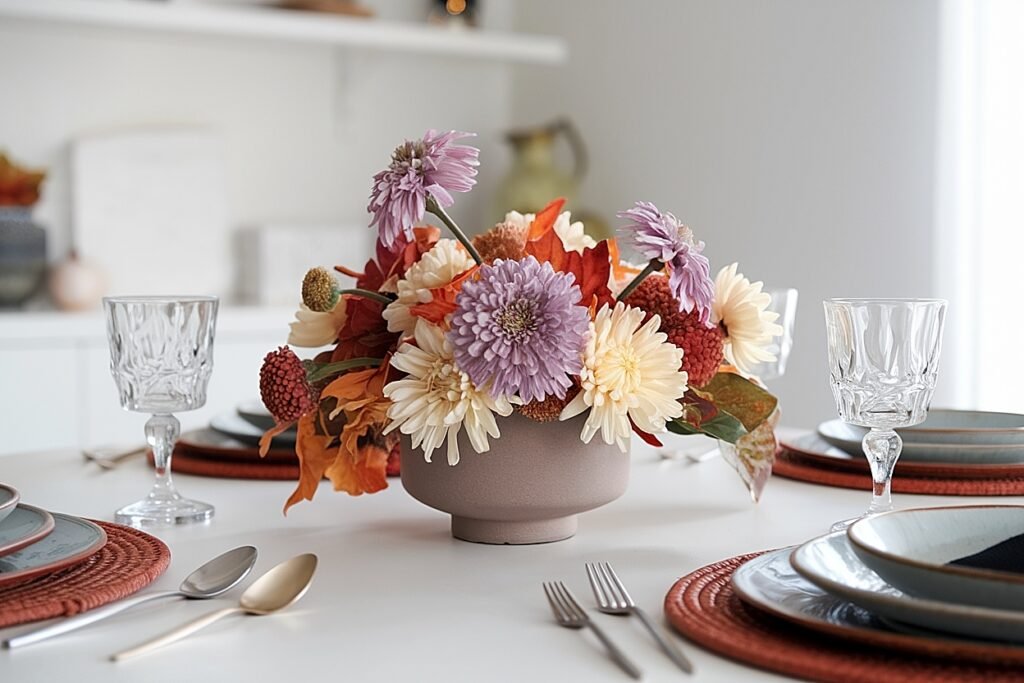
Creating dining table fall flower centerpieces for small apartments requires a completely different starting point from what most fall decorating guides recommend. Those guides are written for dining rooms with forty-eight-inch wide tables and enough clearance between the centerpiece and the nearest guest that height is not an issue. At a twenty-six-inch apartment table where two people sit twelve inches from each other and twelve inches from the arrangement, every single decision changes. The flowers are closer. The vessel is more visible. And the functional surface available for actual dinner items is genuinely limited in a way that guides do not account for.
I have eaten at a lot of apartment-sized tables. Owned them, cooked for them, decorated them, and watched guests have to move the flowers to make room for a serving bowl. That last part stops happening the moment you start sizing the arrangement for how the table actually gets used rather than how it looks in a photo with nothing else on it.
Use this small-apartment dining guide before choosing a Fall Flower centerpiece. Each row helps match table size, best vessel, flower approach, and space-saving benefit. The goal is a cozy centerpiece that feels seasonal and polished while still leaving room for plates, cups, serving dishes, and everyday apartment meals.
| Apartment Table Type | Best Vessel Choice | Best Fall Flower Approach | Space-Saving Benefit |
|---|---|---|---|
| Two-person square table | One low ceramic bowl | Grouped mums, asters, sedum, and tucked foliage | Creates one cozy focal point without crowding plates. |
| Narrow rectangular table | Three mini vases | Repeat one or two stems per vessel | Leaves gaps for cups, napkins, and shared dishes. |
| Tiny round table | Small off-center bowl | Compact flowers kept close to the rim | Keeps the center usable for daily meals. |
| Table used for work and meals | Movable bud vase | Two asters, one mum, and one short accent | Moves quickly when the table changes purpose. |
| Crowded dinner table | Place setting bundles | Tiny tied flowers beside napkins | Leaves the middle open for serving dishes. |
Resources:
- 4 Flowers That Add Drama and Height in a Late Summer Garden When Everything Else Is Wilting
- July Is the Last Chance to Plant These 8 Perennials | Gardening Know How
- The Best Time Of Day To Cut Flowers, According To Experts
How to Style Dining Table Fall Flower Centerpieces for Small Apartments
Stop thinking about the empty table. Think about the table with dinner on it.
An empty apartment dining table looks like it could host a centerpiece, two wine glasses, a bread basket, a serving dish, and some candles. Set it for an actual meal and three-quarters of that surface disappears under practical items. The centerpiece either fits in the remaining quarter or it becomes the thing someone moves before dinner starts.
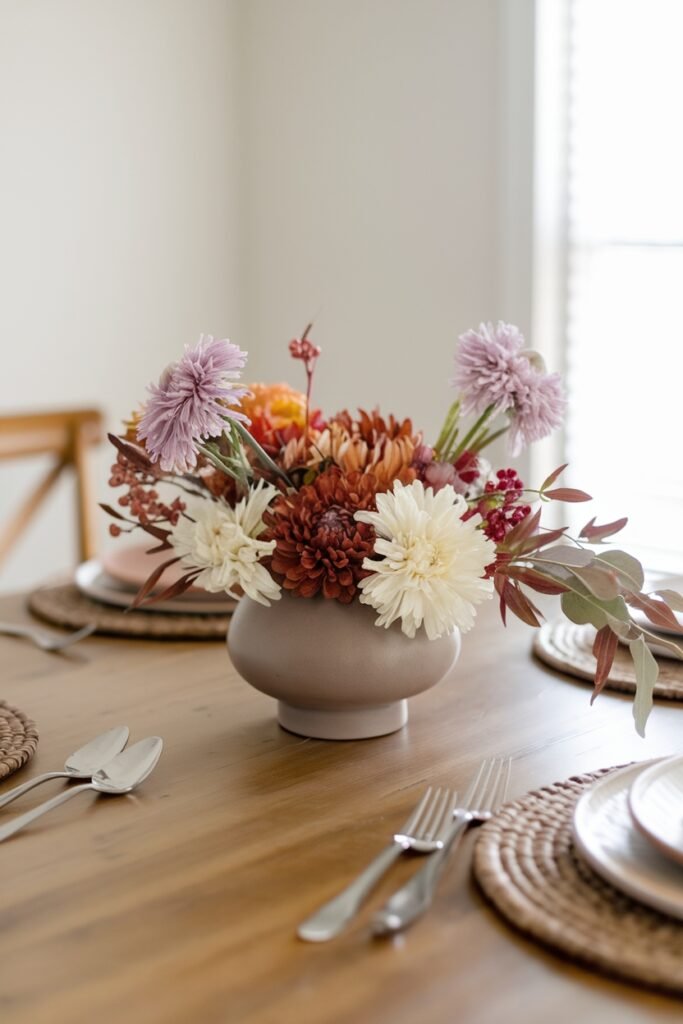
The end-of-table position is not a compromise. On a two-person apartment table, one end is actually closer to both seated guests than the table center is, because both guests sit at the long sides within reach of the same end. A four-inch wide dark bowl at the table end, holding six autumn blooms and two herb sprigs, is visible to both diners and in nobody’s way for the entire meal.
The vessel size test: set the table completely before choosing the vessel. Plates, glasses, water, napkins, one serving dish. Whatever is left uncovered is the footprint the arrangement can use. Not the pre-set footprint. The post-set footprint. For most two-person apartment tables, that is a circle of about five to six inches in diameter at one end. That is the vessel target.
Dark vessels at apartment close-range viewing distance do something they do not do at larger table distances: they show. Every texture on the glaze, every subtle variation in the dark tone, is visible at eighteen inches. A matte charcoal bowl with six mauve asters at rim height looks genuinely specific and considered at an apartment dining table rather than looking like a dark bowl with some flowers in it the way it might from across a larger room.
For more on sage foliage and aster centerpiece ideas specifically, including the fragrance balance rules for small apartments and the tiny bowl formats that suit two-person tables, check out small apartment fall centerpieces with sage foliage and asters. Share this with anyone decorating a small apartment for fall. More ahead on the best flowers, containers, and every specific small table approach.
What Are the Best Fall Flower Centerpieces for Tiny Apartment Dining Tables?
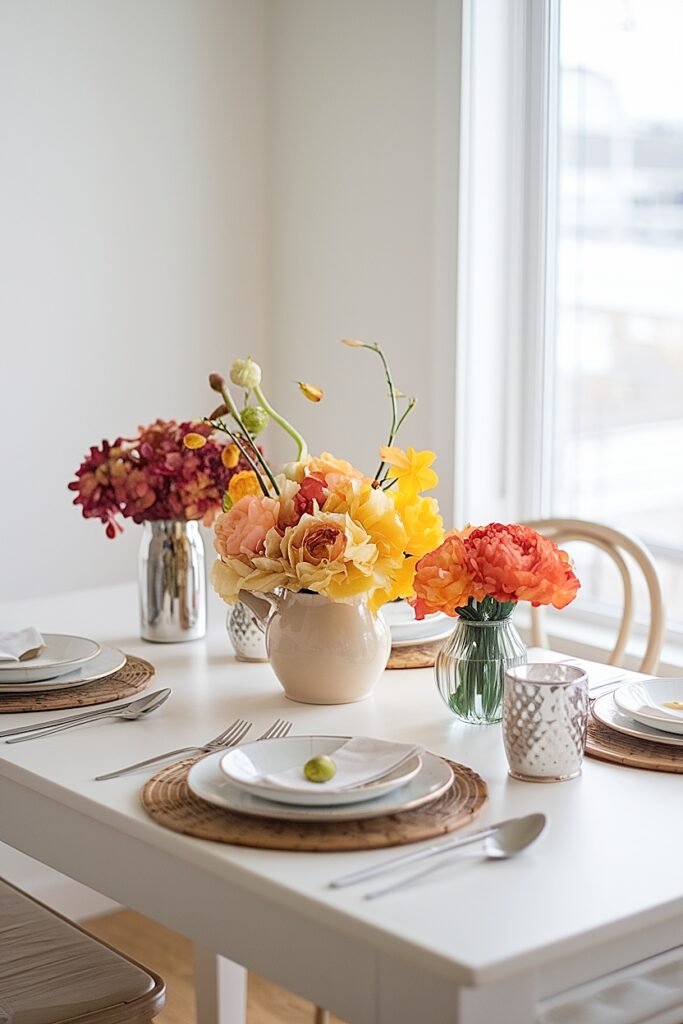
Tiny apartment tables need flowers that make a visual impact in a small vessel at close range rather than flowers that need volume and height to register. Small-bloomed, fragrant, and structurally confident at minimal stem count.
1. Mauve Aster and Sage in a Dark Ceramic Mug Six mauve aster stems cut to one and a half inches above the mug rim plus one fresh sage sprig in a dark ceramic mug with gravel and cold water, positioned at one end of the apartment table. The sage fragrance fills a small apartment dining area within minutes. The mauve tone at close dining range reads as dusty and autumnal rather than vivid. The mug vessel needs no purchase.
2. Rust Carnation and Golden Wheat in a Small Enamel Pitcher Four rust carnation stems plus two short wheat stalks at an outward angle in a small cream or navy enamel pitcher with gravel and cold water. The wheat grain heads extend just past the pitcher rim. The rust-and-amber warm pairing creates strong autumn color at a small apartment dining table where the close viewing distance makes warm bloom tones more vivid than at larger table distances. Holds seven to ten.
3. Cream Pompom Mums in a Wide Low Dark Stoneware Bowl Seven cream pompom mum stems packed to rim level in a wide four to five inch dark stoneware bowl, positioned at the table end. The cream blooms at close apartment range glow in candlelight in a way that they do not at larger table distances. The wide stoneware bowl stays low and provides enough gravel-base weight to resist being displaced when the table is set and served around.
4. Floating White Asters and Sage Leaves in a Small Wide Saucer Three white aster heads with stems removed plus two fresh sage leaves floating face-up in a small wide saucer with one inch of cold water. Total height: one inch. Total footprint: four inches. At close apartment dining distance, the white floating bloom faces and the felted grey-green sage leaves create a quiet still-life surface that reads as a deliberate arrangement rather than flowers in water.
5. Purple Aster and Dried Wheat in a Small Dark Compote Eight purple aster stems at rim height plus two short dried wheat stalks at an outward angle in a small dark ceramic compote with gravel and cold water. The compote’s raised foot creates visual presence without adding stem height. The purple aster’s dusty cool tone and the warm amber wheat create a warm-cool contrast visible at close apartment range that reads as composed. The raised foot elevates the arrangement without.
6. Single Burgundy Dahlia and Wheat in a Small Copper Vessel One deep burgundy ball dahlia stem plus two short wheat stalks in a small copper vessel with gravel and cold water at the apartment table corner. One flower. Two wheat stalks. One copper vessel. At close apartment dining distance, a single well-chosen bloom in a warm metallic vessel reads as more considered than six stems in an ordinary vessel at the same scale. The copper amplifies the warm amber wheat.
7. Gomphrema Balls and Sage in a Small Ceramic Crock Eight rust or burgundy gomphrema ball stems plus one sage sprig in a small dark ceramic crock at the apartment table end. Gomphrema is the most durable fall flower choice for apartment centerpieces because the tight ball structure does not lose petals or collapse in warmth the way larger-bloomed flowers do. Zero pollen near food. The sage fragrance fills the small apartment dining space. Holds two weeks without attention.
More ahead on the height management rules that determine whether a small apartment arrangement stays functional throughout dinner.
How to Keep Fall Flower Centerpieces Low Enough for Apartment Dining
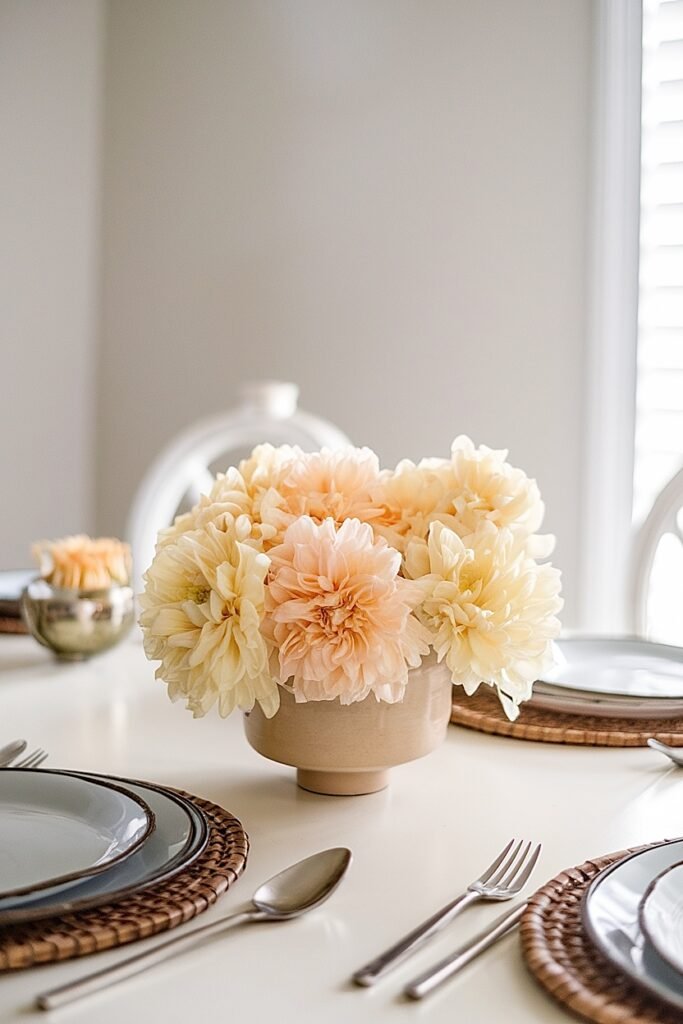
Six inches total. That’s the ceiling for a two-person apartment dining table.
Vessel height plus stem height above the rim, added together, should not exceed six inches at a two-person apartment table where both guests sit within twenty inches of the arrangement. Over six inches and the arrangement enters the sightline between the two faces across the table. Not dramatically. Just enough to create a subtle visual obstacle between conversation.
Measure the vessel first. A vessel three inches tall leaves three inches of stem budget above the rim at a two-person table. A vessel two inches tall leaves four inches. The taller the vessel, the shorter the stems need to be to stay under the height ceiling. Wide, flat bowls and low compotes allow slightly longer stems because their lower vessel height consumes less of the total height budget.
Outward-angled stems stay lower than upright stems at the same cut length. Press each stem into the gravel at a slight outward angle rather than straight up. The bloom face reaches the same visual zone but at a lower absolute height because the stem travels diagonally rather than vertically. At a small apartment table, that difference of half an inch per stem adds up across a full bowl of flowers to a meaningful total height reduction.
More ahead on container choices, which determine the arrangement’s visual impact at apartment close-range viewing more than the flower type does.
What Are the Best Containers for Small Apartment Fall Flower Centerpieces?
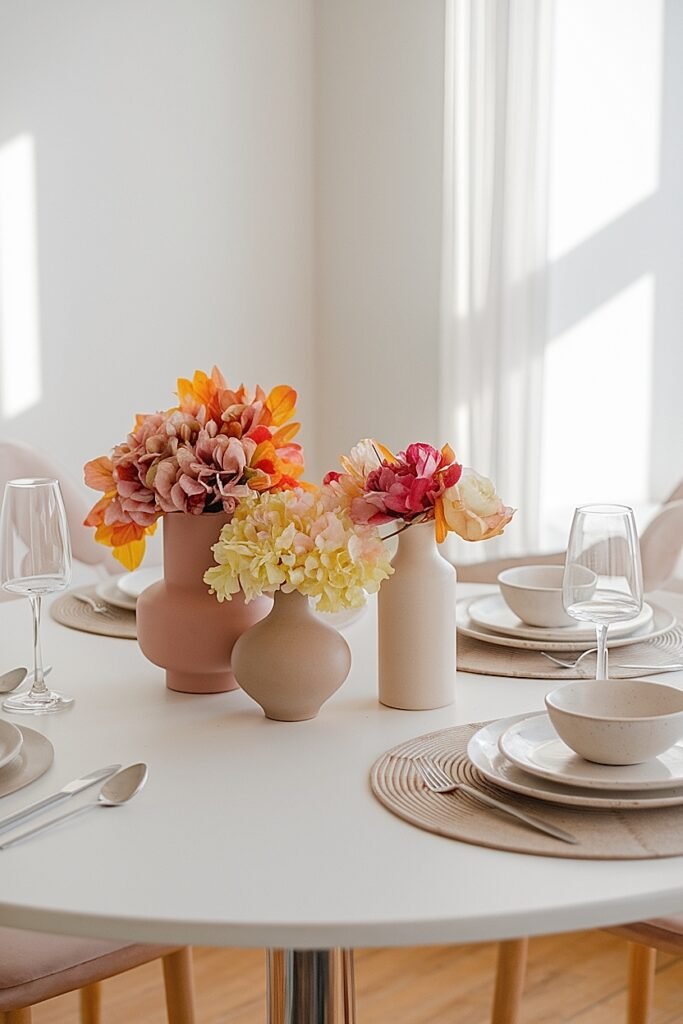
1. A Ceramic Coffee Mug Already in the cabinet. Dark or navy mugs work best. Three inches tall, three to four inches wide. Fits at the table end with room to spare. Add two tablespoons of coarse gravel before the water. The mug handle creates asymmetry that reads as styled at close range. Under twenty.
2. Small Dark Ceramic Crock Four to five inches wide, three inches tall, heavy enough to stay put when someone sets a glass down nearby. The crock format suits autumn fall flower combinations better than any other single vessel type because its low, wide, heavy character suits both the low-height requirement and the apartment aesthetic.
3. Wide Shallow Saucer Two inches tall, four to six inches wide. Stems at rim level, bloom faces at the table surface plane. The saucer creates the widest visual footprint at the lowest possible height of any vessel option. At apartment close-range viewing, the bloom faces visible from the seated overhead angle fill the.
4. Small Enamel Pitcher Three inches tall, two to three inches wide at the mouth, with a handle that creates visual direction. Navy or cream enamel pitchers add a warm-domestic vessel character that suits fall flower combinations and small apartment dining aesthetics simultaneously. The pitcher handle faces toward the primary guest position rather than.
5. Short Glass Jar With Dark Gravel Base A short wide-mouthed jar with dark gravel at the base visible through the glass. The gravel creates a visual base layer at the vessel level that adds autumn ground-texture character before any flower stem goes in. At close apartment viewing range, the stem structure and gravel base visible through the.
6. Heavy Stone or Concrete Low Bowl Four to five inches wide, one to two inches tall, made from cast concrete or rough stone. Maximum tip-resistance of any vessel option on this list. The grey-buff matte tone aligns with the dusty cool tones of mauve asters and sage grey-green. Cannot be displaced accidentally when a glass is.
7. Thrifted Ceramic Ramekin A wide-mouthed ramekin from the kitchen cabinet creates the smallest complete vessel format on this list. Three to four inches wide, one to two inches tall. With dark gravel and cold water, six aster stems at rim level create a complete small arrangement in a vessel that already exists in.
More ahead on making fewer stems look fuller, which is the specific visual challenge of small-scale apartment arrangements.
Creative Ways to Make Fall Flower Centerpieces Look Full With Fewer Stems
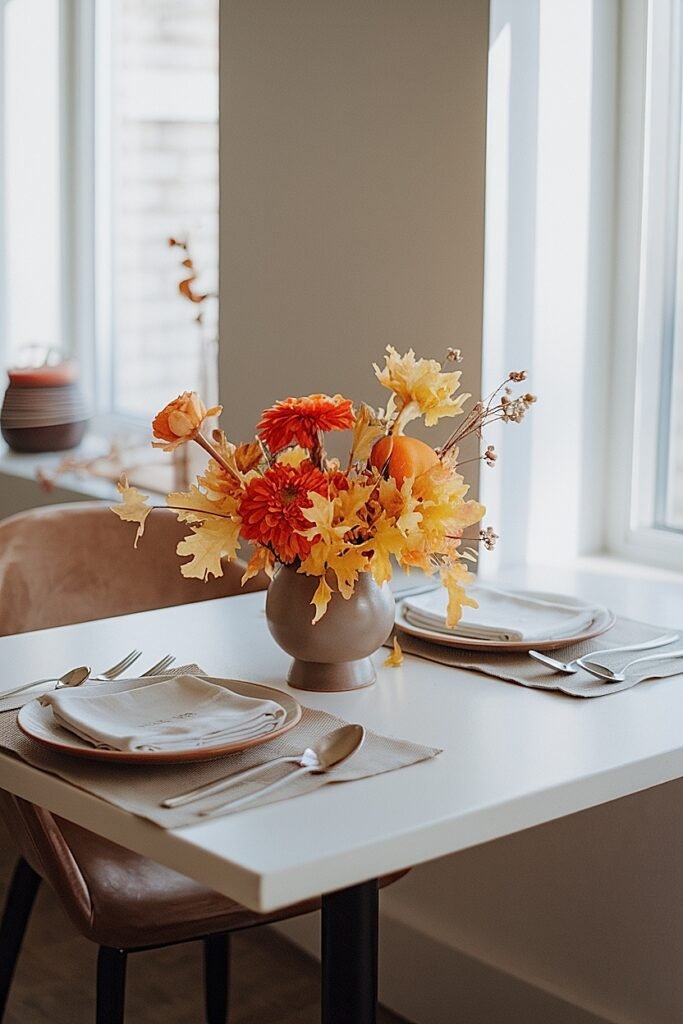
1. Gravel Visible Through the Vessel Creates a Visual Base Layer Dark gravel in a clear or wide-mouthed vessel at apartment close viewing range adds a textural lower layer visible beneath the flower stems that makes the arrangement read as complete from base to bloom rather than just at the bloom level. The gravel is a visual element at close range,.
2. Outward-Angled Stems Create More Visual Coverage Per Stem Four stems angled outward at thirty degrees from vertical cover more of the vessel opening from above than four stems pointing straight up. The outward angle spreads the bloom faces toward the rim perimeter rather than clustering them at the center. At close overhead apartment dining distance, four outward-angled stems.
3. One Herb Sprig Fills the Visual Gap Between Stems A single sage or rosemary sprig pressed between the flower stems at the vessel outer edge fills the visible gap between blooms and vessel wall that makes low-stem-count arrangements look sparse. At close apartment viewing range, the grey-green herb foliage texture between the flower faces reads as a deliberate foliage.
More ahead on creating fall centerpieces that avoid the seasonal clutter problem that apartment spaces face in October.
How to Create Fall Flower Centerpieces Without Seasonal Clutter
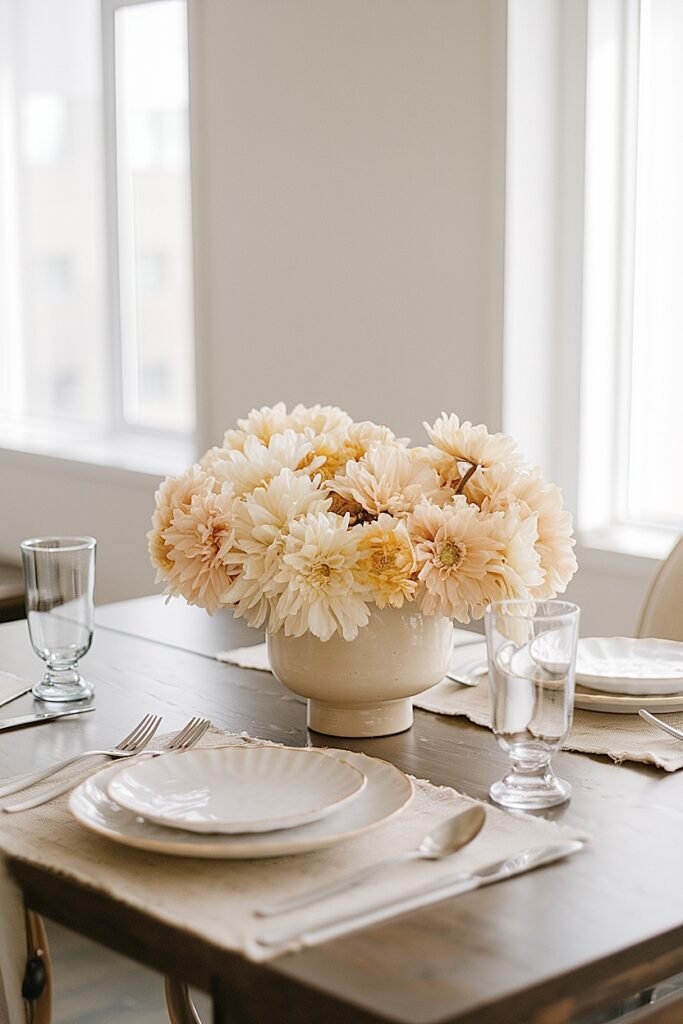
Autumn decorating advice often treats October as a month to fill every surface with something fall-themed. Apartment spaces cannot absorb that approach.
Small apartments get visually crowded fast. One fall centerpiece on the dining table, one candle on the kitchen counter, one small autumn item on the windowsill: that is the complete apartment fall decorating setup for most studios and one-bedrooms. Adding more reads as cluttered rather than festive because the surfaces available cannot spread the seasonal items out enough for each one to breathe.
The fall flower centerpiece on the dining table does triple duty in a small apartment. It is the seasonal decoration, the ambient fragrance source, and the visual anchor of the primary social space all at once. It does not need supplementation from every other surface in the apartment to communicate that it is fall.
The non-clutter rule: one material type per arrangement, plus one accent. Six asters plus one sage sprig. Four carnations plus two wheat stalks. One dahlia plus two wheat stalks and one herb. Not six flower types, three accent materials, and a pear all in one vessel on a small table. The restraint is the sophistication.
Ways to Use Asters in Small Apartment Fall Flower Centerpieces
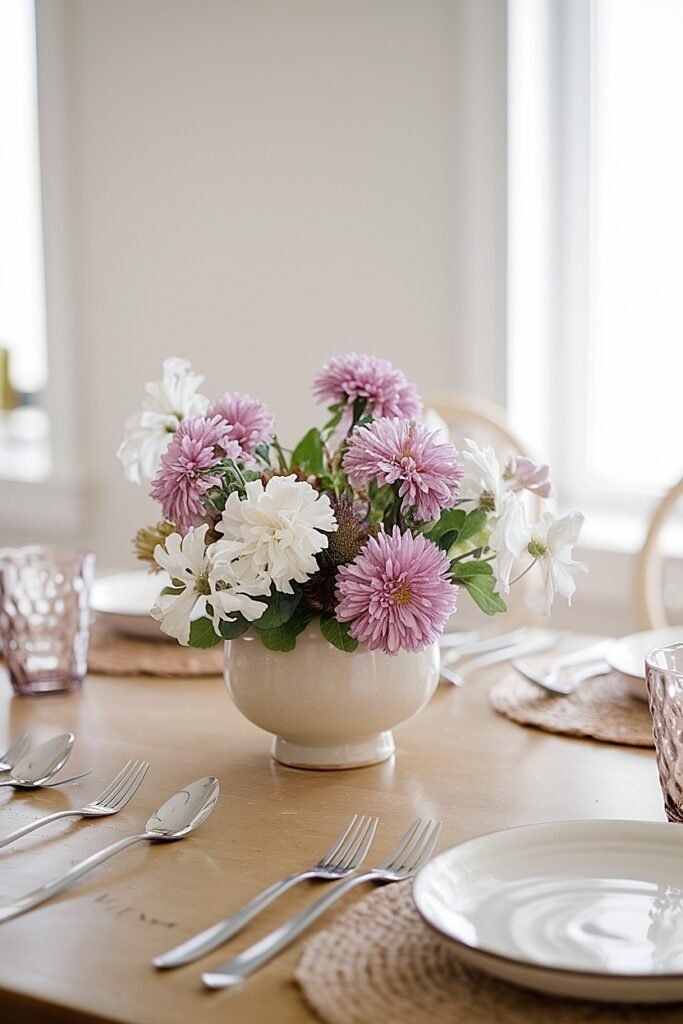
1. Eight Asters Packed to Rim Level in a Wide Dark Mug Eight mauve or purple aster stems cut to one inch above the rim, all at the same height, packed into a wide dark ceramic mug with gravel and cold water. High stem count at minimal height creates the fullest visual coverage from the overhead seated viewing angle. At close apartment.
2. Aster and Sage Single Bud Vase Per Seat Three aster stems plus one sage sprig in a small dark bud vase at each dining seat, positioned at the upper right corner of each place above the plate. Each guest has a personal autumn arrangement. No shared centerpiece in the functional serving zone. The two bud vases together cost.
3. Mixed Aster Colors in a Small Dark Compote Four mauve aster stems plus three white aster stems in a small dark compote with raised foot. The two aster tones create visual depth within one vessel at small-scale close viewing range that a single-color bunch does not produce. The raised foot adds presence without height. The compote stays under.
4. Floating Aster Saucer at the Table Center Three aster heads with stems removed floating face-up in a wide shallow saucer with one inch of cold water at the table center. Everything on the table can stay. The saucer is four inches wide and one inch tall. At apartment close viewing distance, the floating bloom faces at table.
5. Aster, Sage, and Wheat End-of-Table Arrangement Six aster stems plus one sage sprig plus two short wheat stalks in a small dark vessel positioned at one narrow end of the apartment dining table. The three-material combination, asters for color, sage for fragrance, wheat for autumn grain texture, creates a complete fall arrangement in a vessel that.
Conclusion
Small apartment dining tables deserve fall flowers as much as any dining room. They just need different flowers, sized differently, in smaller vessels, placed where they do not get in the way.
End of the table, not the center. Under six inches total height. Dark vessel. One type of flower with one accent.
That is the whole apartment fall centerpiece brief. It fits on any table.
This website contains affiliate links, and some products are gifted by the brand to test. As an Amazon Associate, I earn from qualified purchases. Some of the content on this website was researched and created with the assistance of AI technology.