This website contains affiliate links, and some products are gifted by the brand to test. As an Amazon Associate, I earn from qualified purchases. Some of the content on this website was researched and created with the assistance of AI technology.
Key Takeaways
- White orchids paired with cyclamen create a holiday display that rivals any traditional poinsettia arrangement without the hassle.
- Cool rooms actually help flowering plants bloom longer, making them ideal spots for your best Christmas greenery.
- Matching plants to your room temperatures keeps everything alive well past New Year’s.
- Kalanchoe delivers bold holiday red without the allergies, leaf drop, or short lifespan poinsettias bring.
- Your Christmas cactus will bloom reliably every December once you nail its lighting schedule.
- Choosing long-term house plants over disposable holiday ones saves real money year after year.
Creating poinsettia-free Christmas house plant decor starts with admitting something most of us won’t say out loud: we’ve been on autopilot. Every December, same grocery store trip, same three poinsettias, same mantel spots. Then one year all three dropped their leaves before the 15th. Not one survivor. That was my breaking point.
What I found blew the doors open. Winter-blooming plants come in whites, deep pinks, fiery reds that put poinsettias to shame. The trick? Pair each one with the right room. Temperature matters more than people realize. Light and humidity play huge roles too. Nail those three and your greenery thrives well into January.
Poinsettia-Free Christmas Plant Selection Table
Skip the default red plant and choose an alternative that suits your actual home. This comparison matches five indoor conditions with useful poinsettia-free options, their strongest decorating advantage, and one essential care check. Use it before shopping to find Christmas color that stays healthy, proportional, manageable, and genuinely enjoyable daily.
Which Poinsettia Alternative Fits Your Home?
Match the room condition with a strong plant option, its decorating strength, and the care detail that matters most.
| Home Condition | Useful Alternatives | Decorating Advantage | Essential Care Check |
|---|---|---|---|
| Bright and Cool | Cyclamen, florist azalea, holiday cactus | Crisp flowers and strong winter color | Protect from concentrated heat and check moisture often |
| Bright and Moderate | Moth orchid, amaryllis, bromeliad | Dramatic form for a main focal display | Use indirect light and maintain free drainage |
| Compact Surface | Kalanchoe, prayer plant, small bromeliad | Festive color with a controlled footprint | Measure mature spread and preserve care access |
| Long-Term Plant | Holiday cactus, orchid, prayer plant | Continues as house plant decor after Christmas | Confirm the home supports its year-round needs |
| Pet-Aware Home | Only individually verified species | Builds the display around documented plant identity | Check a veterinary database and keep plants unreachable |
Resources:
- Christmas-Flowering Houseplants | RHS Advice
- Holiday Cactus – Wisconsin Horticulture
- Holiday Houseplants | Mississippi State University Extension Service
- Toxic and Non-Toxic Plants
How to Build White Christmas House Plant Decor With Orchids and Cyclamen
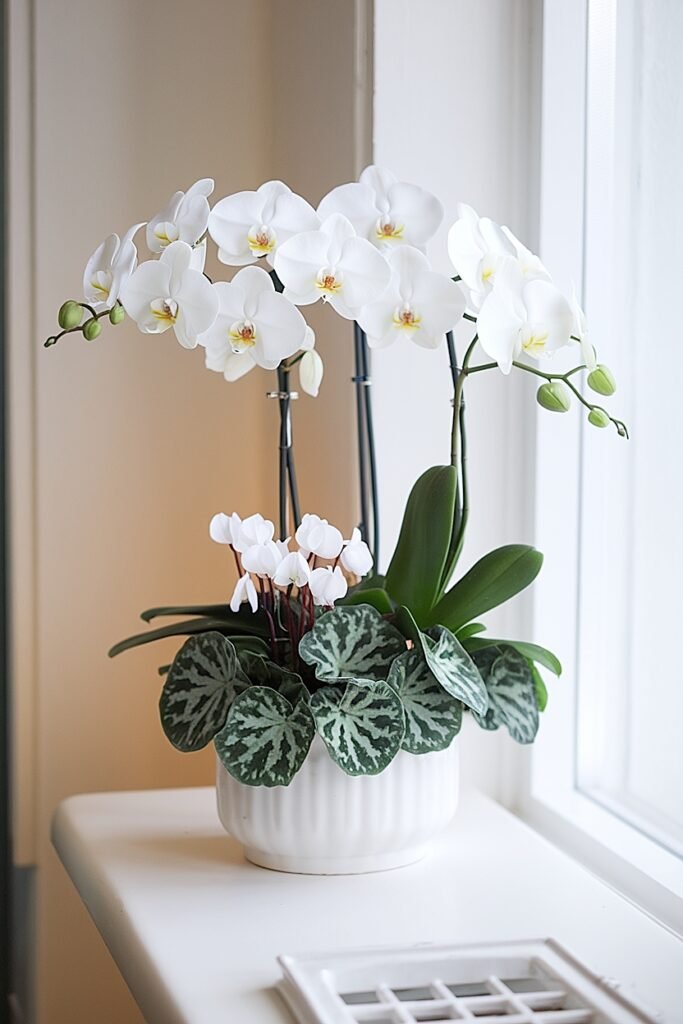
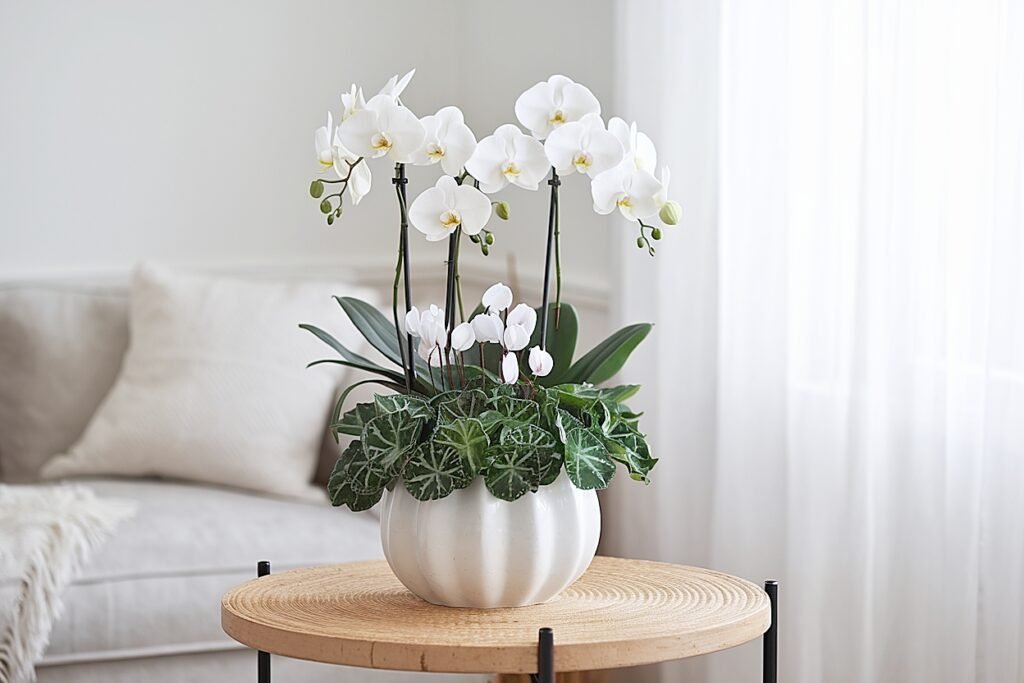
Forget red and green for a minute. Three years ago, I set a clearance moth orchid next to a white cyclamen on my dining room sideboard. Dark wood, white blooms, nothing else. Two guests stopped mid-conversation to ask about it.
White flowers pair with anything. Silver ornaments, gold ribbon, burlap, metallics. You escape the red-and-green box and the whole room feels fresher.
Moth orchids handle indoor air without complaining. Water when the top inch dries out, give them filtered light, and they bloom for weeks. Cyclamen prefer cooler spots. A drafty entryway or north-facing windowsill works perfectly.
Group in odd numbers for visual impact. Three pots on a tray with pine cones, or five down a table runner with evergreen clippings tucked between. If fall decorating appeals to you, check out these Thanksgiving flower and house plant home decorating ideas too. Share this with someone who loves seasonal decor. Below, cool-room picks and bold color alternatives might reshape how you approach holiday greenery.
What Are the Best Cool-Room Poinsettia-Free Christmas House Plants?
Cool rooms are better for holiday plants. Not worse. My back hallway sits around 60 degrees all winter, and blooms last twice as long there.
Most people assume flowers need warmth. Wrong. Cold-season bloomers evolved for cooler climates. Give them what they want and color holds for weeks.
Seven cool-room picks that replace the poinsettia entirely:
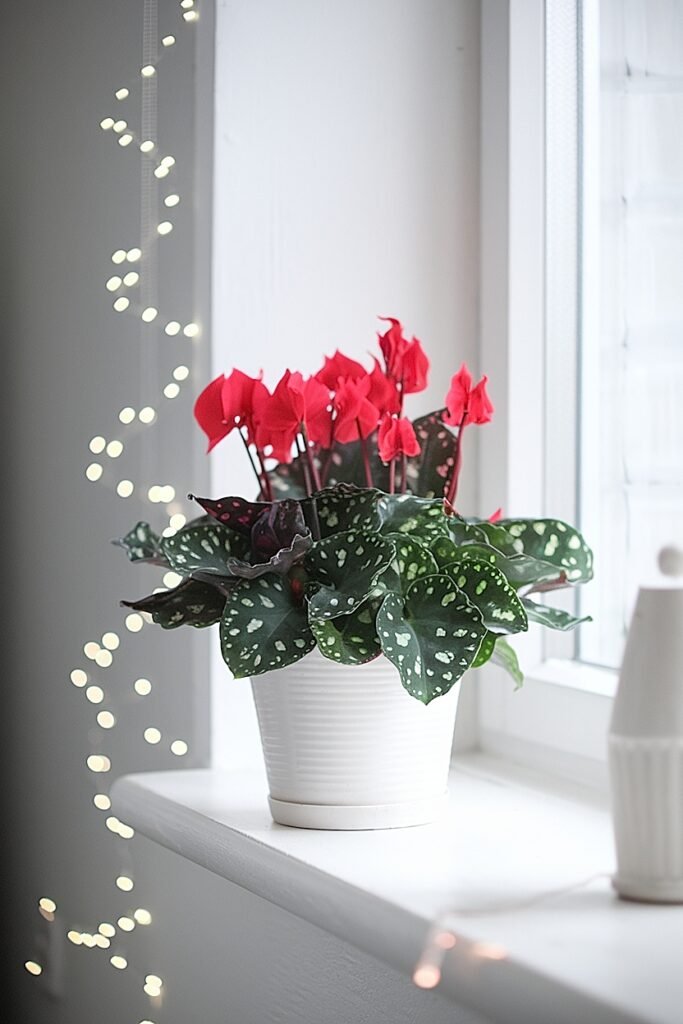
- Cyclamen (Cyclamen persicum) – Cyclamen love the cold. Seriously. That back bedroom you keep at 60 degrees because heating it feels wasteful? Perfect cyclamen territory. The flowers look like butterflies mid-flight, coming in white, rose, deep pink, and those bicolor patterns nobody expects. I water mine from the bottom only. Pour it right into the saucer. Top watering rots the crown faster than you’d believe, and my neighbor lost three in one season before I showed her that trick.
- Christmas Cactus (Schlumbergera) – Everyone’s grandmother had one of these. Not kidding. I inherited mine from my aunt, and the thing is pushing 15 years old now. They bloom right on schedule in December if you provide cool nights around 55 to 65 degrees and about six weeks of long darkness in fall. Colors run from hot pink to salmon to white. They need more water than you’d expect for a cactus because they’re jungle plants, not desert ones. Pass them down. They outlive furniture.
- Norfolk Island Pine (Araucaria heterophylla) – Want a living Christmas tree you don’t toss out January 2nd? This is it. Norfolk Island pines have these soft, tiered branches that hold miniature ornaments and tiny string lights like they were designed for the job. Keep yours between 60 and 70 degrees with bright indirect light. One thing I figured out the hard way: rotate the pot every week or the branches grow lopsided toward the window. Mist the needles too. Dry furnace air makes them drop, and bare patches won’t fill back in.
- Amaryllis (Hippeastrum) – Nothing else delivers this kind of show. A single bulb sends up fat stalks topped with flowers the size of your hand. Reds, whites, candy stripes, doubles. Plant one bulb every two weeks starting in October and you get continuous blooms through the holidays. They perform well around 60 to 68 degrees. Bulb to bloom takes about six weeks, so count backward from when you want flowers on the table. I always start too late. Don’t repeat my mistake.
- Paperwhites (Narcissus papyraceus) – Easiest project in this whole article. Grab a shallow dish, fill it with pebbles, nestle the bulbs in, add water to just below the base. Done. Set them somewhere cool, around 50 to 65 degrees, and fragrant white flowers show up in about three weeks. The smell fills a room. I plant a new batch every couple of weeks through November so there’s always a fresh cluster going. They also make the best last-minute hostess gift when you forgot to buy one.
- Jasmine (Jasminum polyanthum) – The fragrance alone sells this plant. Winter-blooming jasmine puts out clusters of small white star-shaped flowers, and when they open, your whole hallway smells like an expensive candle. It needs cool nights between 50 and 60 degrees to set buds properly. Give it a bright window and something to climb. A small trellis works, or even a bent wire hanger in a pinch. Dark green leaves against those tiny white flowers, in December with early darkness settling in, that contrast hits different.
- Rosemary Topiary (Salvia rosmarinus) – Here’s one nobody considers. Shape a rosemary plant into a little cone and it looks exactly like a miniature Christmas tree. Smells great too, every time you brush past the needles walking through a room. It wants cool conditions, 55 to 70 degrees, and as much direct sun as you can give it. Water when the soil surface dries but don’t let it stand in a puddle. Best part? Snip sprigs off for cooking all winter. Your roast chicken will thank you.
Every one beats a grocery-store poinsettia. Not close. Keep reading for the temperature trick that makes or breaks any holiday display.
How to Choose Poinsettia-Free Christmas House Plants by Room Temperature
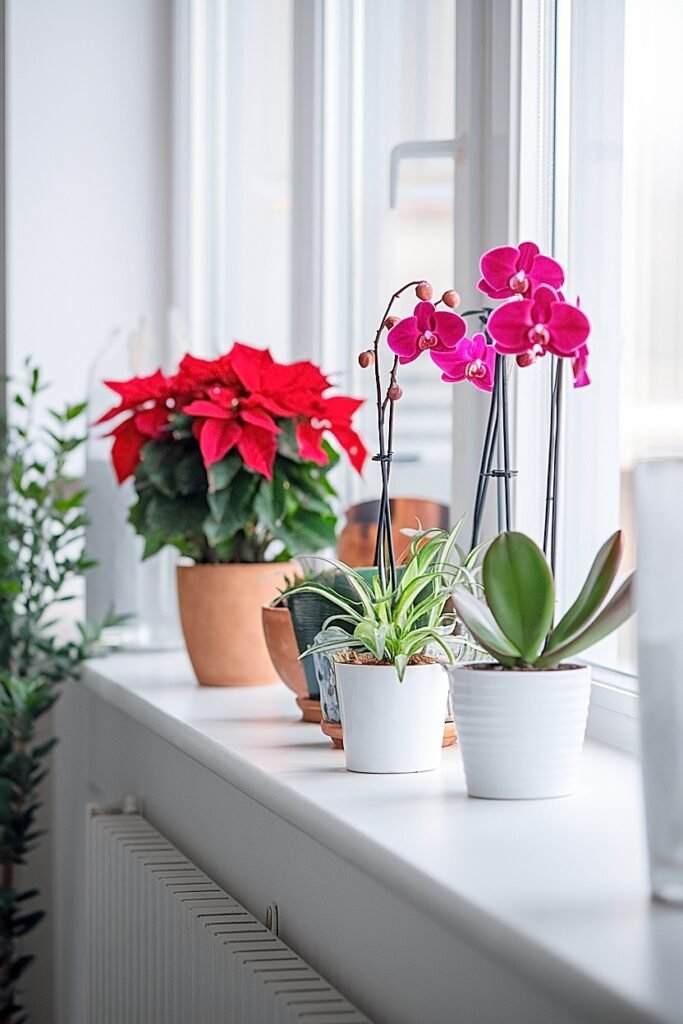
Temperature. The variable everyone ignores. A friend brings home a gorgeous flowering plant, sets it near a heating vent, wonders what went wrong two weeks later. Get the pairing right and blooms push through February.
Below 65 degrees, cyclamen, jasmine, and paperwhites do their best work. Heat vents destroy them fast. Warmer spots between 65 and 80 suit moth orchids and kalanchoe well. Wild swings? Amaryllis handles those better than most. Grab a thermometer, note highs and lows, and placing greenery becomes almost automatic. Up next: plants that stick around long after the ornaments come down.
Easy Ideas for Choosing Long-Term House Plants Instead of Temporary Holiday Plants
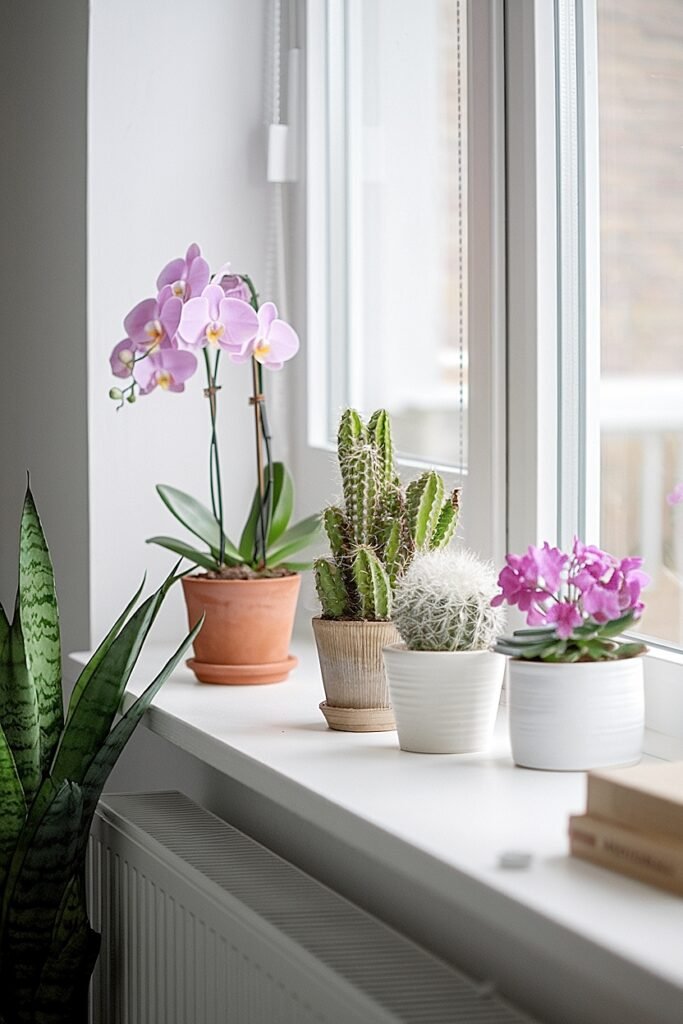
The waste finally got to me. Good money on something gorgeous for three weeks, then straight in the trash. Once I started choosing greenery that earns a permanent spot, everything about my approach changed.
Five strategies for building a lasting collection:
- Pick Species With Annual Bloom Cycles – The right Christmas cactus or orchid variety blooms every winter without you buying anything new. My Christmas cactus has gone through over a decade of Decembers. Follow the natural rhythm: let it rest after blooming, water less, give it that fall dark period. People overthink this. The plant knows what it’s doing. Your job is mostly staying out of the way and not drowning it during dormancy. One plant, years of color. Hard to argue with that math.
- Prioritize Architectural Foliage Plants – Norfolk Island pine. Fiddle leaf fig. Snake plant. Big structural plants with year-round appeal. In December, hang a few ornaments, wrap ribbon around the pot. January, take the decorations off. Still gorgeous. I’ve dressed the same snake plant up for three Christmases running. Sounds lazy, maybe. But the thing costs me nothing at this point and guests still compliment it. Form over flowers works sometimes, especially when the form is that strong.
- Invest in Mature Specimens – Spending more upfront on a bigger, well-rooted plant saves money over the long run. Sounds backward, I know. But a mature orchid handles dry indoor winter conditions without flinching, while a little nursery start wilts within a week. Bigger plants also create an immediate visual impact that a four-inch pot just cannot deliver. Think of it like buying furniture. You can grab the cheap option and replace it constantly, or invest once and forget about it.
- Match Plants to Your Actual Indoor Light – Stop buying plants for the light you wish you had. I did this for years. Grabbed sun-loving succulents for my north-facing kitchen and watched them stretch into weird leggy shapes by February. A peace lily handles dim corners well. Kalanchoe demands that bright south window. Getting that pairing right from day one means your plant settles in and grows instead of slowly fading while you pretend not to notice. Honest light assessment saves a lot of wasted trips to the garden center.
- Start a Seasonal Rotation System – Keep three or four long-term plants and rotate them through your best display spots based on bloom schedules. Christmas cactus gets center stage in December. Move it aside for the orchid in February. Jasmine takes the spotlight come spring. I keep off-duty plants on a stand near my back door where they get decent light but aren’t the main attraction. Nothing gets neglected, everything has its moment, and the house looks fresh every few months without one new purchase.
These approaches build a collection that improves with age. But before you lock anything in, the lighting section below could rescue that cactus from sparse, disappointing blooms.
What Are the Best Light Conditions for a Christmas Cactus Display?
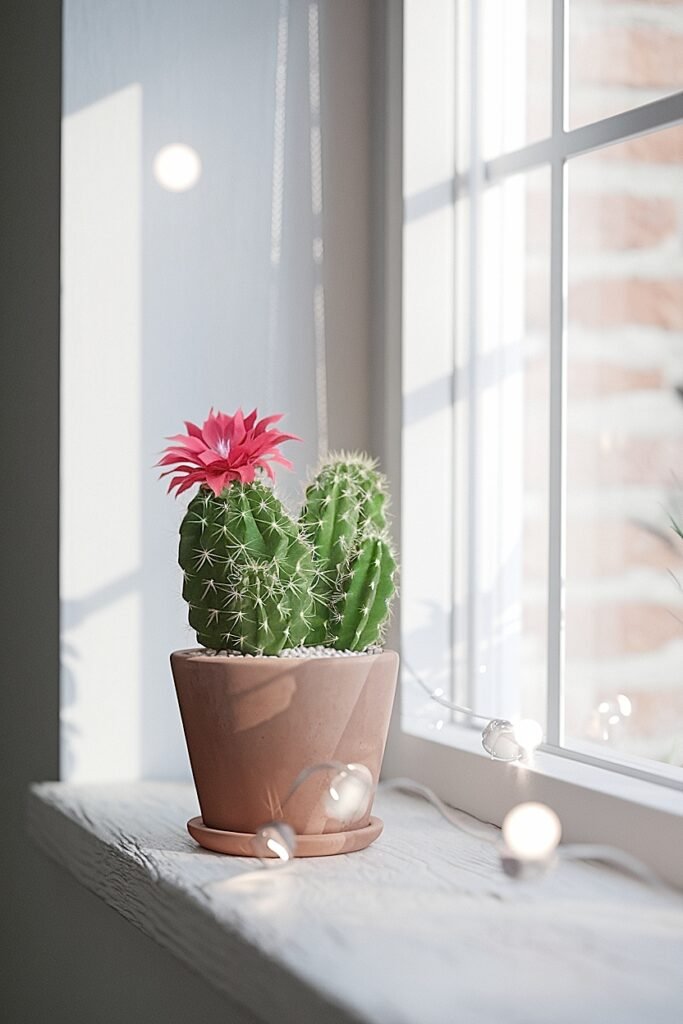
Gorgeous blooms. Lives forever. But lighting is where everything falls apart. I’ve fielded more questions about leggy, flowerless cacti than almost any other indoor gardening problem.
What people miss: this plant demands different light at different growth stages. Fall requires long dark nights. Active blooming calls for the total opposite. Mix those up and you get leaves. Only leaves.
Three lighting setups that produce real results:
- Bright, Indirect Light During Active Blooming – Once buds form and flowers start opening, get the plant near an east or north window with steady, filtered daylight. Direct afternoon sun scorches the leaf segments and buds drop right off. I lost half a bloom cycle two years ago because I left mine too close to a south-facing window on one sunny afternoon. Just a few hours of harsh light and the buds shriveled up. Gentle consistent brightness is what keeps the flowers looking good through their full lifespan.
- Extended Darkness for Fall Bud Initiation – This is the part everyone messes up. Starting around early October, your cactus needs twelve to fourteen hours of total darkness every night for roughly six straight weeks. Even flipping on a light in the room for thirty seconds can reset the whole process. I move mine into the guest room closet every fall. Nobody goes in there after sundown. Can’t find a dark spot? Throw a cardboard box over the plant at nightfall. Not elegant. But it works every time.
- Moderate Light During Summer Recovery – After blooming wraps up in late winter, ease off the intensity. The plant needs to rebuild its energy. A spot with soft morning sun does the trick, or bright shade under a tree outdoors during warmer months. Stay away from harsh midday exposure. I scorched two leaf segments last July leaving a plant out on my patio too long. Think of this period as the off-season. It’s storing up for next December, not performing right now.
Get those three phases right and you’ll see the healthiest blooms possible. But even perfect lighting can’t save a plant fighting bone-dry heated air.
DIY Ideas for Protecting Holiday House Plants From Dry Indoor Heat
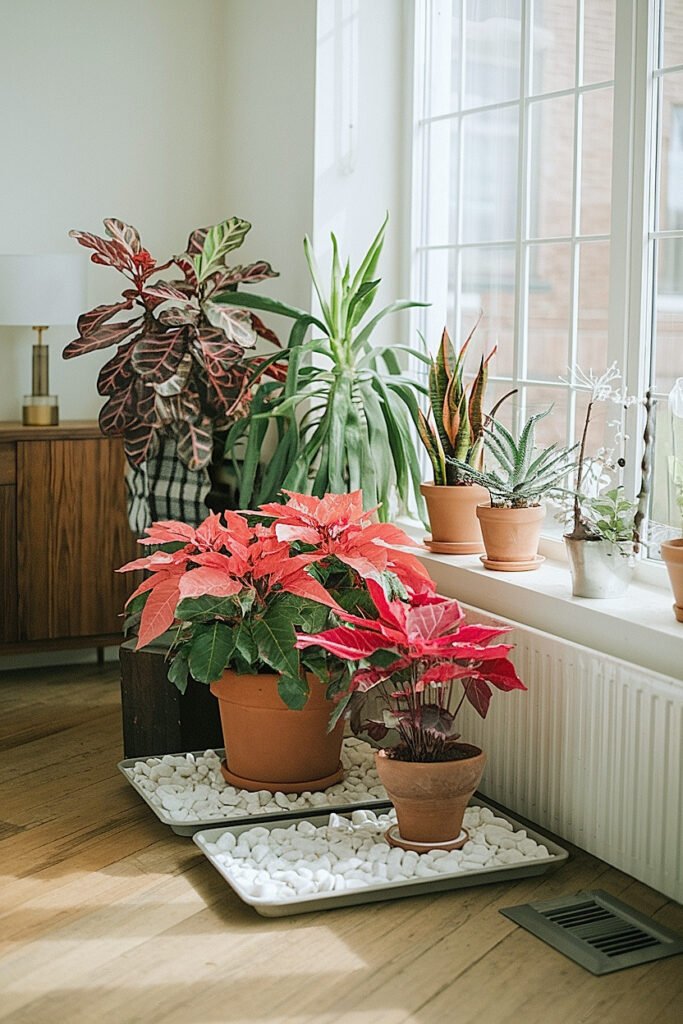
Central heating. Quiet destroyer. Every flowering plant in my house developed crispy brown edges by mid-December one year. Not the watering. Not the light. My forced-air system had turned indoor humidity into single digits.
Holiday bloomers evolved in environments running 40 to 60 percent humidity. Your furnace wrecks that number. Buds shrivel. Petals fall. Leaves curl.
Three practical fixes:
- Build a Pebble Tray Humidity Station – Grab a shallow baking pan, fill it with river pebbles, pour in water until it sits just below the top of the stones. Set your plant pots on the pebbles so the bottoms stay above the waterline. Roots won’t rot, but the evaporating water creates a little humid zone around your plants. I use old cookie sheets for this. Nothing fancy required. Refill every couple of days. During the worst stretches of January when the furnace runs nonstop, these trays separate crispy leaves from healthy ones.
- Group Your Plants Together in Clusters – Plants release moisture through their leaves all day long. Bunch several together and they build this shared humid pocket that helps every plant in the group. Instead of scattering individual pots across three rooms, pull your holiday display into one tight arrangement. Looks better that way anyhow. I cluster mine on a wide tray on the dining room sideboard, and the humidity around that group reads noticeably higher than the rest of the room. One location also means one watering round, not five separate trips.
- Relocate Plants Away From Direct Heat Sources – You’d think this is obvious but I see it every December when I visit friends. Gorgeous orchid parked on a mantel above a working fireplace. Cyclamen perched right beside a heating vent blasting dry air. Move your holiday plants at least three feet from anything pushing warm air into the room. Interior walls work great. Corners too. Spots near windows are fine as long as there’s no baseboard heater running underneath. Cold window draft is less harmful than hot forced air blowing directly at blooms.
These fixes keep blooms fresh into the new year. Below, the white arrangement goes somewhere unexpected.
Creative Ways to Replace Poinsettia Red With Flowering Kalanchoe
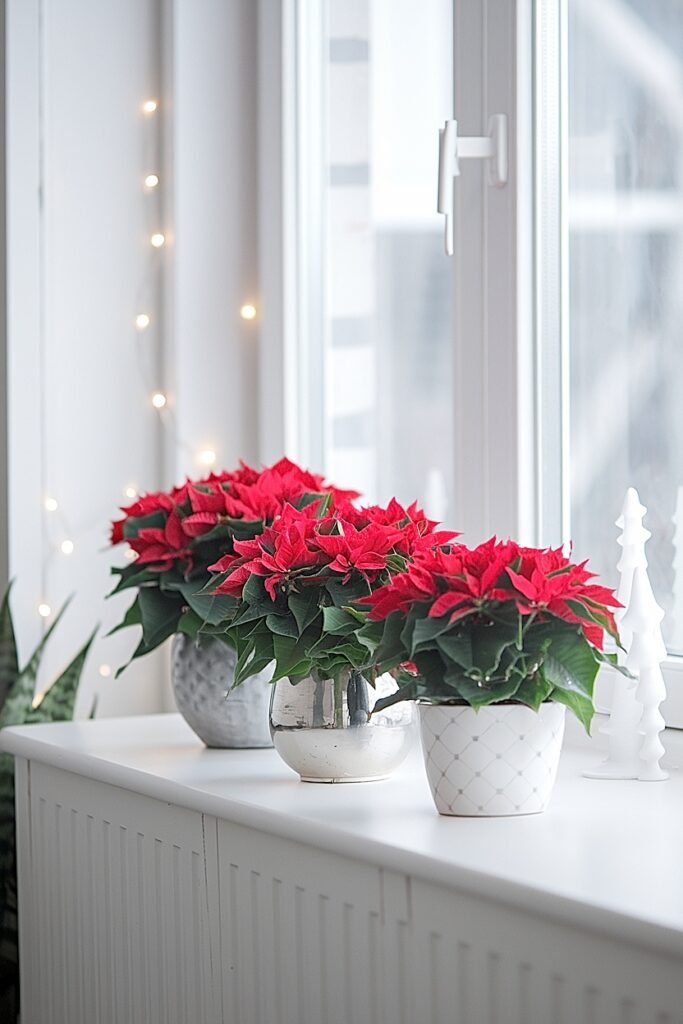
Red belongs in Christmas. No argument from me. But kalanchoe produces vivid red flower clusters every bit as bold, and it’s tougher, blooms longer, reblooms easier. I switched four years ago.
Kalanchoe stores water in thick glossy leaves. Handles neglect that kills a poinsettia in days. Bright light, warmth, occasional water. One specimen can bloom for two months. Sometimes three.
Three ways to use kalanchoe as your red holiday statement:
- Stack a Kalanchoe Centerpiece Tower – Take a tiered plant stand, place your biggest red kalanchoe at the base, medium one in the middle, smallest on top. Wrap warm white fairy lights around the stand and tuck evergreen sprigs between the levels. Done in ten minutes, looks like you spent an hour. I put this together for a dinner party last December and two guests asked where I bought it. Didn’t buy it anywhere. Three plants from the garden center and a stand I already owned.
- Create a Mixed-Color Kalanchoe Windowsill Garden – Line up red, orange, and gold kalanchoe in a long narrow planter along your sunniest window. That warm color gradient catches light from behind and looks like something from a magazine. Here’s what I appreciate about this setup: every variety in the row needs identical care. Same water schedule. Same light. Same soil. You can keep a windowsill display like this going half asleep on a Saturday morning. Try pulling that off with a mixed flower bouquet from the store.
- Pair Red Kalanchoe With White Orchids for Contrast – Red next to white. Classic holiday pairing, but this version feels intentional rather than thrown together. Set a bold red kalanchoe beside a white moth orchid. Thick rounded kalanchoe blooms against the elegant arching orchid stems produce a texture contrast that grabs attention. Place both on a simple wood or white ceramic tray to tie the grouping together visually. Two plants. Maybe thirty dollars total. Somehow it ends up looking like a professional arrangement.
Kalanchoe gives you bold red minus the headaches. Longer bloom times, easier upkeep, and you can rebloom it next year without starting over.
Conclusion
Walking away from poinsettias turned out to be my best decorating move. White orchid blooms for elegance. Kalanchoe for bold red. Forced amaryllis for pure drama. My December home looks better now than it ever did.
Pick two or three from above. Put them in rooms where they’ll actually thrive. Give them proper light. Come January, while everyone else tosses wilted poinsettias, your home will still be full of healthy blooming greenery that’s only getting started.
This website contains affiliate links, and some products are gifted by the brand to test. As an Amazon Associate, I earn from qualified purchases. Some of the content on this website was researched and created with the assistance of AI technology.