This website contains affiliate links, and some products are gifted by the brand to test. As an Amazon Associate, I earn from qualified purchases. Some of the content on this website was researched and created with the assistance of AI technology.
Key Takeaways
- Cream mums, rust carnations, and wheat together cover all three structural roles an arrangement needs: luminous focal color, warm bold color, and neutral textural depth
- The dark vessel is not optional. It amplifies the cream mum’s pale tone and the rust carnation’s warm tone simultaneously by contrast. A light or clear vessel flattens both
- Wheat goes in first at an outward angle in the gravel base, before any flower stem touches the vessel
- Strip the lower leaves off every carnation and mum stem. Every single one. This prevents bacterial buildup in the water and adds three to four days to the arrangement’s lifespan
- One grocery store bunch each of cream mums and rust carnations plus a small wheat bundle is enough material for two complete fall table arrangements
- A table runner format with no central vessel frees up the entire table surface for serving dishes, works great for long narrow tables, and costs the same as a bowl arrangement
Fourteen dollars. That is what this costs. And it holds for over a week.
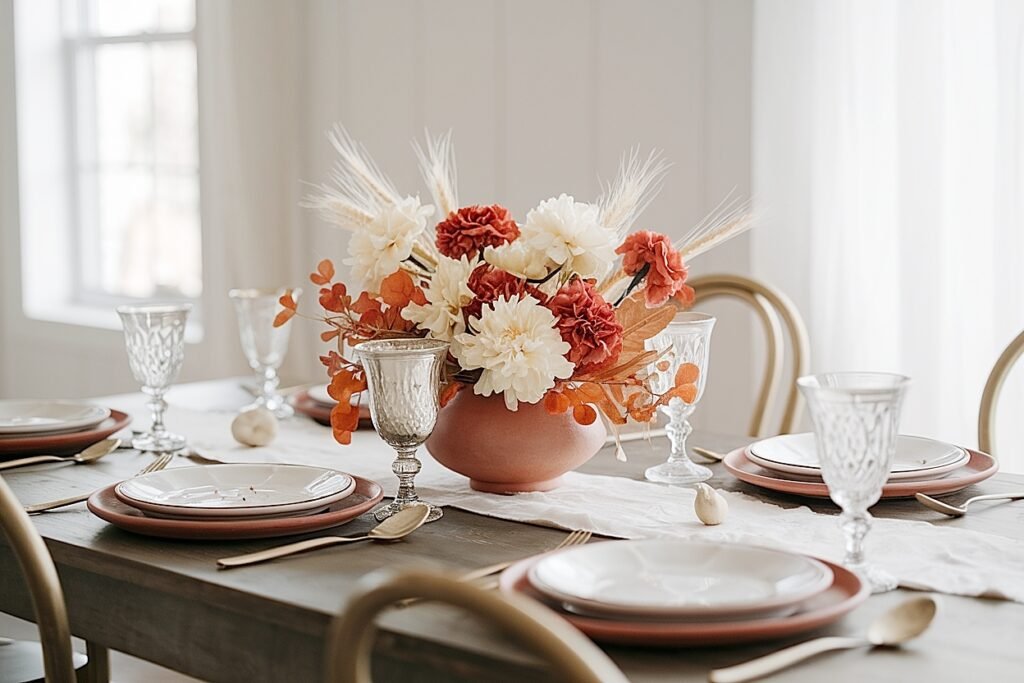
Creating a budget fall centerpiece with cream mums, rust carnations, and wheat is not the backup plan when you cannot afford something better. It is the plan. Cream mum pompoms, rust orange carnations, and a few golden wheat stalks in a dark ceramic bowl is one of the most specifically autumn-looking table arrangements I know how to build, and I have built arrangements with flowers five times the price that looked significantly less interesting. The three materials work together because each one does something the other two cannot. The wheat adds grain texture and a warm neutral tone. The rust carnation adds the bold warm color. The cream mum adds luminosity and soft structure. Three jobs, three materials, one complete fall table.
The budget reality is straightforward. A bunch of cream mums runs five to seven dollars at most grocery stores. Rust carnations run four to six dollars per bunch. A dried wheat bundle from the farmers market or a craft store adds three to five dollars. One dark-toned ceramic bowl from a thrift store or a clearance shelf covers the vessel. Total outlay under twenty dollars. The same display in a flower shop with fancier materials would cost sixty dollars or more.
Use this budget guide to decide where to spend and where to save when arranging cream mums, rust carnations, and wheat. Each row shows the smartest low-cost choice, what it does visually, and the best table use. The goal is a cozy fall centerpiece that looks full without overspending.
| Budget Choice | Best Use | What It Adds | Smart Styling Tip |
|---|---|---|---|
| Cream mums | Main fullness flower | Round softness, brightness, and volume | Place them where they lighten the rust carnations. |
| Rust carnations | Main warm color flower | Ruffled texture and cozy autumn color | Cluster them tightly instead of scattering single stems. |
| Short wheat stems | Low-cost harvest accent | Golden texture without buying extra flowers | Tuck wheat around the rim, not through the center. |
| Reused ceramic bowl | Low dining centerpiece | Structure, stability, and a fuller look | Use a wide low bowl to make fewer stems spread naturally. |
| One support stem | Small texture or color bridge | Detail without raising the budget too much | Choose bronze mums, mauve asters, or pale sedum. |
Resources:
- 7 Beautiful Flowers to Plant in July for a Blooming Fall Garden
- How to Care for Cut Flowers | Yard and Garden
- How to make a bouquet last longer this Mother’s Day | AP News
- When’s the Perfect Time To Buy Your Mums This Fall?
How to Build Budget Fall Flowers Centerpieces With Cream Mums, Rust Carnations, and Wheat
Start with the gravel. Not the flowers.
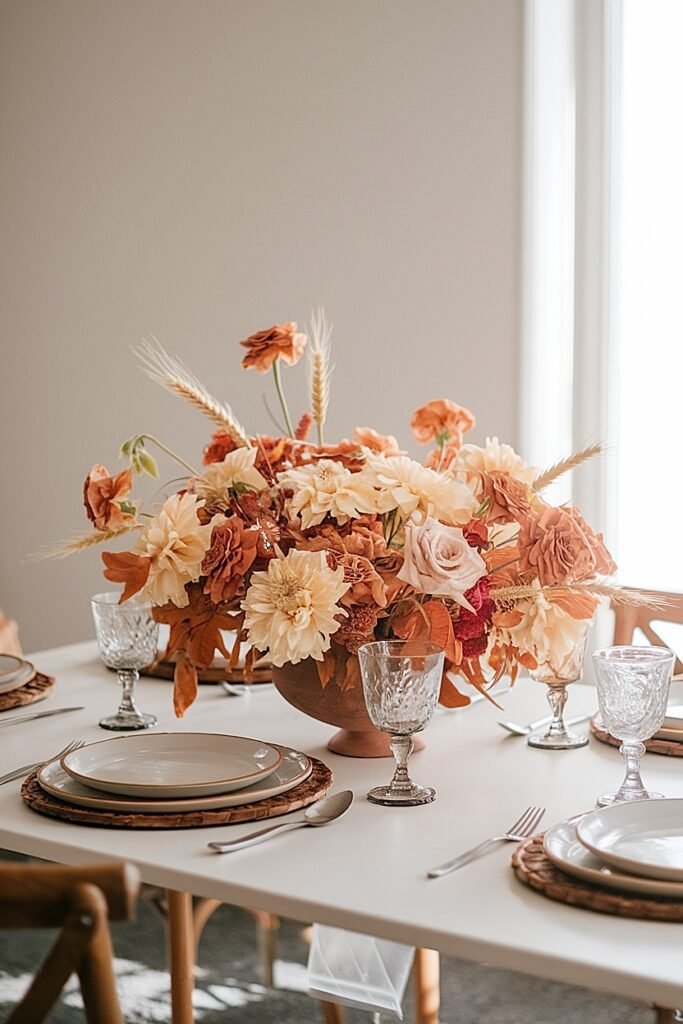
Two inches of coarse gravel in the bowl before any water goes in. This sounds like a minor detail but it is the detail that determines whether the arrangement holds its shape. The gravel anchors each stem at the angle you press it in rather than letting stems drift toward the center or lean against each other. It also adds enough weight to keep a short, wide bowl from being nudged aside when someone reaches across the table during dinner.
Wheat goes in second. Before the flowers. Press two or three wheat stalks into the gravel at an outward angle, roughly thirty degrees off vertical, so the grain heads extend past the vessel rim. Then pour in cold water up to about an inch below the gravel surface. The wheat grain heads sit in dry air above the water. They do not need to be submerged. The stalks anchor in the gravel and hold their position independently of the flower stems that come in around them.
Now the flowers. Cut each mum branch and each carnation stem at a diagonal before placing. The diagonal cut opens a larger surface at the base of the stem for water uptake. Strip every leaf from the lower half of each stem. Lower leaves sitting below the waterline start feeding bacteria in the vessel water within about twenty-four hours, and that bacteria progressively blocks the stem’s water uptake channels. Stripped stems in cold water with a pinch of cut flower food: the arrangement holds seven to ten days. Leaves in warm water: four days at most before things go soft and the whole bowl starts smelling off.
Three cream mum stems and four rust carnation stems in a six-inch dark bowl with two wheat stalks at the outer edge is a complete arrangement. Not a skeleton. Not a starting point to build from. An actual complete arrangement that looks intentional and costs about twelve to fourteen dollars in materials.
For more on the specific cream mum and rust carnation pairing, including the peach softening technique and the sage foliage options that change the sensory quality of the arrangement, check out cream mum and rust carnation centerpieces for cozy fall tables. And if this helped, pass it along to someone who decorates for fall. More ahead on grocery store ideas, the under-thirty-dollar DIY options, and every specific table runner format.
Ideas for Grocery Store Fall Flowers With Cream Mums, Rust Carnations, and Wheat
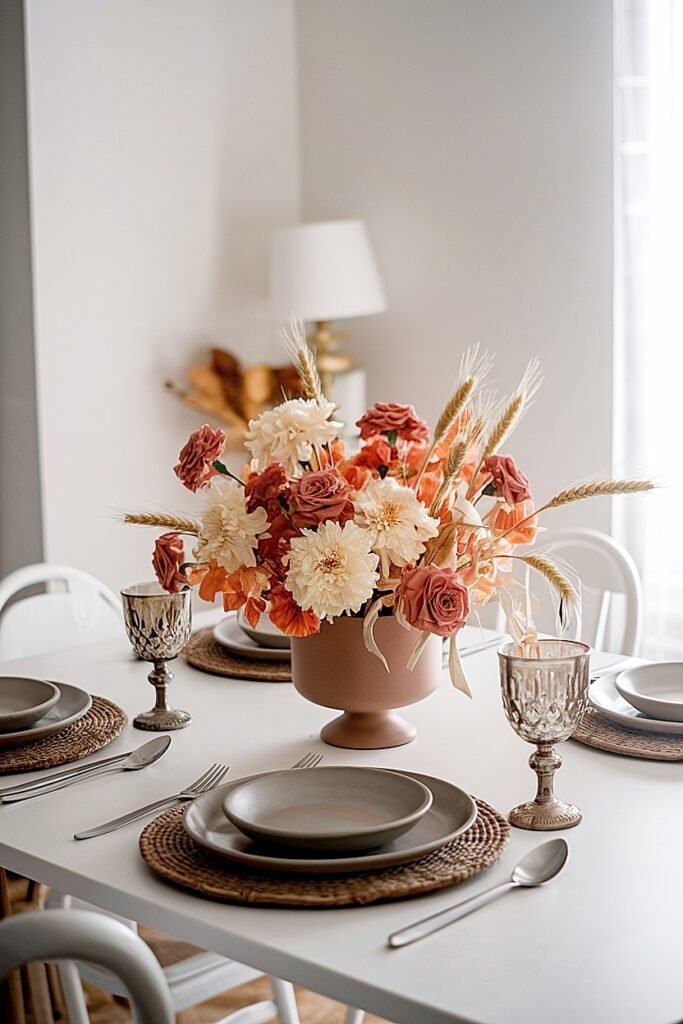
Everything in this combination is at the grocery store right now. Walk past the orchids and the overpriced seasonal displays and head straight for the loose flower section. Cream mums and rust carnations are there almost every week from September through November.
1. One Dark Crock, Five Stems, Two Wheat Stalks Three rust carnation stems plus two cream mum branches cut to two inches above the rim, with two outward-angled wheat stalks in the gravel base, in a short dark navy ceramic crock. The navy creates sharp contrast with both the cream bloom and the amber wheat while amplifying the rust. From the seated overhead dining angle, this reads as a warm full autumn arrangement. Total material cost under twelve dollars.
2. Three Matched Small Vessels in a Row Three matched short dark vessels lined down the table center. The first holds two cream mum stems and one wheat stalk. The second holds two rust carnation stems and one wheat stalk. The third holds one cream mum stem and two rust carnation stems mixed. The mixed center vessel between the two single-variety outer vessels creates a simple designed progression. Under fifteen dollars for the flowers. The vessels come from.
3. Grocery Store Bunch Split Across Two Small Bowls One cream mum bunch and one rust carnation bunch split evenly across two small dark bowls instead of crowded into one larger vessel. Two or three mum branches per bowl, two or three carnation stems per bowl, one wheat stalk per bowl. Two complete arrangements from one grocery store purchase. Place the two bowls at opposite ends of the table rather than side by side. Under fifteen dollars for both.
4. Per-Place-Setting Bud Vase From Grocery Store Materials One cream mum branch plus one rust carnation stem plus one short wheat stalk in a small dark weighted bud vase at each dinner seat. Cut from the same grocery store bunches. One cream mum bunch and one rust carnation bunch covers six to eight place settings depending on how many branches each stem carries. Under a dollar fifty per setting. Each guest gets their own personal autumn arrangement.
5. Flat Table Runner Without a Vessel Four rust carnation stems and three cream mum stems in individual water picks distributed along the table center, with three dried wheat stalks laid flat between the picks. No bowl. No vessel. The wheat stalks on the table surface create the connecting visual element between the individual flower picks and make the whole runner read as a designed display. Frees up the full table surface for serving dishes. Under ten.
More ahead on how to make these three grocery store materials look fuller and more abundant than the stem count suggests.
How to Make Budget Fall Flowers Look Fuller With Cream Mums and Rust Carnations
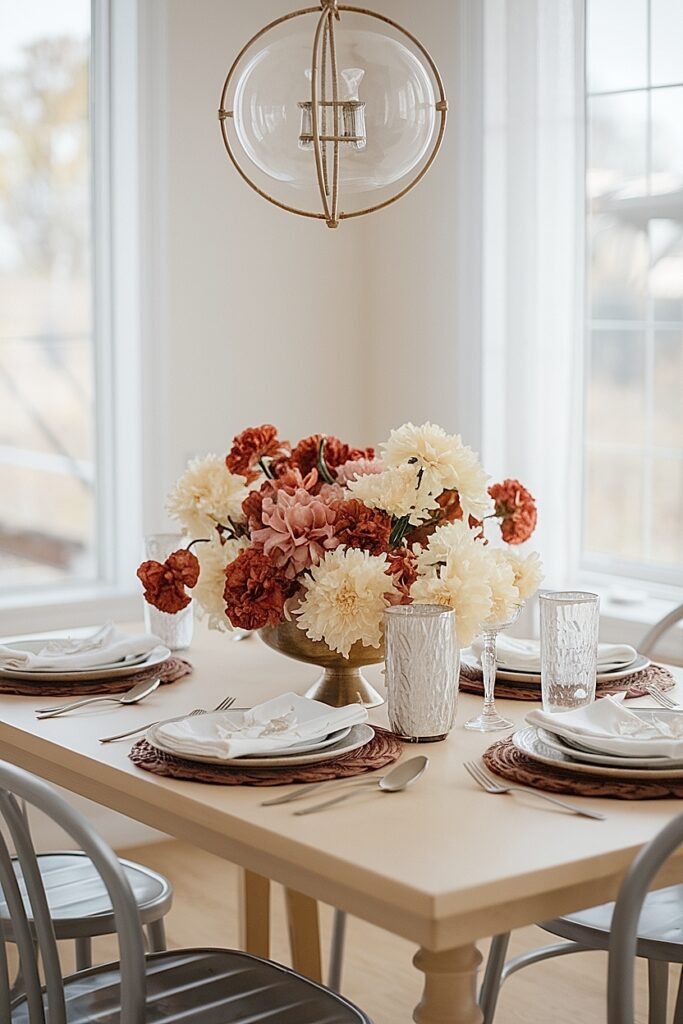
More stems is not how you make an arrangement look fuller. Better positioning is.
Every stem angled outward from the vessel center at a slight angle covers more visual diameter at the rim level than the same stem pressed in straight. The bloom face angles toward the seated guest rather than pointing at the ceiling. From the overhead dining angle that most guests have at a dinner table, outward-angled faces create a ring of visible blooms around the vessel opening rather than a crowded upright cluster that only shows the top few blooms.
The cream mum specifically benefits from this positioning because the rounded pompom face reads as larger when viewed slightly from the side than when viewed straight on from above. Angle a cream mum face outward at about thirty degrees from vertical and it appears to occupy more of the vessel opening than the same mum face pointing straight up. Four cream mum stems angled outward at a low bowl rim creates the same visual coverage as six upright mum stems in the same vessel.
Wheat adds apparent fullness without adding any flower count. Two wheat stalks at the outer vessel edge extend the arrangement’s visual footprint past the vessel rim. The grain heads sit outside the bowl boundary. From the side, the arrangement appears wider than the bowl. From above, the wheat grain adds texture to the outer edge of the flower zone. No extra flowers required.
The vessel width is the other fullness variable. A six-inch wide bowl with five stems cut to two inches above the rim reads as full. The same five stems in a four-inch wide vessel reads as crowded and upright. A wide, low vessel at dining table height is not a compromise. It is the correct format for this material combination.
More ahead on the specific under-thirty-dollar setups that cover multiple tables or multiple dinner evenings from one grocery store purchase.
DIY Ideas for Fall Flowers Centerpieces Under $30 With Cream Mums, Rust Carnations, and Wheat
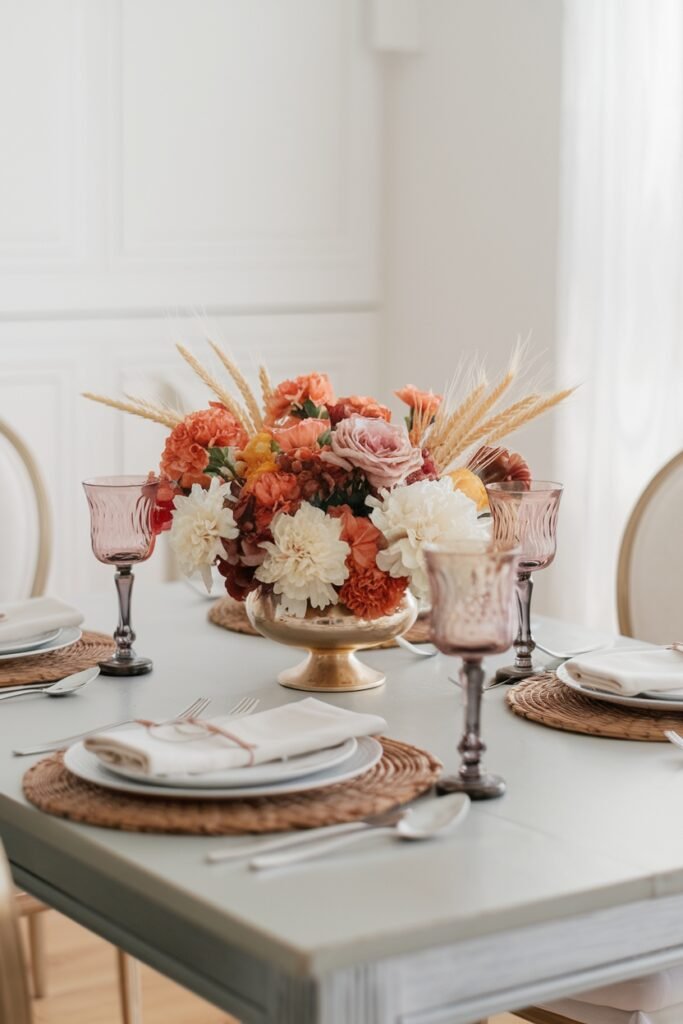
1. Two Full Arrangements From One Purchase One cream mum bunch, one rust carnation bunch, and one wheat bundle split evenly across two dark wide bowls. Each bowl gets three carnation stems, two mum branches, and two wheat stalks. Two complete fall dining arrangements under twenty dollars total. Use one on the dining table and one on.
2. Main Centerpiece Plus Four Place Setting Bud Vases One main low bowl arrangement using half the flowers from each bunch, plus four small bud vases with one carnation stem, one mum branch, and one short wheat piece each using the other half. The main bowl anchors the table center. The bud vases create personal arrangements at each seat.
3. Multi-Vessel Sideboard Display A grouping of five varied dark vessels, two crocks, two small pitchers, and one wide flat bowl, arranged at different heights on a sideboard or buffet using books under cloth to vary elevation. Each vessel holds two to three stems from the cream mum, rust carnation, and wheat materials. The.
4. Autumn Harvest Flat Bundle as a Table Focal Ten to twelve stems from the cream mum and rust carnation bunches plus four wheat stalks gathered into a bound flat bundle, tied at the mid-stem point with jute twine, and laid diagonally across a wooden serving board at the table center. No bowl, no water. The mums and carnations.
5. Window Ledge or Mantle Row Ten small bud vases or narrow bottles in a row along a window ledge or mantle, each holding one stem from the cream mum or rust carnation bunches and one short wheat section. Alternating mum and carnation vessels with wheat in every third vessel creates a visual rhythm. The row.
More ahead on using wheat as the primary textural element in this combination, which changes the whole visual register when done right.
Creative Ways to Use Wheat as Budget Texture With Cream Mum and Rust Carnation Fall Flowers
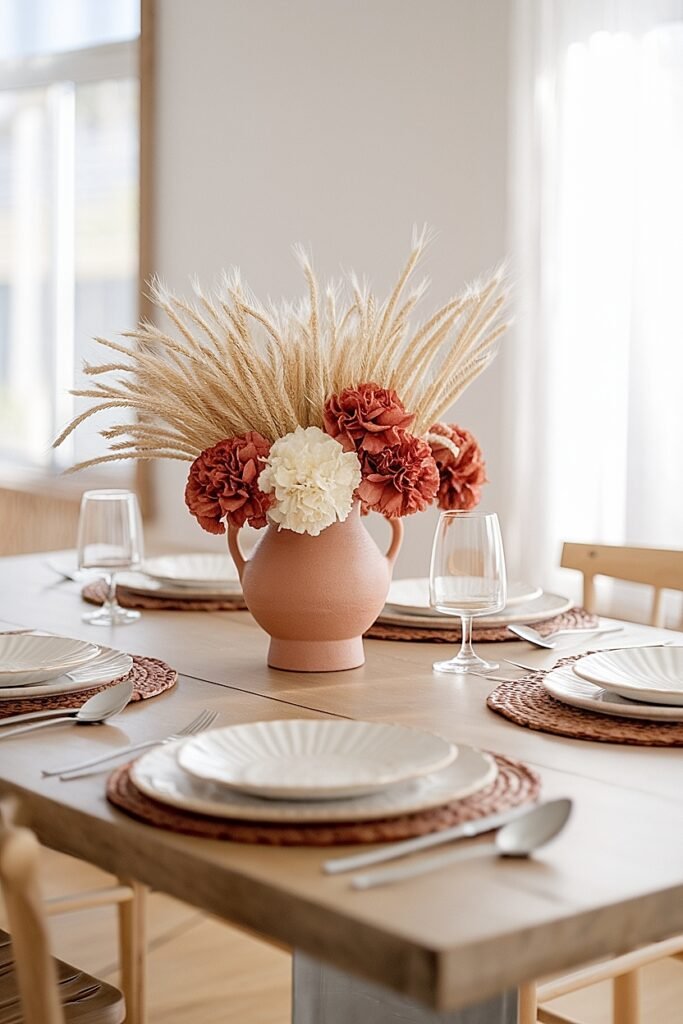
1. Wheat as the Outer Structural Frame Four to five wheat stalks pressed into the gravel at the outer vessel perimeter at an outward angle, creating a wheat frame around the flower zone rather than mixing wheat through the arrangement. The cream mums and rust carnations fill the vessel center. The wheat grain heads extend past the.
2. Wheat Stalks Laid Flat as a Table Surface Base Five or six wheat stalks laid flat on the table surface beneath and around the bowl, extending outward from the vessel base like spokes. No gravel needed for the surface wheat. It just rests on the tablecloth. The bowl sits in the center. The wheat creates a visual ground-level frame.
3. Short Wheat Sections Floating on the Water Surface Two wheat grain heads snipped from their stalks and placed on the water surface in the arrangement bowl between the cream mum and rust carnation bloom faces. The grain heads float. From the overhead dining viewing angle, the arrangement reads as a warm autumn bloom surface with grain texture between.
More ahead on how to balance these three materials visually without reaching for extra flowers when the arrangement feels off.
How to Balance Cream Mum, Rust Carnation, and Wheat Fall Flowers Without Buying More Blooms
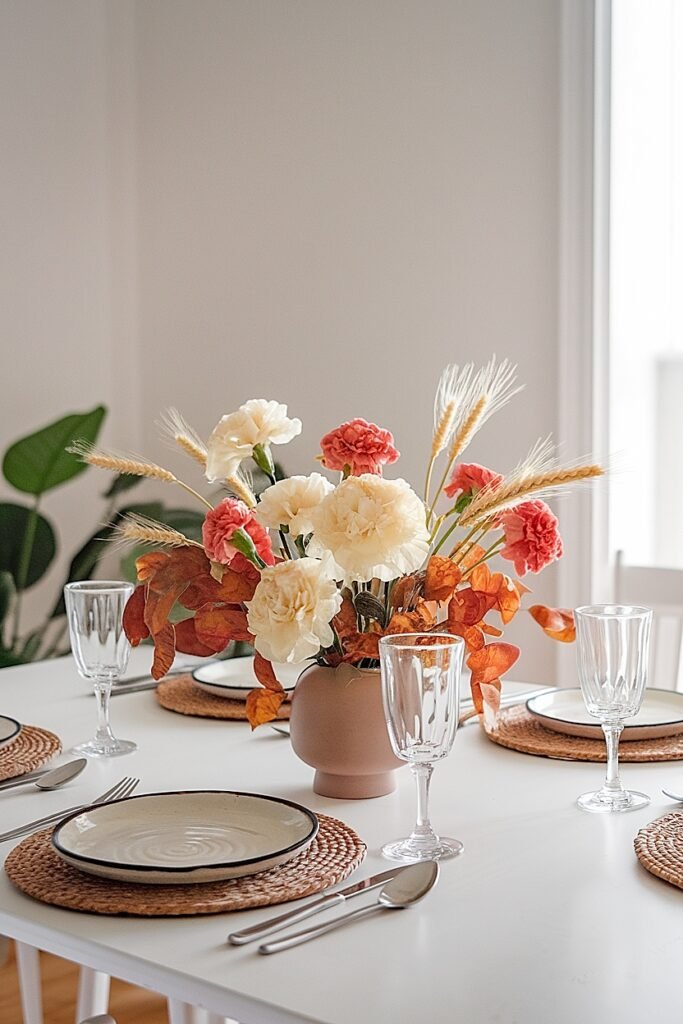
When a three-material arrangement feels off, the instinct is to add more flowers. Usually that is wrong.
Most imbalance in a cream mum, rust carnation, and wheat arrangement comes from one of two things. Either the orange is too dominant because there are more rust carnation stems than cream mum stems, or the arrangement feels thin because the stems are pointing upright instead of outward. Neither problem requires more flowers to fix.
Orange dominance fix: move some rust carnation stems to the back of the vessel and bring cream mum branches to the front outer positions. The cream reads as more dominant from the front viewing angle and the rust recedes slightly. The stem count does not change. Just the positioning does.
Thinness fix: press every stem outward at a thirty-degree angle from vertical rather than straight up. Then check whether any stems are visible below the rim without any bloom coverage at the vessel opening. If yes, recut those stems one inch shorter and press them back in. The goal is bloom faces at the rim level with no exposed stem gaps visible from above. Wide-mouth vessel, short stems, outward angles: the arrangement reads as full with five stems instead of needing ten.
The wheat is the balance element that makes this work without extra flowers. Two or three wheat stalks at the outer vessel edge fill the visual perimeter of the arrangement at a cost of zero extra flowers. The grain texture reads as a third distinct element and the arrangement feels more complex and more complete.
DIY Ideas for Fall Flowers Table Runners With Cream Mums, Rust Carnations, and Wheat
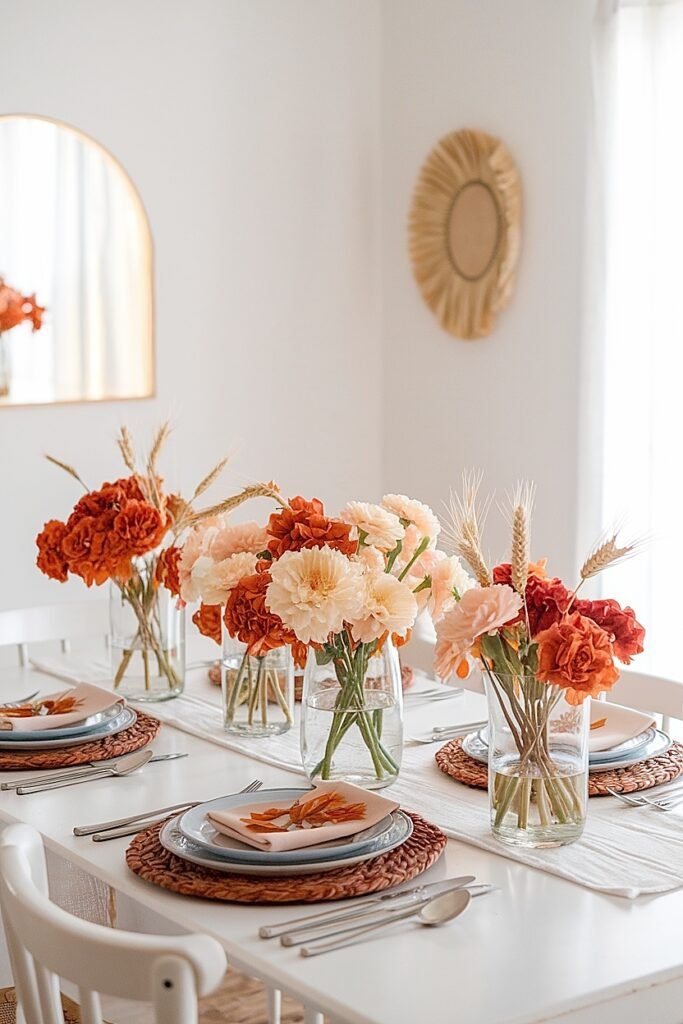
1. Individual Water Picks Along the Table Center Six cream mum stems and six rust carnation stems in individual water picks alternated along the table center, with four wheat stalks laid flat between the picks. The water picks keep blooms fresh. The wheat connects the individual stems visually. The runner format frees up all functional table surface. Assembles.
2. Three Small Vessels in a Loose Row With Wheat Between Three short dark vessels placed at irregular intervals down the table center, each holding two to three stems from the cream mum and rust carnation bunches, with one or two wheat stalks laid flat on the table surface between the vessels. The wheat on the table connects the three separate.
3. Tied Bundle Pairs at Each Place Setting Two to three stems from the cream mum bunch and two rust carnation stems gathered into a small bundle tied with jute, placed flat beside each plate. One wheat stalk tucked into each bundle before tying. No vessel, no water. The mums and carnations hold for a two-to-three-hour dinner without.
4. Long Low Wooden Tray Runner With All Three Materials A long wooden serving tray centered on the dining table, filled with a shallow layer of gravel and cold water, with cream mum branches, rust carnation stems, and wheat stalks all pressed into the gravel at the same low height across the full length of the tray. The tray creates.
5. Alternating Bloom and Wheat Section Runner A runner format that alternates sections rather than mixing materials: two rust carnation stems in a water pick, then two wheat stalks flat, then two cream mum branches in a water pick, then two wheat stalks flat, repeated along the table center. The alternating sections create a visual rhythm that.
Conclusion
Cream mums, rust carnations, and wheat. Three grocery store materials. One fall table that looks like you spent the afternoon on it.
The prep matters. The vessel matters more. The stem positioning matters most.
Dark bowl, outward angle, gravel base, stripped leaves, cold water. That five-step setup is all that separates a ten-dollar arrangement that lasts three days from a ten-dollar arrangement that lasts ten days and gets compliments the whole time.
This website contains affiliate links, and some products are gifted by the brand to test. As an Amazon Associate, I earn from qualified purchases. Some of the content on this website was researched and created with the assistance of AI technology.