This website contains affiliate links, and some products are gifted by the brand to test. As an Amazon Associate, I earn from qualified purchases. Some of the content on this website was researched and created with the assistance of AI technology.
Key Takeaways
- Wheat builds the skeleton — position it first, then arrange fresh flowers around it, never the reverse
- Hard red winter wheat with bristled awns performs significantly better at candlelit dinner table close range than smooth-headed soft wheat varieties
- The thirty-degree outward lean transforms wheat from stiff architectural element to organic visual frame
- A dark vessel changes everything; the same wheat and flowers in a mason jar versus a dark glazed crock produce arrangements that read in completely different aesthetic registers
- Wheat is genuinely waterproof — it holds its position indefinitely in the gravel zone below the waterline and does not degrade in water contact
- One bundled wheat-and-flower sheaf per place setting, tied and laid flat, creates the most intimate autumn dining detail at essentially zero cost beyond the wheat itself
Creating a dried wheat centerpiece for an autumn dining table is not the same as adding a harvest prop to a flower arrangement. Wheat is a structural material. Its job is to establish the visual skeleton — the outer boundary, the height variation, the textural backbone — that fresh flowers arrange around. When I finally stopped treating wheat as a filler I press in at the end and started building the whole arrangement around its positions first, every arrangement I made got dramatically better.
The other thing that took me too long to figure out: wheat variety matters. Hard red winter wheat with long, bristled awns looks entirely different from the smooth-headed soft wheat sold in most craft stores. The awns catch light from every direction. At close candlelit autumn dining range, a hard red wheat grain head glows. The smooth-headed variety just sits there.
Use this quick guide to match dried wheat with the right Fall Flowers, vessel, table size, and styling goal. Each row helps readers choose a cozy centerpiece direction before they start arranging. The goal is a warm autumn dining table that looks beautiful but still leaves room for real meals.
| Centerpiece Style | Best Fall Flowers | Best Vessel | Dining Table Tip |
|---|---|---|---|
| Low wheat bowl | Cream mums, rust carnations, mauve asters | Wide matte ceramic bowl | Keep wheat around the rim and flowers slightly higher. |
| Moody wheat centerpiece | Burgundy dahlias, wine mums, rust carnations | Matte brown or charcoal compote | Use cream plates or taupe linens to keep it warm. |
| Soft neutral wheat table | Cream dahlias, pale sedum, soft bronze mums | Cream, taupe, or oatmeal ceramic bowl | Add rust leaves if the palette looks too pale. |
| Wheat place bundles | Mini mums, asters, small carnations | No vessel needed beside napkins | Place bundles beside napkins, not on food surfaces. |
| Broken wheat runner | Orange zinnias, rust mums, burgundy carnations | Three mini ceramic bowls | Leave gaps for serving dishes and guest comfort. |
Resources:
- How to Create a Floral Arrangement | Yard and Garden
- How to Care for Cut Flowers | Yard and Garden
- Grasses, Grains, and Pods – Floret Flowers
- Principles of Floral Arrangement.doc
- Mums and Asters for Fall Beauty :: Melinda Myers
How to Style Dried Wheat with Fall Flowers in Low Dining Table Centerpieces
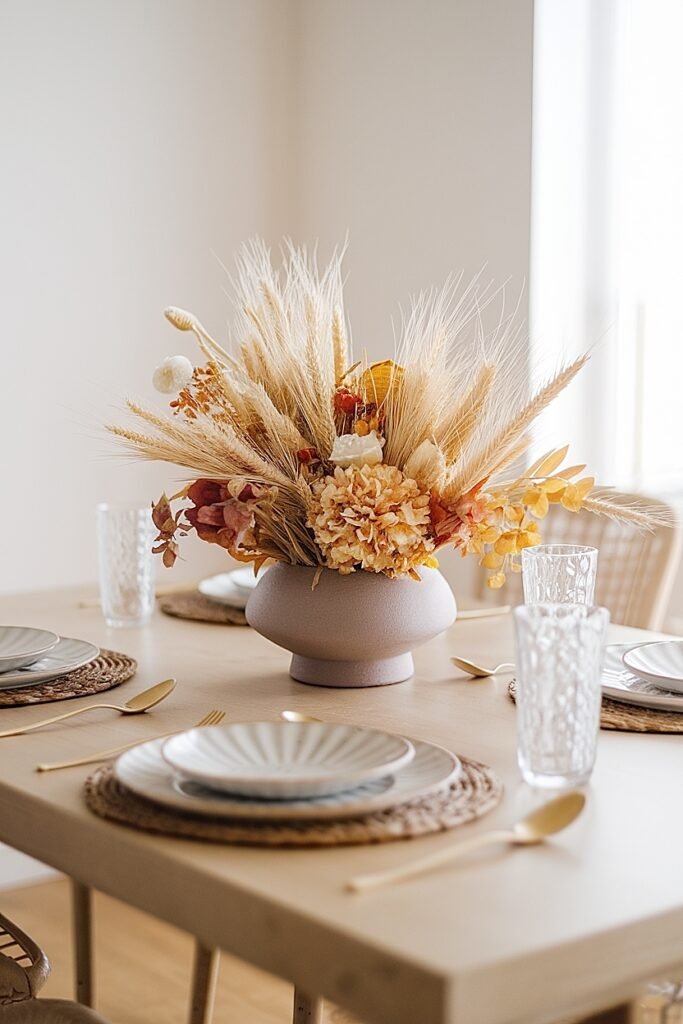
The thirty-degree rule changed how I use wheat completely.
Before I learned it, I placed wheat stalks upright in vessels the same way I place flower stems. Straight up, pressed into gravel, radiating from the center. The result was stiff and formal — an arrangement that looked like it was trying to stand at attention. The wheat was physically present but visually wrong. It created a cage rather than a frame.
The thirty-degree outward lean fixes this. Press each wheat stalk into the gravel at roughly thirty degrees off vertical, angled away from the center of the vessel. The grain head extends beyond the vessel rim, hovering over the table surface. The stem creates a diagonal that reads as placed rather than planted. Add the fresh flowers in the central vessel zone with stems shorter than the wheat, and the arrangement acquires a specific kind of organic depth — flowers in the center, wheat framing from outside — that upright wheat cannot produce.
At low dining table height, this matters for a second practical reason: sightlines. Wheat at thirty degrees outward stays below the conversation threshold. The grain head sits at or near table surface level, extending horizontally. Upright wheat stalks at the same stem count would rise six to ten inches above the rim and create the wall effect that blocks eye contact across the table. Same material, same vessel, completely different impact.
The gravel base is non-negotiable for wheat-and-flower combinations. Two inches of coarse gravel holds wheat stalks at their intended angles independent of the fresh flower stems around them. Without gravel, the wheat wanders as the fresh stems are pressed in beside it, and the outward lean slowly corrects itself upright as buoyancy and stem contact shift the angle. Get the gravel in first, press the wheat at the angles you want, and it stays there.
For more on mixing dried grasses with fresh fall flowers — including pampas grass restraint rules, bunny tail grass proportion, and the key decisions that keep the look out of the farmhouse register — check out how to mix fresh flowers and dried grasses for fall decor. Share this with a friend who decorates for fall. More ahead on which specific flowers work best alongside wheat and how to pull the aesthetic toward elegant rather than harvest-display.
What Are the Best Fall Flowers to Pair with Dried Wheat Centerpieces?
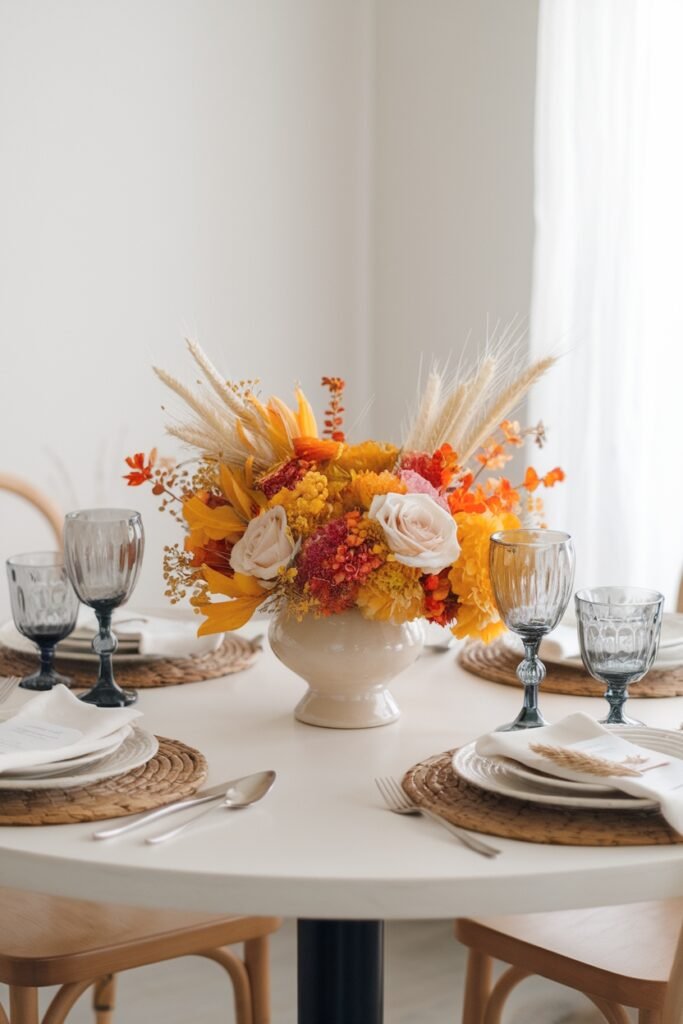
Most soft, delicate flowers get visually absorbed by wheat’s warm amber tones and agricultural character. The flowers that work well alongside wheat share structural confidence — a defined bloom form at a scale that holds its own against the dimensional grain head at close dining table range.
1. Orange or Amber Marigolds (Calendula Varieties) Calendula-type marigolds in deep amber and orange tones create the most tonally harmonious wheat pairing of any flower in this list. The warm amber color family connects flower and grain without creating redundancy because the marigold’s flat pom-pom form differs structurally from the wheat’s upright grain head. One grocery store bunch of amber marigolds and three outward-angled wheat stalks in a dark vessel creates a complete, inexpensive, and specifically October.
2. White Spider Mums Spider mums’ dramatically elongated tubular petals create the most visually distinct bloom structure available among common autumn flowers. At close dining range, the individual petals are fully visible as fine, radiating lines from the center — a textural quality that flat-faced or ball-form blooms do not produce. The white color reads as the cleanest possible contrast against warm wheat amber. One spider mum stem beside two wheat stalks in a.
3. Apricot or Coral Ranunculus Soft apricot ranunculus beside amber wheat creates an autumn combination that reads as September’s warmth rather than October’s depth. The dozens of layered petals at a compact bloom scale are visible in their full detail at eighteen-inch dinner table distance. The warm apricot tone bridges the gap between cream and orange, sitting at the softest, most luminous position in the autumn warm palette. Cool fall temperatures dramatically extend ranunculus vase.
4. Deep Plum Anemones Deep plum or wine-colored anemones alongside wheat create the darkest, moodiest pairing in this list. The dark near-purple of a plum anemone against warm amber wheat creates a color relationship that reads as specifically designed rather than seasonal default. The graphic dark center ring of any anemone variety adds a visual reference point within the combination — a focal detail that the soft, distributed wheat texture cannot provide on its.
5. Cream Cushion Mums The cushion mum’s intermediate form between a pompom and a flat daisy face creates a rounded but slightly irregular silhouette that suits wheat’s own organic grain-head character. Cream varieties in warm ivory or soft gold-cream tones align with the wheat palette without matching it. The cushion mum holds ten to fourteen days in cold water — the longest vase life of any bloom in this list — which makes it.
6. Rust Dahlias (Ball or Pompom Varieties) Rust-toned ball dahlias create the most saturated warm color pairing available with dried wheat at autumn dining close range. The dense spherical structure contrasts the dimensional but lighter grain head in a way that creates mutual amplification: the grain head looks more substantial beside the bloom, and the bloom looks more vivid beside the natural amber grain. The rust-and-amber pairing reads as a designed color palette rather than two objects.
7. Dusty Sage or Chartreuse Asters This pairing surprises people. The cool dusty-green or yellow-green of certain aster varieties beside warm wheat amber creates a specific complementary tension that reads as far more sophisticated than a same-family warm pairing. Green and amber are near-complementary tones — they energize each other without creating contrast aggression. The small daisy face of the aster suits close intimate autumn dining range where fine petal detail is fully visible.
8. Ivory or Warm White Ranunculus Ivory ranunculus — specifically the warm varieties with subtle cream or gold undertones rather than cool white — beside dried wheat creates the pairing that most often draws specific compliments from dinner guests. The warm ivory tone aligns with candlelight in a way that cool white cannot, shifting from ivory to golden-cream as the evening darkens and the candle becomes the primary light source. One or two ivory ranunculus stems.
9. Deep Amber or Gold Chrysanthemums Amber and gold pompom chrysanthemums alongside wheat create a monochromatic warm combination where the color unity forces the viewer to pay attention to textural differences instead — the smooth rounded bloom versus the bristled grain head. This technique, using tonal harmony to amplify textural contrast, creates an unusually nuanced arrangement at close autumn dining range. The chrysanthemum’s ten-to-fourteen-day vase life is the practical anchor for the combination.
More ahead on the specific decisions that move a wheat-and-flower arrangement out of the rustic register.
How to Make Dried Wheat and Fall Flowers Look Elegant Instead of Rustic
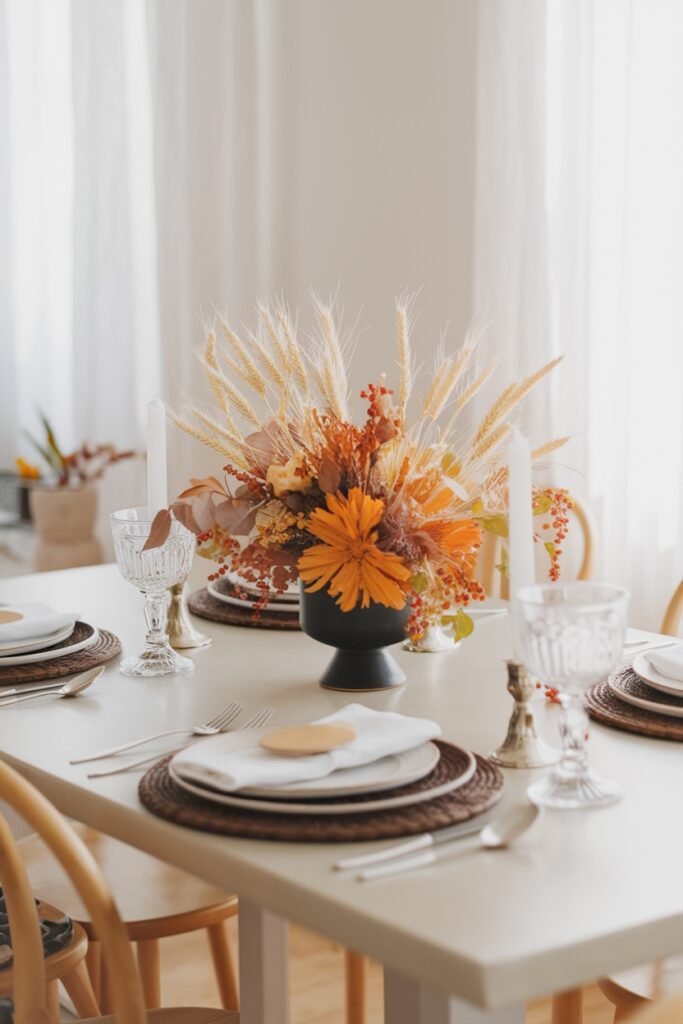
Elegance in a dried wheat arrangement comes from three decisions. Only three. Get them right and the wheat reads as a considered material choice. Get them wrong and the same wheat reads as seasonal prop.
First: vessel color. This cannot be overstated. A matte black, dark navy, or deep charcoal ceramic vessel reads as a design decision. An unglazed natural basket, a mason jar, or a burlap-wrapped container reads as a category — a rustic harvest aesthetic that the vessel communicates before anyone looks at the flowers. The dark vessel does the work of establishing sophistication before a single stem is placed.
Second: wheat quantity relative to flowers. Elegant arrangements have flower dominance. The wheat frame creates structure and texture; the flowers create visual identity. When wheat is present at more than roughly twenty percent of the arrangement’s visual mass, the arrangement shifts from flower display with wheat accent to harvest display with flowers. Both are valid aesthetics in different contexts. Elegance requires the flower proportion to lead.
Third: grain head quality. This is the detail that separates a ten-dollar farmers market wheat bunch from a craft store bunch at the same price. Hard red winter wheat with full, dense awns looks like a deliberate choice at close range. Partial or absent awns on over-dried or low-quality wheat look like degraded material. Hold the grain head close before you buy. The awn density tells you what the arrangement will look like at dinner table distance.
More ahead on ceramic bowls, which frame the wheat-and-flower combination at close autumn dining range better than almost any other vessel type.
Ideas for Dried Wheat and Fall Flowers in Cozy Ceramic Bowl Arrangements
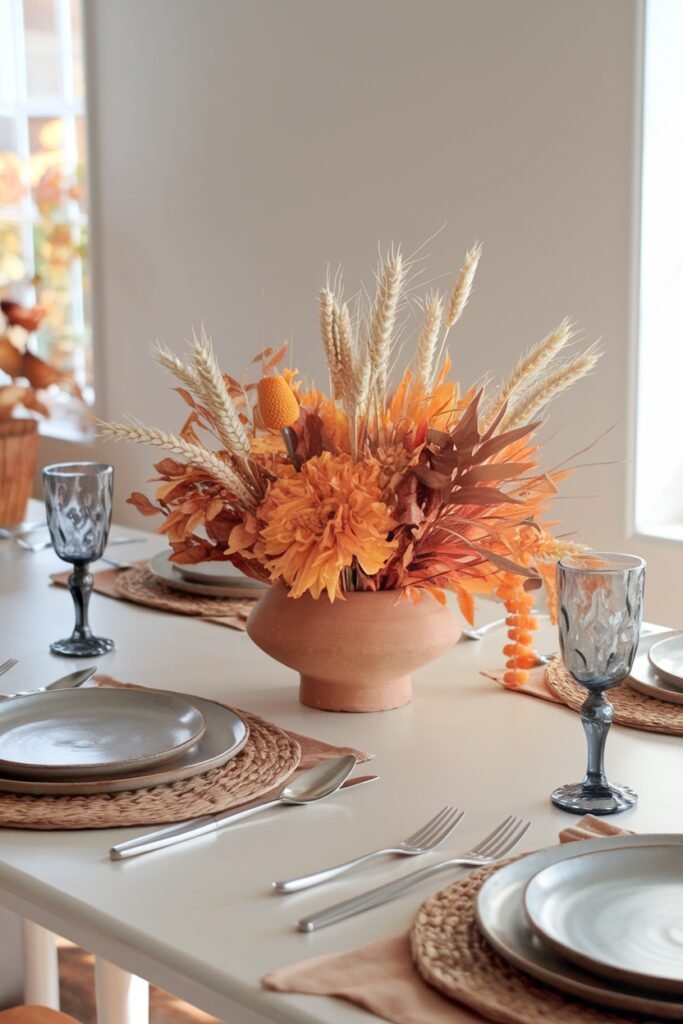
1. Amber Marigold and Wheat in a Dark Charcoal Bowl Five amber marigold stems at rim height plus three outward-angled wheat stalks in a wide dark charcoal ceramic bowl with gravel and cold water. The charcoal creates maximum contrast with the warm amber blooms and grain. The marigold fragrance at close autumn dining range adds a seasonal herbal quality. The.
2. Ivory Ranunculus and Wheat in a Deep Green Glazed Bowl Four ivory ranunculus stems plus two wheat stalks in a small deep forest-green glazed ceramic bowl. The forest green vessel creates a cool-and-warm color relationship with both the ivory ranunculus and the amber wheat simultaneously. The glazed surface catches candlelight differently from matte vessels, adding a luminous vessel quality alongside.
3. White Spider Mum and Wheat in a Navy Low Bowl Two white spider mum stems, positioned so their elongated petals extend outward, plus three outward-angled wheat stalks in a wide low navy ceramic bowl. The navy bowl amplifies both the white bloom and the amber grain by high tonal contrast. The spider mum’s fine radiating petals visible at close range.
4. Mixed Warm Autumn Blooms with Wheat in a Terracotta Bowl Two rust zinnia stems, two cream cushion mum stems, and three wheat stalks in a medium terracotta bowl, all elements cut to the same height with wheat at the outward-angled perimeter positions. The terracotta amplifies all warm tones. The two-bloom combination creates color variety within one vessel without requiring specialty.
5. Single Bloom Type and Wheat in Matched Bowl Row Three matched small dark ceramic bowls in a row down the table center, each holding four stems of the same single flower type plus two wheat stalks at outward angles. The matched vessel repetition creates a designed table runner effect. The single flower type per vessel creates simplicity and clarity.
More ahead on the place setting approach, which creates the most personal and intimate autumn dining detail available at minimal cost.
DIY Ideas for Dried Wheat Bundles with Fall Flowers at Each Place Setting
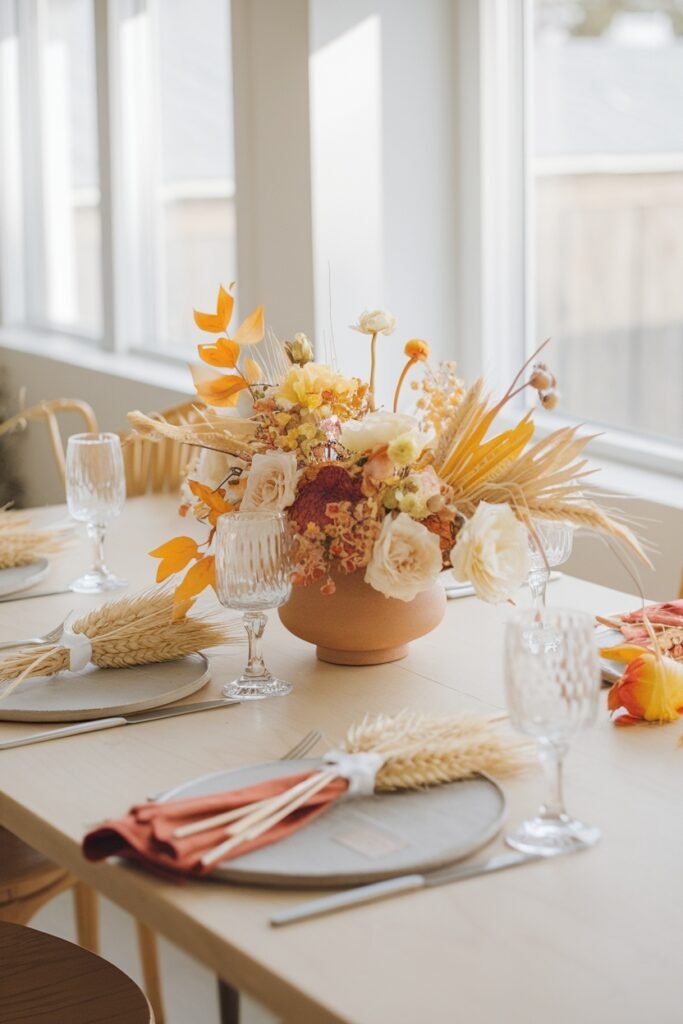
1. Bound Wheat and Marigold Bundle at Each Plate Six wheat stalks plus two amber marigold stems gathered and bound with jute twine at the mid-stem point, laid flat diagonally beside each plate. The marigold fragrance at close dinner table proximity creates a specific seasonal sensory quality at this intimate personal scale. The whole assembly takes under a minute.
2. Wheat Sheaf with One Bloom in a Weighted Bottle at Each Setting Four wheat stalks plus one fall flower stem in a small heavy-based narrow bottle, gravel-weighted at the base, at each guest’s place setting. The wheat rises two to three inches above the bloom. The bloom provides the color. The simple format reads as considered rather than casual when the bottle.
3. Wheat and Herb Bundle Tied Into Each Napkin Three wheat stalks with intact grain heads plus two rosemary or thyme sprigs, gathered and tucked into each rolled napkin or tied through each napkin ring. The grain heads extend above the napkin fold. The herb fragrance at close place-setting range creates a seasonal herb-and-harvest sensory quality that visually-only elements.
More ahead on the proportion balance in small centerpiece vessels, where the margin between composed and crowded is narrowest.
How to Balance Dried Wheat with Fresh Fall Flowers in Small Centerpieces
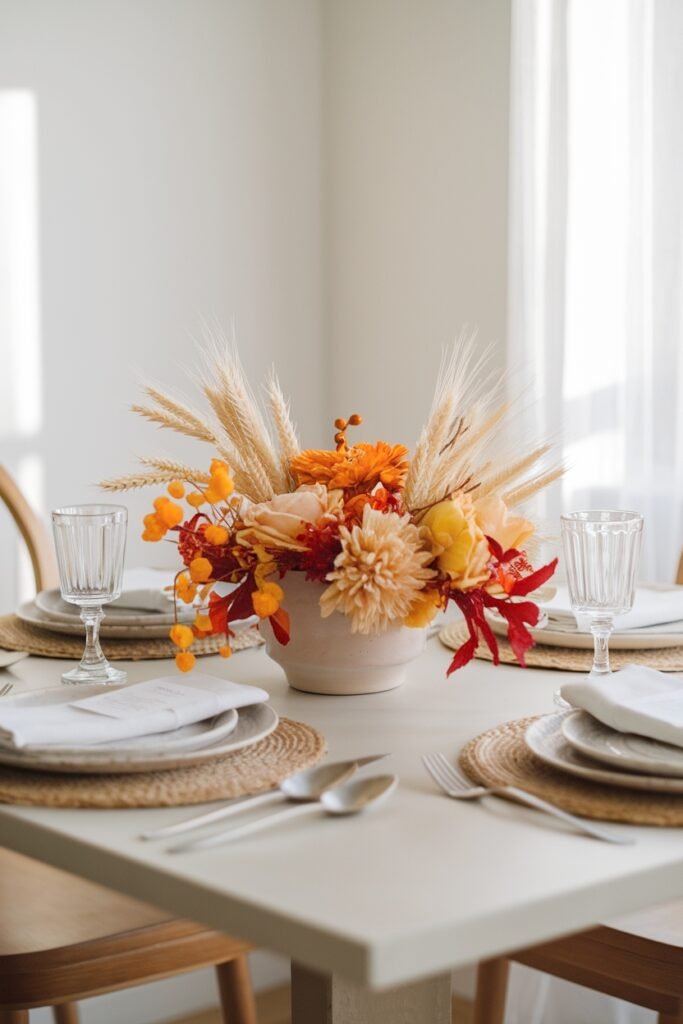
Four to six inch diameter vessels are where proportion becomes most critical. There is almost no room to be wrong.
The rule: two to three wheat stalks for every four to six fresh flower stems. The fresh flowers need visual numerical dominance. The wheat needs only two or three well-positioned stalks to create its structural and textural contribution. Adding more wheat stalks beyond three does not improve the arrangement — it competes with the flowers for visual leadership, and the arrangement loses the clear hierarchy that makes it read as composed.
The two-height wheat technique helps most at small scale. One wheat stalk at full stem length, grain head extending past the vessel rim. A second stalk cut two to three inches shorter, grain head present but recessed. The height difference creates dimension within the wheat element alone that two equal-height stalks cannot produce, and it uses only two stalks to create what looks like more complex structural variation.
Never try to add wheat to a vessel that already contains all its fresh flowers. The wheat stalk is stiff and will displace the fresh stems as it is pressed into the gravel, shifting positions that took two minutes to establish. Wheat first, always, then fresh flowers around and through the wheat structure.
Ways to Pair Dried Wheat with Burgundy Fall Flowers for Cozy Moody Tables
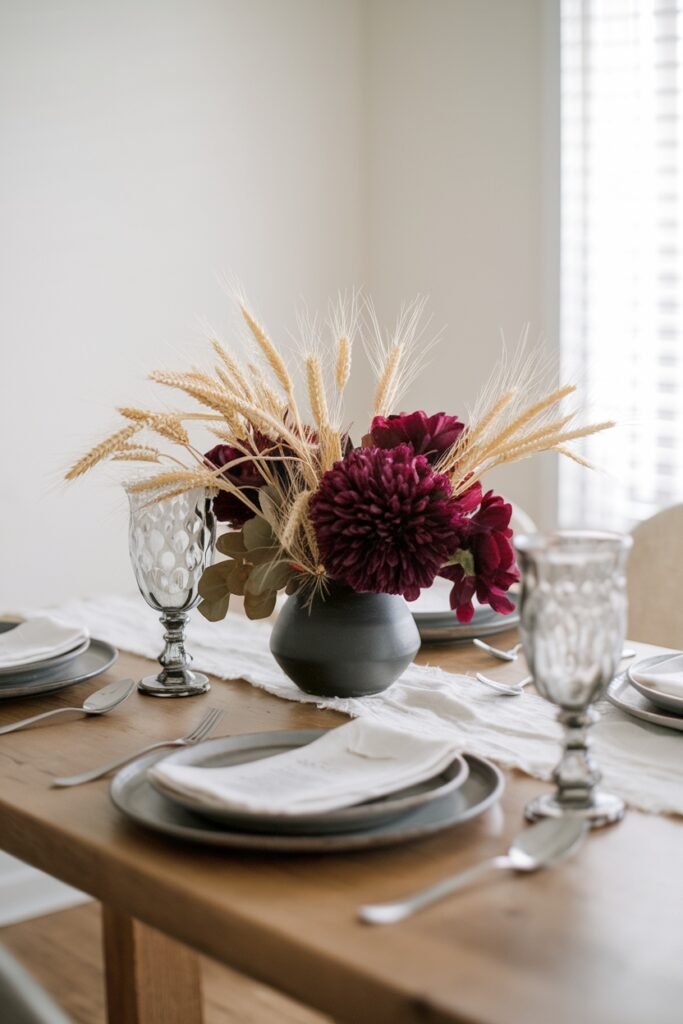
1. Deep Plum Anemone and Wheat in a Copper Pitcher Two deep plum anemone stems plus two wheat stalks in a small copper or brass pitcher with gravel and cold water. The warm metallic copper amplifies the amber wheat while the cool plum anemone creates temperature contrast across the whole composition. The graphic dark center ring of each anemone provides.
2. Dark Claret Cushion Mums and Wheat on a Flat Table Bundle Three dark claret cushion mum stems in individual water picks plus four dried wheat stalks arranged in a flat bundle format along the table runner. No central vessel. The wheat and mum picks alternate along the runner. The flat format suits narrow dining tables where vessel height creates a sightline.
3. Burgundy Lisianthus and Wheat in a Dark Compote Two burgundy lisianthus stems with mixed bud and open bloom stages plus two wheat stalks in a dark ceramic compote. The progressive bud opening over five to seven days means the arrangement looks different across consecutive autumn dinner evenings. The compote’s raised foot creates presence without height. The burgundy lisianthus’s.
4. Wine-Red Aster and Wheat in a Matte Black Low Bowl Six wine-red aster stems at rim height plus three outward-angled wheat stalks in a wide matte black low ceramic bowl. The matte black amplifies both the dark wine-red bloom and the warm amber grain simultaneously. The aster’s flat daisy face at close intimate dining range is visible in its yellow-center.
5. Rust Zinnia, Burgundy Accent, and Wheat in a Terracotta Vessel Three rust zinnia stems plus two deep burgundy dahlia or mum stems plus three wheat stalks in a medium terracotta vessel. The rust-to-burgundy color progression within the warm-dark spectrum creates visual movement across the arrangement without introducing any color outside the autumn warm range. The terracotta vessel’s warm tone bridges.
Conclusion
The difference between a wheat arrangement that looks intentional and one that looks like harvest decoration is almost always a sequencing problem.
Wheat first. Angles established before a single flower stem goes in. Fresh flowers built around the wheat structure rather than pressed in beside it. Dark vessel that creates contrast rather than blending in. Two to three wheat stalks maximum for every four to six fresh stems.
That is all of it. The wheat handles October. You just have to let it do its job.
This website contains affiliate links, and some products are gifted by the brand to test. As an Amazon Associate, I earn from qualified purchases. Some of the content on this website was researched and created with the assistance of AI technology.