This website contains affiliate links, and some products are gifted by the brand to test. As an Amazon Associate, I earn from qualified purchases. Some of the content on this website was researched and created with the assistance of AI technology.
Key Takeaways
- White flowers at close autumn dining range catch and reflect candlelight differently from warm-toned flowers. The glow quality is most visible at intimate dining distance, not across a larger room
- Dark vessels matter more for white fall flowers than for any other color. White in a clear or light vessel disappears. White in a matte black, charcoal, or dark navy vessel reads as luminous and intentional
- White asters and white spray mums are the two most useful small autumn centerpiece flowers at grocery store pricing because both branch into multiple bloom heads per stem
- Warm autumn accents, wheat stalks, a single amber carnation, or a small pear beside the vessel, provide the seasonal context that prevents white flowers from reading as winter or Easter
- White carnations at close autumn table range show fringed petal edges and subtle tonal graduation that are only visible at close range, which makes them specifically interesting for small intimate dining
- White fillers, waxflower, statice, and gypsophila, change the visual density of a white arrangement more than additional focal blooms do
White flowers in fall look like a mistake until they are in the right vessel, and then they look like the best decision you made all season.
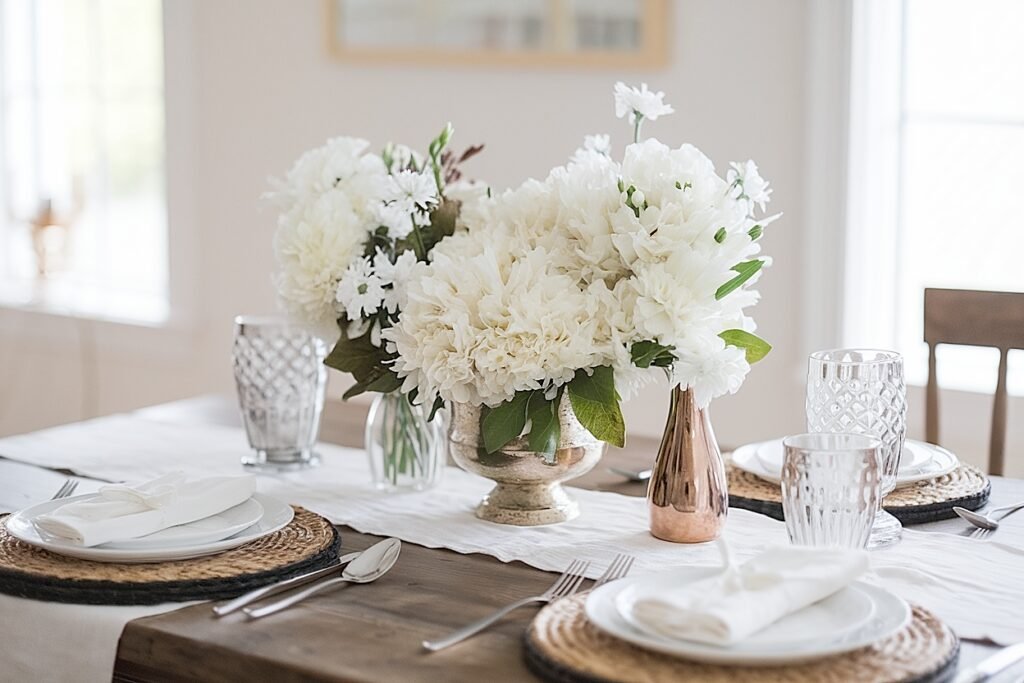
Choosing the best white flowers for small autumn table centerpieces is the move that goes against every visual instinct in October. The season is orange. It is amber and rust and deep burgundy. The grocery store flower section is stocked exclusively in warm tones, and walking past all of that to buy white feels counterintuitive in a way that is hard to explain until you see it on the table. White in a dark vessel beside a lit taper candle at a fall dinner table glows. Not reflects. Glows from inside the bloom. Warm-colored flowers at the same candlelit distance absorb the light and read as rich and moody. White bounces it back and creates luminosity that no warm-toned flower produces.
I started using white fall flowers after a Thanksgiving where I ran out of any other option and grabbed the only bunch left at the grocery store. White chrysanthemums. I was annoyed about it at the time. By the time dinner was done, three people had asked specifically where the arrangement came from. That was the last time I underestimated white in October.
Use this white-flower guide before choosing blooms for a small autumn centerpiece. Each row compares a white flower, its best role, the warm accent that keeps it seasonal, and the small-table benefit. The goal is a bright arrangement that still feels cozy, practical, balanced, and clearly autumnal.
| White Flower Choice | Best Centerpiece Role | Warm Autumn Accent | Small-Table Benefit |
|---|---|---|---|
| White mums | Main fullness flower | Bronze button mum | One bloom can make a low bowl feel full. |
| White asters | Airy texture flower | Taupe ceramic vessel | Tiny blooms add movement without heavy volume. |
| White carnations | Budget ruffled flower | Tiny rust accent | Ruffled petals create fullness at a modest cost. |
| White spray mums | Flexible mini-arrangement flower | Oatmeal linen napkin | One piece can divide into several small displays. |
| White alstroemeria | Soft shape flower | Matte brown side plate | Adds graceful shape when used sparingly and low. |
Resources:
- How to Care for Asters, the Pretty Perennials That Bloom in Fall
- Don’t Ignore Mums in July – 5 Easy Tasks for Big Fall Blooms | Gardening Know How
- Preparing Cut Flowers and Houseplants for Exhibits – Iowa State …
- Mums Vs. Asters and How To Use Them in Your Landscape | HGTV
How to Choose the Best White Fall Flower Varieties for Small Autumn Table Centerpieces
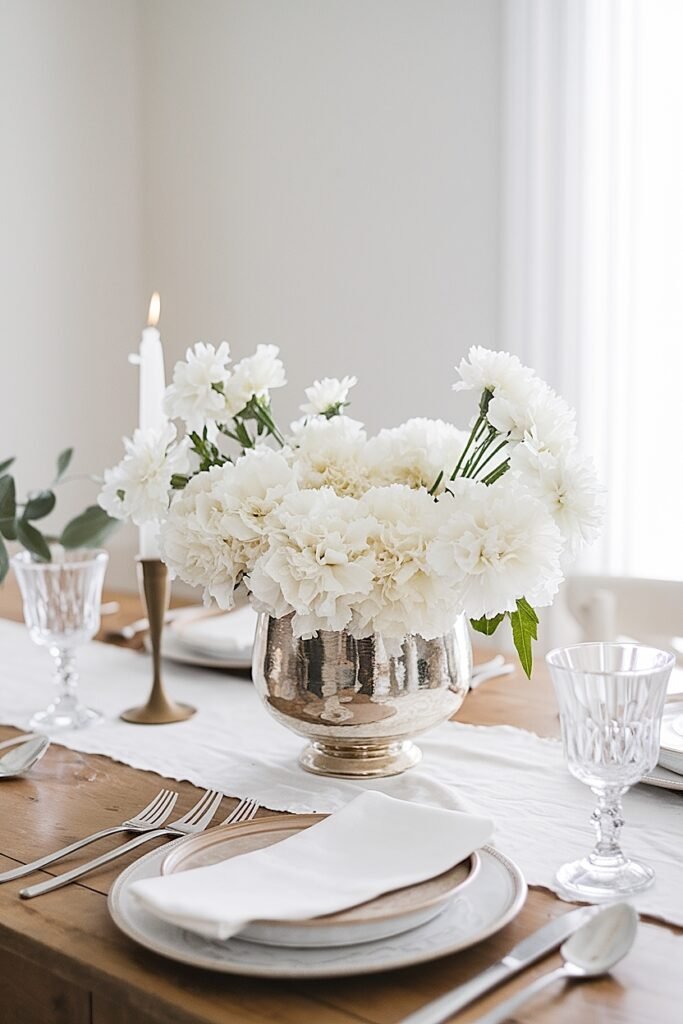
Not every white flower suits close autumn dining range.
Large single-headed white flowers, gerbera daisies, standard garden roses, dinner-plate dahlias, were designed to read across a room. At eighteen inches from a seated dinner guest, they are too big. They take up the wrong amount of visual space at the wrong scale for the viewing distance. One large white gerbera face in a small bowl at an apartment dining table reads as one very conspicuous flower rather than an arrangement.
Smaller-headed and branching varieties suit the close-range fall table context specifically. White spray mums, white asters, white waxflower, white lisianthus, white spray roses, white statice. These flowers have the right scale for the viewing distance and the right stem structure to fill small vessels with visual density rather than occupying the space with one big bloom.
The warm autumn context requirement is real. White flowers at a fall table without any warm seasonal accent read as off-season. The wrong season, specifically. White asters in a dark bowl beside a cream tablecloth look like early spring. The same white asters in a dark bowl beside one outward-angled wheat stalk look like fall. The accent provides the seasonal signal that the white flower itself does not carry.
For more on the best grocery store fall flowers for small centerpieces, including the spray mum sub-stem cutting technique that gives you six arrangement insertions from one stem, check out best grocery store flowers for small fall centerpieces. Share this with someone who decorates their fall table. The section on white asters ahead covers the specific small-scale applications where white succeeds most.
Ideas for White Aster Fall Flower Texture in Small Autumn Table Centerpieces
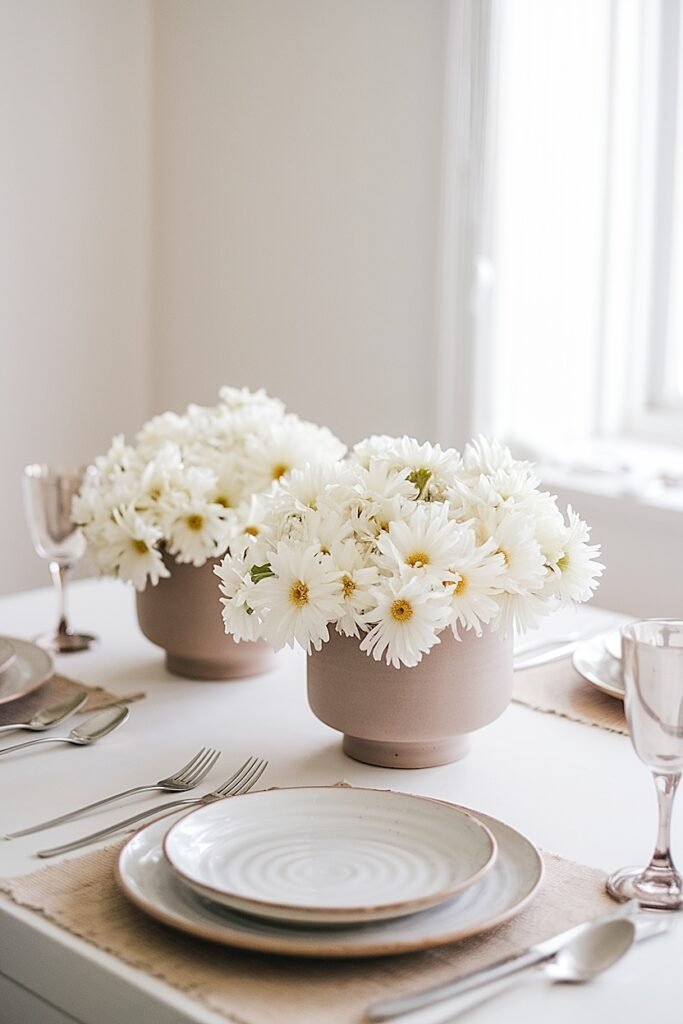
White asters are the white fall flower I reach for first.
The small flat daisy face with a yellow center is the most useful bloom structure for a small centerpiece because it reads as complete and specific at close range while remaining small enough to suit a compact vessel without overwhelming it. The yellow center adds the one warm note that prevents an all-white arrangement from reading as cold. At close candlelit autumn dining distance, those yellow centers glow in a way that reads as specifically warm-season rather than wintry.
1. Eight White Asters and One Wheat Stalk in a Wide Dark Bowl Eight white aster stems cut to one and a half inches above the rim in a wide dark ceramic bowl, with one outward-angled wheat stalk pressed into the gravel at the outer edge. The wheat provides the autumn seasonal signal. The white aster faces at close range glow in warm candlelight. The yellow centers against the cool white petals create warmth within the arrangement that the vessel and surrounding context.
2. White Asters and Sage in a Small Dark Mug Six white aster stems plus one fresh sage sprig in a dark navy or charcoal ceramic mug with gravel and cold water. The sage fragrance fills a small dining area within minutes. At close table range, the felted grey-green sage leaf texture and the white daisy faces create a cool-toned autumn combination that reads as soft and specific. The yellow aster centers add the single warm accent within the cool.
3. White Asters at Each Place Setting With Amber Accent Three white aster stems in a small dark bud vase at each dinner place, with one short amber or rust carnation stem pressed in beside them. The single warm-toned accent alongside the white asters provides the autumn context per setting. At close personal dining distance, the white-and-amber contrast reads as a considered color decision rather than a random pairing.
4. White Aster and Sedum in One Low Vessel Five white aster stems plus two sedum cluster stems in a wide low dark bowl. The sedum’s flat disc structure at close range creates a completely different bloom surface from the aster daisy face, providing textural depth within an all-cool autumn palette. The sedum holds after the asters are replaced. The vessel holds its visual character across multiple stem changes.
5. Floating White Asters and Sage Leaves in a Wide Saucer Four white aster heads with stems removed plus three individual sage leaves flat on the water surface in a wide saucer with one inch of cold water. Zero height. At close overhead dining angle, the floating white blooms and grey-green sage leaves create a soft surface display. The arrangement is entirely at table level and cannot obstruct any sightline between diners.
6. Mixed White Aster and White Spray Mum Sub-Stems Four white aster stems plus four white spray mum sub-stems, each carrying two to three bloom heads, in a wide dark bowl. Two distinct white bloom structures at the same color create visual depth at close range that single-variety white arrangements cannot achieve. The aster’s flat daisy face and the spray mum’s rounder compact pompom face read as different textures within the same white tone.
7. White Aster Row in Matched Bud Vases With Wheat Between Three matched small dark bud vases in a row, each holding three white aster stems, with two dried wheat stalks laid flat on the table surface between the vases. The wheat creates the autumn seasonal context at table surface level between the vessel positions. The white asters above the table surface in matched vessels read as a coordinated display. The flat wheat between them connects the three vases into one.
How to Pair White Fall Flower Centerpieces With Warm Autumn Accents
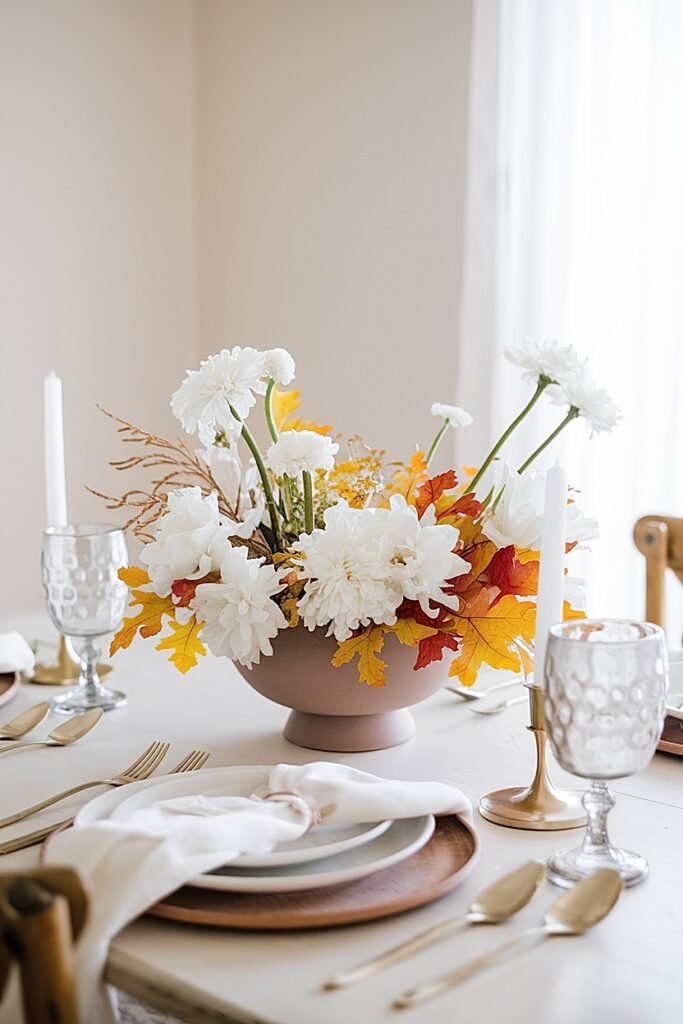
White needs one warm thing beside it in October.
Not a warm arrangement alongside the white arrangement. Not five warm autumn accents fighting for the same table space as the white flowers. One warm element. One is enough and two starts to dilute the reason the white was chosen in the first place.
The warm element options that work best alongside white fall flowers at close table range: a single outward-angled wheat stalk pressed into the arrangement vessel edge. One amber or rust carnation stem among the white stems. A small whole Bosc pear on the table surface beside the vessel. A copper or brass taper candle holder with a lit taper six inches from the bowl. Any one of these provides the autumn seasonal signal that converts the white flowers from off-season to specifically fall.
The pear option is worth specifically noting because it costs nothing extra if the fruit is already in the kitchen and it creates a genuinely beautiful still-life quality at close autumn dining range. White asters in a dark bowl with one small golden-green pear beside it is an autumn table detail that photographs beautifully and costs under ten dollars in total materials.
The candle option requires the least arrangement modification of anything in the list above. Do not put the candle inside the arrangement. Six inches beside the vessel. The warm candlelight does the accent work by changing what the white flowers look like at close range rather than by adding a physical warm-toned element to the arrangement itself.
Ways to Use White Carnation Fall Flower Blooms for Budget Autumn Centerpieces
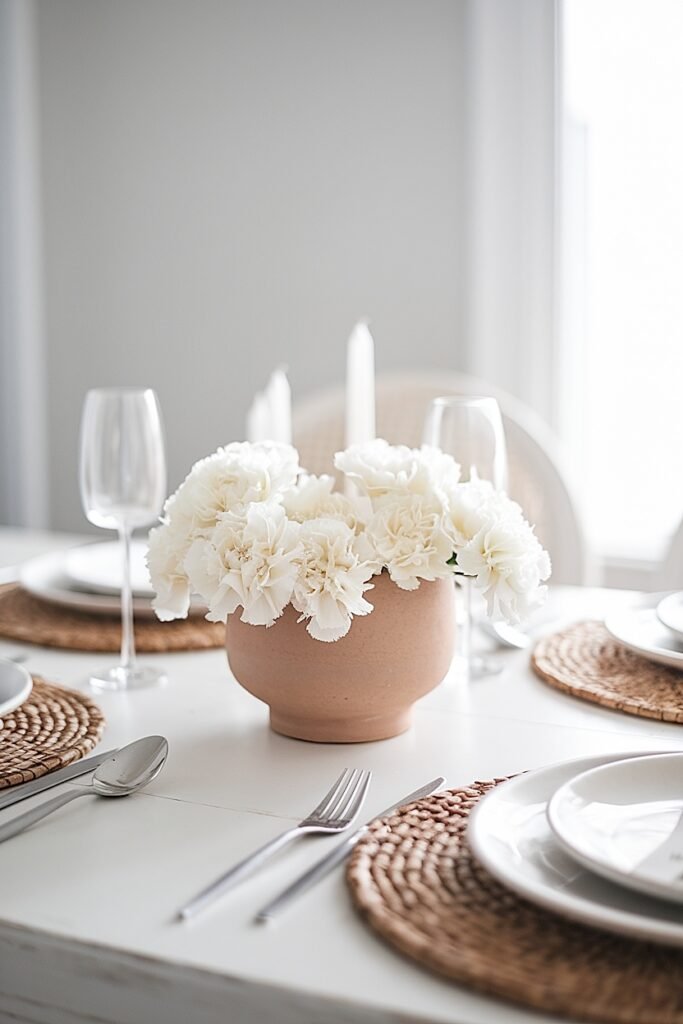
1. Seven White Carnations in a Wide Matte Black Bowl Seven white carnation stems cut to two inches above the rim, all pressed into gravel at slight outward angles in a wide matte black bowl with cold water. The matte black creates the sharpest possible contrast with the white bloom at close autumn dining range. The fringed carnation petal edge.
2. White Carnation and Amber Accent in a Dark Narrow Crock Five white carnation stems plus one amber or rust carnation stem at the arrangement center in a short dark ceramic crock. One warm accent in an otherwise all-white vessel shifts the whole arrangement into autumn territory. The single warm stem at the center reads as a focal point that the.
3. White Carnations and Dried Wheat at Each Place Setting Two white carnation stems plus one short dried wheat stalk in a small dark bud vase at each dinner seat. The wheat provides autumn context per setting. The white carnation in candlelight at personal dining distance shows fringed petal detail only visible at this close range. Under a dollar fifty.
4. White Carnation Floating Bowl With Sage Leaf Accents Four white carnation heads with stems removed floating face-up in a wide shallow bowl, with two dried oak leaves pressed flat on the water surface between the blooms. The oak leaves provide autumn context at water surface level. The floating white carnation faces at close overhead dining angle glow against.
5. White Carnation and Seeded Eucalyptus in a Copper Pitcher Five white carnation stems plus two seeded eucalyptus strands in a small copper or brass pitcher with gravel and cold water. The warm metallic copper vessel provides the autumn warm tone that the white carnations and grey-green eucalyptus do not carry. In candlelight, the copper pitcher glows at the same.
DIY Ideas for White Spray Mum Fall Flower Centerpieces on Small Tables
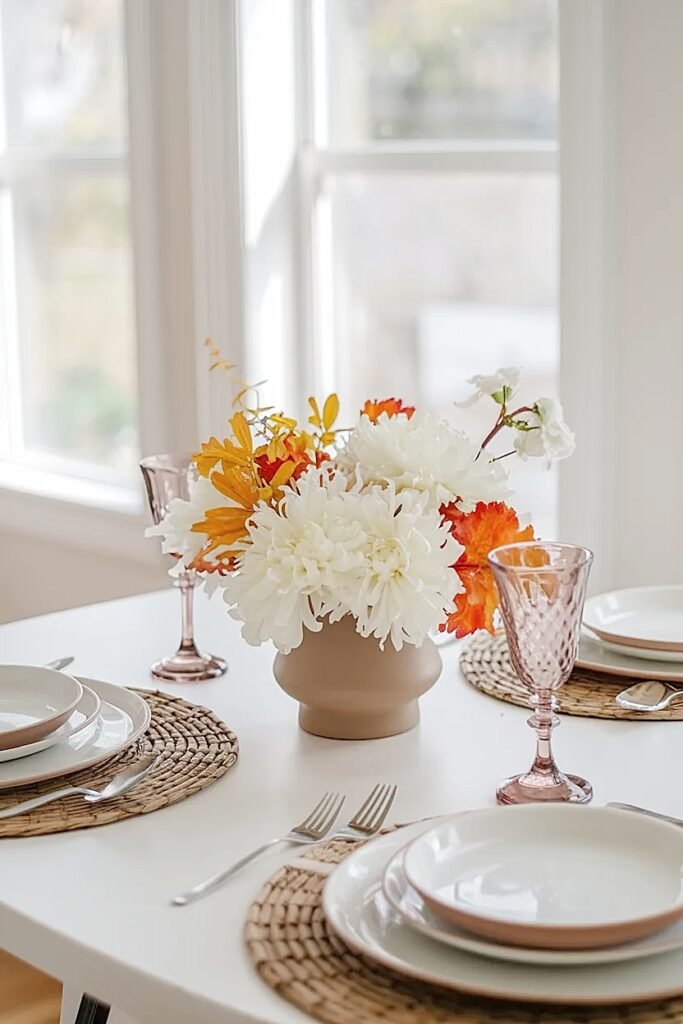
1. One Spray Mum Stem Cut Into Sub-Stems in a Wide Dark Bowl One white spray mum stem cut into individual branches at three to four inches, all pressed into a wide dark bowl with gravel. One stem provides six to eight individual branch insertions, each carrying two to three bloom heads. The entire small vessel fills from one stem. Add one wheat.
2. White Spray Mum and Black-Eyed Susan Accent Four white spray mum sub-stems plus two black-eyed Susan stems, the warm golden petals and dark centers creating the autumn accent, in a small dark vessel. The warm yellow-and-brown of the black-eyed Susan reads as specifically October beside cool white spray mums. Available at grocery stores and farm markets through.
3. White Spray Mum Compote With Pear on the Side Five white spray mum sub-stems in a low dark compote with gravel and cold water, positioned with one small whole pear directly beside the compote on the table surface. The white spray mum provides the arrangement. The pear provides the autumn context. Together they create a still-life quality on the.
How to Keep White Fall Flower Centerpieces from Looking Too Plain
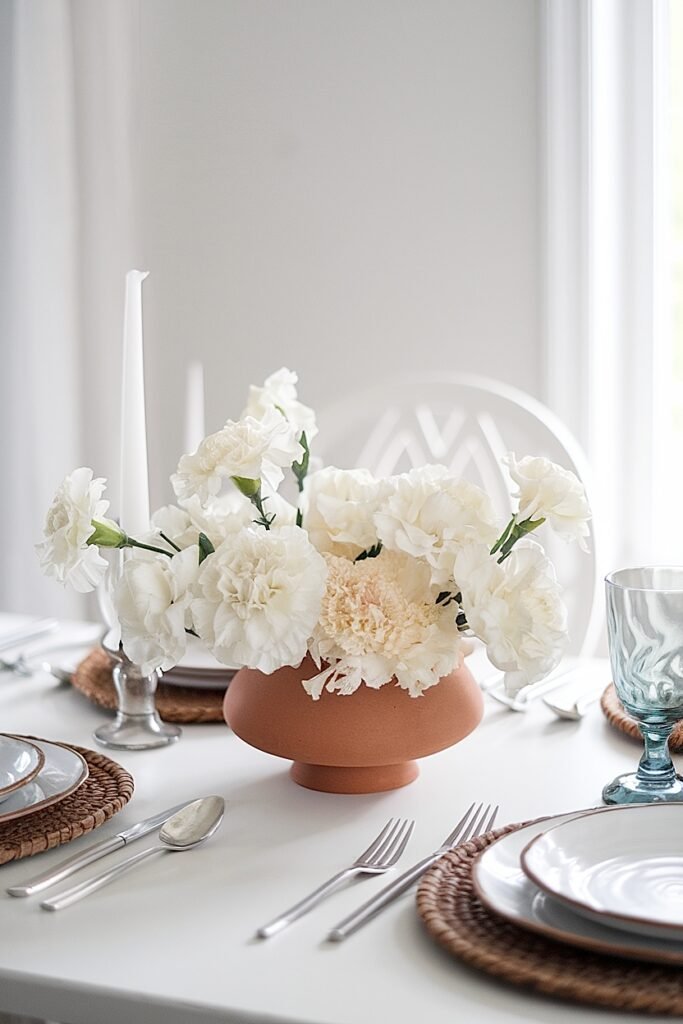
Plain is a positioning and accent problem, not a flower problem.
White flowers in a small vessel without any contextual element, no seasonal accent, no warm vessel tone, no candlelight nearby, look like someone put white flowers in a jar. Which is what happened. The same flowers in a matte black vessel, with one wheat stalk at the outer edge, beside a lit copper candle holder, look like someone designed an autumn table detail. The flowers are identical. Everything else changed.
The vessel does the heaviest lifting. A plain white carnation looks like a grocery store flower in a clear container. The same carnation in a dark matte crock looks like the right flower chosen for the right purpose. No other change required.
The second intervention is the warm accent beside the arrangement rather than inside it. The pear. The wheat stalk on the table surface. The candle. These elements create the seasonal context that prevents white from reading as generic without requiring any additional flowers or complexity inside the vessel itself.
What Are the Best White Fall Flower Fillers for Small Autumn Centerpieces?
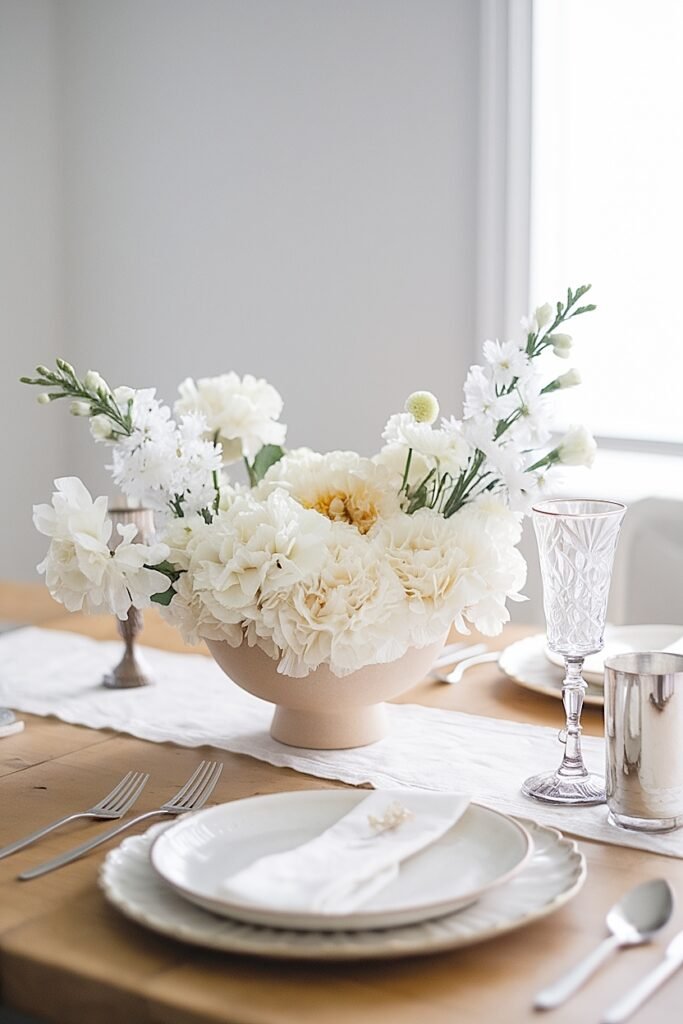
1. White Waxflower One waxflower stem branches into dozens of tiny star-shaped blooms, each contributing white texture at close range without any single branch drawing eye attention. The fine distributed coverage fills the visual gaps between focal blooms in a small vessel without adding visual weight or height. The subtle fragrance at close.
2. White Statice Papery-textured statice clusters hold their structure and color indefinitely without visual decline, which makes white statice the filler that outlasts every fresh flower it is paired with. After the spray mum or carnation stems are replaced, the statice continues providing white texture coverage at the arrangement base. One bunch fills.
3. White Gypsophila at Low Proportion One gypsophila stem per arrangement pressed toward the back of the vessel, creating atmospheric white mist behind the focal flowers rather than distributed throughout. Used this way, gypsophila creates spatial depth without the heavy filler quality that makes it read as dated in high volume. The mist quality at close.
4. Dried White Ammobium Everlasting flowers in white, similar in character to white gomphrema ball blooms, hold their color and structure indefinitely at room temperature. At close small centerpiece range, the papery white ball heads create compact texture accent alongside fresh white blooms. A filler that transitions seamlessly between the fresh arrangement stage and.
5. White Sedum Cluster Where available, white or pale cream sedum cluster heads provide flat disc texture that no other filler material replicates at the same close-range viewing distance. The hundreds of tiny individual florets packed into each cluster head create a botanical surface complexity visible at autumn intimate dining scale. Dries naturally in.
Conclusion
White flowers in fall work because of what they do in low light, not because they fit the expected seasonal palette.
At a candlelit autumn dinner table, at the close viewing distance of an intimate meal, white blooms catch and return warm light in a way that changes the whole visual quality of the table. A dark vessel, one wheat stalk, one lit candle beside the bowl. Those three decisions turn a bunch of white asters into an autumn table detail that reads as specifically intentional.
It is a small shift. It looks like a large one.
This website contains affiliate links, and some products are gifted by the brand to test. As an Amazon Associate, I earn from qualified purchases. Some of the content on this website was researched and created with the assistance of AI technology.