This website contains affiliate links, and some products are gifted by the brand to test. As an Amazon Associate, I earn from qualified purchases. Some of the content on this website was researched and created with the assistance of AI technology.
Key Takeaways
- Rectangular dining tables work best with linear centerpiece formats that run along the table length axis, not single focal points at the center
- White flowers at a narrow rectangular table centerpiece create a luminous axis visible from both table ends in low dinner lighting that warm-toned flowers do not produce
- The centerpiece width should never exceed one-third of the table width. On a standard thirty-six-inch wide table, that means a twelve-inch maximum centerpiece width including all vessels
- Repeating three to five matched small dark vessels creates the designed look that a rectangular table requires without any individual vessel being large enough to block sightlines or interfere with service
- White flowers specifically need dark vessels in a narrow rectangular centerpiece to remain visible as distinct elements against the table surface and surrounding dinnerware
A rectangular dining table is a completely different design problem from a round one, and most centerpiece advice does not acknowledge the difference.
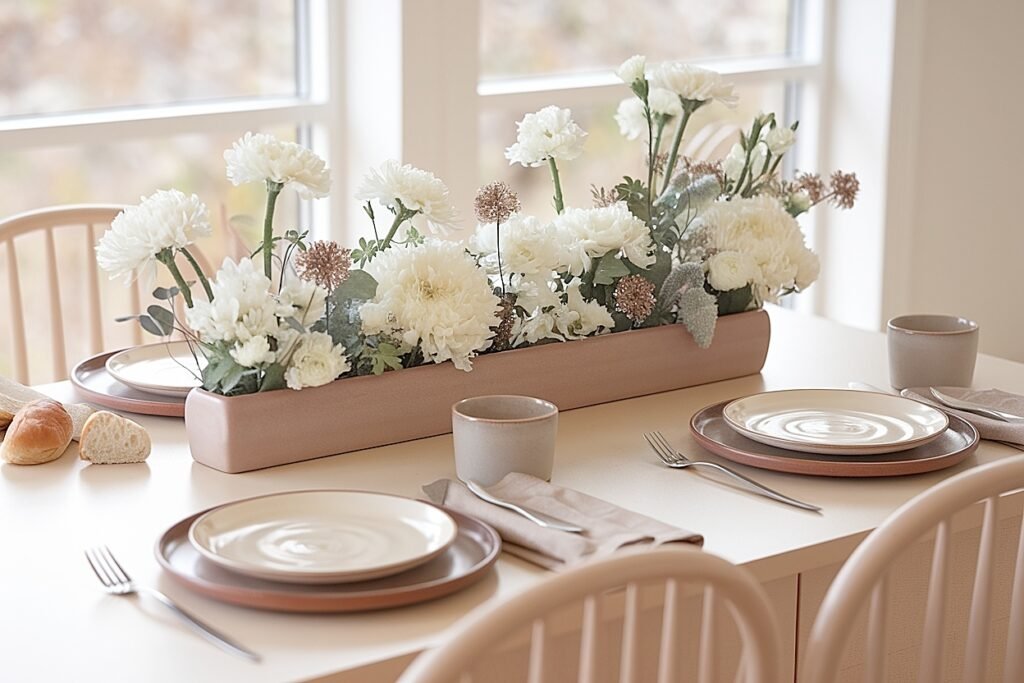
Creating a narrow white fall flower centerpiece for a rectangular dining table means working with the table’s axis rather than against it. The length is the dominant dimension. Six feet of table, two feet wide, four to eight people seated along the sides. The centerpiece that reads as a composed display at this table needs to follow the length axis, not sit as a single focal point in the geometric center the way a round table centerpiece does. A single bowl at the middle of a rectangular table looks lost. A line of three matched small vessels running the table length looks designed.
White flowers suit this format specifically because white catches and reflects ambient and candlelight from a distance down the table length in a way that warm-colored flowers do not. A line of white flower vessels at a long rectangular table in low dinner lighting creates a luminous axis that reads the length of the table. The same line in rust or burgundy reads as a row of objects rather than a visual run of light.
Use this guide to choose the best narrow centerpiece layout for your rectangular dining table. Each row compares a real table challenge, the best white flower format, the most practical placement, and the dining benefit. The goal is a bright autumn table that feels decorated without losing serving or eating space.
Narrow White Fall Flower Centerpiece Layout Guide
Use this table to choose a slim centerpiece layout that fits a rectangular dining table without crowding plates, cups, bread, serving platters, or side dishes.
| Rectangular Table Challenge | Best Narrow White Flower Layout | Best Flowers and Warm Accents | Why This Helps During Dinner |
|---|---|---|---|
| Long platter in the center A roast platter, bread board, or shared main dish needs the middle of the table. | Place two or three tiny vessels slightly off-center in a lengthwise line beside the platter. Keep the flowers parallel to the platter, not crossing into the serving lane. | White asters, compact white spray mums, pale sedum, and one small white mum. Use taupe ceramics and tiny bronze accents for autumn warmth. | The table still looks decorated, but guests can reach the platter, lift serving utensils, and pass food comfortably. |
| Very narrow table width Opposite place settings nearly meet in the middle, leaving only a slim open strip. | Use one slim low ceramic vessel between the place settings. Keep the broadest bloom in the center and smaller textures near the ends. | One white mum, white carnations, white asters, pale sedum, and muted greenery. Pair with oatmeal napkins and matte brown side plates. | The arrangement creates a focal point without reducing plate depth, cup access, or comfortable silverware placement. |
| Bread and side dishes need gaps Small food dishes need flexible landing spots throughout the meal. | Repeat three to five mini bowls down one side of the table with open spaces between them. Leave intentional pauses where bread, salad, or vegetables can sit. | Repeated white asters, white spray mum blooms, small carnations, and pale sedum. Use matching cream, clay, or taupe mini bowls for unity. | The flowers add rhythm and length while the open gaps keep the table flexible as new dishes arrive. |
| Guests sit on both long sides The centerpiece must look good from two directions and stay below the conversation line. | Create a low two-sided line along the center or slightly off-center strip. Avoid a front-facing arrangement that looks finished from only one seat. | White mums as small anchors, white asters at both ends, white carnations for ruffled detail, and bronze accents. Repeat the same flower on both sides for balance. | Both diners see a finished arrangement, conversation stays easy, and the centerpiece does not feel like a barrier. |
| Meal plan may change Extra dishes, dessert plates, or serving bowls may need space after the table is styled. | Use lightweight movable mini vessels near corners, ends, or one long edge. Choose pieces that can slide aside without disturbing the whole table. | White asters, small white carnations, compact spray mums, pale sedum, and one tiny bronze detail. Keep each vessel low, stable, and easy to lift. | The centerpiece adapts when food arrives, dessert begins, or serving space changes, while the table still feels pretty. |
Resources:
- How to Create a Floral Arrangement | Yard and Garden
- How to make a bouquet last longer this Mother’s Day | AP News
- Ditch Mums This Fall and Grow This Underrated Flower Instead, Gardeners Say
How to Design Narrow White Fall Flower Centerpieces for Rectangular Dining Tables
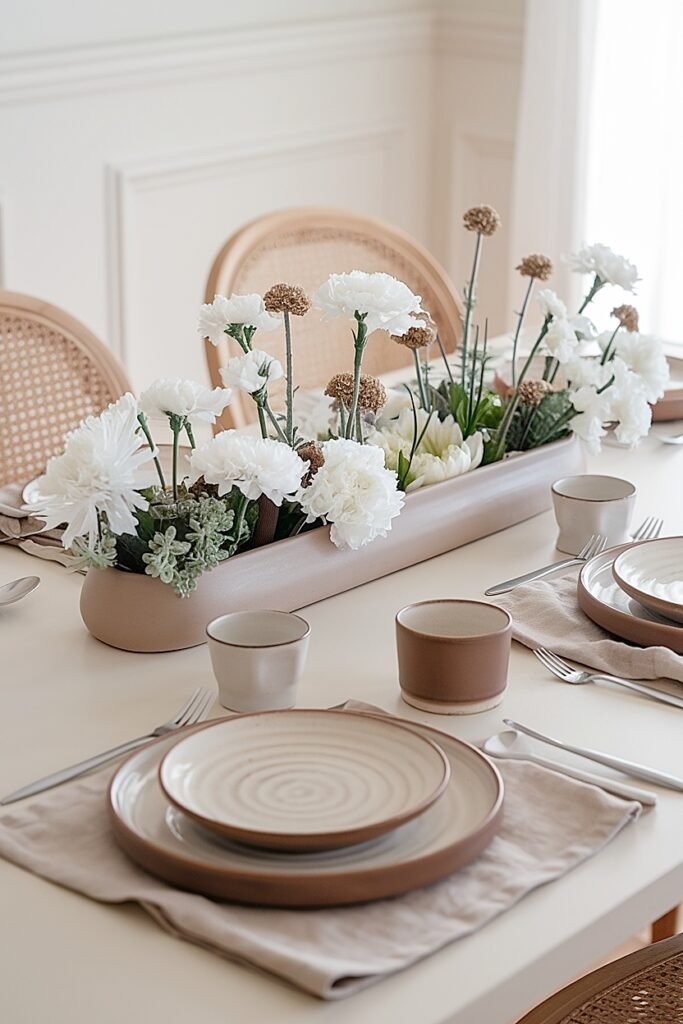
The first question is not which flowers. It is how many vessels and where they go.
A single large vessel at the center of a six-foot rectangular table reads as an island. Visually isolated. Not a centerpiece for the whole table, just decoration for the middle section. Guests at the far ends feel like they are sitting at a different event. The flower arrangement that works at a rectangular table resolves this by running in the same direction as the table, connecting the far ends rather than sitting between them.
Three vessels work for a four-person table. Five for a six-person table. Seven for eight or more. Each vessel holds three to five white stems. The spacing between them creates the service gaps that allow platters to land without displacing flowers. The line reads as a coordinated display from any seat at the table because the arrangement runs parallel to the seated guest’s own position rather than being a single object at a distance.
The width constraint is what the word narrow actually means here. One-third of the table width, maximum. On a thirty-six-inch wide table, that is twelve inches. On a forty-two-inch wide table, fourteen inches. Each individual vessel in the line should be under four inches wide. Three to four-inch wide vessels in a line occupy less than four inches of table width and create the twelve-inch maximum with enough space between each vessel for a serving dish to slot in.
For the narrow rectangular table format to work with white flowers, the vessel color has to provide the contrast that white flowers depend on. White vessels disappear into the table surface and surrounding white tableware context at close dining range. Dark navy, matte charcoal, forest green, terracotta: any of these vessels make the white stems visible as a distinct design element running the table length. Three matched dark four-inch crocks with six white spray mum sub-stems each, spaced at sixteen-inch intervals, is a complete and very good rectangular table centerpiece.
For more on the dinner-space considerations for white flower autumn arrangements, including the six-inch clearance standard and the white-against-white disappearance problem, see small white flower autumn centerpieces that leave room for dinner. If this is useful, share it. The section on slim centerpiece line ideas is next.
Ideas for Slim White Fall Flower Centerpiece Lines on Rectangular Tables
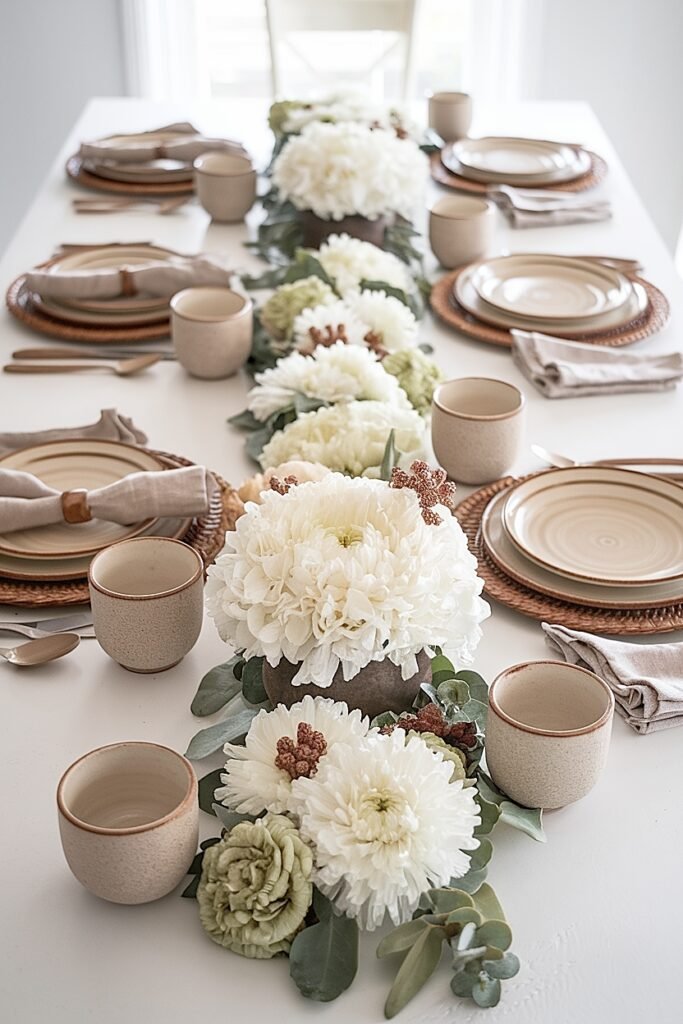
The line format has three distinct approaches. Each one suits a different table width, guest count, and service style.
1. Three Matched Dark Vessels in a Row With Equal Spacing Three matched four-inch dark ceramic crocks positioned at equal intervals down the table length, each holding five to six white fall flower stems at rim height, with serving-dish-sized gaps between each vessel. The matched vessels read as a designed system. The gaps between them are not empty space: they are where the bread basket, the butter dish, and the water pitcher live during dinner. Spacing should be about sixteen to.
2. Individual Water Picks in a Linear Formation Eight to ten white flower stems in individual water picks lined down the center of the table, with dried wheat stalks laid flat on the table surface between every second pick, running the full table length. No central vessel at all. The picks are under one inch of diameter each. The combined line width is under two inches. Serving dishes can land anywhere along the table because the picks and.
3. Bud Vase Row With White Flowers and Alternating Autumn Accents Five slim dark bud vases in a row, three holding white spray mum sub-stems and two holding single autumn accent stems, a burgundy carnation or one outward-angled wheat stalk. The alternating accent vases create tonal rhythm along the line. At close dining range from any seat, the white vases glow and the accent vases provide warm contrast. At the end-of-table viewing distance, the line reads as a cohesive white display.
How to Keep White Fall Flower Centerpieces Narrow on Rectangular Dining Tables
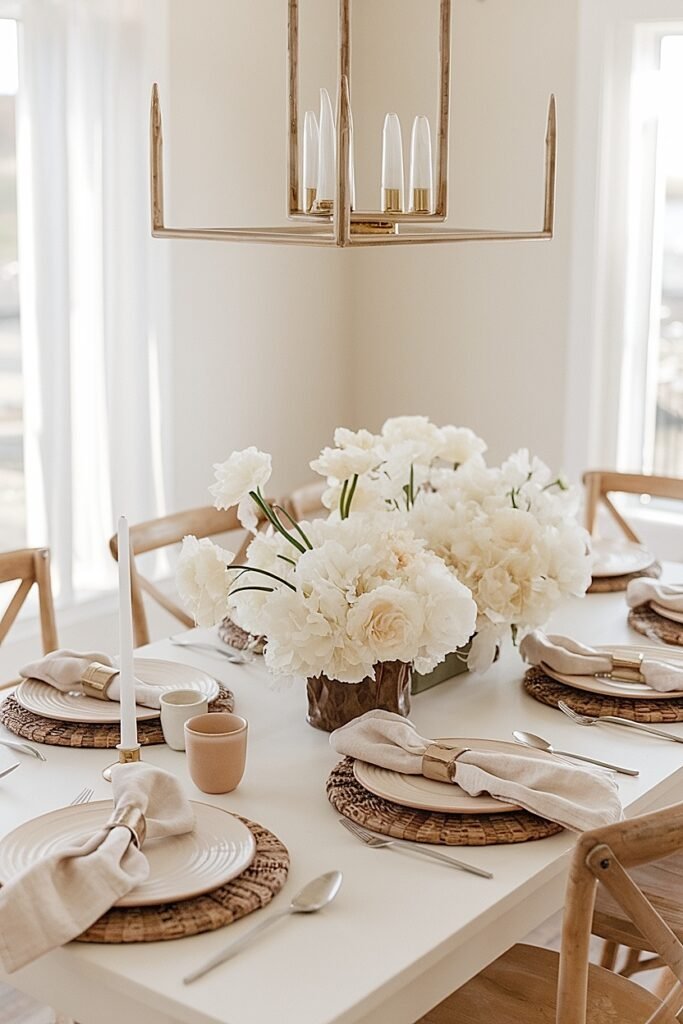
Narrow gets broken by one of two things. Spreading flower branches and widening vessel choice.
Spray mum branches spread outward naturally as they are placed in a vessel. If the branches are left at their full length before insertion, they extend past the vessel rim on every side and add six to eight inches of width to the arrangement footprint. Cut each branch from the main stem as a sub-stem three to four inches long before placing. The bloom cluster sits at or just above the vessel rim rather than extending outward.
The vessel selection determines the footprint baseline before any flower goes in. A four-inch wide vessel with sub-stems cut at two and a half inches above the rim has a total footprint of approximately five to six inches including any slight stem lean at the rim edge. That fits within the one-third table width requirement even on a table as narrow as twenty-four inches.
Individual flower heads that nod or droop, cosmos, sweet peas, certain aster varieties, are difficult to use in narrow rectangular centerpieces because the drooping head extends horizontally beyond the vessel rim without adding any visual height that might make the extension worthwhile. Upright-facing compact blooms, pompom mums, gomphrema balls, button mums, statice clusters, all stay within a narrow footprint because their bloom structure is self-contained rather than outward-reaching.
The gravel base technique specifically helps with narrow centerpieces because it anchors each stem at the angle pressed rather than letting stems lean outward toward the vessel rim. One stem leaning against the rim edge adds two to three inches to the effective arrangement width at that position. Press all stems at a slight inward angle in the gravel. The blooms stay above the vessel without extending past the rim.
DIY Ideas for Repeating White Fall Flower Mini Vessels on Rectangular Tables
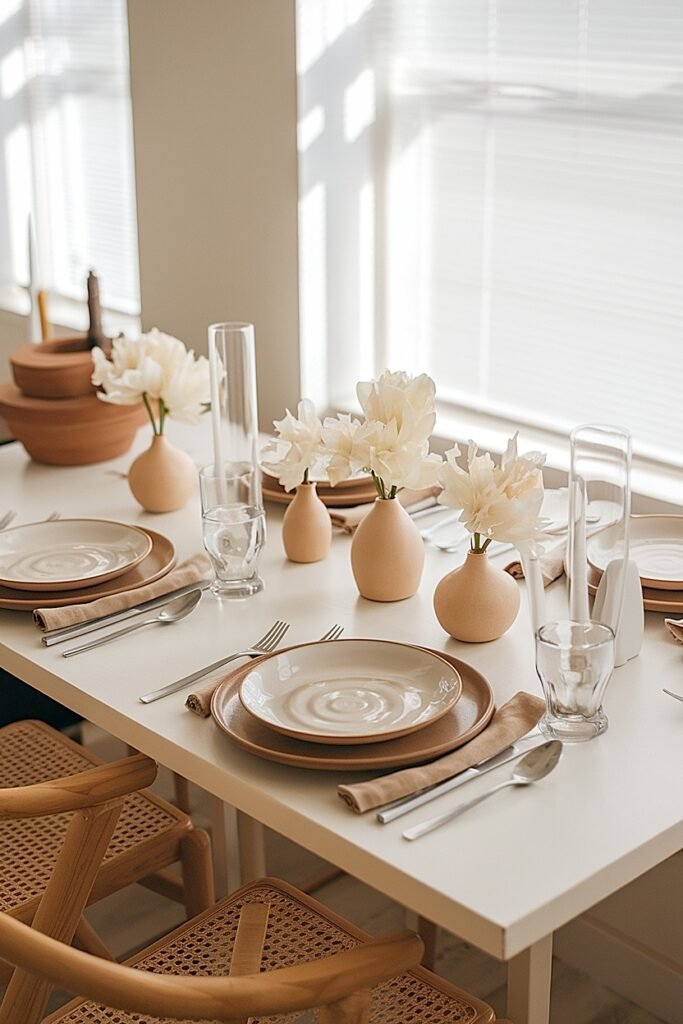
1. Five Matched Dark Ceramic Shot Glasses in a Row Five standard shot glasses in dark or navy ceramic, each holding two white spray mum sub-stems and a pinch of gravel at the base with cold water. The small vessels create a miniature repeated display that reads as a designed table detail from any seat. The shot glass format is.
2. Three Small Dark Crocks With White Flowers at Table-Third Positions Three dark ceramic crocks, one at each third of the table length, each holding five white fall flower stems cut to rim height with gravel and cold water. The table-third positioning places each vessel at the approximate position of each seat cluster. Guests at each end are equidistant from the.
3. Repeating White Gomphrema in Five Narrow Bottles Five narrow sauce or olive oil bottles with one tablespoon of dark gravel at the base, each holding two to three white gomphrema ball stems at three inches above the bottle neck. The narrow bottle footprint, under one inch, creates the most minimal-width repeating display of any vessel option. Gomphrema.
4. Four Terracotta Mini Pots With White Asters and Wheat Four small terracotta pots, two to three inches wide, each holding four white aster stems plus one short wheat stalk at rim height with gravel and cold water. The terracotta provides warm vessel tone that prevents the white asters from reading as winter-adjacent. The four repeating warm-toned vessels and white.
5. Six Individual Floating White Bloom Saucers Six small ceramic saucers each holding one white bloom head floating face-up in a half-inch of cold water, positioned in a line down the table center at twelve-inch intervals. Total individual footprint per saucer: three to four inches. Total line width: four inches. The floating blooms at table surface level.
Creative Ways to Style White Fall Flower Centerpieces Beside Long Serving Platters
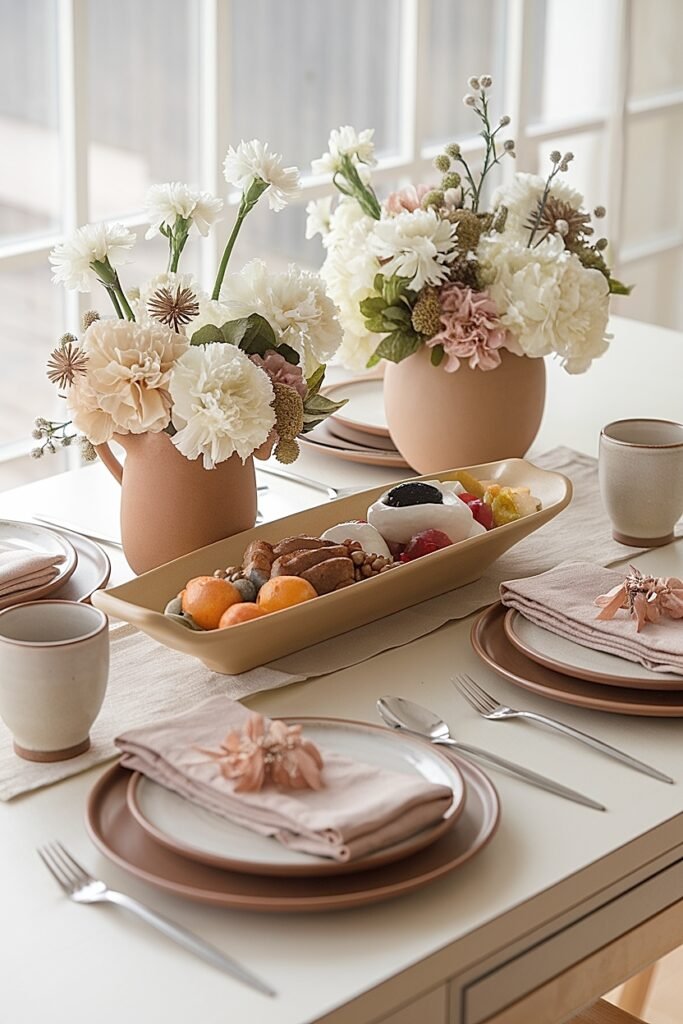
1. White Flower Bud Vase Pair Flanking the Platter on Each Long Side One slim dark bud vase with three white stems on each long side of the central serving platter, positioned at the outer platter edges. Both vases stay outside the serving reach zone. The platter and vases together read as a composed center table display rather than a platter with flowers.
2. White Flower Water Picks in a Row Beside the Platter Back Edge Three white flower stems in individual water picks lined along the back long edge of the serving platter, between the platter and the wall side of the table. The picks sit between the platter and the nearest wall-side seat. Serving and passing happens from the front. The flower row at.
3. White Flower Stems Across the Table End With Platter at Center Two or three white fall flower stems in a small vessel at each narrow table end, with the long serving platter occupying the full table center length. The table ends have flowers. The table center has food. The platter and the flower vessels never compete for the same surface. Each.
How to Balance Narrow White Fall Flower Centerpieces With Dinnerware
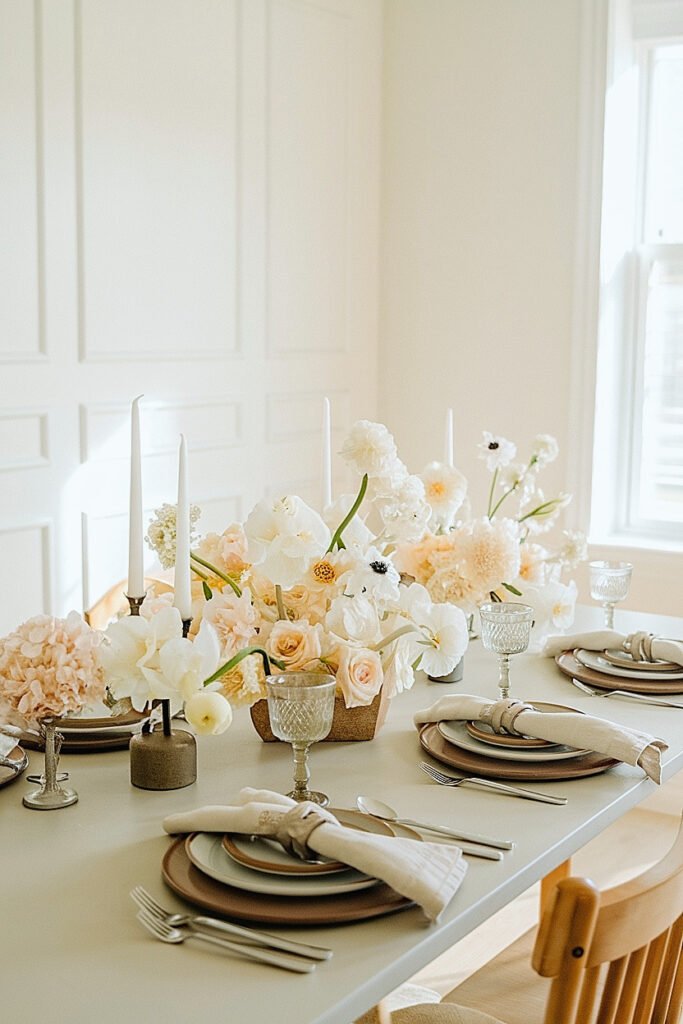
White centerpiece against white dinnerware creates the specific problem of visual disappearance.
On a rectangular table with white plates, white serving dishes, and white napkins, a white flower arrangement running the table center becomes nearly invisible. It is still there. The stems are in the gravel. The blooms are at rim height. But the visual distinction between the white flowers and the white tableware surrounding them collapses at close dining range.
The dark vessel is the solution. Not a slightly darker vessel, a meaningfully dark one. Navy, charcoal, matte black, forest green. The dark vessel creates a boundary between the white tableware context and the white flower arrangement that makes the flowers legible as distinct elements. Without that boundary, white flowers on a white table are decoration that nobody will notice.
A warm accent inside or beside the white arrangement extends the same function in a different direction. One wheat stalk among the white stems creates a warm amber reference point that pulls the viewer’s eye into the arrangement and allows the white blooms to be understood in relation to something other than the surrounding white tableware. The wheat does not compete with the white. It contextualizes it.
At a rectangular table, the balance issue multiplies across the table length because the white arrangement is visible from both table ends and both long sides. The dark vessel read needs to hold from all of those angles. A matte or semi-matte dark glaze holds its darkness from all viewing angles because it does not create specular reflection that changes the apparent darkness at different positions.
What Are the Best White Fall Flower Pairings for Slim Rectangular Tables?
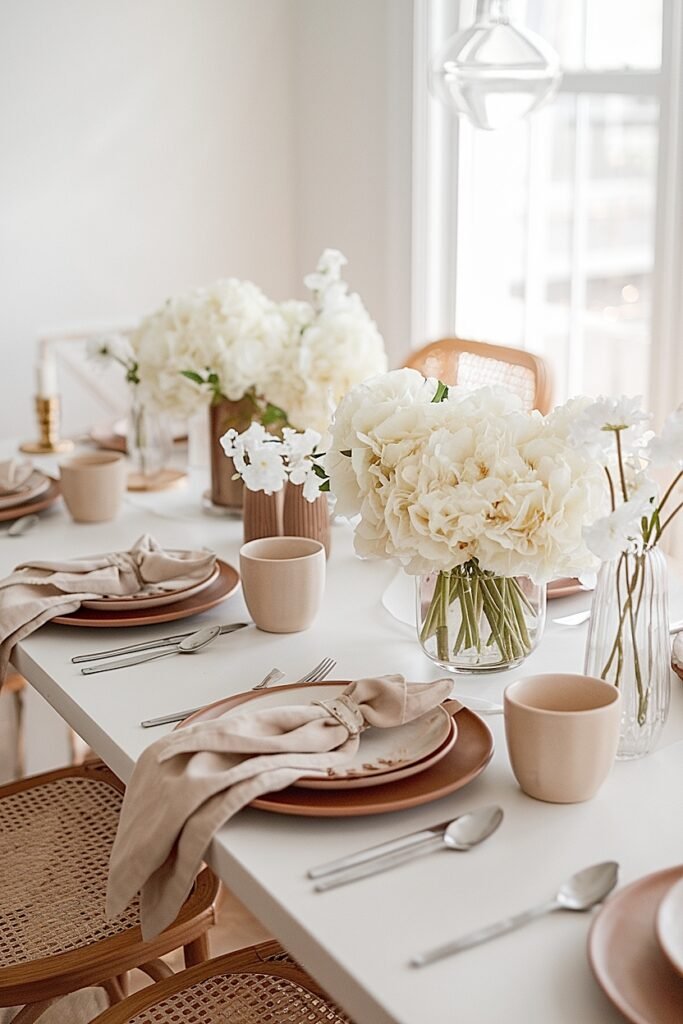
1. White Spray Mum and Golden Wheat White spray mum sub-stems at rim height plus one short outward-angled wheat stalk per vessel provides the most practical autumn pairing for a narrow rectangular centerpiece line. The spray mum’s branching bloom clusters fill the narrow vessel with white coverage. The wheat provides autumn context. The combination holds ten to.
2. White Asters and Dried Sedum White aster stems plus one to two sedum cluster stems per vessel creates two completely different white-adjacent textures at close table range. The aster daisy face and the sedum flat disc structure read as distinct in a way that makes the pairing look layered at close rectangular table viewing distance.
3. White Gomphrema Balls and Sage Sprigs White gomphrema compact ball blooms plus one fresh sage sprig per vessel provides the most compact-footprint autumn pairing of the three options. The gomphrema ball structure requires minimal horizontal vessel space. The sage adds herbal autumn fragrance that runs the full table length from multiple sage sprig positions simultaneously. The.
Conclusion
Rectangular tables need a different way of thinking about centerpieces than round tables do.
Not a focal point. A line. Not one arrangement, but a system of small arrangements that run the length of the table and give every seated guest something near them rather than something distant at the center.
White flowers in dark vessels in a repeating line down the table length creates the most specifically considered fall table of any approach in this article. The white glows across the table in candlelight. The dark vessels hold the line visible against the surrounding table surface.
Three matched vessels. Six feet of table. One complete rectangular centerpiece.
This website contains affiliate links, and some products are gifted by the brand to test. As an Amazon Associate, I earn from qualified purchases. Some of the content on this website was researched and created with the assistance of AI technology.