This website contains affiliate links, and some products are gifted by the brand to test. As an Amazon Associate, I earn from qualified purchases. Some of the content on this website was researched and created with the assistance of AI technology.
Key Takeaways
- Miniature cyclamen blooms in November naturally, driven by shorter days, and holds for four to eight weeks in cool indoor conditions
- Compact kalanchoe offers warm orange, amber, and red tones that land directly in the Thanksgiving color palette with no supporting accents needed
- Florist gloxinia produces flowers that are genuinely large relative to the plant’s small size, with velvety bell shapes in deep violet and wine red that read as expensive at close dining range
- Streptocarpus blooms for months, not weeks, at a compact three to four inch spread that suits even very small table positions
- Compact wax begonias are specifically suited to an active Thanksgiving household because they tolerate heat, forgotten watering, and variable light without immediate decline
- The container matters as much as the bloom. A small flowering plant in a dark glazed or terracotta pot reads as a decision. The same plant in a white plastic nursery pot reads as an oversight
Here is a secret that florists will not tell you: small flowering plants are better than cut flowers for a Thanksgiving table.
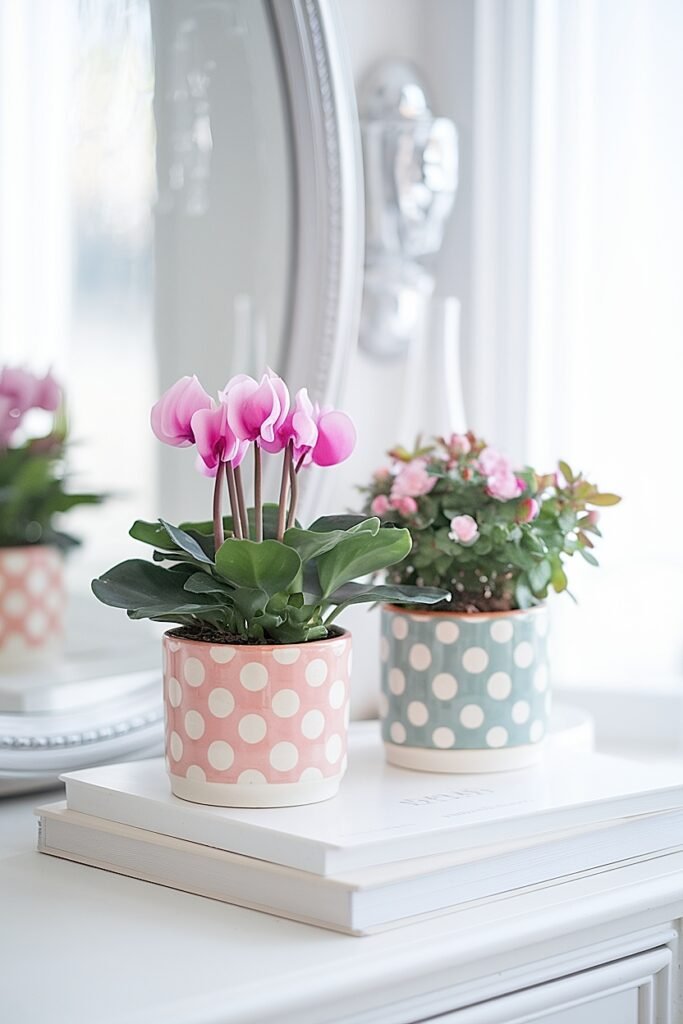
Choosing miniature flowering house plants for Thanksgiving tables changed how I think about holiday decorating entirely. Not because the plants are dramatic or impressive in the way a tall vase arrangement is. Because they are alive, they last, and at close Thanksgiving table range where guests are eighteen inches from whatever is in front of them, a miniature cyclamen with its up swept red petals above silver-marbled leaves is a genuinely interesting thing to have close to you during dinner. Not just pretty. Interesting.
I started using small flowering plants on my Thanksgiving table about four years ago after a bad experience with cut flowers that wilted by Thursday evening. Switched to plants. Have not gone back.
Use this guide to compare five miniature flowering house plants before building a Thanksgiving table display. Each row highlights shape, useful decorative strength, placement needs, and a care warning. The goal is simple: choose compact living color that stays attractive without crowding plates, blocking guests, or weakening plant health afterward.
Which Miniature Flowering Plant Fits Your Table?
Compare growth shape, decorative value, placement needs, and care before choosing a living Thanksgiving display.
| Plant | Best Display Strength | Table Placement | Important Care Check |
|---|---|---|---|
| Cyclamen | Upright flowers above patterned, heart-shaped leaves | Open end position with breathing room around foliage | Best bloom performance generally requires bright light and cool conditions |
| Kalanchoe | Dense flower clusters and a naturally compact silhouette | Small side area where concentrated color is needed | Avoid unnecessary watering and never leave the container waterlogged |
| Gloxinia | Large trumpet-shaped flowers provide strong impact | Display alone with open space around velvety leaves | Maintain consistent moisture while keeping water off delicate foliage |
| Flowering Begonia | Rounded form with abundant small flowers | Repeat at opposite ends instead of filling the center | Match indoor light and moisture to the particular begonia type |
| Miniature Rose | Classic flowers in a compact temporary package | Isolated position away from sleeves and reaching hands | Long-term indoor flowering can be difficult without very strong light |
Resources:
- Cyclamen – Wisconsin Horticulture
- Begonias as Houseplants | RHS Advice
- Streptocarpus ionanthus (African Violet, Kenya Violet) | North Carolina Extension Gardener Plant Toolbox
Easy Ideas for Selecting Long-Blooming Miniature Flowering House Plants
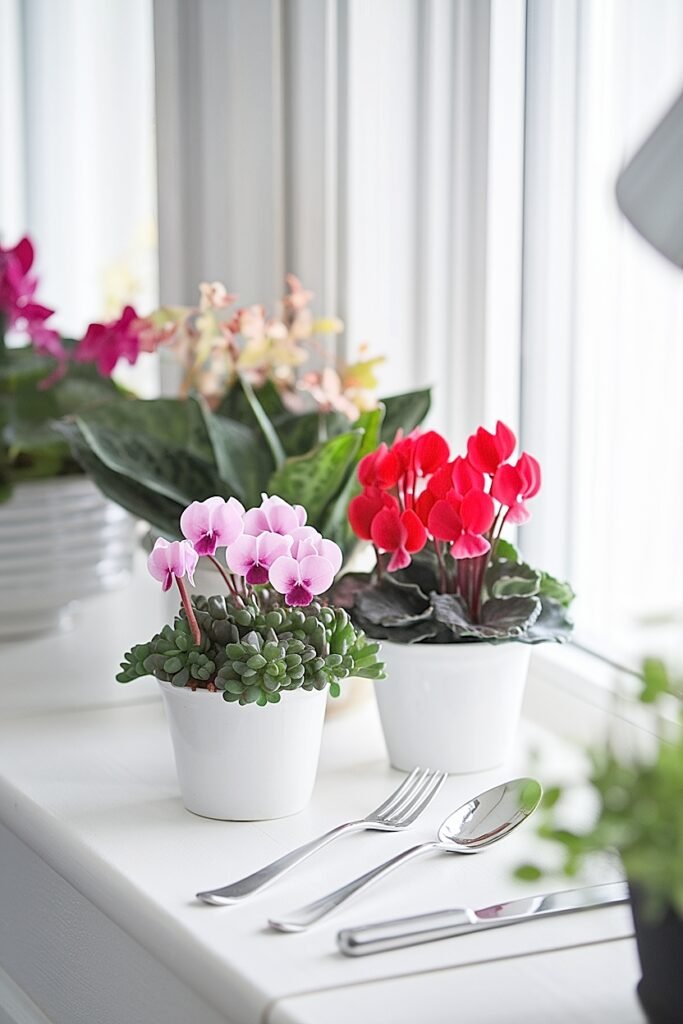
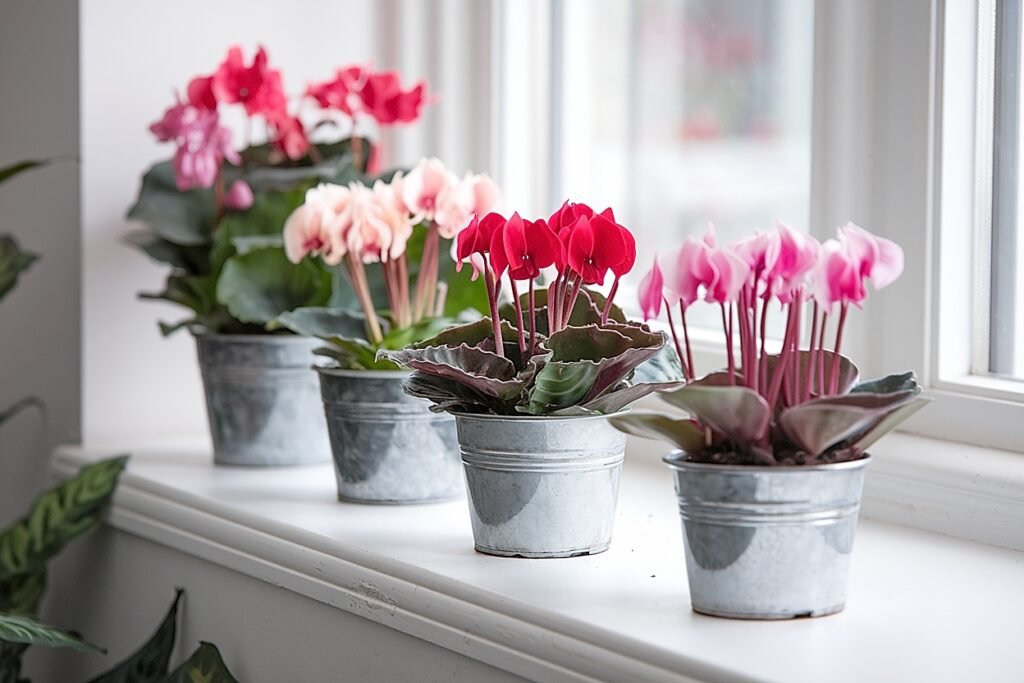
1. Miniature Cyclamen (Cyclamen persicum miniature varieties) Cyclamen blooms in November because it is biologically designed to. Shortening days and slightly cooler temperatures trigger bloom in a plant that otherwise just sits there being green. Get the timing right and a November cyclamen is at its natural peak on Thanksgiving day. Vivid red, deep pink, or white up swept flowers above silver-marbled leaves. Four to eight weeks of bloom in cool conditions. Available at grocery stores and garden.
2. Compact Kalanchoe (Kalanchoe blossfeldiana) Kalanchoe is the reliable one. Clusters of small four-petaled flowers above thick succulent leaves in orange, amber, red, yellow, and coral. Six to eight weeks of bloom with almost no input required beyond indirect light and water every ten to fourteen days when the soil runs dry. The warm orange and amber varieties do not need any autumn accent beside them because the color is already harvest-specific. One compact kalanchoe.
3. Florist Gloxinia (Sinningia speciosa) Gloxinia surprises people. The flowers are big. Genuinely big for a plant this small, large velvety bell shapes in deep violet, wine red, and bright pink with white-fringed petal edges that look painted on up close. The whole plant stays under six inches across, which is why it works on a small dining table. Bloom period four to six weeks. One care note: water the soil not the leaves, which.
4. Streptocarpus (Cape primrose, hybrid varieties) Here is the plant most people have not heard of and should know about. Cape primrose hybrids bloom in soft purple, lavender, and pink tones almost continuously, measured in months rather than weeks. The plant itself stays at three to four inches across at full size. Tolerates moderate indoor light, does not demand perfect conditions, and keeps producing flowers through the entire holiday season and into the new year if.
5. Compact Wax Begonia (Begonia semperflorens) Wax begonias are specifically the right choice for a busy Thanksgiving household where plant care is going to rank low. Warm indoor air from an active oven, inconsistent watering, lower light than ideal: the wax begonia handles all of it without the visible distress that would show in most other flowering plants. Small rose-like blooms in warm coral, pink, and soft red. Before displaying, spend two minutes pinching off any.
There is more ahead on how to position and style each of these plants at a Thanksgiving table, starting with cyclamen and the one pot swap that changes everything.
How to Style Miniature Cyclamen for a Thanksgiving Table Display
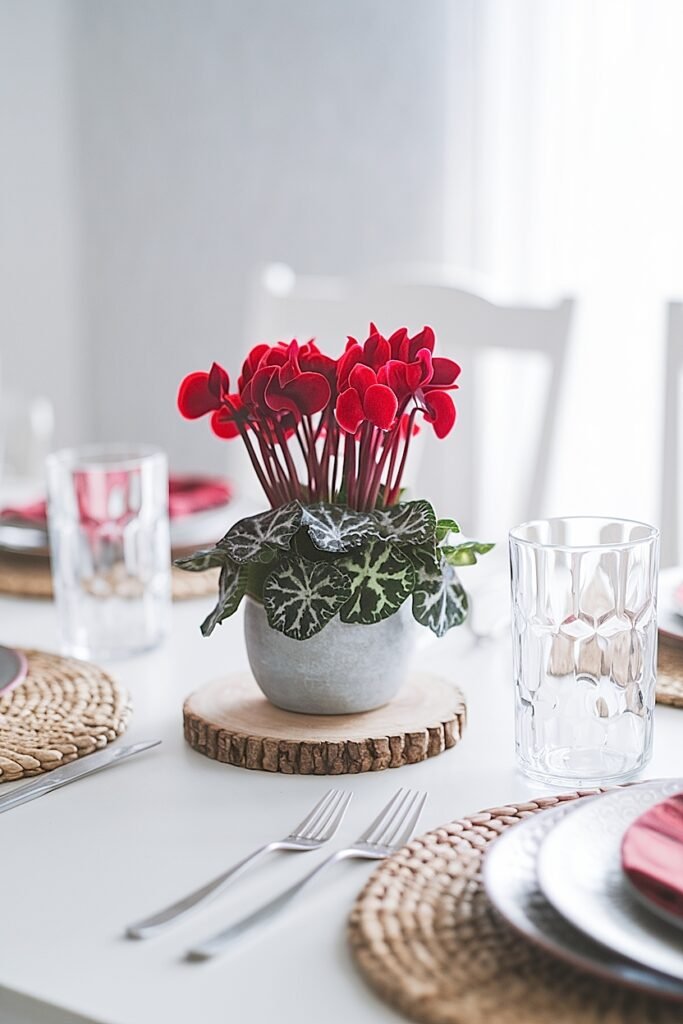
The plant is not the problem. The pot is.
A miniature cyclamen in a white plastic nursery pot on a Thanksgiving table looks like a plant someone bought and put somewhere. The same cyclamen in a small dark terracotta or navy glazed pot looks like a deliberate autumn table detail. Nothing else changes. The bloom is identical. The leaves are identical. The vessel does the entire job of making the arrangement read as intentional.
Dark pot. That is the styling tip.
Temperature matters too. Cyclamen prefer cool conditions and a Thanksgiving house with an oven running and multiple guests generating heat gets warm fast. Position the plant away from the oven airflow, away from heat vents, ideally at the far end of the table from the kitchen. That is not complicated. It is just worth knowing before you put the plant directly beside the range and wonder why it declines by Thursday afternoon.
One miniature cyclamen in a small dark pot at the Thanksgiving table end beside a lit candle. The warm candlelight hitting the saturated red petals at close range creates a genuinely beautiful small-scale autumn table moment for about eight dollars.
Ideas for Using Compact Kalanchoe in Thanksgiving Table Decor
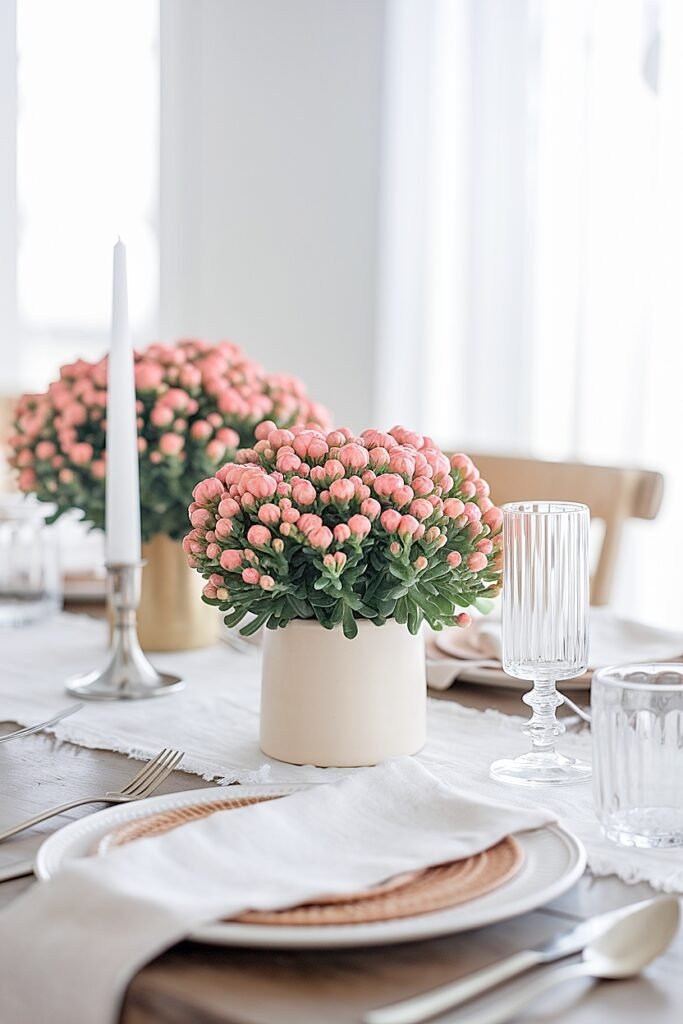
1. One Orange Kalanchoe at Each Narrow Table End in a Dark Vessel Two compact orange or amber kalanchoe plants in matched dark terracotta or ceramic pots, one at each end of the dining table. The warm bloom against the dark vessel reads as harvest-specific without any supplementary decor. The full table center stays clear for the meal. From any seat, one kalanchoe.
2. Kalanchoe and Mini Orchid Paired on a Shared Wooden Tray One compact orange kalanchoe plus one small white phalaenopsis orchid, both in matched dark containers on one wooden tray. Orange and white create a warm-and-neutral plant pairing where each bloom reads more distinctly because of the other. The tray makes both plants one movable unit. Lifts off the table in.
3. Four Kalanchoes in a Row as a Table Runner Four compact kalanchoes in matched small dark pots spaced at four to five inch intervals down the table center, gaps between each pair for serving dishes. The warm bloom color repeated four times reads as a designed botanical runner. Holds for weeks after the holiday. Easier to manage than any.
The sections ahead on gloxinia and streptocarpus cover the less well-known plants that consistently produce the best reactions at close Thanksgiving table range.
Ways to Display Florist Gloxinia on a Small Thanksgiving Table
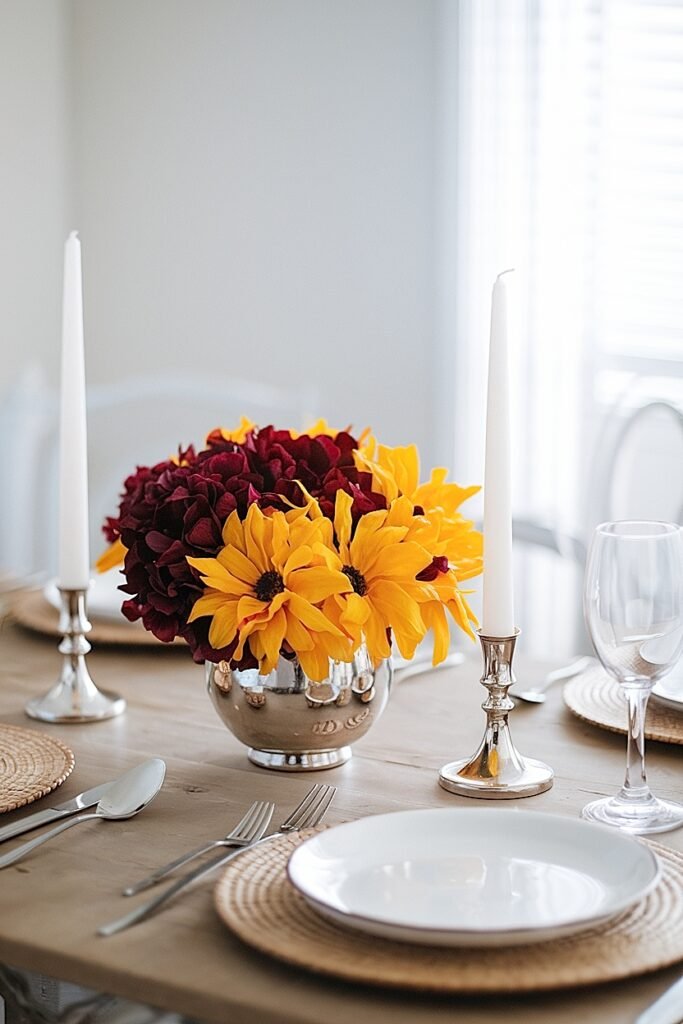
1. One Gloxinia as the Only Plant, Full Stop One florist gloxinia in full bloom in a dark glazed pot at one table end. The velvety bell-shaped flowers in deep violet or wine red are enough. No cut flowers alongside, no supporting accents. The plant does the whole job on its own at close dining range. Simple, specific, impressive.
2. Gloxinia and Candle One gloxinia in a dark pot beside one taper candle in a brass or copper holder. Warm candlelight hitting velvet petals does something to the bloom color at close range that overhead lighting cannot replicate. The plant deepens. The candle glows. The combination reads as composed even though it is.
3. Two Gloxinias in Complementary Tones at Both Table Ends One deep violet and one warm pink gloxinia in matched dark containers, one at each table end. Related bloom tones, both vivid, both on the same botanical plant at close range from either end of the table. The matched vessel connects both positions without making the display look symmetrical and.
4. Gloxinia in a Low Wide Bowl to Reduce Height One florist gloxinia gently repotted into a wide low dark ceramic bowl one size up from the nursery pot. The lower wider vessel drops total height by an inch or two and creates a more stable base at the table surface. Handle the roots minimally during repotting and keep root.
5. Mini Sinningia Varieties at Each Place Setting Miniature sinningia species, smaller relatives of the florist gloxinia, produce the same velvety flower quality in much smaller form. One per guest in a tiny dark container at each place setting above the plate. The full bloom detail visible at personal dining distance. Available at specialty plant shops and some.
Ways to Feature Streptocarpus in Miniature Thanksgiving Plant Displays
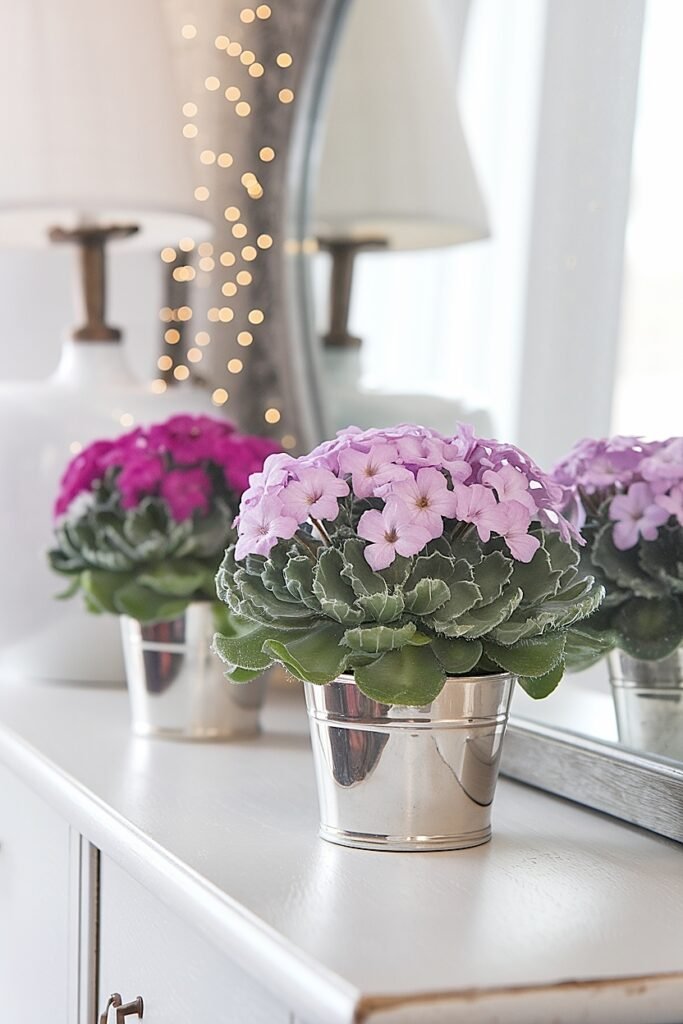
1. One Plant Per Guest Place Setting in a Small Dark Pot One compact streptocarpus in a two-inch dark container at each dinner place, positioned above the plate zone. The soft purple or lavender flower at personal dining range is specifically interesting at the eighteen-inch viewing distance a place setting creates. Total height three to four inches. Well within any sightline rule.
2. Three Plants as a Low Center Run With Serving Gaps Three streptocarpus in matched small dark containers at six to eight inch intervals along the table center, planned gaps between them for serving dishes. The repeated soft bloom tone across three positions reads as a composed botanical display. All three combined take less surface area than one standard-sized flower arrangement.
3. Streptocarpus Beside Miniature Cyclamen on One Tray One streptocarpus in soft lavender paired with one miniature cyclamen in vivid red, both in matched small dark pots on a wooden board. The quiet and the vivid. One plant is soft and sustained. The other is saturated and seasonal. The contrast between the two bloom intensities makes both read.
4. A Row Along the Sideboard Four or five streptocarpus plants in small matched dark pots along the sideboard, visible from the dining table during the meal. The sideboard keeps the plants off the dining surface while creating room-level botanical autumn presence. The soft repeated bloom across the sideboard reads as a considered fall display from.
5. One Plant at the Windowsill Nearest the Table One compact streptocarpus at the window closest to the dining area. The plant gets indirect light it prefers, the dining surface loses nothing, and from the table the windowsill plant reads within close visual range as part of the botanical atmosphere of the room. Sometimes the best plant position is.
How to Use Compact Flowering Begonias in Thanksgiving Displays
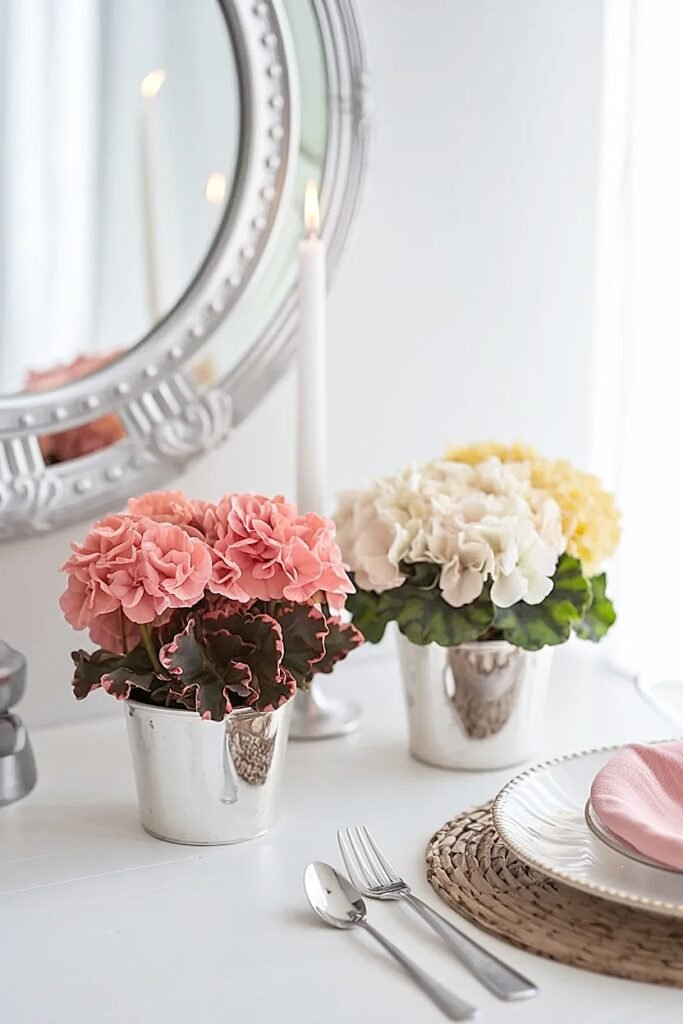
They are forgiving.
That is the single most important quality a Thanksgiving table plant can have. A busy cooking day means the plants get ignored. A warm kitchen means the plants experience heat stress. Guests bumping the table means the plants get jostled. Wax begonias handle all of this without showing it, which is why they belong on this list even though the bloom is smaller and less dramatic than gloxinia or cyclamen.
Before displaying any wax begonia, take two minutes and pinch off all the spent blooms. Every dried or browning flower goes. What appears underneath is a collection of tight fresh buds that were waiting. The plant looks immediately more finished. This is the entire maintenance step. Two minutes, once, before the guests arrive.
The warm coral and soft red varieties slot directly into the Thanksgiving color palette without any supporting accents. The white variety in a dark glazed pot with a single dried wheat stalk beside it reads as genuinely good-looking at close Thanksgiving table range.
Ideas for Mixing Two Miniature Flowering House Plant Species
1. Orange Kalanchoe and White Mini Orchid One compact orange kalanchoe plus one small white phalaenopsis orchid in matched dark containers on one tray. Warm orange bloom cluster beside a cool white arching orchid stem. Both plants hold for weeks. Both available at grocery stores and garden centers in November. The most accessible plant pairing on this.
2. Red Cyclamen and Soft Lavender Streptocarpus One miniature cyclamen in vivid red beside one streptocarpus in soft lavender, both in matched small dark containers on a shared board. Saturated beside muted. November-specific beside months-long. Two plants with different bloom personalities that make each other more interesting at close range.
3. Deep Violet Gloxinia and Coral Wax Begonia One florist gloxinia in deep violet beside one compact coral wax begonia in matched dark containers. Large velvety bell blooms beside small clustered rose-like flowers. Two completely different bloom forms, adjacent color temperatures, both vivid at close Thanksgiving table distance. The scale contrast between the two bloom types is part.
4. Two Kalanchoes in Adjacent Bloom Colors One yellow kalanchoe and one orange kalanchoe in matched terracotta containers. Same species, same bloom structure, two warm adjacent tones. The yellow-to-orange gradient reads as a deliberate warm palette decision rather than two random plants placed near each other. Simple, cohesive, very specifically autumn.
5. Miniature Cyclamen and Compact Wax Begonia One miniature cyclamen with its up swept swept-back petals beside one compact wax begonia with its small clustered rounded blooms, both in matched dark containers. The two distinct flower forms create botanical variety within a warm pink-and-red palette. The cyclamen is vivid and November-specific. The begonia is gentle and continuous. Together.
Conclusion
Small flowering plants are not a substitute for Thanksgiving table flowers.
They are better.
They last longer. They require less preparation. They create more botanical interest at close dining range than most cut arrangements of comparable cost. And a miniature cyclamen or compact gloxinia in the right dark pot at a Thanksgiving table looks exactly as if someone chose it on purpose.
Which, after reading this, you now have.
This website contains affiliate links, and some products are gifted by the brand to test. As an Amazon Associate, I earn from qualified purchases. Some of the content on this website was researched and created with the assistance of AI technology.