This website contains affiliate links, and some products are gifted by the brand to test. As an Amazon Associate, I earn from qualified purchases. Some of the content on this website was researched and created with the assistance of AI technology.
Key Takeaways
- Walk every room first. Light, drafts, pets, and foot traffic decide what lives.
- One botanical job per room, then stop.
- Cut flowers dislike ripening fruit and heat vents. Fruit gives off ethylene gas, which ages blooms faster. Carnations are especially touchy.
- Winter light is thin, so move plants toward the glass, keep their leaves off the pane, and shield a budding Thanksgiving cactus from lamps at night.
- Size the plant to the room, not to the sale table.
- Leave gaps on purpose, and let one side of a display run heavier than the other.
Creating Thanksgiving flower and house plant displays for your home goes sideways in one predictable way: every pot and vase I own ends up on the dining table, until the room resembles a garden center that collided with a farm stand, leaving the turkey nowhere to land. I’ve done it. More than once.
Now I plan the whole house before I buy a single stem. Rooms get light or they don’t. Drafts hit some hallways. Pets wander, and guests cluster wherever the drinks are. Everything below is the system I use, plus a few facts from university extension offices, because I’d rather be right than confident.
Whole-Home Thanksgiving Botanical Planning Table
Choose a decorating plan that fits your plants and your home. This comparison matches five whole-home botanical strategies with their best use, strongest advantage, and essential care check. Start here to coordinate rooms, protect plant health, simplify maintenance, and create Thanksgiving displays that feel intentional instead of crowded or improvised.
Which Botanical Plan Fits Your Home?
Compare the decorating goal, ideal application, main advantage, and care check before placing a single plant.
| Planning Strategy | Best Use | Strongest Advantage | Essential Care Check |
|---|---|---|---|
| Microclimate Match | Homes with varied light, heat, and humidity | Places each plant where it can remain healthy | Confirm actual room conditions before choosing species |
| Color Thread | Connected rooms needing visual continuity | Creates cohesion without identical displays | Repeat color through suitable plants and flowers |
| Care Groups | Collections with different moisture needs | Makes routine checks faster and clearer | Never water unlike plants on one fixed schedule |
| Flower-Foliage Pair | One focused seasonal vignette | Balances bright bloom color with lasting greenery | Keep water access and container footprints separate |
| Transition Plan | Decor intended to continue after Thanksgiving | Reduces teardown and unnecessary purchases | Retain only healthy plants suited to winter conditions |
Resources:
- Choosing the Best Houseplants | RHS Advice
- Toxic and Non-Toxic Plants
- Holiday Cactus – Wisconsin Horticulture
How to Audit Every Room Before Choosing Thanksgiving Flowers and House Plants
Shopping comes last.
I found that out the expensive way, hauling home a huge leafy plant for a hallway that gets maybe two minutes of real daylight, then watching it sulk beside the coat rack until January while I invented desperate excuses for my wife.
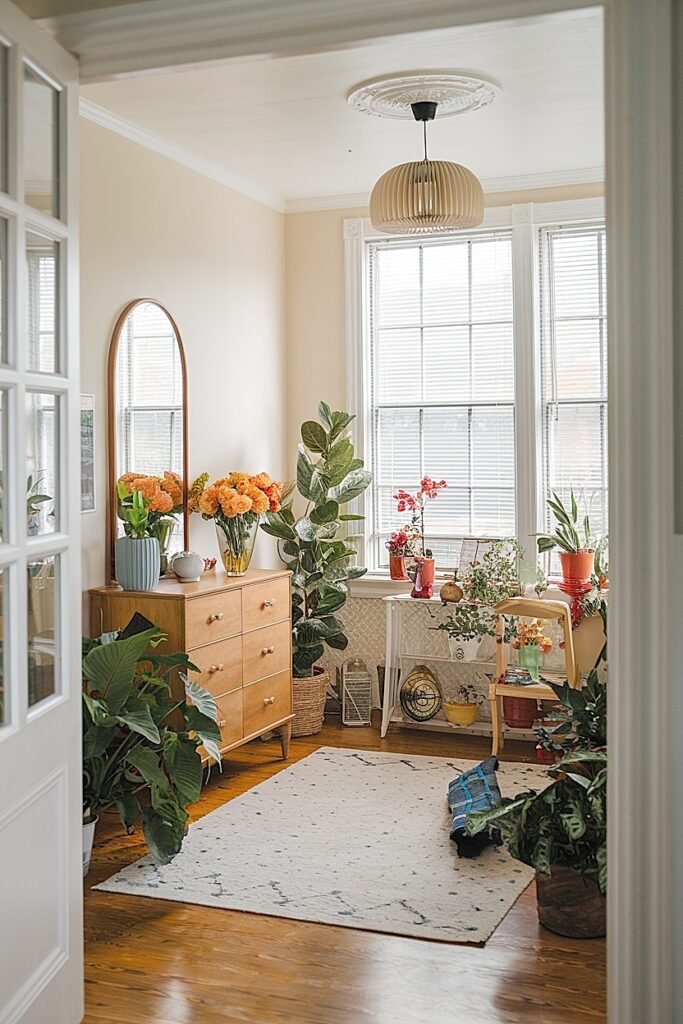
An audit takes twenty minutes and a notepad. Light first.
Nebraska extension material rates a south window at 100 percent, east and west windows at roughly 60, a north window at 20. Winter shaves every one of those numbers down, which explains why a plant that was happy in July may be starving by now. Then check the air. Iowa State’s extension service wants daytime temperatures of 65 to 75°F with nights of 60 to 65. It warns that anything under 50°F can hurt some houseplants, so keep them clear of cold drafts, radiators, and hot air vents. Penn State’s extension team hands cut flowers the same advice: no vents, fireplaces, or appliances nearby.
My sheet, room by room:
- Light. Which way does the window face, and how far from the glass will the plant sit?
- Air. Cold door, vent, radiator, fireplace?
- Pets. Lilies are banned in my house, period. Every part of a true lily, pollen and vase water included, is dangerous to cats. The ASPCA lists the Christmas cactus, a close cousin of the Thanksgiving cactus, as non-toxic to dogs, cats, and horses.
- Fruit. Chrysal, a cut-flower care company, names fruit and tomatoes as ethylene sources. It calls carnations very ethylene-sensitive, with vase life that can fall from three or four weeks to about one.
- Traffic. Where do the elbows go?
Once the sheet is full, the fun starts. Want a handmade centerpiece for the table? My guide to DIY Thanksgiving flower basket arrangement ideas walks through one, and if this post saves you a dead fern, send it to a friend who’s hosting this year.
The audit becomes a map in a minute, and the map decides where everything goes.
Ideas for Creating a Whole-Home Thanksgiving Botanical Floor Plan
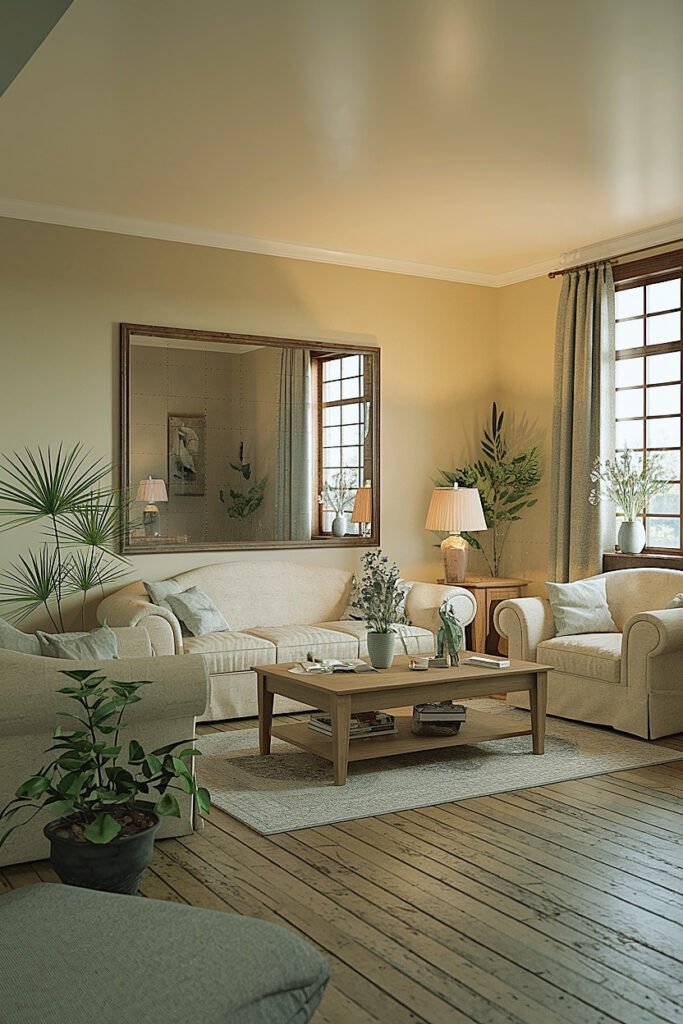
Picture your guests as a parade. Front door, coat pile, kitchen peek, sofa, table, always slowly, always holding something.
Give each stop one botanical moment. One. Skip any stop that flunked the audit, even when it’s prime real estate.
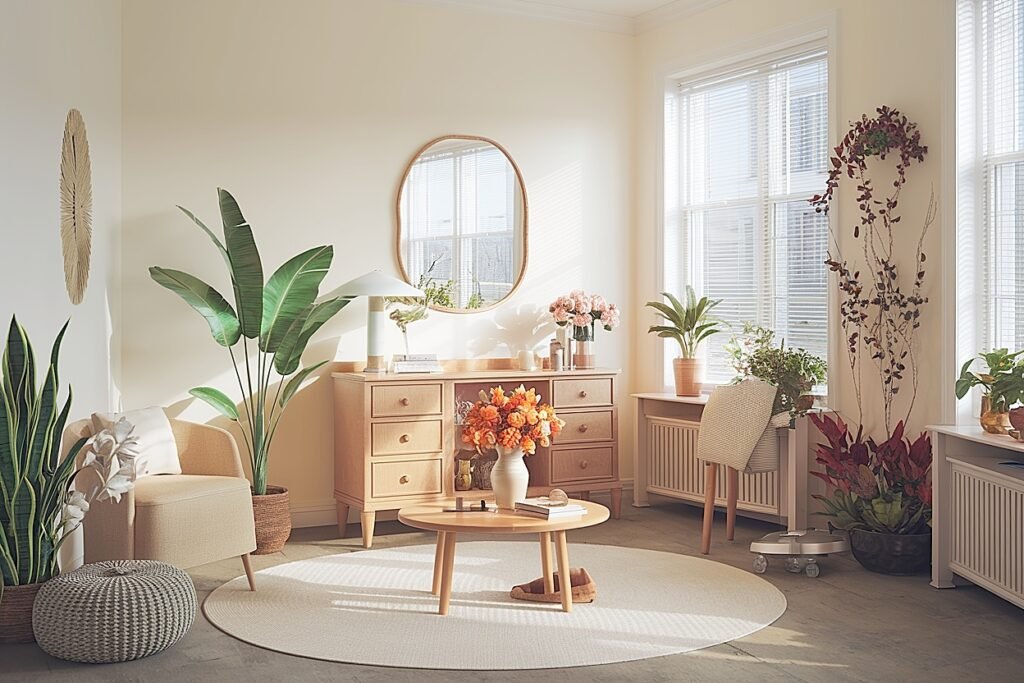
A floor plan starts with job titles. The entry greets. The living room lounges. The dining room feeds. The back rooms rest. Your audit notes tell you which of those rooms can keep a plant alive and which can only host cut flowers for a few days.
That split settles most placement arguments before they start: plants go where the light is, cut flowers go somewhere cool and out of direct sun.
My route has five stops.
- Entry console. Guests meet this spot first, so it stays low and plain: one vase of cut stems, nothing tall enough to snag a coat sleeve. Fresh stems by the door announce the holiday before anyone says hello. Cold air pours in every time that door opens, which rules out tender houseplants. I swap the water twice a week. A small tray under the vase catches drips, saving the wood from rings.
- Table and sideboard. Split the labor. Low flowers go on the table, under eye level, so everyone can see across the turkey, while a leafy plant stands behind them on the sideboard, framing the whole scene without eating a square inch of table space. Keep the vase well away from the fruit bowl, for the ethylene reason covered earlier. If the counter runs short, the fruit moves elsewhere without complaint.
- Kitchen sill. Appliance heat is rough on cut flowers, so my kitchen gets a potted plant on the brightest sill instead. Pick something compact that never blocks the faucet or the window. It makes a living backdrop for the food, then keeps looking good long after the casserole is gone. Craving color near the stove? I park a vase across the room, out of the heat, and admire it from a distance.
- Living room bloom. One showpiece, that’s the rule here. A Thanksgiving cactus fits, since University of Georgia extension says it blooms in late fall, roughly a month ahead of its Christmas cousin. Buy one already showing buds. Keep the soil evenly moist (UGA says that prevents bud drop) but never let water sit in the saucer, then set it on the coffee table and let guests admire the color.
- Guest room bud vase. Tiny gestures win in small rooms. One stem on the nightstand tells an overnight guest they were expected. Nobody asks for it. That’s the charm. Choose a short vase, since a swinging lamp cord can topple a tall one. On party morning I trim leftovers from the big arrangement and carry them upstairs before the first car pulls in. Fresh water each day keeps the stem sharp all weekend.
Plants and flowers still have to share surfaces without elbowing each other, so keep reading for how I referee that.
How to Combine Cut Flowers and House Plants Without Crowding Displays
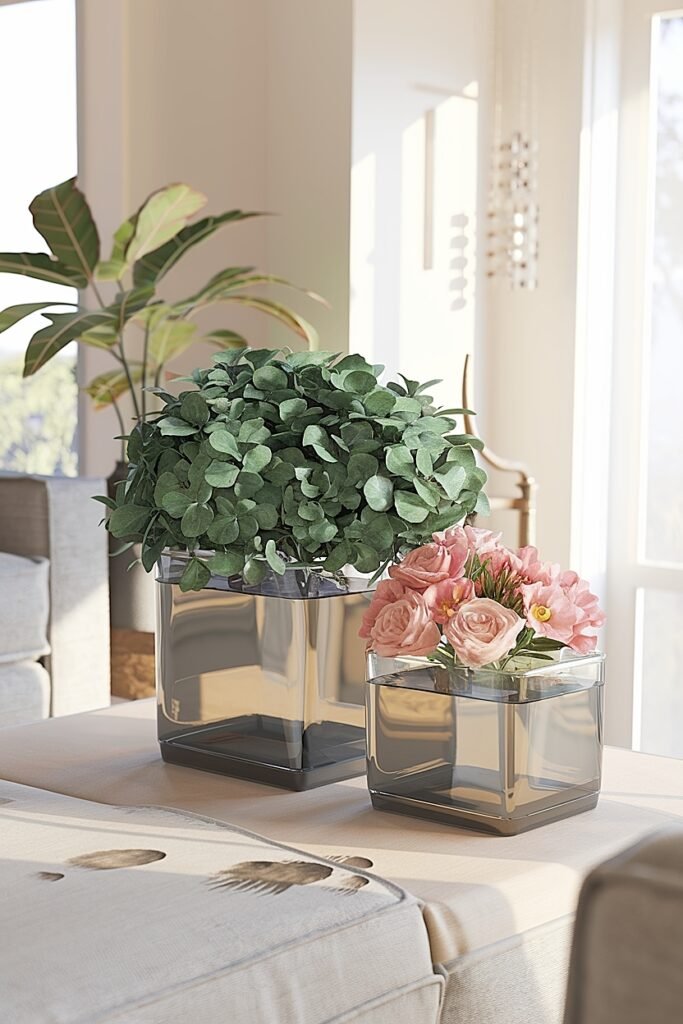
Short answer: plants are the set, cut flowers are the cast.
Put a vase of mums beside a floor plant with huge leaves. Watch what happens. Nothing good. Both demand attention, the eye gives up, and your living room starts to feel like a florist’s cooler.
Plants stay all season, so they supply scale and green. Cut blooms rotate through, supplying color. When the two share a surface, one of them has to stay quiet.
Cut flowers also come with chores. Over at Penn State, the chore list reads: wash the vase, mix flower food, recut the stems at an angle, strip any leaves that would sit below the waterline, and change the water every few days. All of it gets easier when the vase has its own spot instead of hiding in a plant’s leaves.
My pairing routine:
- Place the plant first, wherever the light suits it best.
- Vase beside it. Never in front of the foliage.
- Leave a gap about as wide as your hand between the pot and the vase, because crowding starts at the edges.
- One color family for the flowers; the plant handles the green.
- Carry the vase to the sink for water changes so the plant never gets splashed.
Size matters as much as spacing, and I’ve got a few fitting tricks coming up.
Ways to Match Thanksgiving Plant Scale to Room Size
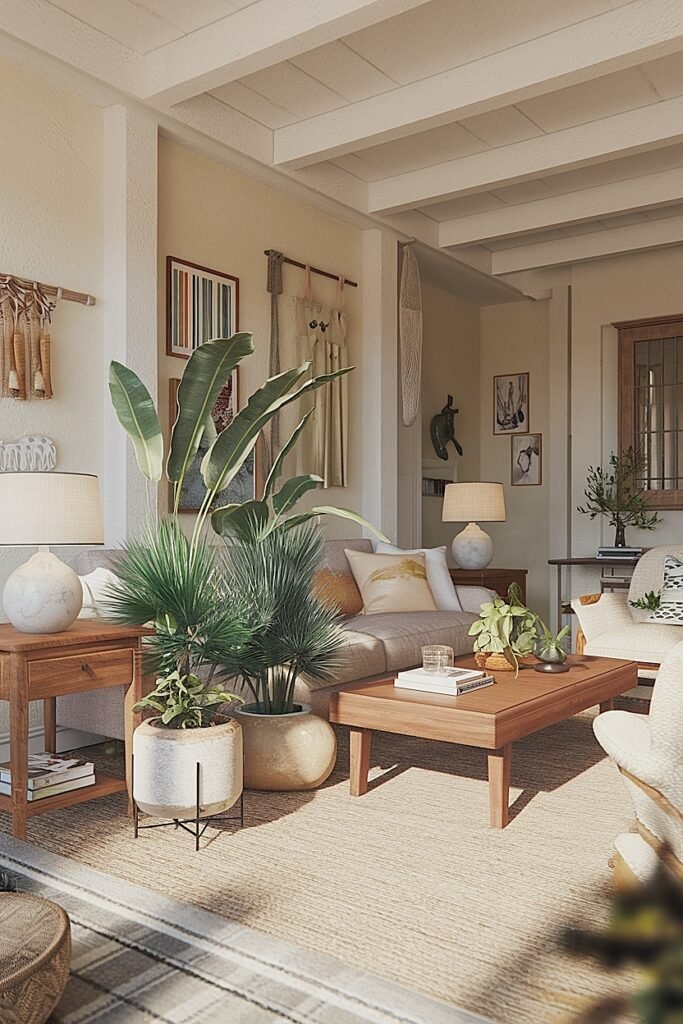
A six-foot plant in a ten-foot room feels like a houseguest who won’t leave. A tiny pot in a great room just vanishes.
Scale is the cheapest fix in decorating. You can test it for free.
Mark the planned footprint on the floor with painter’s tape, stack a few boxes to the planned height, then live with the setup for a day, and if your household works like mine, someone will veto half of it at breakfast, which has saved me more returns than any store policy.
Judge by finished size. Plants grow into their spots, and blooms open after a day or two in the vase, so the store display fibs a little.
Three fits that work:
- One statement plant. Big room? Choose a single tall plant and put it where the eye lands first, like the corner beside the sofa. Add one low bowl of cut flowers nearby. Medium pots scattered across open floor scatter attention too. The room begins to resemble a nursery aisle.
- Shelf-height pieces. Small rooms need clear floors. Lift the plant onto a stool or wall shelf and let a trailing type spill over the edge. One bud vase, tops. You should still be able to walk through without turning sideways, even with a crowd of relatives filling every spare inch.
- One plant, three sizes. Open plans blur room edges, so repeat a single plant in different sizes: large by the sofa, medium on the buffet, small on the kitchen sill. The echo ties the zones together. It looks planned, not accidental, which is the whole point. Guests notice without knowing why.
Even the right size fails in the wrong light, which is where I’m headed next.
Creative Ways to Give Thanksgiving House Plants Brighter Seasonal Light
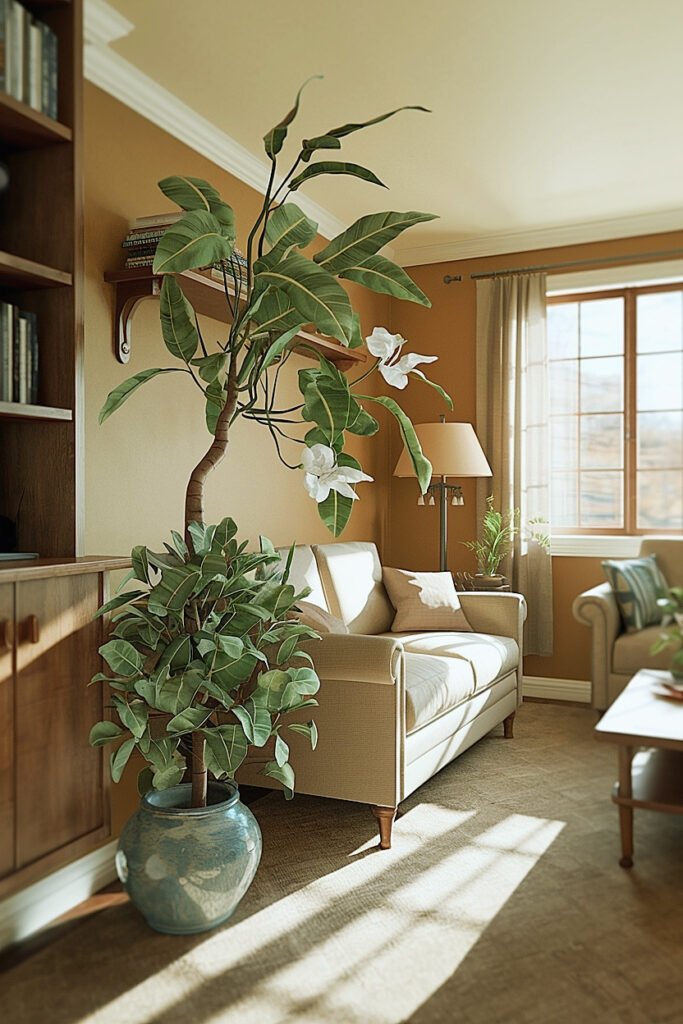
By late November the sun hangs low. Days shrink. One gardening writer sums it up in a line: shorter and, in most climates, grayer.
My first fix isn’t a grow light. Not yet.
Nebraska extension says light fades fast as a plant moves farther from the window, then climbs as it moves closer.
The catch is cold glass. Iowa State warns against letting leaves touch a cold window, and that same gardening writer repeats the warning for freezing climates, so the rule is closer, yes, touching, never.
Here’s what I actually do:
- Stage it at the glass. Set the display on a sill, stool, or low bench beside the window, leaving air between leaves and pane. Light fades quickly with distance, so closer wins. Slide everything back to the table for dinner. Return it to the window next morning. The plants barely notice the commute.
- Swap windows by season. South is brightest, so plants that spent summer on an east sill can take those spots now, and lower-light types move to the other windows. A quick lap around the house takes ten minutes. It costs nothing. It also beats buying a lamp or a new plant.
- Add a lamp, mostly. Extension material suggests 12 to 16 hours of supplemental light for struggling plants, and a plain LED or fluorescent lamp works fine. The exception: any Thanksgiving cactus still setting buds. UGA says it needs darkness for 13 to 16 hours a night, so even two hours of lamplight can stop it.
Healthy plants still need a good stage, so keep going for the art of leaving things out.
Creative Ways to Use Negative Space in Thanksgiving Botanical Vignettes
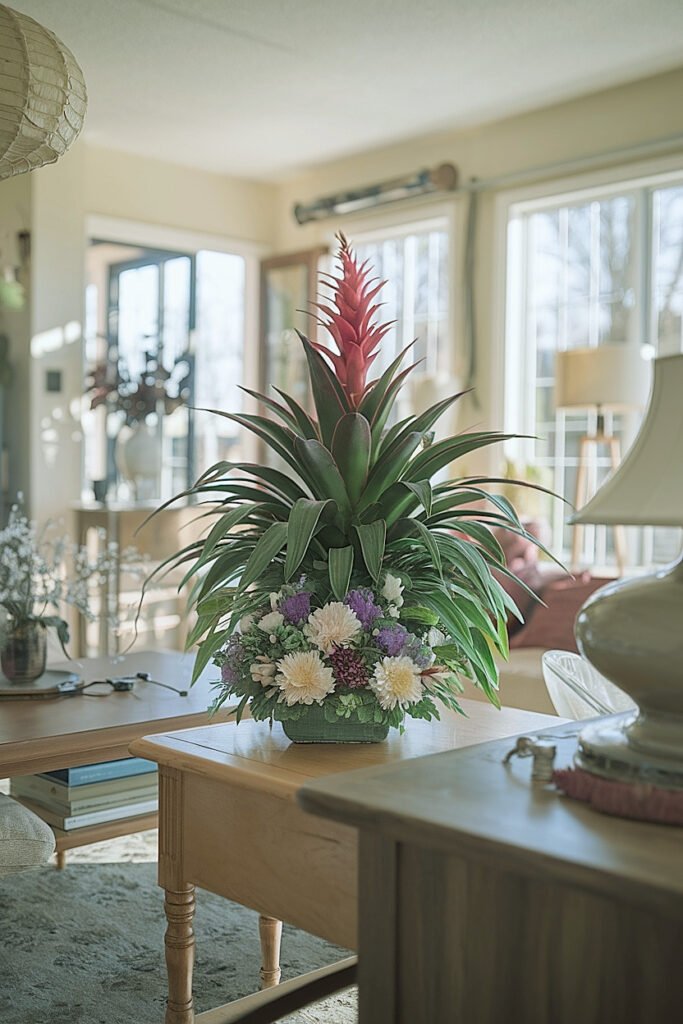
The best vignette I ever built held one stem.
I’m not exaggerating. I’d bet the stem was the least impressive thing in the room. Empty space did the work: it made that single branch look chosen, and anything that looks chosen looks expensive.
Negative space is the open area around and between objects. In a vignette it works like a pause in a sentence. Remove every pause. Nobody can hear the words.
Thanksgiving pushes the opposite way. Gourds, candles, place cards, serving dishes, a relative’s casserole, they all want a spot, each one polite about asking. Your job is deciding where the crowd ends and the quiet begins. Plants make that easier, since their shapes already fill the air.
Three ways to carve out quiet:
- Clear a margin. Imagine an invisible frame around the vignette, then leave a hand’s width of breathing room on every side. Mail, candle stubs, the extra gourd: everything goes to another room. The group reads as one deliberate thing, with the plant’s outline clearly visible instead of dissolving into clutter.
- Let one stem carry the shelf. Drop a single branch or one big bloom into a bud vase beside a trailing plant, then leave everything else on that shelf bare. Contrast does the heavy lifting. The lone stem looks chosen. The plant looks placed on purpose, not parked there. Restraint is cheap, too.
- Open the table’s middle. Run low greenery down the edges, or move the botanicals to a side table, so the center stays free for food. Guests keep clear sightlines and can reach the potatoes. Here the gap earns its keep as well as its looks, which is why it feels right instead of sparse.
One more design move ties all of this together, and it trips up most people.
How to Create Asymmetrical Balance With Thanksgiving Flowers and Plants
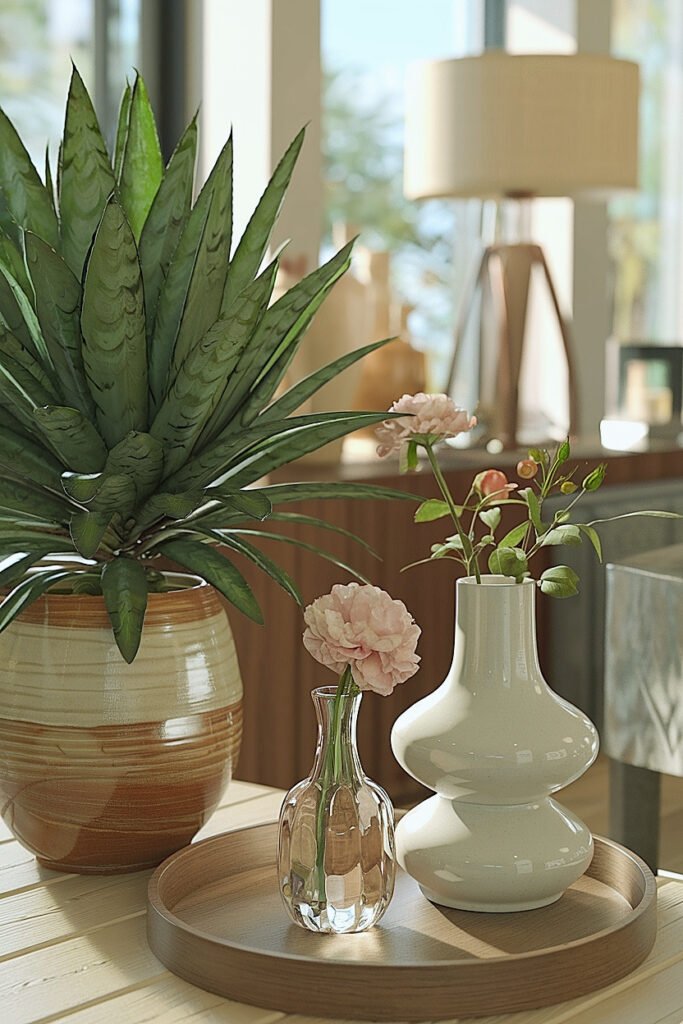
Symmetry is safe.
Two matching vases, one on each side, finished. Also forgettable. Asymmetry takes a little nerve, but it pays off with a display that looks like a person composed it instead of a catalog.
Balance comes from visual weight, not matching halves. Picture a seesaw: a heavy kid sits near the middle, a light kid scoots out toward the end, and the board still levels. A big plant carries heavy weight, so a smaller cluster of flowers has to sit farther out to answer it.
Color and texture count too. Dark, dense, glossy things read heavy; pale, airy, matte ones read light. A mass of burgundy mums can balance a tall, feathery plant twice its height.
My method:
- Set the heaviest piece first, usually the biggest plant, left or right of center.
- Put a lighter counterweight on the opposite side, near the edge, like a shallow dish of cut blooms.
- Link them with one small connector, a candle or a little pot, set lower than both.
- Step back and squint. If your eye keeps sliding off one edge, add weight there or take some from the other side.
A short wrap-up follows with the one habit I’d keep if I had to toss everything else.
Conclusion
Plan the house, then shop.
After years of hauling plants into rooms that didn’t want them, that’s my whole position, and I’d also trade half my decorations for more empty space, every single holiday. A lopsided display with room to breathe beats a perfect, crowded one.
This website contains affiliate links, and some products are gifted by the brand to test. As an Amazon Associate, I earn from qualified purchases. Some of the content on this website was researched and created with the assistance of AI technology.