This website contains affiliate links, and some products are gifted by the brand to test. As an Amazon Associate, I earn from qualified purchases. Some of the content on this website was researched and created with the assistance of AI technology.
Key Takeaways
- Most succulents need bright light. Give them a sunny window, or they stretch tall and go floppy.
- Those red and pink tips are a stress response. Sun, cold, or dry soil brings them out, and green comes back later.
- The ASPCA lists an echeveria, as safe for dogs, cats, and horses.
- Kalanchoe is not. It’s toxic to pets, so that one goes up high, out of reach.
- Terracotta dries fast. Succulents love that, since wet roots are what kill them.
- Water deep, but not often. Soak it, let it dry all the way, then walk away.
Creating Christmas Holiday succulent arrangements for small apartments is what saved my first December in a shoebox studio. My place was tiny. One room, a kitchen the size of a coat closet, and no floor for a real tree. So I jammed a sad tabletop tree on a stool and left it. It looked lonely. Then I glanced at the fat little echeverias on my windowsill, each shaped like a green rose. Let the plants decorate.
Succulents are built for tight spaces. They stay small. They forgive a missed watering. And here’s the fun part: a bunch of them turn red and pink in the cold, which is about as Christmassy as a plant can get. Add a couple of cheap touches, set them by a bright window, and one sill does the work of a whole box of decorations. Eight ways I’ve pulled it off are below.
Choosing Christmas succulent decorations for a small apartment should feel simple and fun. This colorful comparison helps you match five compact arrangements to your available space, favorite materials, and everyday needs. Discover practical design ideas, helpful plant care reminders, and attractive holiday displays that won’t overwhelm your home.
Which Christmas Succulent Arrangement Fits Your Small Apartment?
Choosing Christmas succulent decorations for a small apartment should feel simple and fun. This colorful comparison helps you match five compact arrangements to your available space, favorite materials, and everyday needs. Discover practical design ideas, helpful plant care reminders, and attractive holiday displays that won’t overwhelm your home.
| Succulent Arrangement | Best Apartment Space | Materials and Decorations | Setup and Care Advice |
|---|---|---|---|
|
Vertical Decor
Mini Succulent Christmas Tree
A living tree-inspired display without floor clutter.
|
Studio apartment entry cabinets or compact sideboards. Suits homes with very limited floor space. | Several mini echeverias, a stable tiered ceramic stand, and a few matte red ornaments. Use separate removable growing pots. | Keep the arrangement balanced and secure. Provide bright light and water the individual plants separately when needed. |
|
Space Saving
Coffee Table Succulent Tray
Flexible, movable Christmas greenery.
|
Tiny living rooms with everyday coffee tables. Easy to relocate when entertaining guests. | Three miniature succulent pots, a shallow round ceramic tray, and one small seasonal ornament. Choose a tray that fits your table comfortably. | Leave enough room for drinks and other essentials. Return plants to suitable light when the table position is too dim. |
|
Architectural
Haworthia Holiday Trio
Three patterned plants with subtle festive detail.
|
Compact work desks, narrow accent surfaces, or appropriately lit shelves. Keeps a clean, organized appearance. | Three small haworthias, individual ceramic planters, and a narrow slate-colored tray. Add one understated brass ornament. | Select a bright placement suited to your plants. Haworthias may tolerate somewhat less light than many sun-loving rosette succulents. |
|
Whimsical Holiday
Mini Christmas Village
A small festive scene with living greenery.
|
Narrow apartment display shelves and small cabinets. Works well as a contained seasonal decoration. | Three miniature ceramic houses, two mini echeverias, and individual drainage saucers. Keep the holiday houses removable. | Space the objects so foliage remains unobstructed. Avoid permanent dark-shelf placement for light-loving succulents. |
|
Budget Friendly
Terracotta Christmas Grouping
Earthy seasonal color with reusable materials.
|
Apartment side tables and bright multipurpose surfaces. Useful for renters and budget-conscious decorators. | Three small terracotta pots, compact succulents, protective saucers, and one cream ceramic ornament. Reuse pots and accessories after Christmas. | Arrange pot heights for visual interest. Protect furniture from moisture and allow the growing medium to dry appropriately. |
Resources:
- How to grow cacti and succulents / RHS Growing Guide
- Growing Non-Cacti Succulents Indoors – Succulents In Your Home – Research Guides at New York Botanical Garden
- Succulents Shine in Winter | Extension
- Are Succulents Safe to Have Around Pets? | ASPCA
How to Create a Mini Echeveria Christmas Tree for a Studio Apartment
A studio has no corner to spare. I found that out the hard way, banging my knees on a tree stand every time I walked past.
So I made the tree small.
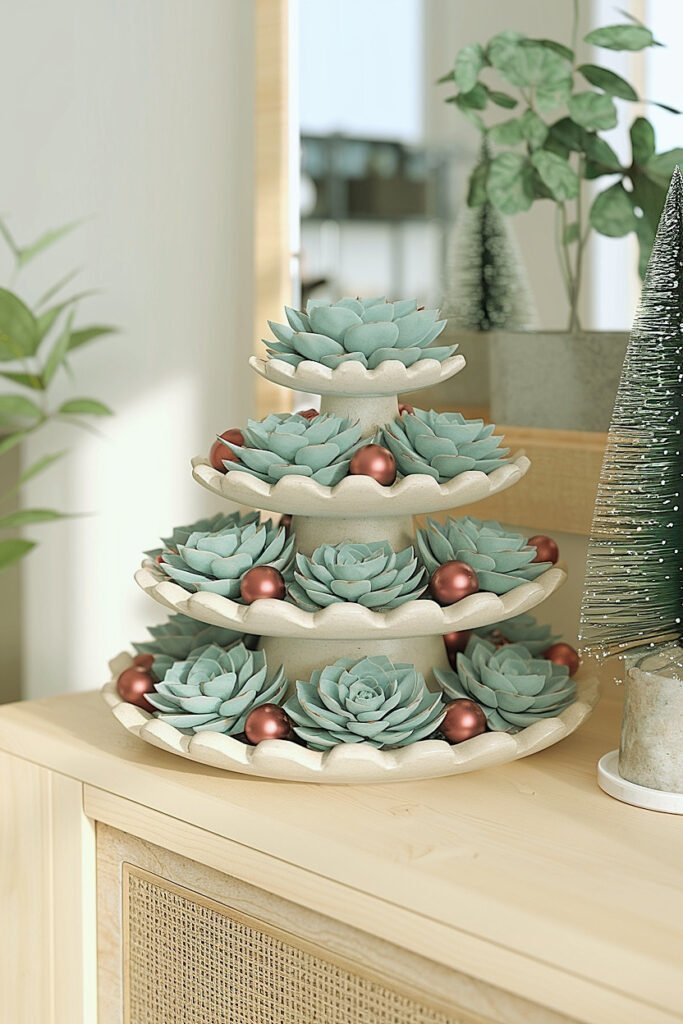
A mini succulent tree is just a cone covered in tiny rosettes. Think of a green ice cream cone, little echeverias spiraling up to a star on top. Grab a foam or wire cone at a craft store, wrap it in damp moss, and poke in echeveria cuttings. The rosettes look like flowers already. So the finished thing is part tree, part bouquet.
Here’s what folks forget. Echeveria is a sun hog. South Dakota State University Extension says succulents want six to eight hours of bright light a day, and without it they stretch and flop, a thing growers call etiolation. Starve the cuttings and the cone falls apart in a few weeks.
So I treat mine like a plant, not a prop. First, I let the cut ends dry and scab over for a few days. That helps them root instead of rot. The cone sits by my brightest window and only comes out for company. I mist the moss. I don’t soak it, because wet roots turn an echeveria to mush fast.
Doing the rest of your place too? My Christmas anthurium arrangements for minimalist living rooms go great with a sill full of succulents. And if you know someone stuck in the same no-room-for-a-tree boat, a quick share on Facebook or Pinterest might save their whole December. Keep going, because the red-tipped rosettes up next are what make all of this feel like Christmas.
Simple Ways to Style Red-Tipped Succulent Rosettes for Christmas
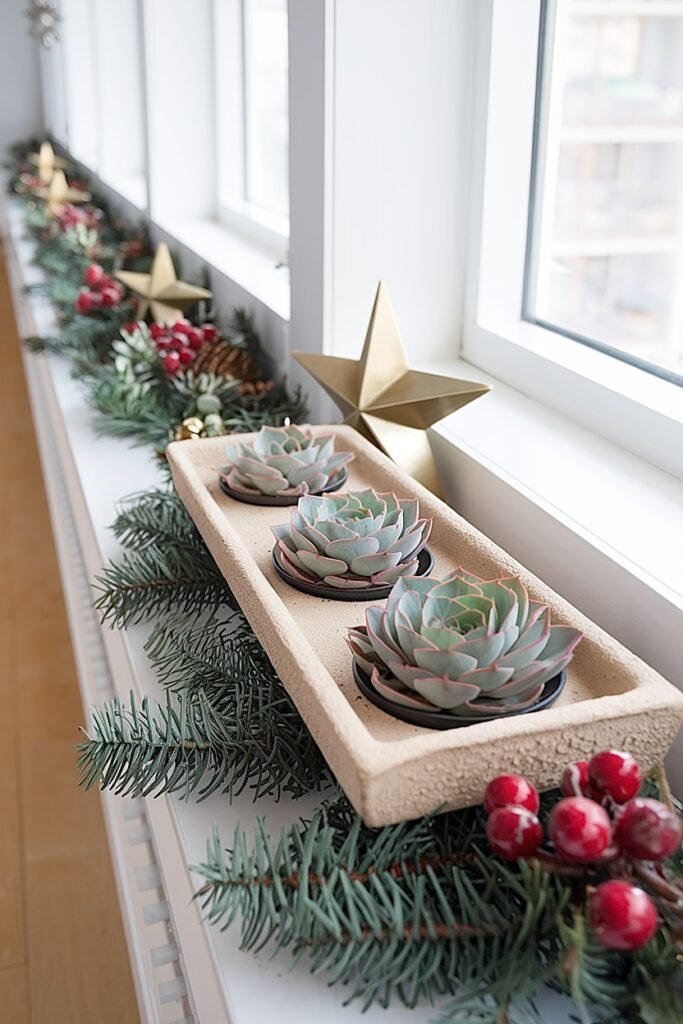
Red and green on one plant. No paint. No dye. No work from me.
That’s a stressed succulent in winter, and it gets me every time.
Here’s the thing. Those red tips aren’t some special holiday plant. They’re a stress signal. Mountain Crest Gardens, a succulent nursery, says the red tones show up when a plant gets pushed by hard sun, a long dry stretch, or cold, and that the plain green comes back once the stress lets up. The plant is fine. It’s just near its limit.
Which makes winter the perfect time. A cool, bright sill tips a lot of echeverias and sedums into deeper reds and pinks right when you want them. Your only job is making those colors look like Christmas on purpose.
- Group Them in Odd Numbers: Three or five red-tipped rosettes on a tray look better to my eye than two or four. Mix the sizes so the group has some bounce to it. Keep the pots touching, which reads as one piece instead of a crowd, and set the cluster where it still grabs strong light, or those red edges fade back to plain green by New Year’s and the whole look goes flat.
- Drop One in a Teacup: A single red-tipped rosette in an old teacup is almost too easy. The small size suits a nightstand or a skinny shelf. Hunt for a cup with a crackled glaze or a gold rim for that holiday touch. One catch: a teacup has no drain hole, so water with a light hand and tip out whatever pools in the bottom, or the roots sit and rot.
- Line the Sill Like a Garland: Stand a row of small rosettes along the windowsill, each in its own little pot. It turns into a living garland, and it sits in the exact spot that keeps the color bright. I mix greener ones in with the reddest few, so the row has some give and take rather than one flat band of red marching end to end.
- Ring It With Cranberries: Scatter a handful of fresh cranberries around the base of a potted rosette. You get a pop of shiny red that bounces off the leaf tips, and it costs about a buck. Pull the berries before they go soft, and don’t let them sit on the leaves, where the wet can start rot. Fake berries skip the fuss and last all season.
- Pair Red With a White Pot: A plain white pot throws every bit of attention onto the plant. Against clean white, those red and rosy tips look brighter, almost lit from inside. I leave the pot bare, no pattern, since the leaves already do the fancy part. One plant, one white pot, done. On that blank backdrop, even a little rosette pulls the eye straight in.
Stick around, because the coffee table trick below tackles the smallest surface in the place.
How to Arrange Succulents on a Tiny Apartment Coffee Table
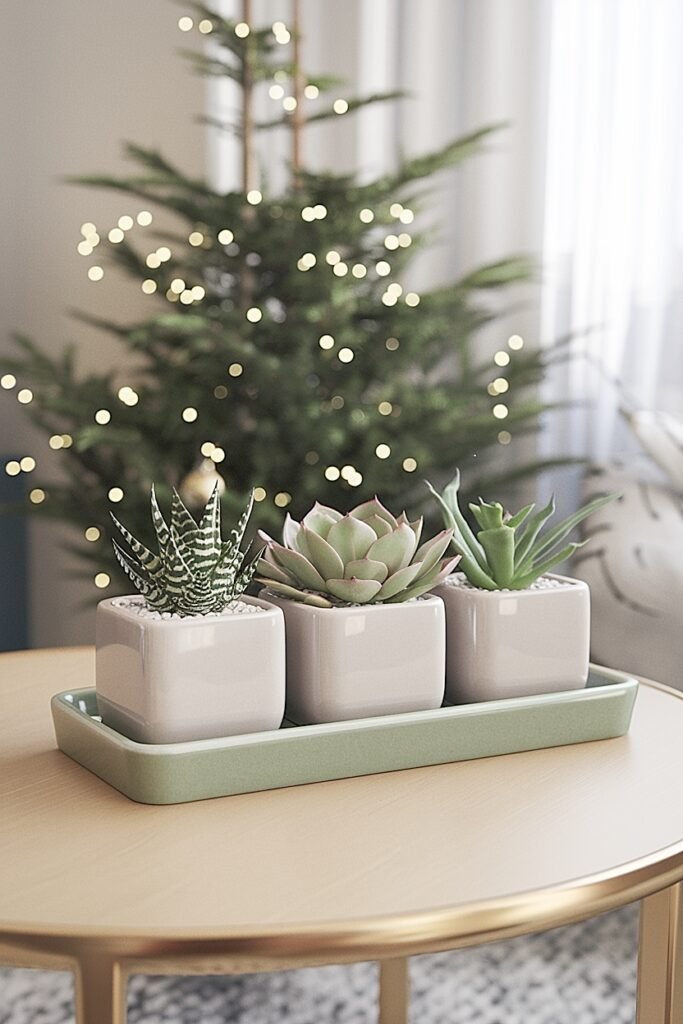
In a small place, the coffee table does everything. Dinner tray. Desk. Footrest. The spot where my keys and mail land the second I walk in.
Making room on it for Christmas is a real fight.
A little succulent setup wins that fight, because it stays low and barely takes up space. The snag is light. Coffee tables usually sit smack in the middle of the room, far from the window, and light is the one thing a succulent can’t skip for long. Leave a pot there all winter and it starts leaning toward the glass across the room.
So I treat the table like a stage, not a home. The plants spend their days on the sill, soaking up sun. They only come to the table when people are over.
Here’s the setup I keep landing on. A small wooden tray sits off to one side. On it: three little succulents in matching pots, a few loose pinecones, one short candle in glass. That’s it. When I need the room back, the whole tray lifts off in one go. That tray is the real trick. It turns a pile of odds and ends into one neat thing I can move in a single swoop. Leave the rest of the table bare so it has room to breathe.
Don’t drift off yet. The snowy white-pebble look coming up is one of my favorites for a bright, wintry feel.
Ideas for Snowy-Look Succulents with White Pebble Christmas Accents
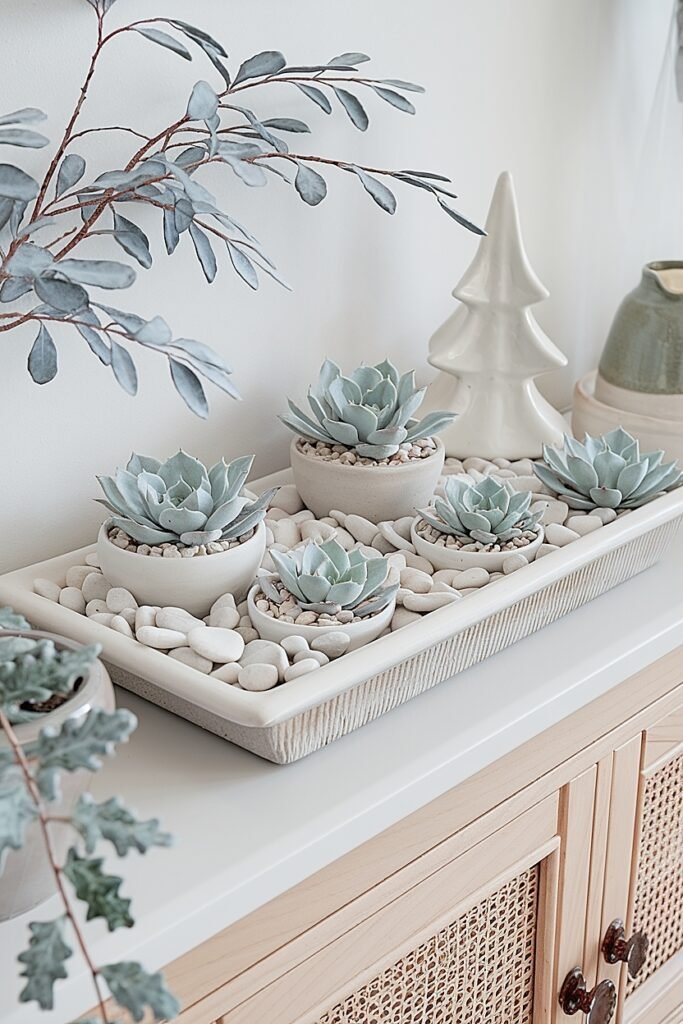
Real snow in a warm apartment? Not happening. White pebbles fake it, though.
A layer of pale gravel over the soil reads like a fresh dusting of snow. And it sets off that blue-green color like nothing else I’ve tried.
There’s a point to it beyond looks. A top layer of stones, what growers call top dressing, holds the lower leaves up off wet soil and makes the pot look finished. For a plant that rots at the first hint of damp, a surface that dries quicker is a quiet little win.
The frosty kinds really sell it. Loads of echeverias wear a pale, powdery coat, and next to white stone they look dipped in snow.
- Top-Dress the Soil: Spread a half-inch of white aquarium gravel or crushed marble over the soil of a potted echeveria. The pale stones look like snow and hold the lower leaves off wet dirt. Leave a small gap around the stem so the base can still breathe and dry.
- Layer a Clear Jar: Pour white pebbles into a clear glass jar, then set a small succulent on top in its own little pot, tucked out of sight. The stacked stone looks like a snowdrift through the glass. Keep the plant in a plastic liner so you can pull it out to water.
- Fake a Snow Globe: Set one frosty echeveria in a shallow dish, ring it with white pebbles, and tuck in a tiny bottle-brush tree. It looks like a snow globe minus the dome. Shallow dishes dry fast, which these rot-prone plants love down to the ground.
- Frost the Rim: Dab a little craft glue around a pot’s rim and dip it in fine white gravel for a snow-capped edge. It frames the plant without hiding any of it. Let the glue dry fully before the pot goes near your plant or the sill.
- Go White on White: Set a pale, frosty echeveria in a white pot and top it with white pebbles. The near-one-color look feels calm and wintry. One soft pop of a red-tipped leaf in the middle keeps it from washing out, like a single ember in the snow.
There’s more worth a look below, including a dressier black-and-gold setup for grown-up holiday nights.
Ideas for a Minimalist Black-and-Gold Succulent Holiday Arrangement
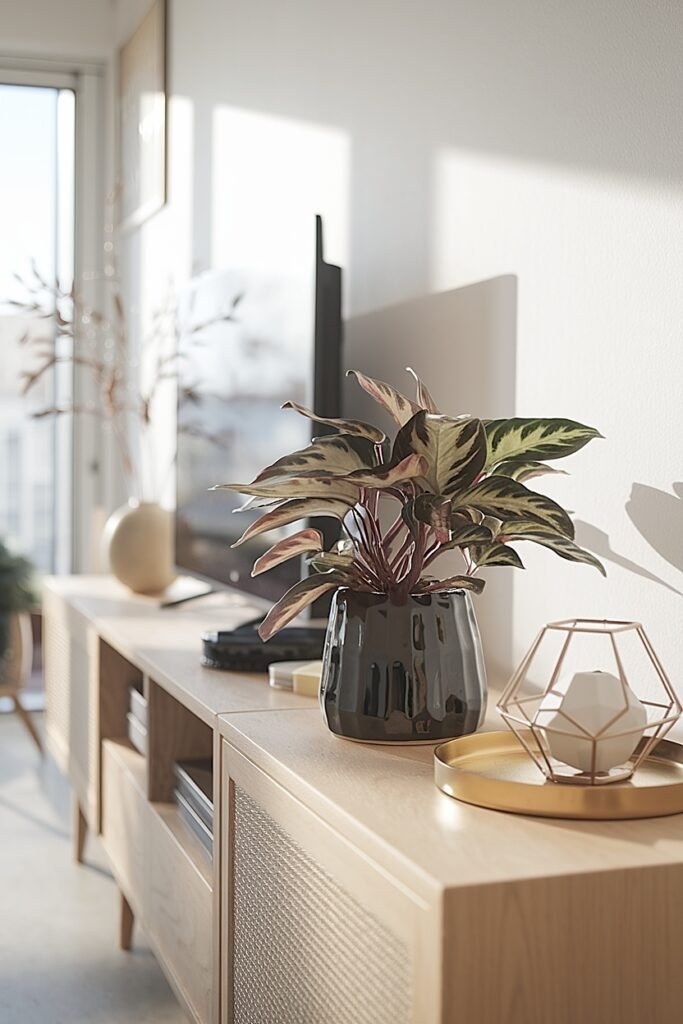
Black and gold is my move when the place needs to feel fancy. New Year’s Eve, mostly.
Looks dramatic. Takes almost nothing.
It all runs on contrast. A matte black pot drinks up the light, so a pale rosette sitting in it seems to glow. Toss in a little gold and suddenly it belongs on a cocktail table. Keep it minimal, though. One or two gold notes feel rich. Five look like a craft bin tipped over.
Succulents fit this look because their shape is already clean. No flowers needed. No fuss. The plant brings the shape, and the two colors handle everything else.
- Black Pot, Pale Plant: Drop a silvery-green echeveria into a matte black pot. The dark, light-drinking finish makes the pale plant look like it’s glowing from within. No other color is needed here. Lift the inner pot to water if the planter has no drain hole.
- Gold-Painted Pebbles: Scatter a few gold-painted pebbles across the surface as a top dressing. Just a handful, catching the light. Go heavy and it slides into gaudy fast. Let any paint dry all the way before the stones touch the plant, so nothing leaches in.
- One Brass Candlestick: Stand a single brass candlestick next to the pot with a black or white taper. One, not a pair. The off-balance look feels modern, and the flame warms up all that black. Keep it clear of the leaves, since dry foliage and fire don’t mix.
- A Thin Gold Rim: Pick a black pot with a slim gold line around the top edge. That one detail does the whole job for you. Subtle from the couch, sharp up close. You don’t need to add a single other thing to make it read as the holidays.
- Black Tray to Pull It Together: Set the plant and one gold piece on a small matte black tray. The tray draws a clean edge and keeps the look sharp. It also lets you carry the whole thing to the sink at watering time in one clean trip.
Keep reading, because the terracotta ideas below are actually the healthiest pick for the plants.
Simple Ways to Make a Christmas Succulent Arrangement in Terracotta
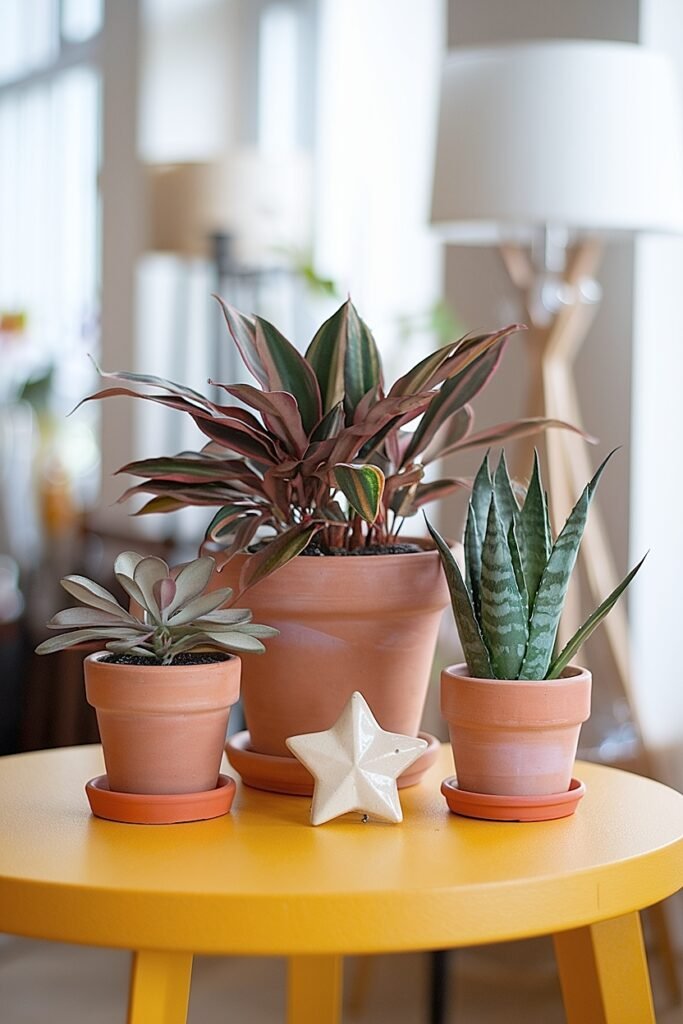
Terracotta doesn’t shout Christmas. Stick with me, though.
That warm orange clay looks great against green leaves and red tips, and it’s the best home a succulent could ask for.
Here’s why. Toronto Master Gardeners point out that soil in terra cotta dries faster than in plastic, and an Ask Extension expert boils the reason down to one word: porous. For most plants, that’s a pain. For a succulent that rots when its roots stay wet, it’s a gift. The pot is on your side.
The clay comes in more looks than people expect, too. Plain orange-brown. Soft blush. And a whitewashed finish that looks almost snowy next to a blushing rosette.
- Raw Clay and Red Tips: Pot a red-tipped echeveria straight into a plain terracotta pot and let the two warm colors play off each other. The porous clay dries the soil fast, which these plants love. Just check the dirt more often, since terracotta pulls water out quicker than plastic does.
- A Row of Little Pots: Line up three or four small terracotta pots along the sill, one succulent each, and tie a thin strip of red ribbon around every rim. The matching clay makes the row feel planned, and the ribbon is your one cheap holiday touch. Easy to tie on, easy to pull off in January.
- Whitewash for a Frosty Look: Brush a thinned coat of white paint over a terracotta pot, then wipe some back so the clay shows through. You get a frosty, wintry finish that suits a snowy-looking echeveria. Let it dry overnight before a plant goes in, and leave the inside bare.
Hang tight. The paper snowflake idea below is the cheapest project in the whole post.
How to Style Succulents with Handmade Paper Snowflakes for Christmas
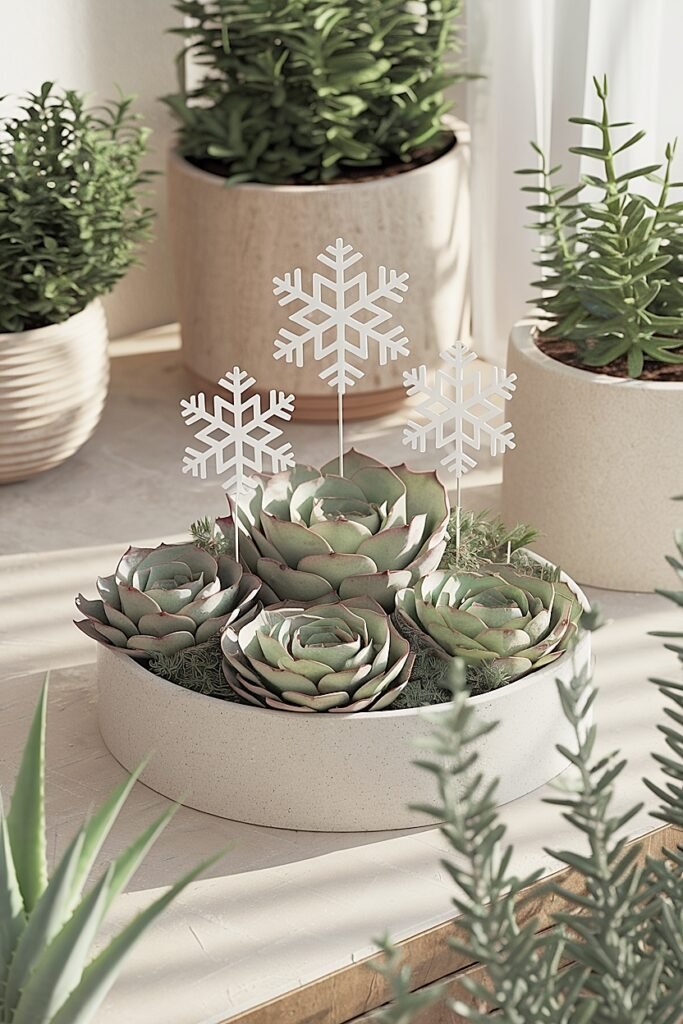
Some of the best holiday decor is free. A sheet of paper and some scissors. That’s it.
Paper snowflakes drag me right back to grade school. And they look oddly great next to a plant.
Why does it work? Contrast, again. A snowflake is all flat, crisp lines. A succulent is round and plump. Set them side by side and each one makes the other pop. Plus it’s a couch project you can knock out in an evening, perfect for a cozy night in.
Scale is the other win. In a small apartment, a giant wreath feels like too much. A few little paper flakes around a plant feel just right.
Here’s how I do it. I cut flakes in a few sizes from plain white paper, then prop the biggest behind a potted echeveria like a backdrop. A couple of smaller ones lie flat on the tray beside the pot. One tiny flake gets a dab of glue on a toothpick, which I poke into the soil so it floats over the plant like a real one coming down. Nothing touches the leaves, since paper and damp foliage don’t get along. White paper against a blue-green rosette looks clean and cold in the best way, and the whole thing cost me a single sheet.
Almost there. The flowering kalanchoe section below brings real color, with one safety note you really need to read.
Ideas for Festive Flowering Kalanchoe Displays in Small Apartments
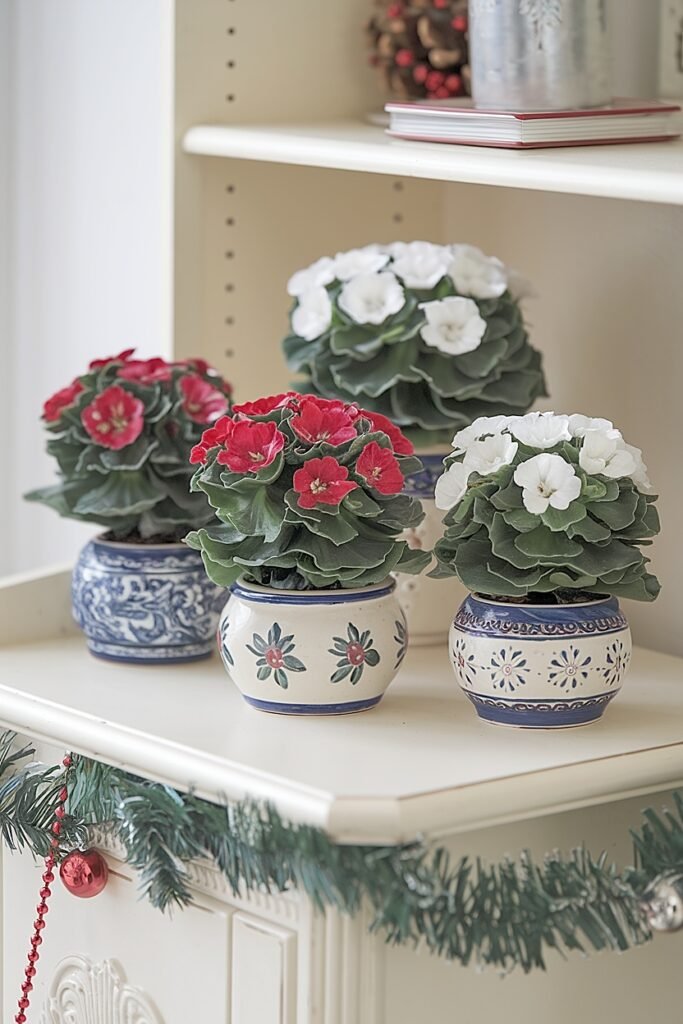
Most succulents skip flowers. Kalanchoe didn’t get the memo.
It blooms in bright clusters straight through winter, a gift that keeps giving.
The flowering kind, Kalanchoe blossfeldiana, even goes by Christmas kalanchoe. Clemson Cooperative Extension says it does best in full sun and well-drained soil, puts up with bright indoor light, and goes spindly in a dim corner. The New York Botanical Garden adds that it blooms in pink, red, orange, white, and yellow, and that it turns lanky and floppy when the light runs low. Bright spot, happy plant.
Now the warning, and I mean it. Kalanchoe is toxic to pets. The ASPCA flags it for dogs and cats, saying it can cause vomiting, diarrhea, and an off heartbeat. If a cat or dog shares your small space, this plant lives somewhere they truly cannot get to.
- A Red One by the Window: Set a red-flowering kalanchoe on a bright sill for instant Christmas color that holds for weeks. Clemson notes it needs that strong light to stay full and keep blooming. Water only when the soil dries out, since this succulent gets damaged fast by too much water sitting around.
- A Mix of Colors: Group three small kalanchoes in red, white, and pink for a living bouquet on a shelf. The flower clusters ride above the leaves, so the color reads clear across the room. Keep them up high and out of reach if pets roam, given how toxic this one is to them.
- One Plant, One Nice Pot: Slip a single blooming kalanchoe into a ceramic pot that fits your room. The long bloom time means it earns its keep all season long. Make sure the pot drains, or lift the inner pot to water, because soggy roots are this plant’s number one enemy.
Conclusion
A small apartment doesn’t mean a sad little Christmas. Succulents stay compact, they practically decorate themselves when the cold pulls out their color, and a single bright sill can hold your whole holiday display.
Where would I start? A few red-tipped echeverias in plain pots on the sunniest sill I’ve got. Then build. Add white pebbles for snow, terracotta for warmth, a blooming kalanchoe for real color, just keeping that last one away from pets. Give them light. Water them deep but rarely. They’ll carry you right through to spring.
My honest take? Skip the fake mini tree from the big-box store. A living one looks better, lasts longer, and is still around long after the ornaments go back in the box.
This website contains affiliate links, and some products are gifted by the brand to test. As an Amazon Associate, I earn from qualified purchases. Some of the content on this website was researched and created with the assistance of AI technology.