This website contains affiliate links, and some products are gifted by the brand to test. As an Amazon Associate, I earn from qualified purchases. Some of the content on this website was researched and created with the assistance of AI technology.
Key Takeaways
- White cosmos petals are tissue-thin and heat-vulnerable: use cold water and avoid direct afternoon sun for events longer than two hours
- The delicate stem structure needs support: a clear tape grid across the vessel mouth or gravel-bottomed cold water keeps stems positioned without crowding
- White cosmos blooms close in low light: stage in a bright space before the dinner to keep blooms open, then move to the table at the last moment
- Pairing cosmos with soft-stemmed herbs like dill, fennel fronds, and parsley creates the most natural, airy aesthetic without adding visual weight
- White cosmos read beautifully beside pale yellow: cream-white and soft butter-yellow creates the sunniest summer palette without saturated color
- Avoid tight, dense arrangements with cosmos: they need breathing room in the vessel to display individual stem arching and bloom movement
Styling White Cosmos for summer table centerpieces is the most forgiving and most universally flattering flower project I know. The tissue-thin petals and the naturally arching, delicate stem structure create an airiness that no other common summer flower produces at the same scale or cost. One bunch of white cosmos in a simple glass vessel looks like a professional florist arrangement. The flower does the design work: the movement, the light-catching translucency, the nodding bloom heads that orient toward available light.
The challenge with white cosmos is the same quality that makes them beautiful: their delicacy. The thin stems need support in water, the tissue-thin petals show heat stress as edge browning, and the open bloom faces close completely in low light or overnight. Understanding those specific characteristics is what separates a cosmos centerpiece that holds its beauty through a full dinner from one that starts to look tired by dessert.
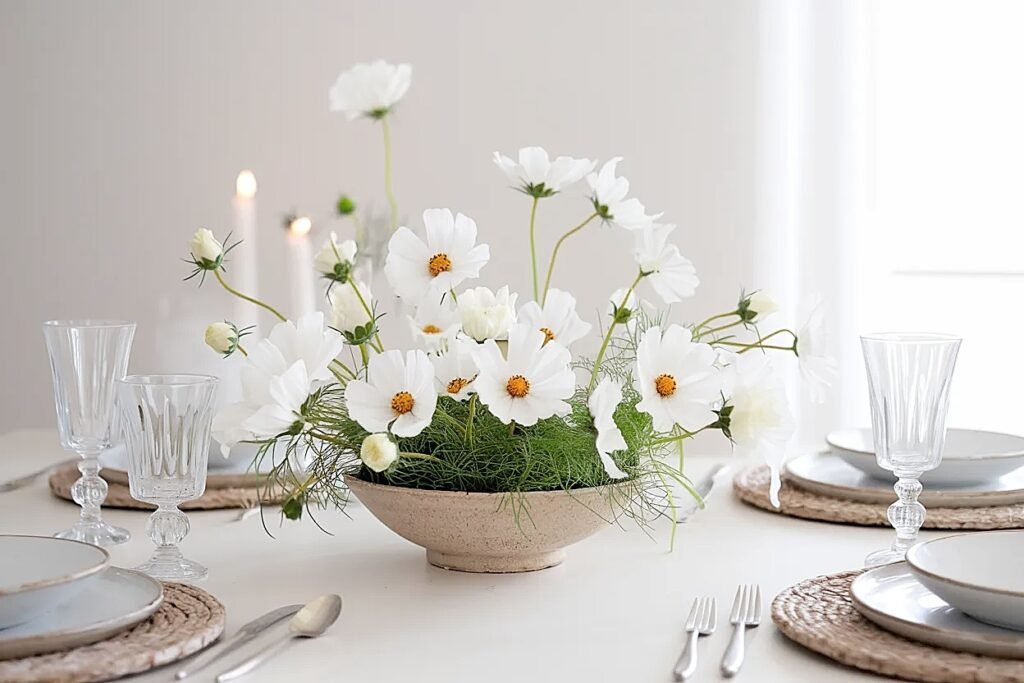
Use this table to choose the right white cosmos centerpiece style before you start arranging. It keeps the decision simple: table size, best container, support method, and styling mood. The goal is a centerpiece that looks breezy, stays low, and leaves plenty of room for food, plates, and conversation.
White Cosmos Summer Flowers Centerpiece Style Guide
Match your table setup to the right container, support style, and airy summer look.
| Table Situation | Best Container | Support Method | Finished Look |
|---|---|---|---|
| Small brunch tableUse one compact centerpiece so plates and serving bowls still fit easily. | Low ceramic bowlChoose cream, pale green, or soft clay so white cosmos stay the focus. | Flower frog or twig gridHold thin stems upright without packing in too many blooms. | Soft and openAiry, low, and easy to see across during a relaxed meal. |
| Long family tableSpread flowers evenly instead of building one tall arrangement in the middle. | Mini pottery cupsRepeat five small vessels down the table for rhythm and balance. | Short stem clustersUse three to five cosmos stems per cup with a little greenery. | Light table runnerA meadow-like line of flowers that still leaves room for food. |
| Outdoor dinnerUse a stable container and keep delicate stems protected from bumps. | Wide matte troughA longer base gives cosmos support without needing height. | Low greenery baseAdd herbs or fine foliage at the bottom to steady the stems. | Fresh garden styleCasual, practical, and bright enough for summer patio dining. |
| Buffet or side tableCreate beauty around dishes without letting flowers lean into the food zone. | Grouped small bowlsPlace two or three low bowls near the back edge of the display. | Angled stem placementPoint blooms upward and outward while keeping the food area clear. | Clean and usefulDecorative, airy, and safe for guests reaching across the table. |
| Budget summer tableMake a few stems feel fuller with smart spacing and small companion flowers. | Small cream pitchersUse narrow openings to help stems stand with less floral material. | Filler bloom pocketsTuck feverfew, yarrow, or tiny daisies between cosmos stems. | Full but breezyPretty, affordable, and not overstuffed or formal. |
Resources:
- Utah State University Extension: Cosmos as a cut flower
- Brooklyn Botanic Garden: How to make cut flowers last longer
- Iowa State University Extension: Harvesting and conditioning cut flowers
- Floret: Cosmos growing and vase notes
How to Style White Cosmos Summer Flowers in Low Bowls for Airy Table Centerpieces
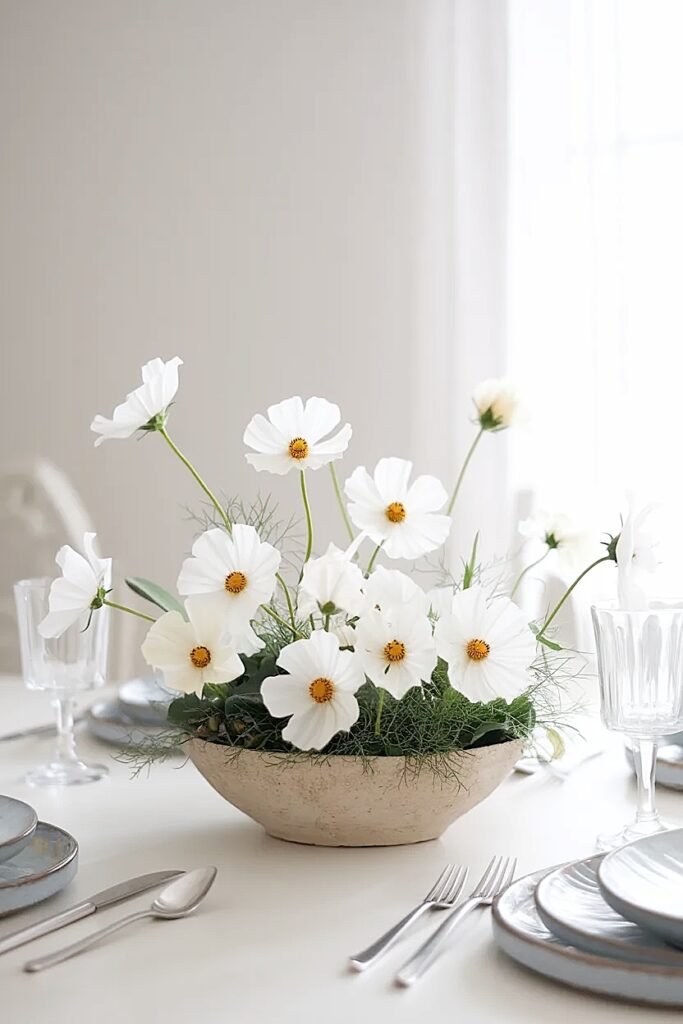
A low bowl is an unusual vessel choice for cosmos, which have long, arching stems that seem to belong in a tall vessel. But a low, wide bowl with cosmos creates one of the most visually distinctive summer centerpieces available. The key insight is that the cosmos stems do not need to stand upright inside the bowl: they can be cut short and placed face-up in an inch of water, with their blooms floating at bowl rim level. From the seated viewing angle at a dining table, the overhead cosmos faces create a cloud-of-white effect that tall arrangements simply cannot replicate from the same distance.
Use a wide ceramic or glass bowl, at least eight inches in diameter, with no more than an inch or two of cold water. Cut cosmos stems to four to six inches and press them into gravel or a loose pin frog to hold their positions. The short stems allow the bloom heads to sit at rim level without any support structure. Tuck small sprigs of dill, fennel fronds, or fresh parsley between the cosmos blooms to fill the gaps and add the fine green texture that makes the white cosmos appear to float in a garden rather than in a vessel.
The low bowl format suits dining tables where sightlines matter. A flat, wide cosmos arrangement never blocks the view across the table. It exists at table surface level, which means guests look across rather than through it. The arrangement does not participate in conversation geometry at all.
For more on white flowers in summer arrangements, check out how to use white zinnias in summer flower arrangements that stay bright. Share this with anyone building summer centerpieces. More ahead on herb pairings, filler bloom support, and every other cosmos technique.
Ways to Pair White Cosmos Summer Flowers with Soft Green Herbs for Fresh Table Centerpieces
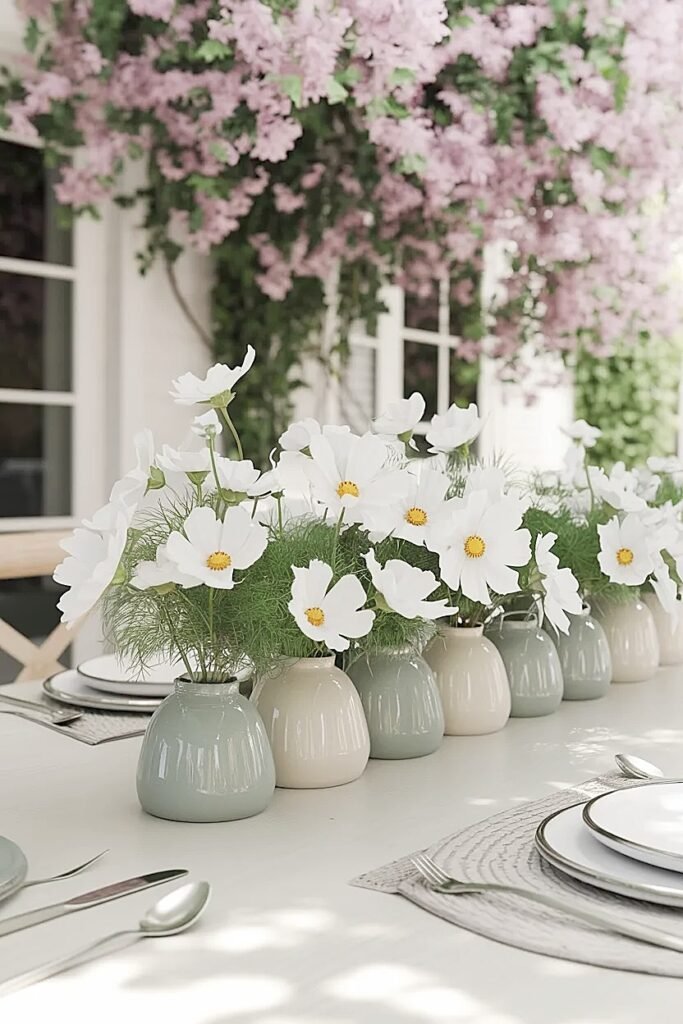
Cosmos and herbs are the most natural pairing available for a summer centerpiece. The arching, fine-stemmed quality of cosmos and the delicate leaf structure of soft herbs like dill, parsley, and fennel fronds belong to the same visual language: both plants communicate garden abundance and organic lightness in a way that structured flowers and commercial foliage cannot replicate. The herb fragrance at dining table range adds a sensory dimension that purely ornamental arrangements do not provide.
1. White Cosmos with Fresh Dill Fresh dill’s feathery yellow-green fronds create the finest textural contrast of any herb alongside white cosmos. The dill fronds fill the visual gaps between cosmos stems without adding any structural weight. The anise fragrance at dining table range is gentle and food-compatible. Cut dill to two to three inches longer than the cosmos stems so the fronds appear above and between the white blooms, creating.
2. White Cosmos with Bronze Fennel Bronze fennel’s copper-tinted feathery fronds create an unusual warm-against-cool contrast alongside white cosmos. The bronze tone adds subtle depth to an otherwise all-cool palette. The fennel fragrance is slightly stronger than dill but still food-compatible at dinner table range. Bronze fennel fronds arch naturally alongside cosmos stems, creating a mixed arrangement where both plants’ movement quality is visible. The color variation between bronze and white.
3. White Cosmos with Curly Parsley Curly parsley creates the densest, most ground-level green texture of any herb alongside white cosmos. The compact, tightly curled dark green parsley provides a visual base layer from which cosmos stems rise naturally. The dark green makes white cosmos appear brighter by contrast. The parsley fragrance is extremely mild at dining table range. Pack parsley into the vessel base before inserting cosmos stems: the parsley.
4. White Cosmos with Lovage Lovage, an aromatic herb with large, celery-like leaves and hollow stems, creates a bold foliage contrast behind white cosmos. The larger leaf scale provides a backdrop that makes cosmos blooms appear more delicate by comparison. The lovage fragrance is complex, celery and angelica notes, that adds unusual depth to the dining table atmosphere. Position lovage stems toward the back of the arrangement with cosmos in.
5. White Cosmos with Lemon Verbena Lemon verbena’s citrus fragrance and narrow, bright green leaves create a fragrant, light-green textural contrast alongside white cosmos. The verbena fragrance is specifically food-compatible: it reads as a garnish quality rather than a floral scent. The narrow leaf form does not crowd the cosmos stems. At table range on a summer evening, lemon verbena fragrance drifts pleasantly without overpowering. The light green verbena leaf tone.
More ahead on keeping white cosmos stems upright without losing the lightness that makes cosmos beautiful.
How to Keep White Cosmos Summer Flowers Upright Without Making Centerpieces Look Heavy
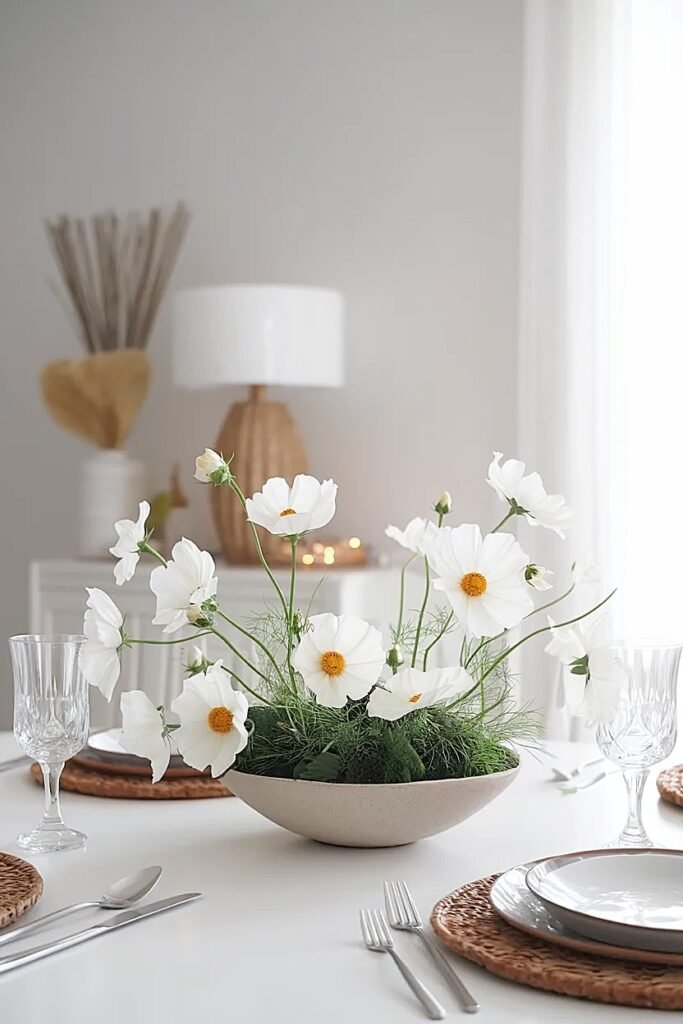
This is the technical challenge that stops many people from using cosmos in table centerpieces: the slender, delicate stems do not support themselves well in water without falling to the sides of the vessel. The common solution, packing the vessel tightly with other stems to create mutual support, defeats the airy quality cosmos provides. The right solution is structural support that is invisible and does not crowd the stems.
A clear tape grid across the vessel mouth is the most effective invisible support for cosmos stems in a centerpiece vessel. Lay two to three strips of clear tape horizontally across the vessel mouth and two to three strips vertically, creating a grid with half-inch to one-inch openings. Insert one cosmos stem through each grid opening. The tape grid holds each stem in its individual vertical or slightly angled position without any stem touching another. The grid is invisible in the vessel water. The stems appear to stand naturally without the crowded base that tight packing creates.
A loose layer of clean pebbles or marbles in the vessel base is the second effective option. Two to three inches of pebbles with cold water provides enough resistance for cosmos stem bases to hold their positions when pressed in at different angles. The pebbles allow more repositioning than tape and they are better suited for wide, low bowl arrangements where the tape grid would need to span a very wide vessel mouth.
One cosmos-specific technique worth knowing: trim one inch from each stem every twelve hours and change the water at the same time. Cosmos are particularly sensitive to bacterial buildup in arrangement water, which blocks water uptake faster than it does in woody-stemmed flowers. The regular trim-and-change maintains clear water access that keeps cosmos petals from showing stress.
More ahead on which filler blooms work best alongside cosmos without crowding or competing with the cosmos’ lightness.
What Are the Best Filler Blooms to Support White Cosmos Summer Flowers on Dining Tables?
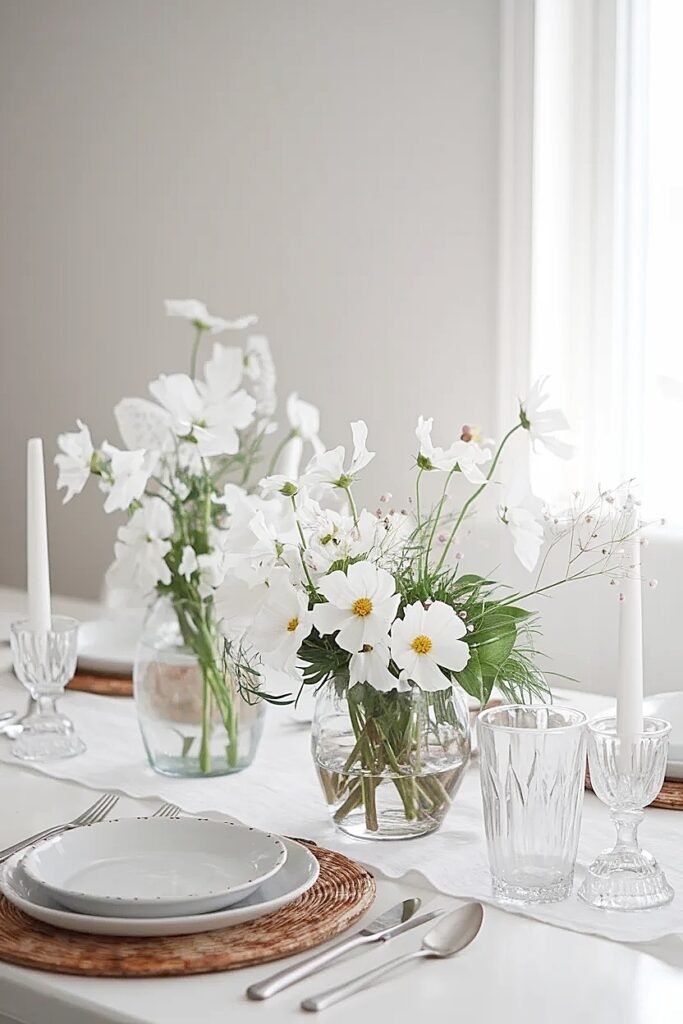
A filler bloom for a cosmos centerpiece has specific requirements: it must be smaller in scale than the cosmos face, shorter in stem height so it supports rather than competes, and either similarly light in visual weight or structurally compact enough that it grounds the cosmos without creating visual density that cancels the cosmos’ airiness.
1. White Waxflower White waxflower creates the finest-textured filler support for white cosmos. The tiny star-shaped blooms along each stem look like dozens of mini-cosmos at a fraction of the scale. One or two waxflower stems fill a vessel with supporting white bloom texture without adding any visual.
2. Chamomile Fresh chamomile cut to three to four inches fills the base and gaps of any cosmos arrangement with delicate daisy faces. The yellow centers add a warm accent that makes the white cosmos appear cooler and more vivid. The honey fragrance at close dining table.
3. Gypsophila (Baby’s Breath) Gypsophila creates a mist-like supporting texture that reinforces rather than competes with the airy quality of cosmos. The tiny white clouds of gypsophila between cosmos stems create a cumulative white atmosphere that makes the whole arrangement read as more abundant without any individual stem adding.
4. White Statice White statice provides a papery, structured filler that supports the cosmos arrangement from the base without crowding the visible stem zone. Placed at the vessel base below the cosmos stem level, statice creates a white ground layer that the cosmos stems rise from naturally. The.
5. Forget-Me-Nots (Blue) Blue forget-me-nots as a filler alongside white cosmos creates one of the most distinctive cool-palette summer arrangements available. The soft blue clusters fill gaps between white cosmos blooms with a color that creates gentle contrast rather than bold competition. The tiny scale of forget-me-not blooms.
More ahead on how pale yellow blooms work alongside white cosmos to create the most quintessentially summer palette.
How to Layer White Cosmos Summer Flowers with Pale Yellow Blooms for a Sunny Table Look
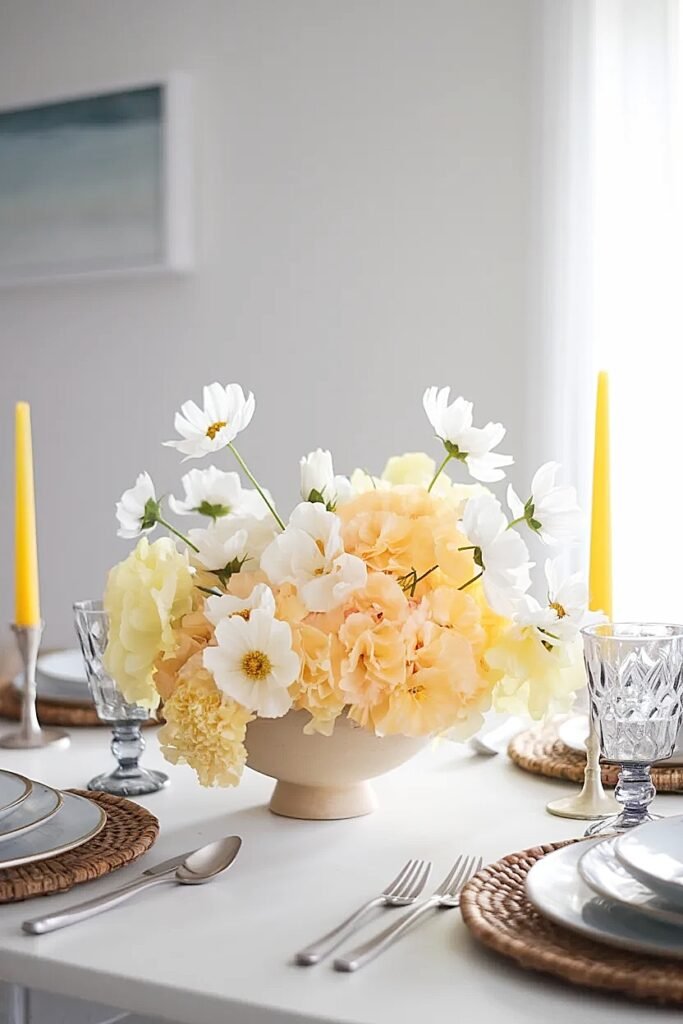
White and pale yellow is the softest, warmest, most summery palette available in a cosmos-centered arrangement. The tissue-thin white cosmos petals have a very slight warm undertone in certain light, particularly afternoon light, that responds to pale yellow proximity by appearing warmer and more luminous. Pale yellow blooms, butter yellow ranunculus, soft yellow chamomile, pale lemon-toned calibrachoa, or yellow-centered white daisies, all activate this warmth in the cosmos without introducing saturated color that would overwhelm the delicate palette.
The arrangement technique for white cosmos and pale yellow is asymmetric placement rather than even distribution. Cluster the pale yellow blooms at one side or end of the arrangement and position the white cosmos predominantly on the other side with greenery filling the visual middle zone. The color separation creates a visible color composition rather than a blended mix that reads as undifferentiated pale tones from a distance.
The yellow choice matters: specifically pale, butter, or cream yellow works. Vivid golden yellow beside white cosmos creates too much contrast and reads as a different arrangement that happens to use two kinds of flowers. The goal is a palette where white and yellow exist in the same tonal range, creating variation within a unified soft palette rather than a two-color contrast effect.
At evening dinner table light, particularly candlelight, the pale yellow and white cosmos palette becomes genuinely beautiful in a way it does not achieve in bright daylight. Candlelight amplifies the warm undertones of pale yellow and creates a glow quality around white petals that overhead lighting does not. If the arrangement is intended for an evening gathering, the pale yellow and white cosmos combination specifically suits that light environment.
What Are the Best Greenery Choices for White Cosmos Summer Flowers Centerpieces?
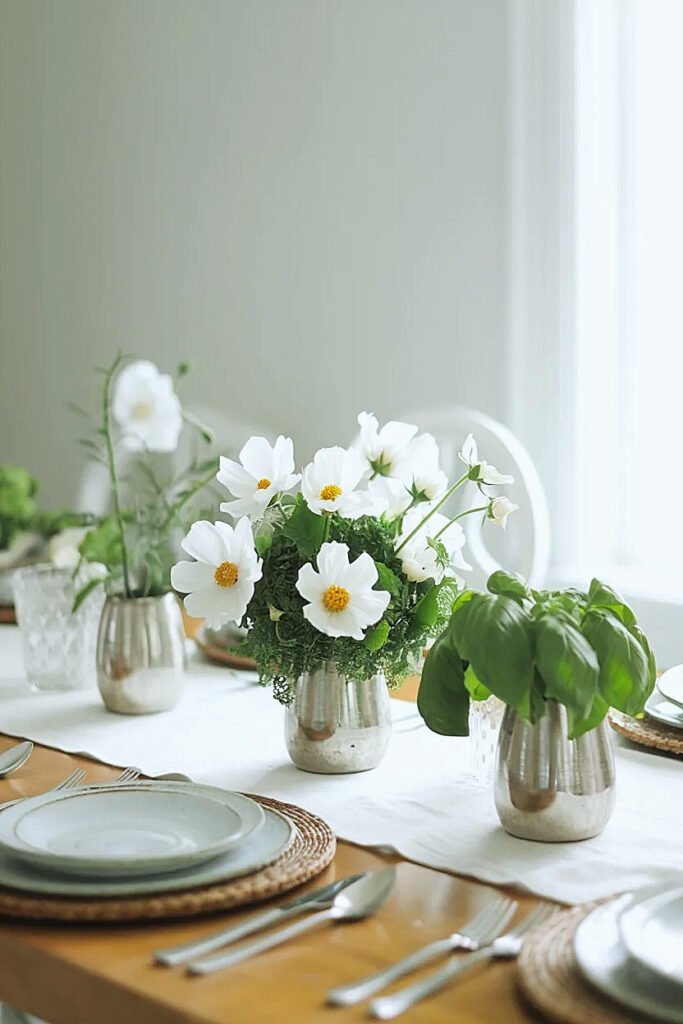
Greenery for a cosmos centerpiece serves a different function from greenery in a structured arrangement. Because cosmos stems and blooms already provide movement and delicacy, the greenery’s role is purely to provide visual contrast, not structural support. Fine-textured greens that do not interrupt the visual flow of the arrangement suit cosmos better than bold, large-leafed foliage.
1. Seeded Eucalyptus Seeded eucalyptus trails naturally between cosmos stems, adding silvery-grey textural contrast at the vessel edge and below. The round seed clusters echo the circular cosmos bloom face at a much smaller scale. The gray-green tone bridges between cool white cosmos and any vessel or table.
2. Maidenhair Fern Fronds Maidenhair fern fronds create the most naturally complementary green for white cosmos. The delicate, fan-shaped leaflets on thin black stems match the cosmos’ own fine visual language. Both cosmos and maidenhair fern communicate organic lightness: together they create an arrangement that reads as a gathered.
3. Italian Parsley or Flat Leaf Parsley Flat leaf parsley provides a darker, more contrasting green alongside white cosmos without the structural bulk of ruscus or eucalyptus. The flat, slightly glossy leaf reflects table-level light back toward the white cosmos faces. The mild parsley fragrance is food-appropriate at dinner table range. Cut.
More ahead on how ferns change the register of a cosmos centerpiece from summer garden to woodland.
How to Style White Cosmos Summer Flowers with Ferns for Soft Woodland Table Centerpieces
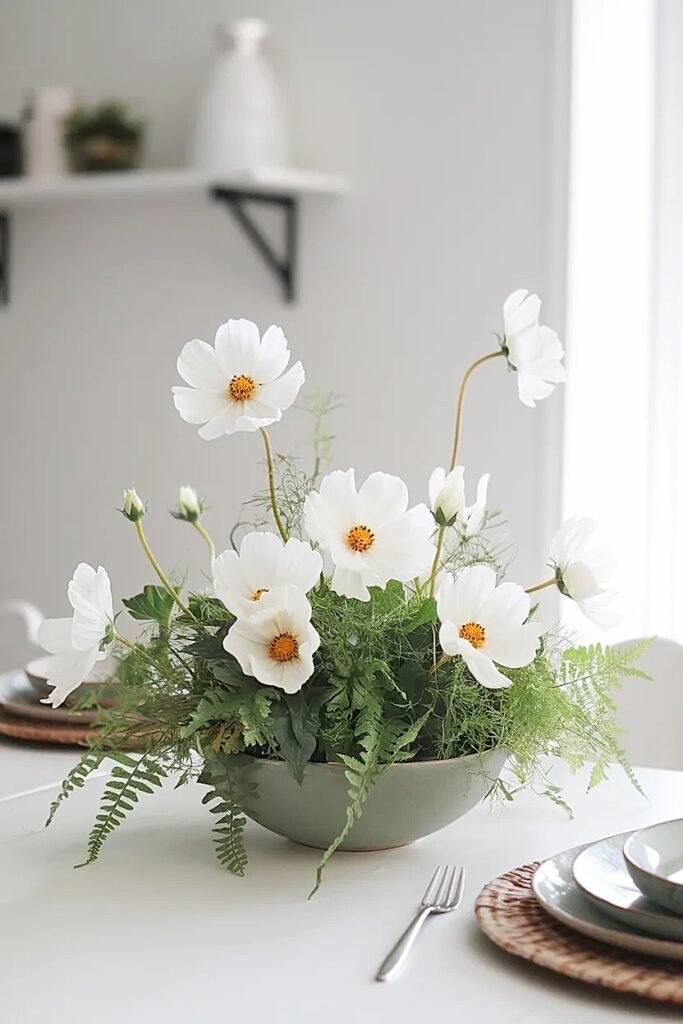
Cosmos and ferns belong to the same visual world: both communicate organic, non-cultivated abundance rather than the formal garden quality of roses or dahlias. Together in a centerpiece, white cosmos and soft fern fronds create an arrangement that reads as gathered from a shaded summer meadow rather than assembled from purchased materials. The register is immediately distinctive.
The fern varieties that work best alongside cosmos for this woodland quality are the soft, arching types: maidenhair, soft shield fern, lady fern, or any fern with a delicate frond structure. Stiff, upright ferns like Boston fern in its formal basket form or rigid sword fern do not create the same quality. The arching quality of a soft fern frond, with the leaflets distributed along a gracefully curving stem, mirrors the arching stem quality of cosmos in a way that creates genuine botanical harmony.
Build the woodland cosmos arrangement with the fern fronds as the structural base: position three to five fern fronds in the vessel first, creating an arching foliage framework. Then insert the cosmos stems through the fern layer at varying heights and angles. The cosmos stems find natural resting positions between the fern fronds, creating mutual support. The cosmos blooms rise above the fern leaf level, visible against the fern background.
The woodland cosmos aesthetic suits a very specific occasion type: garden parties, late summer dinners on a covered porch, morning breakfast arrangements where the light is soft, and any gathering where the host wants a natural, undesigned quality that reads as personal rather than decorated. It is the opposite of the statement centerpiece. It is the centerpiece that feels like it grew there.
Ways to Make White Cosmos Summer Flowers Feel Elegant for a Small Summer Gathering
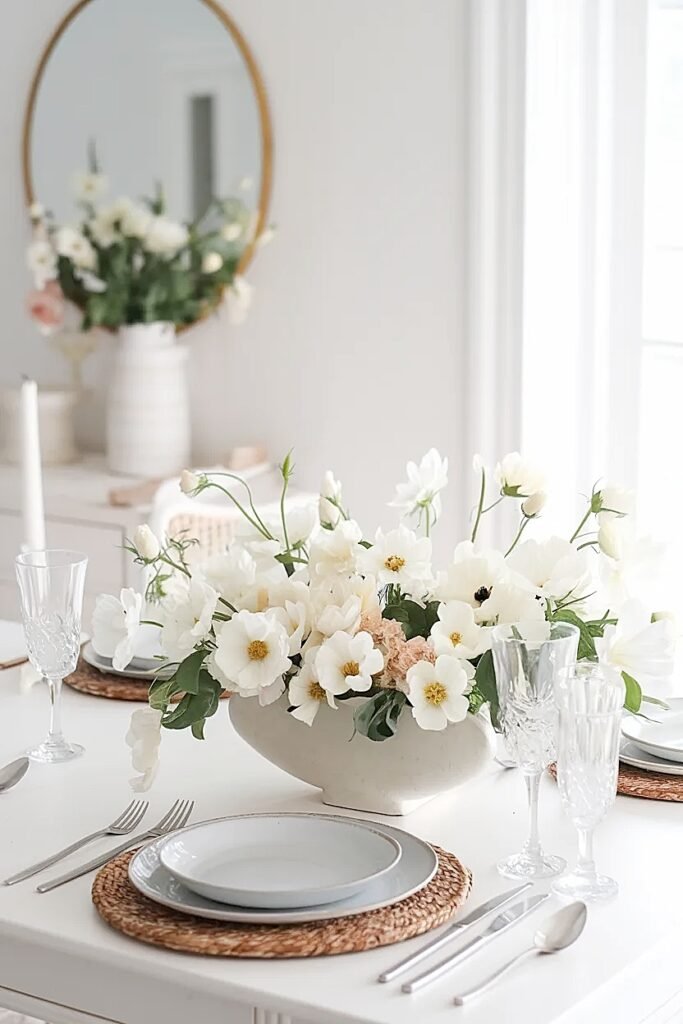
Small summer gatherings, four to eight people for lunch or dinner, create the most intimate relationship between the centerpiece and the guests. Everyone is close enough to see individual petals. The arrangement quality is visible at conversation distance. White cosmos is inherently suited to this context because the individual bloom quality rewards close viewing in a way large statement centerpieces do not.
1. Single Tall Glass Vase with Three Cosmos Stems Three white cosmos stems in a tall, narrow glass vase with two dill fronds is a complete, elegant centerpiece for a small table. The single tall vessel creates vertical presence. The three stems allow each bloom to arch independently without crowding. The glass lets guests.
2. Matched Bud Vases at Each Place Setting One small bud vase with one cosmos stem and one herb sprig at each place setting turns the table into a distributed centerpiece. Each guest has a personal arrangement rather than sharing one centerpiece. White cosmos at this intimate scale, at arm’s reach, creates a.
3. Floating Cosmos in a Wide Crystal Bowl Two to three white cosmos heads floating face-up in a wide crystal or clear glass bowl at the table center creates the most luminous small gathering cosmos arrangement. Crystal amplifies candlelight from below, which makes white cosmos petals appear to glow from inside. The floating.
4. Cosmos in a Vintage Cut Crystal Bud Vase One or two white cosmos stems in a vintage cut crystal bud vase creates a formal-meets-wildflower pairing that reads as specifically thoughtful. The formal vessel amplifies the cosmos’ casual beauty by contrast. The cut crystal catches and disperses light around the delicate white petals. At.
5. White Cosmos with One Accent Color Add one stem of a deeper, richer bloom, a small burgundy dahlia, a pale purple lavender stem, or one soft peach ranunculus, to a three-stem white cosmos arrangement. The single accent creates a focal point and color narrative that makes a simple arrangement read as.
Conclusion
White cosmos for summer table centerpieces rewards one approach above all others: restraint. Not because cosmos needs to be minimized, but because the flower communicates its most powerful quality, airiness, lightness, organic movement, most effectively when it is not crowded, not forced into tight arrangements, and not surrounded by flowers that compete with its delicacy.
Three cosmos stems, dill fronds, and cold water in a simple vessel. That is a complete, beautiful summer centerpiece. Build outward from that foundation and every addition is an enhancement of an already complete design.
This website contains affiliate links, and some products are gifted by the brand to test. As an Amazon Associate, I earn from qualified purchases. Some of the content on this website was researched and created with the assistance of AI technology.