This website contains affiliate links, and some products are gifted by the brand to test. As an Amazon Associate, I earn from qualified purchases. Some of the content on this website was researched and created with the assistance of AI technology.
Key Takeaways
- White zinnias hold their bright white color in direct summer sun better than nearly any other white cut flower
- Cool white zinnia varieties create the strongest visual contrast with bold summer palettes
- Pairing white zinnias with vivid single colors amplifies both: the contrast makes each appear more intense
- White zinnias work best at the vessel perimeter, not clustered in the center, creating a visual frame around bolder focal flowers
- The flat, face-forward petal structure reads clearly from every angle: white zinnias perform equally well in tall and low arrangements
- Seeded eucalyptus and Italian ruscus are the strongest greenery pairings because their tones amplify the white’s brightness
Using white zinnias in summer flower arrangements is one of the most underappreciated flower decisions available. White zinnias are almost never a first choice at the market. The orange ones go first, then the coral, then the vivid magenta. The white ones get overlooked by people who do not yet understand that white does something no other color does in a summer arrangement: it creates visual breathing room, separates vivid colors, and amplifies their intensity by contrast.
The other thing white zinnias do that most people discover by accident is stay bright. The dense, flat petal structure makes white zinnias one of the most UV-stable white flowers available. Where white ranunculus and white cosmos yellow and brown at the petal edges within hours of direct afternoon sun, a white zinnia holds clean bright white for the full duration of a summer party.
Use this quick guide when you want white zinnias to stay bright, not flat. It helps you match your arrangement goal with the right container, companion flowers, and care move. If you are not sure where to start, this table makes the decision much easier and faster for real-life summer decorating.
| Arrangement Goal | Best White Zinnia Setup | Best Companion Summer Flowers | Best Brightness Tip |
|---|---|---|---|
| Bright everyday centerpiece | Low ceramic bowl with white zinnias, white cosmos, and soft greenery | Lisianthus, phlox, airy filler flowers | Use a shallow container and keep the white blooms slightly above the greenery so the petals catch more light |
| Stronger color contrast | Cluster white zinnias in small groups rather than scattering them randomly | Sunflowers, coral roses, blue delphinium, lavender scabiosa | Let white zinnias separate bold colors so the palette looks crisp instead of busy |
| Longer vase life | Fresh-cut white zinnias in a clean ceramic vase with stripped lower stems | Lisianthus, gomphrena, sturdy fillers | Refresh water, trim stems, and use floral preservative to help blooms stay bright longer |
| Relaxed non-bridal bouquet | Loose gathered bouquet with white zinnias, herbs, and open spacing | Cosmos, pale yellow blooms, peach accents, mint, basil | Add soft accent color and casual greenery so the bouquet feels homey, not formal |
| Full garden-style look | White zinnias layered low and central with foliage around the rim | Ammi, herbs, ferny greens, trailing foliage | Build in layers—base greens, focal white zinnias, then airy stems—so the white flowers stay visible |
Resources:
- How to Grow Zinnias: The Best Varieties & Care Tips | Home & Garden Information Center
- the-care-and-handling-of-cut-flowers-hla-6426.pdf
- Zinnia Insect Pests & Diseases | Home & Garden Information Center
- Zinnia (Zinnia sp.)-Hort Answers – University of Illinois Extension
How to Use White Zinnias in Summer Flowers Centerpieces That Stay Bright All Day
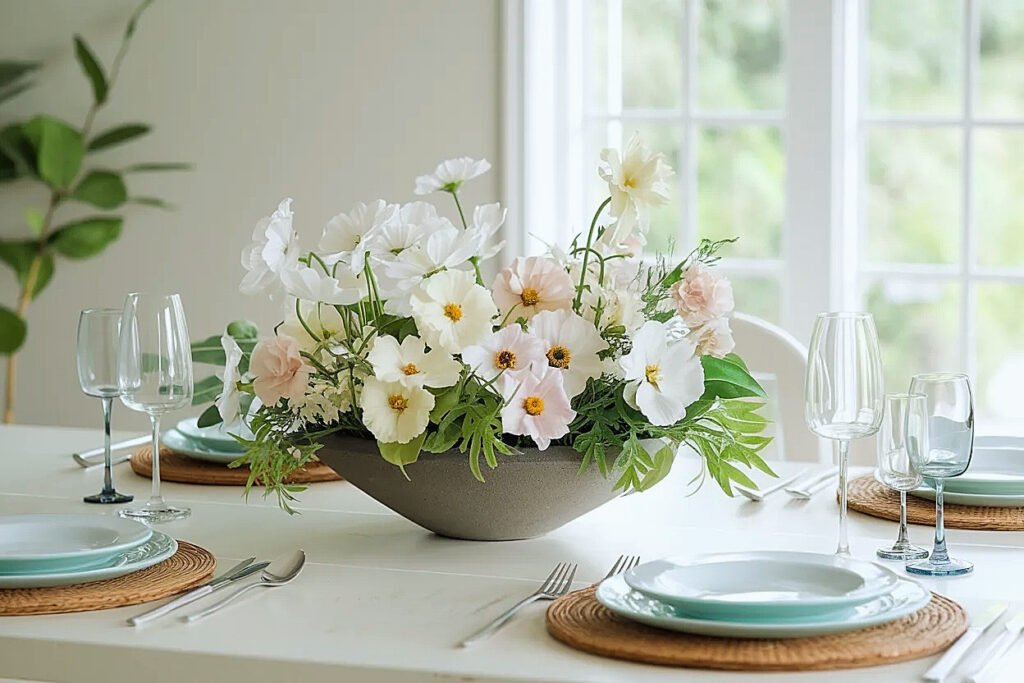
The staying-bright challenge for outdoor summer centerpieces is real. Most white flowers show heat stress within the first two to three hours of direct afternoon sun. White zinnias are genuinely different: the dense layered petals do not open much further than their initial state and the color holds in a way that loose-petaled white flowers cannot match.
The practical setup that maximizes white zinnia brightness: cold water in the vessel immediately before the party starts, not thirty minutes before. An inch of gravel in the vessel base to anchor the stems. Stems cut at a steep diagonal immediately before insertion, not the previous evening.
For a centerpiece that needs to stay bright from late morning through evening, white zinnias at the perimeter create the visual frame that holds brightness throughout. Position white zinnias at the outer edge, bloom faces outward. Bolder colored flowers at the center. The white perimeter continues separating and brightening the inner color mass.
One detail specific to white zinnias: they read brightest against dark backgrounds. Position dark greens, Italian ruscus, or seeded eucalyptus behind the white zinnias. The dark backdrop amplifies the white brightness from behind.
For more on using white flowers broadly across summer arrangements and which other white varieties hold up in summer heat and outdoor conditions, check out what are the best white flowers to brighten summer flower arrangements. Share this with anyone who overlooks white zinnias at the market. More ahead on pairings, containers, and every specific white zinnia application in this article.
What Are the Best Summer Flowers to Pair with White Zinnias for Crisp Contrast?
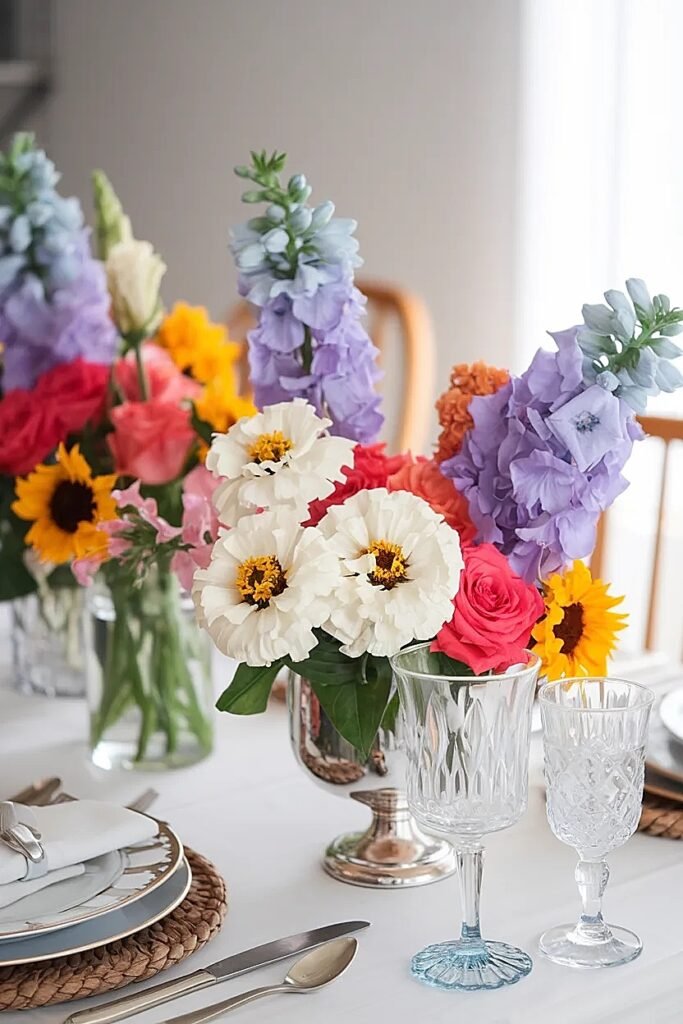
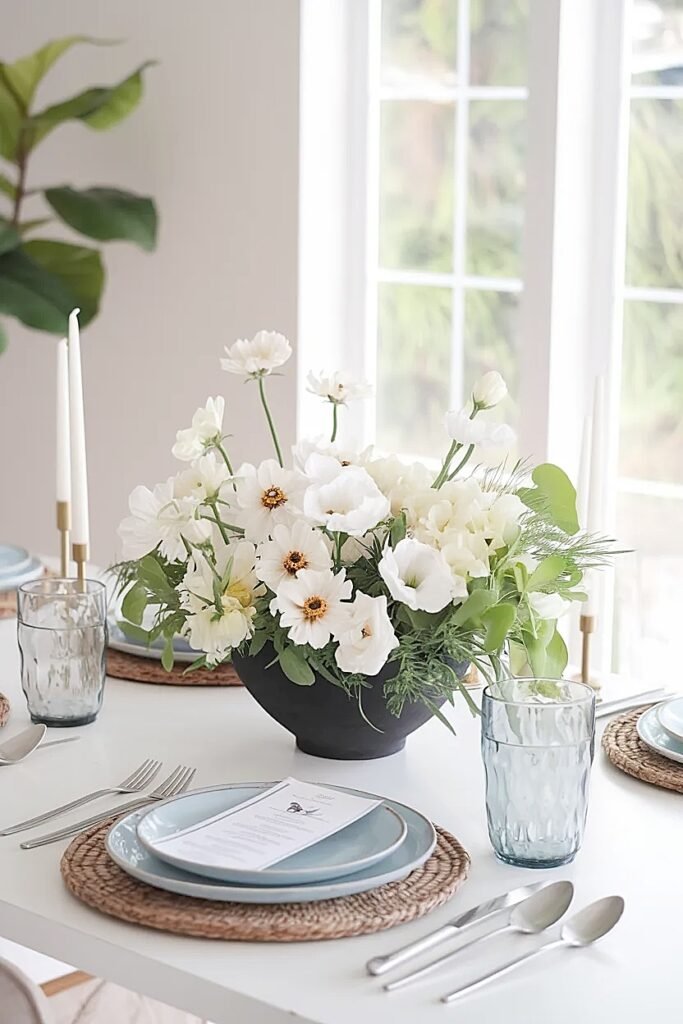
Crisp contrast with white zinnias comes from two sources: color distance and texture difference. Color distance means choosing flowers at the opposite end of the color temperature scale, deep purples, vivid oranges, and saturated corals, which create the maximum apparent brightness in the white by direct comparison. Texture difference means choosing flowers with a structurally different petal form from the flat zinnia face, which creates visual variation that makes both flowers read more clearly at close range.
1. Deep Purple Gomphrena Deep purple gomphrena balls beside white zinnias create the crispest two-color contrast available in a summer arrangement. The cool purple intensifies the apparent brightness of the white zinnia while the white makes the purple read as more saturated. The structural contrast between the smooth flat zinnia face and the textured gomphrena ball adds a tactile quality at close viewing range. Both flowers have essentially identical.
2. Vivid Coral Zinnias Pairing white zinnias with vivid coral zinnias within the same variety creates a monochromatic structural arrangement with a vivid color contrast. Both flowers are identical in form, only the color differs. That structural unity reads as designed rather than eclectic. The coral appears more vivid against the white and the white appears brighter against the coral. One bunch of white zinnias and one bunch of.
3. Deep Orange Marigolds Deep orange marigolds alongside white zinnias create a warm-cool contrast that amplifies both colors. The dense pom-pom structure of the marigold differs substantially from the flat zinnia face, creating texture variation that reads as designed at close range. Both flowers share the same outdoor heat tolerance, which makes the combination reliable for any length outdoor party in direct summer sun. Zero pollen drop from either.
4. Burgundy or Deep Red Zinnias Deep burgundy or near-black-red zinnias alongside white zinnias create the most dramatic tonal contrast available within the zinnia family. The depth of color in the darkest zinnia varieties makes the white appear almost luminous by comparison. Arrange the white and deep burgundy in alternating positions around the vessel perimeter rather than clustering each color separately. The alternating pattern creates maximum contrast at every viewing angle.
5. Cobalt Blue Salvia Blue salvia spikes alongside white zinnias create a complementary blue-white pairing with strongly different structural forms: the vertical salvia spike versus the flat zinnia face. The vivid cobalt blue makes the white appear warmer and more vivid simultaneously. Position the salvia spikes at the center back of the arrangement with white zinnias in front. The height and structural difference between the two elements creates depth.
6. Yellow Sunflowers A single yellow sunflower surrounded by white zinnias creates a sun-and-sky quality that reads as joyful and celebratory. The oversized sunflower face at the center of a white zinnia ring creates a focal hierarchy that most multi-variety summer arrangements lack. One sunflower cut short, white zinnias packed around it at the same height, seeded eucalyptus trailing at the vessel edge: a complete, striking arrangement in.
7. Purple Statice Purple statice mixed throughout white zinnias creates distributed contrast rather than zone-by-zone separation. The fine papery purple texture between the broad white faces reads as background color that intensifies the white brightness without creating a bold second focal zone. The combination suits informal arrangements where the white zinnias are the clear visual lead and the purple statice provides supporting contrast without competing. Both flowers have.
More ahead on how to layer white zinnias with greenery, which changes the overall register of any arrangement from simple to composed.
How to Layer White Zinnias with Greenery in Summer Flowers Arrangements
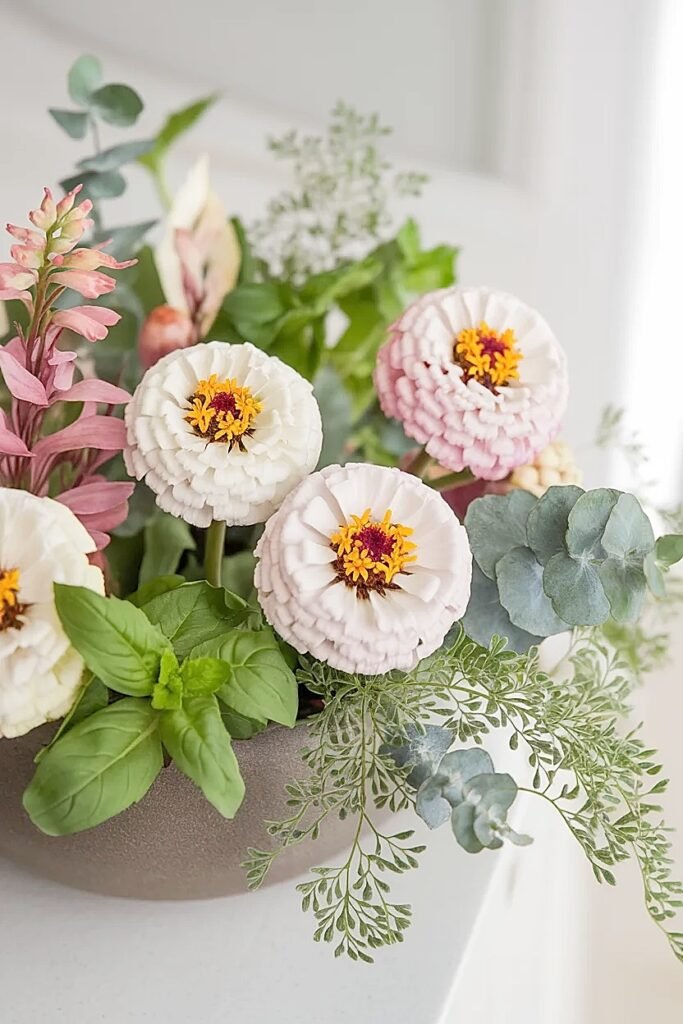
The greenery pairing for white zinnias is the decision that most significantly changes how the white reads. Dark greenery makes white zinnias appear brighter by contrast. Silver-grey greenery like seeded eucalyptus creates a warm, organic setting. Light green or variegated greenery blends with the white rather than contrasting, reducing the brightening effect.
For maximum brightness, Italian ruscus makes white zinnias appear to glow. The glossy dark leaf surface reflects light back toward the white bloom faces. Position ruscus stems directly behind white zinnias. The dark backdrop amplifies perceived brightness from the direction the light is coming from.
Seeded eucalyptus creates the most popular and widely applicable white zinnia greenery combination. The silvery-grey seed clusters bridge between cool white and warm-colored accessories. Trail seeded eucalyptus generously over the vessel edge: the trailing element creates movement that flat-profile arrangements lack.
Fresh herb greenery alongside white zinnias creates a fragrant, kitchen-garden quality. Rosemary’s needle-like silver-green foliage creates a fine-textured background that reads as effortlessly styled. The rosemary fragrance is a sensory bonus that purely ornamental greenery cannot provide.
More ahead on container choices that complement white zinnias and change how the whole arrangement reads.
What Are the Best Containers for White Zinnias in Summer Flowers Displays?
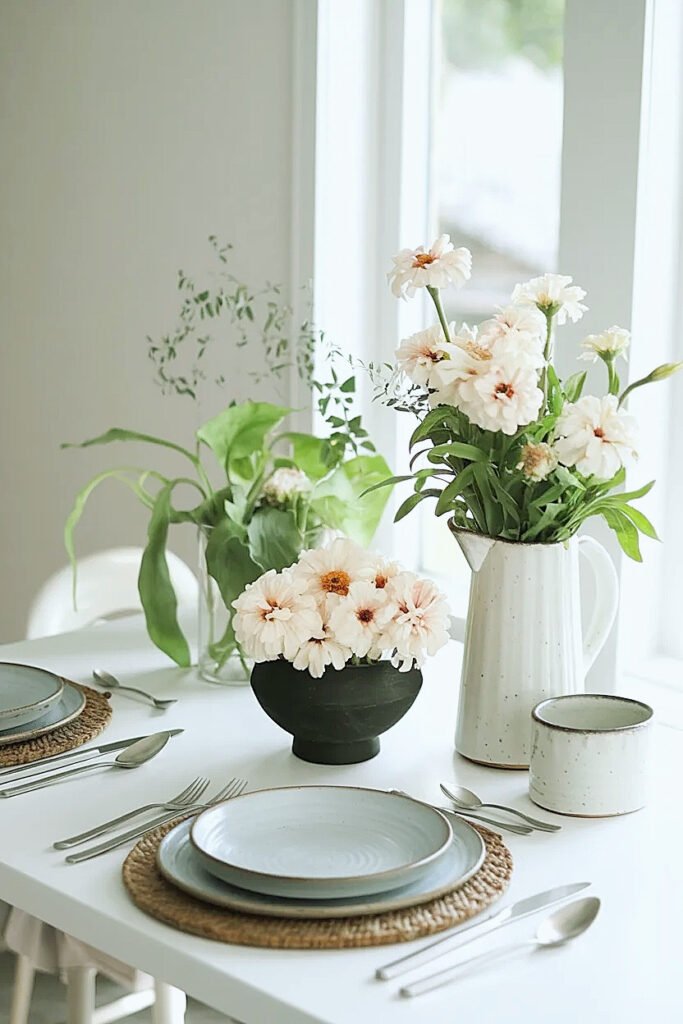
The container for a white zinnia arrangement is a significant design decision because white reads against whatever surface or vessel is below and behind it. Dark vessels make white zinnias appear brighter. White or cream vessels create a tone-on-tone composition that reads as soft and cohesive. Terracotta and natural material vessels create warmth that contrasts gently with the crisp white blooms.
1. Cobalt Blue Ceramic or Glass A cobalt blue vessel with white zinnias creates a coastal blue-and-white combination that is among the strongest single-vessel pairing available. The deep blue makes the white appear almost luminous. Short, wide cobalt ceramic bowls create a low-profile arrangement that shows the white zinnia face from.
2. Dark Green or Black Ceramic Mug or Crock Dark-colored ceramic vessels create the strongest white zinnia contrast of any vessel type. The dark surface behind and below the white blooms amplifies the apparent brightness of each white face. Use a short, wide dark vessel so the maximum number of white zinnia faces can.
3. Natural Terracotta Pot Terracotta creates a warm contrast with white zinnias that reads as organic and garden-quality. The warm buff-orange tone of terracotta against cool white blooms creates a complementary warmth that suits farmhouse, cottage, and outdoor entertaining aesthetics. Wide terracotta saucers with white zinnias pressed to rim.
4. Clear Glass Mason Jar A clear glass mason jar filled with white zinnias and seeded eucalyptus is the most casual, most widely available, and most visually honest white zinnia container. The clear glass shows the stem mass and water level, which reads as informal and unpretentious. For a table.
5. Galvanized Metal Bucket or Tin Galvanized metal against white zinnias creates a high-contrast industrial-meets-garden pairing with a strong outdoor summer character. The silvery metal tone does not compete with white the way a cream or pale vessel might. One small galvanized tin packed generously with white zinnias and one eucalyptus.
More ahead on the farmhouse table application, one of the most naturally suited contexts for white zinnias.
How to Use White Zinnias in Summer Flowers Arrangements for Farmhouse Tables
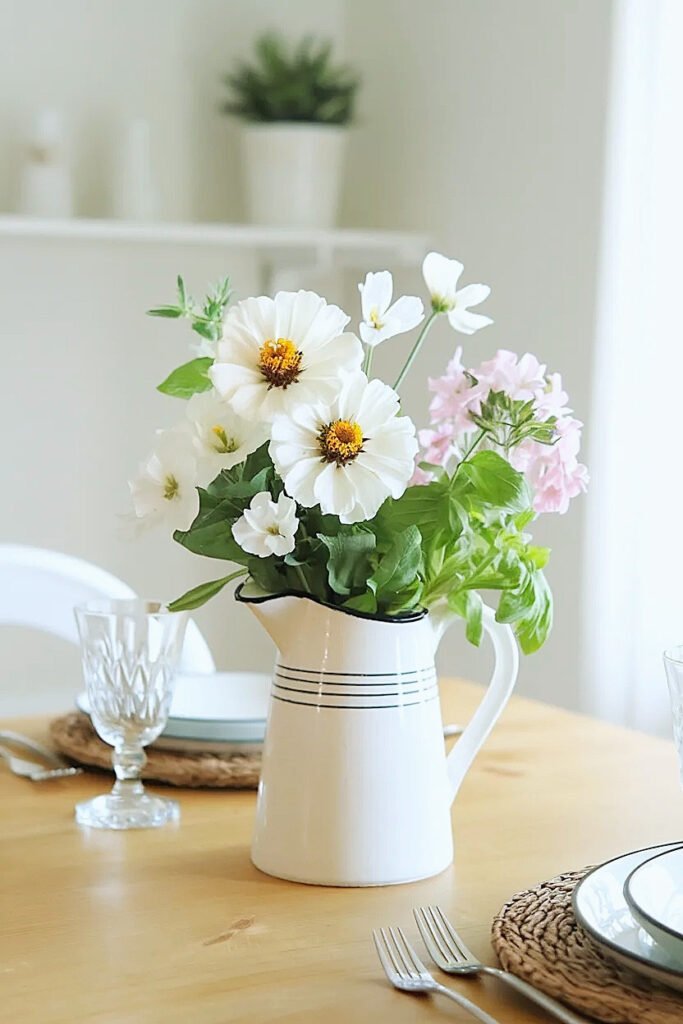
A farmhouse table requires arrangements that match its register. Too formal and the arrangement looks out of place. White zinnias occupy exactly the right quality of informality: genuinely beautiful but completely unpretentious, available at the grocery store but appearing as if they came from the cutting garden.
The garland approach works beautifully on a farmhouse table. Five to seven mason jars or terracotta pots of varying heights spaced down the center, each holding white zinnias and a sprig of rosemary or seeded eucalyptus, connected by a loose eucalyptus strand. The mismatched heights, informal spacing, and casual trailing vine create the curated-but-not-precious quality farmhouse aesthetics demand.
White zinnias in an enamel pitcher at the farmhouse table center is the single-element approach. Cream or white enamel creates a tone-on-tone composition. Cobalt or deep green enamel creates contrast. Either direction suits the farmhouse context. Fill the pitcher fully: a half-filled pitcher reads as incomplete on a long farmhouse table.
The fragrant addition transforms a farmhouse white zinnia arrangement from visual to experiential. Rosemary sprigs, basil tucked between zinnia stems, or fresh lavender add the garden fragrance dimension that distinguishes a farmhouse arrangement from a generic summer display.
More ahead on how to handle white zinnias alongside pastel flowers to prevent the palette from washing out.
Ideas for Mixing White Zinnias with Pastel Summer Flowers Without Washing Out the Palette
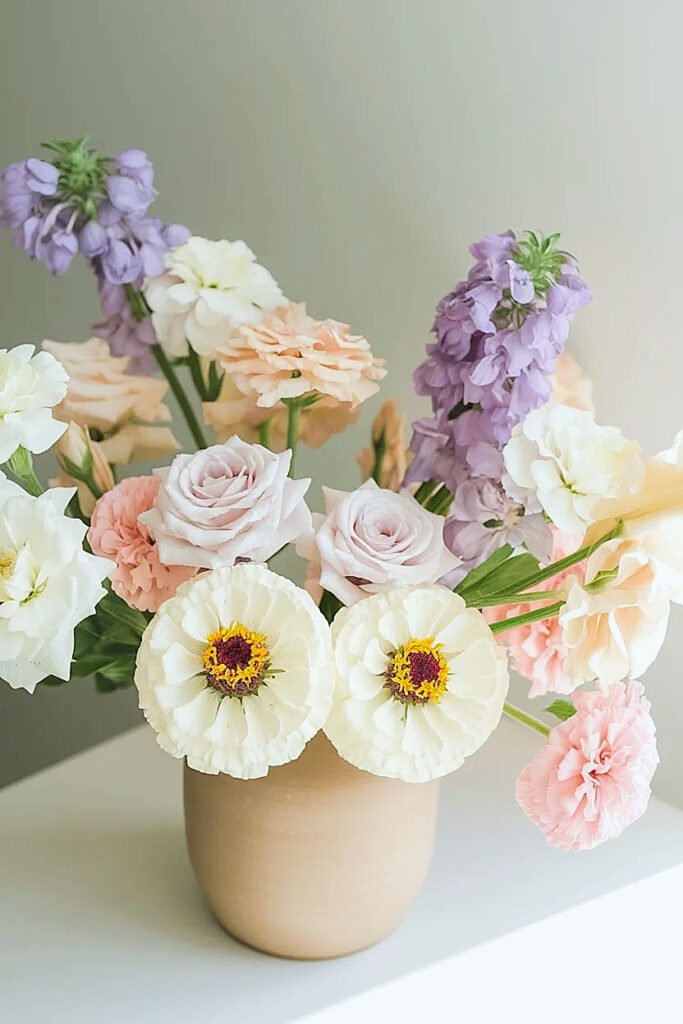
White and pastels together create the most delicate summer palette possible but also the most fragile from a visual energy standpoint. Too much white beside soft pastels and the whole arrangement disappears. The technique that prevents this: use white zinnias as an accent element at the perimeter, not as a dominant center element, and ensure at least one element has genuine color depth.
1. White Zinnias as Edge Accents with Deep Peach Ranunculus Position white zinnias at the outer edges of a ranunculus-centered arrangement, with the three to four deepest peach ranunculus stems at the center. The white edge frames the peach center rather than competing with it. The depth of peach, a tone rich enough to hold.
2. White Zinnias with Lavender Statice as the Visual Separator In a pastel arrangement with pale pink and soft peach elements, lavender statice acts as the visual separator that gives the white zinnia contrast to read against. Without a medium-value color element like lavender, white and pastels create a single soft wash. The lavender provides.
3. White Zinnias with One Saturated Accent Add one moderately saturated flower, a mid-tone coral cosmos, a soft-but-not-pale blue delphinium, or a true pink rather than a blush pink, to any white-and-pastel combination. That single element with more color depth anchors the palette and creates a focal point that prevents the arrangement.
More ahead on small dining table arrangements with white zinnias, where scale and proportion change the approach.
Ways to Use White Zinnias in Summer Flowers Arrangements for Small Dining Tables
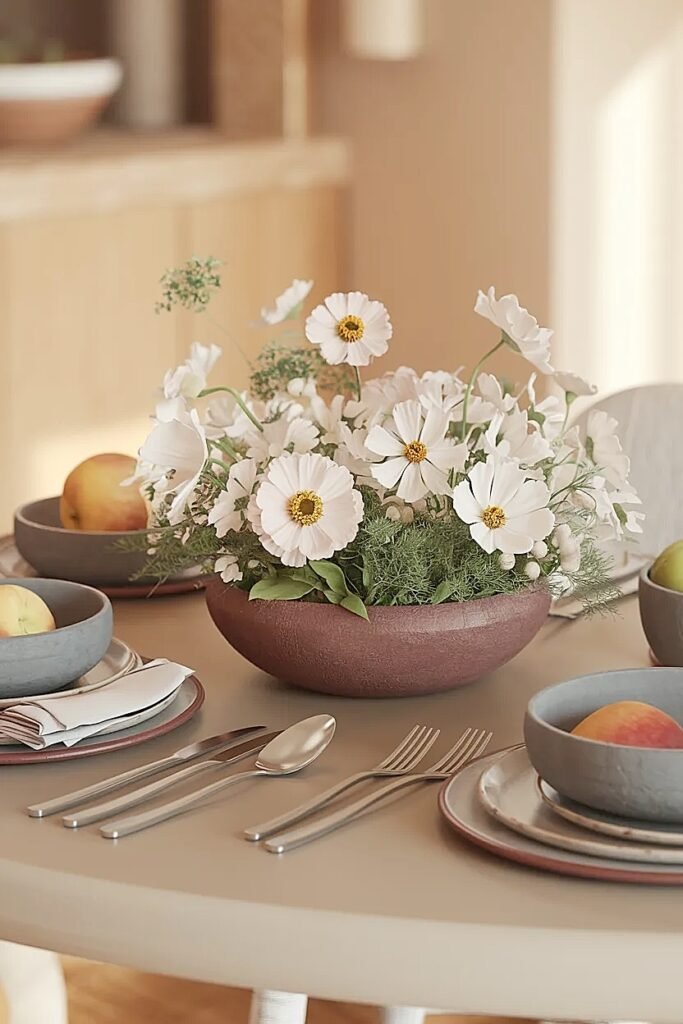
A small dining table creates the most intimate relationship between the arrangement and the guests. Every stem is visible at close range throughout the meal. White zinnias suit small dining tables specifically because their clean, face-forward structure looks designed at arm’s length rather than just from a distance.
1. Three-Vessel Row at Table Center Three matching vessels in a row down the center of a small dining table, each holding three white zinnia stems and one rosemary or eucalyptus sprig, creates a complete centerpiece that reads as deliberately designed without overwhelming the table surface. Keep vessel height at three to four inches above the rim and the arrangement reads.
2. Single Wide Bowl with Face-Up White Zinnias One wide, low bowl at the table center with five to seven white zinnia heads floating face-up creates the most elegant low-profile small dining table arrangement available. The face-up orientation shows the full bloom from the overhead angle that seated guests experience. No stem insertion needed: press the blooms gently face-down into shallow water and.
3. One Tall Vessel with Mixed White Zinnia and Herb Sprigs One taller vessel, a slim glass or ceramic bottle, with five white zinnia stems and three herb sprigs, rosemary, basil, and one thyme branch, creates a fragrant kitchen-garden arrangement appropriate for a small table lunch or dinner. The single-vessel approach leaves maximum table surface available while the herb fragrance creates ambient sensory quality throughout the.
4. Matched Pair at Table Corners One compact white zinnia arrangement at each far corner of the small dining table rather than a centerpiece arrangement. The two matching bookend vessels create a visual frame that defines the table as designed without consuming any central table space. The center of the table stays completely clear for food, conversation, and elbow room.
5. Bud Vases at Each Place Setting One small bud vase with one white zinnia stem and one herb sprig beside each plate creates a personal arrangement rather than a shared centerpiece. The per-setting approach makes each guest feel individually considered, which elevates the table experience more than a shared centerpiece does. White zinnias suit this approach because one stem per vase.
More ahead on pairing white zinnias with lavender, one of the most satisfying white zinnia combinations.
Ideas for Pairing White Zinnias with Lavender in Summer Flowers Displays
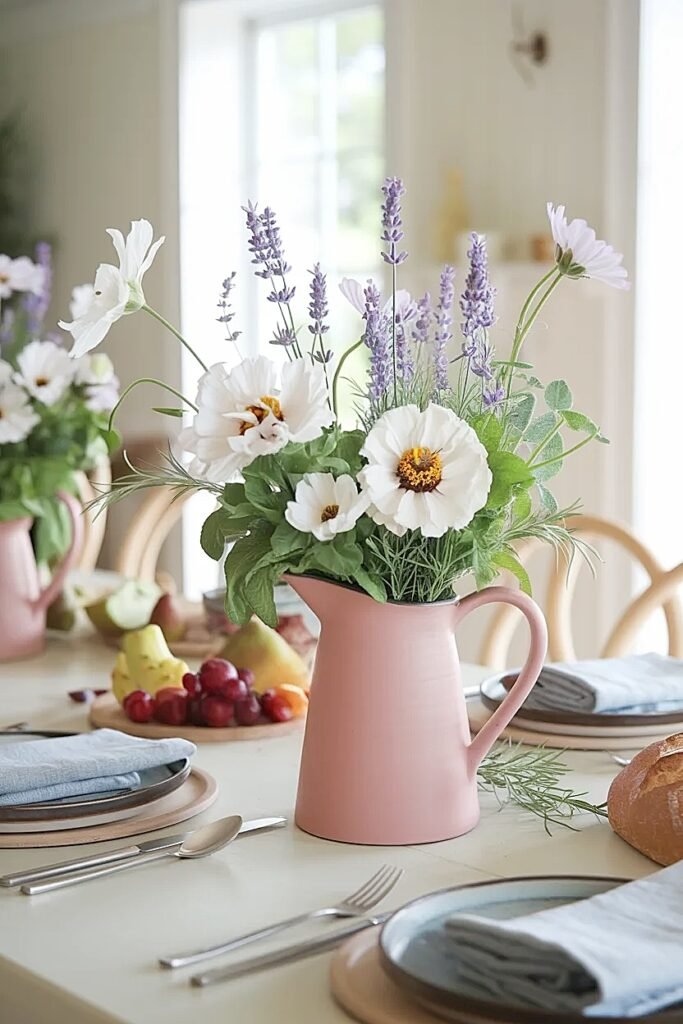
White zinnias and lavender is a combination I come back to repeatedly because it covers every aspect of a summer arrangement simultaneously: color contrast, textural contrast, fragrance, and the visual depth that two differently structured elements create together. The flat dense white zinnia face against the thin vertical lavender spike makes both elements read more distinctly than alongside a structurally similar flower.
1. White Zinnias and Fresh Lavender in a Terracotta Pot Three to five white zinnia stems with three fresh lavender sprigs inserted throughout in a terracotta pot creates a warm, organic arrangement with immediate fragrance. The lavender fragrance at table or windowsill height is an immediate sensory experience. The purple-grey lavender against cool white zinnias.
2. White Zinnias with Dried Lavender Stems Dried lavender stems alongside fresh white zinnias create an interesting fresh-and-dried textural pairing. The dried lavender’s silver-grey stems and compact dried flower heads provide structure and fragrance even when the blooms have dried fully. The combination works particularly well in terracotta or galvanized metal vessels.
3. White Zinnias and Lavender in a Matching Set Across a Shelf Three or five small vessels in a row on a shelf or window ledge, alternating between white zinnia vessels and lavender-only vessels, creates a fragrant display sequence. The alternating pattern means every other vessel contributes lavender fragrance while the white zinnia vessels provide the visual.
4. White Zinnias with Lavender as the Filler Use multiple lavender sprigs densely packed as the filler element around three to five white zinnia stems as the focal flowers. The lavender provides visual mass and fragrance while the white zinnias create the focal brightness. The purple-grey lavender doubles the visual density of the.
5. White Zinnias and Lavender with Lemon Verbena Adding a few stems of lemon verbena to a white zinnia and lavender arrangement creates a layered fragrance experience. The lavender’s floral note and the lemon verbena’s citrus note combine as a complex garden fragrance at close range. The lemon verbena’s light green leaf adds.
Conclusion
White zinnias in summer flower arrangements do two jobs no other grocery store white flower does simultaneously: they hold their bright white color through a full outdoor party in direct sun, and they create visual separation between vivid colors that makes everything around them appear more saturated and intentional.
Start with a bunch of the cleanest, coolest white zinnias the market offers, pair them with one vivid contrasting flower and seeded eucalyptus, and place them in a dark ceramic vessel. That combination demonstrates the white zinnia’s full capability in the simplest format. Everything in this article builds from there.
This website contains affiliate links, and some products are gifted by the brand to test. As an Amazon Associate, I earn from qualified purchases. Some of the content on this website was researched and created with the assistance of AI technology.