This website contains affiliate links, and some products are gifted by the brand to test. As an Amazon Associate, I earn from qualified purchases. Some of the content on this website was researched and created with the assistance of AI technology.
Key Takeaways
- White flowers are not neutral: cool white creates contrast and brightness, cream white creates warmth and softness, and each serves a different design role
- Cool white flowers, lisianthus, statice, and gypsophila, create the most effective brightening effect in arrangements that need clarity
- Outdoor heat eliminates delicate white flowers quickly: statice, waxflower, and gomphrema are the most heat-stable white options
- White and green together read as designed rather than formal: fresher and more contemporary than white alone
- Coastal blue-and-white combinations require cool white, not cream: the contrast between blue and warm cream is insufficient
- White flowers beside roses keep the design from reading as bridal only when the white variety has a distinctly different texture or form
Choosing the best white flowers to brighten summer flower arrangements is more nuanced than most people expect. White is not one thing. Cream white reads warm and soft, disappearing into arrangements with soft warm tones rather than brightening them. Pure cool white creates high visual contrast with vivid colors. Greenish-white flowers like hydrangea have a muted quality suited to natural garden aesthetics rather than brightening. The specific type of white matters enormously for what the flower actually does in an arrangement. (Field Grown Annuals for Cut Flowers : Greenhouse & Floriculture : Center for Agriculture, Food, and the Environment (CAFE) at UMass Amherst)
I started paying close attention to white flower variety after putting a cream ranunculus into an arrangement of vivid orange dahlias and realizing it was completely invisible as a brightening element. Swapping it for a cool white lisianthus changed the whole arrangement: the cool white created visual contrast that made the orange appear more vivid. That distinction, between warm white and cool white, is the foundational white flower selection decision. (Discover the magic of white gardens / RHS Gardening)
Use this quick table to match white summer flowers with the job you need them to do. Some blooms add height. Some soften bold colors. Some last longer outdoors. The goal is simple: choose the right white flower for the right summer arrangement, not just the prettiest bloom.
| Reader Goal | Best White Summer Flowers | Why They Work | Best Styling Move |
|---|---|---|---|
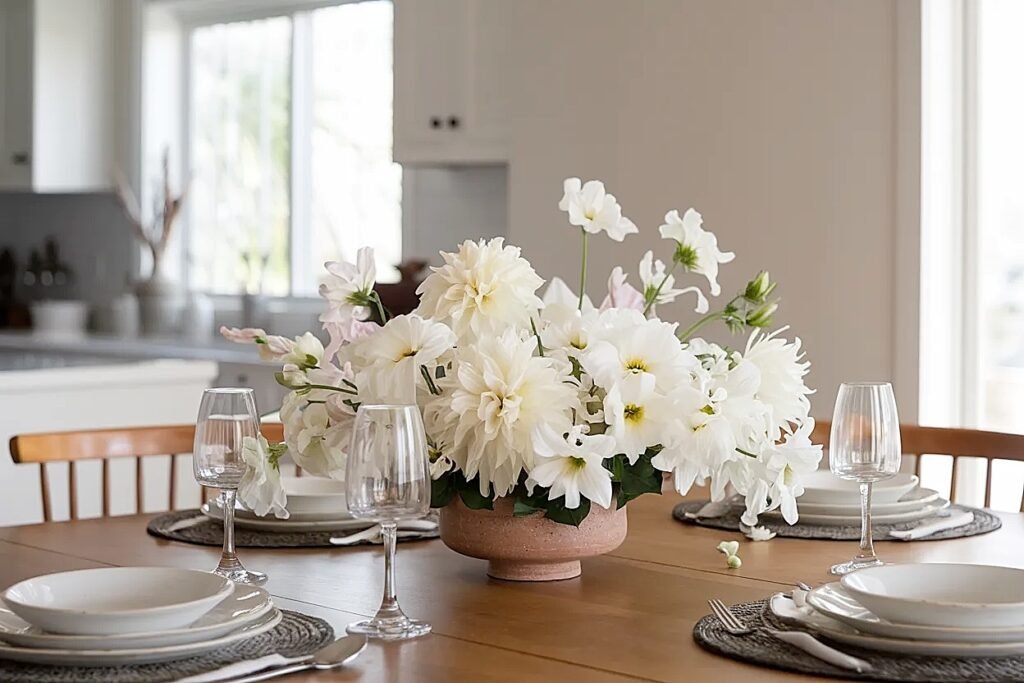
| Brighten a dark room | White dahlias, lisianthus, garden phlox, white zinnias | Large white petals reflect light and create instant contrast against darker furniture, walls, or table surfaces. | Use a low ceramic bowl with greenery tucked around the base so the flowers feel full but not bulky. |
| Cool bold colors | White cosmos, white zinnias, white lisianthus, white ammi | Airy white blooms separate strong pink, orange, yellow, and coral flowers so the palette feels calmer. | Place white flowers between bright blooms instead of clustering all the white stems in one spot. |
| Add soft height | White snapdragons, lilies, tall cosmos, white phlox | Upright stems give the arrangement shape without needing a huge amount of flowers. | Use tall stems at the back or center, then fill the lower area with round blooms and greenery. |
| Make it last longer | White zinnias, lisianthus, gomphrena, dahlias, stock | These flowers can give stronger structure and better vase presence when cut and cared for properly. | Strip leaves below the waterline, refresh water often, and keep the display away from direct heat. |
| Create a relaxed farmhouse look | White cosmos, white roses, lisianthus, phlox, baby’s breath | Soft white blooms pair beautifully with herbs, greenery, pitchers, baskets, and casual table settings. | Use loose spacing, a pitcher-style vessel, and a few herb stems so the design feels gathered, not formal. |
Resources:
- Homegrown bouquets: three species for your garden | Good Growing | Illinois Extension | UIUC
- Field Grown Annuals for Cut Flowers : Greenhouse & Floriculture : Center for Agriculture, Food, and the Environment (CAFE) at UMass Amherst
- 15 Easy-to-Grow Cut Flowers | Johnny’s Selected Seeds
- How to Grow More Cut Flowers than You Ever Thought Possible – Floret Flowers
How to Use White Summer Flowers to Brighten Dark Dining Room Arrangements
A dark dining room reads summer flower arrangements differently from any sun-filled space. Colors that look vivid in good light look muddy in low light. Whites that read as subtly cream in a bright room look yellow in dim light.
The white flowers that perform best in low-light brightening have the highest opacity and the coolest undertone. Lisianthus and white statice have a clean, cool brightness that resists the yellowing effect of warm indoor lighting. White gomphrema’s tightly packed ball structure reflects rather than absorbs ambient light.
In a dark dining room, white flowers create the most brightening effect when positioned at the front of the arrangement closest to the room’s ambient light source. Positioning white flowers at the back completely negates their brightening function.
Smaller white flowers often create more brightening effect than large single white blooms in a dark room. A cluster of white statice creates multiple small reflective surfaces distributed through the arrangement. One large white dahlia creates a single point of brightness. The distributed approach illuminates more evenly.
For more on the filler plants that create the visual density that makes white flowers work in mixed arrangements, check out the best filler plants to use with summer flowers in pots. Share this with anyone building summer arrangements this season. More ahead on every specific white flower choice and application.
What Are the Best White Summer Flowers for Cooling Down Bold Color Palettes?
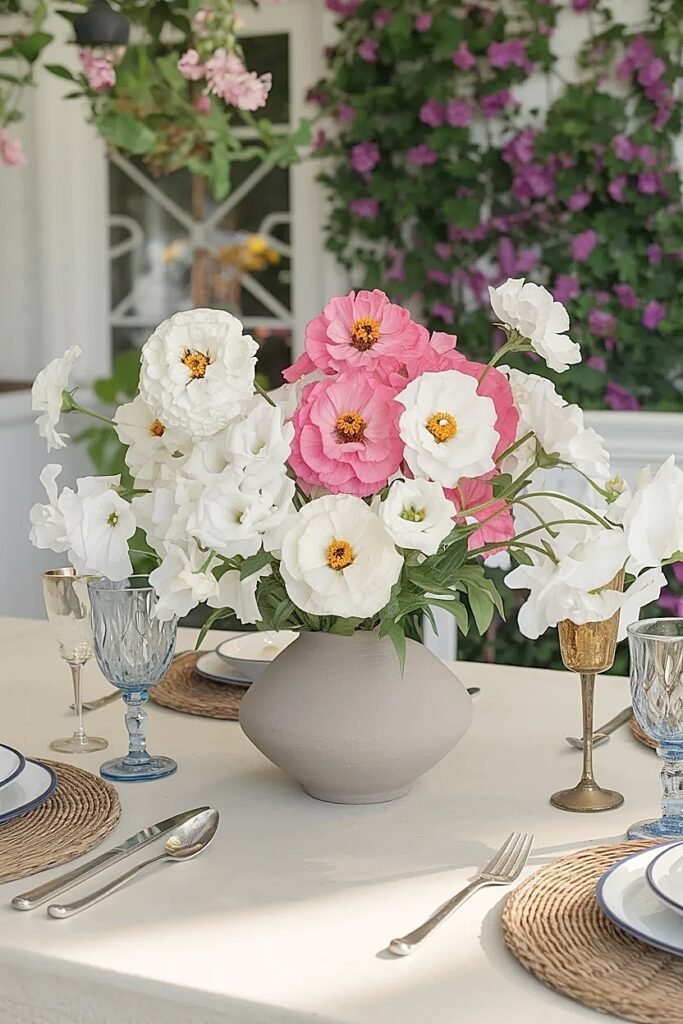
A bold color palette, one built around vivid orange, deep magenta, or electric coral, needs a visual rest point. Bold colors adjacent to each other create optical vibration that makes the whole arrangement read as energetic to the point of chaos. A cool white element between or alongside the vivid colors does not diminish them: it separates them and allows each color to read more clearly by preventing the colors from competing at their shared boundary.
1. White Lisianthus The tightly layered cool white petals of lisianthus create the cleanest, most effective visual separation from any vivid color it is paired with. The cool undertone creates genuine contrast rather than the subtle warmth that cream flowers add. One to two stems of white lisianthus between zones of vivid orange and deep purple creates a visual pause that makes both colors read more clearly. Virtually.
2. White Statice White statice creates a distributed cooling effect throughout any arrangement rather than a single point of white. The small papery blooms spread through the arrangement between the vivid focal flowers, creating multiple small white separators that cool the whole color palette simultaneously. The effect is subtler than lisianthus but more evenly distributed. Zero pollen, zero fragrance, and the papery texture adds tactile contrast to the.
3. White Gomphrema White gomphrema ball blooms create a three-dimensional cooling element with structural texture that flat-petaled white flowers do not provide. Positioned between vivid colored balls of purple gomphrema or bold zinnias, the white ball creates visual breathing room without flattening the arrangement’s textural composition. The compact ball scale suits the cooling role at close viewing range without competing with the larger-bloomed focal flowers for visual attention.
4. Gypsophila (Baby’s Breath) Gypsophila creates a cloud-like white mist that distributes a cooling effect more broadly and more gently than any structural white flower. Used in summer arrangements as a true cooling element rather than a filler, gypsophila surrounds vivid flowers with a soft white atmosphere that reduces the apparent color intensity of bold tones without eliminating their vibrancy. Available in fresh-cut bunches at grocery stores throughout summer.
5. White Waxflower White waxflower provides the finest-textured white cooling element available for mixed summer arrangements. The tiny clustered star-shaped blooms create a delicate white texture that distributes throughout the arrangement alongside vivid focal flowers. The scale difference between the tiny waxflower blooms and the larger bold flowers creates a proportional cooling effect where the white reads as a supporting texture rather than a competing element. Zero pollen,.
More ahead on how to choose white flowers for outdoor heat conditions, which eliminates several popular white varieties from consideration entirely.
How to Choose White Summer Flowers That Hold Up Well in Outdoor Heat
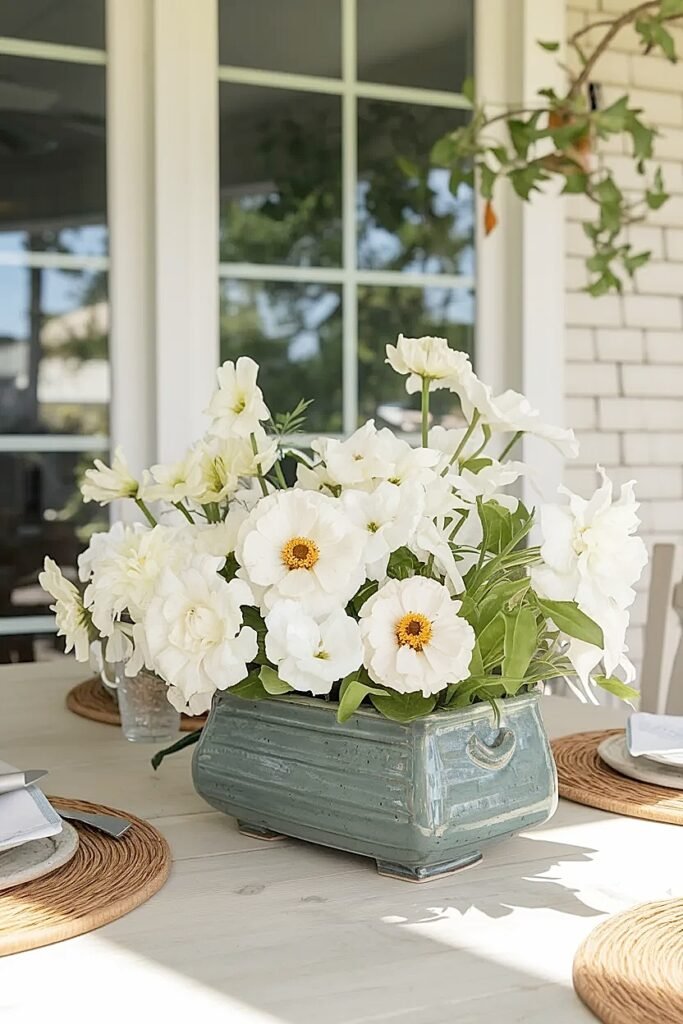
White flowers in outdoor arrangements face a specific challenge that colored flowers do not: heat-related browning and yellowing at the petal edges is particularly noticeable against white. A vivid orange zinnia with slight heat stress is barely detectable. A white zinnia with the same degree of heat stress shows brown edges immediately visible against the white field.
The white flowers that hold up best in outdoor heat have dense, papery, or structurally compact petals. White statice is the most heat-tolerant: the papery blooms do not brown at the edges and maintain their white color through any outdoor party duration. White gomphrema is the second most heat-stable, with the tightly packed ball structure resisting both heat browning and physical deformation in direct sun.
White waxflower is in the moderate category: it holds its color and form better than white ranunculus or cosmos in outdoor heat but shows more heat stress than statice or gomphrema by the end of a long afternoon. Cold water at setup and afternoon shade protection extend white waxflower’s presentation life significantly.
White ranunculus and white cosmos are the most heat-vulnerable white flowers for outdoor use. Both show the edge browning that is so visible in white within the first hour of direct afternoon summer heat.
More ahead on how to layer white flowers with greenery specifically for the freshest, most contemporary arrangements.
Ways to Layer White Summer Flowers with Greenery for a Fresh Garden Look
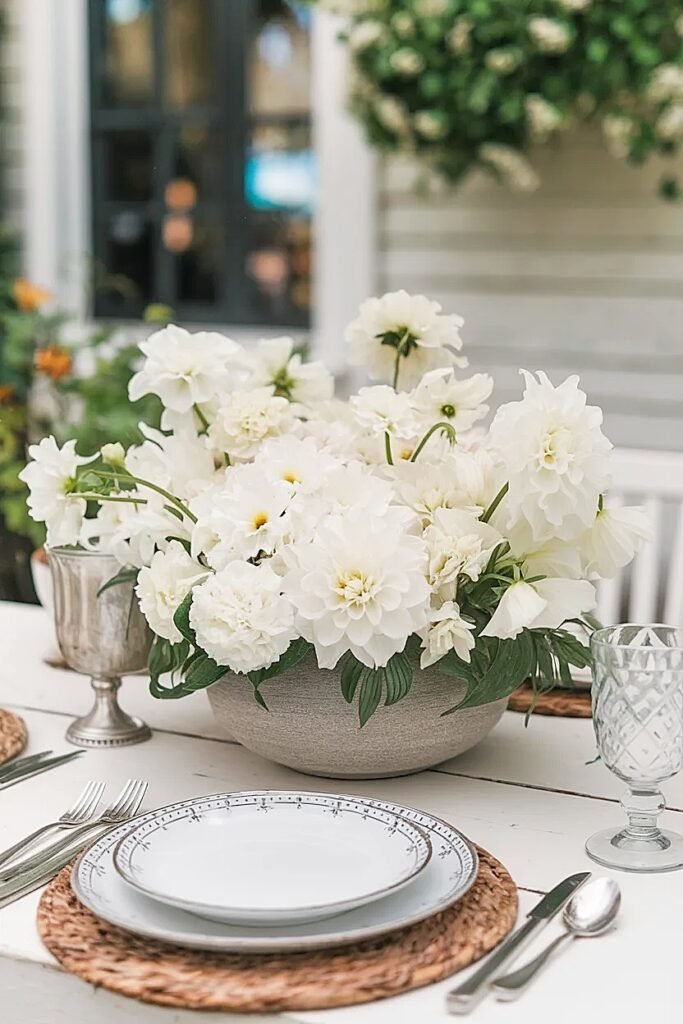
White and green is the most universally applicable combination in flower arrangement because the two elements create freshness together that neither achieves alone. White alone reads as formal or bridal. Green alone reads as foliage rather than arrangement. Together, the white creates visual brightness and the green grounds it in a natural setting rather than a formal one.
1. White Statice with Seeded Eucalyptus Pack a vessel with a dense layer of seeded eucalyptus and distribute white statice stems throughout. The eucalyptus provides the green structural base while the statice creates distributed white brightness across the full arrangement depth. The fine seed pods add interesting textural variety alongside the.
2. White Lisianthus with Italian Ruscus White lisianthus stems paired with dark Italian ruscus create a high-contrast white-on-dark-green arrangement with a sophisticated, gardener’s quality. The dark ruscus makes the white lisianthus appear brighter by direct contrast. Both materials hold well with regular cold water changes. The glossy ruscus surface creates an.
3. White Gomphrema with Variegated Mint Sprigs Fresh mint sprigs alongside white gomphrema balls create a fragrant, kitchen-garden quality that most white-and-green combinations lack. The mint’s fresh clean fragrance at close arrangement range adds a sensory dimension. The variegated mint foliage, with its lighter green and white edges, bridges visually between the.
4. White Cosmos with Wild Grasses White cosmos in a loose arrangement with fresh wild grasses, whatever is available from the garden or market, creates the most organic, naturalistic white-and-green combination available. The tissue-thin cosmos petals and the flexible grass stems both move in the slightest breeze. For outdoor arrangements in.
5. White Chamomile with Fennel Fronds Fresh chamomile, the flower, paired with the feathery fronds of bronze or green fennel creates a fragrant, fine-textured white-and-green combination suited to kitchen table arrangements, porch side tables, and any intimate setting where close viewing range reveals the fine detail of both plants. The chamomile.
More ahead on how a farmhouse pitcher changes the white-flower-and-greenery relationship.
How to Use White Summer Flowers in Farmhouse Pitcher Arrangements
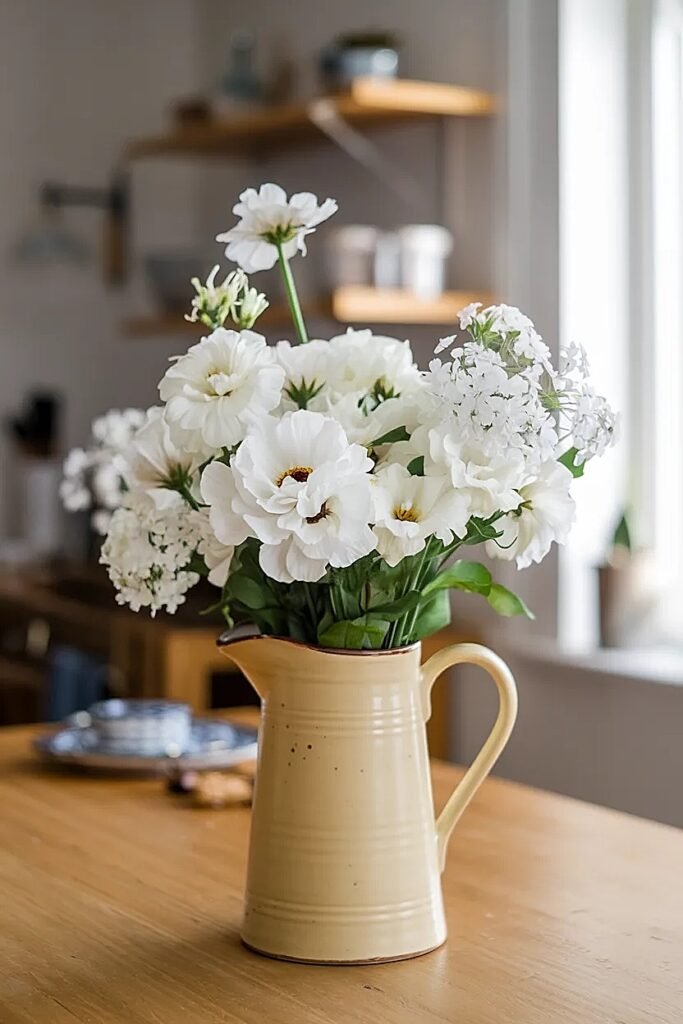
A farmhouse pitcher is one of the most forgiving flower vessels available. The wide mouth accommodates loose, informal arrangements that would look disheveled in a more formal vessel. Fill the pitcher with white flowers throughout, add green stems between the whites, and the wide mouth and informal vessel create the garden-gathered quality the farmhouse aesthetic requires.
White flowers suit a farmhouse pitcher specifically because of the vessel’s material palette. Cream, buff, and white ceramic pitchers amplify the white flower tone by creating a total white composition with tonal variation. Enamel pitchers in cobalt blue or dark navy create the coastal blue-and-white combination. The choice depends entirely on the room aesthetic the pitcher arrangement serves.
The most effective farmhouse pitcher white flower combinations are the informal, loosely arranged ones. White cosmos, white chamomile, white queen anne’s lace: all have an inherently informal quality that suits the pitcher. White lisianthus can work but its formal refinement reads as slightly out of character with the casual vessel.
One farmhouse pitcher detail worth knowing: the vessel is typically wider at the mouth than at the base. Add gravel to the pitcher base to weight it and anchor stems. The gravel holds stems at the angles that create the loose, full look the farmhouse arrangement needs.
More ahead on which white flowers suit a low centerpiece, where the viewing angle differs entirely.
What Are the Best White Summer Flowers for Low Table Centerpieces?
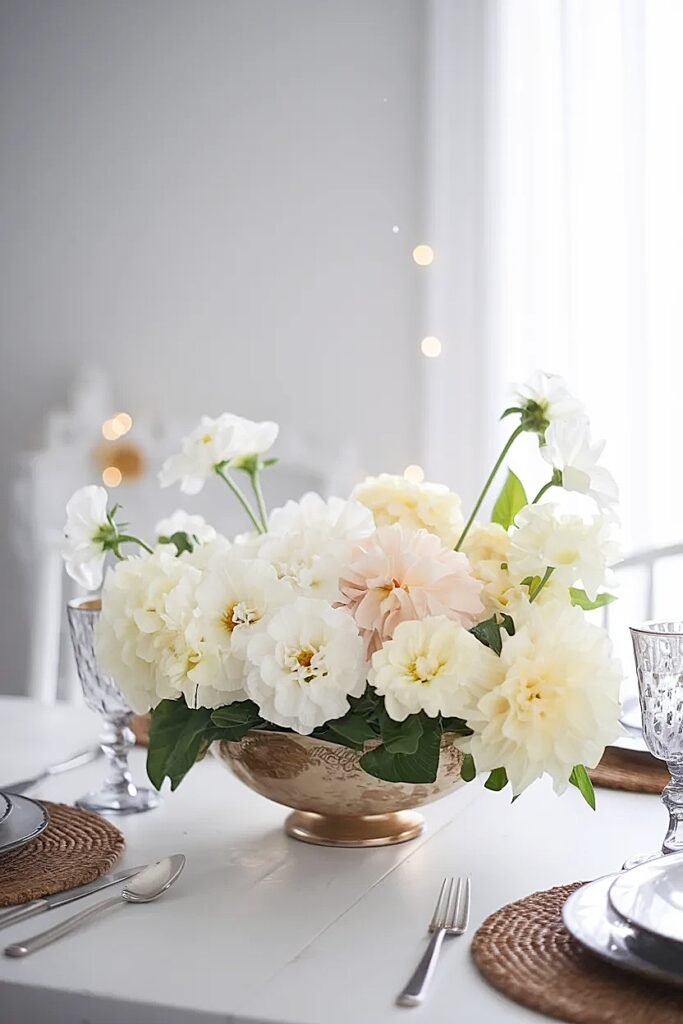
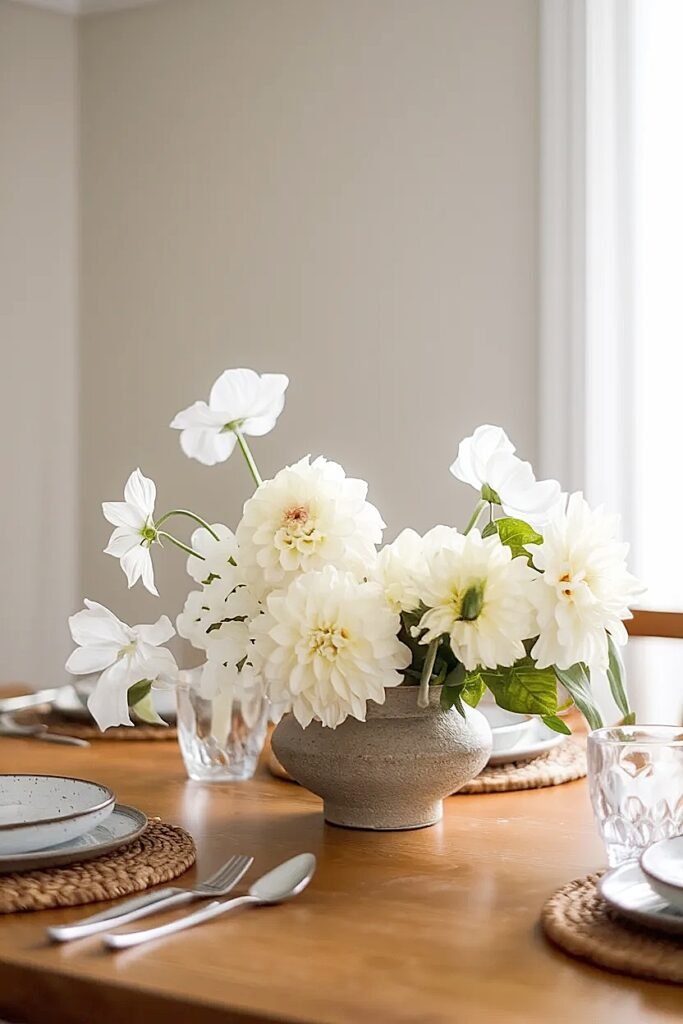
A low centerpiece is viewed primarily from above and from the side at close range. White flowers in a low centerpiece read against the table surface rather than a wall or window background. The white flower’s interaction with the table surface below it becomes a primary design consideration.
1. White Chamomile White chamomile at low centerpiece height creates a garden-gathered quality that suits any informal table setting. The flat daisy faces read clearly from the overhead viewing angle. The yellow center creates interesting detail visible at close range from seated guests. One small bunch fills a.
2. White Waxflower A dense cluster of white waxflower in a low wide bowl creates a snow-like effect at table level that no other flower replicates at the same scale and cost. The tiny blooms create extraordinary visual density in a low arrangement without adding any problematic height.
3. White Lisianthus White lisianthus in a low arrangement provides the most refined, sophisticated white centerpiece effect available at a grocery store budget. The layered petals read beautifully from the overhead viewing angle that low centerpiece arrangements receive from seated guests. Position the most open blooms facing upward.
More ahead on how the blue-and-white combination changes which white flowers to choose.
How to Combine White Summer Flowers with Blue Accents for Coastal Decor
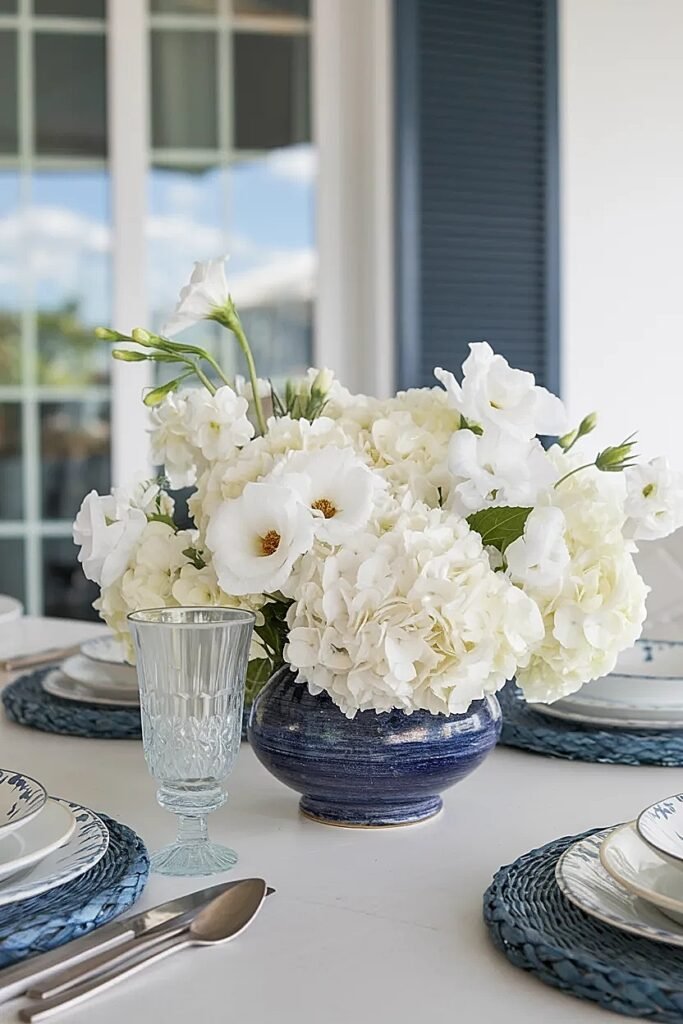
The coastal blue-and-white combination requires specifically cool white: navy, cornflower blue, and sky blue all create a high-contrast, clean coastal reading when paired with cool white. Pair the same blues with cream or warm white and the combination reads as antique rather than coastal and fresh.
Hydrangea is the obvious pairing partner for blue-and-white coastal arrangements, but it wilts unpredictably in indoor arrangements. More reliable pairings: white lisianthus with blue delphinium, white statice with blue gomphrema, or white waxflower with dried blue statice.
The vessel matters. Cobalt glass, navy enamel pitchers, or blue-and-white ceramic vessels amplify the coastal combination by extending the blue element into the vessel. The most impactful coastal blue-and-white arrangements use the vessel as a third element in the composition.
White alyssum as a filler in a coastal blue-and-white arrangement creates a fresh honey fragrance that reads as contextually appropriate in a way that strongly fragranced flowers like gardenia or tuberose would not.
Ways to Mix White Summer Flowers with Roses Without Making the Design Look Bridal
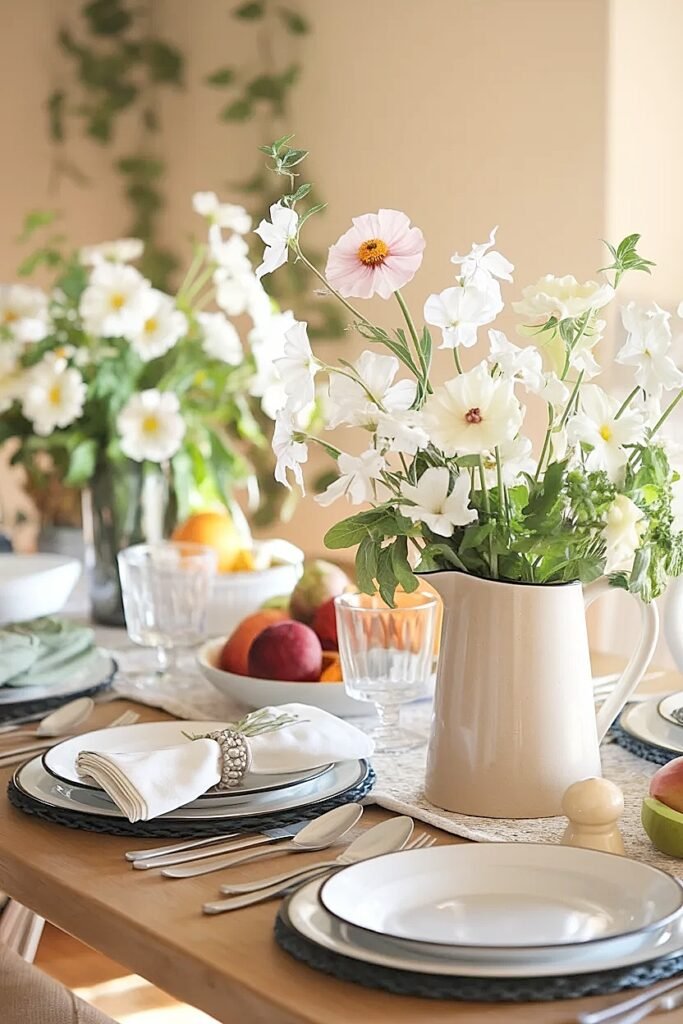
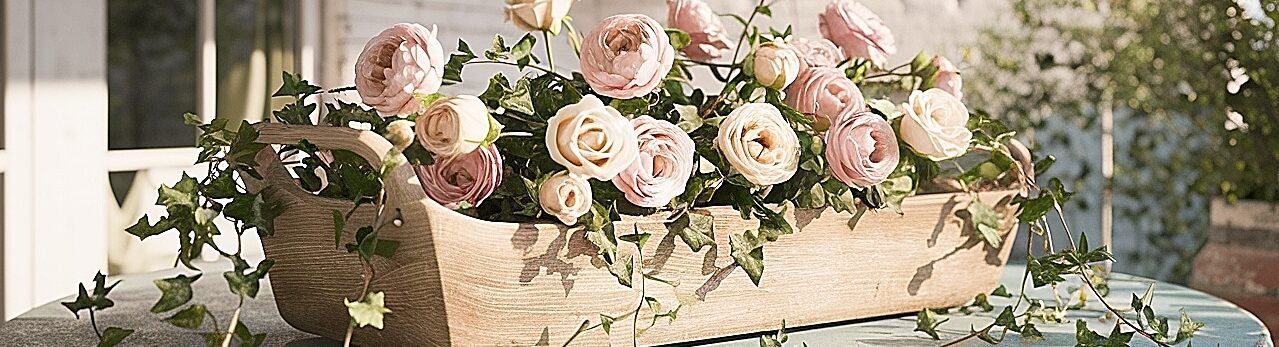
White roses combined with any other white flowers create bridal associations almost automatically. The rose’s formal structure and the all-white palette trigger wedding recognition in most viewers. Breaking the bridal association requires at least one of three interventions: a strong non-white color element, distinctly informal white supporting flowers, or a vessel that reads as inherently casual.
1. White Roses with Vivid Orange Zinnias Add vivid orange zinnias to a white rose arrangement in equal or greater proportion to the roses. The orange completely eliminates the bridal association by introducing a bold color that no formal event palette would use. The white roses retain their structural elegance while the zinnias provide the casual, garden-party character that keeps the arrangement.
2. White Roses with Wild Herb Sprigs Rosemary, thyme, and lavender sprigs mixed with white roses immediately shift the combination from formal to farm-table. The herb fragrance amplifies the shift: a fragrant kitchen-garden herb alongside a rose reads as outdoor entertaining, not wedding decor. Use generous herb quantities so the herb character dominates and the rose reads as a luxurious accent within.
3. White Roses with Overscaled Leaf Accents Large tropical leaves, banana leaf pieces, or monstera fronds alongside white roses create an arrangement where the overscaled foliage disrupts the formal visual language of the rose. The arrangement reads as tropical and casual rather than bridal. One or two large leaves arranged loosely with three to five white roses in a clear glass vessel.
4. White Roses in a Rustic or Informal Vessel A jam jar, a terracotta pot, a galvanized bucket, or any informal vessel disrupts the rose’s bridal associations at the vessel level. The same five white roses that look ceremonial in a crystal vase look casual in a mason jar beside a pitcher of lemonade. The vessel communicates the register of the arrangement before the.
5. White Roses with Textured Wildflower Mix Queen anne’s lace, yarrow, chamomile, and other wildflower types alongside white roses create an arrangement where the informal wildflower character outweighs the rose’s formal connotations. Keep the wildflowers in greater proportion than the roses. One to two rose stems per five to seven wildflower stems. The rose reads as a luxurious detail within a garden-gathered.
More ahead on using white flowers effectively across a buffet table in small individual vases.
Ideas for Styling White Summer Flowers in Small Vases Across a Buffet
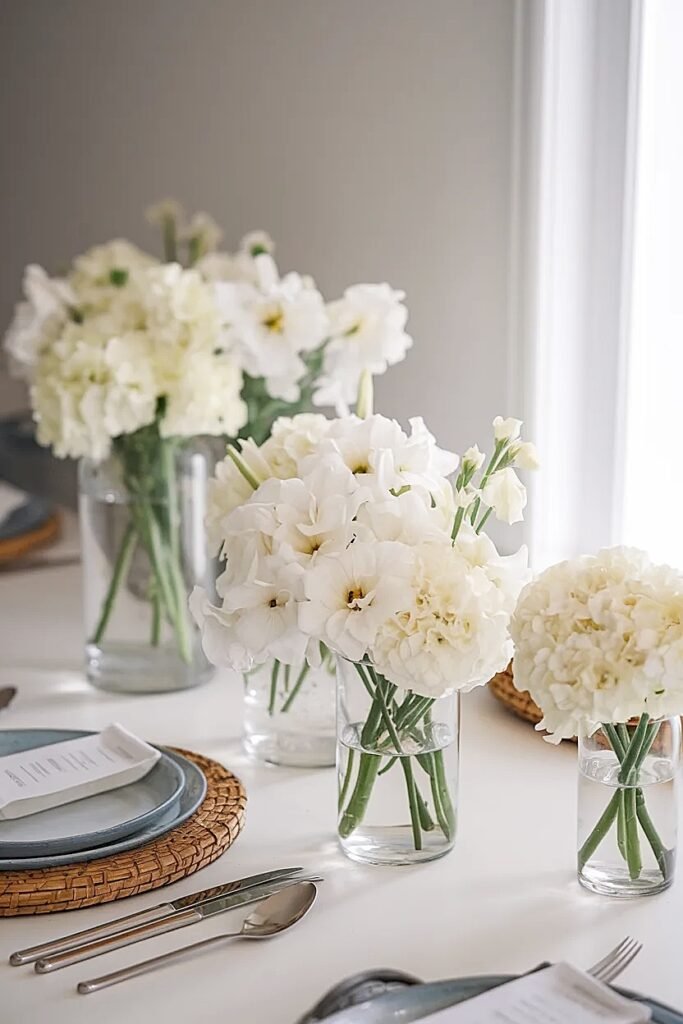
Small individual vases of white flowers distributed across a buffet table create a continuous white visual thread that unifies the full buffet display. A single centerpiece competes with the food for attention. Multiple small white arrangements integrated among the serving dishes create a designed cohesion without competing with any single dish.
1. Single White Lisianthus Stem per Bud Vase One white lisianthus stem per small bud vase at consistent intervals across the buffet creates a formal, refined visual thread. The tall, refined bloom reads clearly above the serving dishes. Space at every eighteen inches for a complete buffet. Use matching bud vases for visual.
2. White Statice Spray in Small Ceramic Mugs Small ceramic mugs filled with white statice spray at regular intervals across the buffet create a distributed white brightening effect at the buffet level. The ceramic mugs read as warm and casual, appropriate for most summer buffet aesthetics. White statice requires no water management and.
3. Floating White Blooms in Small Wide Vessels One white zinnia or ranunculus head floating face-up in a small wide vessel of water at each position across the buffet creates the most visually unexpected small white buffet arrangement available. Nothing rises above the vessel rim, making this the most food-safe and sightline-safe white.
4. White Chamomile in Mismatched Small Vases Three to five stems of white chamomile in small mismatched vintage bud vases at irregular intervals across the buffet creates an intentionally curated, collected quality. The mismatched vessels read as styled rather than random when they share similar scale. The chamomile fragrance at buffet height.
5. White Waxflower Clusters in Short Jars Dense clusters of white waxflower stuffed into short, wide-mouth jars at regular buffet intervals create full-looking, snow-white cloud arrangements at very low cost per position. The jar’s informal character and the waxflower’s abundant white coverage create a visually complete buffet arrangement that requires no arrangement.
Conclusion
The best white flowers to brighten summer flower arrangements are the ones chosen for the specific quality of white the situation requires: cool white for contrast and brightness, cream white for warmth and softness, distributed small-bloom whites for a diffuse brightening effect.
Start with white statice for any outdoor or heat-demanding situation. Use white lisianthus where the cooling, clarifying quality of cool white needs to be most precise. The type of white is often more important than the flower variety. Getting the white temperature right is what makes white flowers actually work in an arrangement.
This website contains affiliate links, and some products are gifted by the brand to test. As an Amazon Associate, I earn from qualified purchases. Some of the content on this website was researched and created with the assistance of AI technology.