This website contains affiliate links, and some products are gifted by the brand to test. As an Amazon Associate, I earn from qualified purchases. Some of the content on this website was researched and created with the assistance of AI technology.
Key Takeaways
- Low arrangements, two to four inches above the vessel rim, are the practical standard for any dining table because they preserve sightlines and allow guests to reach across
- Per-place-setting ceramic cups create a personal flower detail that a single shared centerpiece cannot: each guest has their own small arrangement
- Repeating clusters of two or three matched vessels along the table center create a designed display that reads as deliberate from any end of the table
- Wind-tolerant flowers, compact daisy forms, gomphrema, and statice, outperform delicate open-faced flowers like cosmos or sweet peas in exposed outdoor positions
- A small outdoor bouquet looks full when the vessel is packed to the rim with flowers rather than having visible stem space between blooms and vessel edge
- Casual elegance in a white outdoor arrangement comes from vessel choice, not flower cost: a beautiful ceramic cup or a worn enamel pitcher creates refinement regardless of what flowers fill it
Creating small white summer flower bouquets for outdoor dining tables is one of the few decoration decisions where the constraints actually produce better outcomes than freedom does. A small outdoor dining table forces you toward small, focused arrangements. Small arrangements force you toward thoughtful flower selection. And the outdoor context demands flowers and vessels that can handle heat, breeze, and a certain amount of guest incursion without falling apart. Those three constraints, together, eliminate the arrangements that would have looked mediocre anyway and leave you with the clear, deliberate, genuinely beautiful small white displays that suit outdoor dining better than anything more ambitious.
White is specifically suited to outdoor summer dining in a way that other flower colors are not. In direct outdoor light, vivid flower colors compete with the light rather than working with it. White blooms catch and reflect outdoor light in a way that makes them appear luminous on a sun-lit table. As the afternoon moves toward evening and the light softens, white flowers become more visible and more beautiful rather than less, which means a white outdoor dining arrangement improves throughout the event rather than peaking at one moment.
Use this table to choose the right small white bouquet style for your outdoor dining table. Match the vessel, flower shape, and placement to your table size first. That one decision helps keep flowers pretty, low, useful, and safely out of the way of shared food.
Small White Summer Flowers for Outdoor Dining Tables
Pick your bouquet style by table shape, serving style, and how much room guests need.
| Outdoor Table Need | Best Small Bouquet Style | Best White Summer Flowers | Smart Placement Tip |
|---|---|---|---|
| Family-style servingShared platters need open reach zones. | Narrow side clustersUse slim vessels between serving dishes. | Feverfew, yarrow, gomphrenaSmall texture stays contained. | Offset the flowersKeep the center line open for food. |
| Narrow tableThere is limited room for plates and elbows. | Staggered mini vesselsA few small cups work better than one wide arrangement. | Cosmos buds, scabiosa, tiny astersShort stems keep the table airy. | Use a zigzag lineThis prevents a crowded centerpiece strip. |
| Individual place settingsEach guest gets a small decorative detail. | Ceramic cup bouquetOne tiny bouquet beside each plate. | Feverfew, small zinnias, herb sprigsCompact blooms stay polite near food. | Place beside napkinsKeep flowers away from the eating area. |
| Round tableThe center must look pretty without blocking everyone. | One low bowlKeep it compact and below sightline. | Zinnias, yarrow, short cosmosUse low structure with airy edges. | Stay under face heightConversation matters more than height. |
| Long tableThe table needs rhythm without a floral wall. | Repeating mini bouquetsUse several small arrangements with breathing room. | Scabiosa, feverfew, yarrow, herbsRepeat textures for a pulled-together look. | Leave gaps between vesselsOpen space makes the flowers feel intentional. |
Resources:
- Cut Flower Care – Gardening Solutions
- Harvest & care tips for 10 heat-loving summer blooms – Floret Flowers
- How to Care for Cut Flowers | Yard and Garden
- How to Grow Zinnias for Cut Flowers: A Guide for Small-Scale Farmers — Sierra Flower Farm
- 6 things you should never put on your dining room table | Homes and Gardens
How to Style Small White Summer Flowers Bouquets Low Enough for Outdoor Dining Tables
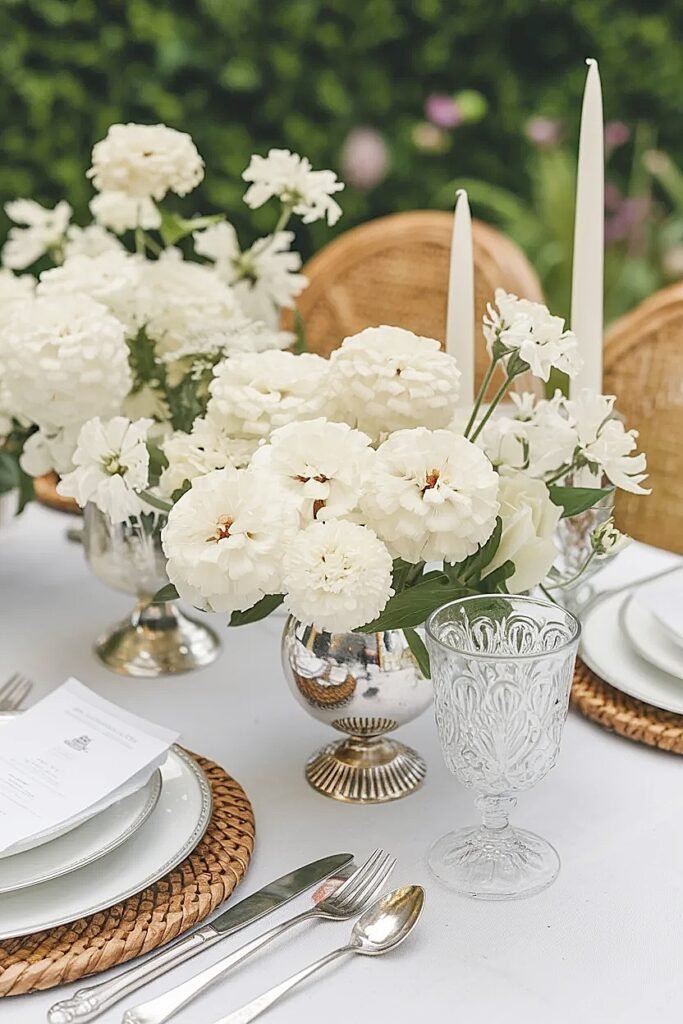
A low arrangement on an outdoor dining table solves two problems simultaneously: it preserves conversation sightlines and it reduces the wind profile of the display. Every inch of height above the vessel rim is both a potential sightline obstruction and a sail for afternoon wind. Keeping all blooms within two to four inches of the vessel rim is not a creative compromise. It is the correct functional decision for outdoor dining flower placement.
The technique that creates the fullest-looking low arrangement: cut all stems two to four inches above the vessel rim measurement, not above the vessel base. Measure from the rim, not the table. Insert the stems and orient bloom faces at forty-five-degree outward angles rather than pointing straight up. The outward angle fills the visual perimeter of the vessel before filling the center, which creates the impression of a wider, fuller display at lower height than upward-facing stems in the same vessel would produce.
The low outdoor arrangement also demands a specific vessel shape: wide-mouth over narrow-mouth, and heavier base over lighter base. A narrow vessel with a dense low arrangement becomes top-heavy, particularly when a guest reaches across. A heavy, wide-mouthed ceramic crock, a weighted pitcher, or a low terracotta bowl eliminates that tipping risk while making the low arrangement look intentional rather than crammed into an inadequate vessel.
One low-arrangement detail that specifically suits outdoor dining: the rim view. At outdoor dining table height, guests look down into their place settings and across the table surface. They see the top of the arrangement from above more than from the front. This overhead viewing angle rewards upward-facing bloom selection, open white daisy faces, white gomphrema balls, or white chamomile, over side-facing blooms that orient themselves toward a viewer directly in front.
For more on easy approaches to white summer flower bouquets for beginners, including the one-tall-one-round-one-filler rule, check out easy ideas for beginner bouquet makers using white summer flowers. Share this with anyone setting up an outdoor summer dining table. More ahead on per-place-setting cups, repeating clusters, and wind-friendly flower selection.
Easy Ideas for Small White Summer Flowers Bouquets in Ceramic Cups for Each Place Setting
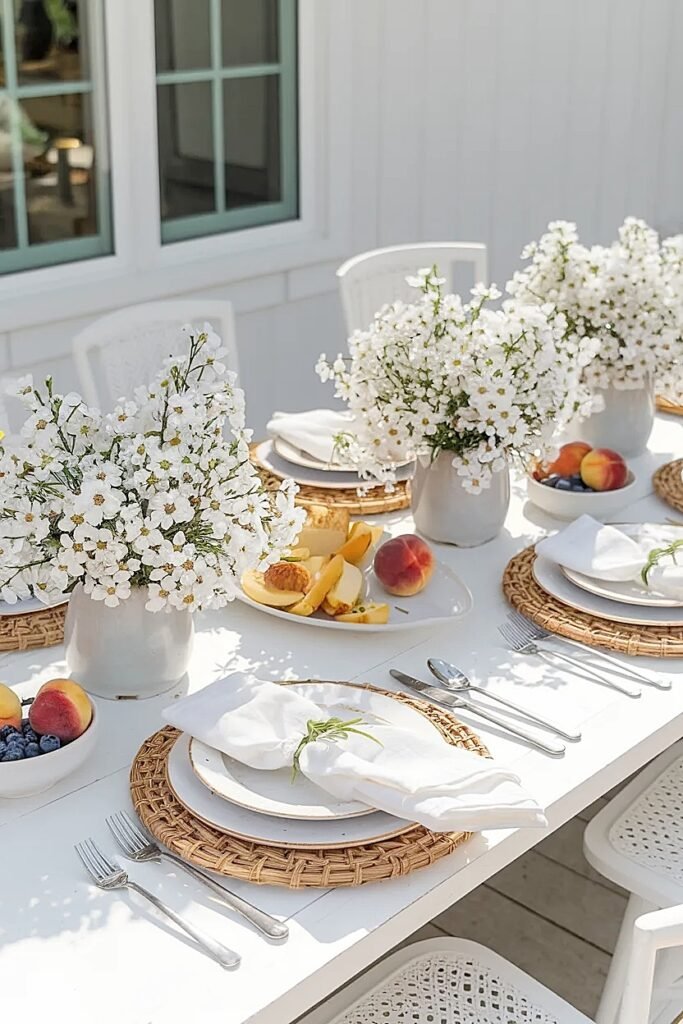
Ceramic cups are among the most naturally appealing small flower vessels available: they are weighted, wide-mouthed, visually varied in the interesting handmade way that mass-produced vessels are not, and they communicate warmth and domesticity that more formal vessels do not. At each place setting, a single white flower in a ceramic cup creates a personal detail that tells a guest they were thought about specifically rather than generically.
1. Single White Zinnia in a Handmade Stoneware Cup One white zinnia stem cut to three inches above the rim in a heavy handmade stoneware cup creates the most visually complete single-stem arrangement available. The zinnia’s flat face oriented upward suits the overhead outdoor viewing angle. The stoneware’s earthy character creates a warm contrast with the cool white bloom. Gravel-weighted at the base prevents tipping when guests reach across. Two to three minutes to.
2. White Chamomile Cluster in a Glazed Ceramic Cup Four to five white chamomile stems cut to the same height in a small glazed ceramic cup creates a tiny meadow-style cluster at each place setting. The multiple small daisy faces read as a unified display from overhead and from the side simultaneously. The honey fragrance at close table range adds a sensory dimension. The warm yellow centers against the white petals create the one.
3. White Lisianthus Bud in a Narrow Ceramic Mug One white lisianthus stem with one open bloom and two closed buds cut to four inches in a narrow ceramic mug creates a progressive display: the buds will open over the next two to three days, changing the arrangement’s appearance at each dinner. The elongated mug shape provides natural stem support without gravel. The lisianthus’s cool clean white suits the refined-but-casual ceramic mug aesthetic directly.
4. White Statice and Rosemary in a Small Handled Cup Two white statice stems and one rosemary sprig in a small handled ceramic cup creates a fragrant, herb-and-flower arrangement that suits outdoor summer dining specifically. The rosemary fragrance at close range contributes to the outdoor garden atmosphere. Statice holds ten or more days in cold water, meaning the cup arrangements can be set up two to three days before the dinner. The rosemary sprig is.
5. White Waxflower Puff in a Colored Ceramic Cup Dense white waxflower packed into a colored ceramic cup, cobalt blue, sage green, or burnt orange, creates a vessel-and-flower color contrast that reads as designed without any arrangement structure. Pack the waxflower to just above the cup rim so the white blooms appear to overflow gently. The vessel color does the design work. Three to four waxflower stems per small cup provides complete visual coverage.
6. White Feverfew with One Herb Sprig in a Terra Cotta Cup White feverfew’s clustered button blooms in a small unglazed terra cotta cup create a kitchen-garden quality that suits outdoor summer dining tables with a casual, abundant quality. One rosemary or thyme sprig alongside the feverfew adds fragrance and foliage texture. The unglazed terra cotta wicks some moisture, which keeps the vessel exterior cool and slightly damp, creating a subtle surface texture that suits summer outdoor.
7. One White Gerbera in a Matte White Cup One white gerbera daisy in a matte white ceramic cup creates a tone-on-tone arrangement where vessel and flower exist in the same color register. From the seated guest’s viewing angle, the bold flat gerbera face appears to emerge from the cup without any visual separation between bloom and vessel. The single graphic bloom in a matching vessel reads as a deliberate minimalist design choice rather.
More ahead on how repeating clusters of matched vessels create table-long arrangement displays that read as unified and designed.
How to Arrange Small White Summer Flowers Bouquets in Repeating Table Clusters
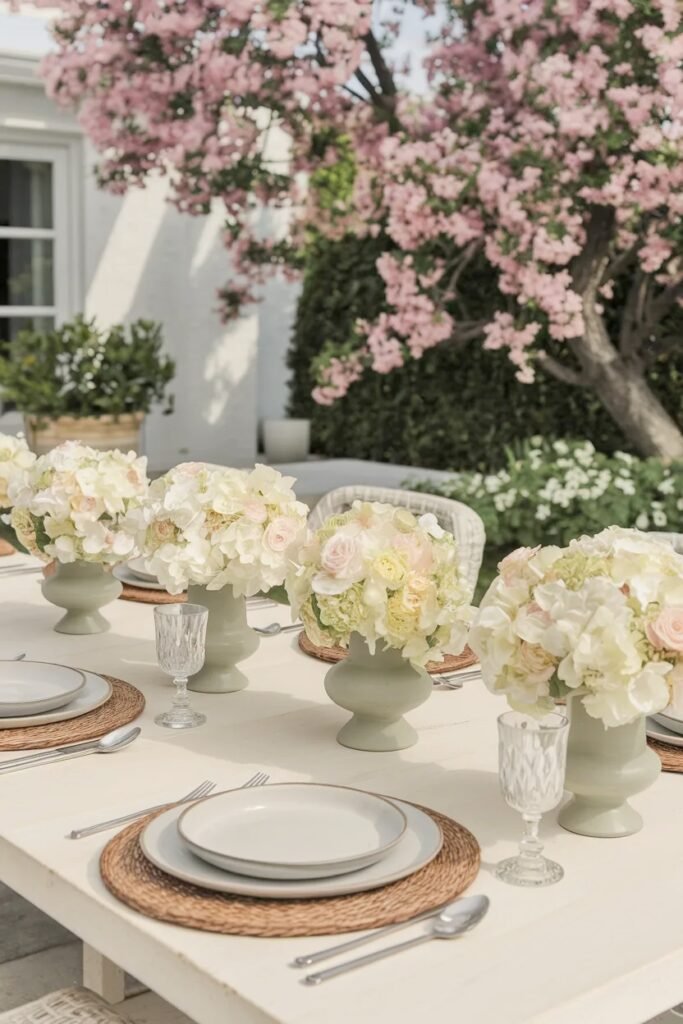
A repeating cluster arrangement along the table center, three matched vessels in a group, repeated every twenty-four to thirty inches, creates a more designed, more visually impressive table display than any single large centerpiece would at the same material cost. The repeat pattern is the key design element: the repetition tells the viewer that a system is at work, which reads as intentional regardless of how simple each individual vessel arrangement is.
The cluster spacing rule for outdoor dining: position clusters so no single cluster is more than eighteen inches from any guest’s position. This proximity ensures every guest experiences the arrangement at close range, making the individual flower detail matter. A single centerpiece at the middle of a long table is visually remote from guests at the ends. Repeating clusters are equally close to every seat.
Within each cluster, the most effective arrangement uses one taller vessel flanked by two shorter vessels. The height variation creates visual movement across the cluster that three identical-height vessels do not achieve. The taller center vessel holds the same flower at three to four inches above its rim. The flanking vessels hold matching flowers at two to three inches. The modest height difference creates dimensional depth visible from any seated position at the table.
For outdoor dining specifically, the cluster approach has a wind management advantage that single large centerpieces do not. If a gust displaces one small vessel in a cluster, the other two remain in place and the overall table composition stays intact. A single large centerpiece toppled or displaced by wind creates a table-length disruption. Distributed clusters limit wind damage to the individual vessel level.
There is more ahead on the specific small pitcher formats that suit outdoor patio table dining specifically.
DIY Ideas for Small White Summer Flowers Bouquets in Short Pitchers for Patio Tables
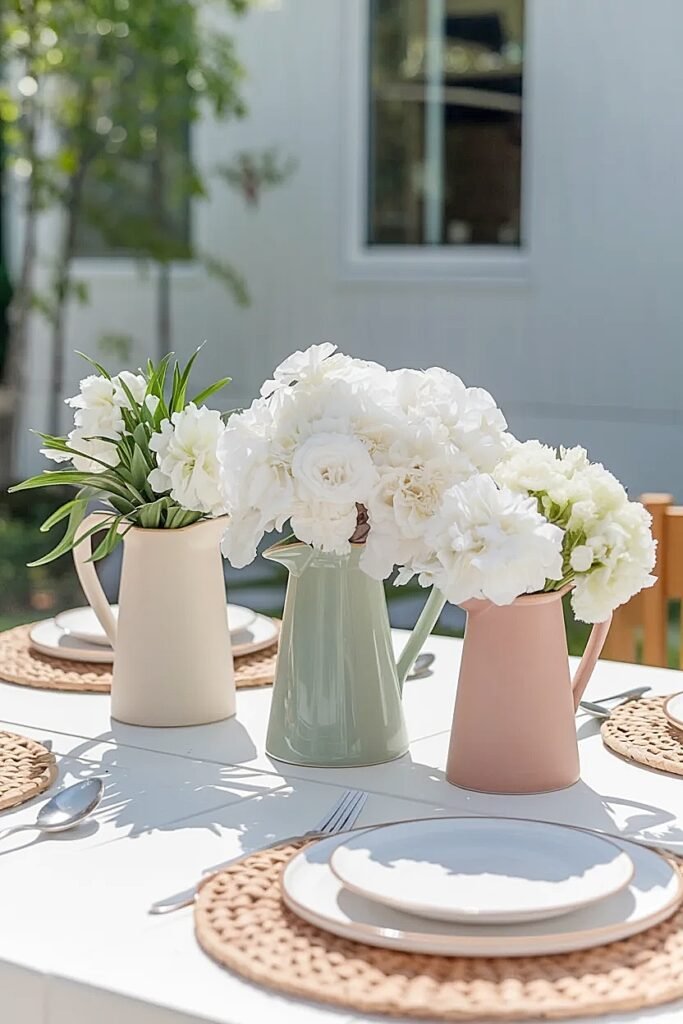
1. White Zinnia and Seeded Eucalyptus in a Short Cream Pitcher Cream enamel pitcher with five to six white zinnia stems and two seeded eucalyptus strands. Cut all zinnias to three to four inches above the pitcher rim. Trail the eucalyptus over the pitcher handle side. The eucalyptus trail creates asymmetry that reads as organic and.
2. White Chamomile Filled Short Cobalt Pitcher Dense white chamomile packed into a short cobalt blue pitcher creates the strongest color contrast available for an outdoor patio white bouquet. The bold cobalt-and-white combination reads as graphic and designed from across the patio. Pack the chamomile to the pitcher rim at full capacity.
3. White Statice and Lavender in a Grey Ceramic Pitcher White statice combined with a lavender sprig or two in a grey ceramic pitcher creates a fragrant, tone-harmonious arrangement where grey, white, and soft purple exist in the same muted spectrum. The lavender fragrance at outdoor dining table range disperses pleasantly without competing with food.
4. White Phlox in a Terracotta Short Pitcher White phlox in a terracotta short pitcher creates a warm-contrast combination where the earthy orange-red of unglazed terracotta amplifies the white phlox brightness by complementary contrast. The phlox fragrance at outdoor patio range is sweet and summery. One bunch of white phlox with two sprigs.
5. White Gerbera and Mint in a Galvanized Mini Pitcher One to two white gerbera stems with fresh mint sprigs in a small galvanized metal pitcher creates an industrial-meets-garden combination with strong graphic quality. The galvanized silver metal amplifies white by contrast. The mint fragrance at outdoor table range is refreshing and food-compatible. The gerbera’s.
More ahead on which specific white flowers hold up best in wind-exposed outdoor positions.
What Are the Best Small White Summer Flowers for Wind-Friendly Outdoor Dining Bouquets?
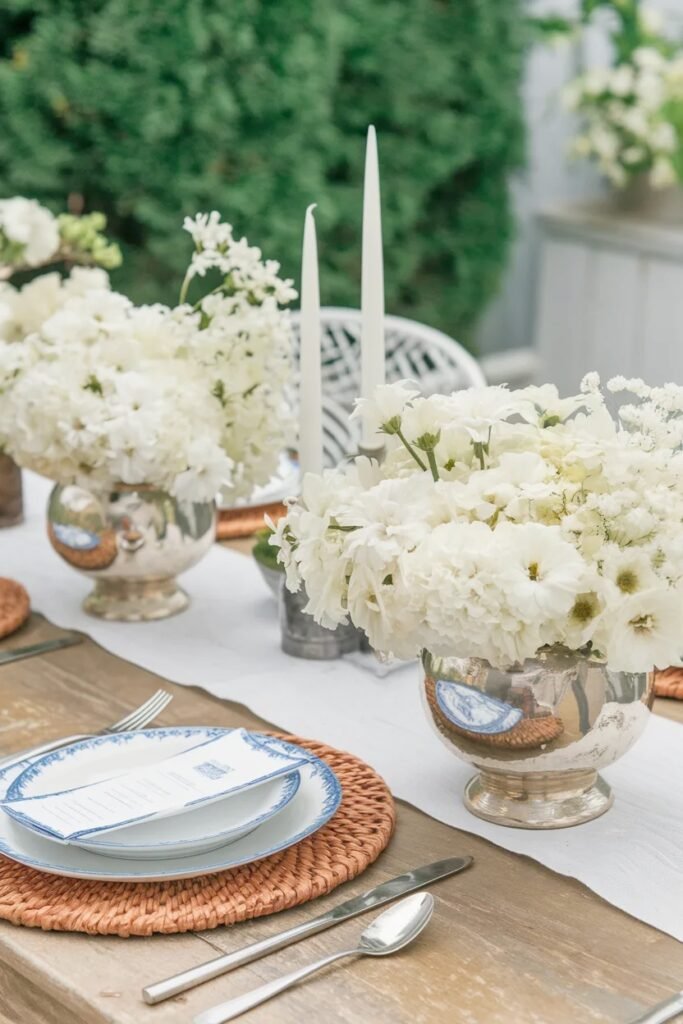
Wind is the outdoor dining arrangement variable that indoor arrangements never face. Even light afternoon breeze creates stem agitation, vessel rocking, and petal drop in delicate flowers. Compact, structurally solid white flowers with short, strong stems outperform delicate open-faced varieties in any wind-exposed outdoor dining position. The specific wind-friendly quality is a combination of petal density, bloom structure, and stem-to-bloom proportional weight.
1. White Gomphrema The compact ball bloom structure resists wind deformation better than any open-faced flower. Zero petal drop in outdoor breeze. The tightly packed ball holds its form and white color throughout any party duration. Two to three stems per small vessel creates complete visual coverage. One.
2. White Zinnia The dense, flat-petaled structure resists wind better than loose or single-petaled white flowers. Heavy enough relative to stem length to resist tipping in light wind. The petals do not drop. The flat face reads clearly from above when the wind creates stem movement. Available at.
3. White Statice Papery, structurally inert blooms are unaffected by outdoor wind at any speed typical of summer dining conditions. The papery bloom structure sheds nothing in moving air. Zero stem agitation impact on flower appearance. The most reliably wind-immune white flower available. Available dried or fresh. The.
4. White French Marigold Compact pom-pom white or cream French marigold varieties have the same wind resilience as their orange and yellow counterparts. The dense rounded bloom structure resists deformation. The compact plant habit means short sturdy stems that do not amplify wind into the blooms the way tall-stemmed.
5. White Chamomile The small, flat daisy faces of chamomile are individually too light to resist wind without moving, but the movement quality of chamomile in a breeze reads as a living, garden-gathered display rather than a failing one. Short-cut chamomile at vessel rim height creates blooms with.
More ahead on the specific techniques that make any small outdoor white arrangement look genuinely full without using more stems than the table can accommodate.
How to Make Small White Summer Flowers Bouquets Feel Full Without Crowding the Table
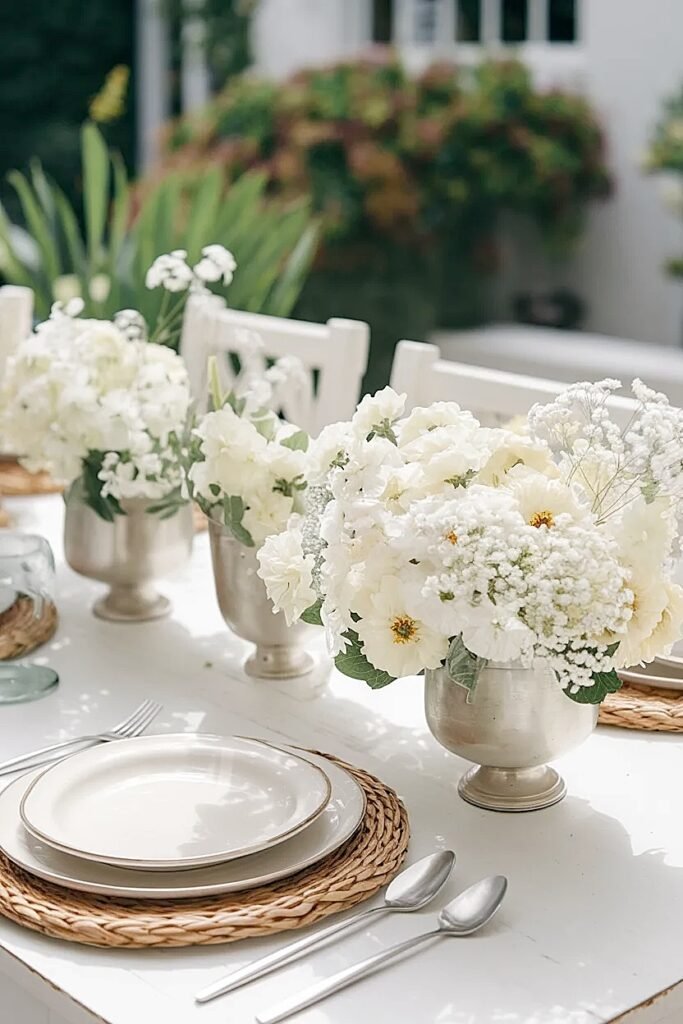
The outdoor dining table space allocation problem is specific: every vessel occupies table surface that guests need for plates, glasses, and service. A full-looking small arrangement that still allows adequate guest space is a real design constraint rather than an aesthetic preference. The answer is not a matter of flower count but of vessel width-to-height ratio and bloom face size relative to vessel opening.
A vessel with a wide mouth relative to its height allows low-profile arrangements that cover a large visual footprint from above without tall stems that steal vertical space. A two-inch-tall, four-inch-diameter low ceramic bowl packed with white chamomile or gomphrema covers a four-inch visual circle on the table but takes almost no vertical space. The same flower count in a narrow two-inch-diameter vessel occupies a smaller visual footprint with taller stems that create a sightline risk.
The fullness trick most beginner arrangers miss: the vessel should not be visible between the blooms when viewed from above. If you can see the vessel interior through gaps between the flower heads, the arrangement reads as sparse regardless of stem count. The solution is not more stems: it is shorter-cut stems that bring all the bloom heads closer to the rim level, creating horizontal coverage of the vessel opening rather than vertical stacking of blooms that creates gaps below.
Fresh herb volume fills out small outdoor arrangements in a way that adds fragrance alongside visual mass. Three rosemary sprigs packed into a vessel alongside two white zinnia stems create a visually full arrangement at the same overall stem count as five zinnia stems, but with different textures, a fragrance dimension, and a visual variety that five identical stems cannot provide.
Easy Ideas for Small White Summer Flowers Bouquets That Look Elegant but Casual
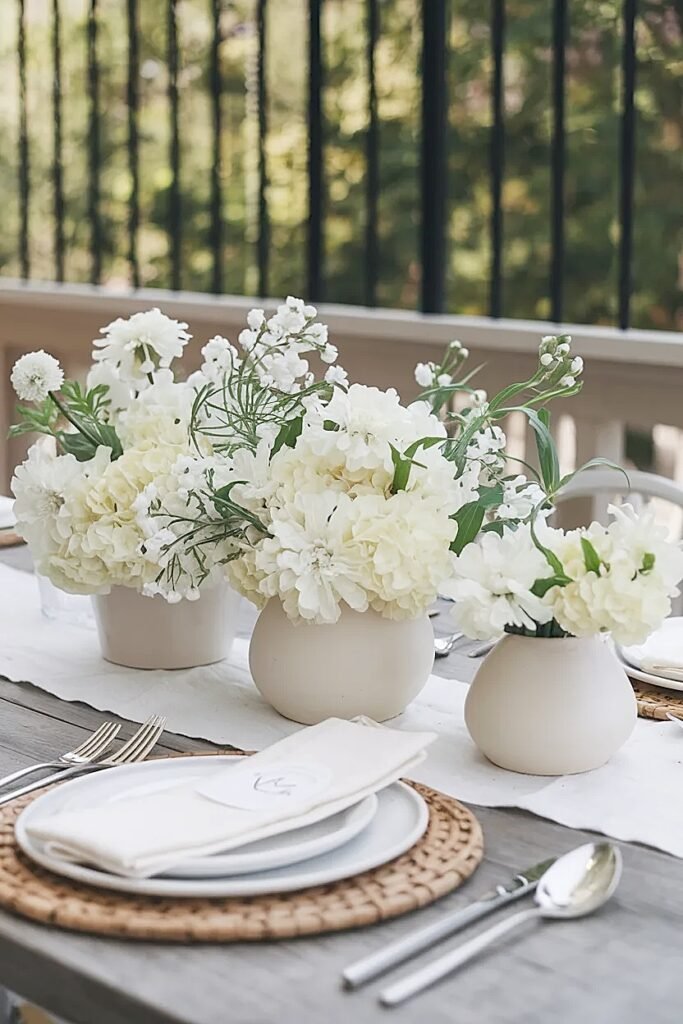
1. White Lisianthus in a Single Clear Bud Vase per Guest One white lisianthus stem in a slim clear glass bud vase at each place setting. The transparent glass allows the stem to read as part of the composition. The lisianthus’s refined layered petals create sophistication. The single stem in a simple clear vessel communicates effortless.
2. Floating White Gerbera in a Small Wide Bowl One white gerbera head floating face-up in a wide low bowl at the table center. Zero stem work required. The geometric simplicity of a single large bloom face centered in a clear bowl reads as deliberately minimal. The water surface surrounding the floating bloom creates.
3. White Chamomile and Mint in a Jam Jar White chamomile stems and fresh mint sprigs in a standard jam jar at the table center. The jam jar communicates casual without effort. The chamomile-and-mint fragrance combination is specific and memorable. The combination reads as gathered from the garden that morning, which is exactly the.
4. Single White Stem in a Colored Medicine Bottle One white sweet pea, cosmos, or lisianthus stem in a colored glass medicine bottle per guest. The vintage colored glass vessel creates visual elegance without the expected flower arrangement structure. The single stem appears chosen rather than arranged. The colored bottle is the primary design.
5. White Waxflower in a Small Black Ceramic Bowl White waxflower packed densely into a small matte black ceramic bowl creates a high-contrast, graphic white-on-black combination that reads as designed from any viewing angle. The matte black amplifies the white brightness. The waxflower’s fine-textured white cloud against the dark matte surface creates a composition.
Conclusion
Small white summer flower bouquets for outdoor dining tables work best when they solve the specific problems of the outdoor dining context first and look beautiful second. Low enough for sightlines. Stable enough for wind. Proportional to the table surface. Fragrant enough to contribute to the outdoor atmosphere without competing with food.
White flowers in small vessels at outdoor dining tables consistently create the most appreciated arrangement experience. Every guest is close to a flower. Every arrangement is personal scale. And the white color performs beautifully in direct outdoor light, at dusk, and in candle glow, which means the arrangement improves as the evening progresses rather than competing with the meal.
This website contains affiliate links, and some products are gifted by the brand to test. As an Amazon Associate, I earn from qualified purchases. Some of the content on this website was researched and created with the assistance of AI technology.