This website contains affiliate links, and some products are gifted by the brand to test. As an Amazon Associate, I earn from qualified purchases. Some of the content on this website was researched and created with the assistance of AI technology.
Key Takeaways
- The filler creates the visual middle ground that makes the focal flower look intentional and the spiller look connected
- Foliage fillers like coleus and euphorbia provide color and texture without competing with the primary flower
- Flowering fillers like lantana and gomphrena add a second bloom layer that increases visual density
- White fillers create visual separation between colors that might otherwise compete
- Match filler height to the thriller: a filler taller than the focal flower defeats the visual hierarchy
- In small pots, one filler is enough: two fillers eliminate the root space the primary flower needs
Choosing the best filler plants to use with summer flowers in pots is the container decision most people either overthink or skip entirely. The filler occupies the visual middle ground between the thriller and the spiller: it creates mass and density that makes the focal flower and the trailing edge look designed rather than planted.
I have been building container combinations for years, and the variable that most consistently separates an impressive container from an average one is filler quality. Without the right filler, even a stunning zinnia or dahlia reads as a flower in a pot rather than a designed arrangement.
Use this quick guide to choose the right kind of filler plant before you build a pot with Summer Flowers. It helps you match the mounding habit, texture role, and color function of common fillers with the design effect you actually want, so the pot feels fuller, more balanced, and more intentional.
Best Filler Plants to Use with Summer Flowers in Pots
Pick the filler based on what you want the middle of the container to do. Some fillers add bloom color, some add airy softness, some bring foliage contrast, and some help the whole pot stand up better in heat. This guide helps you match the filler to the effect you want from your Summer Flowers.
| Filler Goal | Best Filler Plants | Why It Works | Best Styling Tip |
|---|---|---|---|
| Airy White Middle Layer Need the pot to feel softer and lighter. |
Diamond Frost Euphorbia Billowy, fine-textured, and easy to mix with many flowers. |
Softens Strong Colors Great when bright Summer Flowers need a lighter, more connected center. :contentReference[oaicite:5]{index=5} |
Let It Weave Use it between brighter flowers instead of isolating it in one tight clump. |
| Heat-Friendly Bloom Filler Need strong summer performance in full sun. |
Lantana, Gomphrena Rounded bloomers that handle heat well. |
Better Warm-Weather Reliability Useful when the container needs a tough middle layer that still blooms. :contentReference[oaicite:6]{index=6} |
Keep Color Repeated Match one filler color to one center flower color for a more connected pot. |
| Colorful Foliage Body Need the container to feel richer even between bloom cycles. |
Coleus, Dusty Miller Strong foliage fillers for contrast and texture. |
Adds Interest Without More Blooms Helpful when flowers alone make the container feel flat. :contentReference[oaicite:7]{index=7} |
Use One Dominant Foliage Tone Too many leaf colors can make the center feel busy. |
| More Structured Middle Height Need something between a thriller and a rounded filler. |
Angelonia Can work as a vertical filler in many container sizes. |
Adds Lift Without Going Too Tall Useful when the center needs more shape but not a dominant focal point. :contentReference[oaicite:8]{index=8} |
Use in Small Groups One or two small clumps usually look better than a dense mass. |
| Classic Full Pot Body Need a container that feels complete and well packed. |
Mounding Fillers Rounded plants that visually connect thrillers and spillers. |
This Is the Core Filler Job Fillers are what create fullness and body in the classic container formula. :contentReference[oaicite:9]{index=9} |
Do Not Skip the Middle Layer A pot with only a thriller and spiller often looks sparse and disconnected. |
Resources:
- Plant top annuals of 2023 to create craveable container gardens | Illinois Extension | UIUC
- Euphorbia Diamond Frost® – Wisconsin Horticulture
- Angelonia: Sun-loving Garden Neophyte – In the world of ornamental flowering annuals, there are relatively few newcomers in the marketplace
- Container gardening in a sunny area
How to Use Diamond Frost Euphorbia as a Light Airy Filler Plant with Summer Flowers in Pots
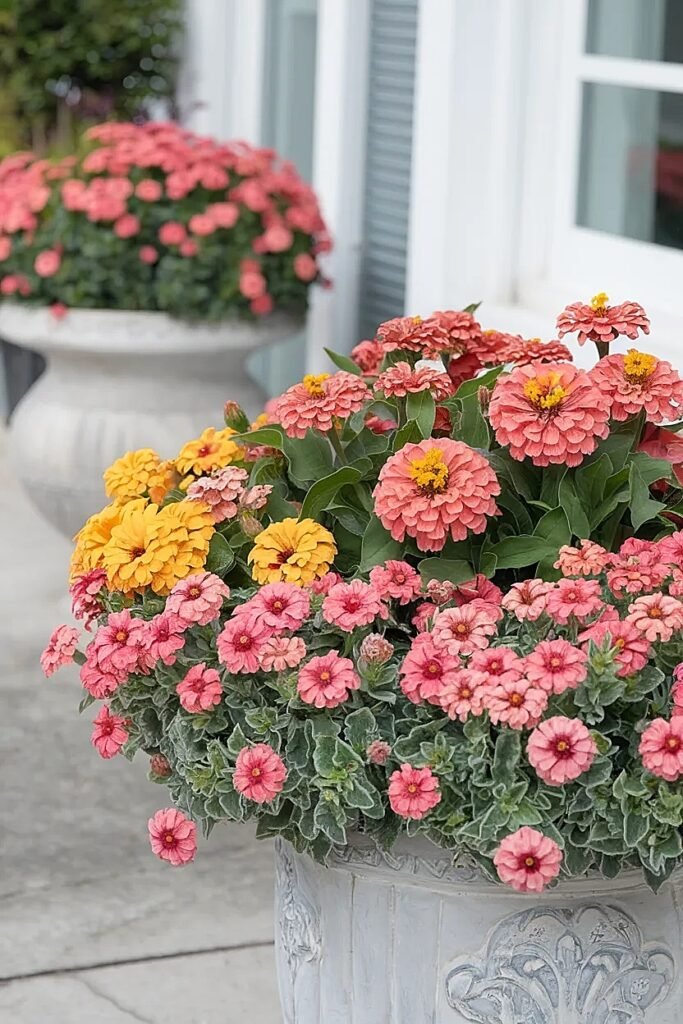
Diamond Frost euphorbia creates frothy, weightless visual texture that makes every flower beside it look more vivid. It functions as a visual clearing agent: the airy white texture makes bold focal colors read more clearly by providing fine-textured neutral contrast.
The visual quality it creates is volume without weight. The white misty flowers function as negative space that highlights whatever bloom is planted alongside it.
Diamond Frost performs best with zinnias, dahlias, and any vivid single-color focal flower. In mixed-color containers, it provides the neutral ground that prevents the combination from reading as busy.
Pinch it back every three to four weeks: Diamond Frost grows quickly and becomes the dominant visual element if unmanaged.
For more on spiller plants that complete the thriller-filler-spiller combination beyond the filler role, check out the best spiller plants to pair with summer flowers. Share this with anyone building outdoor containers this summer. More ahead on lantana, gomphrena, coleus, and every other filler type.
Ideas for Using Lantana as a Heat-Tolerant Filler Plant with Summer Flowers in Pots
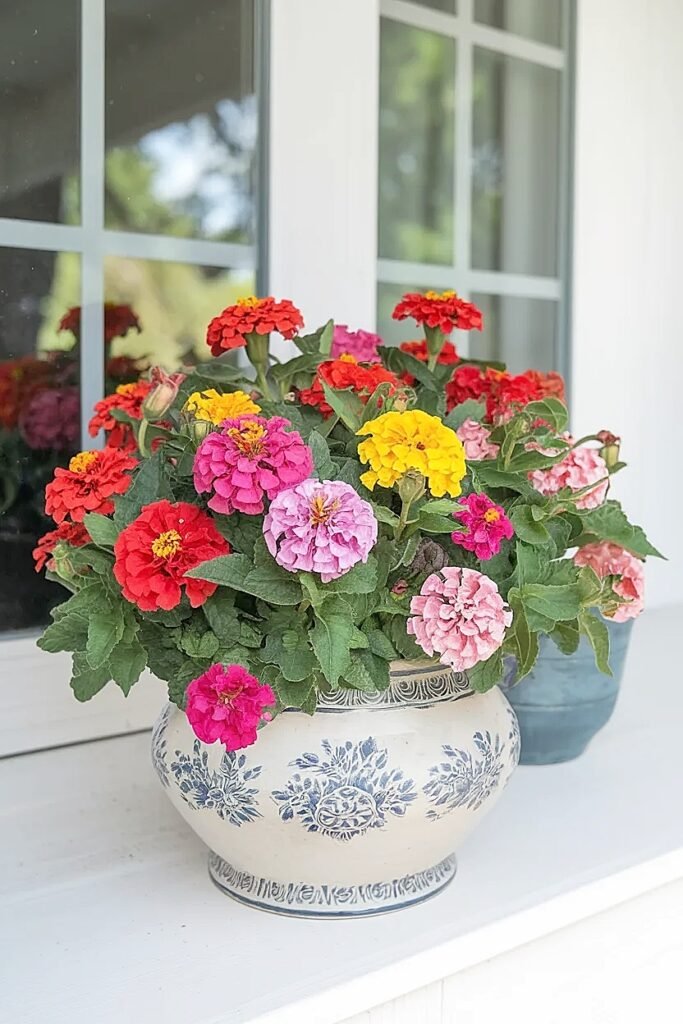
Lantana serves a different role from Diamond Frost: it is a flowering filler that contributes its own bloom layer to the container rather than providing neutral textural support. That distinction means lantana pairings need to account for two bloom relationships rather than one, the focal flower and the lantana blooms alongside it. When those two bloom elements work together in color, the container looks like a designed combination. When they compete, it looks like two unrelated plants sharing a pot.
1. Lantana with Orange and Yellow Zinnias The bicolor orange-yellow lantana cluster bloom echoes the warm tones of mixed orange and yellow zinnias in the same container. The lantana serves as both filler and secondary bloom layer. Both plants share identical heat tolerance and moderate water needs, creating a compatible container that needs consistent care rather than individual management of two different moisture requirements.
2. Lantana as Filler Around a Tall Tropical Focal Plant lantana in a ring around a central canna lily or elephant ear thriller. The lantana fills the mid-container zone between the tall tropical base and the container edge while contributing vivid bloom color at mid-height. The heat tolerance of lantana suits the full-sun positions that tropical thrillers prefer. The combination requires minimal deadheading, as lantana self-cleans through most of the summer season.
3. White Lantana with Deep Purple Petunias White lantana paired with deep purple petunias creates a high-contrast two-tone container that reads as designed from distance. The white lantana cluster blooms neutralize the purple petunia dominance and create visual breathing room between the purple zones. White lantana has slightly better sun tolerance than white-flowering bacopa or alyssum, making it a more durable choice for containers in direct afternoon exposure.
4. Trailing Lantana as Combined Filler and Spiller Trailing lantana varieties, as opposed to compact mounding forms, serve double duty as both the filler and spiller in a two-plant summer container. Planted at the outer perimeter of a large container with a tall single-stem focal flower, trailing lantana fills the mid-container volume and spills over the container edge simultaneously. This two-role combination reduces material cost and maintenance requirements for an outdoor entertaining container.
5. Salmon Lantana with Coral Zinnias Salmon-toned lantana, a warm peach-orange bicolor variety, paired with coral zinnias as the focal flower creates a graduated warm palette where the filler and focal flower share the same color family at slightly different tones. The color proximity creates harmony rather than contrast. From outdoor entertaining distance, this combination reads as a single warm color expression with visible textural variation rather than two distinct color.
6. Purple and Gold Lantana with Bright Yellow Marigolds The purple-and-gold bicolor lantana paired with vivid yellow French marigolds creates the most visually complex combination on this list. The lantana’s dual color echoes the gold of the marigolds while the purple creates a secondary color accent the marigolds cannot provide alone. Both plants have essentially identical cultural requirements, making this a container that can be planted once and left to perform through the full.
7. Lantana in a Color-Blocked Repeating Container Display For a multi-container display, use the same lantana variety in every container but pair it with a different focal flower color in each pot: lantana with coral zinnias in one, lantana with orange marigolds in the next, lantana with burgundy dahlias in the third. The repeated lantana creates visual continuity across the display while each focal flower provides variety. The consistent filler creates a designed.
More ahead on gomphrena, which creates ball-structured visual texture alongside summer flowers.
How to Pair Gomphrena as a Rounded Filler Plant with Summer Flowers in Pots
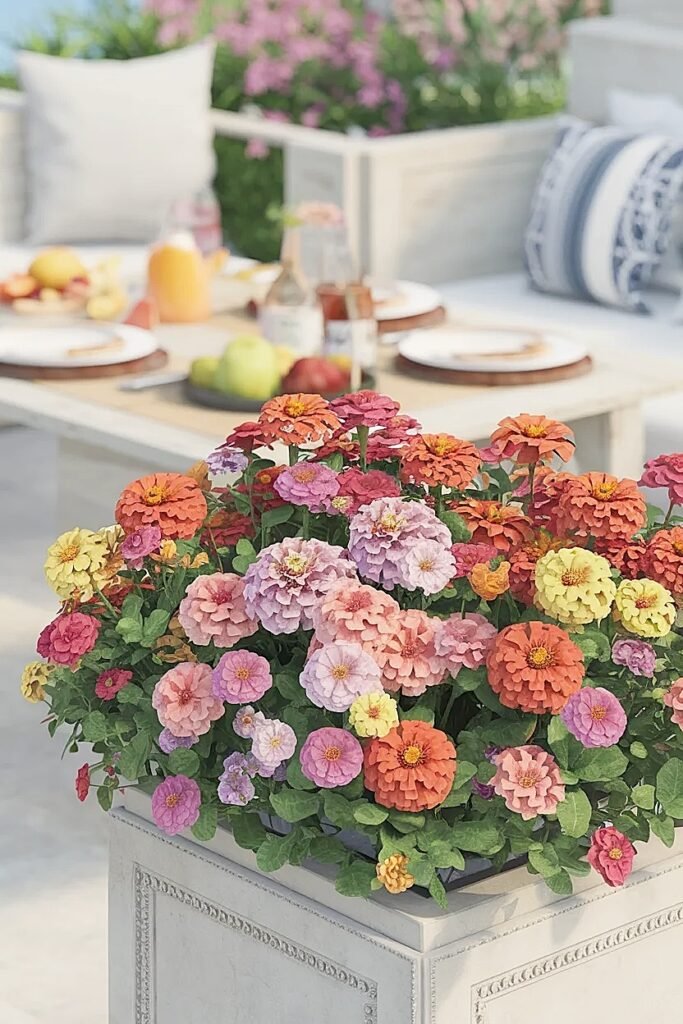
Gomphrena occupies a textural niche no other common filler fills: the rounded ball bloom. When planted as a filler around a flat-faced focal flower like a zinnia or sunflower, the gomphrena ball shapes create a three-dimensional texture contrast that elevates the whole container at close viewing range. Standing over the container, the alternating flat faces and round balls read as a composed, layered arrangement rather than a single-variety planting.
The most effective gomphrema filler placement is around the inner perimeter of the container between the central focal plant and the outer spiller zone. In this mid-ring position, gomphrema is visible from above when standing and from the side when seated, covering both primary viewing angles. Two to three gomphrema plants per container in this ring position creates the ball-texture layer without overwhelming the focal flower.
Gomphrema filler works particularly well with single-stem focal flowers: sunflowers, tall dahlias, and cannas. These single-stem thrillers create open space in the container below the focal bloom that gomphrema fills with its compact branching structure. Without a filler in that mid-height zone, tall single-stem containers look sparse from the middle down even when they are impressive at the top.
The color choice for gomphrema filler follows two approaches. Echo the focal flower color with a same-family gomphrema, pink gomphrema around a coral zinnia, for a harmonious tone-on-tone combination. Or choose a contrasting gomphrema color, deep purple gomphrema around bright orange marigolds, for a complementary color pair where the filler actively contributes a second color dimension.
More ahead on coleus, the foliage filler that often creates more visual impact than any flowering filler.
Ways to Use Coleus as a Colorful Foliage Filler Plant with Summer Flowers in Pots
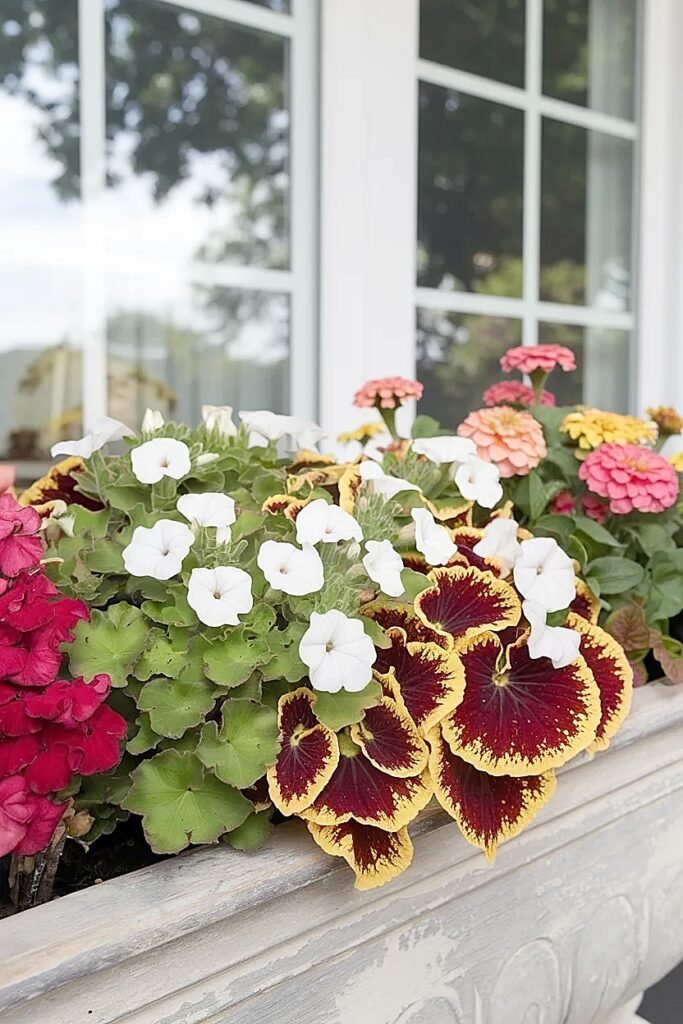
Coleus is the most visually assertive foliage filler for a summer container. Unlike Diamond Frost or green foliage fillers that recede and support the focal flower, coleus steps forward with its own color story. The key is choosing a variety whose foliage palette shares at least one color with the focal flower rather than introducing an entirely independent color element.
1. Dark Burgundy Coleus with Coral Zinnias Deep burgundy or near-black coleus foliage paired with coral zinnias creates one of the most striking container combinations available. The dark foliage makes the coral zinnia appear to glow against it, an intensification effect similar to the chartreuse-against-warm-tones quality of creeping Jenny. One coleus plant.
2. Lime Green Coleus with Deep Purple Petunias Lime-toned coleus variety creates the same chartreuse intensification effect as creeping Jenny at a filler rather than spiller position. The vivid cool-toned purple petunias against the warm lime-green coleus create a complementary color pair that reads as designed from distance. Plant the coleus at mid-container.
3. Multi-Toned Coleus as the Container Focal Point In a container where no single summer flower is bold enough to serve as the thriller, a large statement coleus plant with vivid multi-toned foliage can occupy the thriller role entirely. Simple white or pale complementary flowers then serve as understated companions that let the.
4. Compact Coleus at Container Perimeter Compact coleus varieties, labeled as dwarf or sun-tolerant at garden centers, fit the filler role in standard containers without the aggressive growth of standard coleus. Plant compact coleus at the container perimeter between the focal flower and the spiller zone. The compact form stays in.
5. Coleus in a Shaded Partial-Sun Container Coleus is one of the few foliage fillers that genuinely thrives in partial-sun and shaded container positions where most other summer fillers struggle. Paired with impatiens or begonias as the focal flower in a shaded porch container, coleus provides the same foliage contrast and visual.
More ahead on the structural decisions that keep filler in proportion to the focal flower.
How to Choose Filler Plants to Use with Summer Flowers in Pots Without Overcrowding the Center
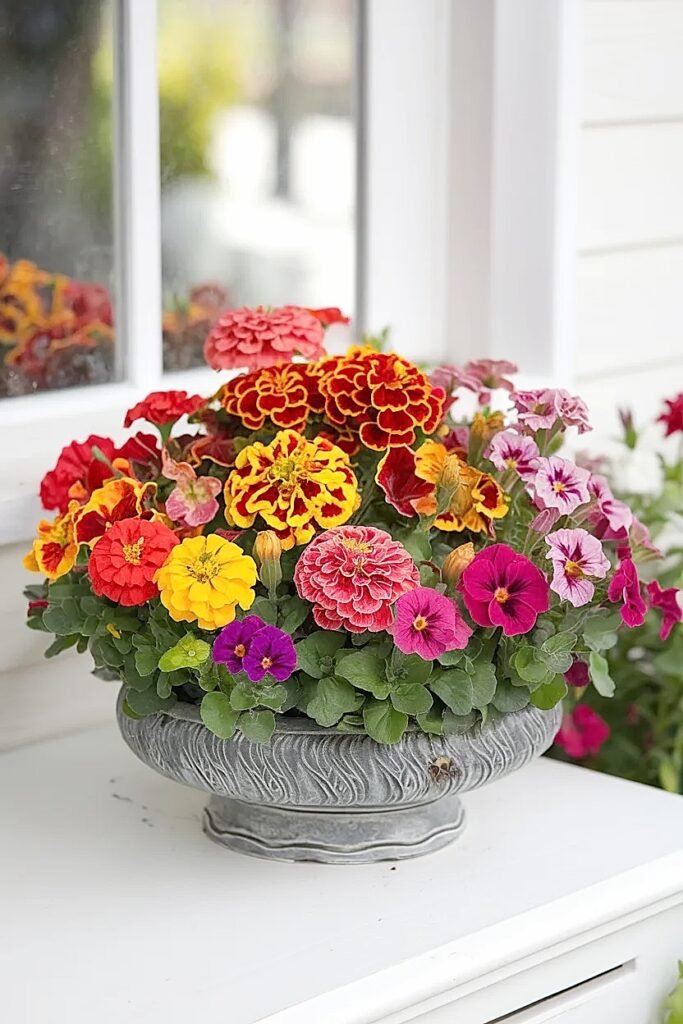
Overcrowding is almost always a filler problem. A filler that outcompetes the thriller root system reduces its bloom production over several weeks until the focal element starts looking stressed.
The filler must remain shorter than the focal flower throughout the season. For a zinnia or marigold at twelve to sixteen inches, the filler should be no taller than eight to ten inches.
Root vigor is the second decision. Sweet potato vine is a notoriously poor filler because its root system fills the entire container rapidly. Diamond Frost euphorbia, gomphrema, and compact coleus all co-exist with focal flowers through a full season.
One technique: plant the filler starts in individual four-inch pots inside the main container. The pot barrier slows lateral root expansion while allowing normal growth above. Remove the inner pots after six to eight weeks once the filler is staying in proportion.
What Are the Best White Filler Plants to Use with Summer Flowers in Pots?
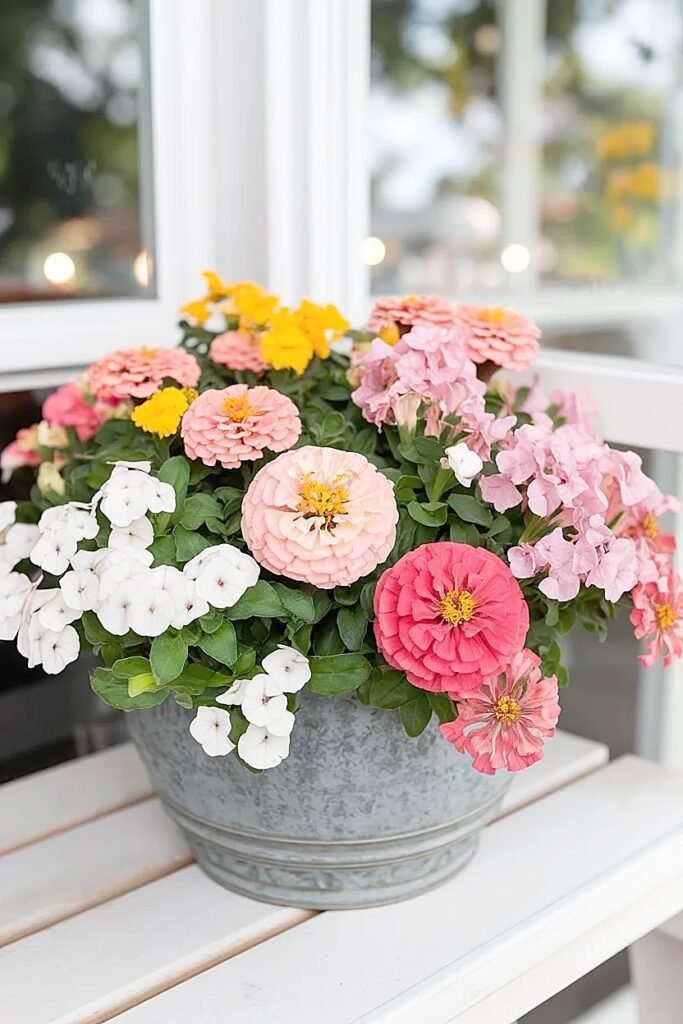
White filler plants serve the same visual function in a container that white space serves in graphic design: they provide visual rest, create separation between competing elements, and allow vivid colors to read at their maximum intensity. In a container with two strong color zones, a white filler between them prevents the color competition that makes mixed containers look busy rather than bold.
1. Diamond Frost Euphorbia The white mist of Diamond Frost euphorbia creates the lightest, most airy white filler quality available. The tiny flowers on fine stems do not crowd the container visually despite substantial plant size. White Diamond Frost beside any vivid summer flower creates a visual clearing effect.
2. Sweet Alyssum Sweet alyssum provides white filler effect with the added contribution of honey fragrance at container range. The compact spreading form fills container mid-zone without aggressive root competition. The tiny clustered flowers create dense white coverage at low height. One or two plants per standard container.
3. White Gomphrena White gomphrena provides white filler in the rounded ball texture that no flat-flowered white filler can replicate. The ball structure creates three-dimensional white texture that reads differently from the flat white coverage of alyssum or Diamond Frost. Used between vivid orange or coral focal flowers,.
More ahead on achieving a soft, romantic quality in a container using billowy filler plants.
How to Use Soft Billowy Filler Plants with Summer Flowers in Pots for a Romantic Look
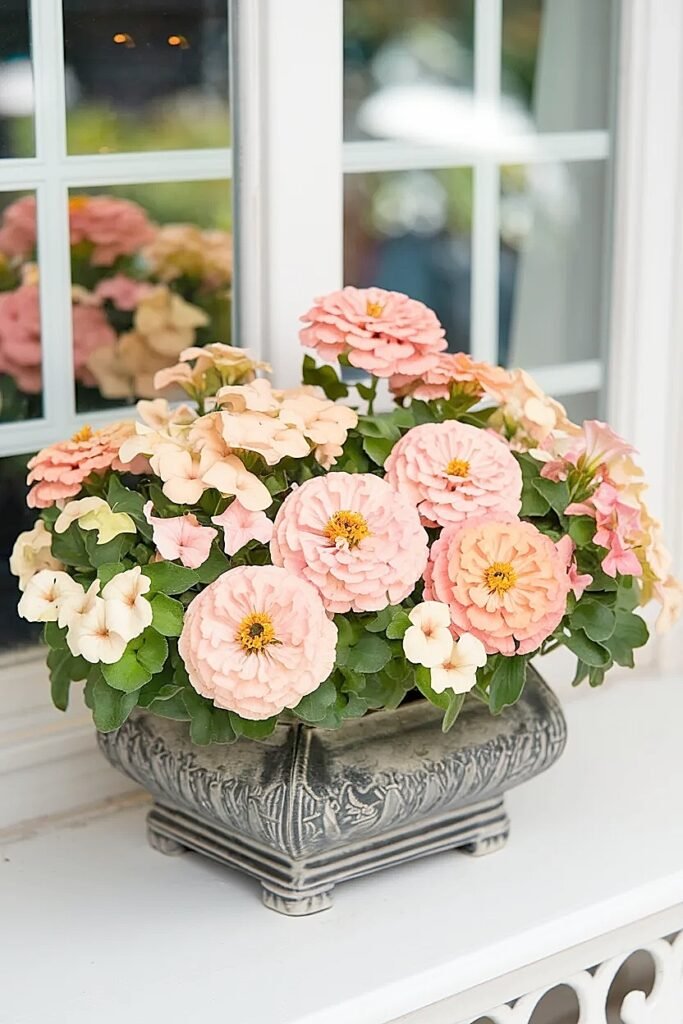
The romantic container aesthetic is defined by softness: loose, flowing, layered forms that read as abundant and organic. Soft filler plants include creeping zinnia; baby’s breath planted as an annual filler; and fine-textured grasses like Fiber Optic grass, which provide movement that broadleaf fillers cannot match.
The romantic container requires restraint in color saturation. Bold, vivid colors fight against the soft billowy aesthetic. Use the softest tones, pale pink rather than vivid magenta, with the billowy filler providing the abundance that quiet flower colors cannot achieve alone.
Fragrance completes the romantic container. Sweet alyssum, lavender, or low-growing thyme as a filler creates a multi-sensory quality that purely visual combinations cannot match.
Ideas for Using Flowering Filler Plants with Summer Flowers in Pots for More Bloom Color
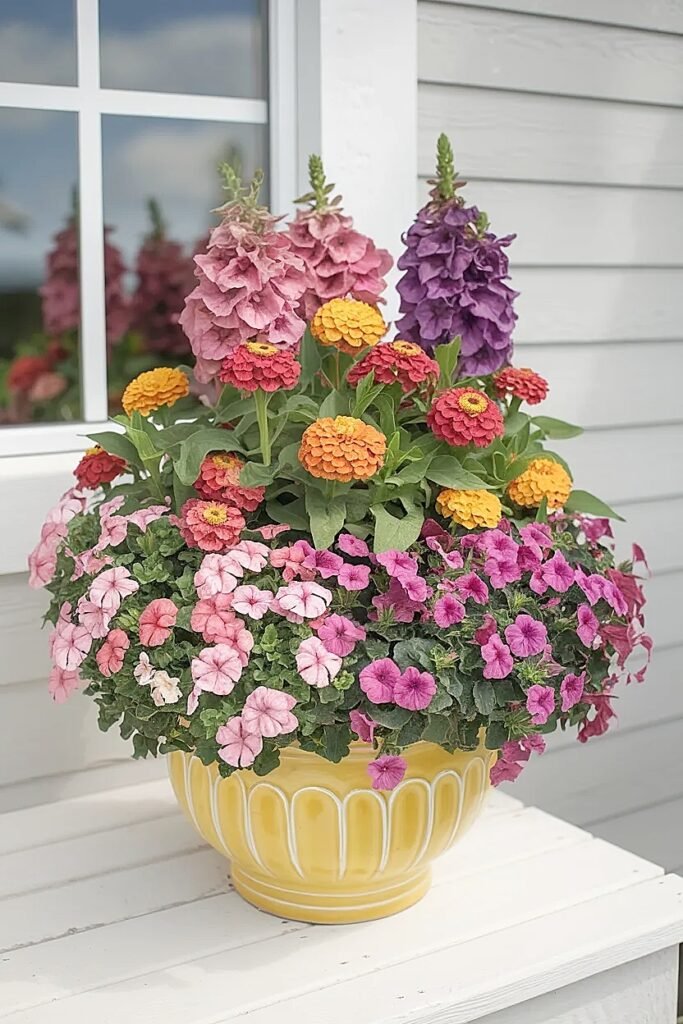
A flowering filler adds a second bloom layer to the container above the structure provided by a foliage filler. When the flowering filler is chosen for color compatibility with the focal flower, the result is a container where multiple bloom levels create genuine visual depth: the tall focal flower above, the filler blooms in the mid-zone, and the spiller at the edge. Three distinct levels of color rather than one.
1. French Marigolds as Filler Around Tall Zinnias French marigolds planted as filler around the base of tall zinnia thrillers create a vivid warm double-bloom layer that reads as abundant from any viewing angle. The marigold fills the mid-height zone below the zinnia tops. Both plants share identical cultural requirements, allowing consistent care without individual management. Deadhead both regularly for maximum bloom density.
2. Calibrachoa as Flowering Filler and Spiller When calibrachoa serves double duty as both filler and spiller, it creates the flowering double-layer effect with only one additional plant. Plant calibrachoa at the container outer perimeter and allow it to fill the mid-zone and trail simultaneously. Two calibrachoa plants per container in this perimeter position creates a complete flowering base layer below the.
3. Scaevola as a Low-Maintenance Flowering Filler Scaevola fan flowers planted at container mid-zone create a unique textural flowering filler that no other common plant replicates. The fan-shaped individual blooms create interesting visual texture at close range while the overall plant mass provides the color density of a standard flowering filler. No deadheading required. Heat-tolerant through August conditions that reduce the bloom.
4. Lobelia as a Cool-Blue Flowering Filler Trailing or compact lobelia planted as a filler beneath warm-toned focal flowers, orange marigolds, coral zinnias, or red dahlias, creates the complementary blue-warm color pairing that experienced container designers use consistently. The cool blue lobelia bloom mass below a warm focal flower creates a color relationship that makes both colors appear more intense. Replace lobelia.
5. Coleus Blooms as Accidental Flowering Filler When coleus is not pinched back to discourage blooming, the small flower spikes it produces in late summer create an unintentional flowering filler layer within the foliage mass. The flowers are small and not individually showy, but the accumulated flower mass at mid-container height adds a secondary visual interest layer that pure foliage coleus does.
More ahead on filler choices best suited to small pots, where scale and vigor constraints are most demanding.
What Are the Best Filler Plants to Use with Summer Flowers in Small Pots?
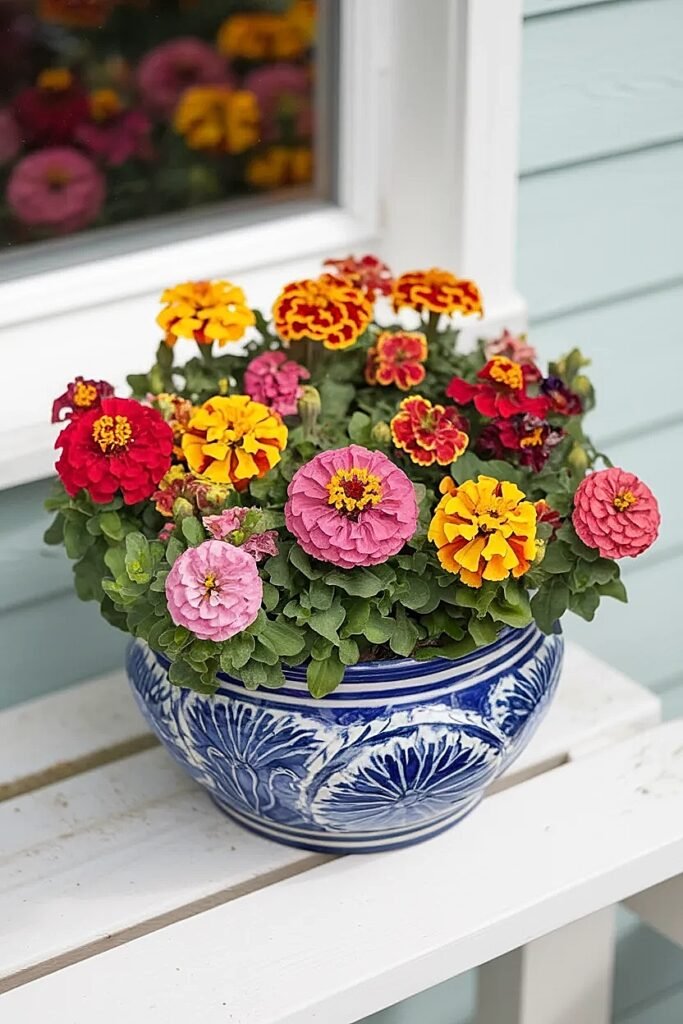
A small pot, eight to ten inches in diameter, has room for one good focal plant, one carefully chosen filler, and possibly one restrained spiller. No more. In a small pot, the filler needs to be genuinely compact: slow-growing, shallow-rooted, and modest in its vigor so it supports rather than overwhelms the focal flower in the limited container volume.
1. Diamond Frost Euphorbia (Compact) Standard Diamond Frost is too vigorous for a small pot. Look for compact or dwarf euphorbia varieties, smaller plants labeled as Breathless Blush or similar compact relatives, which provide the same airy white quality at a scale appropriate for small container use. One plant per.
2. Sweet Alyssum One sweet alyssum plant per small pot creates gentle fragrant white coverage at the focal flower base without aggressive root competition. The compact spreading form suits small pot proportions naturally. It stays in scale with small containers throughout summer without requiring trimming or management. The.
3. Compact Bacopa One compact bacopa plant as the filler-spiller in a small pot handles both the mid-container filler role and gentle spiller role simultaneously in a two-plant combination. The fine-textured white flowers and delicate trailing stems suit the intimate scale of a small pot container. Water consistently:.
4. Dwarf Marigold (Single Plant) One dwarf French marigold plant at the outer edge of a small pot creates a secondary bloom filler that earns its space with its own flower contribution. The compact form stays proportional to small pot constraints. One marigold per small pot, planted slightly off-center toward.
5. Bronze Fennel (One Stem) A single stem of bronze fennel inserted as a cut material rather than a planted element in a small pot creates a fine-textured, copper-bronze airy quality that no planted filler at this scale replicates. The feathery texture creates the same visual effect as Diamond Frost.
Conclusion
The best filler plants to use with summer flowers in pots are the ones that create visual density, support the focal flower’s dominance, and stay in proportion to the container through the full season. Diamond Frost for airy texture and visual clearing, lantana for a second heat-tolerant bloom layer, gomphrema for rounded ball structure, coleus for bold foliage contrast.
Start with one filler plant whose color and texture complement the focal flower you have already chosen. Get that single pairing right. The container will reward the decision with a visual quality that a single-flower planting cannot match.
This website contains affiliate links, and some products are gifted by the brand to test. As an Amazon Associate, I earn from qualified purchases. Some of the content on this website was researched and created with the assistance of AI technology.