
This website contains affiliate links, and some products are gifted by the brand to test. As an Amazon Associate, I earn from qualified purchases. Some of the content on this website was researched and created with the assistance of AI technology.
Key Takeaways
- Airy bouquets require structural lightness, not just white color: tissue-thin petals, branching stems, and small-to-medium bloom scale all contribute to the floating quality
- The most effective airy white bouquets use two or three flowers that complement each other’s structural differences: one airy focal, one fine-textured filler, one arching spiller
- Heat tolerance matters even in indoor bouquets: place arrangements away from direct sunlight and drafts, and use cold water at setup for maximum vase life
- Lace-like flowers, Queen Anne’s lace, ammi, and white yarrow, create the structural framework that makes other delicate flowers appear more intentional and composed
- Long-stemmed white flowers allow natural drooping and arching that create the organic, gathered quality: do not cut all stems to the same length
- Bridal-style airy bouquets differ from garden-style ones primarily in stem treatment and greenery choice, not flower selection
Choosing the best white flowers for summer bouquets that feel airy is a more specific design brief than it sounds. Most white flowers are visually solid and structured: white garden roses create mass and weight, white dahlias create focal presence, and white hydrangea creates dense bloom clusters. These are all beautiful flowers. None of them create the airy quality that defines the most distinctive and beloved summer bouquet style, the one that looks gathered rather than arranged, light rather than heavy, breathing rather than packed.
Airy white bouquets depend on flowers with specific structural properties: tissue-thin petals that move in air, stems that branch naturally and create horizontal reach, and blooms small enough that multiple flowers in the same vessel create fullness without density. The flowers below have all been chosen for exactly these structural properties rather than simply for their white color. The specific combination of these qualities in a single flower, or across a set of complementary flowers, is what creates the bouquet you are trying to build.
Use this quick guide before choosing white bouquet flowers. It helps match each flower shape to the job it does best, so your bouquet feels airy instead of heavy. Pick one fluttery flower, one soft filler, one height flower, and one texture flower for a balanced summer bouquet.
White Summer Flowers Shape Guide for Airy Bouquets
Use flower shape, not just color, to build a bouquet that feels soft, open, and naturally balanced.
| Flower Shape | Best White Summer Flowers | What It Adds | Best Bouquet Tip |
|---|---|---|---|
| Fluttery petalsLight blooms that move naturally and keep the top open. | Cosmos, scabiosa, sweet peasUse these when the bouquet needs softness and motion. | Air and movementThey stop a white bouquet from looking stiff or packed. | Place higherLet these flowers float above fuller blooms. |
| Tiny fillersSmall flowers that add detail without much weight. | Feverfew, gomphrena, small astersIdeal for soft texture and light gap-filling. | Fine textureThey make the bouquet feel finished without crowding it. | Scatter lightlyAvoid thick filler clumps. |
| Tall spikesUpright stems that create loose height and flow. | Snapdragons, salvia, stockUse these for gentle vertical shape. | Height and liftThey make the bouquet taller without adding bulk. | Keep off-centerSlight asymmetry feels more natural. |
| Daisy facesOpen blooms that keep the bouquet cheerful and clear. | Cosmos, coneflowers, astersGreat for casual garden bouquets. | Simple structureThey give the bouquet visible shape without heaviness. | Space faces apartLet each flower show instead of stacking them. |
| Soft clustersGrouped blooms that build body through the middle. | Phlox, yarrow, hydrangeaUse sparingly for fullness. | Gentle volumeThey help the bouquet look complete. | Keep clusters lowLet airy flowers rise above them. |
Resources:
- Harvest & care tips for 10 heat-loving summer blooms – Floret Flowers
- How to Harvest, Condition, and Care for Cut Flowers | Yard and Garden
- Brighten Your Home with Cut Flowers | Nebraska Extension in Lancaster County | Nebraska
- Choosing plants for your cut flower farm | UMN Extension
How to Choose White Summer Flowers with Airy Petals for Soft Bouquets
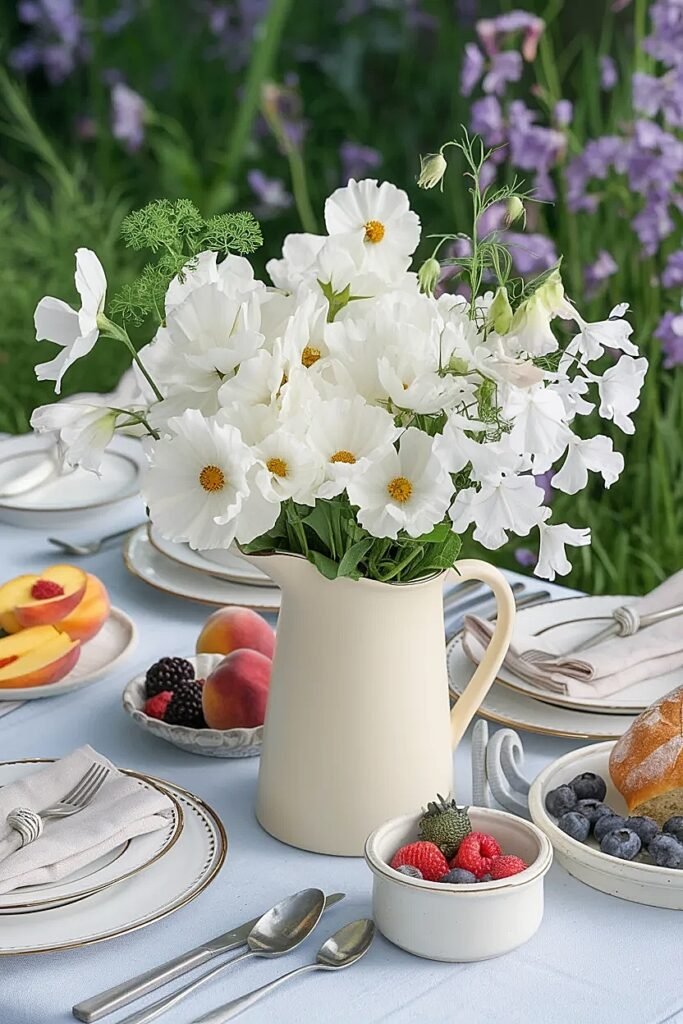
Airy petal structure is a botanical characteristic that varies significantly even within the white color category. A white zinnia has dense, overlapping petals that create mass. A white cosmos has a single ring of eight flat petals arranged around a central disc, and those petals are so thin that light passes through them visibly. The difference in visual weight between those two flowers is dramatic even though they share color and bloom size. When building an airy bouquet, that structural characteristic, petal count, petal thickness, and petal arrangement, matters more than color alone.
The flowers that consistently create the most airy visual quality in summer bouquets are the ones with single or semi-double petal arrangements rather than fully double or pompon forms. Cosmos, anemone, echinacea, single daisy forms, and open-faced wild flowers all share this single-layer or sparse-layer petal structure. The visual lightness comes specifically from the ability to see through or around the flower rather than encountering a solid mass of petals in the arrangement.
Within the airy-petal category, the quality that most elevates a bouquet from soft to genuinely ethereal is petal translucency. White cosmos and white sweet peas both have petals thin enough to show light transmission at close range. This translucency creates a luminous quality in outdoor light or near windows that no opaque white flower can match. The same arrangement in direct afternoon light and in shade reads completely differently when it contains translucent-petal flowers: the light version appears to glow.
For a hand-tied bouquet specifically, the stem-gathering technique interacts with the petal airy quality in important ways. Gather the stems loosely at the binding point rather than pulling them tight together. A loose gathering allows each stem to find its own natural angle in the bouquet, which creates the varied facing directions and natural arching that makes an airy bouquet look garden-gathered. Tight stem binding forces all stems upright, creating a more formal, cylindrical bouquet shape that works against the airy aesthetic.
For more on mixing white cosmos with other soft white summer flowers for arrangements and centerpieces, check out what are the best white summer flowers to mix with cosmos. Share this with anyone building a summer bouquet. More ahead on tiny filler blooms, lace-like flowers, and every specific airy white choice.
What Are the Best White Summer Flowers with Tiny Filler Blooms for Airy Bouquets?
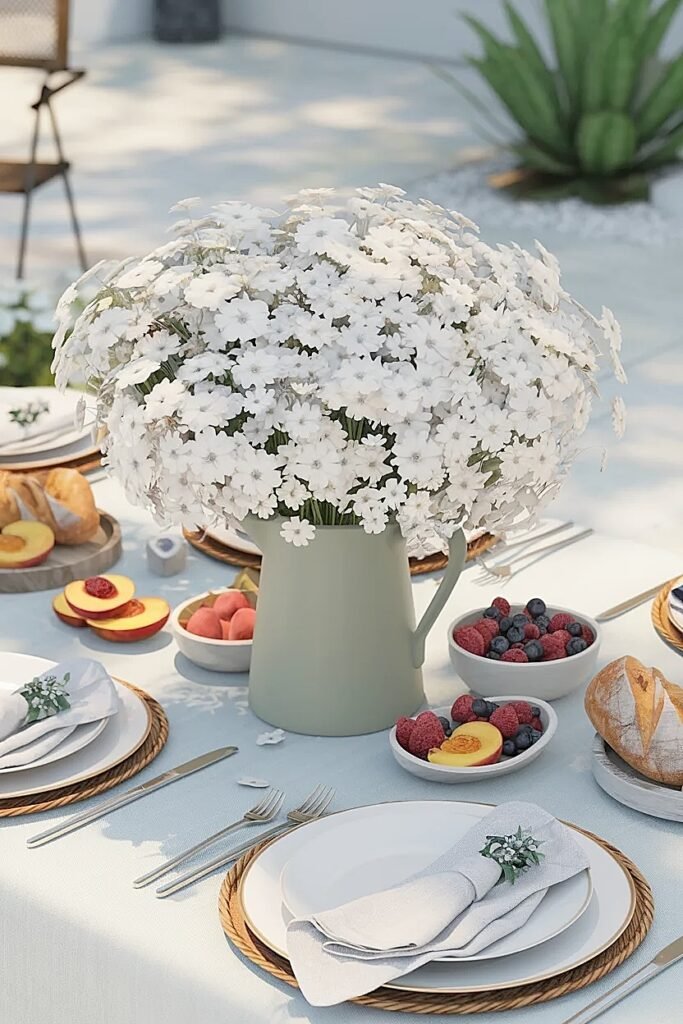
Tiny filler blooms serve a function in an airy bouquet that larger flowers cannot: they create visual density between the focal flowers without adding mass. A bouquet built from focal flowers alone looks like a handful of stems. Add fine-textured small-bloom filler between those stems and the bouquet reads as full, lush, and composed. The key is that the filler must stay in proportion to the other flowers: filler that is too coarse or too large in bloom scale becomes a second focal element rather than a supporting texture.
1. Gypsophila (Baby’s Breath) The classic fine-textured white filler that creates atmospheric mist throughout any bouquet without adding structural weight. The tiny clouds of white blooms fill visual gaps while remaining visually transparent: you look through gypsophila rather than at it. Available as fresh cut, fresh-dried, or preserved. Use it at low proportion, one to two stems per every five focal stems, for contemporary airy bouquets rather than the.
2. White Waxflower White waxflower creates fine-textured filler specifically suited to hand-tied bouquets because the arching stems naturally curve outward at the bouquet edges, creating the organic, reaching quality that straight-stemmed fillers cannot provide. The tiny star-shaped blooms distributed along each stem look like dozens of individual flowers per stem. The barely perceptible fragrance adds a sensory dimension without competing with stronger-scented focal flowers. Excellent vase life of.
3. White Feverfew Feverfew’s clusters of small white button blooms with yellow centers create a warm filler note that pure white fillers do not provide. The yellow centers add the one warm accent that prevents an all-cool white bouquet from reading as clinical. Each stem carries multiple branching clusters, creating volume from a small stem count. The distinctive herbal fragrance is detectable at close range: a quality that.
4. Sweet Alyssum (White) Fresh white alyssum creates the most delicate, closest-to-nature filler effect of any option on this list. The tiny clustered white flowers and the honey-vanilla fragrance at close bouquet-holding range create a sensory quality that dried or preserved fillers cannot replicate. Sweet alyssum wilts quickly without water, so it suits bouquets held for brief periods, such as ceremony flowers, more than long-lasting centerpiece arrangements. Cut just.
5. White Ammi (Daucus) White ammi creates a lace-like filler with more structural presence than baby’s breath but less visual mass than a true filler flower. The flat-topped flower clusters on long branching stems create a horizontal architectural layer in the bouquet that provides visual rest between focal flowers. The delicate umbel structure has a wildflower quality that elevates the whole bouquet’s aesthetic toward the meadow-gathered look that is.
More ahead on how to use lace-like flowers specifically as the structural framework of an airy meadow-style bouquet.
How to Mix White Summer Flowers with Lace-Like Blooms for Meadow-Soft Bouquets
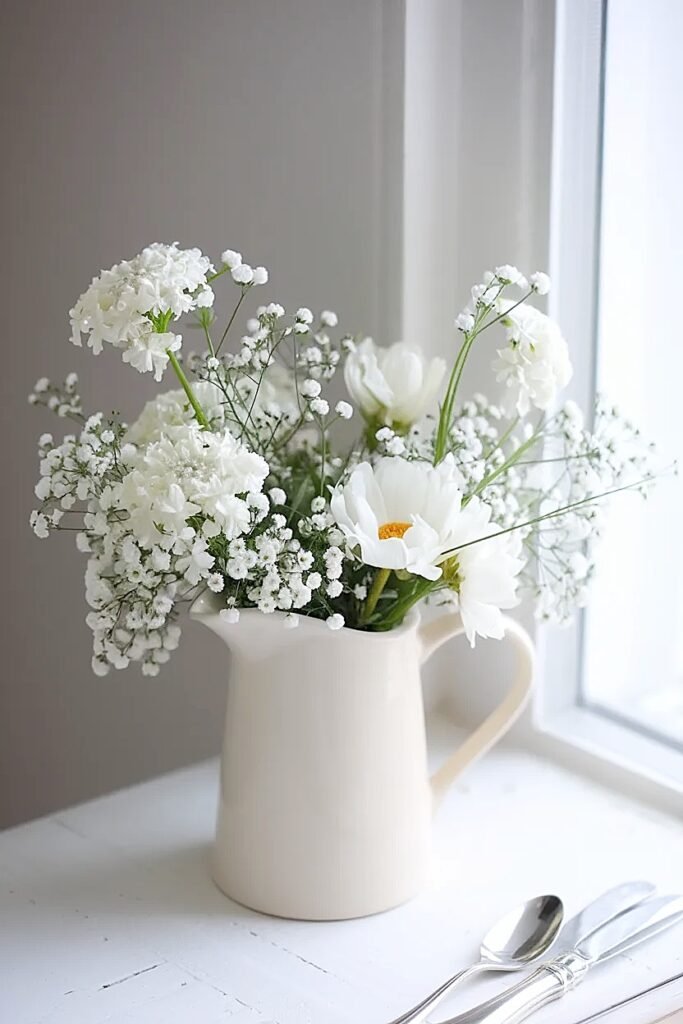
Lace-like blooms, flowers with the flat-topped or cloud-like umbel structure of Queen Anne’s lace, ammi, elderflower, and white yarrow, are the structural foundation of the most successful airy meadow-style bouquets. They do not function as filler and they do not function as focal flowers. They occupy a structural middle role: providing visual architecture and horizontal layering that makes both the filler texture and the focal blooms appear more intentional and carefully placed than they would without this structural support.
The key insight about lace-like flowers in an airy bouquet is their ability to create spatial relationships between other flowers. Where a dense filler creates solid mass between stems, a lace-like flower creates a transparent visual plane that connects adjacent blooms across a spatial gap. This horizontal plane-creation is the visual mechanism behind why Queen Anne’s lace and ammi are so essential to the meadow bouquet aesthetic: they connect flowers spatially without touching them physically.
Queen Anne’s lace is the most widely available and most effective lace-like white flower for summer bouquets. Its large, flat-topped umbel clusters can span four to six inches across, creating significant horizontal structural presence in any bouquet. The one management consideration worth knowing: Queen Anne’s lace wilts rapidly in warm water or without water access. Cut fresh, immediately water-conditioned stems make a significant difference. Commercial cut flower food extends Queen Anne’s lace vase life from two to three days to five to six days.
White yarrow serves a similar structural role to ammi and Queen Anne’s lace but with a firmer, longer-lasting character. The flat-topped clusters hold their shape and color for ten to fourteen days in cold water, which makes yarrow an extremely useful structural element in bouquets that need to hold over several days. Yarrow also dries beautifully in arrangements, which means arrangements that include it naturally transition from fresh to dried as other elements age, creating an intentional-looking dried arrangement without any specific design effort.
There is more ahead on specific soft-cluster white summer flowers that add fullness without bulk to hand-tied bouquets.
Easy Ideas for White Summer Flowers with Soft Clusters for Breezy Bouquet Fullness
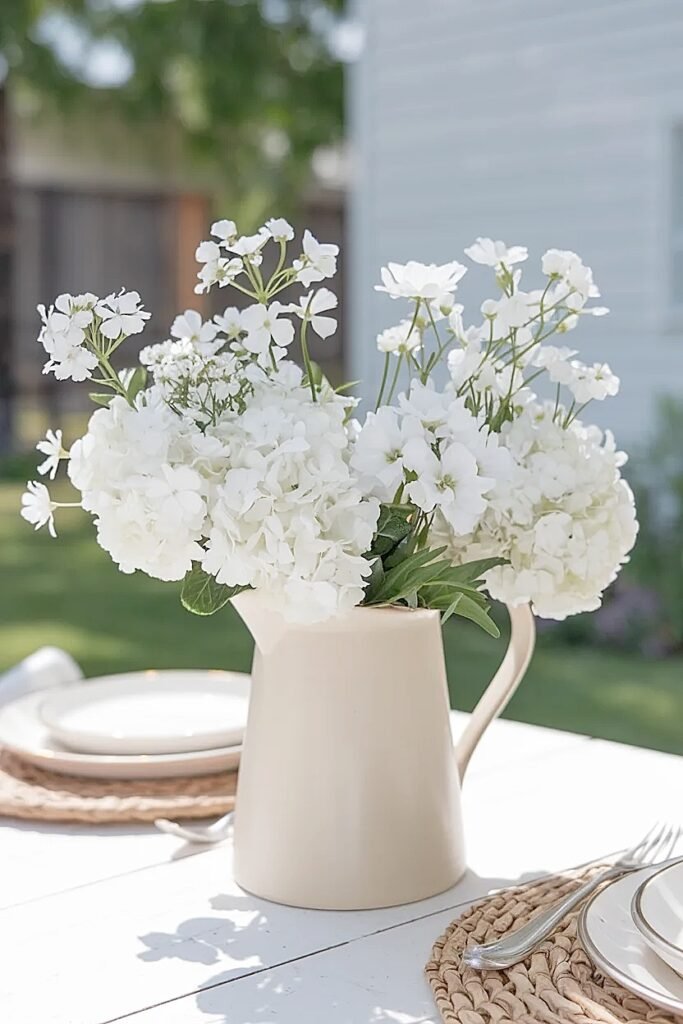
1. White Phlox Clusters Phlox’s flat-topped flower clusters create soft, informal fullness at a scale between the tiny filler bloom and the single focal flower. Each stem holds multiple small clusters. The mild fragrance at close range adds a cottage-garden sensory quality. Position phlox stems at mid-length in a.
2. White Cow Parsley or Sweet Cicely Where available, fresh cow parsley or sweet cicely creates the most authentic meadow-gathered quality of any cluster flower. The lacy white umbels are similar to Queen Anne’s lace but with a softer, less-structured character. The anise-like fragrance of sweet cicely is unexpected and pleasant at.
3. White Heather (Summer Varieties) White heather sprigs create fine-textured, branching cluster fullness at the bouquet perimeter. The tiny bell-shaped blooms along each stem create a linear cluster quality different from flat-topped umbels or button blooms. The branching form allows heather to fill the outer perimeter of a hand-tied bouquet.
4. White Statice Sprays White statice provides the most structural, longest-lasting cluster fullness of any option on this list. The papery clustered blooms hold their appearance for ten or more days in cold water and continue looking presentable as they dry in the arrangement. For bouquets that will be.
5. White Scabiosa (Pincushion) Scabiosa’s dome-shaped pincushion blooms create a three-dimensional cluster quality distinct from flat-topped umbels. The outer petals of the dome extend outward in a fringe-like arrangement that creates a soft, rounded fullness at mid-height in any bouquet. The thin, wiry stems create natural movement in air,.
More ahead on the long-stemmed white flowers that allow natural arching and drooping for the most organic-looking hand-tied bouquets.
Easy Ideas for White Summer Flowers with Long Stems for Hand-Tied Bouquets
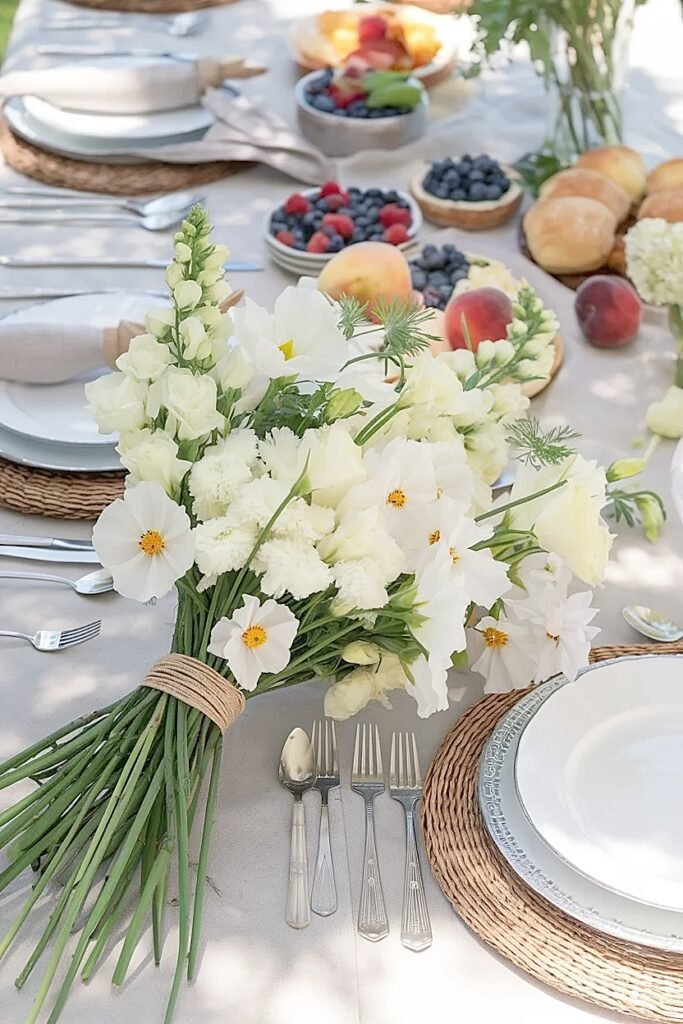
1. White Campanula (Bellflower) White campanula provides upward-reaching stems of pendant bell-shaped blooms that create gentle arching movement at the bouquet edges. Each stem holds multiple blooms along its length that open progressively over several days. The light, slender stems add height and reach without structural weight. Allow campanula.
2. White Veronica (Speedwell) White veronica spikes create vertical structure in a soft, non-aggressive way unlike most spike flowers. The tiny blooms along each narrow spike create a tapered, fine-textured vertical line that adds height and visual direction without the formal imposing quality of gladioli or delphiniums. Veronica stems.
3. White Agapanthus (African Lily) White agapanthus creates bold structural height in summer bouquets with a characteristic globe-topped stem that is immediately recognizable and distinctive. Each globe holds multiple small white trumpet blooms that open progressively. The long bare stem below the globe creates dramatic height variation when paired with.
4. White Eustoma (Lisianthus) on Long Stems Commercial lisianthus cuts come on long stems of forty to fifty centimeters with multiple buds per stem that open sequentially over seven to ten days. The long stem allows the multiple buds to spread at varying heights throughout a hand-tied bouquet. The cool white variety.
5. White Sweet Peas White sweet peas create the most fragrant, most delicate long-stemmed option for summer hand-tied bouquets. The winged, ruffled petals have a tissue-thin quality that creates maximum visual lightness per bloom. The tendrils that sometimes accompany cut sweet pea stems add an organic, vine-like quality to.
More ahead on using smaller focal blooms specifically, which change the scale register of the whole bouquet.
How to Use White Summer Flowers with Smaller Focal Blooms for Soft Shape
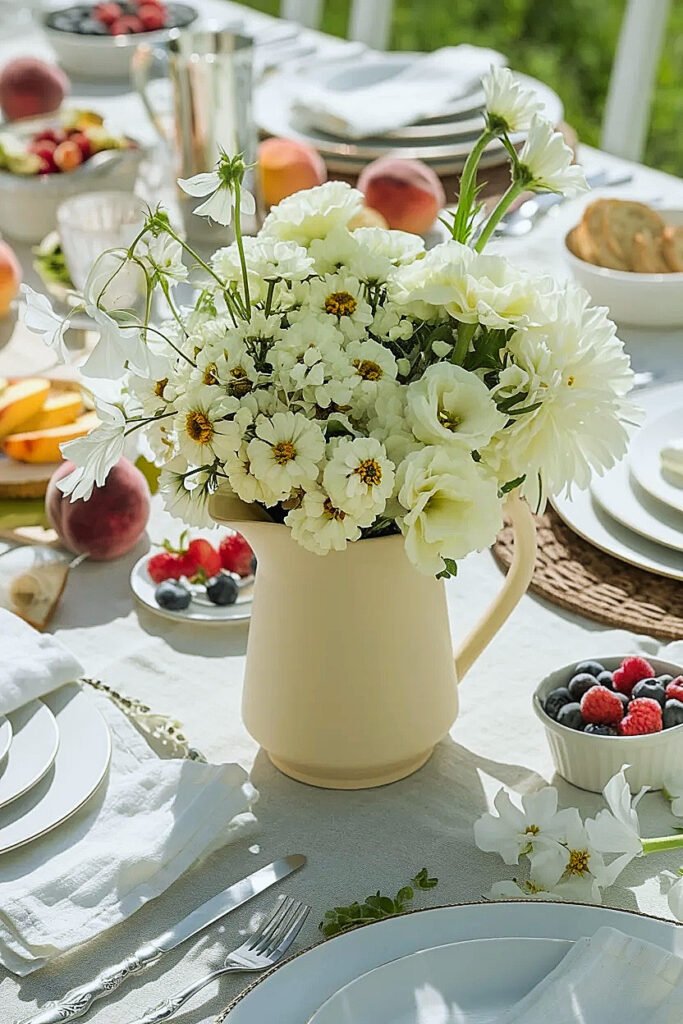
The scale of the focal bloom in a hand-tied bouquet determines the overall visual register more than any other single decision. Large focal blooms, large garden roses, dinner-plate dahlias, or big gerbera daisies, create an arrangement that reads as structured and formal even when surrounded by soft filler. Smaller focal blooms, flowers in the two-to-four-centimeter bloom-face range, create a bouquet that reads as soft, gathered, and organic even when the arrangement itself is deliberately composed.
White ranunculus in the medium-small size range, two to three centimeters of open bloom face, is the best small-to-medium focal white flower for an airy summer bouquet. The layered petals create visual depth without bulk. The stem bows gently in water, creating the natural arching that adds movement to any arrangement. One to three ranunculus stems among five to eight softer flowers creates the focal hierarchy without the weight of a large-headed focal flower.
White anemones with their distinctive dark centers create a small-focal quality with a specific graphic contrast that most white-on-white arrangements lack. The jet-black or dark purple center ring within the white anemone creates a visual point that the eye finds repeatedly throughout the bouquet, creating the impression of careful composition without any specific arrangement structure. This center-contrast quality distinguishes white anemones from every other small-focal white flower.
White echinacea, the native coneflower, creates a small-to-medium focal bloom with an unusual physical structure: the center cone rises above the reflexed white petals in a way that creates height from a single bloom face. This vertical quality within a single bloom adds spatial dimension at the bouquet’s focal flower level. The reflexed petals contribute to the airy quality because they sweep downward and outward rather than enclosing the center in the cup-like form most other flowers create.
What Are the Best White Summer Flowers for Airy Bridal-Style Summer Bouquets?
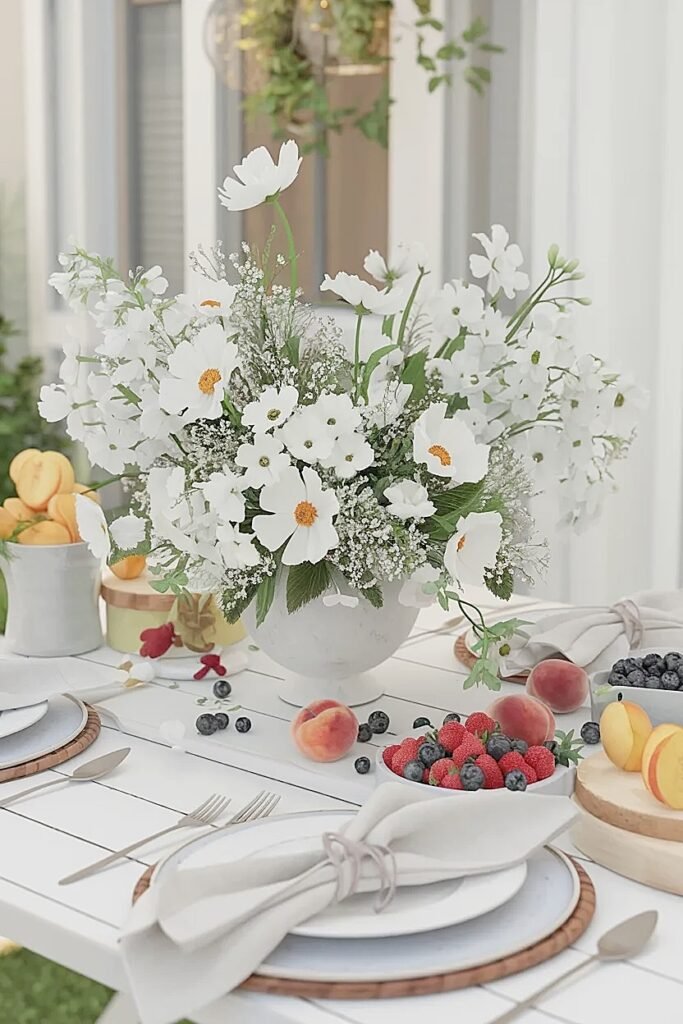
A bridal-style airy summer bouquet differs from a garden-style one primarily in stem treatment and greenery selection rather than in the flowers themselves. The same white cosmos, ranunculus, and ammi that create a casual garden-gathered look in one context create a bridal look in another when stems are uniformly trimmed, the binding point is precise, and the greenery is selected for refinement rather than wildness.
1. White Ranunculus The small-to-medium bloom scale and the naturally bowing stem create precisely the soft shape that airy bridal bouquets require. The layered petals add visual depth without density. Available in cool white and cream white varieties: choose cool white for maximum contrast against a white dress.
2. White Sweet Peas Sweet peas create the most fragrant and most specifically romantic airy white bloom available for bridal bouquets. The winged petals flutter at the outer edge of a hand-held bouquet in a way no other flower replicates. The fragrance is a specific bridal sensory quality that.
3. White Lisianthus White lisianthus provides the refined layered-petal quality that white roses provide at a lower price point and with a softer, less formal character. The multiple buds per stem create natural variation in bloom stage across the bouquet, which reads as organic and gathered. The cool.
4. White Cosmos White cosmos adds the tissue-thin translucent petal quality that no structured flower provides. In a bridal bouquet, the cosmos blooms catch light from the sides and above, creating luminous moments within the arrangement. The nodding heads create gentle movement when the bouquet is carried. The.
5. White Ammi or Queen Anne’s Lace White ammi or Queen Anne’s lace as the lace-like structural element in a bridal bouquet creates the romantic, meadow-gathered quality that distinguishes airy bridal bouquets from formal ones. The flat umbel clusters frame and separate the focal flowers without competing with them. The fine, intricate.
Conclusion
The best white flowers for summer bouquets that feel airy are not the most expensive, the most cultivated, or the most formal. They are the ones with thin petals, branching stems, small bloom scale, and a natural tendency toward movement rather than mass. Cosmos, sweet peas, ammi, ranunculus, waxflower: all of these are grocery store and farmers market accessible, genuinely beautiful, and structurally suited to the airy quality that makes a summer bouquet feel like it came from a garden rather than a shop.
Build the airy bouquet from the filler outward: choose the fine-textured filler first, add the lace-like structural element second, and place the small focal flowers last. Gather the stems loosely at the binding point. Allow natural arching and drooping. The bouquet will look better for the restraint.
This website contains affiliate links, and some products are gifted by the brand to test. As an Amazon Associate, I earn from qualified purchases. Some of the content on this website was researched and created with the assistance of AI technology.