This website contains affiliate links, and some products are gifted by the brand to test. As an Amazon Associate, I earn from qualified purchases. Some of the content on this website was researched and created with the assistance of AI technology.
Key Takeaways
- Sorting flowers by visual job, focal, structural, and textural, before building any bouquet eliminates most beginner placement errors before they happen
- The one-tall, one-round, one-filler rule creates instant hierarchy in any white summer bouquet: every stem has a clear role and a clear position
- Proper stem prep, diagonal cuts, lower leaf removal, and cold water conditioning, extends fresh-keeping time and prevents the mid-arrangement wilt that frustrates new makers
- White flowers amplify structural mistakes: every stem angle, gap, and proportion imbalance is more visible in white than in mixed-color combinations
- Triangle composition is the most beginner-forgiving arrangement shape because it creates visual balance through proportion rather than through precise individual stem positioning
- One color with many textures is the most teachable advanced concept for a white-flower beginner: it trains the eye to see structure before color
Beginner ideas for white summer flowers bouquets almost always skip the most important step: teaching the beginner how to think before they reach for their first stem. Most tutorials start with flower selection. The ones that produce the best results start earlier, with a conversation about what each flower is supposed to do in the arrangement, and why understanding that job distinction matters before a single stem gets cut. White summer flowers are the ideal teaching palette because the absence of color competition keeps the focus exactly where it belongs for a beginner: on structure, shape, and stem placement.
I built my first twenty or thirty arrangements by feel, which meant I learned slowly and produced a lot of mediocre results before understanding why the good ones worked. The pattern I eventually recognized was consistent: the arrangements that looked designed shared a structural logic that the ones that just looked like flowers in water did not. That logic was not about expensive flowers or advanced technique. It was about assigning roles to stems before building, and letting the role determine the placement. This article is the shortcut I wish I had at the beginning.
Use this beginner table before you touch a stem. It turns bouquet making into a simple checklist: pick a shape flower, a height flower, a filler, an airy stem, and greenery. Once each job is covered, white summer flowers become much easier to arrange without crowding the bouquet.
Beginner Bouquet Job Guide for White Summer Flowers
Choose one flower for each job, then build your bouquet in a calmer, easier order.
| Bouquet Job | Beginner-Friendly White Summer Flowers | Why It Helps | Simple Placement Tip |
|---|---|---|---|
| Shape flowerThis gives the bouquet a clear center and keeps it from looking random. | White zinnias, white scabiosaRound blooms are easy for beginners to see and place. | Creates instant structureYou know where the bouquet starts. | Place low firstUse these as the first anchors in the pitcher. |
| Height flowerThis keeps the bouquet from looking flat. | White snapdragons, white stockTall stems add lift without needing many flowers. | Adds a top lineThe bouquet feels taller and more finished. | Go slightly off-centerThis looks more natural than perfect symmetry. |
| Filler flowerThis softens beginner gaps and uneven spacing. | White feverfew, white statice, white yarrowSmall texture hides awkward spots. | Makes mistakes softerGaps look intentional instead of empty. | Scatter lightlyDo not pack fillers into one thick clump. |
| Air flowerThis stops an all-white bouquet from looking heavy. | White cosmos, white sweet peasLight petals create movement and breathing room. | Keeps the bouquet breezyAiry stems make the whole design feel softer. | Add lastLet these float above and around stronger stems. |
| GreeneryThis makes white flowers look fresher and more natural. | Basil, mint, thyme, soft herbsBeginner-friendly greens are easy to find. | Adds contrastGreen stems prevent the bouquet from looking flat. | Tuck around edgesUse greenery as a frame, not the main feature. |
Resources:
- This Simple ‘Wiggle Test’ Will Tell You When To Cut Garden Flowers
- Choosing plants for your cut flower farm | UMN Extension
- The Cut Flower Garden | MU Extension
How to Sort White Summer Flowers by Job Before Making a Beginner Bouquet
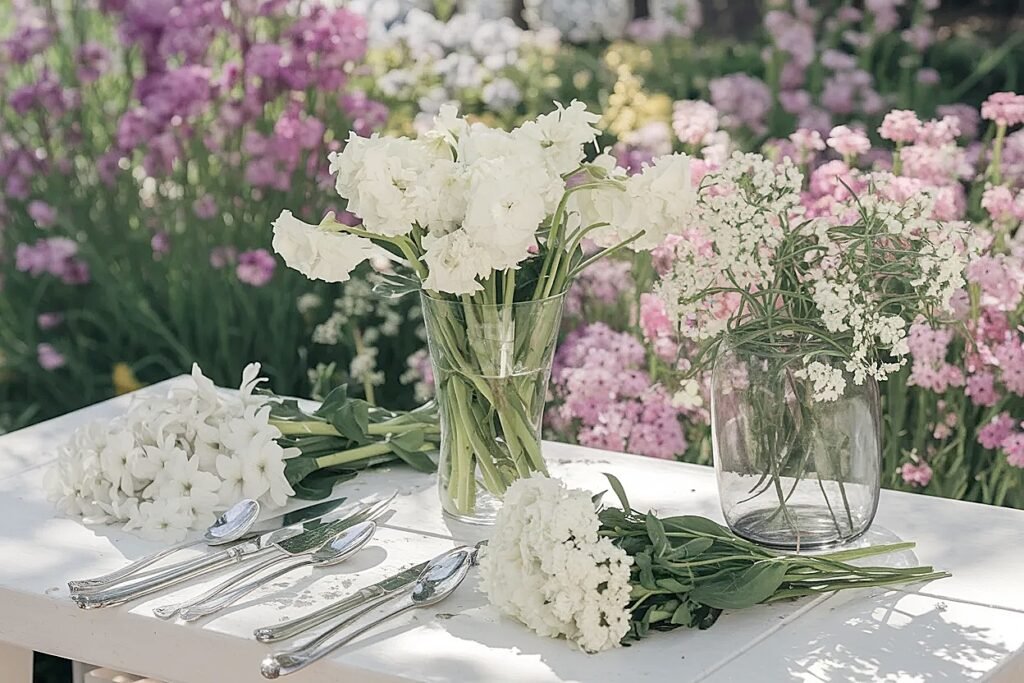
Every bouquet has three types of stems working simultaneously: the stems that create the shape and height of the arrangement, the stems that provide the visual focal point that the eye returns to, and the stems that fill the gaps and create the sense of fullness that makes an arrangement read as complete rather than sparse. Most beginners combine these three jobs into one undifferentiated stem selection because no one has told them that the roles are distinct. The result is arrangements where every stem competes for the same visual position without any clear hierarchy.
Sorting by job takes about thirty seconds and changes everything. Hold up each flower or stem and ask one question: is this the tallest, most structural element, is this the most visually interesting bloom that will anchor the viewer’s attention, or is this the texture and mass that will fill the space between the other two types. Put each stem in a different pile based on that answer. When you pick up the vessel to start building, the sorted piles tell you exactly what goes in first, what goes in second, and what fills the remaining space.
The specific white summer flowers that most naturally sort into each role: white snapdragons, white veronica, white echinacea on tall stems, and white lisianthus on long-stemmed cuts all function as structural shape-creators. White gerbera daisy, white peony, white ranunculus, and white zinnia function as focal blooms that anchor visual attention. White statice, white waxflower, white chamomile, white feverfew, and baby’s breath all function as textural gap-fillers that create fullness around the focal and structural elements.
One role-sorting mistake worth specifically avoiding: treating greenery as an afterthought rather than as a legitimate structural element. Greenery sorts into the first pile alongside structural flowers. Eucalyptus, Italian ruscus, myrtle, and herbs all contribute to shape-creation and should be placed in the arrangement at the same stage as the structural flowers, not added at the end to fill gaps the blooms left behind.
For more on the best white summer flowers for beginner bouquet makers, including which varieties have the most forgiving stems and longest vase life, check out what are the best white summer flowers for beginner bouquet makers. Share this with anyone just starting their bouquet-making practice. More ahead on the one-tall, one-round, one-filler rule and every other beginner technique.
Easy Ideas for White Summer Flowers Bouquets Using the One-Tall, One-Round, One-Filler Rule
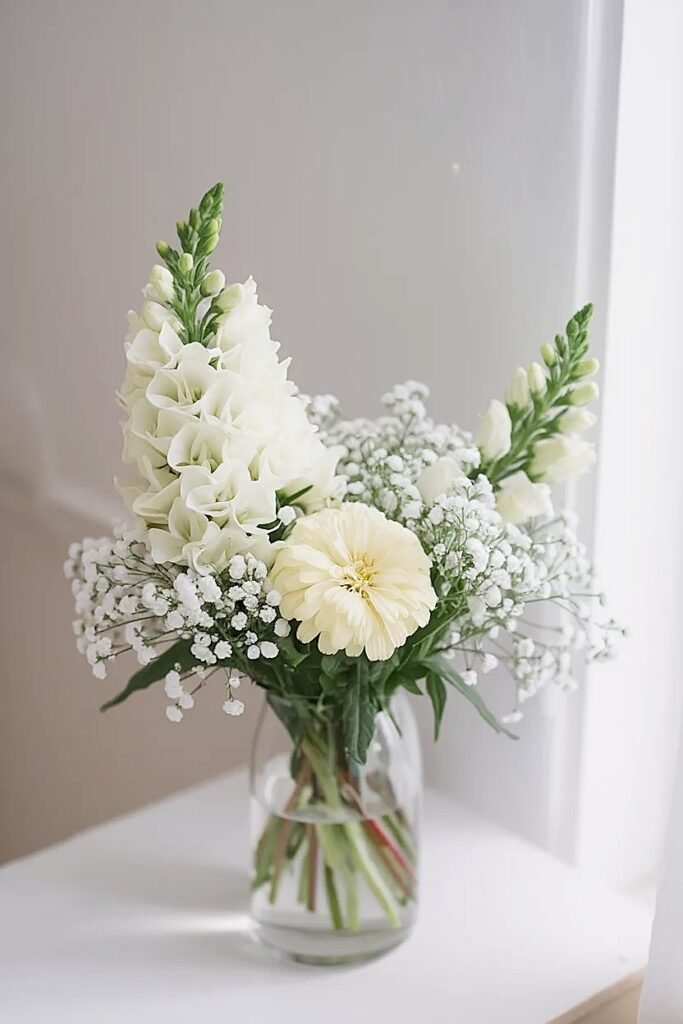
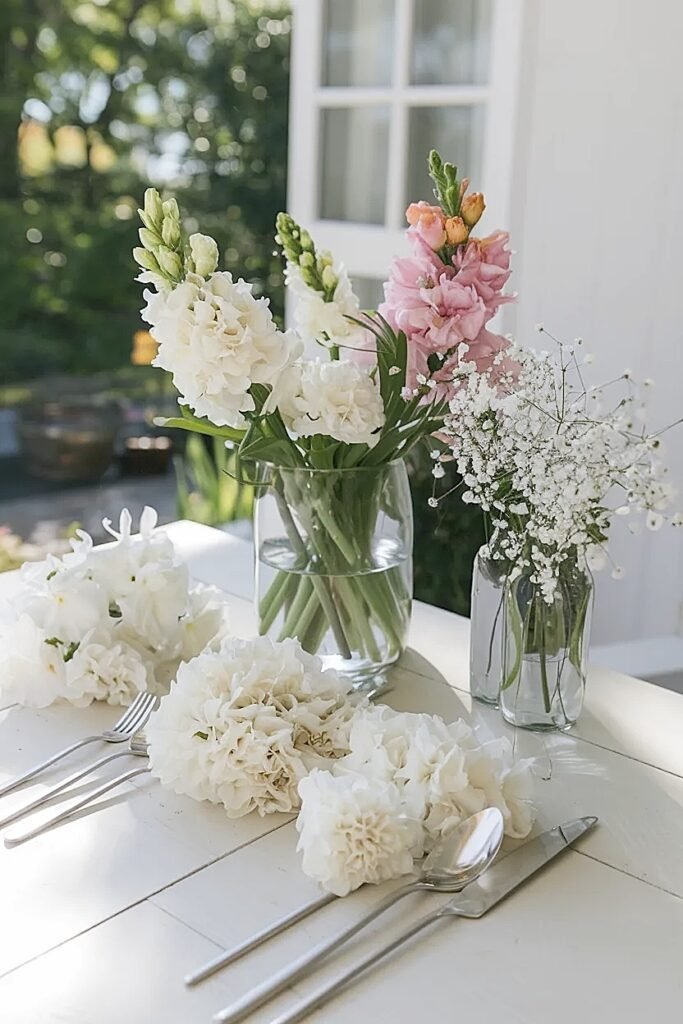
The one-tall, one-round, one-filler rule works because it guarantees that every arrangement contains one stem type from each of the three functional roles described above. The tall element creates the upper boundary of the arrangement and provides directional movement. The round element creates the visual center of gravity. The filler creates the fullness that makes both of the other elements look intentional and complete. Three elements, three roles, one formula.
1. White Veronica, White Zinnia, White Waxflower White veronica’s upright spike creates the tall structural line. White zinnia provides the flat, face-forward round focal. White waxflower fills all gaps with fine-textured white clusters. The three bloom structures, vertical spike, flat circle, and distributed cluster, create maximum shape variety without color complexity. Five veronica stems, four zinnia stems, and two waxflower stems fills a medium vessel with a complete, role-sorted arrangement that reads.
2. White Snapdragon, White Gerbera, Baby’s Breath The tall tapered snapdragon spike creates height and directional movement. The bold graphic gerbera face provides the eye-anchoring round focal. Baby’s breath distributes white atmospheric mist as the filler layer. The scale contrast between the tall snapdragon, the medium gerbera, and the fine baby’s breath creates natural size hierarchy that reads as professionally composed. Build the snapdragon stems first, gerbera in the middle zone, baby’s.
3. White Foxglove, White Ranunculus, White Chamomile Foxglove creates dramatic tall structure with progressive floret opening along the vertical spike. White ranunculus provides the layered-petal round focal that draws close-range attention. Chamomile creates a warm daisy-face filler with yellow centers that add the one warm note preventing the all-cool white arrangement from reading as stark. The three elements create a cottage-garden quality that suits informal summer table and windowsill arrangements equally well.
4. White Agapanthus, White Lisianthus, White Statice Tall white agapanthus globe-topped stems create distinctive structural height above a white lisianthus focal mid-zone. White statice fills the lower arrangement volume with papery texture that holds its appearance for ten or more days. The combination suits large vessel arrangements for dining sideboards, hallway consoles, or any position where the bouquet needs to hold its appearance over multiple days without water-change attention. Three structural roles,.
5. White Cosmos, White Feverfew, Seeded Eucalyptus White cosmos creates the tall, arching structural element with its naturally nodding stems. White feverfew provides the clustered round focal with warm yellow centers. Seeded eucalyptus serves as the filler greenery that creates silver-green texture contrast against the all-white blooms. The combination suits small to medium vessels and has a meadow-gathered quality that suits casual summer settings. The cosmos and feverfew together create a botanical.
More ahead on stem prep specifically, which is the preparation step that most directly determines whether the finished arrangement holds its quality.
How to Prep White Summer Flowers Before Beginner Bouquet Making Starts
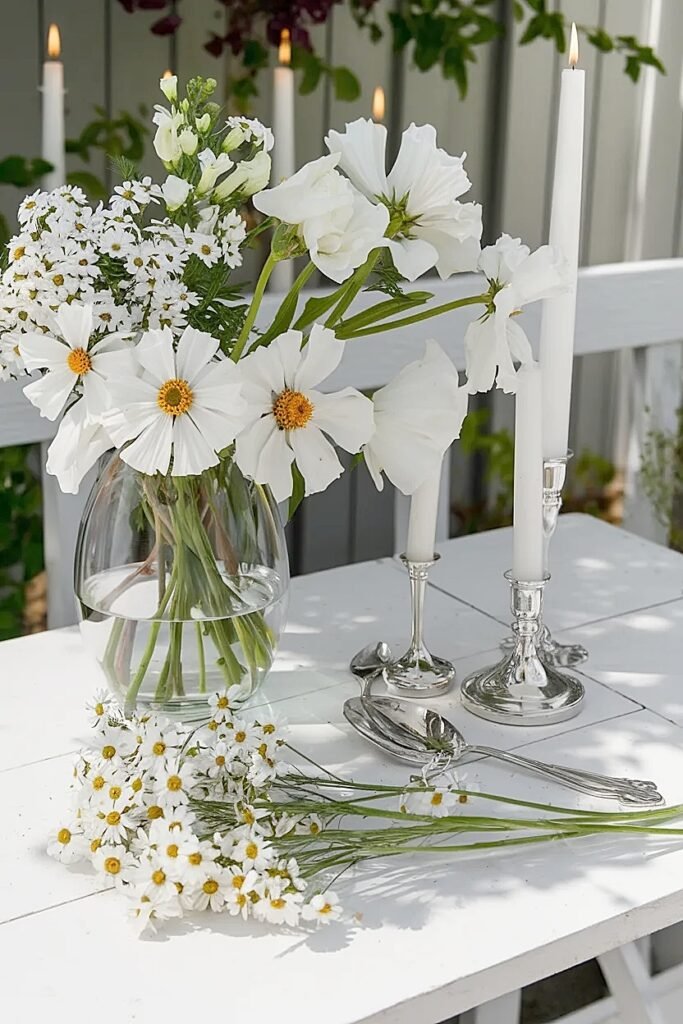
Stem preparation before building the arrangement is the single most impactful maintenance decision any beginner can make. The basic preparation sequence takes about ten minutes and significantly extends the life of every white flower in the finished bouquet: fill a clean vessel with the coldest available tap water before any stems are cut. Cut each stem at a steep diagonal, removing at least one inch, using sharp scissors rather than tearing or crushing. Strip all leaves from the lower half of each stem so no foliage will sit below the water line. Place the conditioned stems in the cold water and allow them to hydrate for one to two hours before building the arrangement.
The diagonal cut is not decorative: it creates a larger water uptake surface than a flat cut and prevents the stem base from sitting flush against the vessel bottom where it would seal itself against the water. Sharp scissors or a dedicated stem knife matter because crushing cuts, which blunt scissors create, damage the stem’s water-conducting vessels and reduce uptake even with a diagonal cut angle.
One white-flower-specific preparation detail: white blooms show bacterial water cloudiness more noticeably than colored flowers because the discoloration of the water is visible through clear or glass vessels and the deterioration of white petals to yellowing or browning at the edges reads more dramatically against white than against any other color. Change the arrangement water every two days, trimming half an inch from each stem with each water change. This practice is more important for white flowers than for any other color simply because the decline is more visible.
Grocery store white flowers, zinnias, statice, and chrysanthemums, typically come wrapped tightly in plastic that has been banding the stems together during transit. When you unwrap them, separate the stems gently rather than pulling them apart: tightly banded stems often bruise at the banding point, which creates a weak spot that causes early wilting in the arrangement. Gently separating each stem and checking the base condition before cutting is a two-minute prep step that prevents the most common beginner arrangement failure.
There is more ahead on which specific white summer flowers work best for practicing stem placement, the foundational technique that improves every subsequent bouquet.
What Are the Best White Summer Flowers to Practice Stem Placement for Beginners?
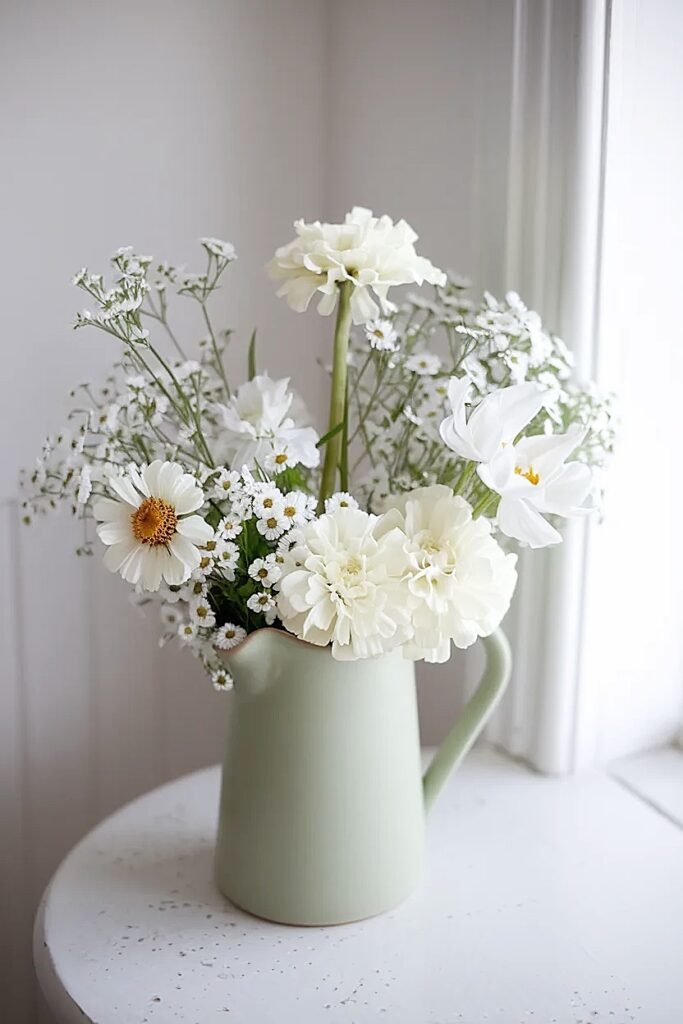
1. White Zinnia White zinnias have stiff, self-supporting stems that hold whatever angle they are placed at in the vessel. This predictable stem behavior allows the beginner to focus entirely on the placement decision rather than managing stem collapse or repositioning. One zinnia stem moved to a new.
2. White Statice White statice’s branching stem structure makes it the best flower for practicing how branching stems work differently from single-headed stems in a vessel. Each branch creates its own visual position and the beginner can observe how one statice stem occupies three to four positions simultaneously.
3. White Lisianthus Lisianthus stems carry multiple buds at different stages of opening, which makes them ideal for practicing how to read stem potential rather than just current bloom state. A lisianthus stem with three closed buds today creates three separate focal positions as they open over the.
More ahead on triangle composition, the arrangement shape that teaches spatial proportion more effectively than any other single technique.
DIY Ideas for White Summer Flowers Bouquets with a Simple Triangle Shape
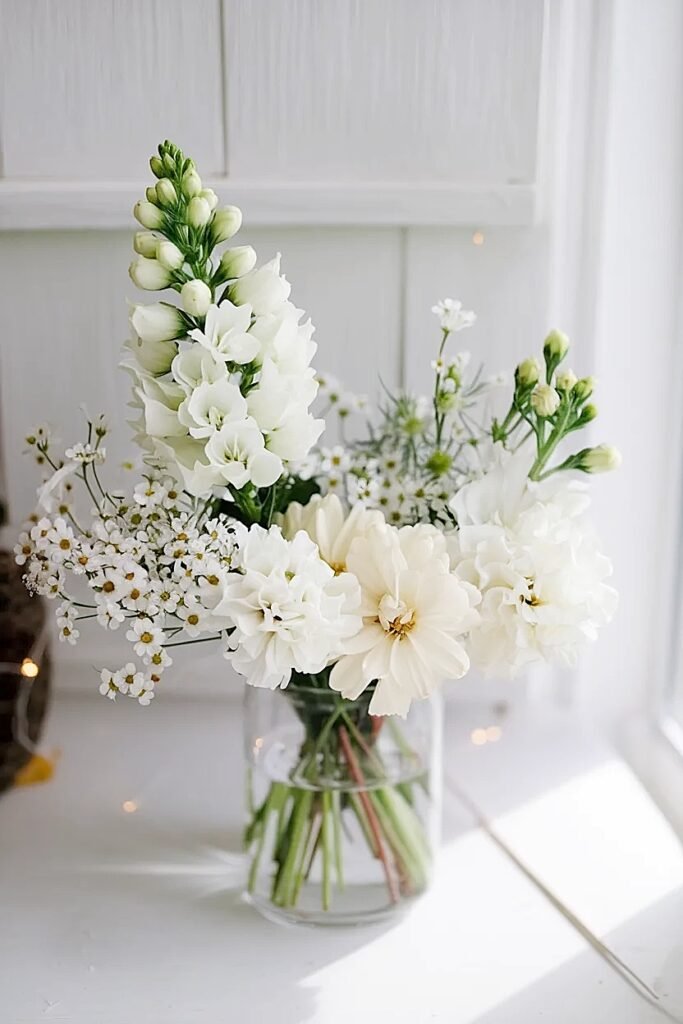
1. White Snapdragon Tall Center with White Zinnia Wings One tall white snapdragon stem at the arrangement center creates the triangle’s apex. Three to four white zinnia stems positioned lower and outward to each side create the triangle’s two lower corners. Fill between the elements with white waxflower or statice. The triangle is immediately.
2. White Foxglove and White Gerbera Triangle One tall foxglove spike at center creates the apex. Two white gerbera stems at lower-left and lower-right positions anchor the base corners. Chamomile or baby’s breath between the three anchor stems creates fullness within the triangle shape. The three structural blooms establish the proportion: the.
3. White Lisianthus Center with White Statice Wings One tall lisianthus stem at center apex with two to three shorter lisianthus stems positioned outward as the base wing. White statice fills the full triangle body with fine-textured white papery texture. The all-lisianthus focal element with statice as the filler creates a single-variety triangle.
4. White Veronica Spike with White Ranunculus Base White veronica spike at the triangle apex, two white ranunculus stems at the base corners, and gypsophila or white waxflower filling the triangle interior. The veronica spike creates the sharpest, most defined triangle apex of any tall structural flower. The round ranunculus blooms at the.
5. White Agapanthus and White Phlox Triangle Tall agapanthus globe-topped stem creates the apex. Two white phlox cluster stems at the base positions create the fragrant lower corners. White statice fills the interior. The globe agapanthus apex creates a distinctive circular top to the triangle that makes the composition immediately recognizable as.
More ahead on the finishing techniques that make any white bouquet read as complete with fewer stems than a beginner expects to need.
How to Make White Summer Flowers Bouquets Look Finished with Fewer Stems

The most common beginner impulse is to add more stems when an arrangement feels incomplete. This impulse is usually wrong. The feeling of incompleteness in a beginner arrangement almost always comes from one of three specific causes: gaps at the vessel rim where stems meet the water line, gaps at the arrangement sides where stems have all pointed toward the center, or the absence of a single dominant visual element that anchors the viewer’s attention. None of these problems require more stems. They require different stem positioning of the stems already present.
The vessel rim gap is the most immediately fixable. Press two to three short-cut filler stems, statice, chamomile, or waxflower at two to three inches above the rim, outward at shallow angles so they sit at the arrangement edge rather than pointing upward with everything else. This low perimeter layer creates a visual foundation that connects the arrangement to the vessel and eliminates the gap that makes the arrangement appear to float above the container rather than grow from it.
Stem direction is the cause of the side-gap problem. Every stem in a beginner arrangement tends to angle toward the center because the beginner is instinctively pointing each bloom toward the viewer. Deliberately insert two stems per side at outward-facing angles, approximately thirty to forty-five degrees off vertical toward each side. The outward-facing stems create width at the arrangement’s mid-zone that covers the vertical sides that center-pointing stems leave exposed.
The single dominant element absence is the most important insight: a white arrangement without one clearly larger, more visually distinct bloom reads as a collection of similar flowers rather than a composed arrangement. Add or promote one element that is visually distinct from everything else, whether by bloom size, bloom structure, or stem height. That one dominant element creates the hierarchy that allows the viewer to understand the rest of the arrangement in relation to it.
Creative Ways to Use White Summer Flowers with One Color but Many Textures
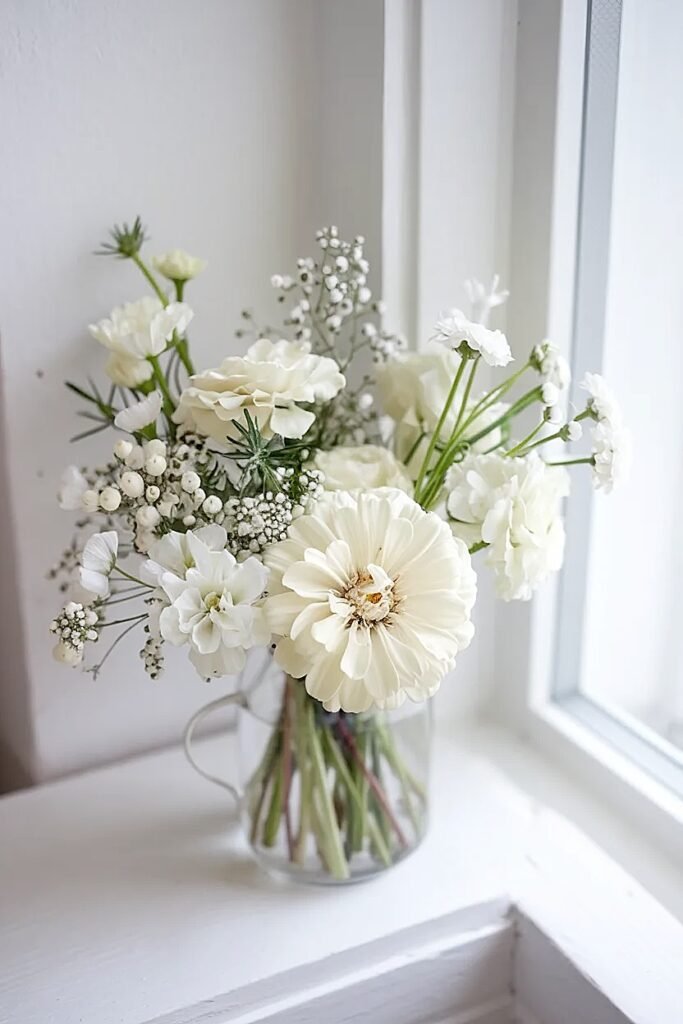
1. White Zinnia with Gypsophila and Eucalyptus Three distinct textures in one white palette: the smooth flat zinnia face, the misty gypsophila cloud, and the silver-grey eucalyptus texture. The zinnia’s density contrasts with the gypsophila’s airy mist and the eucalyptus’s structured leaf. Three textures create visual variety equivalent to three colors without.
2. White Statice with White Echinacea and White Waxflower Papery statice cluster, bold echinacea center cone, and tiny waxflower star blooms create three completely different white textures at three different scales. The scale variation from large echinacea to medium statice to tiny waxflower creates a natural size hierarchy that reads as intentionally designed. The.
3. White Ranunculus with Baby’s Breath and Maidenhair Fern Tightly layered ranunculus petals, atmospheric baby’s breath clouds, and delicate fern frond leaflets create a density-to-mist textural gradient. The ranunculus reads as the densest, most opaque element. The baby’s breath is the most transparent. The fern bridges between the two extremes with its intermediate fine-textured.
4. White Phlox with White Feverfew and Rosemary Phlox cluster blooms, feverfew button faces, and rosemary needle-like foliage create a herb-garden white texture combination with strong fragrance layering. The phlox’s sweet floral note, feverfew’s distinctive herbal note, and rosemary’s piney scent create a complex fragrance alongside the visual texture variety. The texture-and-fragrance combination.
5. White Lisianthus with White Cosmos and Seeded Eucalyptus Layered lisianthus petals, tissue-thin cosmos faces, and seeded eucalyptus texture create a three-element white arrangement ranging from dense formal petal structure to translucent organic delicacy. The lisianthus reads as the most cultivated and refined element. The cosmos reads as the most organic and delicate. The.
Conclusion
Easy ideas for beginner bouquet makers using white summer flowers work best when they start with role-sorting and structural thinking rather than with flower selection. The flowers do not build the arrangement. The understanding of what each flower needs to do builds it.
Sort before you build. Prep before you place. Use the triangle shape as a fallback whenever proportion feels off. And when the arrangement feels incomplete, add better-placed stems rather than more stems. White summer flowers reward those four practices with finished results that read as designed long before the technique behind them is genuinely advanced.
This website contains affiliate links, and some products are gifted by the brand to test. As an Amazon Associate, I earn from qualified purchases. Some of the content on this website was researched and created with the assistance of AI technology.